MEET CATEKCNC

CATEK CNC® Self-Developed CNC Wood Lathe System

Empowering the Automation Upgrade of the Manufacturing Industry with Minimalist Intelligence

Since its establishment, CATEKCNC has been committed to advancing the automation and intelligent development of the manufacturing industry. Traditional CNC systems, due to their complex programming logic and high learning costs, have held back a large number of labor-dependent manufacturing enterprises in the face of automation transformation—seriously hindering the enterprises’ intelligent progress. To truly make CNC technology accessible to more practitioners, CATEK established a dedicated CNC system R&D team in 2013. Relying on over 10,000 hours of accumulated on-site installation and training experience, as well as continuous user research, the team took "intelligent operation + minimalist learning" as its core R&D concept and pioneered the launch of the 1000-TC series CNC wood lathe system. By 2025, CATEKCNC has always adhered to a "user-centric" approach: through continuously listening to user feedback to optimize system functions, it has built a dynamically iterative technology evolution system. After 23 system program version updates, a comprehensive revolution has been achieved from drawing programming to machine operation—even novices with no CNC experience can quickly master basic operations, completely breaking down the usage threshold of CNC technology.

Two Innovative Designs: Making "Zero-Threshold" Operation a Reality

Innovative Auxiliary Design Software: Significantly Reducing Design Difficulty

The auxiliary design software perfectly compatible with the 1000-TC series has completely subverted traditional design processes. Unlike traditional CAD software, which relies on professional knowledge and complex operations, operators using this auxiliary software do not need to master professional design skills: they only need to input key dimensions of each section of the product to be processed (such as length, diameter, and shape), and the software will automatically generate standardized processing drawings. After importing the drawings into the CNC system, operators can start automated production by simply setting processing parameters—truly realizing "easy design even without prior experience."

Built-in System Macro Program: Start Machining Immediately After Drawing Import

The 1000-TC system is equipped with a built-in macro program for "automatic G-code conversion," which fundamentally simplifies the programming process: operators only need to import the design drawings, combine the system’s built-in process parameters, and set parameters such as cutting layers, grooving depth, and feed rate according to material characteristics and processing requirements. The macro program will then automatically convert the drawings into G-code required for CNC machining, and machining can be started immediately after the conversion is completed. The entire process requires no professional personnel to write post-processing programs, and even eliminates the tedious steps of manual code debugging.

Meanwhile, the system is fully compatible with drawings and codes exported by mainstream CAD/CAM software (such as PowerMill and AutoCAD). Manufacturing enterprises do not need to replace their existing design software—they can achieve seamless integration with the CATEK CNC system and quickly start automated production.

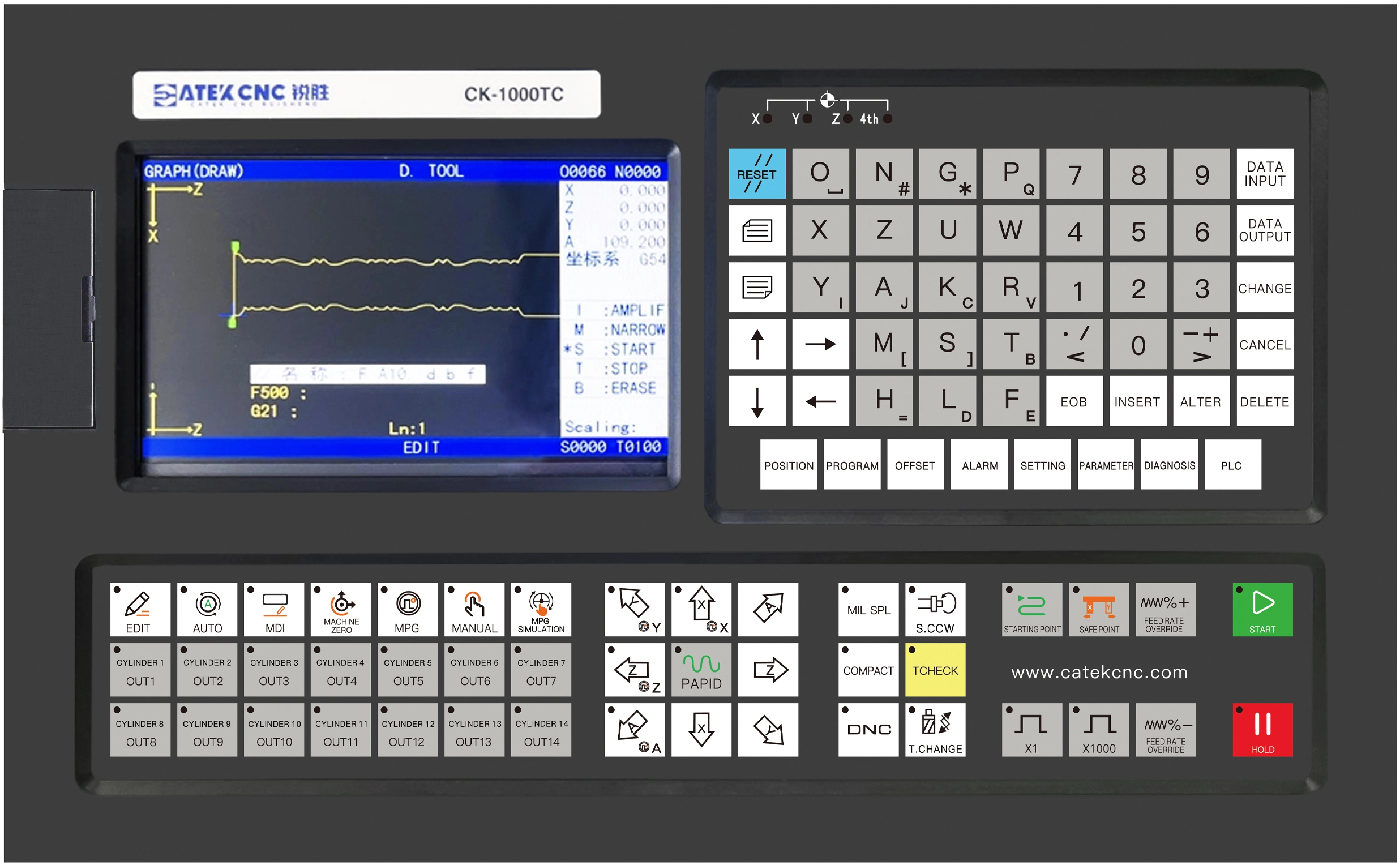
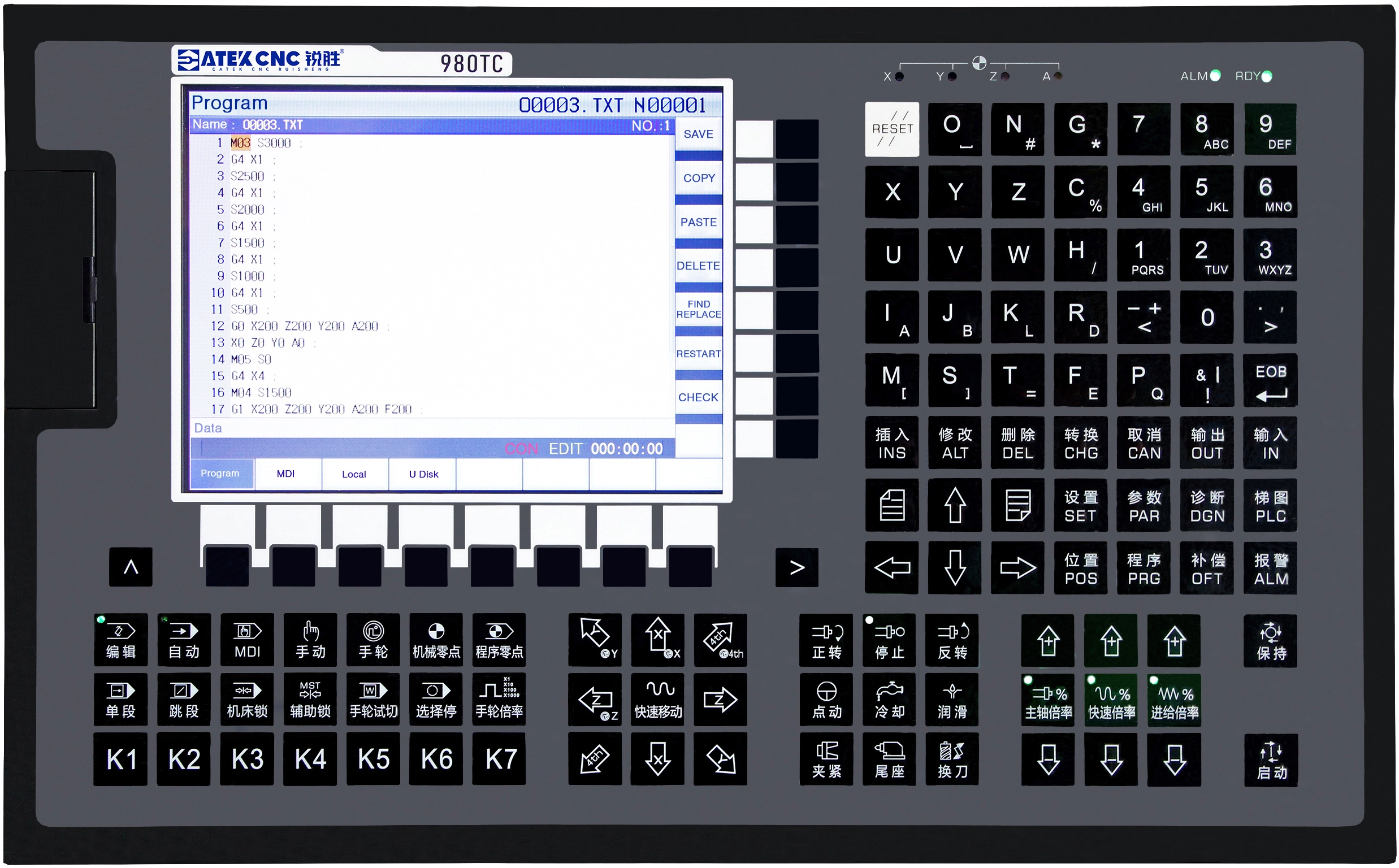
CATEKCNC-1000TC CATEKCNC-980TC

CATEKCNC Control System

Leveraging 12 years of iterative upgrades in control systems, the CATEK CNC system has developed three core advantages: "controllability, reproducibility, and optimizability," while achieving three key performance metrics: "high precision, high efficiency, and high consistency." Its performance has been refined to near perfection.

Advantages and Features

  • High Processing Precision: The system is equipped with built-in high-precision position loop and speed loop algorithms. The positioning accuracy of the feed axis is controlled within ±0.001mm, and the repeat positioning accuracy reaches ±0.005mm1. This enables stable machining of various precision workpieces, fully meeting the requirements of high-precision manufacturing.

  • High Processing Efficiency: Through the optimization of G-code operation and automated linkage, redundant code is significantly reduced. It supports direct import of CAD drawings; after setting processing parameters, G-code is automatically generated without manual writing, thus significantly improving processing efficiency.

  • Multi-Process Integration: It integrates 6 workpiece coordinate systems (G54-G59), allowing continuous machining of 6 drawings at one time and realizing automatic switching of multiple processes such as turning, milling, drilling, grooving, and polishing. A single device can complete the full-process machining of complex workpieces without multiple clamping or switching between machines with different functions, reducing the turnover time of the process flow by more than 70%2.

  • Strong Processing Consistency: The debugged processing parameters can be saved in the system for repeated calling, ensuring that the machining process of each batch of parts is completely consistent. The error of mass-produced products is controlled within ±0.05mm.

  • Automated Loading and Unloading: Through the linkage of the control system with the automatic feeding device, the full-process unattended operation of "automatic feeding → machining → finished product unloading" is realized, and the machine stops automatically when materials are exhausted. A single operator can manage more than 5 devices, reducing labor costs by more than 80%3.

  • Intelligent Fault Early Warning: The system is equipped with built-in modules for automatic G-code detection and servo driver/servo motor abnormality monitoring; each axis is equipped with a photoelectric limit switch. In case of issues such as G-code errors, drive abnormalities, or over-travel during operation, the machine will automatically stop and issue a warning, and the interface will simultaneously display the cause of the fault, reducing troubleshooting time by more than 60%4.

  • Parametric Operation: Processing parameters can be set by directly entering numbers, without the need to record complex codes. The system has built-in automatic setting parameters for various processes such as turning, milling, and grooving. Through parameter settings, the conversion from 2D drawings to 3D machining can be directly realized, enabling combined machining processes such as 360° rotating grooving, linear grooving, and planing. For workpieces requiring large cutting depth, by setting the number of layered machining passes, automatic layered cutting of large-diameter workpieces can be achieved without manual layered programming via CAM software.

  • Visual Human-Machine Interface: The graphical operation interface allows new operators to master it proficiently within 2-3 hours5. It supports the handwheel simulation function before machining, which enables pre-verification of tool paths and programs, avoiding equipment damage caused by misoperation.

  • Strong Function Expandability: The standard configuration supports the 4-axis linkage function. When expanding functions, only the function kits need to be connected to the CNC system, and different functions for system can be unlocked via program upgrades. Functions can also be expanded by upgrading, modifying, or rewriting the PLC program through the USB interface—no system replacement is required.

  • Highly Integrated Hardware Modules: The core control unit integrates the CPU, control board, and I/O modules, reducing signal transmission delay, minimizing interference and faults, and achieving better response speed.

  • Multi-Scenario Function Integration: It is equipped with dual modules: PLC and NC. The NC module is responsible for core control functions such as system display, communication, editing, decoding, interpolation, and acceleration/deceleration; the PLC module handles ladder diagram interpretation, execution, and input/output. It supports statement-style macro code programming and automatic calling of macro programs with parameters, realizing the transition from single-program machining to automatic integrated multi-task machining.

  • Coordinated Control of Software and System Algorithms: It deeply integrates motion control, PLC logic, and process optimization algorithms. The collaboration of multiple algorithms improves machining efficiency and precision, and optimizes the overall production process.

  • Integrated Human-Machine Interaction: It supports full offline operation and integrates functions such as parameter setting, status monitoring, fault diagnosis, and program calling—no software switching is needed. It supports direct connection with mainstream CAD/CAM software; generated codes can be imported via USB without intermediate format conversion.

  • Multi-Axis Linkage Operation: It supports 4-axis linkage (X, Y, Z, A axes). With unique acceleration/deceleration control and interpolation algorithms, it achieves high-speed, high-precision, and high-reliability operation, with a single-axis control precision of ±0.001mm.

  • Compatibility with Multiple Machine Types: The 1000TC model is compatible with various CNC wood lathes (2-axis, 3-axis, 4-axis, etc.). It supports the expansion of functions such as spindles, saw blades, sanding devices, automatic tool changers, and loading/unloading, meeting the needs of diversified production scenarios.
CATEKCNC has always adhered to the "user-centric" philosophy. Not only does it independently develop high-performance CNC wood lathe systems, but it also collaborates deeply with globally leading CNC system and electrical brands. With comprehensive adaptability, it empowers Spire CNC woodworking machinery and supports the design, development, and expansion of various customized software and hardware functions. Whether you have specific brand preferences or not, the Spire High-End Custom Series offers exclusive tailored solutions.

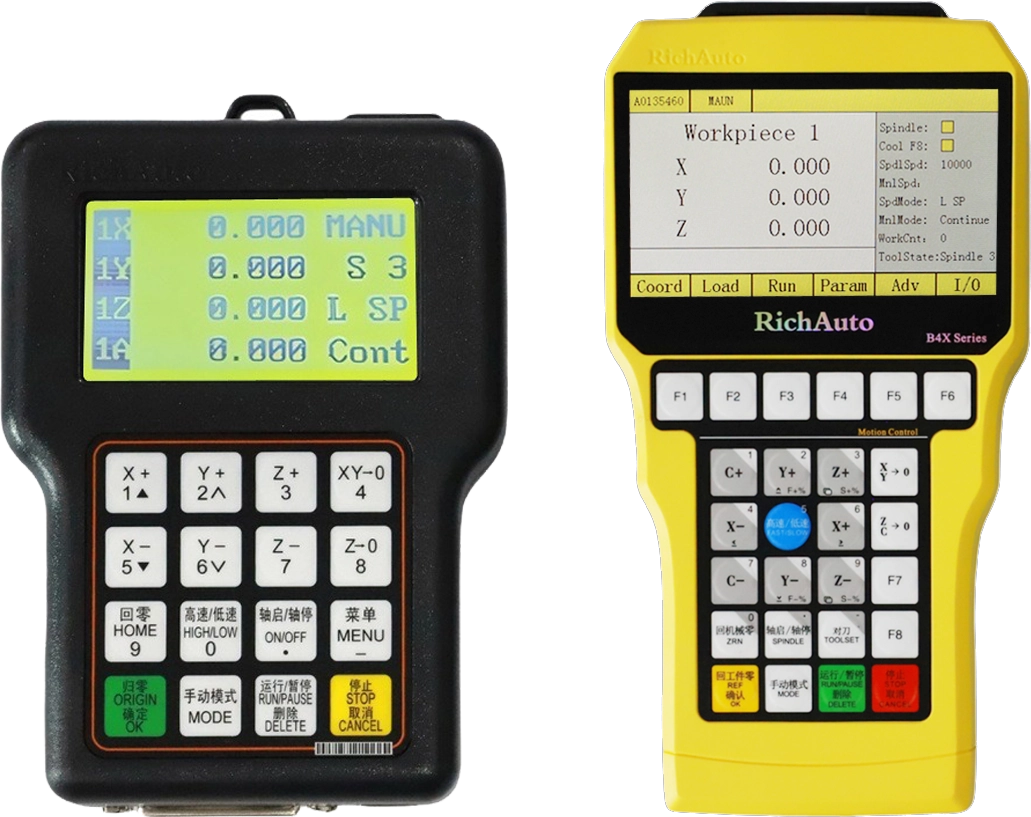
Richauto DSP

RichAuto

The core advantage of choosing the Ruizhi Tianhong DSP Handle lies in its ability to significantly enhance the stability, production efficiency, and operational convenience of CNC equipment. It adopts a DSP chip, which ensures high-speed computing and stable control, while also providing effective anti-interference capability—making it suitable for harsh industrial environments. The handle supports full offline operation and is equipped with a file pre-check function to prevent machine crashes caused by program errors. Compatible with various CAD/CAM software, it brings you improved advantages in high reliability, high production efficiency, and operational convenience.

Advantages and Features

  • Excellent Offline Operation and Usability: Featuring a handheld design combined with an LCD screen, it offers simple operation and supports Chinese-English switching, enabling intuitive and flexible operation. All operations can be completed without relying on a computer. Equipped with a USB interface, it supports multiple file transfer methods for convenient program transmission. The built-in memory can store multiple machining files; switching between machining files only requires direct calling of internal files, saving time.

  • Extensive Motion Control Support: It supports various 3-axis, 4-axis, and 5-axis CNC machines as well as multi-axis linkage operation. Compatible with standard G-code and commands in PLT format, it works with all types of CAD/CAM software. It also has file pre-check capability, which can predict machining time and detect file format errors. The Model B47 further supports machining path preview, provides multiple workpiece coordinate systems, and recognizes T-code to realize the automatic tool change function—facilitating the machining setup of complex workpieces.

  • Strong Anti-Interference and Reliability: With strong anti-interference capability, it is equipped with power-off protection and breakpoint memory function. This allows the machine to resume machining from the interruption point even after unexpected machining interruptions, improving operational fault tolerance.

  • Parameter Backup and Safety Early Warning: It provides parameter backup and restoration functions to prevent setting loss caused by user misoperation, ensuring the safety and reliability of system settings. Additionally, it is equipped with a safety detection and alarm system to ensure operational safety and prevent potential risks during machine operation.

Syntec 60CA Syntec 60WE

Syntec

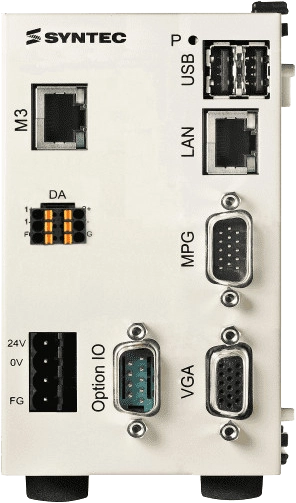
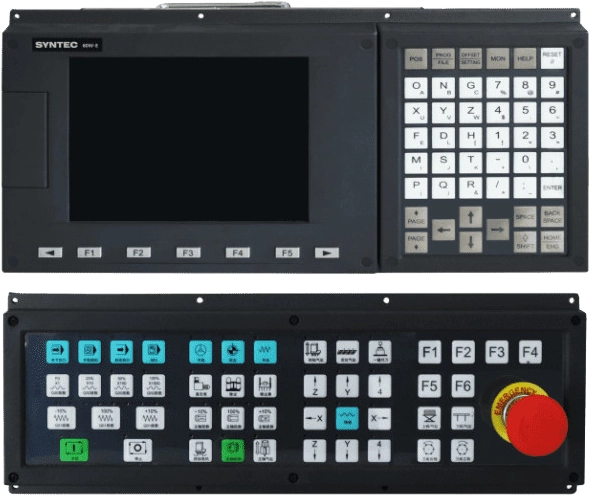
The core advantage of the Syntec CNC System lies in its outstanding control capability and powerful customization capability. It features excellent motion control performance, supporting precision machining such as 5-axis RTCP, and provides dedicated optimization solutions for fields like lathes and milling machines. Choosing Syntec means choosing a highly open control system with strong control capabilities; it offers development and control capabilities beyond standard control, making it the preferred choice for mid-to-high-end users!

Advantages and Features

  • User-Friendly Operation Experience: The Syntec system is equipped with a large-size display and provides multi-language operation interfaces. It supports functions such as graphical simulation and machining time prediction, and boasts the advantages of simplicity, convenience, and ease of learning. It supports multiple operation modes including MDI/JOG/handwheel, and is compatible with various extended functions (e.g., drill bank, 4th rotary axis, automatic loading and unloading platform, automatic labeling system). As a commonly used system for CNC woodworking machinery, it can accurately adapt to wood processing technologies such as cutting, engraving, and milling. It ensures smooth cutting edges and clear engraved patterns, effectively reducing issues like edge chipping and burrs during wood processing.

  • Distinct Advantages in Cost-Effectiveness and Performance: Compared with well-known international CNC systems, the Syntec system delivers comparable performance while featuring a more advantageous price point, making it one of the high-quality choices for users with limited budgets seeking CNC upgrades. Additionally, it has a complete product lineup that supports various types of CNC machines. CNC machines equipped with the Syntec system offer high precision and high speed. The control system can achieve smooth motion control at high feed rates through intelligent functions such as corner deceleration, reducing contour machining deviation and ensuring smoother and more natural machining lines. Finished products after machining can be used without excessive secondary processing, saving subsequent processes.

  • Machining Support Functions: It can realize 3-axis, 4-axis, and 5-axis linkage as well as multi-axis linkage, enabling precise motion control of each axis. Meanwhile, it provides basic yet critical machining auxiliary functions including coordinate system setting, tool length compensation, automatic tool calibration, and spindle speed control. For CNC routers with automatic tool change functionality, the Syntec system can accurately control automatic tool changes to complete continuous multi-process machining. With shorter tool change time and precise positioning, it enhances machining continuity for complex multi-process tasks.

  • Fault Self-Diagnosis Function: It offers functions such as breakpoint recovery and fault detection. Equipped with a built-in diagnostic module, it can perform real-time monitoring of its own hardware status, voltage, control chip temperature, and communication links. It can also check for potential faults in external equipment, such as the status of limit switches for each axis of the machine tool and spindle abnormalities. Once a problem is detected, the system will automatically issue an alarm and display fault codes and brief descriptions on the screen, facilitating maintenance personnel to quickly locate the cause of the fault.

  • Software and Compatibility: The Syntec system enables seamless integration with various mainstream CAD/CAM design and programming software on the market, such as Mastercam, UG, Artcam, Powermill, and Function360. It supports G-code and NC-code files in various formats. Meanwhile, the Syntec controller has built-in drive solutions for many well-known international servo systems (e.g., Yaskawa, Delta), which can be quickly integrated into the system, simplifying system debugging.

LNC system

LNC

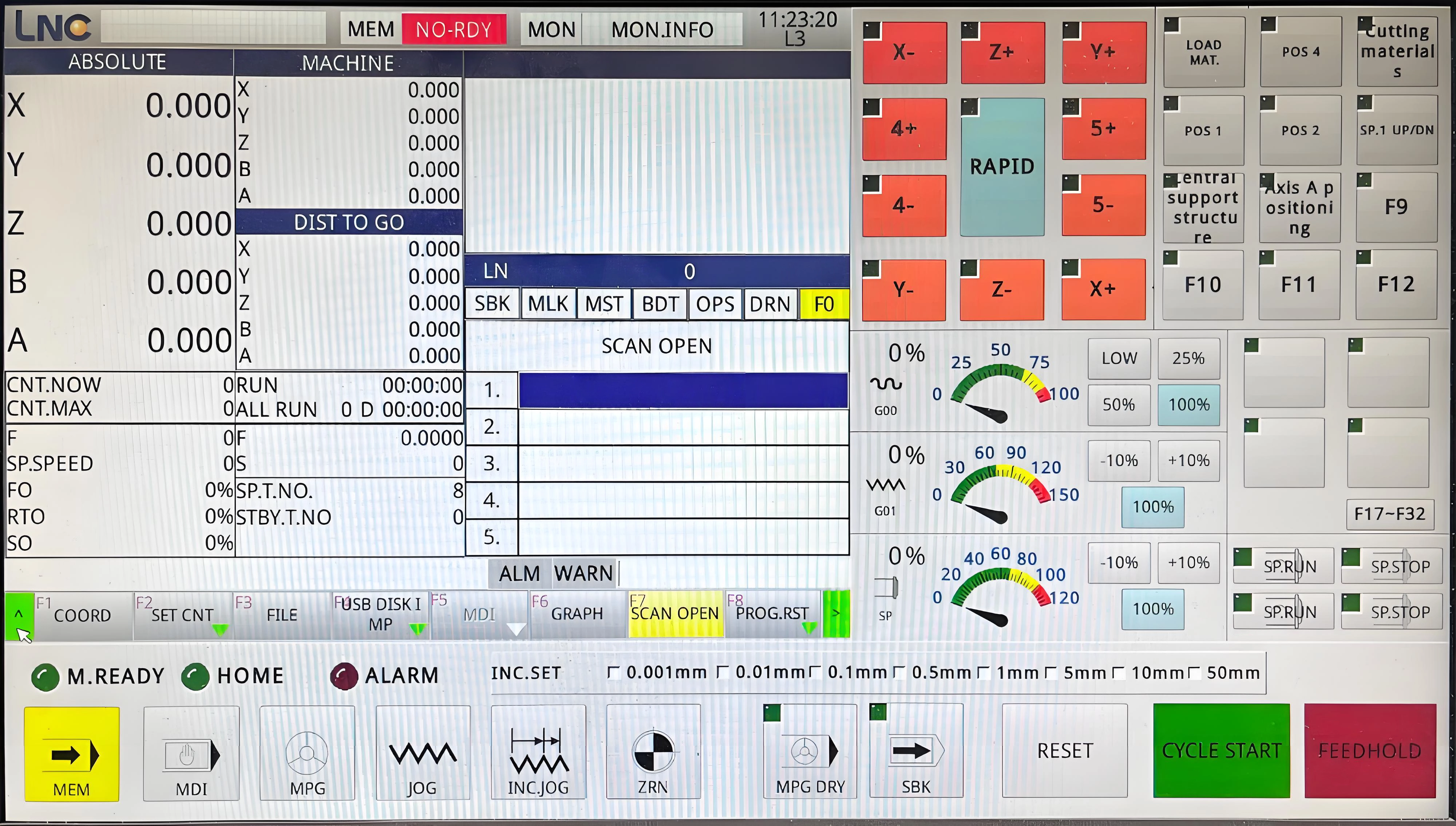
With its outstanding openness and integration capabilities, powerful motion control performance, forward-looking intelligent solutions, and high cost-effectiveness, the LNC CNC System endows equipment manufacturers with a high degree of customization rights. The system also features advanced functions such as multi-axis linkage control and high-speed & high-precision machining, effectively ensuring machining efficiency and quality. Choosing the LNC CNC System can provide flexible expansion space for the upgrading of intelligent manufacturing, realizing the comprehensive benefits of cost reduction, quality improvement, and efficiency enhancement. It is particularly suitable for users who focus on innovation, customization, and intelligent upgrading.

Advantages and Features

  • Easy to Learn & Wide Machine Compatibility: The interface has a reasonable layout and clear function divisions, supporting multi-language display. It supports operation via keyboard and mouse, as well as touchscreen. The main screen intuitively displays key content such as machining file information and system operation modes. Its operation logic conforms to daily usage habits—after simple training, operators can proficiently master common operations such as machining program editing and parameter adjustment, greatly shortening the adaptation period for new users. The system supports various types of CNC routers and CNC wood lathes, and is compatible with a variety of multi-functional CNC equipment. It can perfectly adapt to both functions such as automatic loading/unloading and automatic tool change, and configurations such as drill bank and 4th rotary axes.

  • Rich Functions, Intelligent & Efficient: The LNC control system integrates a variety of intelligent functions including restoring from power off, automatic tool setting, and fault detection. It also supports file transfer via USB flash drive. The system version designed for CNC routers is compatible with mainstream nesting software (such as Yunxi and E-Wood) to achieve seamless connection. Meanwhile, it is equipped with a tool management function that can cooperate to complete automatic tool change operations. Supporting functions like tool setting and tool length compensation, it meets the demand for rapid tool change during multi-process machining, effectively reducing downtime.

  • Multiple Safety Protection Mechanisms: Equipped with dual protection for both physical and data security, the emergency stop response time is <20 ms. It features both software limit and hardware limit protections, capable of halting motion within 0.05 mm in case of tool overtravel to ensure machine safety. The system supports diagnostic logic for various common faults and performs an automatic self-check of the entire machine upon startup, guaranteeing smooth and secure operation during the machining process.

  • Multi-Axis Control Capability: It supports 3-axis, 4-axis, and 5-axis linkage, as well as the RTCP (Rotation Tool Center Point) function, enabling synchronous motion control of each axis. When this system is adopted in 5-axis CNC wood lathes, it can further support helical interpolation and tilting machining functions. In wood processing scenarios, it can complete operations such as inclined surface milling, drilling, and grooving, significantly reducing manual intervention—making it suitable for processing various complex wood furniture accessories. In addition, the system supports the expansion of I/O points, which can meet the control needs of various woodworking machinery for complex peripheral devices such as multi-cylinders, multi-sensors, and vacuum adsorption, with comprehensive and complete functions.

Weihong DSP Weihong NC65C

Weihong

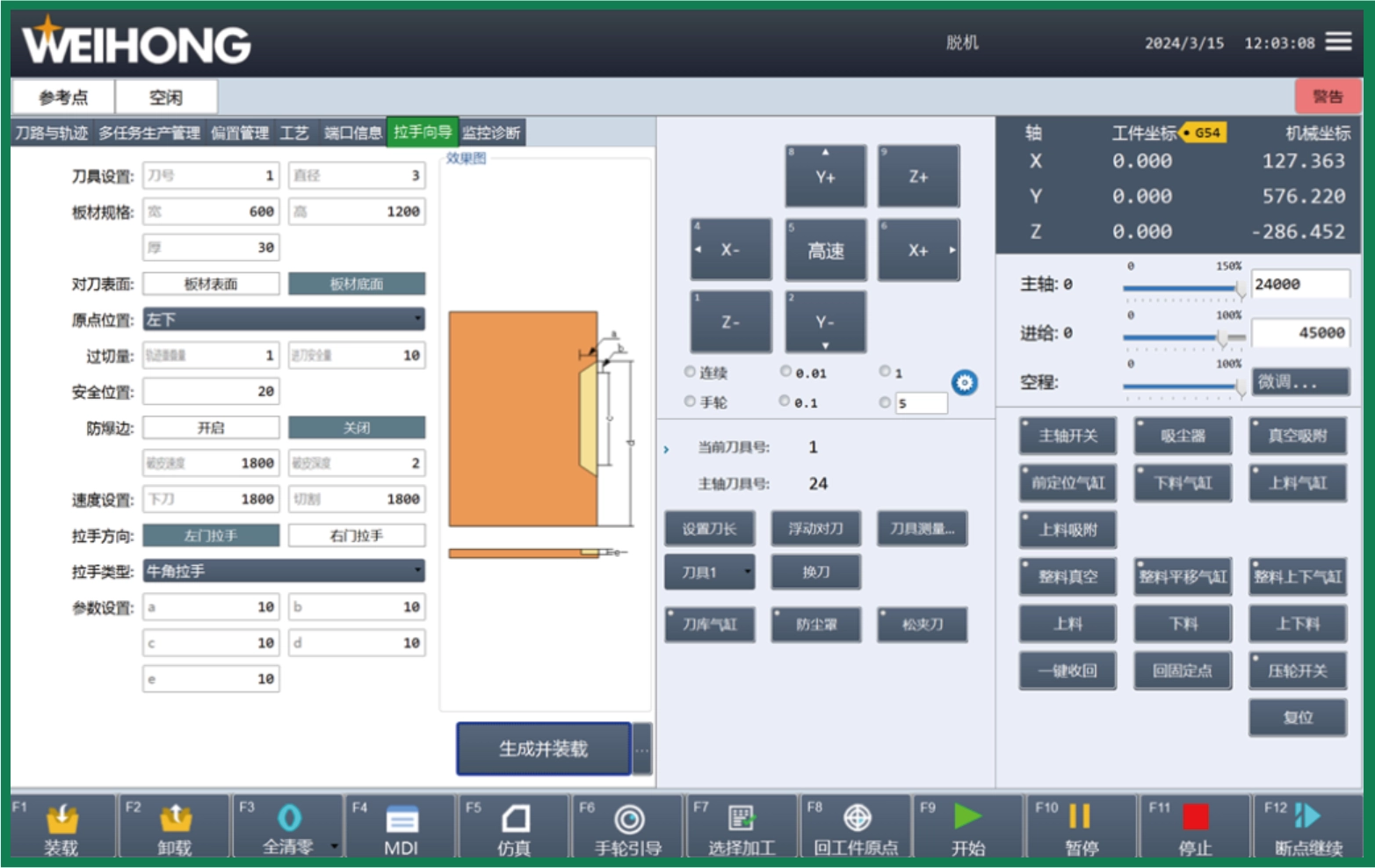
The advantage of the Weihong CNC System lies in its deeply integrated intelligent processes and comprehensive ecological integration capabilities. It provides high-precision algorithms and the 5-axis RTCP (Rotation Tool Center Point) function, significantly improving the machining accuracy and efficiency of complex curved surfaces. At the same time, it supports users in flexibly customizing interfaces and process logic to quickly adapt to the needs of special-purpose equipment. Choosing the Weihong System can provide you with a one-stop, cost-effective solution from control to execution, facilitating the upgrading of industrial automation and achieving the comprehensive goals of cost reduction, product quality improvement, and efficiency enhancement.

Advantages and Features

  • Easy to Learn & Wide Machine Compatibility: The interface has a reasonable layout and clear function divisions, supporting multi-language display. It supports operation via keyboard and mouse, as well as touchscreen. The main screen intuitively displays key content such as machining file information and system operation modes. Its operation logic conforms to daily usage habits—after simple training, operators can proficiently master common operations such as machining program editing and parameter adjustment, greatly shortening the adaptation period for new users. The system supports various types of CNC routers and CNC wood lathes, and is compatible with a variety of multi-functional CNC equipment. It can perfectly adapt to both functions such as automatic loading/unloading and automatic tool change, and configurations such as drill bank and 4th rotary axes.

  • Stable, Reliable & Easy to Use: The Weihong System boasts high stability and a low failure rate—this is particularly critical for CNC routers that require long-term continuous operation, as it effectively reduces unplanned downtime caused by system issues. The system interface supports multiple languages and features a user-friendly design, operators can master its use after simple training, reducing reliance on skilled technicians and lowering training costs.

  • Diverse Options & Rich Functions:

    Spire Series CNC router machines offer the Weihong 95A control card and NK105 handle, while ATC CNC routers can be optionally equipped with the NC65C control system:

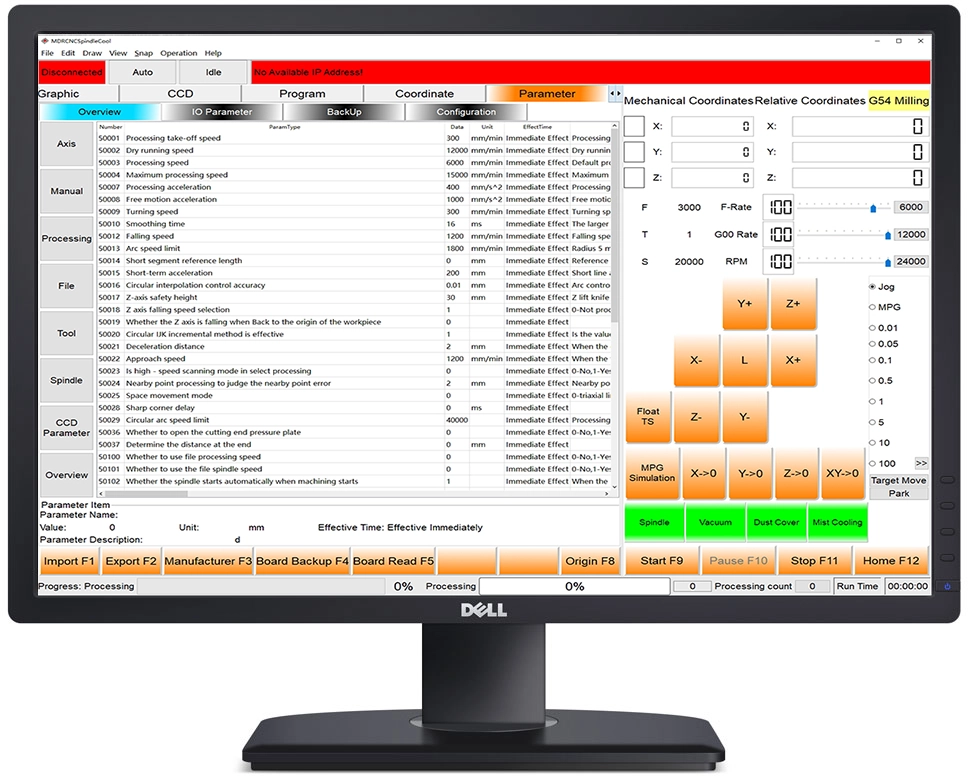
    Weihong PM95A Motion Control Card: Needs to be connected to a PC via a PCI-E slot for use; supports 64-bit Windows 7/Windows 8 systems; controls machine operation through the NcStudio motion control software, featuring strong functionality, high reliability, and ease of use.

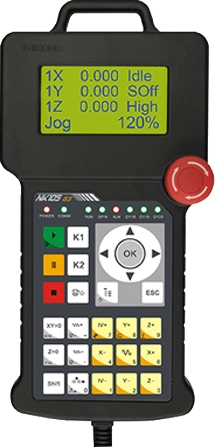
    NK105 Handle-Type Control System: Based on an embedded control platform, it consists of a host system and an operation panel, adopting a detachable design. The handle controller can be separated from the electrical cabinet, facilitating machine tool operation. Additionally, its internal speed parameters are optimized, which can effectively solve problems such as burrs and vibration marks during machining. It supports multiple languages and switching between metric and imperial units, ensuring intuitive and convenient use.

    NC65C: Integrated industrial computer running a dedicated version of the Windows operating system, featuring faster startup speed and superior anti-virus capability. As an integrated multi-axis CNC control system, the NC65C integrated CNC system supports 5-axis linkage machining and has excellent hardware performance. It supports self-inspection and repair functions for data disks, and is equipped with multi-axis linkage, rotation mode, workpiece compensation, and automatic tool change functions.

  • Comprehensive Functions: The system supports functions including breakpoint carving resumption, power-off memory, automatic tool setting, machining speed control, spindle speed control, drawing preview, and simulated machining. It can also be expanded with external functions such as 5-axis RTCP, drill bank, automatic plate labeling, the 4th rotary axis for CNC routers, and automatic loading/unloading. With comprehensive coverage of functions, it can meet the machining needs of various scenarios.

  • Strong Compatibility: It supports various types of CAD/CAM software and various types of G-code files. Meanwhile, it is compatible with servo drives, spindles, and other hardware from various brands, providing a wide range of options to meet different control requirements.

XDW system

XDW

Choosing XDW CNC System provides a comprehensive, all-scenario machining solution characterized by high precision, broad compatibility, and deep integration of versatile functionalities. With a single machine, multiple functions can be seamlessly combined, Thanks to its precision machining capabilities, flexible expandability, and support for secondary development and customization, it is particularly suitable for users who require one CNC machine to fulfill diverse processing needs. This helps users achieve the integrated goals of reducing procurement costs, expanding machine utility, and improving processing efficiency.

Advantages and Features

  • Flexible Expandability: The XDW control system utilizes control boards to connect the control software with the machinery. Equipped with dedicated control chips, it enables on-demand expansion and supports multi-axis applications. The control board manages motor pulse and direction signals, analog interfaces, and more, eliminating the need for external adapter modules.

  • Comprehensive Functional Coverage: By expansion, the system can easily integrate various functions required by CNC routers, including automatic tool changing, CCD visual positioning, oscillating tools, a fourth rotary axis, and automatic loading/unloading. It is especially suited for adding CCD vision systems and oscillating tool functionality to CNC routers, meeting diverse processing needs for both rigid and flexible materials.

  • Wide Compatibility: The system supports both image files and G-code files. For cutting operations using spindles or oscillating tools, image formats can be directly selected, while G-code is used for engraving and milling tasks. It is compatible with various CAD/CAM software and accepts a broad range of file types.

  • High Speed and Precision: With a pulse output frequency of up to 2 MHz and a position command response delay of ≤10 μm, the system’s built-in compensation algorithms automatically correct errors. Positioning accuracy reaches ±0.005 mm, and repeat positioning accuracy achieves ±0.001 mm, meeting the demands of high-precision machining applications.

  • Enhanced Stability:

    Designed for industrial use, the system incorporates anti-interference modules in its circuitry to withstand electromagnetic interference from motors, frequency converters, and other equipment in workshop environments, preventing signal loss. It also supports parameter backup to avoid downtime caused by data loss.
  • Visualized Interaction: The accompanying DHTN control software enables real-time preview of machining paths, live parameter monitoring, and fault alerts. With support for both Chinese and English interfaces, operators can adjust processing parameters such as speed in real time, reducing the technical skill threshold required for operation.

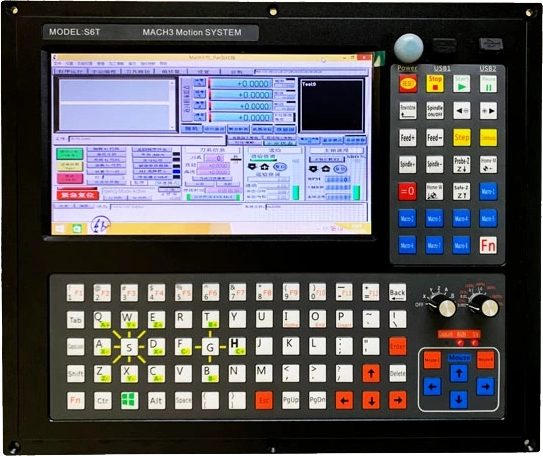
Mach3 Mach3

Mach3

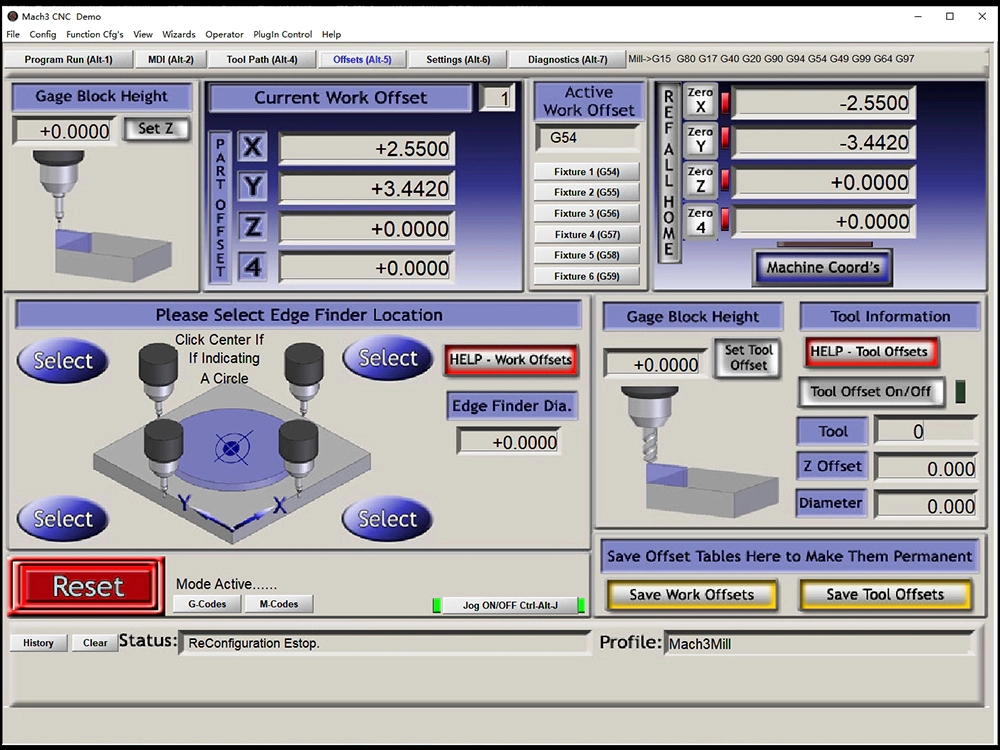
The core advantages of the Mach3 CNC system lie in its exceptional cost-effectiveness and open PC-based architecture. As a software-based CNC solution running on Windows, it requires no dedicated hardware controller and utilizes standard computers for multi-axis motion control, significantly reducing automation upgrade costs. It supports various drive systems with broad compatibility and offers functions such as G-code editing, 3D toolpath simulation, and customizable macro operations. Particularly suitable for CNC woodworking routers of all types, it enables small and medium-sized enterprises to achieve high-precision machining and flexible production tasks at low costs.

Advantages and Features

  • Hardware Adaptation and Expansion: Mach3 supports multiple communication protocols, including USB and Ethernet, and is compatible with a wide range of drive systems. The basic configuration supports three-axis-linkage operation, while expansion cards can upgrade the system to synchronous control of up to six axes. It also supports additional features such as a fourth rotary axis and automatic tool changing.

  • Comprehensive Functionality: The system provides error compensation, backlash compensation, tool compensation, radius compensation, and mode compensation, among other features. It supports spindle speed control, multi-relay control, manual pulse generation, automatic tool setting, and breakpoint memory retention. These capabilities enhance user convenience and ensure long-term machining accuracy.

  • Intuitive Interface Display: With support for 3D dynamic tracking display, users can simulate toolpaths before machining to verify G-code accuracy, effectively avoiding collisions and errors during trial operations.

  • Robust Community Ecosystem: Over years of development, Mach3 has cultivated a large user community. Its ease of use and powerful expandability have made it a popular choice globally. Numerous tutorials, plugins, and troubleshooting resources are readily available online.

  • Extensive Format Support: Mach3 is compatible with various types of G-code. Through its companion Lazycam software, users can directly import files in formats such as dxf and cmx, and automatically generate G-code. This feature is particularly beneficial for users unfamiliar with CAM software, featuring a simple and straightforward learning curve.

Delta system

Delta

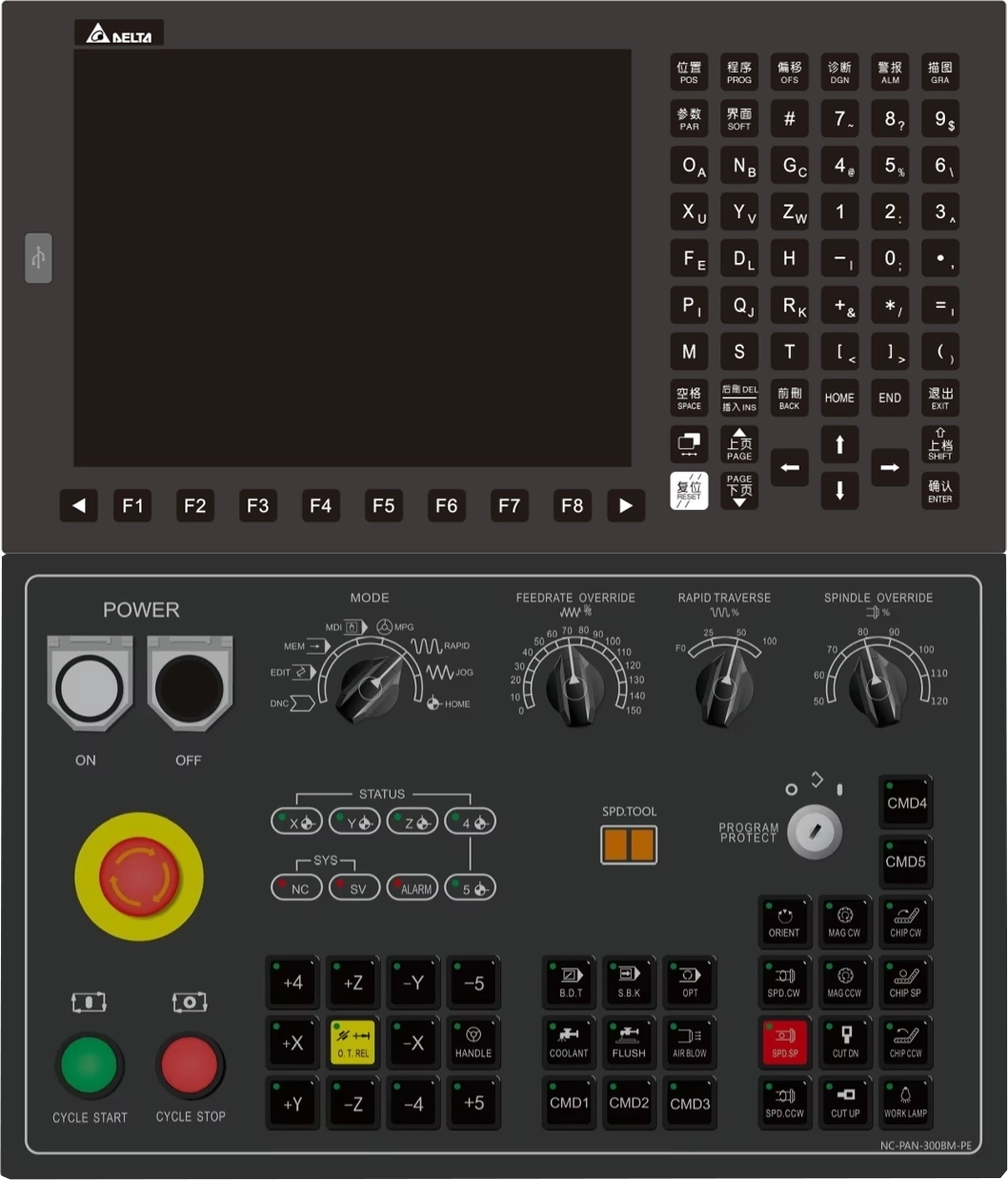
Delta CNC System has become a preferred solution in the smart manufacturing field due to its powerful multi-axis control capability, high-speed and high-precision algorithms, and industry adaptability. It is particularly suitable for enterprises pursuing high-efficiency production and flexible manufacturing. By integrating hardware performance with the NC5 software ecosystem, it not only meets the needs of precision machining but also lays a foundation for future intelligent upgrades, making it an ideal choice for mid-to-high-end manufacturing enterprises.

Advantages and Features

  • Advanced Motion Control Algorithms: Delta's control system adopts a high-performance multi-core CPU processor and supports IEEE 64-bit floating-point numbers, achieving a significant improvement in computing performance. It is compatible with multiple communication protocols; in addition to supporting ISO-standard G-code, it also features sophisticated path parsing capability and pre-reading design. Combined with high-order curve analysis and fitting, it optimizes machining trajectories and speed planning, achieves precise path optimization, and enhances overall machining speed.

  • Multi-Axis & Multi-Channel Control Capability: It supports 4-channel and 32-axis synchronous control. When paired with bus servo motors, it can achieve microsecond-level errors, with synchronization error controlled within ±5μm. In the 5-axis linkage configuration, it is equipped with the RTCP (Rotation Tool Center Point) dynamic tool tip compensation function. During high-speed 5-axis direction switching, the system automatically corrects the tool posture to avoid trajectory deviation, ensuring the tool tip moves along the commanded path. With a machining accuracy of ±0.01mm, it enables one-time clamping to complete multi-process composite machining (including turning, milling, drilling, and grooving), increasing production efficiency by more than 40%.

  • Built-in CAD/CAM Software Solution: It supports direct drawing of machining contours or importing STEP files, and automatically generates G-code—reducing programming time by 50%. Integrating powerful modeling, design, and machining functions, users can create complex model diagrams using this software and automatically generate tool machining paths, thereby improving efficiency and product quality. It is capable of producing 2D/3D and multi-axis complex workpieces.

  • Extensive Process Support: It supports various ISO-standard G-codes and extended macro instructions, and can directly import machining programs generated by CAM software. Users can also modify codes via the editor to adjust industrial parameters. It supports T-code commands for automatic switching of multiple tools, enhancing machining efficiency. Additionally, it features a 3D machining simulation function that performs real-time simulation of tool paths and machine tool movements, detecting collision risks in advance and reducing the number of test runs.

  • Intelligent Auxiliary Functions: It supports machining path preview and simulation operation, helping to identify potential program errors in advance. It is also equipped with an automatic diagnosis function, which automatically issues alarms for operation faults such as driver alarms and overtravel alarms during machine operation—greatly reducing downtime due to faults.

Faunc system

FAUNC

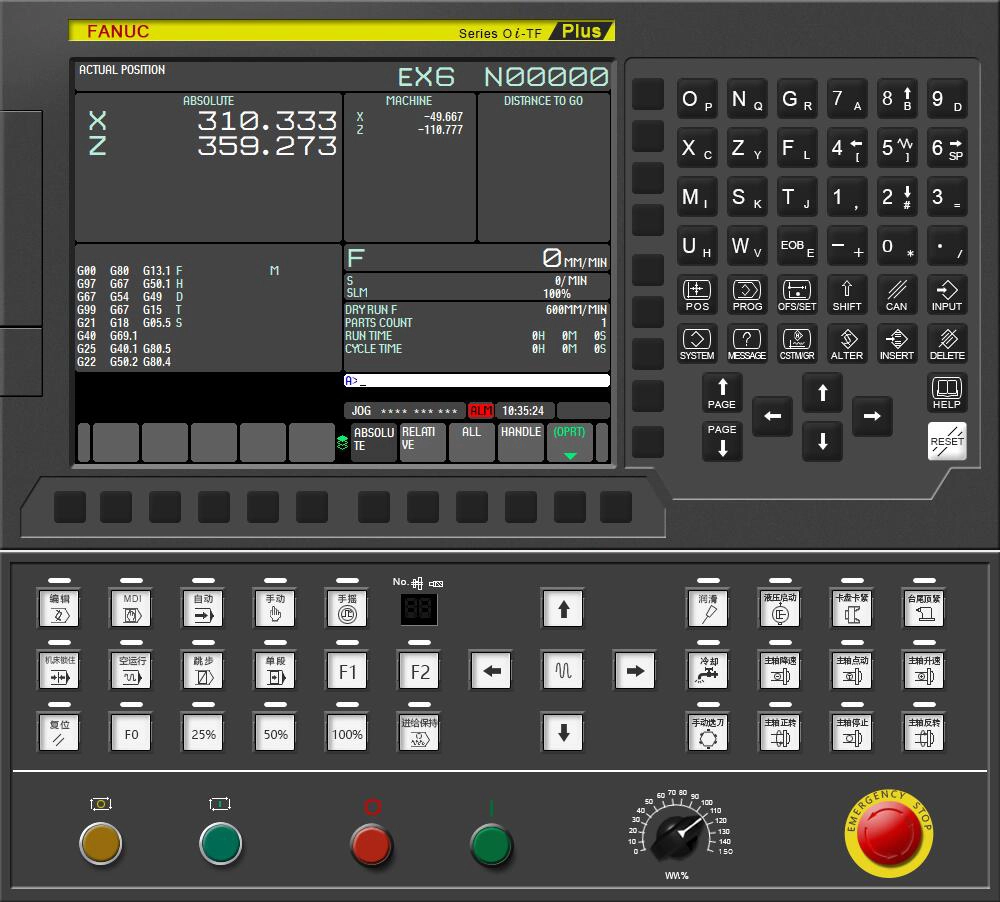
FANUC CNC System boasts advantages such as ultimate reliability, outstanding precision stability, and comprehensive functions. It adopts a dedicated hardware architecture and a closed CNC platform to ensure long-term trouble-free operation in harsh industrial environments. Equipped with high-performance servo drives and high-resolution encoders, it achieves micrometer-level machining precision and stable surface quality control. Meanwhile, it features a world-leading service network and technical support system, making it particularly suitable for high-volume, high-continuity production fields such as high-end CNC machines and the first choice for reliability in high-end manufacturing.

Advantages and Features

  • Exceptional Stability and Reliability: FANUC System uses high-quality electronic components and materials, delivering excellent resistance to vibration, corrosion, and electromagnetic interference. It also adopts a modular architecture where each functional module operates relatively independently, minimizing the scope of impact in case of faults—maintenance personnel can quickly replace faulty modules for repairs. Furthermore, the system is equipped with built-in comprehensive fault diagnosis and alarm programs that conduct real-time monitoring of its own hardware operating conditions and machining status, upon detecting anomalies, it immediately triggers an alarm and accurately locates fault points, enabling users to troubleshoot and handle issues promptly. Additionally, the system maintains an extremely low failure rate.

  • Powerful Servo Control Performance: The servo motors and servo drives independently developed by FANUC deliver exceptional performance. With HRV (High Response Vector) Control, the servo motors and spindle enable ultra-fast startup, braking, and speed change, while providing high rigidity, precise positioning control, and excellent surface machining quality. The system performs interpolation calculations in units of 0.00001mm, which greatly smooths the movement of CNC machines and eliminates errors caused by servo lag, thereby achieving superior surface finish and contour accuracy.

  • Rich and Diverse Functions: FANUC lathe control systems offer basic capabilities including automatic programming, tool compensation, and multi-axis linkage control. In addition, specialized functions such as cylindrical interpolation and combined machining cycles facilitate the completion of specific tasks like cylindrical grooving and multi-step turning of complex shapes. It supports multiple programming functions, including MDI (Manual Data Input), standard G-code programming, and parametric programming, which can adapt to the operating habits of different users. The MANUAL GUIDE conversational programming tool, through graphical interaction and guided steps, allows operators without programming experience to quickly create machining programs.

  • User-Friendly Operation Interface: It is equipped with a color LCD display that ensures clear and intuitive visualization. The interface layout is carefully designed: function keys are reasonably arranged, the operational hierarchy logic is clear and distinct, and important information is highlighted. Operators can quickly locate the corresponding control buttons and data viewing areas, enabling efficient human-machine interaction. Moreover, the G-code used in FANUC systems has become an industry standard, boasting unparalleled ecological compatibility and market penetration.

  • Powerful Diagnosis and Maintenance Functions:

    Detailed Alarm History: The system automatically records the detailed occurrence time, cause, and solution prompts for all alarms.

    Real-Time Status Monitoring: Users can view the real-time status, load, and temperature of the driver through the servo/spindle debugging screen, facilitating fault troubleshooting and performance optimization.

    Ladder Diagram Display: Users can directly view and track the PLC ladder diagram on the CNC system, making it easy to diagnose peripheral faults.

Siemens system

SIEMENS

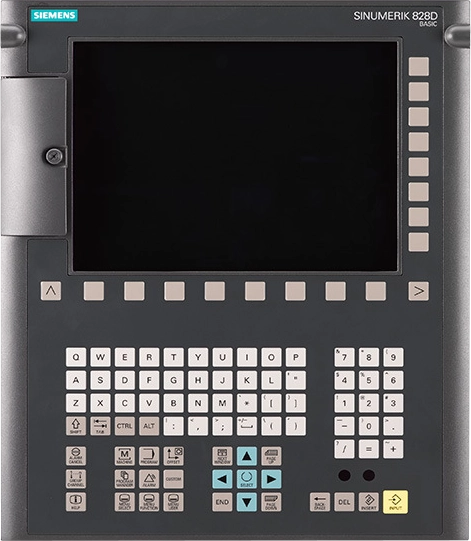
Siemens CNC System boasts advantages such as outstanding reliability, high-precision machining performance, and forward-looking digital integration capabilities. Choosing Siemens means choosing world-class industrial reliability and technological innovation. It delivers sub-micron level machining precision, seamlessly integrated digital production processes, and intelligent services covering the entire equipment lifecycle—serving as an industrial-grade solution that enables high-end manufacturing plants to achieve deep integration of high precision, intelligence, and full-lifecycle value.

Advantages and Features

  • High-Level Machining Precision: Siemens lathe systems utilize advanced digital control algorithms to precisely regulate the motion trajectory of each lathe axis, achieving stable and accurate position servo control and ensuring that the dimensional accuracy and geometric tolerances of parts meet high standards. Additionally, they have inherent advantages in processing complex 3D curved surfaces, as the built-in algorithms are particularly suited for high-precision, high-complexity contour machining. The system also integrates functions such as dynamic feedforward control, intelligent collision prevention, and adaptive chatter control. These functions can predict the machine’s motion state and adjust servo parameters in advance, thereby maintaining extremely high precision and surface finish during high-speed machining, further enhancing machining accuracy while protecting the machine tool’s mechanical structure.

  • Powerful Machining Capability: Equipped with Siemens servo motors, the system offers excellent overload performance: the feed axis speed can significantly exceed conventional values, and the torque has an overload capacity of more than 3 times. With strong cutting force, it can maintain stable operation even in heavy cutting scenarios, enabling efficient machining of hard materials or large-margin cutting. Meanwhile, the system supports multi-axis linkage, which can drive the lathe’s multiple axes for coordinated operation—smoothly realizing the machining of complex spatial curved surfaces and special-shaped contours. It can process complex parts and achieve surface quality that is difficult for other systems to match, meeting the machining needs of various types of workpieces.

  • Convenient and Efficient Programming: Siemens lathe systems provide diverse programming methods. They support various types of CAD/CAM software, allowing direct use of codes output by the software for machining; manual programming is also available. During manual programming, users only need to directly call the system’s internal commands and set key parameters to complete the code writing for specific machining operations, reducing programming workload. Moreover, the system is equipped with a graphical guided programming module: through an interactive interface and graphical menus, users input workpiece parameters and machining requirements as prompted, and the system automatically generates machining programs. This low-difficulty programming method greatly reduces programming and debugging time.

  • User-Friendly Operation Interface: Siemens lathe systems adopt the unified SINUMERIK Operate user interface, paired with a color LCD display and multi-window display function that can present multiple types of key information simultaneously. The interface features clear function divisions, scientifically arranged operation buttons, and a reasonable operation hierarchy—allowing operators to easily locate operation entrances and quickly perform tasks such as program editing, parameter setting, and tool management. Furthermore, the system has built-in help documentation: when operators encounter questions, they can call up relevant explanations at any time to obtain operation guidance and technical interpretations.

  • Strong System Integration: Siemens lathe systems are highly integrated CNC solutions, deeply integrating core components such as the digital controller, PLC, and human-machine interaction module into a compact hardware architecture. This enables high-speed, reliable data transmission between the drive system and the control system, ensuring no delay or interference in signal transmission. The system possesses strong resistance to vibration, electromagnetic interference, and environmental temperature and humidity fluctuations. At the same time, it is equipped with comprehensive self-diagnostic programs that conduct real-time monitoring of operating data such as hardware status, drive current, and temperature parameters. Upon detecting anomalies, the system promptly triggers an alarm and displays fault codes and cause prompts via the diagnostic interface, facilitating users to quickly troubleshoot and resolve faults.

OSAI system

OSAI

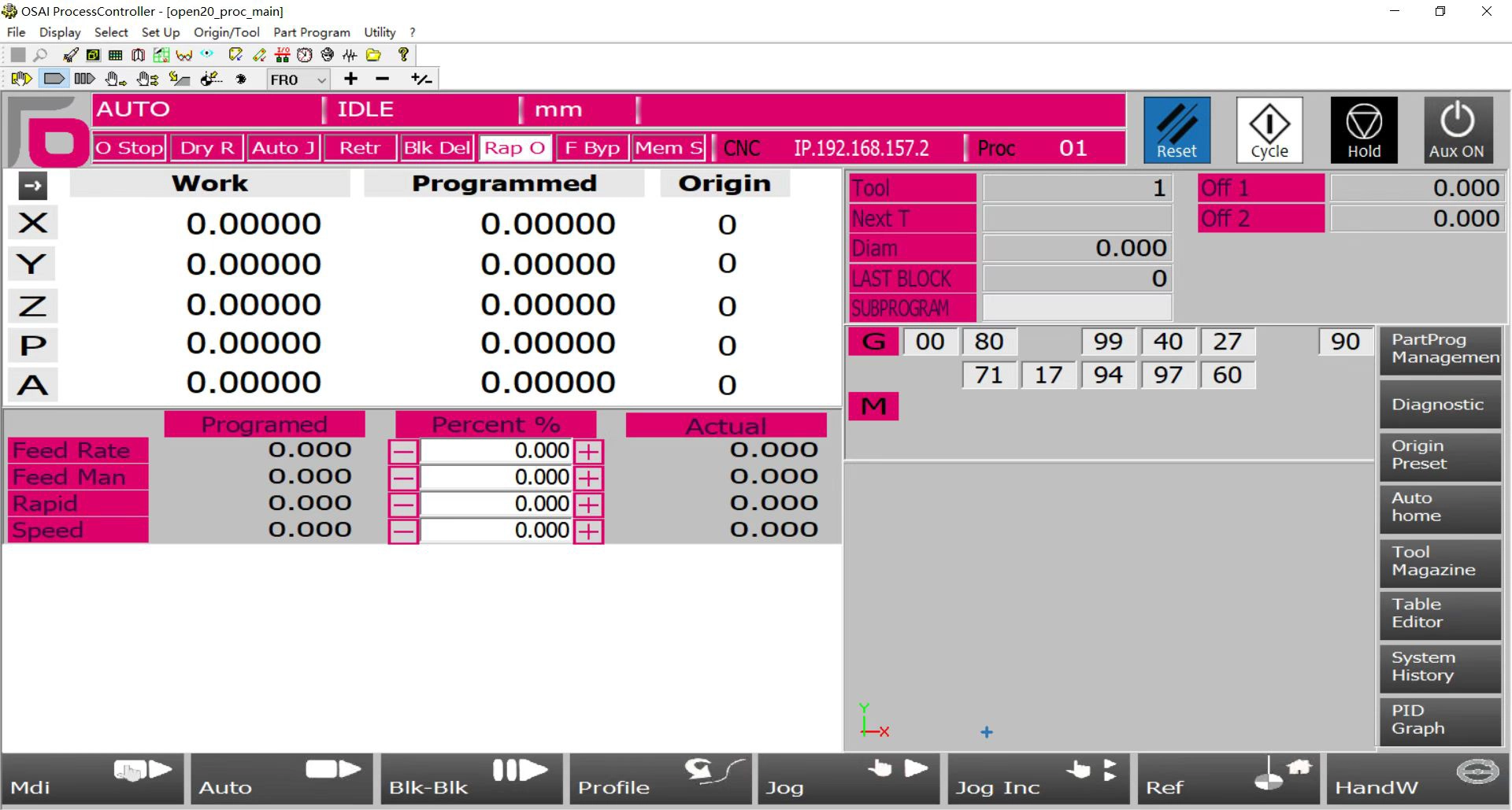
The advantages of the Italian OSAI CNC System lie in its highly modular and open architecture, outstanding 5-axis machining performance, and customized solutions. It supports multi-axis linkage and the RTCP function, making it particularly suitable for precision machining of complex curved surfaces. Meanwhile, it provides flexibly configurable hardware and software modules that can accurately adapt to the special needs of various machining fields, while balancing high performance and cost-effectiveness. Choosing OSAI means choosing a full range of control capabilities from entry-level to top-tier performance, making it an ideal choice for realizing high-end customized machine tools and precision machining of complex materials.

Advantages and Features

  • Outstanding Multi-Axis Control Capability: The OSAI OPEN Control series CNC system has an extremely high upper limit for the number of controlled axes, supporting up to 64 interpolated axes. This enables it to handle large-scale multi-axis linkage CNC machine tools, providing a hardware control foundation for the precision machining of multi-dimensional complex curved surfaces and irregular contours. At the same time, it operates with high efficiency, featuring an extremely fast interpolation speed—with a maximum interpolation cycle of 500 microseconds. It can quickly process motion commands, allowing the machine tool’s cutting tool to execute position movements at an extremely fast pace, which significantly reduces the overall machining time for complex parts.

  • High-Speed Machining Technology: The OSAI system is equipped with advanced 5-axis RTCP technology. During high-speed cutting, the system ensures that the tool center point strictly follows the preset programmed trajectory. Even when the machine tool changes tools or the tool length changes, there is no need to recalculate the tool path—this guarantees the accuracy and continuity of the cutting path, thereby improving machining efficiency and product quality.

  • Comprehensive Compensation Mechanisms: It is equipped with cross compensation and volume compensation capabilities, which can systematically correct spatial geometric errors caused by the machine tool’s structural characteristics during multi-axis linkage machining, as well as volume deformation errors caused by factors such as temperature changes. This ensures that the machine tool maintains stable machining dimensions and precision even during long-term continuous machining and complex motion scenarios.
  • Flexible System Architecture: The hardware adopts a modular combination design. Users can independently select and organically combine functional modules with different computing capabilities, storage capacities, and axis control scales based on factors such as the complexity of their machining tasks and precision requirements. The software is built on the Linux operating system, with open-source code and high customizability. Users can conduct secondary customization of the system’s underlying logic and upper-layer application interface according to their personalized menu requirements.


  • Features of the PLC Module: The integrated PLC module is characterized by fast logic operation speed. When handling complex discrete control tasks, it can respond to sensor signals and drive executive electrical components (such as relays) in an extremely short time. It supports multiple standard PLC programming languages including ladder diagrams, allowing users to edit the sequential movements of the machine tool according to their preferred programming paradigms. Furthermore, PLC programs can be debugged and modified online directly within the system—no additional software is required for programming and debugging. This streamlines the electrical architecture and reduces the number of potential fault points.

TPA system

TPA

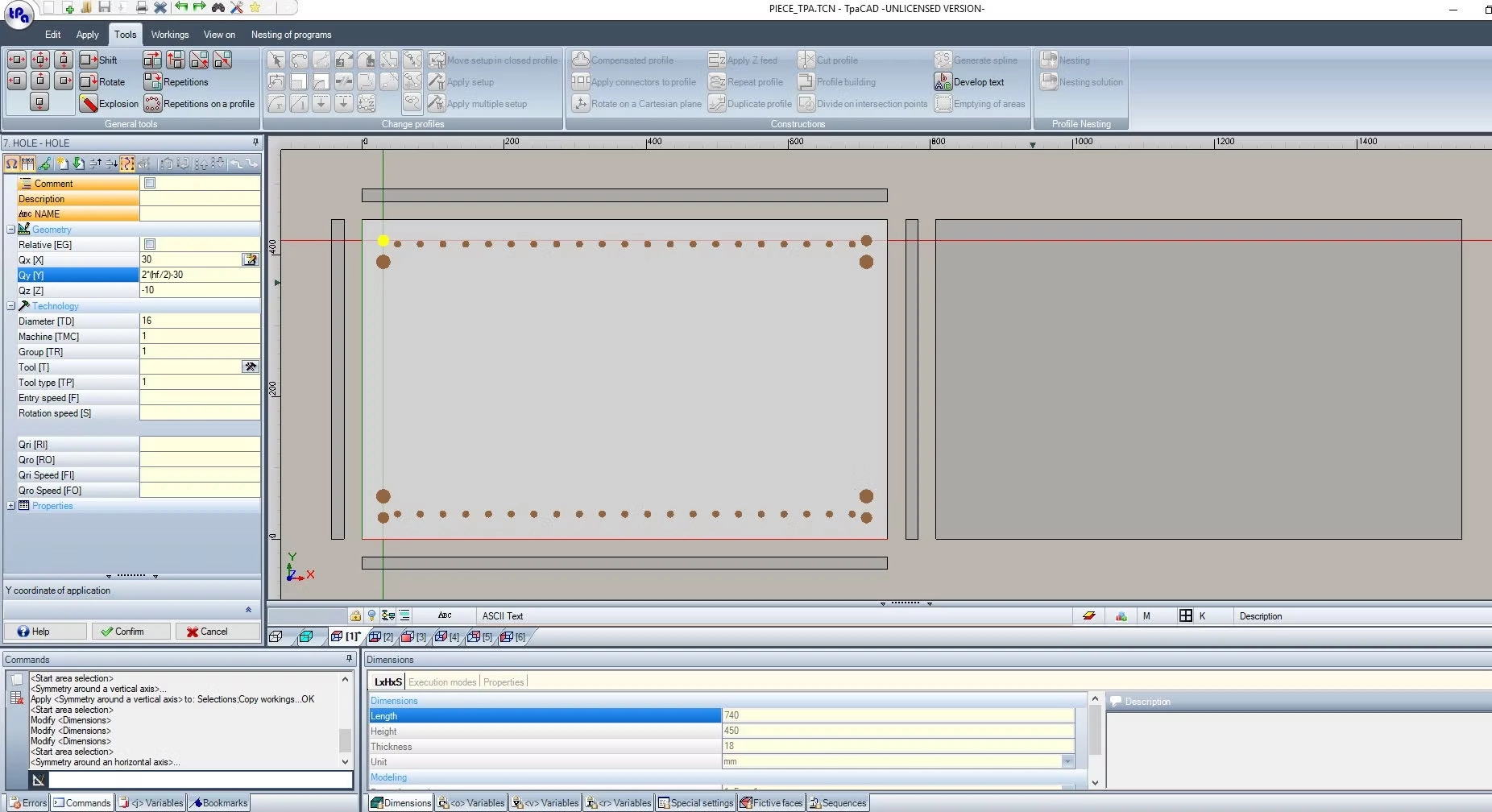
With three core advantages—highly integrated hardware, graphical programming, and multi-scenario process adaptability—the TPA CNC System has become a preferred solution in the woodworking machinery field, especially for enterprises pursuing efficient production and flexible manufacturing. Choosing TPA means opting for a professional solution for high-efficiency precision machining and flexible automated production, making it an ideal choice for high-end CNC machines that prioritize precision and stability.

Advantages and Features

  • Easy Graphical Programming: The TPA CNC System is equipped with an intuitive graphical programming module, allowing operators to avoid relying entirely on complex G-code commands for programming. They can either directly draw machining contours on the system’s drawing interface or import CAD graphics files. After setting machining parameters such as tool paths and cutting parameters, the system automatically generates machining codes. This reduces programming difficulty, accelerates program development efficiency, and is particularly suitable for preparing programs for parts with complex shapes—even novice operators can master it quickly.

  • Flexible Interface Control: The operation interface supports multiple interaction methods: it can be operated via touchscreen, keyboard, or mouse, enabling direct selection of function menus and input/modification of parameters. Meanwhile, it also supports a handwheel control mode, which operators can switch to based on the machining scenario and personal preferences. The interface layout adheres to ergonomic and usability principles, with clear divisions between the machining status area, parameter setting area, and auxiliary function area. All key machining data and equipment operation information are displayed in real-time with updates, allowing operators to quickly grasp the machine tool’s working conditions.

  • Multi-Axis Control & High-Precision Response: It supports 4-6 axis linkage operation, with an axis control resolution of 0.1μm and an interpolation cycle of 1ms—meeting the needs of 5-axis RTCP linkage milling, multi-axis turning compound machining, and the processing of complex irregular workpieces. Built-in algorithms such as lead screw pitch error compensation, backlash compensation, and thermal deformation compensation work with temperature sensors to monitor the machine tool’s thermal status in real-time and dynamically adjust axis motion parameters, ensuring stable long-term machining precision.

  • Comprehensive PLC Functions: The system incorporates a high-performance PLC (Programmable Logic Controller) module. With fast program processing speed, it can quickly parse logic commands and enable precise automated control of auxiliary actions such as the sequential movements of the machine tool’s tool change mechanism and cylinder operation. It supports universal PLC programming languages including ladder diagrams and statement lists, which users can choose based on their experience. Additionally, PLC program online diagnosis, editing, and modification can be directly carried out on the CNC operation interface, enabling quick troubleshooting and resolution of electrical faults in peripheral equipment.

  • 3D Machining Simulation: It supports dynamic simulation of the machining process, helping detect collision risks in advance. This reduces trial-and-error costs while minimizing the risk of machine collisions.

Electrical components

Electrical Components

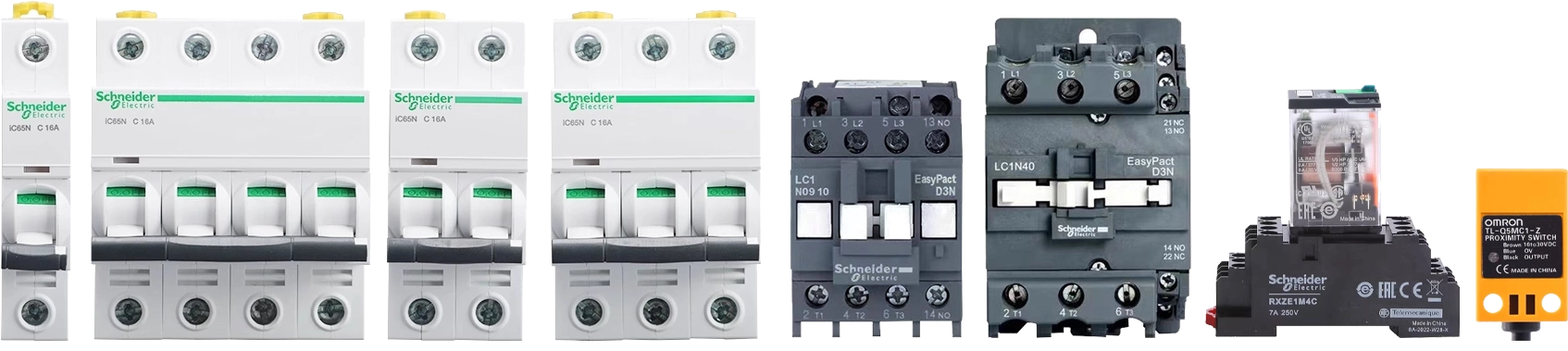
All models in the Spire Series come standard with imported Schneider air circuit breakers, AC contactors, and relays, paired with imported Omron photoelectric limit switches. This ensures long-term stability, safety, and reliability of the equipment under harsh working conditions from the electrical source. By adopting electrical components from international renowned brands, the equipment maintains stable 24/7 operation, reducing the failure rate by 40%.

We also offer top-tier brands such as Delixi and Chint for your free selection. Should you have needs for custom special functions or more specific application requirements, our professional technical team can provide you with one-on-one customized solutions. We will tailor the combination of accessories based on your actual application scenarios and functional demands, ensuring each piece of equipment perfectly meets your usage needs.

With independent control over core components to guarantee supply chain security, and high-quality hardware combinations to reduce long-term maintenance costs, CATEK Spire is a wise choice for you to pursue high reliability, high adaptability, and high cost-effectiveness in the CNC machine field.

Spire Exclusive

VIP Customer Service

Customer service
Let Us Chat
  • Dedicated service butler

    Dedicated Service Butler

  • Professional question answers

    Professional Question Answers

  • 24-hour quick response

    24-Hour Quick Response

  • Dedicated after-sales team

    Dedicated After-Sales Team

Contact Us

Learn more about how the CATEK Spire Series can bring you more production efficiency.

Submit
  • Product images, features, parameters, and specifications are for reference only. The actual installed model shall prevail.
  1. Refers to the minimum controllable displacement of the CNC system. Actual accuracy depends on the performance of supporting hardware such as servo motors, screws, and guideways.

  2. Compared with the traditional production mode of using multiple single-function machines for dispersed processing.

  3. Compared with conventional CNC machine tools without automatic loading and unloading mechanisms.

  4. Compared with CNC systems without real-time monitoring and diagnostic functions.

  5. This data is derived from standardized training tests conducted by CATEKCNC on multiple novice operators. Actual proficiency time may vary depending on individual learning ability.