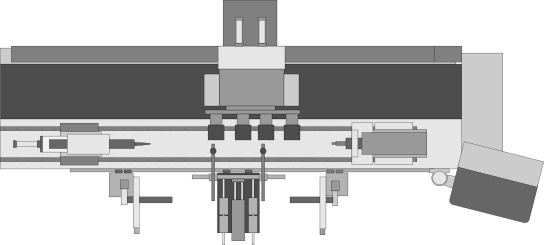
Professional Pool Cue Making Equipment
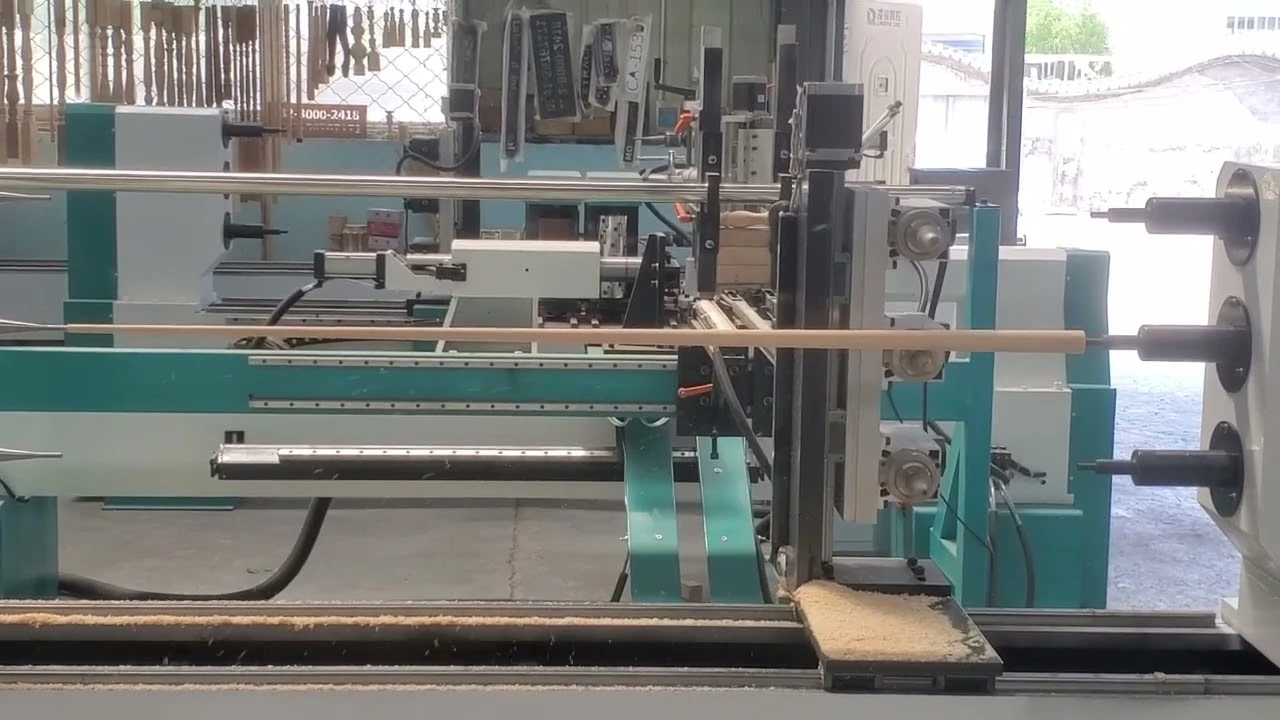
Pool cue lathes, as a high-precision equipment specifically designed for pool cue processing, is subdivided into various specialized machine types. The pool cue tapering machine is primarily used for milling the taper of pool cues; the joint processing machine focuses on tapping, drilling, and thread milling of pool cues; the deep-hole drilling machine is specifically designed for machining deep holes filled with weight; the prong processing machine is responsible for shaping the tail end of the stick's shaft into a prong ; while the pool cue engraving machine specializes in fine engraving on the surface of pool cues.
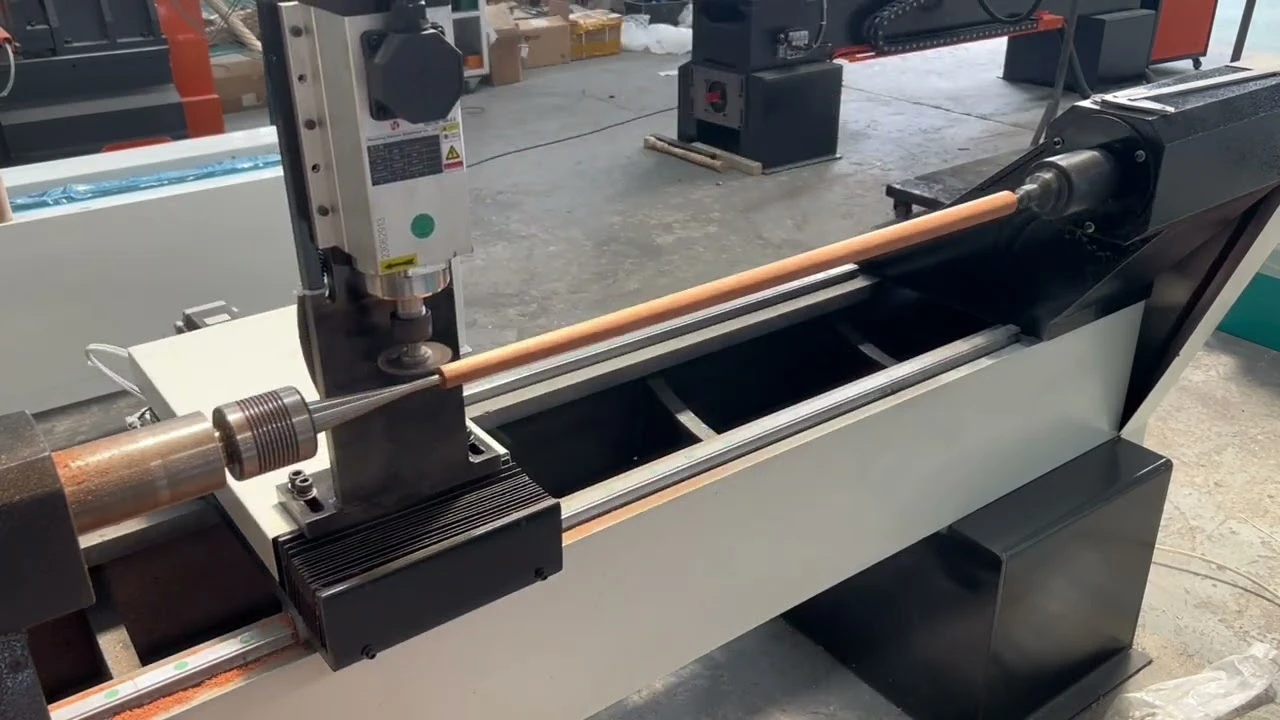
These machines have been deeply optimized and designed around the processing characteristics of pool cues. Taking the pool cue tapering machine as an example, it uses saw blades or radius cutters to mill the blanks. Unlike conventional lathes where the workpiece rotates at high speed while the tool remains fixed, pool cue machining adopts a unique method where the tool rotates at high speed while the workpiece rotates at low speed. This effectively avoids vibration and deformation caused by high-speed rotation of slender workpieces, ensuring precision and surface smoothness, and demonstrating significant advantages in pool cue processing.To meet the batch processing needs of factories, we have specially designed multi-station models that can process multiple products simultaneously, greatly improving processing efficiency. Additionally, the automatic loading and unloading system is available as an optional configuration. After it is selected, the loading and unloading of wood can be fully automated without manual intervention, making it particularly suitable for large-scale batch production scenarios in factories.
You can select the most suitable equipment based on your actual needs and budget. As a basic equipment, the tapering machine is widely used even in workshops that emphasize handmade pool cues. If you are involved in processing split cues, purchasing a machine for machining joints will significantly reduce workload and improve working comfort.
-
2026 Best Cheap Pool Cue Milling CNC Wood Lathe
-
CK-1510
-
5.0(2)
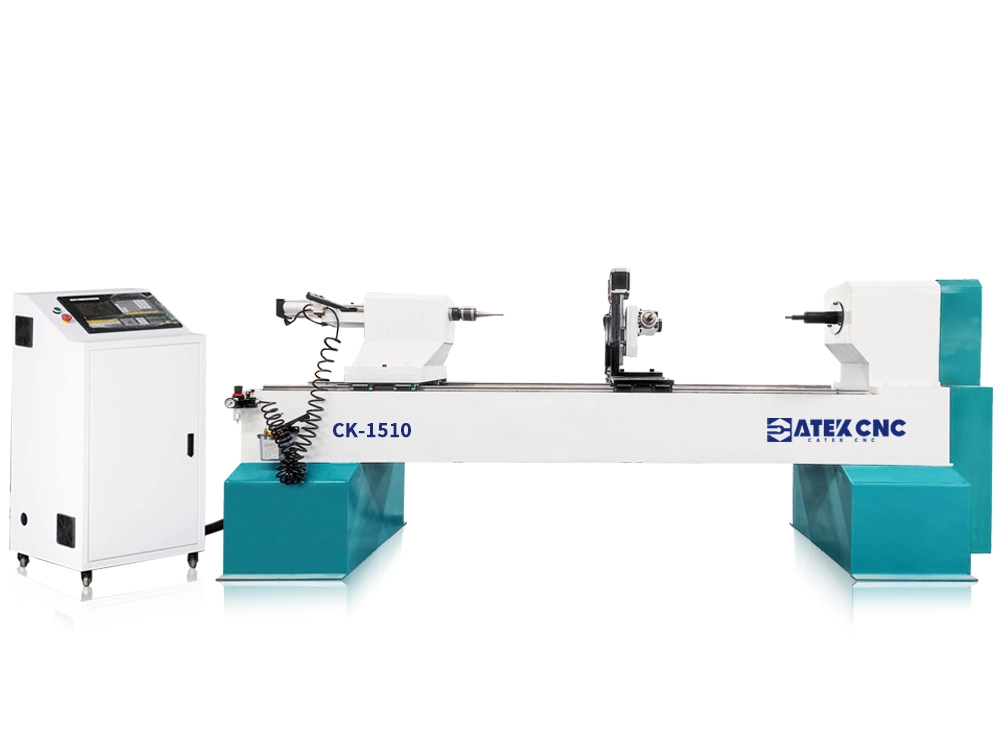
This is a machine specifically designed for tapering pool cues, which uses a milling tools to mill slender wooden blank strips into tapered rods.$4,400.00~$5,150.00 -
-
Affordable 2-Station Pool Cue CNC Milling Machine
-
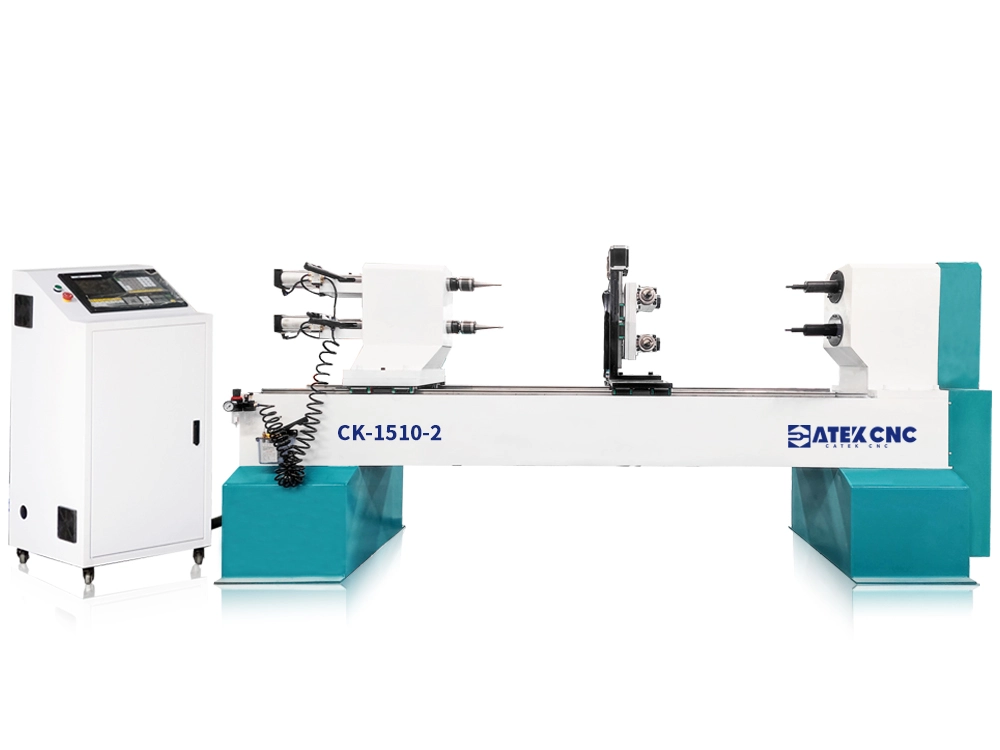
CK-1510-2
-
5.0(2)
This lathe has two identical workstations, each with a clamping device and milling tools, enabling simultaneous processing of two identical pool cues.$5,000.00~$5,588.00 -
-
3-Station CNC Wood Lathe for Mass Production of Pool Cues
-
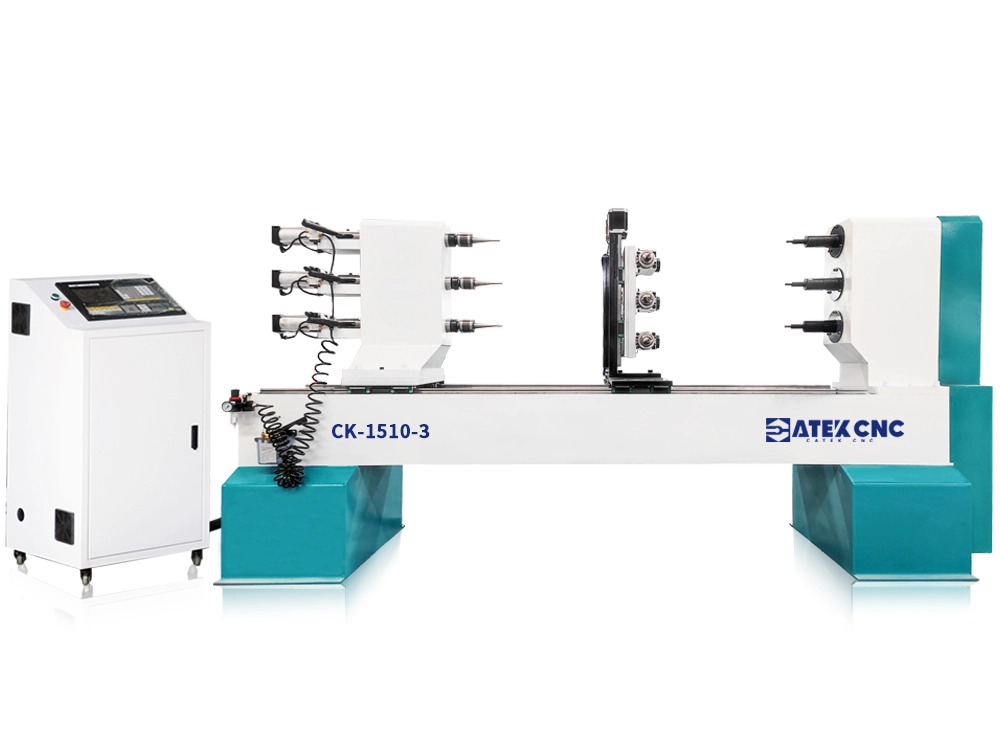
CK-1510-3
-
5.0(2)
It features three machining stations capable of simultaneously milling three pool cues, significantly improving efficiency and making it ideal for factory batch production.$5,588.00~$6,300.00 -
-
Hot
Special Lathe for Milling Pool Cues with Automatic Loading and Unloading
-
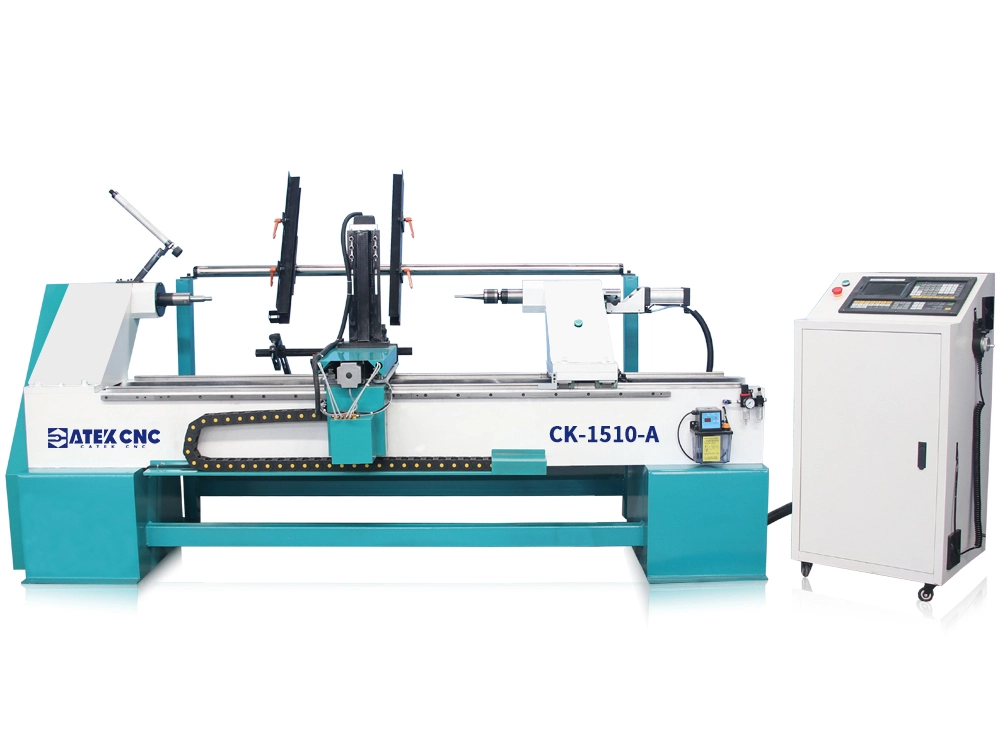
CK-1510-A
-
5.0(1)
It features a high-capacity hopper and an automatic feeding device, which positions the wood at the designated machining location automatically, eliminating the need for manual loading and centering.$5,150.00~$5,588.00 -
-
2-Station Pool Cue CNC Milling Machine with Automatic Loading and Unloading
-
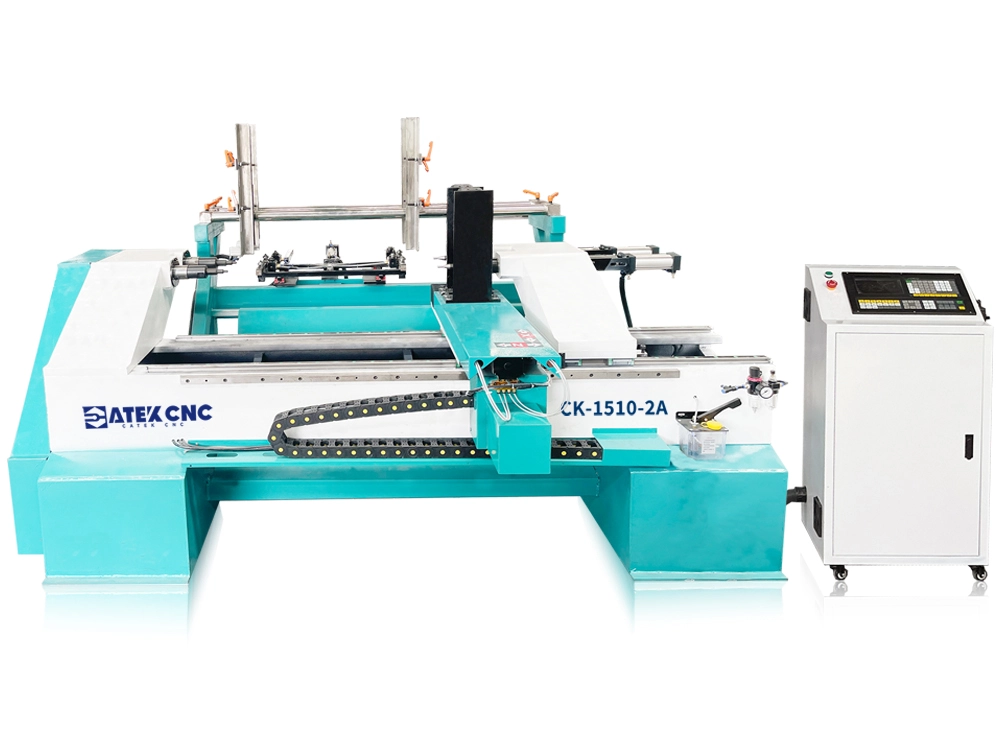
CK-1510-2A
-
5.0(0)
The lathe features two workstations, a hopper, and a multi-cylinder automatic loading/unloading system, enabling simultaneous processing of two identical pool cues with fully automated material handling.$6,300.00~$6,760.00 -
-
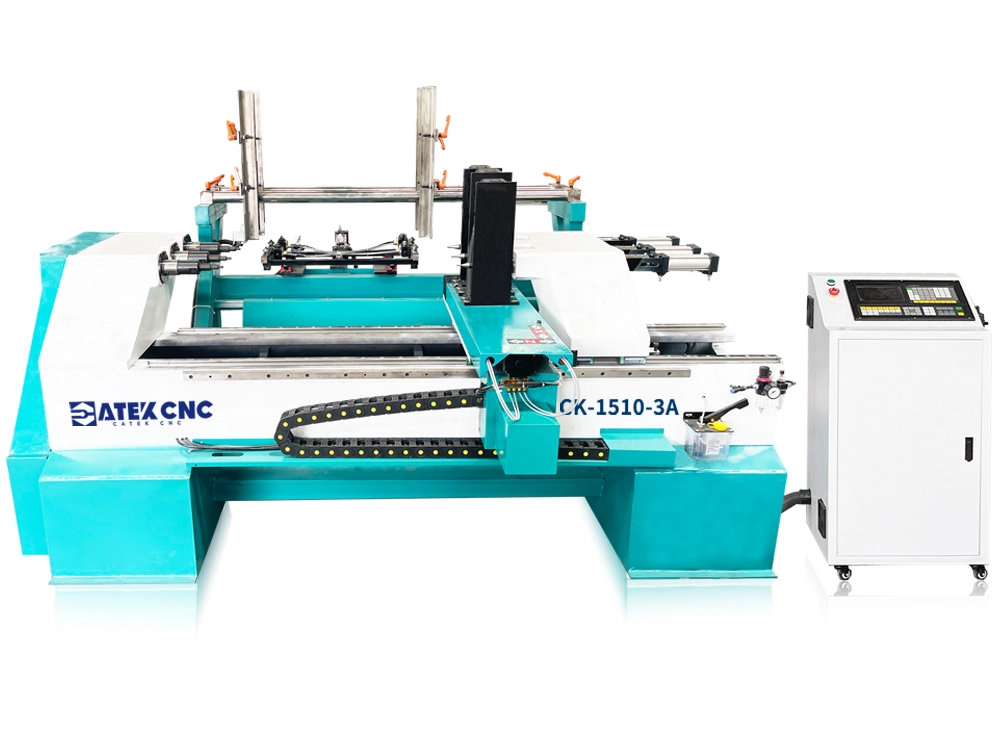
Automatic Loading and Unloading 3-Station Pool Cue CNC Milling Lathe
-
CK-1510-3A
-
5.0(1)
The lathe features three workstations, a hopper, and a multi-cylinder automatic loading/unloading system, enabling simultaneous machining of three identical pool cues with fully automated material handling.$7,058.00~$8,200.00 -
THE FOLLOWING ARTICLES MAY HELP YOU
-
CNC Wood Lathe
CNC Wood Lathes vs Manual Wood Lathes
Traditional WoodworkingBefore the emergence of woodworking lathes, humans have always processed various types of wood products by hand.Traditional manual processing has a long history, and the various processing techniques and tools related to it have also been refined and developed in the long history. It represents the essence of human wisdom and craftsmanship. It is not only a skill, but also a cultural and historical heritage.With the progress of human civilization, manual woodworking proces...
-
CNC Wood Lathe
CNC Lathe Tool Setting Method
What Is "Tool Setting" in CNC Machines?In CNC machining operations, the tool setting refers to a series of operations performed to determine the relative positional relationship between the tool and the workpiece or machine reference point, and then input this data into the CNC system to ensure the machine can accurately complete the machining process according to the program. Simply put, it is about telling the machine "where the tool is currently located," thereby enabling the system to calcul...
-
Other
What Is a Servo Motor?
To understand what a servo motor is, you first need to know several relevant professional terms.Open-Loop ControlA control system in which the output quantity has no impact on the system's control is called an "open-loop control system".Open-loop control is a control method that acts on the controlled object unidirectionally only through preset instructions. Its core feature is the absence of a feedback loop in the system structure. After the controller generates an operation instruction based o...
HERE ARE SOME RELATED VIDEOS OF CNC MACHINES
-
00:35
CNC Wood LatheMay 26, 2025CNC Pool Cue Lathe with Automatic Feeding - CK-1510-A
This lathe is equipped with an automatic feeding system. We will demonstrate the automated taper milling process for pool cues, including feeding, centering and clamping, milling, and finished product unloading.
-
00:54
CNC Wood LatheMay 26, 2025Milling a Walking Stick on a CNC Pool Cue Taper Lathe
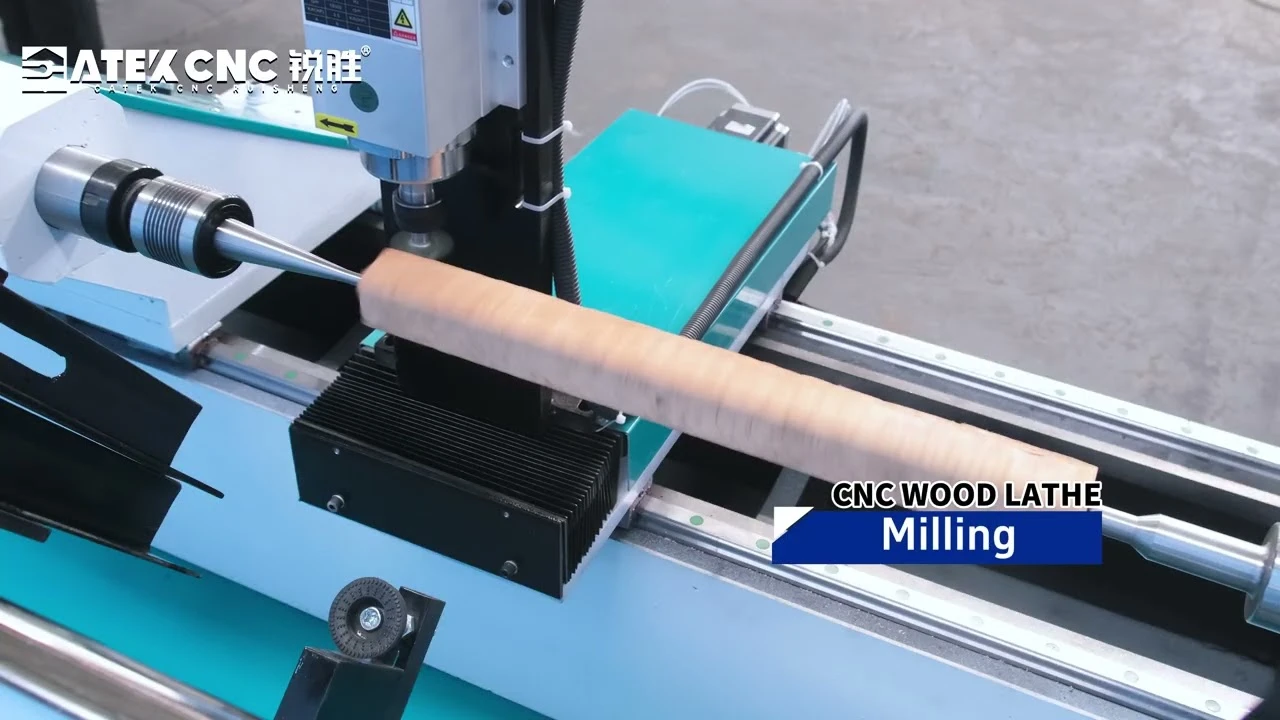
A CNC Wood Lathe for Pool Cues Is a Machine That Performs Taper Milling on Workpieces Using Saw Blades or Radiu Cutters.
-
01:21
CNC Wood LatheMay 26, 2025Three-Station CNC Pool Cue Lathe to Machining Cue
The CK-1510-3 is equipped with three identical machining stations, enabling batch taper milling of pool cues to significantly improve production efficiency.
HERE ARE SOME FUN PROJECTS FOR CNC MACHINES
-
CNC Wood LatheMaking Pool Table Legs Using a CNC Wood Lathe
Pool table leg processing is a typical wood lathe application. Our machines can be used for processing pool table legs in many models. Below we will introduce in detail the models and processing processes that can be used to process such products.
-
CNC Wood LatheMachining Stair Railings and Newel by a CNC Wood Lathe
Stair railings and newel posts are a common example of wood lathe processing. Relatively simple products only require turning using a turning tool, while complex products require planing, milling, grooving, carving, etc. Depending on the complexity of the product to be processed, a lathe with different functions needs to be selected.
-
CNC Wood LatheMaking Nesting Dolls (Matryoshka) Using a CNC Wood Lathe
Matryoshka dolls also known as stacking dolls, nesting dolls, Russian tea dolls, or Russian dolls is one of the most representative traditional handicrafts in Russia. It is made of multiple wooden dolls of different sizes nested in layers, and each doll is painted with exquisite patterns.In Russian, the Matryoshka Dolls are called: матрёшка. Originally, they were based on a round-faced country girl. Gradually, the materials for nesting dolls have become more and more abundant. In additio...
ONE-STOP POOL CUE MAKEING MACHINE BUYING GUIDE
As a type of professional equipment dedicated to pool cue processing, pool cue lathes are subdivided into a variety of highly targeted types. Among them, pool cue taper machines are mainly used to mill the taper of pool cues; joint processing machines focus on tapping, drilling and thread milling of pool cues; deep hole drilling machines are specifically used to drill deep holes for filling counterweights; prong machines are responsible for processing the tail end of the forelimbs of pool cues into a prong; and pool cue engraving machines are dedicated to fine engraving on the surface of pool cues.
These devices are closely optimized and designed around the processing characteristics of pool cues. Taking the pool cue taper machine as an example, in the rough processing stage, it uses a saw blade to perform preliminary processing on the wood; and in the fine processing, a radius cutter is used to replace the traditional V-shaped turning tool. Circular milling cutters have significant advantages in curved surface processing. They have a small cutting angle and a low cutting amount, which can effectively ensure the surface accuracy of the workpiece and greatly reduce the generation of burrs and scratches. Even without sanding, the surface of the pool cue can achieve excellent finish. In response to the needs of factory batch processing, we have specially designed a multi-station mode that can process multiple products at the same time, significantly improving processing efficiency. In addition, an automatic loading and unloading system is also available as an optional configuration. Once equipped with this system, wood feeding and unloading can also be automated, and the entire processing process does not require manual intervention, which is especially suitable for large-scale batch production scenarios in factories.
You can choose the most suitable equipment based on your actual needs and budget. As a basic equipment, the taper machine is also used in large quantities even in workshops that claim to make handmade billiard cues. If you are engaged in the processing of split cues, purchasing a lathe for processing joints will greatly reduce the intensity of work and improve work comfort.
Introduction
Pool cues may seem simple, but their production process is very complicated, especially for high-end pool cues, which have more than 200 processing steps. The traditional production process covers the selection of blanks, material cutting, storage in a constant temperature and humidity room, and material texture screening, all of which are highly dependent on manual operation and require high professional skills. The modern pool cue production process is different from the past. Major pool cue manufacturers are replacing new CNC equipment to replace the previous processes that required a lot of manual processing. It greatly improves production efficiency and reduces labor costs. We not only provide fully automatic pool cue taper machines of various specifications, but also supply row cutters that can punch holes, turn tenons, and pick internal threads. In addition, we also provide targeted special models for different process requirements, such as equipment for deep holes, through holes, external threads, and milling of cue handle grooves. The following is a list of all CNC machines required to produce pool cues, as well as a detailed cue production process for your reference.
Types and Functions of Pool Cue Machines
- CNC wood lathe for pool cues
-
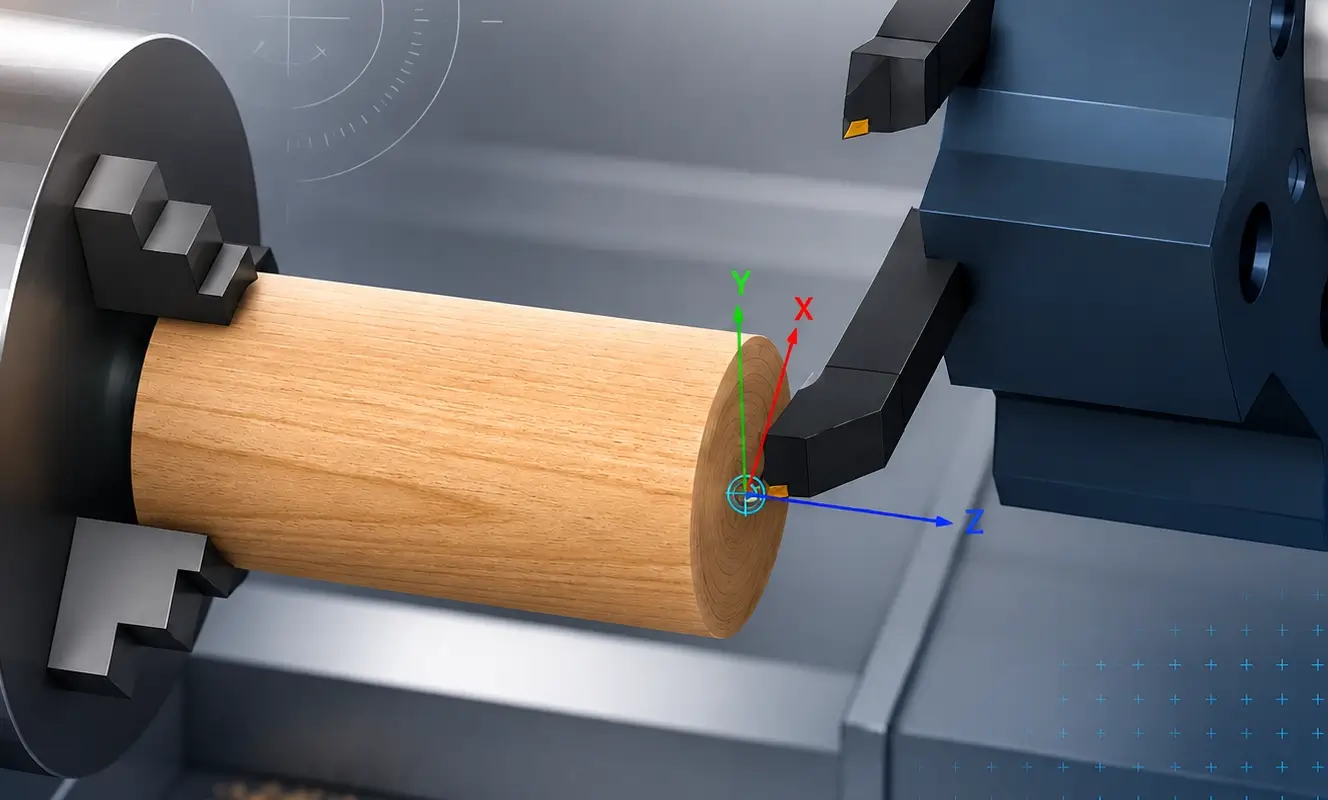
This type of machine is also called a pool cue taper machine or pool cue milling machine. It is the most important equipment in pool cue production. It mainly mills square or round blank wood strips into cone-like bodies with thin front and thick back. Since pool cues are slender and elastic, ordinary turning methods cannot meet their processing requirements. The front section diameter of most pool cues is generally 9-13mm (0.35- 0.51''), the end diameter is generally 29.8-31.8mm (1.17-1.25''), and the length is generally 1450-1550mm (4.75-5.08'). Since such slender wood is very easy to swing during processing, it is very difficult to process such products even if an ordinary lathe with a steady rest is added. This leads to extremely poor turning accuracy, the finished product is not straight and the cross section is not round enough, and the residual knife marks on the surface are difficult to deal with. Therefore, the processing method of this type of machine is different from that of traditional turning lathes. It slows down the rotation speed of the workpiece (usually only 280 rpm) and uses a high-speed variable frequency spindle (18000-36000 rpm) to drive a radius cutter or saw blade for fine milling, which can not only ensure the surface finish of the product, but also accurately control the processing accuracy within 0.1mm (3.9 mil). At the same time, according to the different production scales, you can choose a machine with 1-4 processing stations, or add an automatic loading function to simplify the tedious process of loading materials.
- CNC lathe for joints processing
-
A pool cue usually consists of a tip, a ferrule, a joint, a shaft, a butt, a grip, and a butt extension, which are generally connected by embedded screws. This machine is mainly designed for this process. Its tools include right-angle turning tools, drill bits, and tapping spindles, which can complete all pool cue joining processes at one time. The rotating shaft of this machine is hollow, and the semi-finished product that has been milled to a taper is clamped by a pneumatic chuck of matching diameter to perform processes such as cutting tenons, tapping, internal thread milling, and drilling. All processes can be completed with one clamping, avoiding precision errors caused by repeated clamping. Because the joining process has extremely high requirements for precision, the spindle runout accuracy of this machine is controlled within 0.001mm,so this ensures accurate joining of the shaft and the butt.
- Pool cue deep hole drilling machine
-
In the manufacturing process of some styles of pool cues, it is necessary to drill a through hole on the shaft and then embed the carbon fiber tube into it to reduce the weight and increase the strength of the cue. However, due to the slenderness of the cue and the long through hole required, the processing is extremely difficult and it is very easy to go off-center when drilling. And the precision requirements for the through hole are extremely strict. Once the precision is insufficient, it will have an adverse effect on the quality of the cue. In response to this process problem, we have specially developed a deep hole drilling machine that can be integrated with the cue taper machine or operate independently. The drilling depth can reach 800mm (about 31.5''), and the accuracy can be controlled within 0.1mm (about 0.0039'').
- Prong and side processing machine and sanding machine
-
In the production process of pool cues, full splice and sanding are also very important processes. Full splice means that the shaft and butt are connected by mutual plugging.In the past, experienced carpenters usually manually operated saw blades and milling cutters to make the parts required for splicing. This method not only has low processing efficiency but also the accuracy of the same batch is difficult to grasp. Now, due to the advancement of production technology, we have developed CNC equipment specifically for processing the prong structure and side structure required for splice. This type of equipment is mainly divided into two types, one is to use a saw blade to cut the shaft to process a female end with 4 pronged, and the other is to use milling cutters to process male end with 4 sided(cross-section similar to a cross). After the two ends are butt-jointed, apply special glue, and then tie them with elastic ropes to fix them. After the glue dries, use a taper machine for overall finishing.
Sanding machines are generally divided into single-belt and double-belt types. We usually recommend double-belt sanding machines, which are equipped with two sanding belts of different mesh number, which are used for coarse grinding and fine grinding in turn, which can save time and improve grinding efficiency. During operation, the wood is pressed by the inclined wheel and rotated forward to save time and effort. There are also drum grinders, which are generally used for the overall sanding of one-piece cues.
- Pool cue engraving and inlaying machine
-
In the field of high-end billiard cues, ordinary splice or veneers inlay cues can no longer meet the extreme requirements of some customers for craftsmanship and aesthetics. In this case, we can use engraving technology to carve exquisite lines or customer-customized texts, patterns, etc. on the surface of the cue. Inlay precious metals (gold wire, silver wire, etc.) or other precious materials (gems, pearl, abalone shells, etc.) to meet the personalized needs of customers and improve brand awareness and value.
- Other pool cue production equipment
-
In the production process of billiard cues, the production process will be different because each manufacturer has different cue styles and designs. We can provide you with customized machine services and tailor-make your CNC processing equipment according to your cue production process. Such as automatic spray painting machine, manual polishing machine, copper head inlay machine, automatic screw machine, cutting precision saw, etc.
Application Scope
One-piece or sectional snooker cues, eight-ball and nine-ball cues, fancy billiard cues and snooker extension cues, bridge sticks, hiking poles, walking sticks, rolling pins, tapered table legs, etc.
The woods that can be processed include all common cue stick woods, such as ash, maple, North American poplar and African ebony etc.
Specification
| Brand | CATEKCNC |
|---|---|
| Machine Category | Pool cue taper machine, pool cue punching machine, pool cue multifunctional turning and milling machine, pool cue prong and side processing machine, pool cue engraving machine, pool cue sanding machine, pool cue deep hole drilling machine |
| Machine Model | CK-1510, CK-1510-2, CK-1510-3, CK-1510-4, CK-1510-4, CK-1510-A, CK-1510-2A, CK-1510-3A, etc. |
| Axis Number | 1 Axis, 2 Axis, 3 Axis, 4 Axis, etc. |
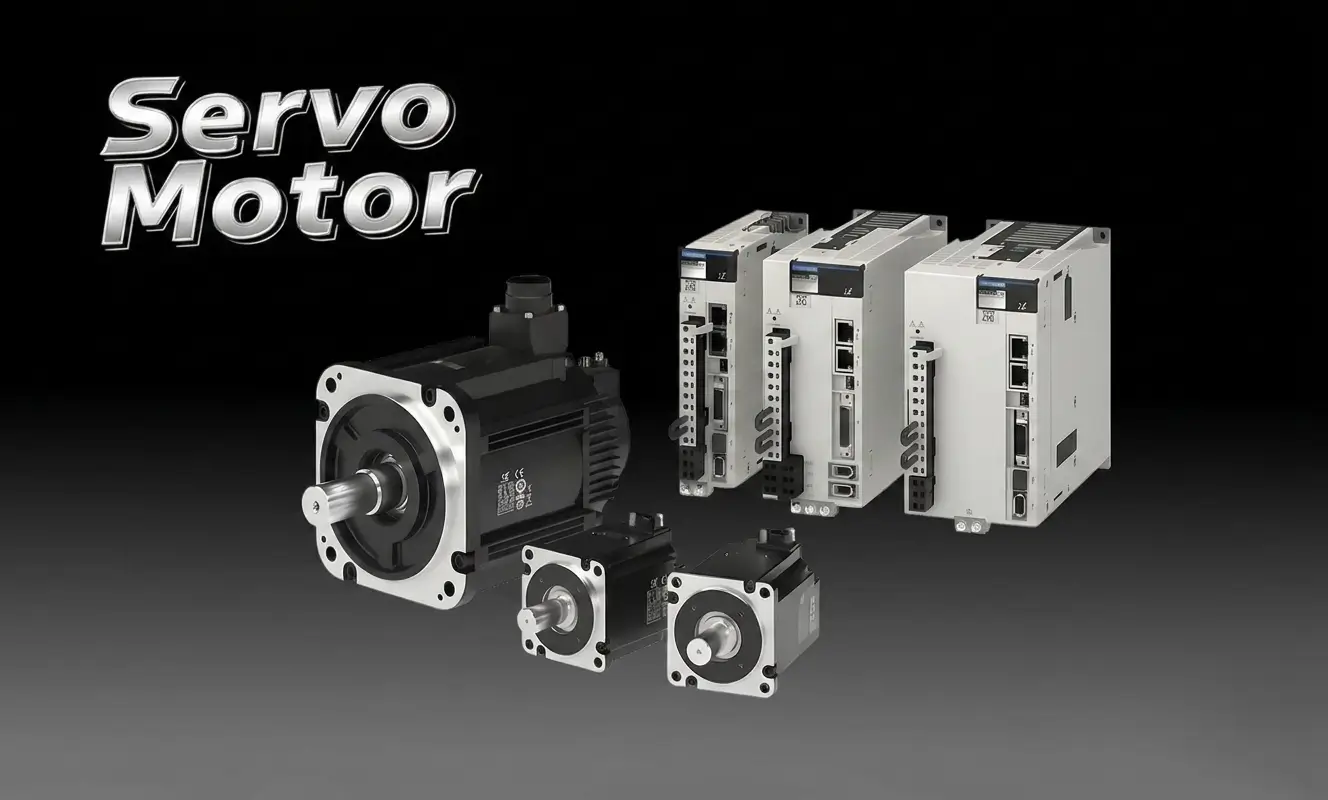
| Optional Motor Brand | YAKO, Yaskawa, Panasonic, Delta, Leadshine, Donlim, etc. |
| Milling Spindle Power | 2.2KW, 3.5KW, 4.5KW, 6KW |
| Milling Spindle Speed | 0-2880rpm |
| Optional Inverter | BEST,Delta,Folinn,Hpmont,etc. |
| Electrical Part | Schneider, Delixi, Chint, Omron, etc. |
| Control System | CATEK-1000TC, DSP, MACH3, NC-studio, Syntec, Siemens, FANUC, Mazak, Mitsubishi. |
| Software | Artcam, type3, CAD drawing, CDR, solidworks UG powermill,auxiliary design, etc. |
| File Format | G code, u00, mmg, plt, dxf, dbf, txt |
| Processing Dimensions(length * diameter) |
|
| Processing Station | 1~4 |
| Function | Milling, drilling, milling screws, tapping, cutting, engraving, sanding, etc. |
Machine Price
Due to the wide variety of pool cue machines, the price ranges from US$1,000 to US$8,000. For example, a sander can be purchased for only about US$1,000, the price of a milling taper machine ranges from US$4,200 to US$8,000, the price of a mortise and tenon punching machine generally ranges from US$4,000 to US$6,400, and the price of an engraving and inlaying machine is between US$2,500 and US$5,000. All machines can be customized according to the process requirements proposed by the user. This requires you to communicate with sales experts before they can provide the most cost-effective machine price and customized solutions.
Billiard Cue Production Process Steps
-
Wood selection and cutting
Due to the special nature of the cue, the wood used is usually ash or maple that has been naturally air-dried for many years (this type of wood has straight and uniform texture, good elasticity, and no obvious defects). Cut the logs into long strips with a square cross-section that conform to the cue taper, and then place the wood in a constant temperature and humidity room to dry the wood evenly to prevent warping or cracking and deformation.
-
Processing of the cue shaft
Rough processing: Use a CNC cue taper machine to process the wood strips into cones with a certain taper, leaving a processing allowance of 2-3mm (0.079-0.118'') for subsequent fine processing.
Fine processing: After the rough processing is completed, the wood still needs to be placed in a constant temperature and humidity environment for a period of time. Select wood with small deformation, fine and uniform texture, and use it to make high-value cues; while wood with slight defects or bends is used for processing cheap cues. Afterwards, the cue taper machine is used again for fine taper milling, and the processing accuracy should be controlled within 0.1mm (about 0.004 inches).
-
Processing of the cue butt
Select materials with fine texture, uniform color and high density (such as ebony and maple) as veneers inlay or splice materials. The different number of pieces and angles of these materials will present different patterns, so it is necessary to carefully design the style, and then cut them into wood blocks or wood chips for use. Then use a saw blade or milling cutter to cut, groove or punch holes in the cue butt, embed and paste the veneer with high-quality glue to the part, and ensure that it is evenly pasted without gaps. After the glue is completely dry, use the taper machine for overall milling to present a beautiful pattern. The joint between the material and the cue should be natural and smooth, without obvious gaps and defects. In addition, various patterns or text grooves can be carved out by CNC engraving machines, which can be used to inlay more expensive materials such as shells, gold wire, silver wire, etc. to improve the quality and value of the cue.
-
Grinding and polishing
Grinding: Use a double belt sander or a drum sander to perform preliminary sanding of the cue to ensure that there are no particles, burrs or scratches on the surface, and to ensure that the surface is smooth and delicate.
Polishing: This process has a great impact on the user's feel, so it is generally polished manually. Use a simple lathe that can drive the workpiece to rotate, and spray a special polishing liquid for fine polishing to ensure that the surface of the cue has good gloss and smoothness.
-
Install the weight
Use a precision weighing instrument to weigh the weight of the cue, and according to accurate calculations, punch a vertical deep hole at the back of the cue. By increasing or decreasing the number of weight blocks, repeatedly adjust and test the balance and weight distribution of the cue until it reaches the ideal state. After the adjustment is completed, install the butt cap to hide the weight hole. This process has an important impact on the user's feel and hitting feeling when hitting the ball.
-
Install the ferrule and final inspection work
Choose a ferrule with hard texture and exquisite craftsmanship to ensure that its surface is smooth and flawless. Install the ferrule firmly on the pre-cut tenon at the front end of the cue, and carefully check and adjust the ferrule to ensure perfect integration with the cue.
The production process of pool cues is a complex and delicate process, involving multiple steps such as material selection, cutting, processing, grinding, veneers inlaying or splicing, weighting and installation. With the addition of CNC equipment, the entire process becomes relatively simple and easy to use.
Features of Pool Cue Taper Machine
-
Using a radius cutter for milling is more in line with the processing characteristics of rod products. The surface is smooth and delicate, and even sanding is not required.
-
Ultra-high precision. The quality of the pool cue has a great impact on the hitting effect (especially in snooker, which has extremely strict technical requirements). There are many factors that affect the quality of the pool cue. From the processing procedure, the first thing to do is to ensure that the taper of the pool cue is absolutely accurate. Now the precision of CNC lathes can be controlled at 0.05mm, and our equipment with an external pulse handwheel can even control the precision to an amazing 0.01mm, which is far beyond the traditional manual processing.
-
The size of the processing station is reasonably designed. The length of traditional eight-ball or nine-ball cues is generally between 139 and 144 cm (55 to 57 inches), snooker cues are 143 or 145 cm (56 to 57 inches), and carom billiards cues are only 140-140 cm (54-56 inches). Our machine can process products with a maximum length of 150 cm and a diameter of 10 cm. It can process standard rods in various billiard sports (if you need to process non-standard one-piece extended billiard cues, we can also customize them for you), without being too redundant.
-
Fully automatic loading and unloading, fast and accurate loading, can automatically place the wood in the center of the lathe center, eliminating the need for placement, centering, and clamping operations. After processing, the top cylinder will unload the product and continue the loading and processing of the next piece of wood. The only thing that needs manual operation is the filling. The maximum storage capacity of the silo is about 30 pieces of wood. It takes more than an hour to consume all the wood, and there is no need for frequent filling.
-
Flexible processing. In the multi-axis and multi-station model, if you want to use only one of the stations (for example, manually fine-processing a product alone or the workpiece diameter is too large), you can disable the other axes and use only one axis for processing.
CUSTOMER REVIEWS
-
Due to a limited budget, I compared seven suppliers, but choosing CATEKCNC was a very wise decision! I used this machine to process billiard cues. Because the product is very slender, I was worried that it could not be processed before purchasing. Fortunately, catekcnc provided sample processing services and recorded videos for me to view. After confirming that this machine can process my products, I placed an order to purchase this woodworking lathe. So far, this CNC woodworking lathe has been running smoothly for 133 days without any problems. During the use of the machine, the after-sales team had three video calls with me to conduct preventive inspections on the machine and provide lubrication and maintenance plans for the machine according to the frequency of use of my machine. It is particularly worth mentioning that because I am not familiar with computers, the engineer also provided me with dozens of free programming. This value-added service far exceeded my expectations!
KalogerasMay 08, 2025 -
Some of my hand-turned pieces like butt tapers and cues, just weren’t coming out 100% straight.
Decided to give this CNC lathe a go, and it’s been a game changer. Set up the design, hit start, and it runs true every time. No more wonky tapers or uneven curves.
Still getting used to the software, but even my early test runs are coming out cleaner than my best hand-finished work. Worth every dollar if you’re serious about consistency.
SharpFeb 04, 2026 -
As a first-time CNC user, I was completely lost when the CNC cue lathe arrived. Their technical team guided me patiently through WhatsApp—answering every basic question with photos and videos. For beginners, their human support is as valuable as the machine itself.
ΚαλογεράςJan 27, 2026 -
Мы использовали эту станок с ЧПУ для производства партии бильярдных cues. Результат довольно хороший: круглость и гладкость соответствуют стандартам. Хотя эта станок может обрабатывать только форму бильярдных cues, она уже сократила нам много времени, а также значительно снизила процент брака по сравнению с предыдущим периодом.
TadeushevichJul 10, 2025 -
I ordered this custom 4-station CNC cue tapering machine, and it’s brilliant! Just clamp the wood blank in place, and the machine does the rest. The finished cues come out with perfect roundness. I’m so chuffed with the results, I’m even thinking of buying their drilling and splicing machines next.
MurphyApr 22, 2025 -

This CNC wood lathe is perfect for making billiard cues! It works very fast and the precision is excellent – the dimensions are accurate and the roundness is perfect. Most importantly, the price is very affordable. It's a machine I could actually afford, and it does a great job.
MuchemedziOct 14, 2025 -

I’m from Malta and purchased this CNC lathe from the website in February to make snooker cues. Based on the standard configuration, I added an extra chuck to better suit my needs. The machine arrived in Malta in April, and I’ve already put it to use. I was particularly concerned about potential vibration during processing, but to my delight, the machine operated smoothly and stably. The finished snooker cue turned out exceptionally smooth and perfectly rounded.
SimpsonMay 31, 2025 -

Tenho usado esta fresadora CNC para produzir tacos de bilhar e posso afirmar com segurança que ela fez uma enorme diferença em nossa fábrica. Antes, tínhamos muitas etapas manuais, mas agora tudo é mais rápido e consistente.
O que mais me impressiona é o sistema automatizado de carga e descarga — ele economiza uma quantidade significativa de mão de obra, permitindo que a máquina opere praticamente sem interrupções. O design de três estações também é altamente eficiente, permitindo-nos processar várias peças simultaneamente e lidar facilmente com grandes encomendas.
AdemirApr 03, 2026