CO2 Laser Marker for Non-metal Marking and Engraving
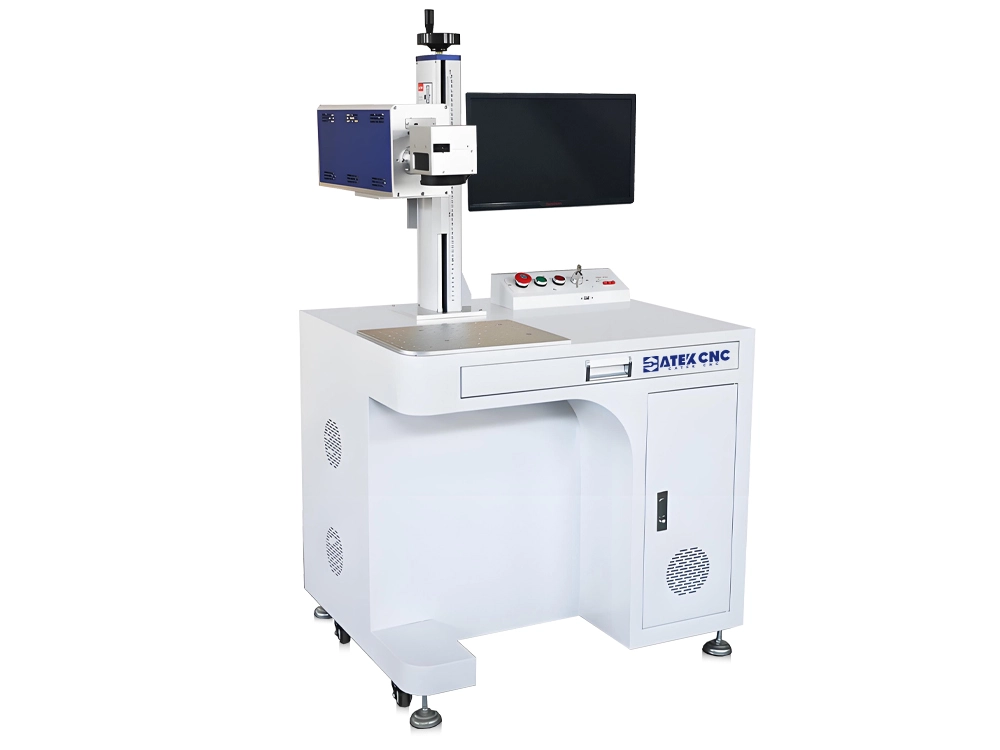
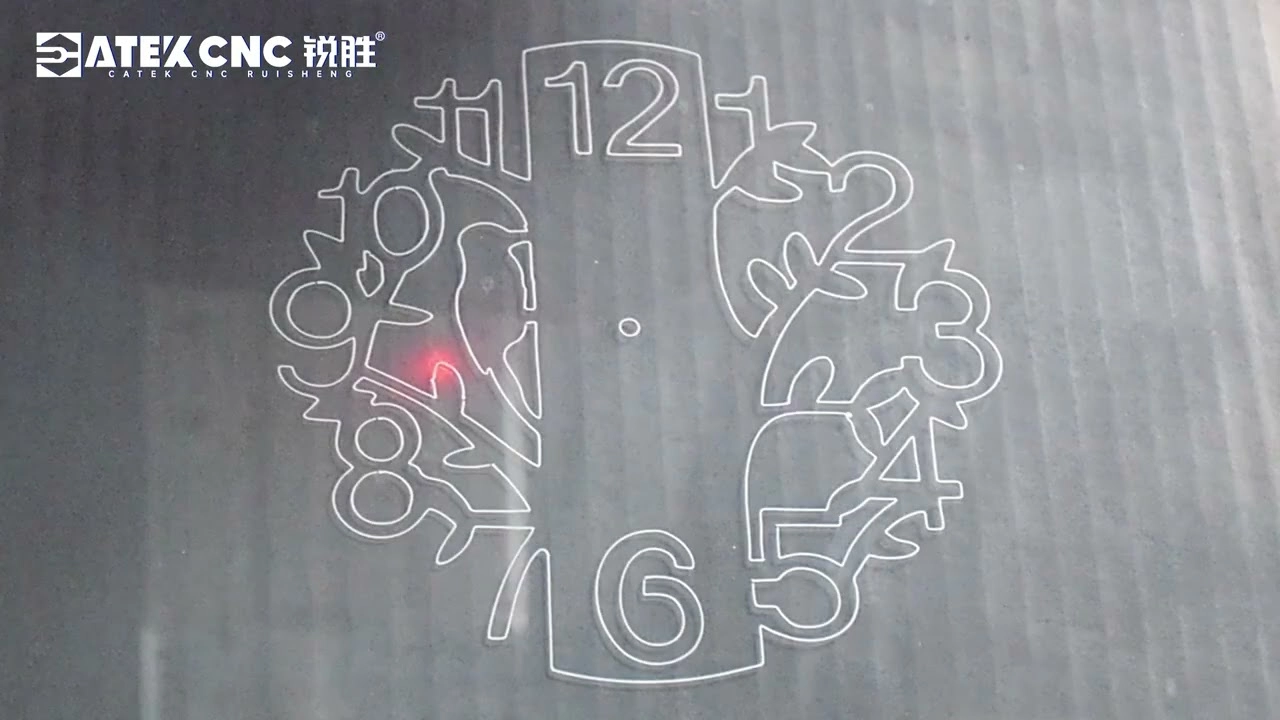
CO2 laser marking machines use far-infrared lasers with a wavelength of 10.6 microns to mark or engrave products. The target materials are non-metallic materials such as wood, plastic, acrylic, rubber and fabric. The core of this type of equipment is the same as that of CO2 laser cutting machines, and the laser source also has DC CO2 glass tubes and RF laser source to choose from. However, CO2 laser marking machines are designed for fine marking and are equipped with high-speed scanning galvanometers, which can quickly change the laser focus position to achieve the marking of text, numbers, QR codes, barcodes, photos, and patterns.
Depending on the power, the processing speed and applicable materials of CO2 laser marking machines vary. Low power (10W - 30W) is suitable for marking thinner non-metallic materials in the food processing, packaging, clothing and other industries, such as paper, cloth, leather, acrylic, etc. with a thickness of less than three millimeters; medium power (40W - 80W) is suitable for marking or engraving non-metallic materials with moderate thickness in the advertising industry, such as 5-10mm acrylic, wood, density board, rubber, etc.; high power (above 80W) can be used for deep engraving or cutting of wood, acrylic, stone, and polymer materials with a thickness of 15mm and above. When processing materials with shallow marking depth, it can also greatly increase the processing speed, which is suitable for industrial production scenarios. In addition, you can also choose a large-format 3D dynamic CO2 laser marking machine, which can be used for marking and cutting flexible materials such as leather and cloth.
-
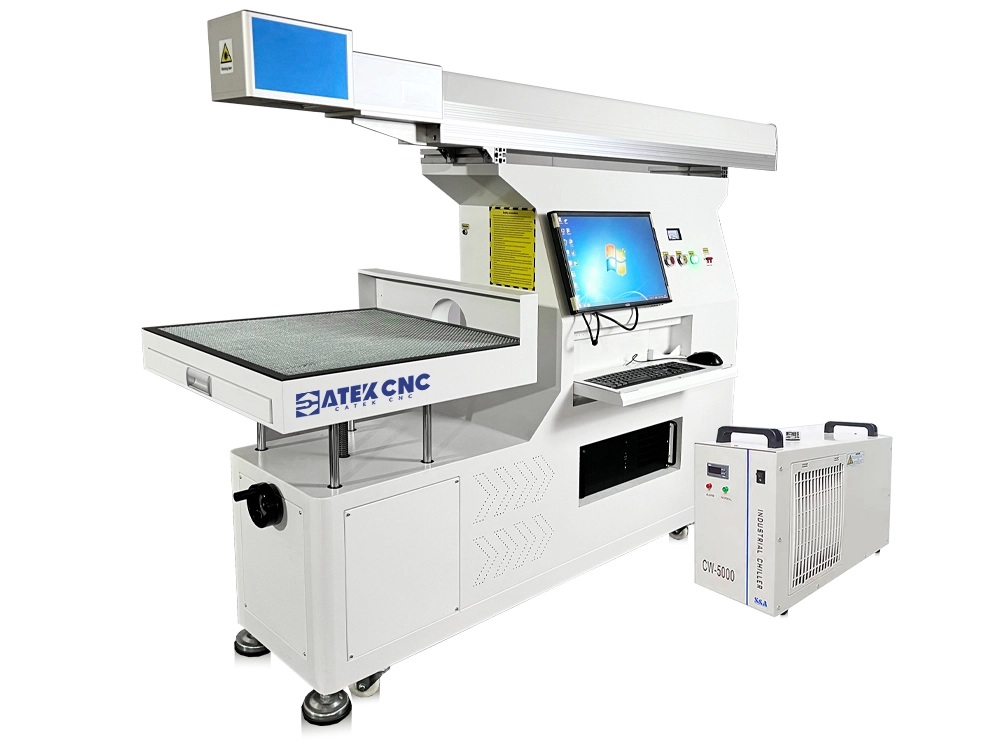
Large Format CO2 Laser 3D Dynamic Marking Machine
-
CK-50-CC-3D
-
5.0(1)
This large-format CO2 laser marker offers a 500*500mm marking area with a honeycomb workbench, suitable for engraving leathers, cloths, woods, plastics, and other non-metallic materials.$5,900.00~$6,900.00 -
-
Hot
Cabinet-Type RF CO2 Laser Marking Machine
-
CK-11-CC-RF
-
5.0(0)
This cabinet-type laser marker utilizes an RF CO2 laser, delivering stable power output, superior beam quality, high conversion efficiency, and exceptional lifespan.$1,900.00~$2,200.00 -
HERE ARE SOME RELATED VIDEOS OF CNC MACHINES
-
00:32
Laser Marking MachineSep 27, 2025CO2 Laser Marking Machine Demo: Paper Cutting and Wood Marking
This video shows a CO2 laser marking machine cutting paper and marking wood.
-
00:43
Laser Marking MachineOct 30, 2025Advanced RF-CO2 Laser Marking Machine
The video demonstrates how an RF CO2 laser marking machine can mark various non-metallic materials.

BUYING GUIDE FOR CO2 LASER MARKING MACHINES FOR NON-METALS
Do you want to add a unique and personalized mark to your product? If so, you might want to explore the capabilities of a CO2 laser marking machine. This innovative device can accurately present your ideas and designs on various non-metallic materials through marking. Simply set the desired marking content through computer software, and like magic, the machine will complete the marking and engraving without direct contact with the product, effortlessly enabling automated processing.
In today's manufacturing landscape, the demand for personalized and precise marking is growing rapidly. The CO2 laser marking machine, as a cutting-edge tool for personalized marking and industrial identification, is increasingly becoming a key factor in enhancing product value and corporate competitiveness. The working principle of the CO2 laser marking machine is truly fascinating. It utilizes a CO2 laser beam focused on the workpiece surface, generating instant high temperatures that cause physical or chemical changes in the material, thereby forming patterns, text, or anti-counterfeiting codes on the material. The entire process is akin to an artist painting on a canvas, with each stroke executed with precision. In an era that prioritizes high quality and efficiency, the CO2 laser marking machine is undoubtedly an indispensable tool, offering perfect solutions for identification needs across various industries.
CO2 laser marking machines come in various models, classified based on processing size, functionality, laser power, and more. Different power levels and functions cater to different products and industries. Through this guide, you can gain detailed insights into the components, working principles, applicable materials, maintenance, and more aspects of CO2 laser marking machines.
What is a CO2 Laser Marking Machine?
A CO2 laser marking machine is a gas laser that uses carbon dioxide gas as the working medium and is controlled by specialized software. It generates a 10.6μm CO2 laser beam through a laser generator, which is then focused to produce a high-energy-density laser. This laser locally irradiates the workpiece, causing the material's surface to instantaneously vaporize or melt under high-temperature burning, thereby leaving a permanent mark.
The focused ultra-fine laser beam acts like a cutting tool, removing material point by point from the object's surface. Its advanced nature lies in its non-contact processing, which does not generate mechanical force and thus avoids damaging the surface of the workpiece. Since the focused laser beam is extremely small, the heat-affected zone is minimal, allowing for highly precise processing. This enables the completion of intricate tasks that are difficult to achieve with conventional methods, such as marking text, symbols, patterns, barcodes, and more on various non-metallic materials. The character size can be accurate to the micrometer level.
After laser marking, since the surface material of the workpiece is stripped away, the mark will not fade due to friction, high temperature, or corrosion, ensuring the marking information remains permanent.
Laser processing requires only the focused laser beam, eliminating the need for additional equipment or materials. It operates solely on electricity, enabling 24-hour continuous operation with extremely low running and maintenance costs.
Composition of CO2 Laser Marking Machine
The CO2 laser marking machine is mainly composed of a CO2 laser generator, galvanometer system, field lens, control system, cooling system, and machine frame structure. First, the laser is generated by the laser generator, then the galvanometer and field lens system are used for focusing and scanning, and the control system controls the processing trajectory. All components are highly coordinated to achieve precise marking processing on the material surface.
- CO2 Laser Generator
-
Can be divided into two types:DC sealed-off CO2 laser glass tube and radio frequency (RF) CO2 laser.
- DC sealed-off CO2 laser glass tube: Made of glass, it consists of three layers from inside to outside: the discharge tube, cooling layer, and gas storage layer. The gas storage layer is filled with a mixture of CO2, nitrogen, and other gases, connected to the discharge layer through a spiral tube. When electric energy enters the discharge tube, it produces glow discharge, exciting gas molecules to generate a 10.6μm wavelength laser.
- RF CO2 laser: Adopts a fully enclosed aluminum alloy structure, divided into two parts: the RF power supply and the resonant cavity. The RF electromagnetic field ionizes the mixed gases such as CO2 to produce light energy, which is reflected multiple times in the resonant cavity to eventually form a 10.6μm wavelength laser beam. RF CO2 lasers have a longer service life and higher stability but are more expensive.
- Galvanometer System
- The 2D planar scanning galvanometer has two mutually perpendicular galvanometer motors for the X and Y axes. By controlling the internal motors of the galvanometer, the mirrors deflect, quickly reflecting the laser beam to achieve precise path control. The 3D galvanometer adds a Z-axis dynamic focusing lens to the 2D galvanometer. By adjusting the position of the dynamic focusing lens, the laser focal length can be adjusted, ensuring the laser focus always falls on the surface of workpieces with different heights, thicknesses, and shapes, enabling complex curved surface marking.
- Field Lens
- Uses a 10.6μm CO2 laser-specific field lens. The field lens can change the relationship between the beam's incident angle and the focusing position, ensuring uniform focusing of the laser beam within the plane. At the same time, field lenses with different focal lengths affect the scanning range. A larger focal length increases the scanning range but also increases the diameter of the focused laser spot, reducing energy density and edge processing accuracy and effectiveness. In contrast, a shorter focal length field lens has a smaller scanning range, a smaller laser spot diameter, higher energy density, and better processing accuracy and effects.
- Control System
- Includes both software and hardware components. The software refers to the laser marking machine control software, while the hardware refers to the laser marking machine control card. The software is used for graphic design, format conversion, and adjusting machine parameters such as power, frequency, and speed, as well as generating processing instructions. The hardware is responsible for converting processing instructions into executable signals to control the operation of the machine components.
- Cooling System
- Divided into water cooling and air cooling systems. Low-power RF CO2 lasers often use air cooling systems, which use fans for heat dissipation, featuring simple structures and easy maintenance. Higher-power RF CO2 lasers and CO2 laser glass tubes use water cooling systems for heat dissipation, where circulating cooling water removes the heat generated during laser operation. Water cooling systems offer better cooling performance but require regular replacement of the circulating water.
- Mechanical Frame Structure
- Includes the machine cabinet, workbench, and lifting structure. The cabinet is used to house and fix components such as the laser generator and laser power supply. The workbench is used to place the workpiece for processing. The lifting structure allows for vertical movement to adjust the focal length over a large dynamic range based on materials of different sizes and thicknesses.
Applications of CO2 Laser Marking Machine
The CO2 laser marking machine has a very wide range of applications, spanning from electronic products to food and beverage packaging, and further extending to medical devices, jewelry, textiles and apparel, handicrafts, hardware and building materials. It covers almost all industries and fields with marking needs. It is primarily used for various non-metallic materials, including ABS, PVC, PC, acrylic, epoxy resin, glass, ceramics, leather, fabric, rubber, plastic, wood, MDF, plywood, bamboo, stone, artificial stone, corrugated paper, cardboard, and more. Additionally, it can also be used for coating removal on certain coated metal materials.
Advantages of CO2 Laser Marking Machine
- Comprehensive functionality, including marking, cutting, and engraving.
- Utilizes high-energy-density laser beams with a small focused spot, enabling precise marking processing on various non-metallic material surfaces. The processing depth can be arbitrarily controlled with flexible adjustment.
- High processing speed, which can be more than three times faster compared to traditional marking methods.
- Durable markings, resistant to wear, corrosion, water, and oil, ensuring permanent preservation.
- Non-contact processing, avoiding physical damage to the material surface.
- Powerful software with simple operation, supporting CAD, PS, and other software, allowing flexible parameter adjustments.
- No consumables required during processing, resulting in extremely low long-term usage costs.
- Eco-friendly operation, producing no harmful substances, dust, or noise, meeting environmental requirements.
- Interchangeable lenses, suitable for processing products of different sizes.
- Wide range of optional accessories, applicable to various processing needs such as rotary marking and flying marking. It can be integrated with third-party automated production lines to achieve unmanned continuous production.
Advantages of CO2 Laser Marking Compared to Other Marking Methods
CO2 laser marking technology utilizes high-energy laser ablation to remove or melt materials, offering several irreplaceable advantages over other marking methods. It enables high-quality, clear, and permanent marking in an extremely short time.
Toxic ink solvents cannot be used in pharmaceutical packaging or aluminum-plastic panel marking, whereas CO2 laser marking does not require any ink or organic solvents, making it non-toxic and highly suitable for demanding work environments such as the pharmaceutical industry. Additionally, it does not use molds, making it very simple to change marking content—just select the processing design directly using the software. CO2 laser marking also has fewer consumable parts, resulting in extremely low maintenance costs.
Types of CO2 Laser Marking Machines
- Standard CO2 Laser Marking Machine
-
Used for marking and engraving various flat non-metal products. Its structural design varies widely, but the configurations of CO2 laser marking machines with different designs are generally similar. The different structural designs are primarily intended to address various application scenarios and user needs.
- Cabinet-type machines: Come with a complete working environment, making it easy to store other related items, and can be directly integrated with a computer, making them suitable for fixed environments.
- Split-type machines: Separate the control cabinet from the workbench, facilitating mobility or marking in confined spaces.
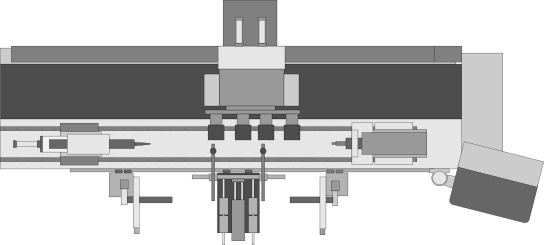
- Flying-type machines: They are often used in industrial production lines and can be flexibly installed on various third-party production lines for rapid marking.
- Large-format CO2 Laser Dynamic Marking Machine
- Equipped with a 3D dynamic focusing galvanometer, it compensates for changes in the laser spot caused by surface height differences when processing large-format workpieces by adjusting the position of the dynamic focusing lens in real time. This ensures consistent spot diameter across the entire surface, achieving high-precision marking. It is mainly used for processing large-format or uneven surfaces such as leather, clothing, wooden boards, and fabrics.
- 3D CO2 Laser Marking Machine
- Equipped with a 3D galvanometer and 3D control system, it can directly recognize 3D model files and automatically adjust the focal length for marking based on the depth information of curved or irregular materials. It can perform flat marking or 3D relief on both flat and irregular products, expanding the processing range of laser marking machines.
- Flying CO2 Laser Marking Machine
- Equipped with a high-speed scanning galvanometer system, it offers faster scanning speeds than standard galvanometers. It can perform real-time marking on products moving along a production line without requiring the line to stop. It is suitable for industrial production lines such as bottle caps, plastic bottles, and food packaging.
Optional Accessories for CO2 Laser Marking Machines
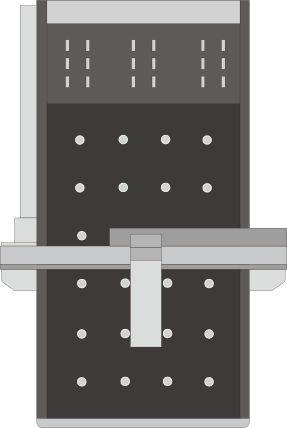
- Flat Workbench: Optional one-dimensional, two-dimensional, or three-dimensional workbenches that can move along the X, Y, and Z axes to expand processing dimensions.
- Rotary Device:
Expands the processing range of traditional flat marking machines by clamping or placing workpieces for rotary marking. It can be divided into chuck-type rotary axes, roller-type rotary devices, and quick-clamping rotary axes (jewelry rotary axes).
- Chuck-type rotary axes are used for clamping and rotating large-sized products such as pen holders and vases.
- Roller-type rotary devices are used for placing and rotating cylindrical products like cans, thermos cups, and mugs.
- Quick-clamping rotary axes are smaller in size and used for processing products such as bracelets, bangles, and cup lids.
- CCD Visual Positioning: Uses a camera to capture real-time images of the workbench and requires a control system that supports visual recognition. Even if products are placed randomly, the system can automatically recognize their position, angle, and contour, eliminating the need for manual positioning and enabling automatic marking. This is particularly suitable for batch processing, effectively reducing the defect rate caused by manual operation errors.
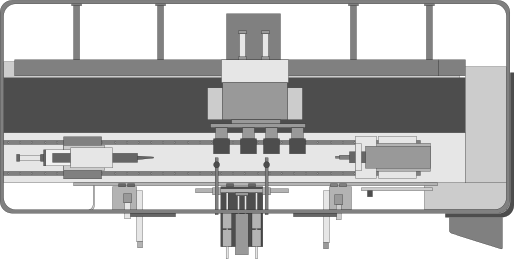
- Conveyor Belt Workbench: Allows for the placement of a large number of workpieces at once, with automatic conveying for processing, improving efficiency. It is suitable for batch processing and is often used in conjunction with CCD cameras to achieve automatic positioning and correction.
Technical Specifications of CO2 Laser Marking Machine
| Type | CO2 laser marking machine |
|---|---|
| Brand | CATEKCNC |
| Laser Type | CO2 laser |
| Laser Central Wavelength | 10.6μm |
| Processing Type | Non-contact laser processing |
| Workbench Size | 110*110mm, 150*150mm, 175*175mm, 200*200mm, 300*300mm, 400*400mm, 500*500mm, 600*600mm, 800*800mm, etc. |
| Laser Power | 20W, 30W, 40W, 50W, 60W, 80W, 100W, 130W, 150W, 180W, 200W, etc. |
| Laser Generator | Reci, Yongli, SPT, CRD, etc. |
| Applicable Materials | Non-metallic materials and some coated metal materials |
| Application Software | EZCAD, CorelDRAW, Adobe Illustrator, Adobe Photoshop, AutoCAD, LightBurn, LaserGRBL, Inkscape, etc. |
| Compatible Formats | Dxf, plt, ai, svg, eps, bmp, jpg, jpeg, png, gif, tiff, etc. |
| Cooling Method | Water cooling / air cooling |
| Price | $1,850−$13,000 |
Price of CO2 Laser Marking Machines
The price range of CO2 laser marking machines varies significantly and is influenced by multiple factors, including laser power, machine brand, machine configuration, and additional features. The starting price for an entry-level 30W split-type CO2 laser marking machine is $1850; a CO2 laser marking machine capable of 3D engraving starts at $5400; while a high-end industrial-grade large-format 130W dynamic CO2 laser marking machine starts at $6000. An additional rotary device costs around $100. Before deciding to purchase a CO2 laser marking machine, it is recommended to conduct detailed market research, compare quotes, after-sales service, and technical support from different suppliers, and consider the performance and suitability of the equipment. You may also request sample processing services from suppliers before purchasing to ensure the machine's processing quality.
Maintenance Tips for CO2 Laser Marking Machines
To ensure your CO2 laser engraving machine performs at its best at all times, regular maintenance is essential. Below are some daily maintenance tips.
- Clean the field lens: Dust or residue accumulated on the field lens of the CO2 laser marking machine can affect marking quality. Regularly wipe the lens with a lens cloth dipped in anhydrous alcohol, and avoid touching the field lens directly with your fingers during operation.
- Check the cooling system: The quality and circulation of cooling water significantly impact the machine's stability and lifespan. Regularly check the temperature and water level of the cooling water, and ensure it remains clean and circulates smoothly. If any abnormalities are detected in the cooling water, replace or clean the cooling system promptly.
- Inspect the laser generator: Occasionally check the laser generator that produces the beam for wear or other damage. On average, the lifespan of a DC CO2 laser glass tube is about 3,000–10,000 hours, while an RF CO2 laser generator can last over 45,000 hours. Regularly monitoring the power output helps determine when the laser generator needs replacement or gas replenishment.
- Software updates: Keeping the control software updated can enhance the machine's functionality and resolve issues related to its operation.
- Ensure stable power supply: CO2 laser marking machines have high power requirements, and a stable power input ensures normal operation. When in use, connect the machine to a stable power outlet separately, avoiding sharing a power line with other high-power devices. Additionally, regularly check that the ground wire connection is secure.
- Turn off the machine after shutdown: After shutdown, promptly turn off the machine to avoid shortening its lifespan due to prolonged standby. Also, ensure the cooling system of the CO2 laser generator is turned off to maintain the safety of the equipment during idle periods.
Common Faults and Solutions for CO2 Laser Marking Machines
-
Failure to achieve expected marking depth:
- Laser output power is too low, adjust the laser output power or replace the machine with one of higher power.
- Workpiece distance does not match the laser focal length, adjust the workpiece distance until the spot diameter on the workpiece surface is in a reasonable state.
- Field lens surface is contaminated, clean the field lens carefully.
- Marking speed is too fast, appropriately reduce the marking speed.
-
Marking lines appear as dashes:
- Signal line has a loose connection, check the signal line.
- Check if the connection line between the galvanometer driver board and the motor is damaged or has other issues.
-
Marking fonts or patterns are unclear:
- Check if the field lens surface is contaminated with oil or worn out.
- Check if the mirrors inside the galvanometer are functioning properly to prevent moisture or dust buildup.
- Incorrect marking focal length, adjust the focal length.
- Check if the output lens of the laser generator is contaminated.
-
Current or arcing sounds inside the marking machine:
- Check if there is dust inside the machine cabinet and clean it.
- Check if the environmental humidity is too high.
- Check if there are loose or poor connections in the electrical components inside the machine cabinet.
-
Machine stops working due to overheating:
- Cooling system failure. If using an air cooling system, check if the fan is damaged or if the vents are blocked; if using a water cooling system, inspect the water cooler to see if the circulation pipes are blocked or if the coolant is insufficient.
- Excessive continuous operation leading to heat accumulation, Pause the machine and wait for the temperature to return to normal before resuming use.
- High ambient temperature reducing heat dissipation capacity, Move the machine to a cooler location and restart the processing.
CATEKCNC is one of the world's leading suppliers of laser marking solutions, offering comprehensive pre-sales consultation, in-sales guidance, and after-sales service systems. We provide a one-stop service from solution design and machine selection to installation, debugging, and operational training. Moreover, we offer customized solutions tailored to the needs of different industries, helping each customer enhance their brand image and product competitiveness. If you are considering choosing a CO2 laser marking machine, we welcome you to contact CATEKCNC. We believe that through relentless effort and innovation, we will become your most trusted partner, helping your brand shine brightly in the market.
CUSTOMER REVIEWS
-
We have been using the CO2 laser marking machine for over six months in our production facility in Doha, primarily for engraving serial numbers, logos, and barcodes on plastic components. The performance has been exceptional. The machine offers remarkable precision and speed, even under high-volume production demands. The software is user-friendly and allows for quick adjustments, which is crucial for our custom orders.
AqilJun 17, 2025