


{{goods.model}}
Most Popular 4-Axis CNC Router for 3D Carving in 2026
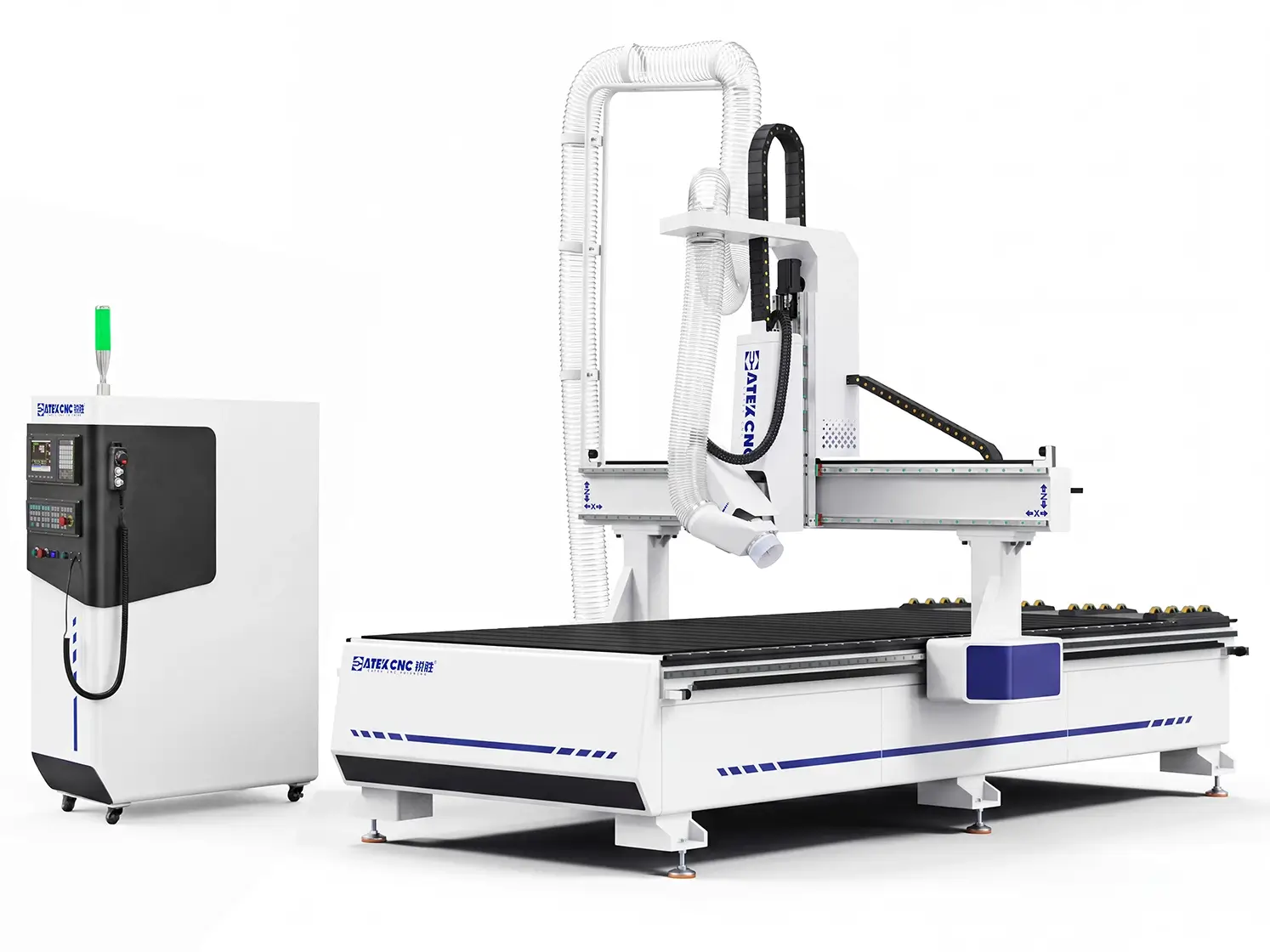
4-axis CNC routers adds an additional rotary axis to the traditional three-axis router, making it more powerful. This type of machine is mainly divided into two types: The first type has a machine structure similar to a lathe, equipped with an indexing rotary axis for clamping and rotating the workpiece, thereby enabling machining on multiple surfaces or revolving surfaces of the workpiece. This type of machine is mainly used to produce products such as Roman columns, stair handrails, and statues. The second type is called a swing-head CNC router, which adds an axis (A-axis) to the spindle that can rotate up to ±90 degrees in the X-Z plane, allowing the spindle to tilt at a certain angle in this plane. It is suitable for machining wave boards, irregular chair backs, and models with curved surfaces. The 4-axis CNC routers can machine multiple surfaces of a workpiece or perform machining at non-perpendicular angles, making its application range extremely wide. Users can choose the appropriate machine model based on their actual machining needs.
Showing 1–12 Of
10 Results
-
Spire

Spire 1530 4-Axis CNC Router with Swing Head
-
 CK-1530-WSP-ST-4S
 -

This is a typical 4-axis CNC router from the Spire Series. It is equipped with an A-axis capable of rotating ±90° in the X-Z plane, allowing the spindle to perform operations such as drilling, milling, chamfering, and grooving on inclined or lateral surfaces.$9,680.00~$13,980.00 -
-
Spire
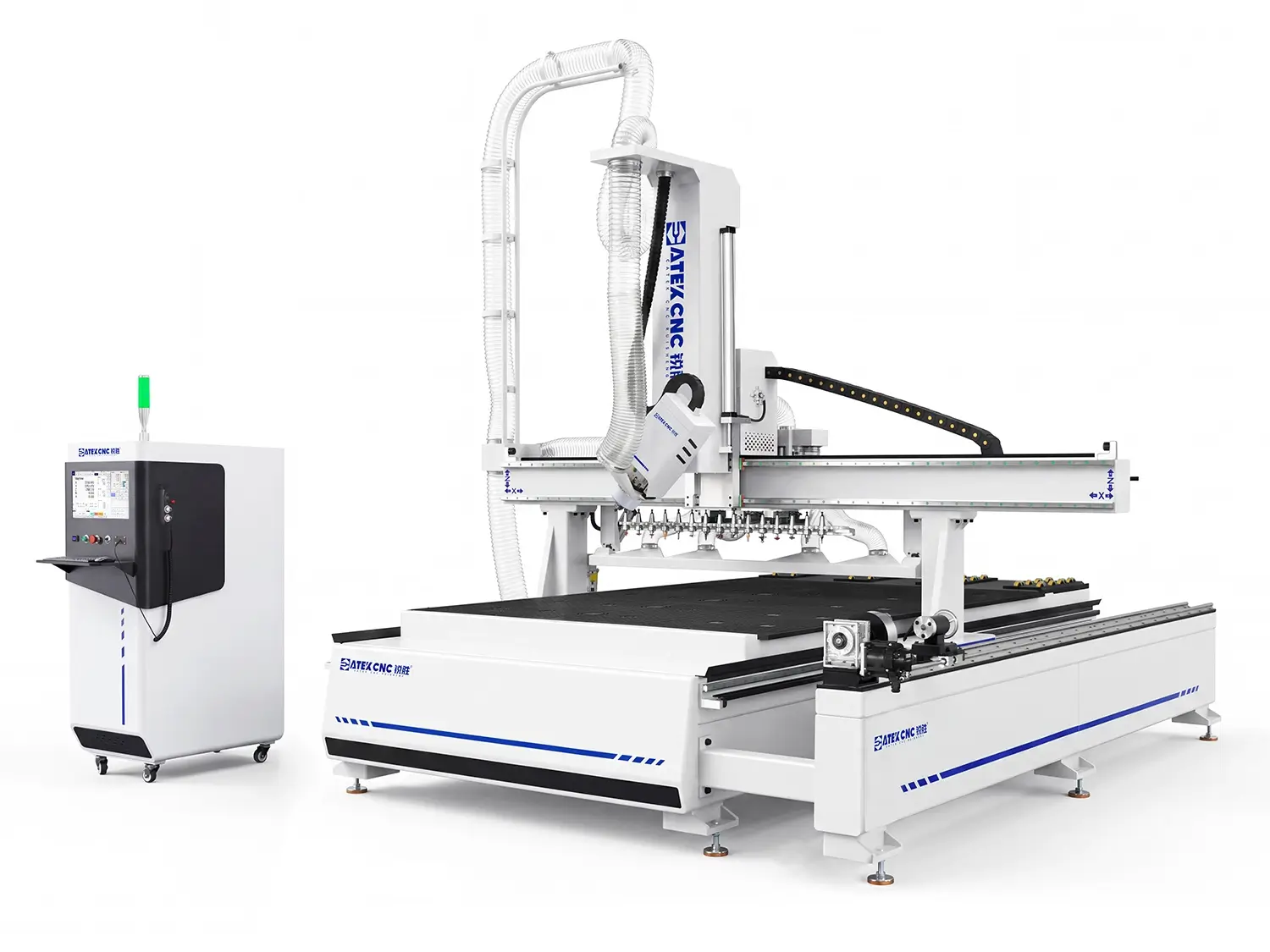
Engineered for ultimate versatility, this Spire 4-axis linear ATC CNC router combines a 7x10ft vacuum table with a swing head for angular machining and a rotary 4th axis for rotational workpieces.$24,800.00~$32,800.00
-
Hot
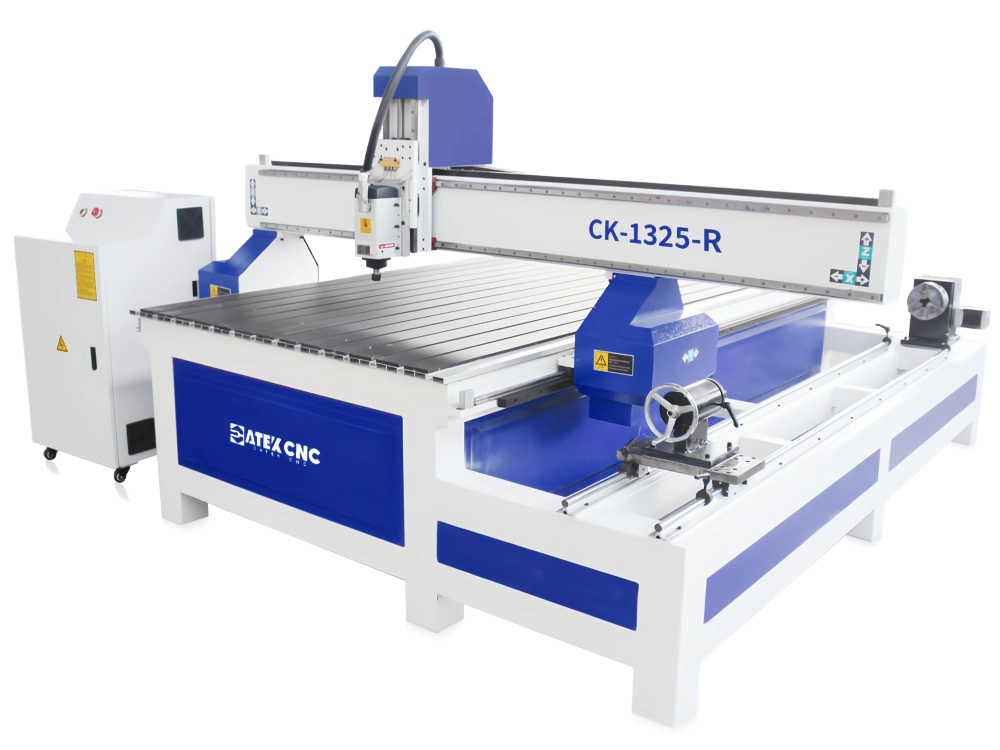
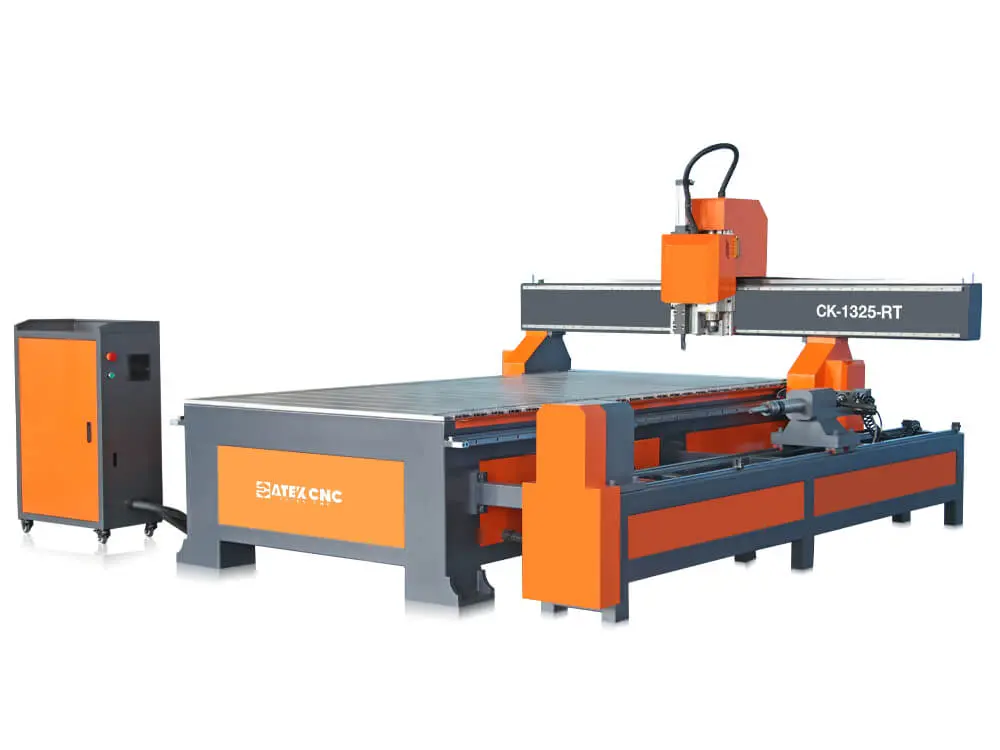
This CNC router features an added fourth rotary axis on the side. In addition to standard flatbed machining, the fourth axis can clamp and rotate cylindrical workpieces for machining, serving dual purposes.$4,000.00~$5,570.00
-
Hot
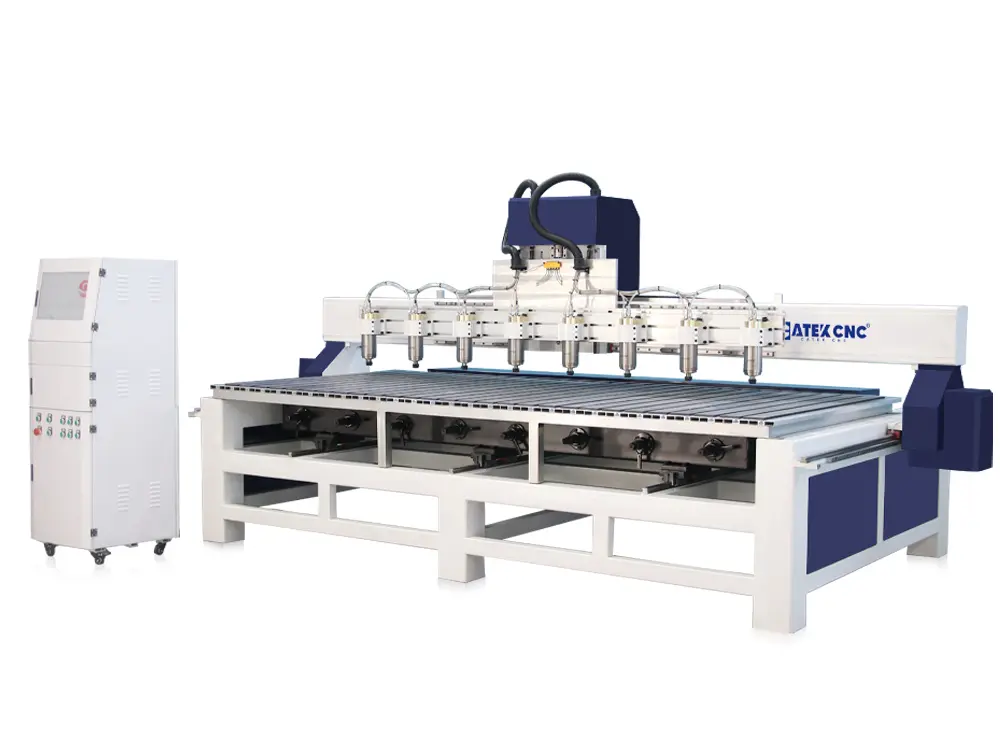
This is an 8-station CNC wood router machine that supports both 2D and 3D engraving, capable of batch processing columnar workpieces and panel-type workpieces.$11,380.00~$13,800.00
-
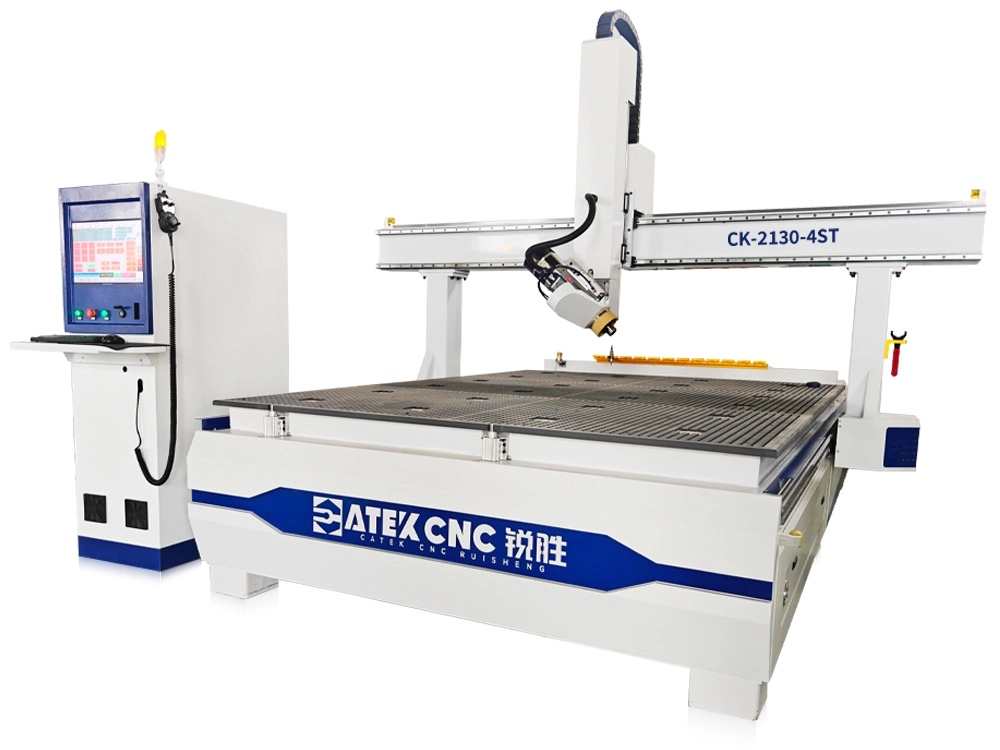
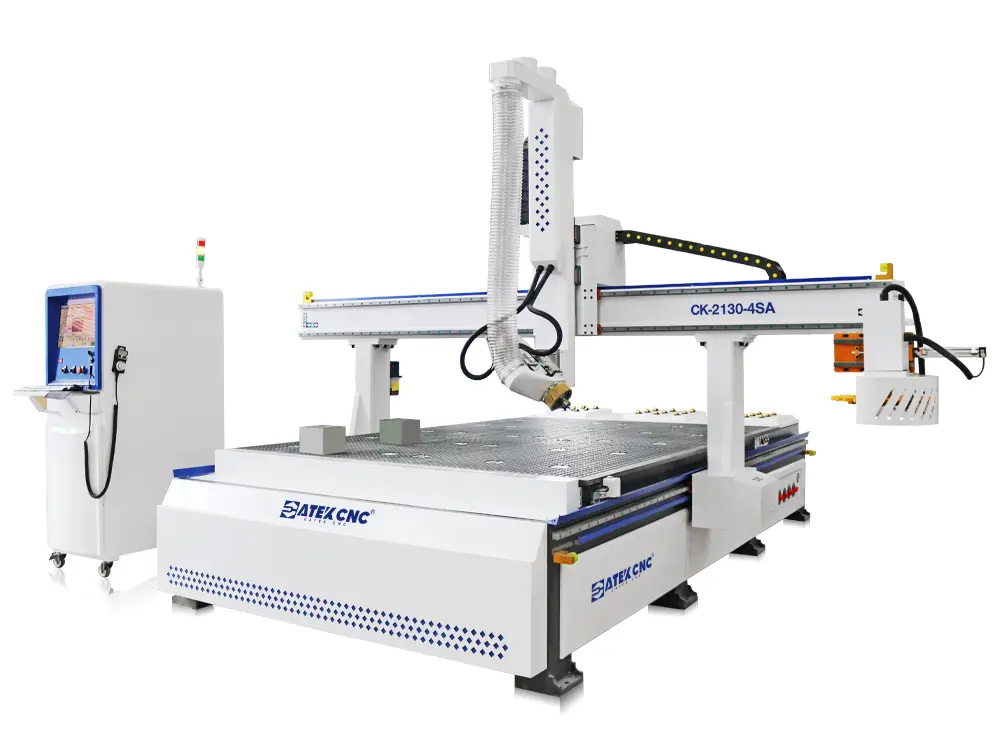
This is a standard 4-axis CNC router that builds upon traditional 3-axis systems by adding a ±90° rotation mechanism around the X-Z plane, allowing the spindle to tilt for workpiece angled machining.$11,600.00~$15,900.00
-
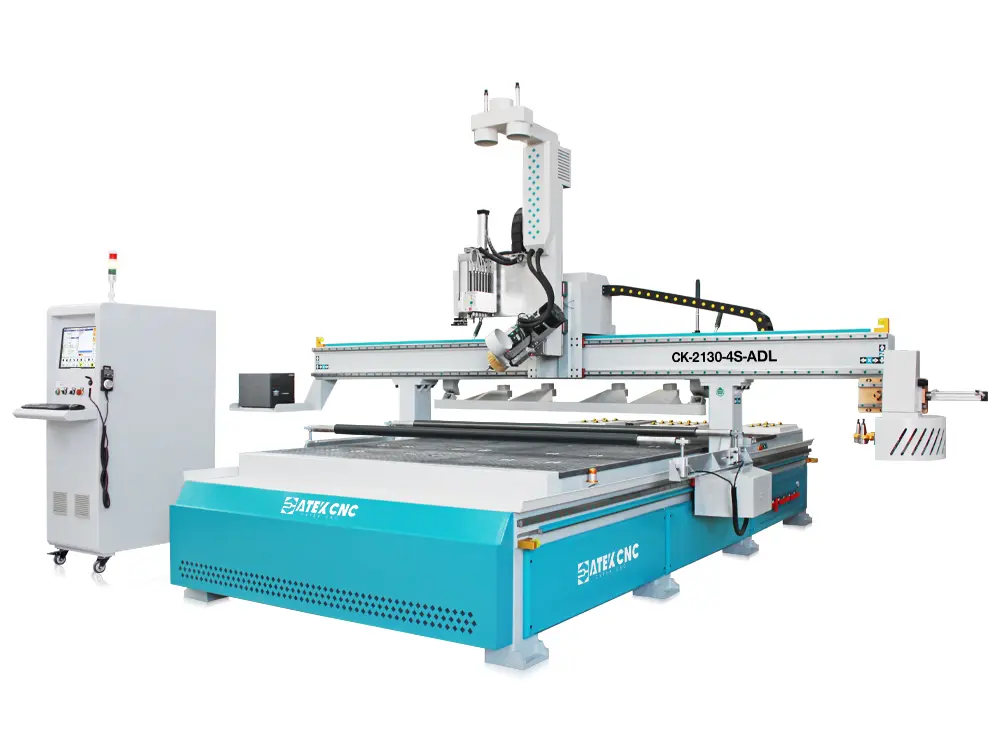
Equipped with a full-size vacuum worktable, an automatic tool-changing system, and 4-axis swing head machining capabilities, this CNC Nesting Machine is widely used in furniture manufacturing, interior decoration, and wooddoor industries.$12,900.00~$19,800.00
-
Hot
This is a 4-axis CNC wood router, additionally equipped with a rotary 4th axis and turning tools, capable of flat engraving, 3D carving and turning operations.$5,280.00~$6,380.00
-
Hot
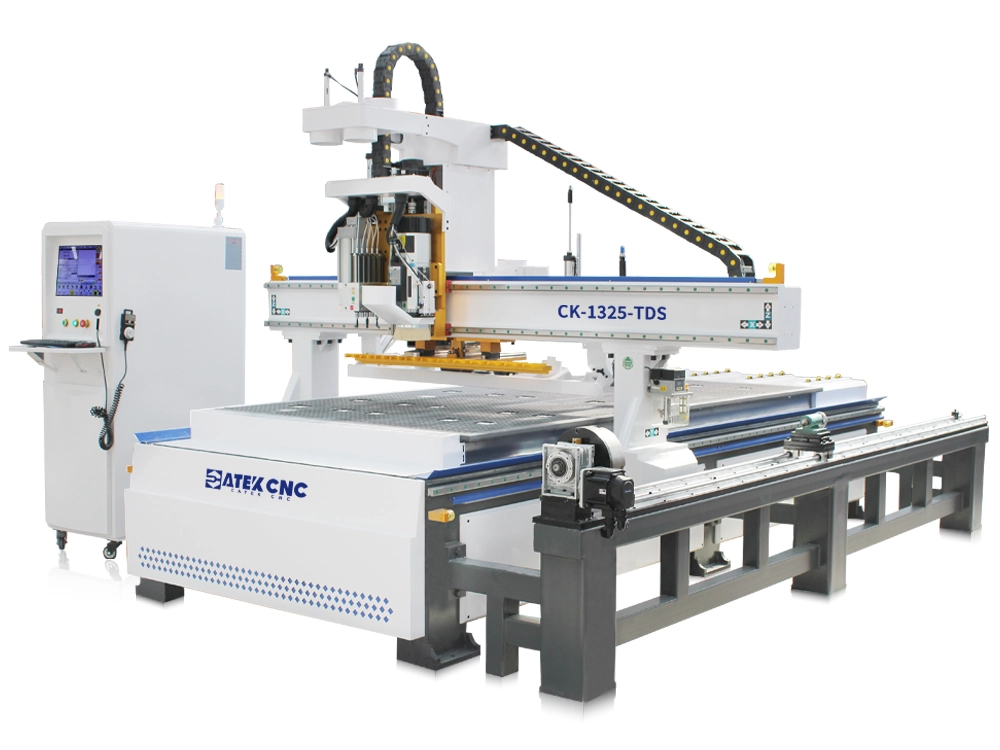
This router features a vacuum adsorption workbench, linear-type tool changer, 5+4 pneumatic drilling bank, and 3D rotary axis, enabling panel furniture engraving/drilling and rotary carving of wood columns.$13,800.00~$17,500.00
-
This is a carousel-type ATC 4-axis CNC router machine, equipped with an automatic labeling function and a drilling bank, making it highly suitable for various types of furniture production and manufacturing.$13,800.00~$19,800.00
-
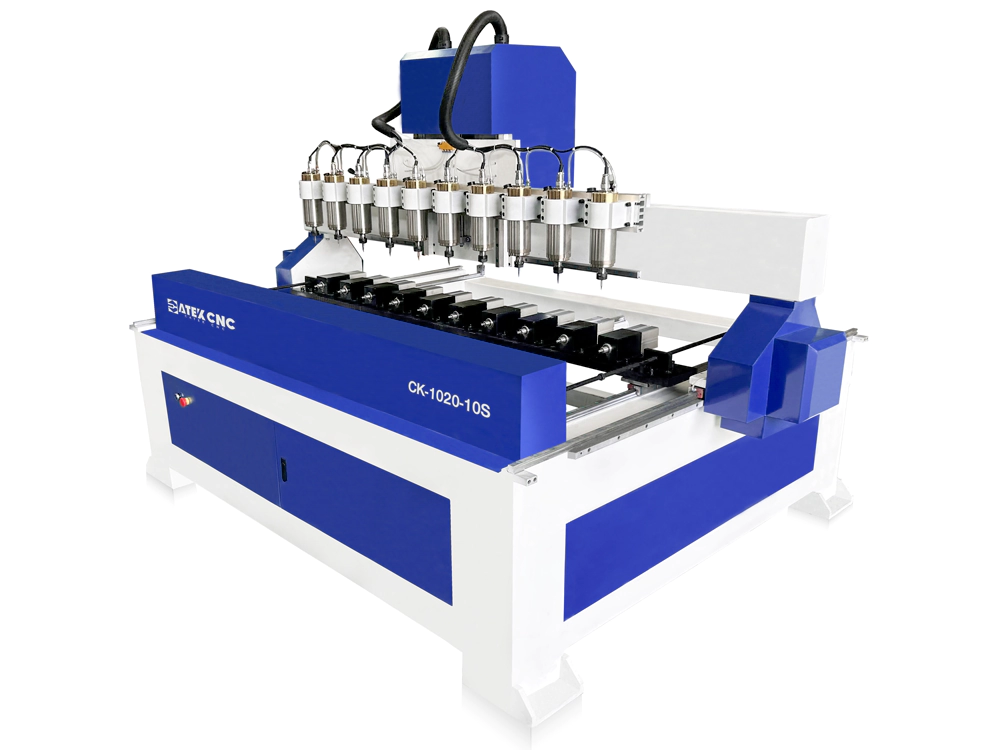
Multi-Head CNC Wood Router for Batch 3D Carving
-
CK-1020-10S
-
The machine features multiple workstations, each equipped with a rotating device for workpiece and machining spindle for batch processing of surfaces-of-revolution.$10,300.00~$13,900.00 -
THE FOLLOWING ARTICLES MAY HELP YOU
-
CNC Router
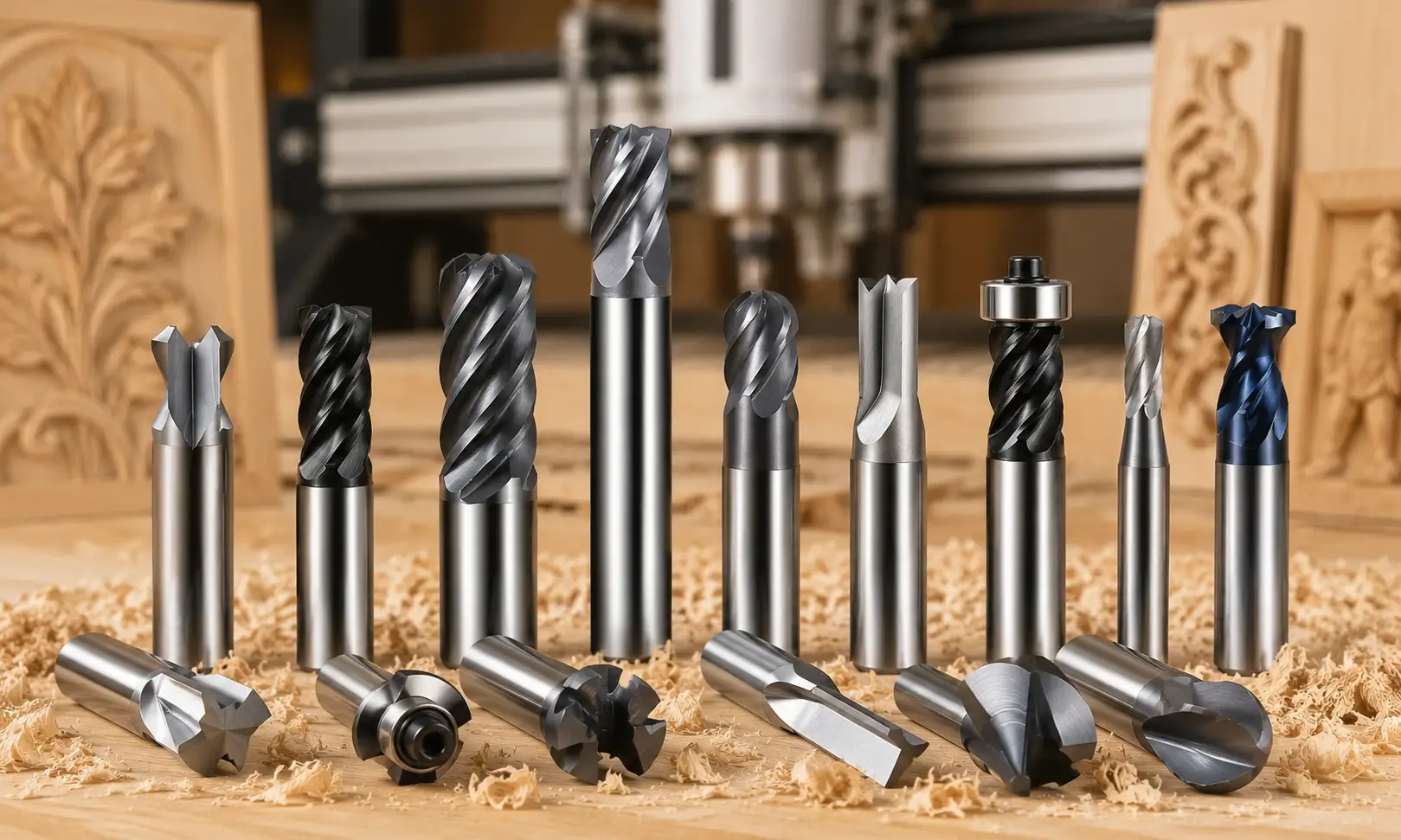
How to Select the Milling Tools for CNC Wood Router?
A milling tool is a cutting tool with a cylindrical shape, featuring cutting edges on its circumference and bottom, which performs rotational motion to cut and machine workpieces.The milling tool family is very extensive. Together with hole-making tools (drills, reamers, taps, boring tools, etc.), they cover almost all commonly used processing tools on CNC wood router machines.Types of Milling ToolsMilling tools can be classified into various categories based on different criteria. Below are sev...
-
CNC Router
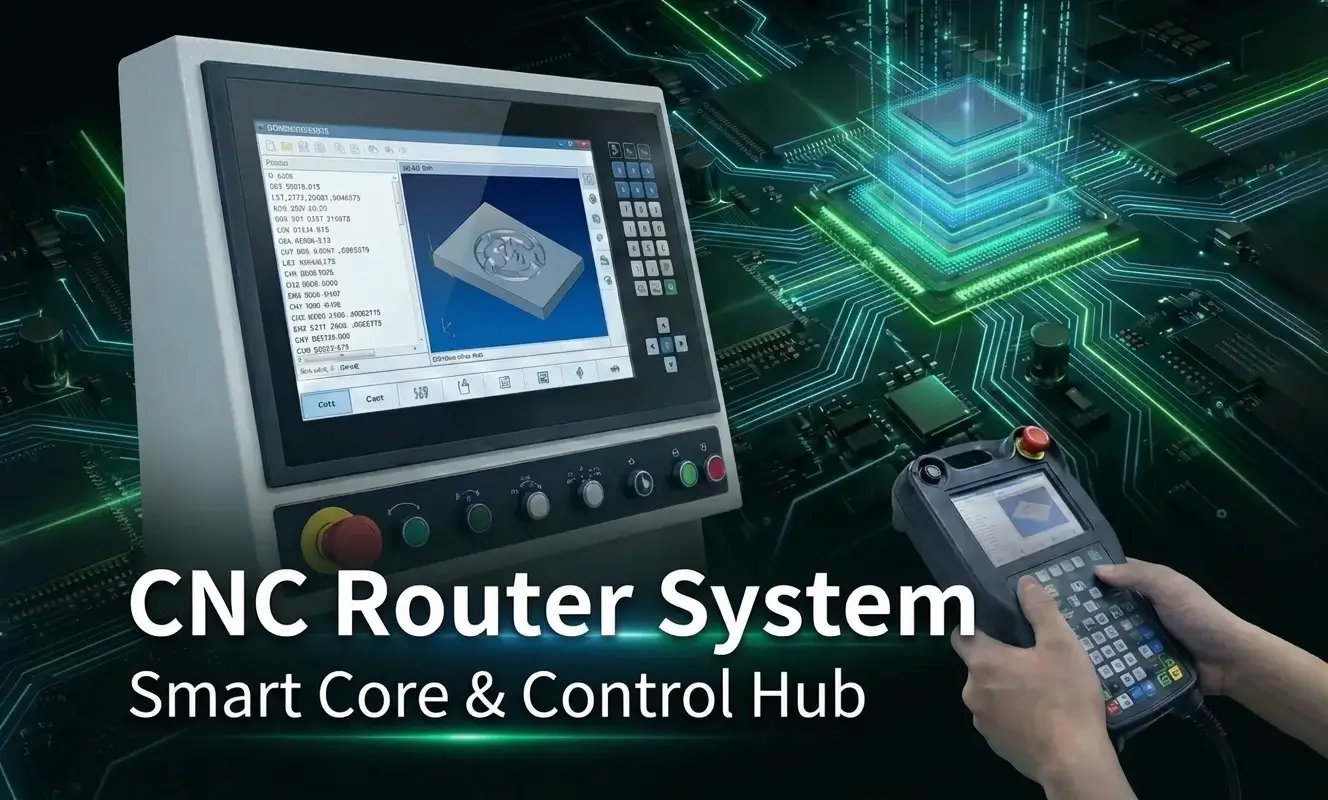
How to Choose a Control System for CNC Wood Router?
As the brain of a CNC Router Machine, the control system is a core component that directly dictates the machine's machining precision, efficiency, operational complexity and applicable scenarios. A suitable control system doubles the results with half the effort in production; otherwise, even a machine with excellent hardware configuration may suffer poor machining performance and low efficiency due to incompatible system matching. This article will detail the pros and cons of mainstream CNC Rou...
-
CNC Router
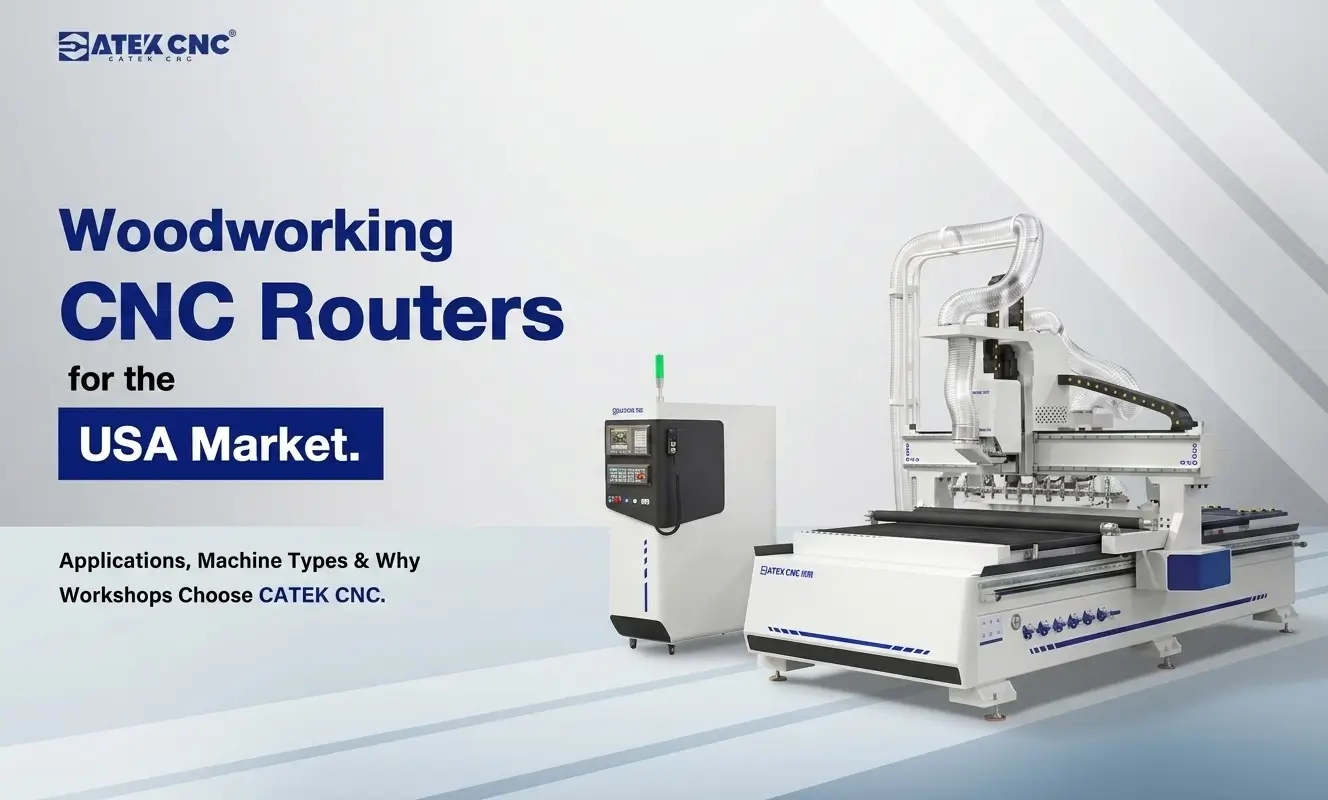
Best CNC Router for Woodworking in the USA
CNC routers have become core equipment for enhancing production efficiency and processing quality in the modern woodworking industry. For American woodworking enterprises, whether in custom furniture manufacturing, cabinet processing, decorative material cutting, or intricate wood product engraving, selecting high-performance CNC wood routers can significantly improve production workflows, reduce labor costs, and elevate product precision and processing consistency.This article provides a compre...
HERE ARE SOME RELATED VIDEOS OF CNC MACHINES
-
02:46
CNC RouterDec 16, 2025
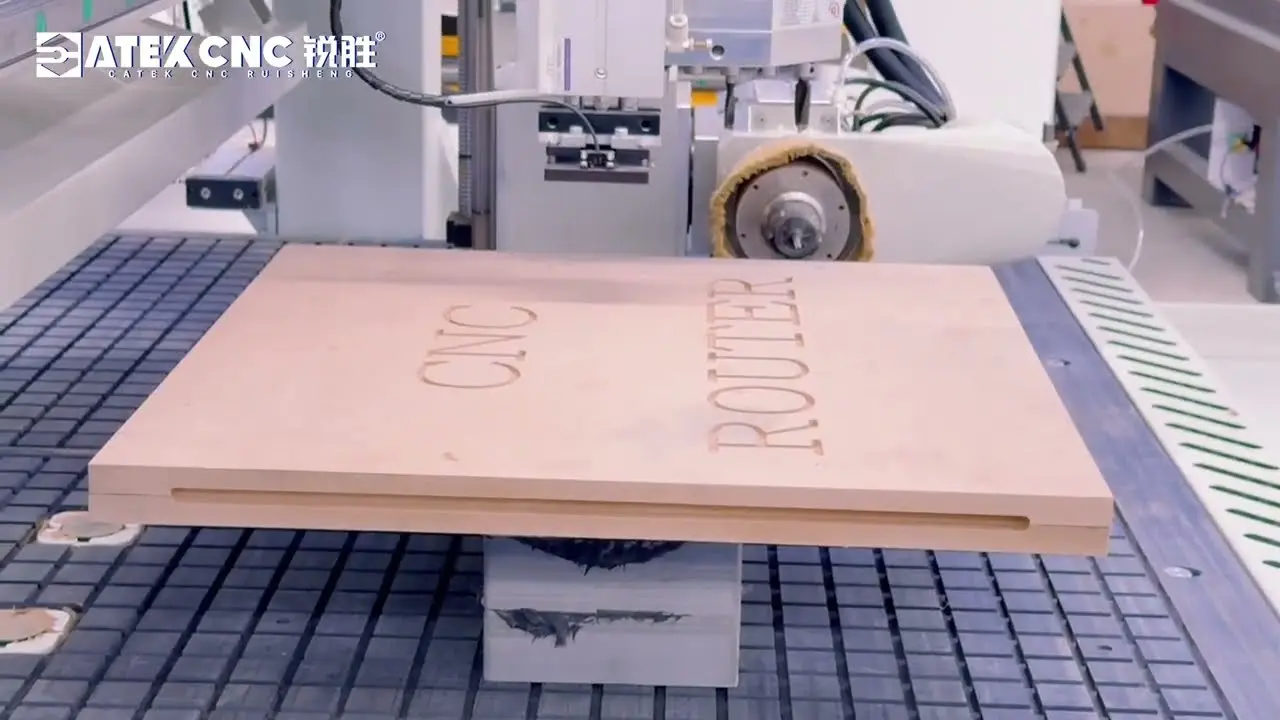
Carousel-Type ATC 4-Axis CNC Router with Labeler and Vertical Drilling Bank
Troubled with side panel processing, extensive drilling, or labeling? This CNC engraving machine can meet all your needs!
-
01:06
CNC RouterFeb 13, 2026
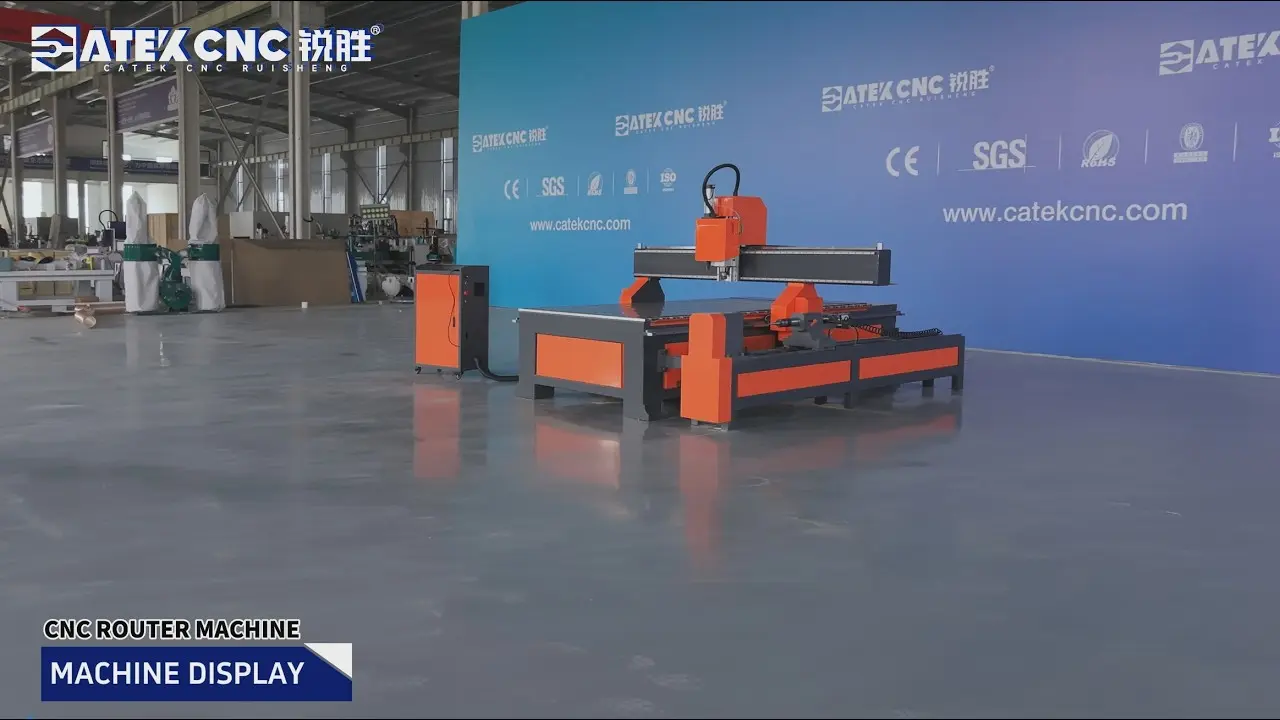
CK-1325-RT Multi Function CNC Router with 4th Rotary Axis & Truning Tool
This video introduces an innovative CNC router equipped with a 4th rotary axis and turning tools.
-
01:30
CNC RouterMay 27, 2025
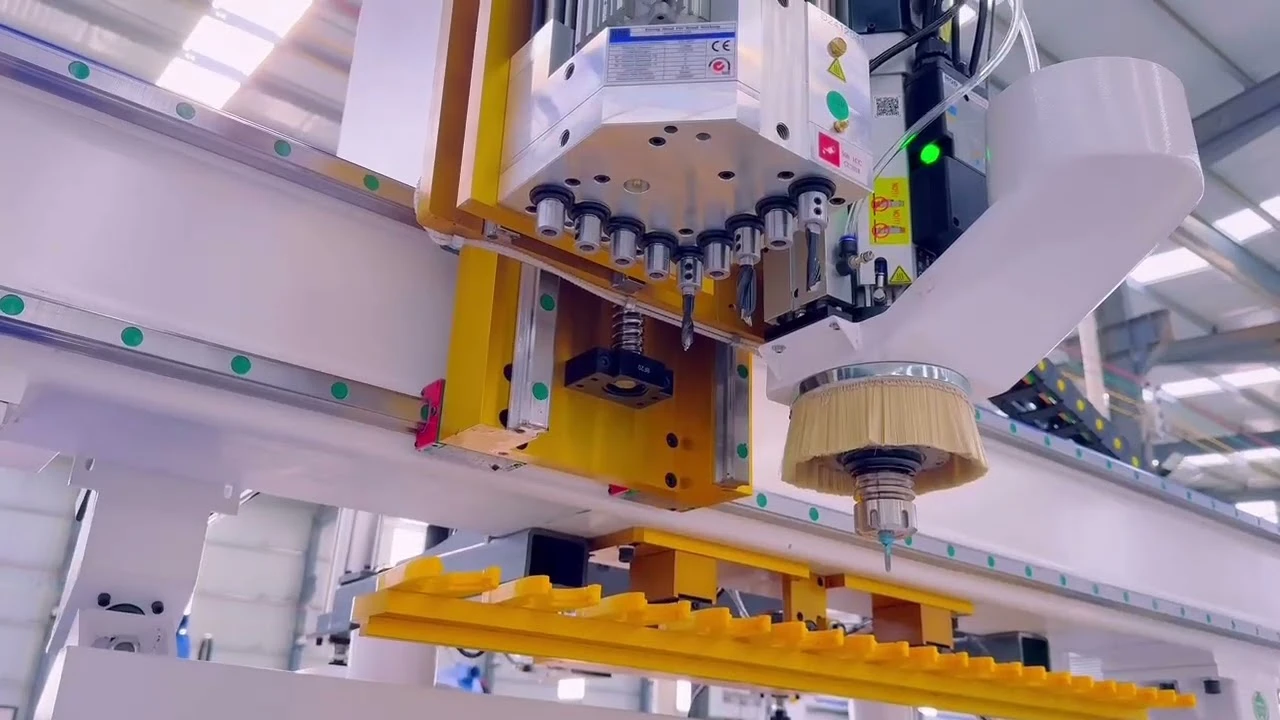
Linear ATC CNC Wood Router with 5+4 Drilling Bank and Rotary 4th Axis - CK-1325-TDS
The CK-1325-TDS is a linear ATC CNC wood router equipped with a 5+4 pneumatic drilling bank for drilling and a rotary fourth axis for 3D carving.
HERE ARE SOME FUN PROJECTS FOR CNC MACHINES
-
CNC Router
Produce Chinese-Style Wood Door Using a CNC Router Machine
Chinese furniture is loved by some people for its solemn, simple, harmonious and elegant style, but its complex carvings and strict symmetrical aesthetic requirements make its processing more complicated. Now, with the help of CNC routers, you can save effort and complete the production of Chinese furniture quickly, and the production quality and consistency of mass production far exceed traditional manual labor.
-
CNC Router
Cabinet Manufacturing Project Using 2130 Linear ATC CNC Router
In modern furniture manufacturing, improving efficiency and machining accuracy is essential for cabinet factories and panel furniture producers. This project introduces the use of a 2130 Linear ATC CNC router in cabinet production, showing how an automatic tool change CNC router can complete cutting, drilling, grooving, and engraving in one cycle.With a large working area, vacuum table, and high-speed spindle, the ATC CNC router for cabinet making allows manufacturers to process MDF, plywood, pa...
-
CNC Router
How This 4-Axis ATC CNC Router Transforms Panel Furniture Production Efficiency
This project focuses on upgrading a panel furniture production line by introducing a fully integrated 4-axis ATC woodworking CNC router machine with automatic labeling and drilling functions. The goal was to replace a traditional multi-machine workflow with a more efficient, single-machine solution.By implementing this advanced CNC router for woodworking, the factory successfully streamlined its entire process, from labeling and cutting to drilling and output, while significantly reducing manual...




CUSTOMER REVIEWS
-
This CNC router machine works well for our small woodworking shop in Indonesia. We use it for furniture parts, engraving, and some round wood pieces. The 4th axis gives us more options for our projects. It took some time to get familiar with the operation, but now it runs smoothly and helps us finish jobs more efficiently.
Alfin Jul 15, 2026
 -
I have been using this machine for quite some time. Recently, I encountered some inverter issues. The technician, Perry, was very patient, and we resolved the problem together. I must give him a perfect score, and thank you for his excellent service. Now, the side rotation device of this CNC router is functioning properly again.
Thapa Aug 17, 2025
 -
A very impressive machine! The appearance, color, functions, and even the brand of electrical components can be fully customized to my requirements. Since I might work with cylindrical wood in the future, I added a 4th rotary device to this CNC router.
Richard Apr 03, 2025
 -
This 10-station CNC router is a revolution for our artisanal workshop. We can now produce a full series of intricate motifs with flawless consistency and speed. It doesn't replace the artisan's touch; it multiplies it, allowing our traditional craftsmanship to reach a much wider market.
Paul Nov 04, 2025
 -
Originally, I was only planning to purchase a CNC wood lathe from this supplier. However, while browsing their website, I came across this specific model of CNC wood router, it turned out to be an excellent discovery.
Carving stair newels used to be one of the most time-consuming tasks in our workshop. With this machine, we can now process ten balusters in a single cycle, with consistent precision and detail. The improvement in our production efficiency has been remarkable.
Shelley Jan 08, 2026
 -
We primarily manufacture woodworking parts, and this 4 axis CNC router with rotary axis offers us greater flexibility compared to a standard three-axis machine. In addition to planar cutting and engraving, we can now process cylindrical parts such as table legs and decorative columns, which greatly expands our product range. The rotary mechanism is easy to set up and ideal for continuous production; I admit we made the right investment.
Dula Apr 16, 2026
 -
As the owner of a custom woodworking factory in the UAE, I've been searching for efficient equipment that can balance high-volume production with complex customization needs. Purchasing this CATEKCNC 8-station 2D/3D integrated CNC router truly solved our core pain point. Given the environment here, we were very concerned about machine overheating. The machine's water-cooled spindle system performed remarkably well under heavy workloads, without any downtime due to overheating.
Ernesto
Jul 16, 2026 -
We have received the CNC router machine. The assembly and debugging process took some effort, but overall it went quite smoothly because we maintained constant communication in the after-sales support group.
Chun Jan 29, 2026
 -
We’re using the this ATC CNC router for cabinet cutting work. It handles full sheets well and the swing head is useful for some angled cutting jobs we do. Overall the machine runs steady in daily production. Setup took some time at the beginning, but after adjustments it’s been working fine. It fits what we need for our workshop.
Jose Jun 10, 2026
 -
I received this machine with trepidation, because I was very worried that it would not meet my requirements. Before, tI used to carve a piece of wood by hand, which took me three days, but this machine can complete 10 identical tproducts in just one day. The work that took me a month to complete before was completed in one day by this machine, twhich completely exceeded my expectations.
Oscar Lopez Jan 29, 2025
Get quote