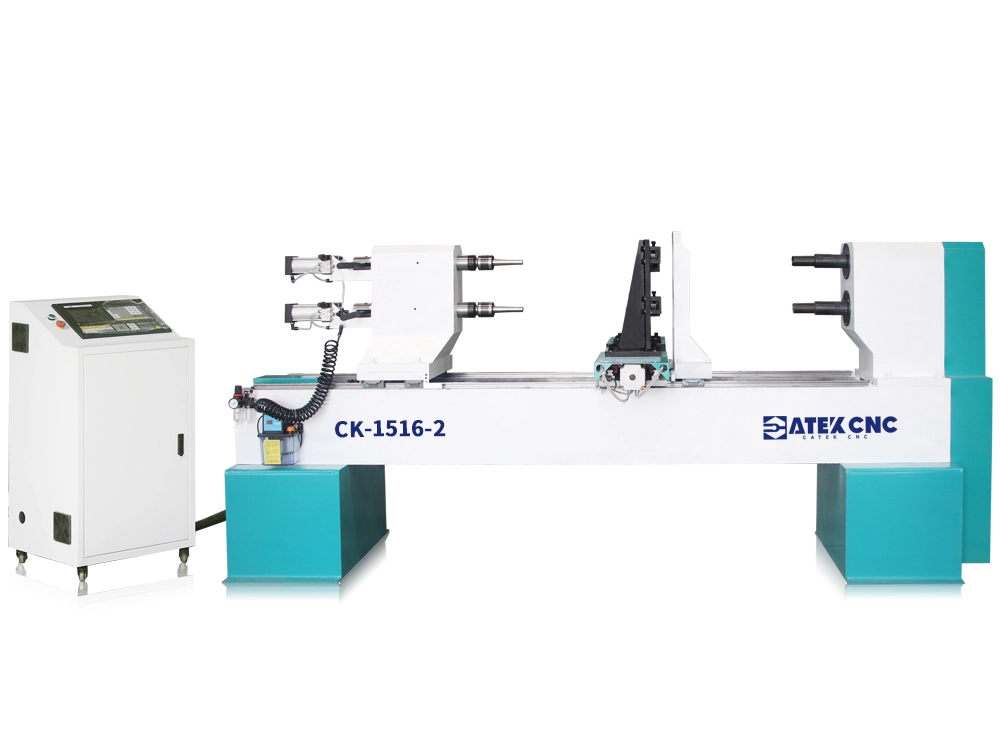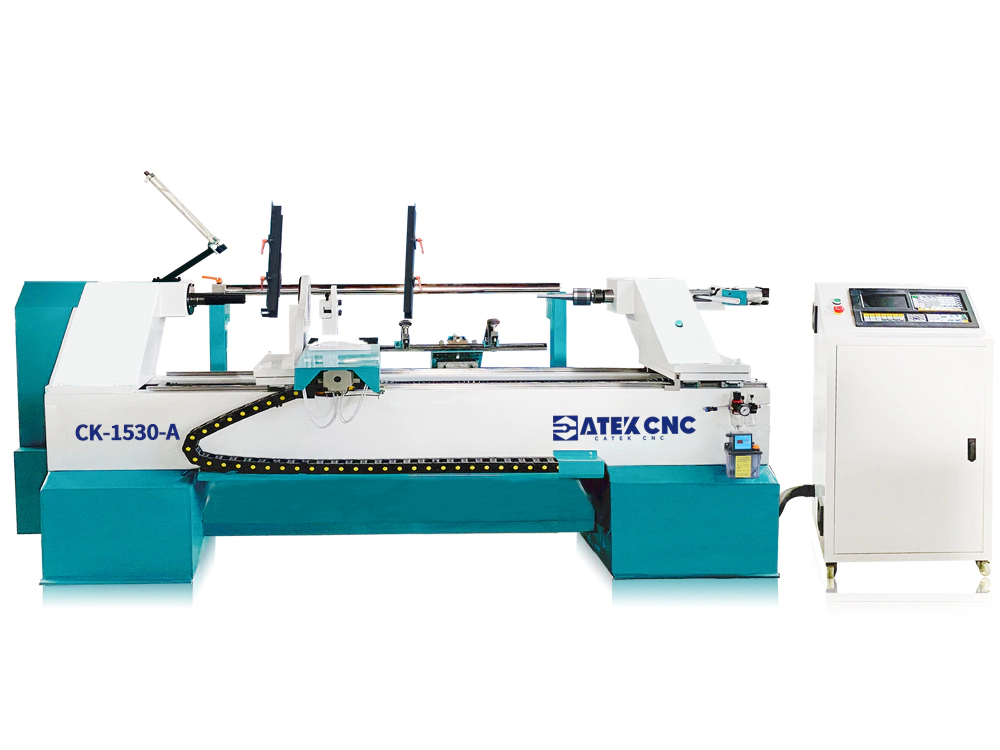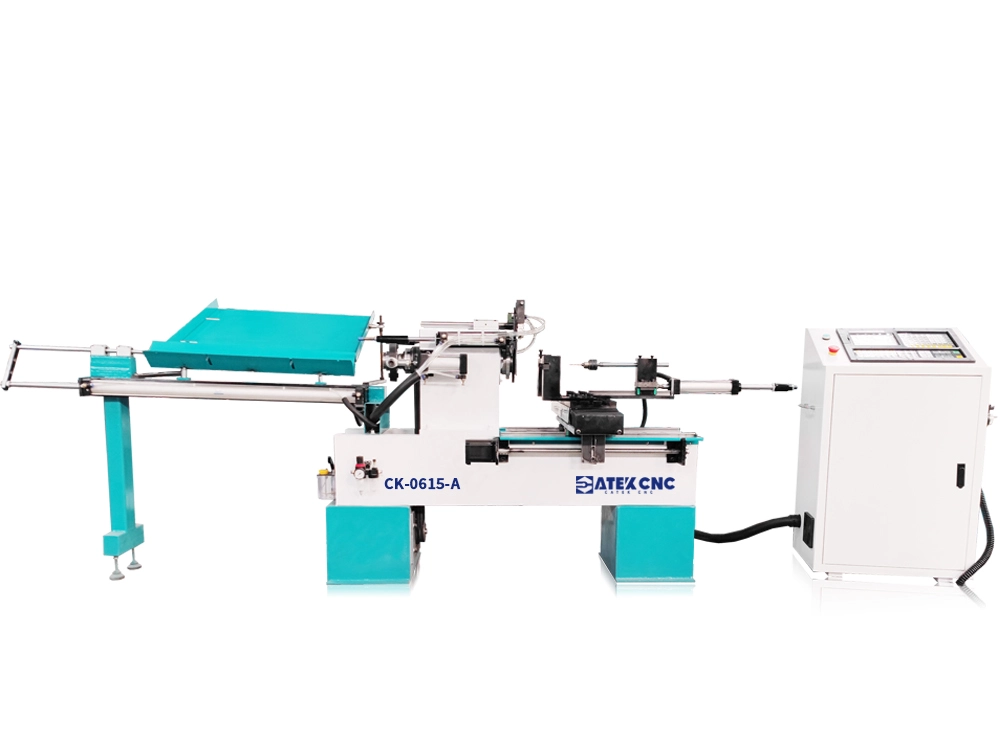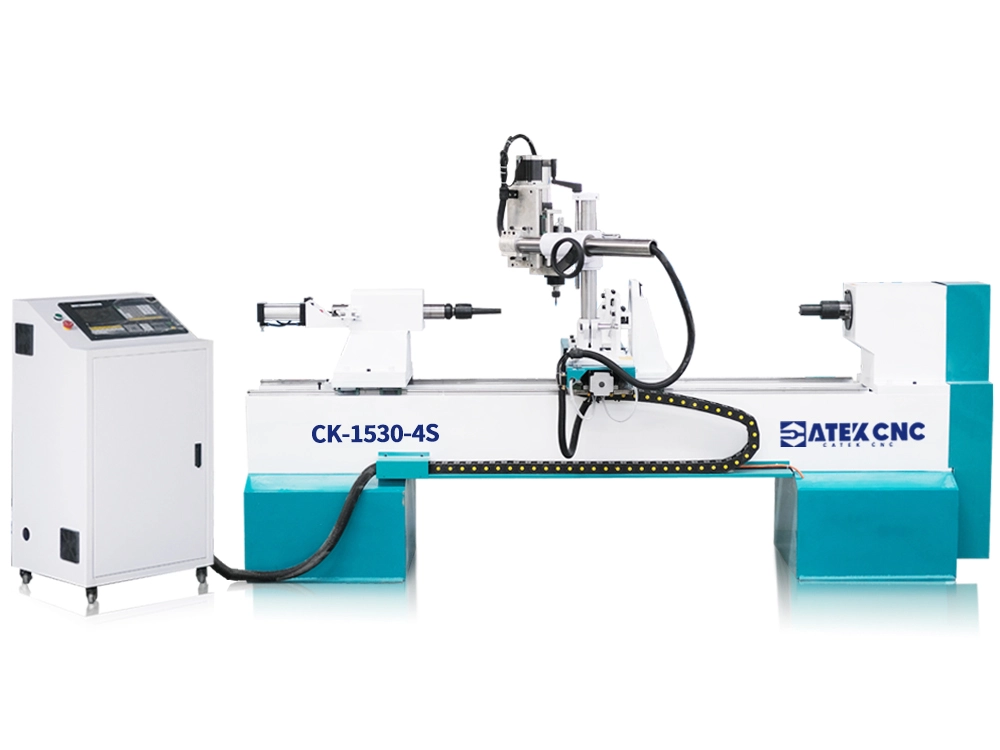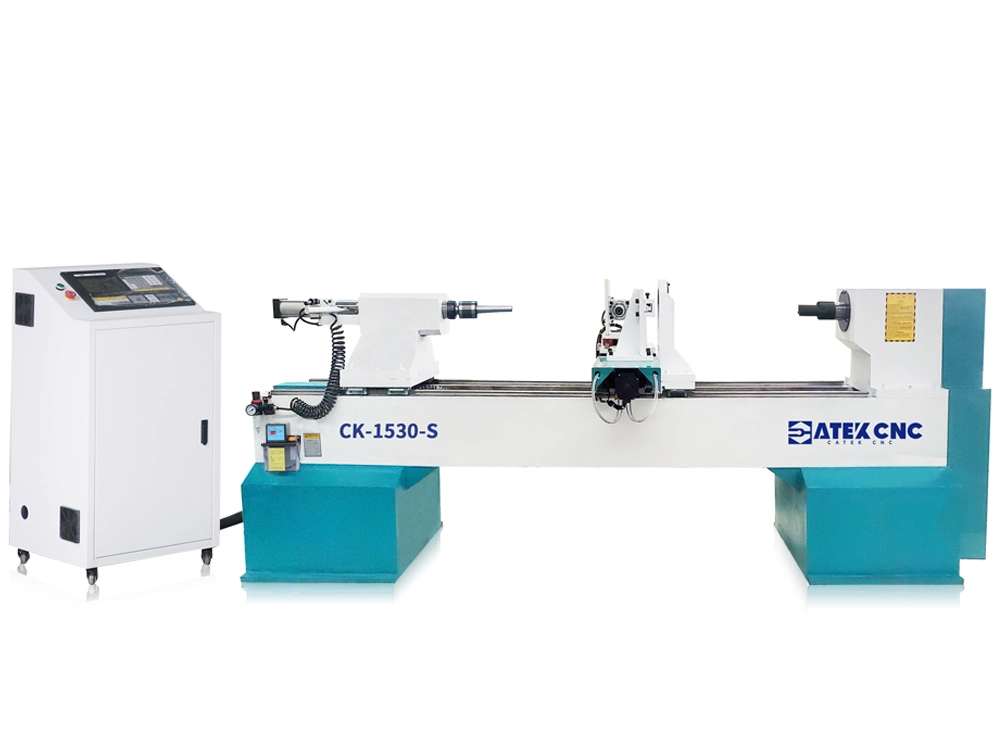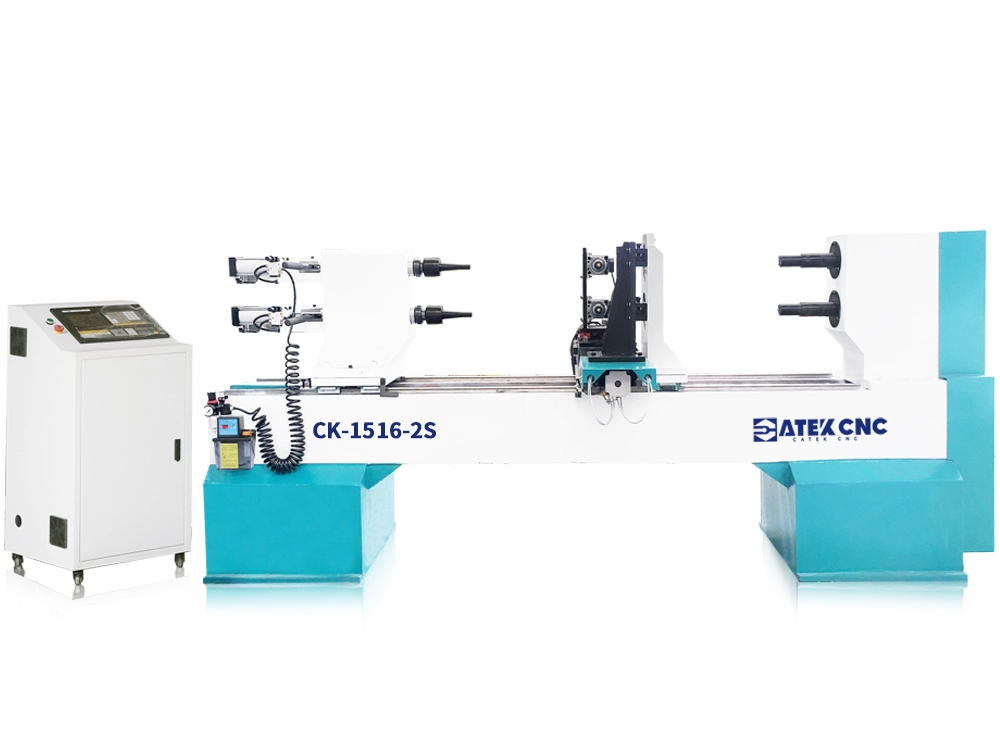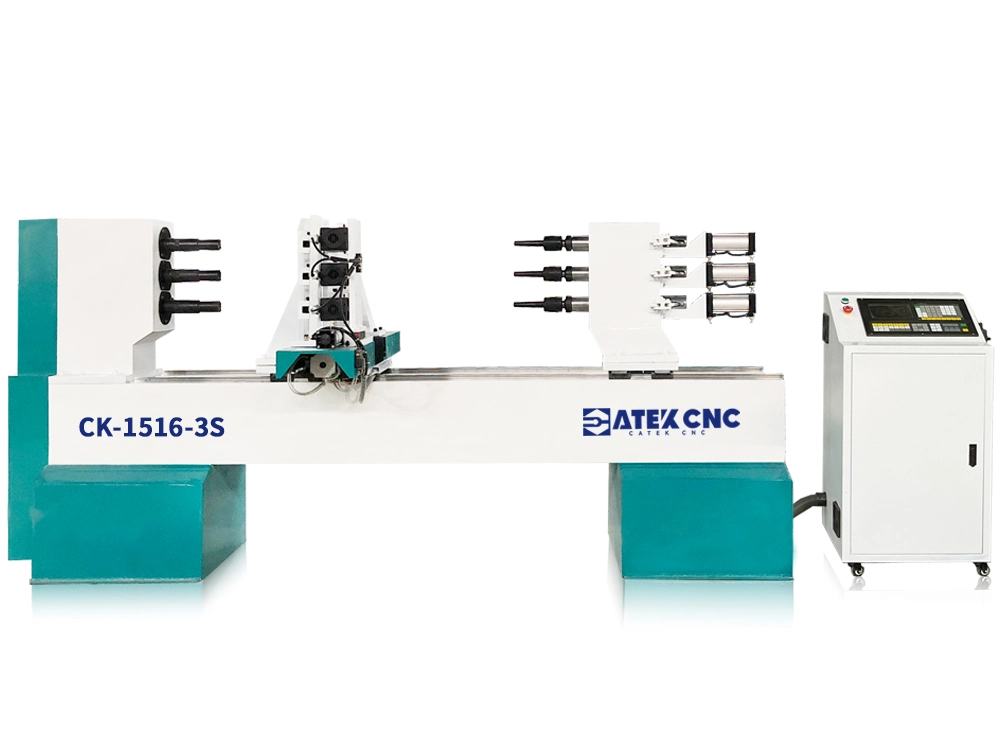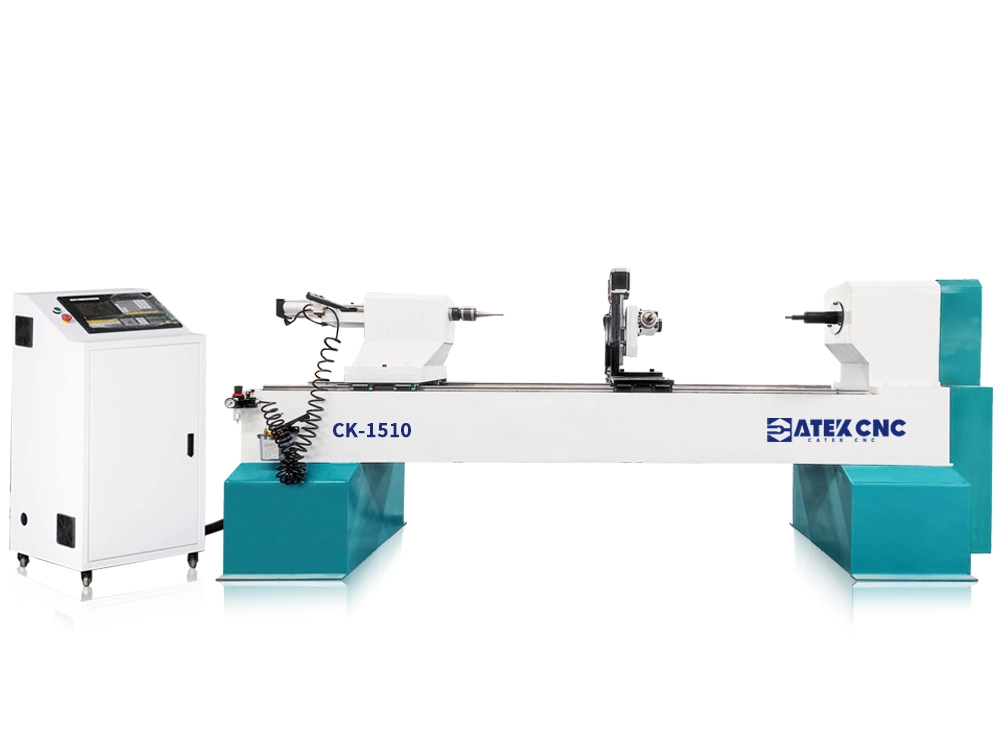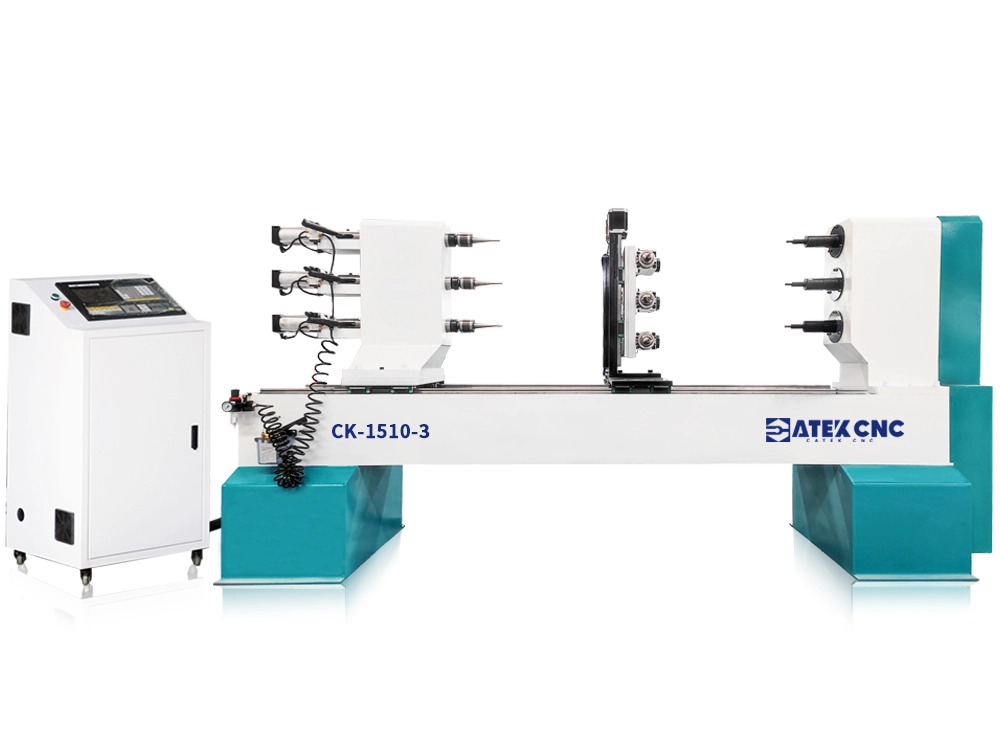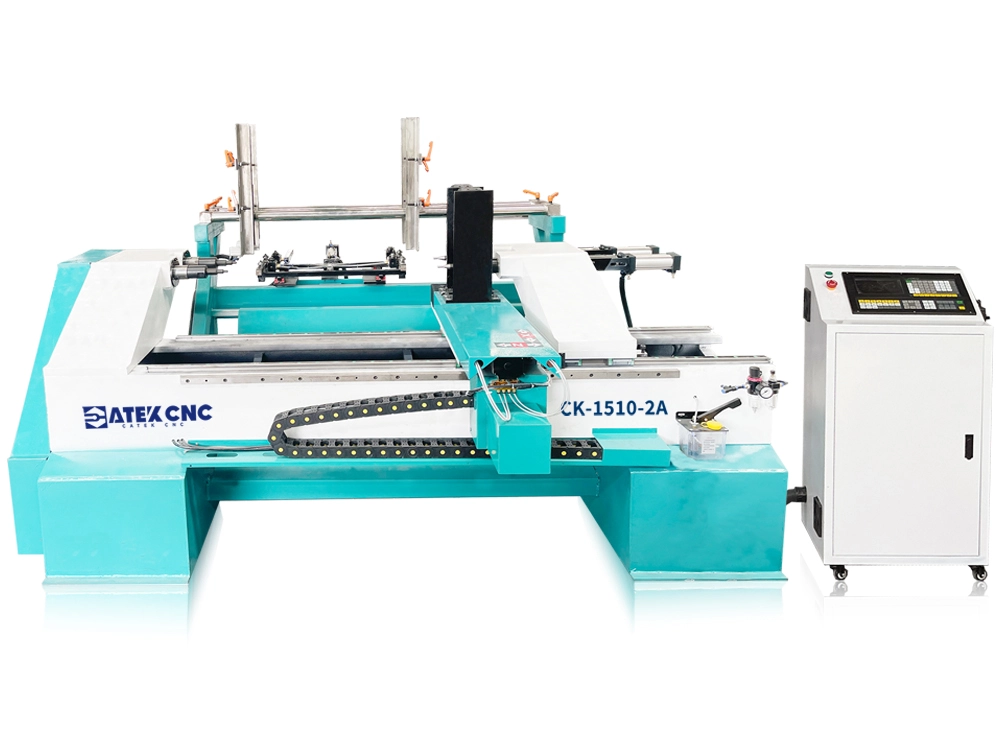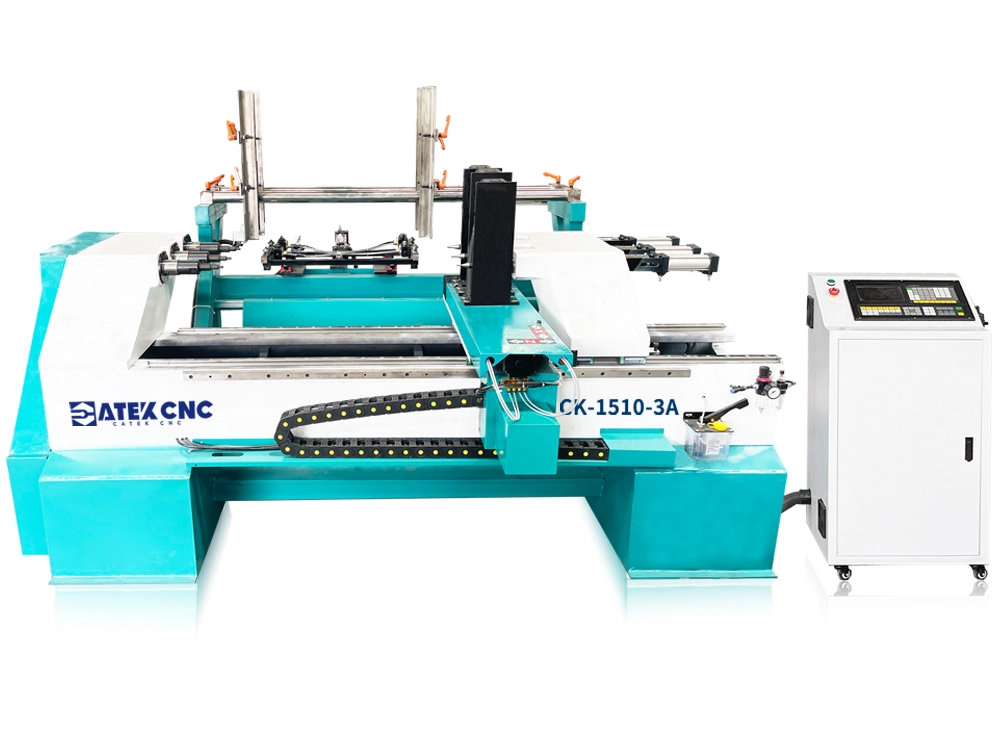
MEET CATEKCNC

The Best CNC Woodworking Lathe of 2026

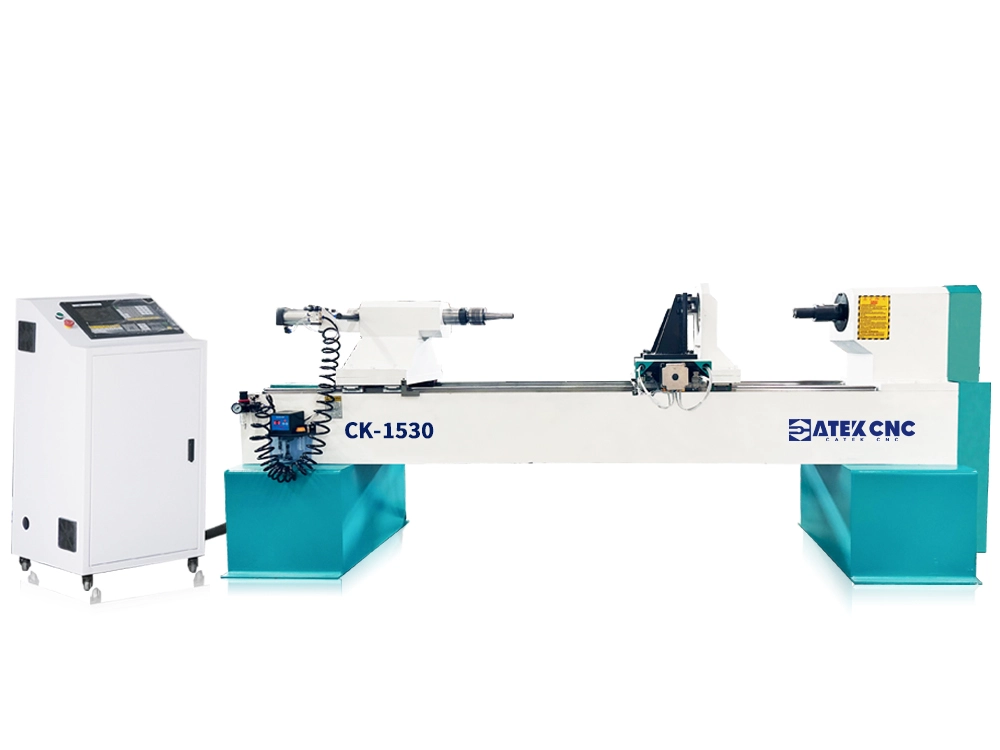
CNC wood lathes is primarily used for machining the surfaces-of-revolution of wood. It rotates the wood material by the lathe center and employs various physical tools to perform turning, drilling, sanding, engraving, milling, shaping, and grooving on the inner and outer diameters of the wood. Unlike conventional manual wood lathes, this type of lathe achieves full digital control. After programming with specialized code, the machine can automatically process the blank, saving labor, improving machining accuracy, and ensuring excellent product consistency.

Based on extensive user machining experience, CATEKCNC has meticulously developed and manufactured wood lathes that are more suitable for general users to address the programming challenges of various complex products on the market. With our self-developed CNC system, users can avoid tedious manual coding. Simply input parameters such as product length, diameter, and outline shape into the software, and the system will automatically generate the corresponding G-code, making it easy for even beginners to master the machining technology.

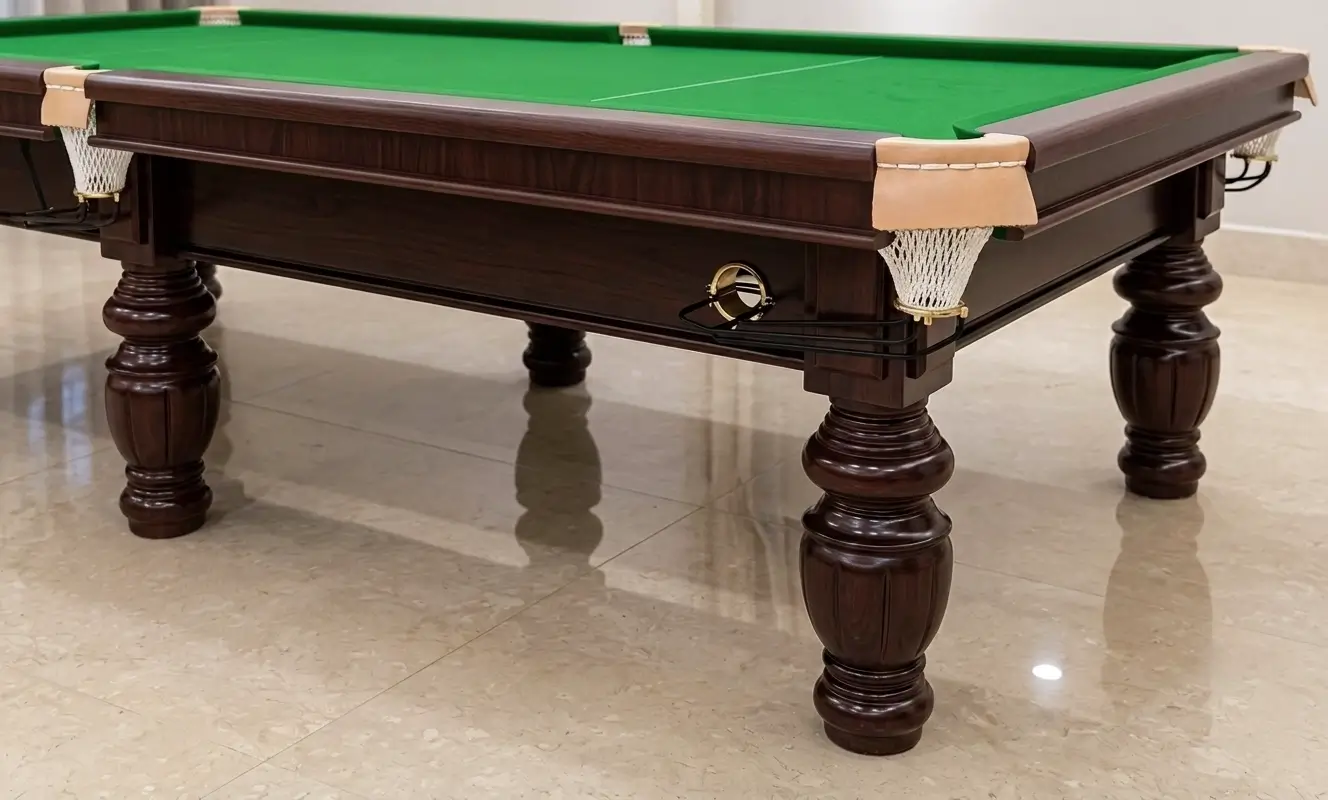
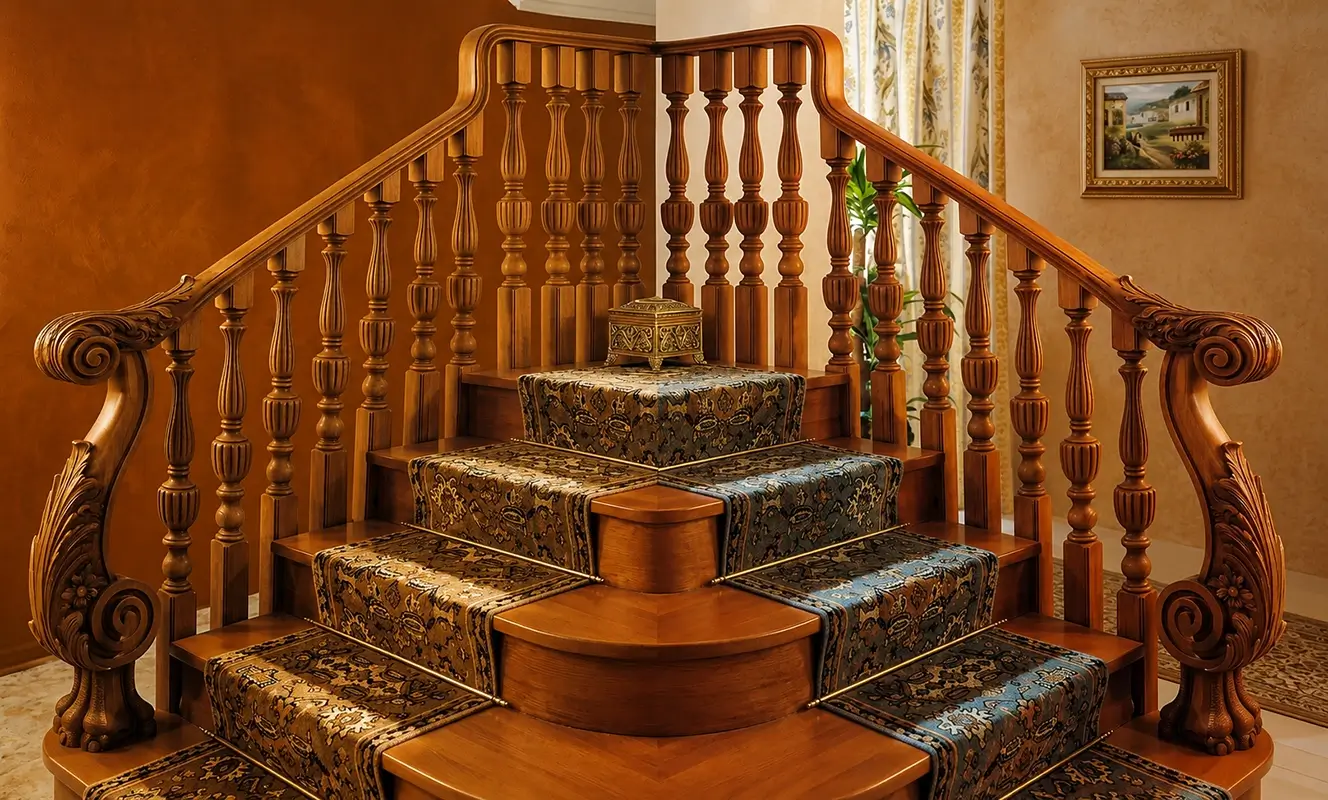
CNC wood lathes mainly performs surface machining on cylindrical wood and can process common woodworking products such as stair columns, baseball bats, pool cues, wooden bases, wooden crafts, Matryoshka dolls, table and chair legs, coat racks, and chess pieces. We offer the widest range of customization services for our customers, including machine size, color, bed, machining stations, motors, and spindles. Additionally, various functional kits are available for selection, such as sanding devices, rotary tool turrets, loading/unloading devices, and a variety of machining tools (e.g., turning tools, planing knives, milling cutters, saw blades, and drill bits). Whether you are a carpenter, a small woodworking workshop, or a professional machining factory, you can customize your exclusive machine here based on your budget and actual machining needs.

AUTOMATED MACHINING WITH CNC WOOD LATHES

Modern industrialized production increasingly tends to specialization, intelligence, efficiency, standardization, in addition to a few products with handmade feelings, the era of relying on manual production has quietly passed. We increasingly need specialized machinery and equipment for our production and processing services, if you are engaged in or want to engage in the wood furniture production industry, handicraft manufacturing industry, etc., wanting to understand or buy a suitable CNC wood lathe or mill-turning composite center, the following content can help you pick the most suitable machine. There are many types of CNC lathes, so how to pick the most suitable machine, which still requires some professional knowledge. Whether you are a beginner, an entrepreneur or a business owner who is in the process of adding more machines to your production, you can find the right CNC wood lathe for you here.

Introduction of CNC Wood Lathe

Historically, the woodworking lathe is one of the oldest machine tools, which uses a clamping tool to rotate the workpiece to be processed, and then uses various turning tools to machine it into various surfaces of revolution.Its specific operations on the workpiece include "turning", "facing", "parting", "grooving", etc., among which turning the outer cylindrical surface is the most common operation.

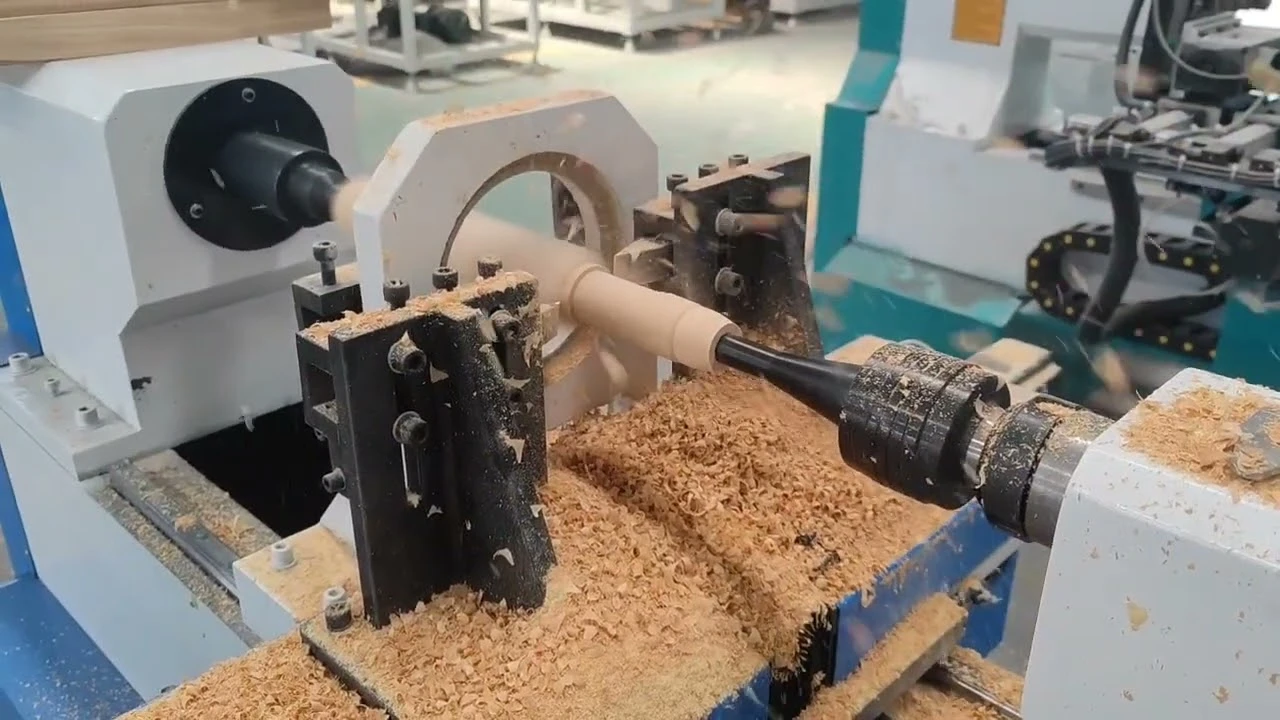
Usually, the workpiece is clamped by a device called "lathe center" (chuck or collet can also be selected), there are many types of this device, the end close to the spindle box is called drive center (also called grip center, which is connected to the workpiece and drives the workpiece to rotate). The other end is used to apply a horizontal force to the workpiece to clamp the workpiece,and it is mainly divided into two types. One is a dead center (an alloy cone that does not rotate with the workpiece and requires lubrication to reduce friction, and is now rarely seen on woodworking lathes), and the other is a live center (called a rotary center or rotating center or running center, which has a bearing inside and can rotate with the workpiece). During the processing, the workpiece is driven to rotate by the clamping device, and the tool used for cutting is generally fixed in the "tool post",and the tool post is driven to move by a device called "compound rest", and the tool itself does not rotate.

In traditional manual woodworking lathes, there are still devices for clamping and rotating workpieces, but the operator needs to hold the tool to make it contact the rotating workpiece for processing. The rotation speed of the workpiece, the feed amount and angle of the turning tool are extremely dependent on the operator's experience, and it is difficult to ensure that the products have the same precision when processing products in large quantities.

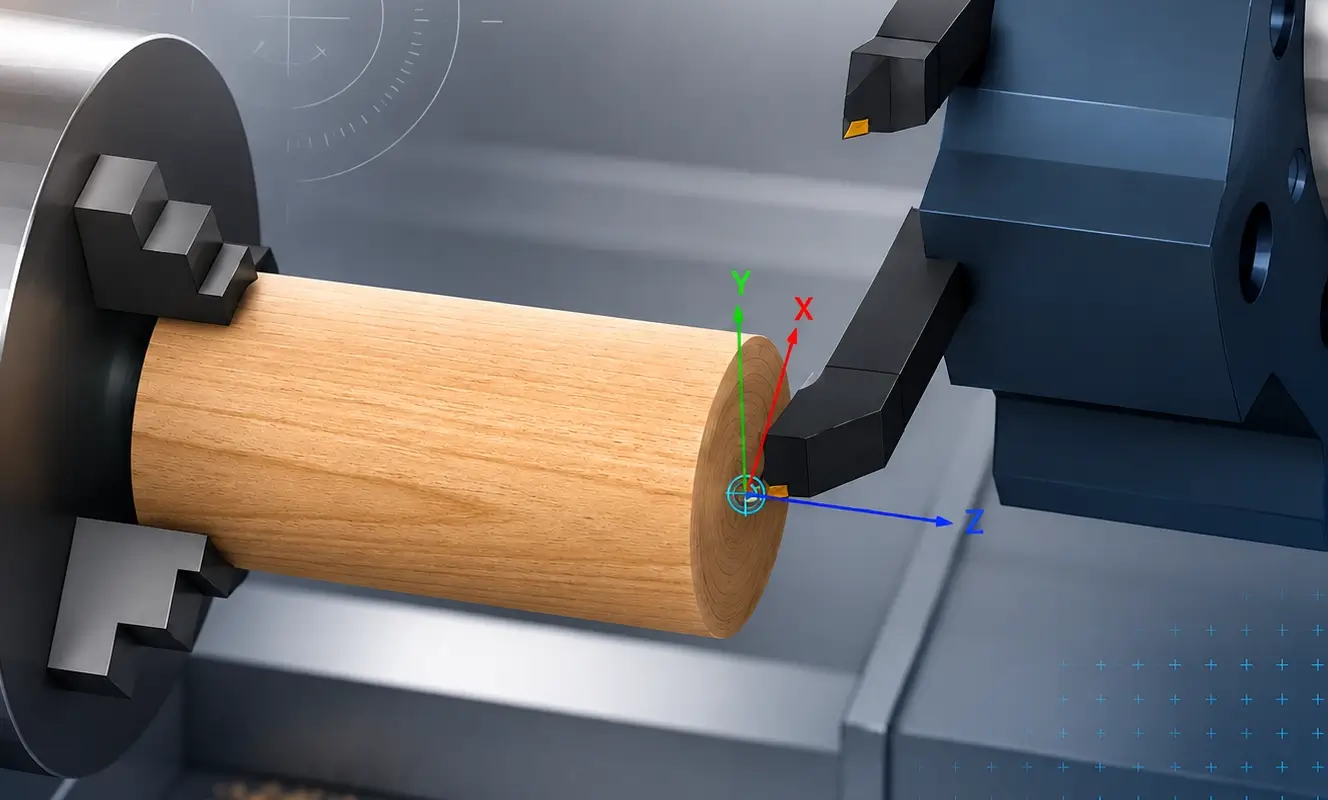
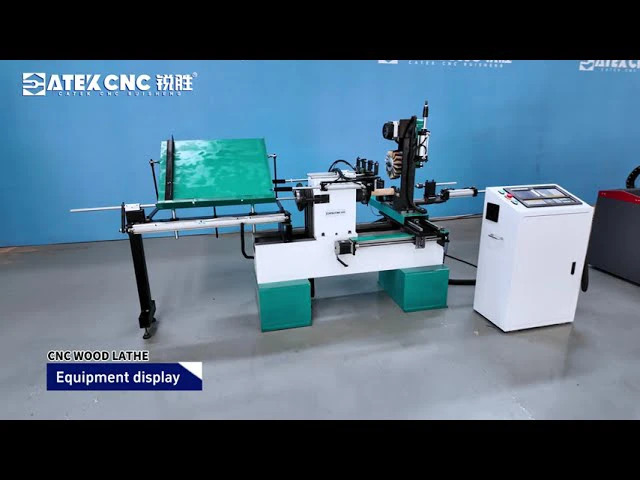
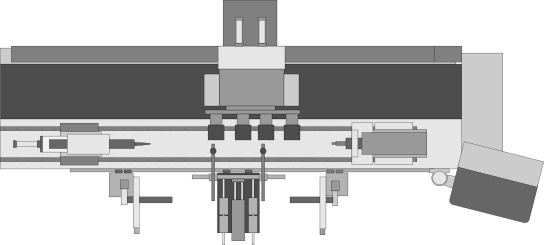
Modern CNC woodworking lathes are controlled by CNC systems, with motors as the power source, and use high-precision ball screws or gear racks to make the X, Y, Z, A and B axes move linearly or rotary, thus realizing fully automatic production and processing of woodworking lathes without any professional foundation. Unlike ordinary manual lathes, this type of machine achieves full digital control. After programming with G code, the machine can automatically process raw materials, from loading to workpiece clamping and rotation, and turning tool feeding, without manual participation, which truly liberates manpower, improves processing accuracy, and has excellent product consistency, greatly improving production efficiency. More complex CNC woodworking lathes can add multi-functional spindles and various tools. These spindles are driven by independent motors, and different tools can be added to each spindle and can cooperate with each other. Compared with traditional manual lathes, the advantages of multi-process processing are more obvious.

Categories of CNC Wood Lathes

With the continuous advancement of science and technology and the improvement of people's aesthetic level, modern lathes have been gradually upgraded from a single rotary product used only for turning simple products to a multifunctional equipment integrating turning, drilling, sanding, slot milling, milling, 3D engraving, 4, 5-axis linkage engraving, automatic tool change, etc. It can meet the various aesthetic products designed by designers. From the previous cooperation of multiple machines to complete a workpiece, to the current integration of multiple processes in one machine, it has greatly saved labor and machinery costs. It is also more convenient and easy to use.

Multifunctional Composite Machining Center with Turning, Milling, Engraving, Sanding and Drilling Functions

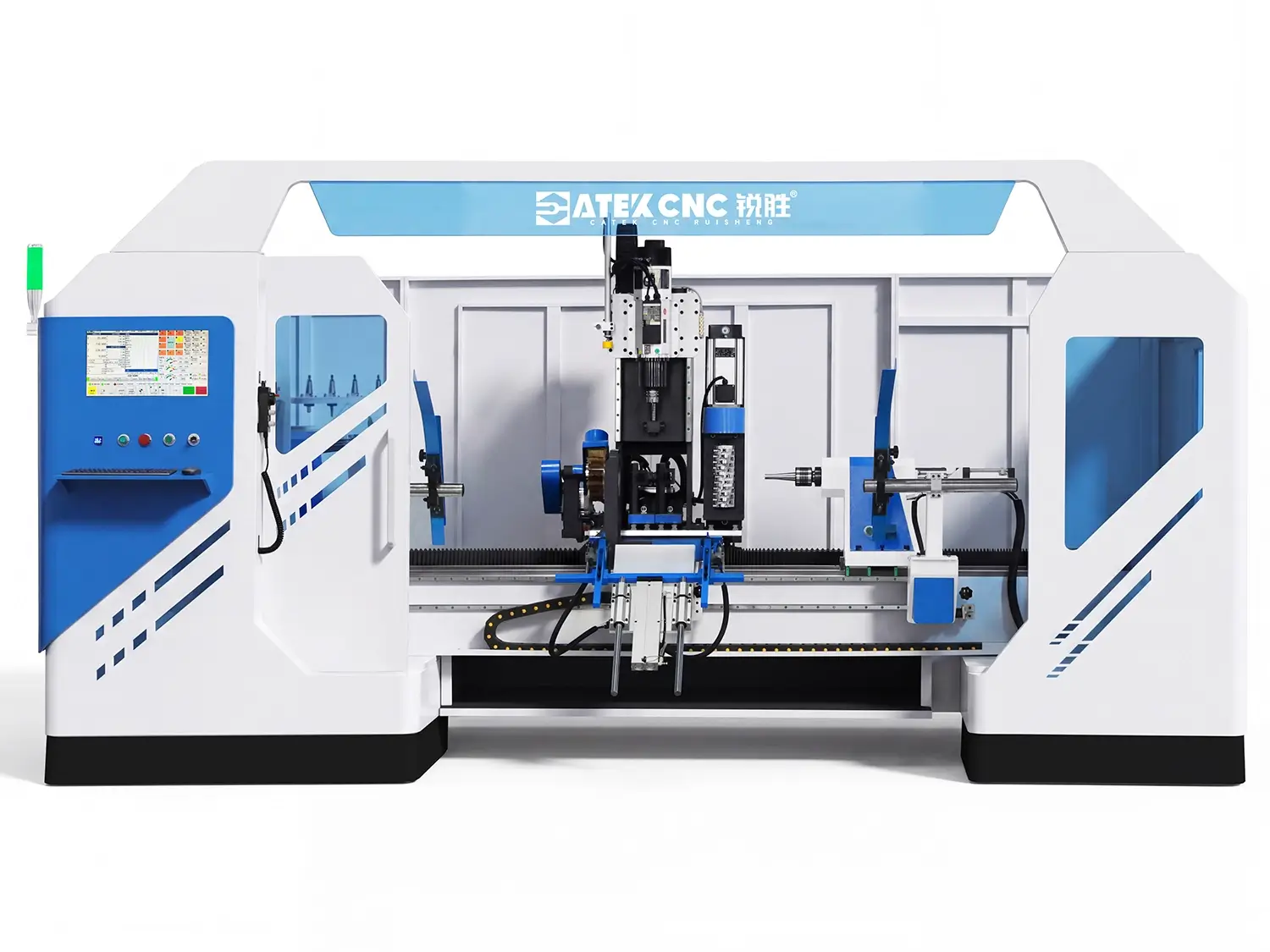
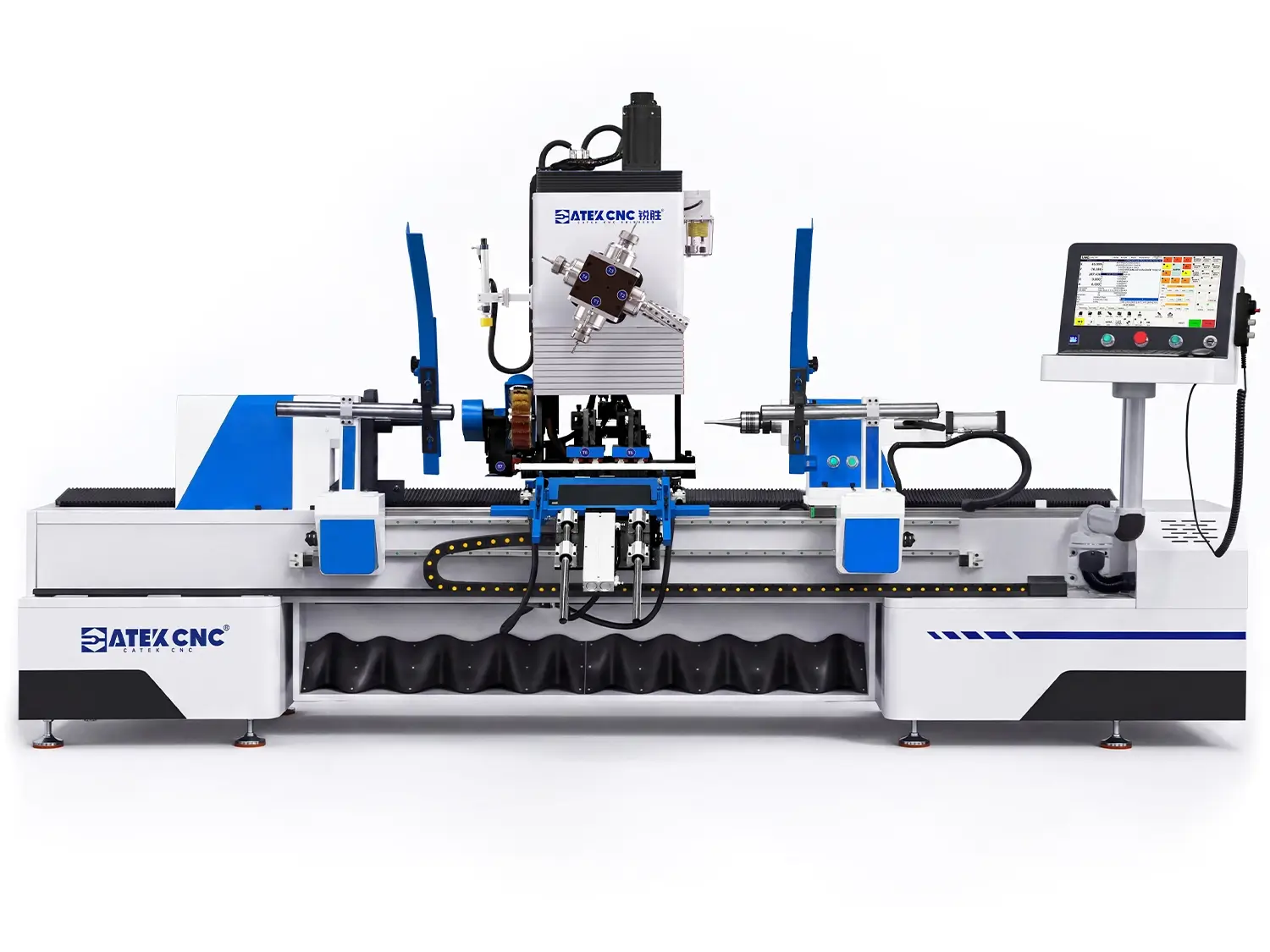
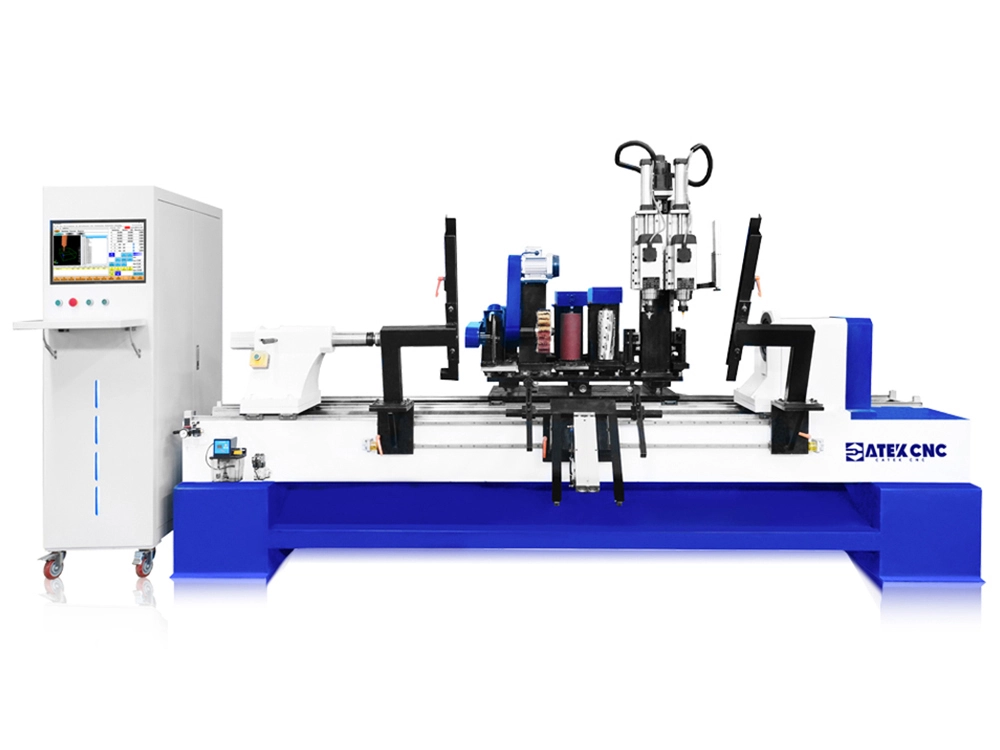
The structure of this type of machine tool is similar to that of an ordinary CNC wood lathe, but many functions have been added to it, and it can process workpieces with extremely complex processes. It is equipped with functions such as turning, milling, four-axis linkage engraving, sisal brush sanding, and automatic loading. You can add or reduce functions as needed. For detailed optional content, please enter the multi-functional wood lathe to view.

Turning CNC Wood Lathe

The functions are relatively simple, and it can only complete turning and drilling of inner and outer diameters, but the production efficiency is very high. Usually, it only takes 60 seconds to turn a 900mm Roman column, and you can still choose more functional kits to meet diverse processing needs.

Turning and Carving CNC Wood Lathe

This type of lathe has expanded its scope of use to a certain extent, and has the functions of turning, engraving, drilling, and grooving. It can be used for workpieces that are not particularly complex.

Pool Cue CNC Wood Lathe

This lathe is specially designed for processing slender products such as billiard cues. Ordinary lathes rely on the high-speed rotation of wood and the back-and-forth movement of the tool to complete the processing of workpieces. Obviously, this is unrealistic for slender billiard cues. This lathe mainly relies on the high-speed rotation of the tool (milling cutter) and the slow rotation of the wood to process.

Working Principle of CNC Woodworking Lathe

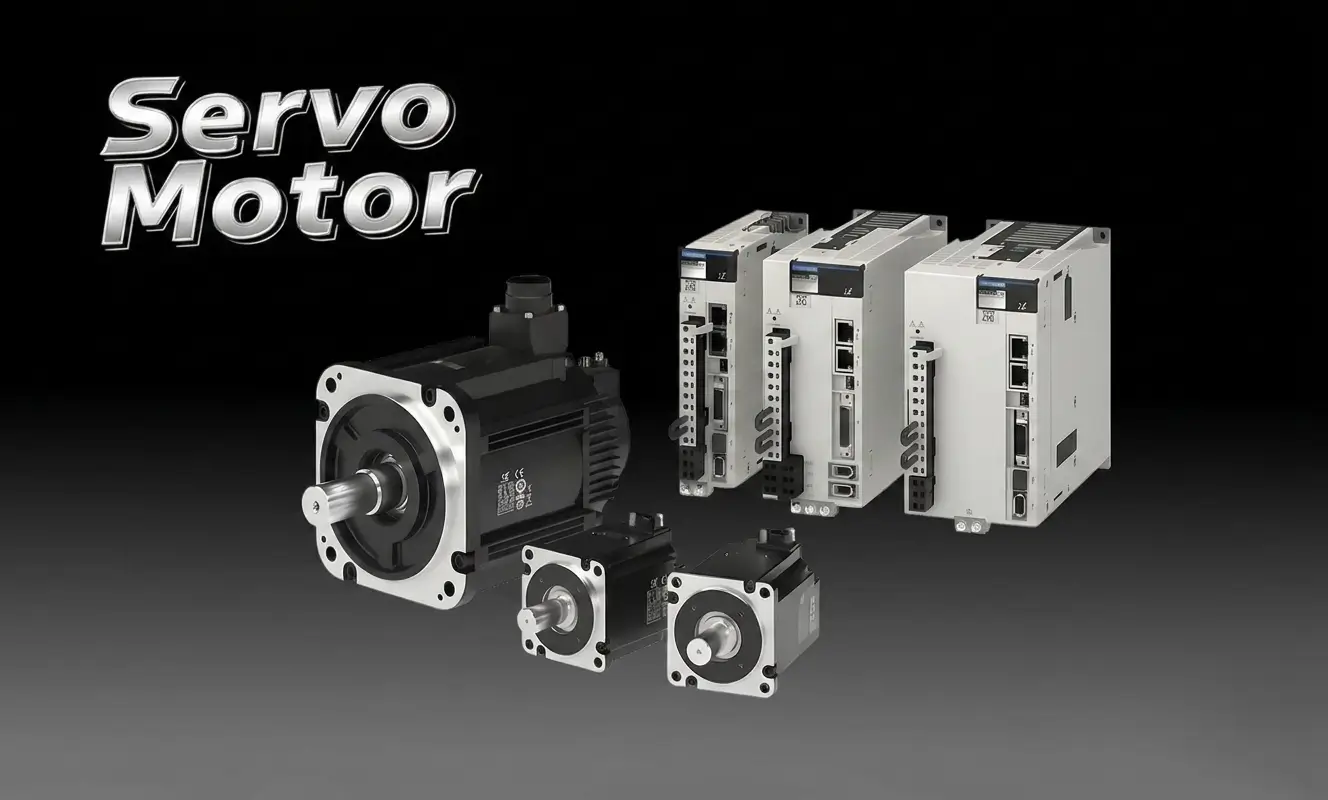
CNC wood lathes usually have 4 axes, X and Y axes correspond to two turning tools, and Z axis corresponds to the long axis. G code is used as the control instruction, and the servo or stepper motor drives the ball screw or gear rack to drive, so that these axes can move on the slide rail to process the shape we want.

The A axis is a rotating axis. For ordinary turning machines, A axis can only be used to drive wood to rotate. During processing, the clamping of the two turning tools will be staggered by a certain distance, usually within 10mm. They are driven by two independent drive motors, one for roughing and one for forming. The two knives work at the same time, which improves the processing efficiency while ensuring the processing accuracy and finish.

The multifunctional CNC wood lathe adds engraving spindle, large milling cutter, sanding belt, saw blade and other functional kits to the basic lathe, and the main motor is replaced from the original asynchronous motor to a 4KW or even larger servo synchronous motor, which drives the workpiece to rotate at high speed while accurately controlling the rotation angle, and the belt is also replaced with a toothed synchronous belt to ensure rotation accuracy. When milling grooves or engraving, the main motor controlled by the code can cooperate with the engraving tip or forming knife clamped on the engraving spindle to rotate the material to complete the milling of non-rotating bodies. If the machine adds a 5-axis function, the spindle will change from being able to move vertically to being able to swing up and down, forward and backward, left and right. It can also freely control the rotation of 0-180 degrees, thereby achieving more complex bevel processing that cannot be completed by four-axis linkage. The milling cutter is driven by a motor to rotate. The standard diameter is 90mm and the height is 240mm. There are 60 disposable blades on it, which can be used to complete milling processing with a very large cutting amount. If the blade is not sharp, we do not need to replace the entire milling cutter, but only need to replace the blade on it. The same principle applies to sanding and saw blade processing. Through our video column, you can see the working principle of this type of machine more intuitively.

How to Choose a CNC Wood Lathe That Suits You?

  1. Clarify Your Processing Needs

    Choose a lathe with corresponding processing capabilities according to the type of product you want to process. All types of lathes have turning functions (some specially customized models may not have them, such as the lathe for billiard cues replaces the turning cutter with a milling cutter). You can expand the functions you need based on the basic model, or you can choose from some of our standard models.

    You need to determine the diameter and length of the material to be processed to ensure that the maximum processing range of the lathe can meet the processing requirements. You also need to consider the accuracy requirements of the processed parts and choose a CNC woodworking lathe with the corresponding accuracy level to ensure the processing quality. Normally, the accuracy should be within 0.1mm.

  2. Determine Configuration Parameters

    You should first choose a machine with a high-strength and high-rigidity bed to ensure stability and precision during processing and the service life of the machine. The configuration of the machine also determines the cutting capacity and processing efficiency of the lathe, so it is particularly important to choose a configuration that suits you according to your processing needs. For example, a configuration with a servo motor and a reducer will have a faster idling speed, greater turning torque, more cutting capacity, and higher processing efficiency than a configuration with a stepper motor and a gear box.

  3. Estimated Production Efficiency and Output

    Choose a lathe with an appropriate number of axes and tools according to production requirements. Multi-axis and multi-tool lathes can complete multiple processing steps at one time, improving processing efficiency. For personal studios, single-axis lathes can generally meet production requirements.

    Choose a lathe with multiple degrees of automation according to production requirements. Automated lathes can reduce manual intervention and improve production efficiency and product quality. Such as: automatic loading, automatic tool change, automatic sanding, etc.

  4. After-Sales Service and Technical Support

    A CNC woodworking lathe supplier with professional and timely after-sales service can allow you to get timely technical support and maintenance services during the use of the machine. Find out whether the factory provides technical training support, including operation training, drawing training, etc., to help users better master and use the product.

Application Scope

Applicable Materials

  • Natural wood: hardwood (oak, walnut, cherry, beech, etc.), softwood (pine, fir, balsa, etc.)
  • Synthetic wood: MDF, HDF, solid wood particle board, etc.
  • Composite polymer materials: thermosetting and thermoplastic plastics, acrylic PVC, Carbon fiber, etc.
  • Other materials: dimensional stable materials such as gypsum and asbestos.

Application Industry

  • Furniture parts: Roman columns, stair railings, various tables and chairs, sofa legs, bed legs, etc.
  • Sports equipment: pool cues, baseball bats and other rods, various chess games.
  • Musical instruments: drumsticks, violins, bassoons, recorders, etc.
  • Crafts: wooden bowls, wooden balls, vases, nesting dolls, various sculptures, etc.
  • Daily necessities: candlesticks, pen holders, cat climbing frames, various wooden handles, canes, etc.

Specification

Processing Method Special alloy tool for CNC lathe
Control Type Computer numerical control
Optional Color The standard colors are two-color stitching: green and white, blue and white, orange and gray, green and gray, blue and orange. Color cards are available and we provide free color customization service.
Bed Heavy gray iron cast bed,Optional double bed four track advanced version (for machine models with more functions)
Optional Motor Brand YAKO, Yaskawa, Panasonic, Delta, Leadshine, Donlim, etc.
Optional Spindle Motor HQD HSD 3.5kw,4.5kw,6kw,7.5kw,9Kw
Spindle(Drive Workpiece) Speed 0-6000r/m
Spindle(Multifunctional) Speed 0-12000r/m,0-18000r/m,0-24000r/m
Optional Inverter BEST,Delta,Folinn,Hpmont,etc.
Electrical Part Schneider, Delixi, Chint, Omron, etc.
Optional Guideway Taiwan Hiwin/PMI/Japan THK high precision 25 linear square rail/25 slider
Transmission Mode XY axis 25TBI ball screw drive, Z axis uses high-precision helical rack/TBI 32 ball screw
Control System CATEK-1000TC, DSP, MACH3, NC-studio, Syntec, Siemens, FANUC, Mazak, Mitsubishi.
Software Artcam, type3, CAD drawing, CDR, solidworks UG powermill,auxiliary design, etc.
File Format G code, u00, mmg, plt, dxf, dbf, txt
Processing Dimensions(length * diameter)
  • 3000 * 500mm

  • 2500 * 400mm

  • 2000 * 300mm

  • 1500 * 500mm

  • 1500 * 300mm

  • 1500 * 160mm

  • 1500 * 100mm

  • 1200 * 500mm

  • 1200 * 200mm

  • 800 * 200mm

  • 200 * 80mm

  • 150 * 70mm

  • 150 * 60mm

  • (Other processing sizes can be customized for you)

Processing Station 1~4
Function Turning, facing, milling, carving, sanding, etc.
Optional Parts All kinds of turning tools and planers and engraving tools, four-jaw chuck, steady rest, automatic tool changer, multi-function spindle (optional four-axis linkage), cutting saw blades, sanding wheels or belts, automatic loading and unloading system, semi-enclosed or fully enclosed protective cover, dust collector

Purchasing Cost of CNC Wood Lathe

The price of a CNC woodworking lathe is related to its size, processing station, function, parts brand, etc. You can get our mini woodworking lathe for just over $3,000, the medium-sized 1516 model and the rod-specific 1510 model are $4,000 to $8,000, the full-size 1530 model and the larger 2516 model are $4,000 to $10,000, and the most powerful wood turning and milling compound machining center 1530-8T model can reach up to $18,000. You may have noticed that the price of the machine does not increase significantly with the increase in processing size, but the price range of each size is very large, so let's explain our pricing strategy in detail. The open and transparent price can make you buy more assured and know where your money is spent.

First of all, as an old OEM manufacturer, we can produce machines of various sizes and configurations according to user needs, so you can customize the size that does not exist in our "Specifications" table above. We take the standard size 1530 lathe as the benchmark. For every meter of length, the price will increase by about $300 (it will be higher after it is extended to 3 meters), and for every ten centimeters of diameter, the price will increase by $150 (it will be higher after it is increased to 500 mm).

The standard version of the lathe has only one processing station, and you can also customize the processing station. The relationship between the number of processing stations and the price is more complicated. It is affected by the size and whether it contains automatic loading and unloading functions. For example, the standard version of the 1510 billiard cue lathe will increase the price by $430 to $580 for each additional station, while the model with automatic loading and unloading function (1510-A series) will increase the price by $1000 to $1200 for each additional station.

In addition to these, the cost of accessories accounts for a large proportion of the woodworking lathe. For example, adding a sanding wheel costs $280, a planer costs $710, an automatic tool changer costs $410, and a 160mm chuck costs $140. We are also well aware that the economic levels of our customers vary greatly. Many customers with financial difficulties also want to use more modern woodworking lathes to replace old manual lathes. Therefore, our various parts can also be selected from different brands according to your requirements, so that more customers can use our high-quality lathes.

Please compare with other sellers. We can proudly say that our lathes are absolutely not inferior to any other in quality. The pure gray iron cast bed, parts purchased from industry leaders, and wiring that are like works of art, and the price is even lower than many manual lathes.

Term

If you have read this far, you must be eager to check out the machine. Before that, it is necessary for us to explain the relevant professional terms to facilitate beginners or enthusiasts who are new to this industry to purchase a woodworking lathe.

Bed

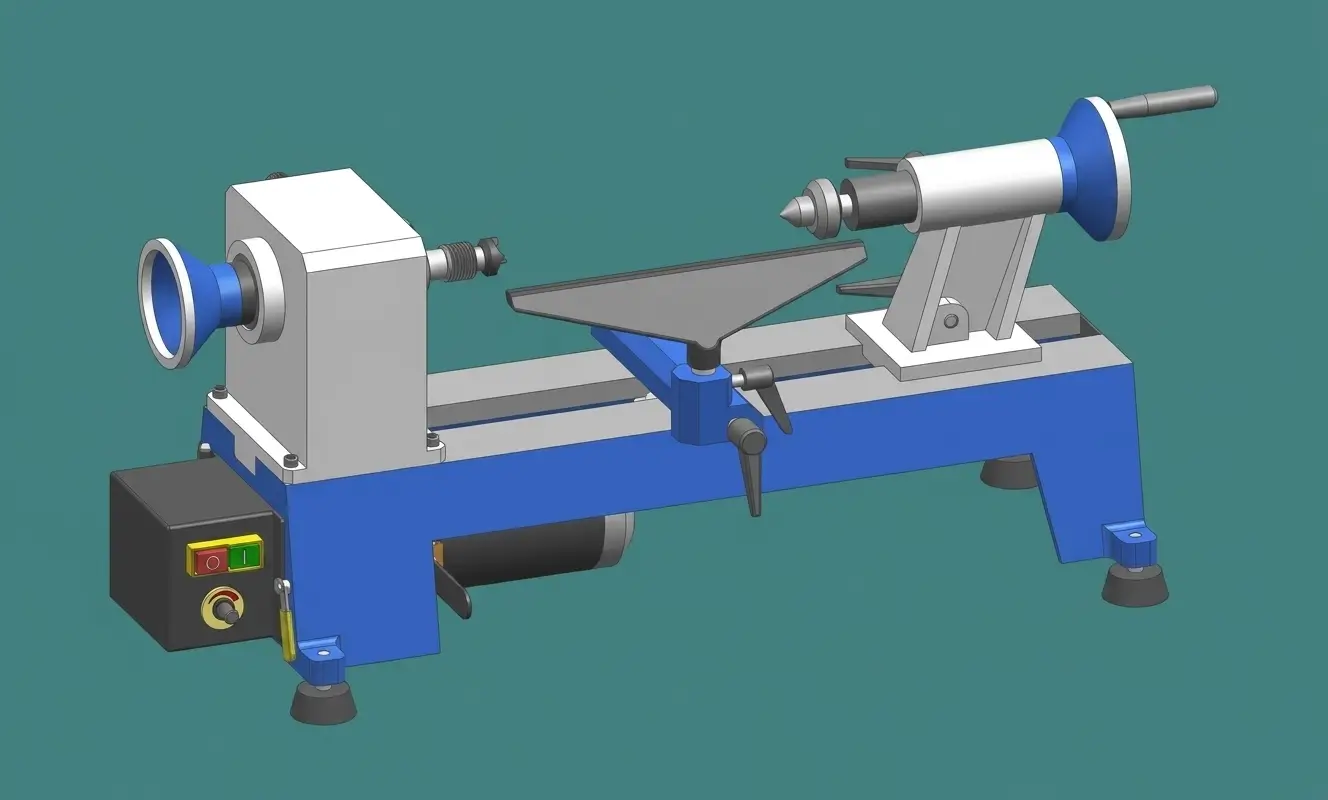
The bed is the basic part of the lathe, used to support and connect other parts. It usually has sufficient rigidity and stability to ensure that there is no deformation or vibration during the processing. The most commonly used lathe in modern wood processing is the horizontal lathe. The bed is a horizontal beam, which together with the base, spindle box and tailstock constitutes the basic appearance of the lathe (a horizontally elongated H shape). It is generally made of high-quality gray iron material. After aging treatment, it can effectively eliminate internal stress and increase the service life of the machine tool.

Spindle

In a narrow sense, "spindle" usually refers to the horizontal axis that drives the workpiece to rotate. It is located in the spindle box, and the core component is the spindle bearing, which is driven by the power of the feed box. Its main function is to drive the workpiece to rotate, and it is connected to the workpiece through center or chuck, etc. We are generally accustomed to calling this type of spindle "drive spindle". Due to its one-to-one characteristics with the workpiece, adding multiple sets of drive spindle systems can form multiple processing stations, thereby realizing batch processing.

In a broader sense, the term “spindle” also refers to various types of machining axes other than the horizontal drive axes described above. These axes can be machined in different directions (x, y, z, etc.) using different machining tools, they are often referred to as “multifunctional spindles”.

Headstock

It is a box located on the left side of the bed, which contains the spindle and its related components. The main function of the headstock is to provide a stable structure to support the spindle, ensuring its stability and precision at high-speed rotation. During processing, the spindle will bear the force from the cutting tool and workpiece, so it needs to have sufficient rigidity.

Tailstock

It and the headstock are located at both ends of the bed, usually at the right end, and can move horizontally. Its main function is to fix the other end of the workpiece. One end of the workpiece is fixed to one side of the spindle, the tailstock can exert a horizontal force opposite to the spindle on the workpiece to support the workpiece, effectively increasing the stability of the workpiece during processing, When processing a short workpiece and needing to process the cross section of the workpiece, a chuck may be used to fix the workpiece and the spindle, and may not need to use the at this time.

Cross Slide And Compound Rest

The cross slide is fixed to the bed by a slide rail or a screw rod, and it can move left and right. There is a device called compound rest on it that can move forward and backward perpendicular to the bed,the compound rest is equipped with a tool holder that carries the processing tool. Therefore, the cross slide and the compound rest work together to realize the left and right movement (selecting the processing position) and forward and backward movement (feeding the tool).

Guide for First Start-Up of Woodworking Lathe

  1. Check the sequence of the neutral and live wires to ensure that they are not connected in reverse, otherwise it will cause a short circuit in the control cabinet.

  2. Press the green start button on the lathe to turn on the machine and power it on. Wait for the display to start up and display the initial screen. The power indicator light will light up, and the cooling fan and all electrical components in the control cabinet will also start.

  3. On the lathe operation panel, find and press the manual button on the panel, and press the XYZ and other direction buttons to move each axis to expand the machine.

  4. Prepare the tools and spare parts required for installation, such as wrenches, screwdrivers, etc., and install the machine's chuck, rotary center, turning tool and other parts.

  5. Check the installation status: Check the installation status of the parts thoroughly to ensure that all parts are installed in place without looseness or missing.

  6. Carry out trial machining: load suitable materials and perform trial turning using the trial machine drawings we provide, observe the operation of the lathe, check for abnormal sounds or vibrations, and ensure that all functions of the machine are normal and stable.

Daily Maintenance of Woodworking Lathe

Daily maintenance of the lathe is essential to ensure its normal operation and extend its service life. Here are some professional woodworking lathe maintenance processes for your reference.

Maintenance and inspection before starting

Cleaning and lubrication: Wipe away the dust and sawdust on the exposed guide rail surface of the woodworking lathe, and check the oil level of the electric oiler and whether it is working properly, to ensure that each transmission part is lubricated normally.

Empty processing test run: Before starting the machine every day, the lathe should be allowed to process empty first, check whether all parts of the machine tool are operating normally, without abnormal sound or vibration, and whether the processing starting point and action are normal to avoid damage to the workpiece.

Monitoring during processing

Strictly follow the machine operation procedures to ensure the safe operation of the lathe. Pay attention to the operation of the machine at any time. If there is any abnormality, press the red emergency stop button on the machine in time to avoid the expansion of the fault.

Maintenance after shutdown

Clean the sawdust not collected by the dust collector to avoid sawdust accumulation affecting lathe performance and lubrication effect. Wipe or blow clean all parts, including guide rails, lead screws, etc., to ensure that there is no oil or sawdust residue.

Regular maintenance
  1. Regularly clean and lubricate the guide rail surfaces manually to ensure smooth sliding of the guide rails and machine accuracy.

  2. Check whether the machine lubrication system, guide rail lubrication system, etc. are working properly, open the bearing oil seal, and add grease in time if it is missing.

  3. Regularly check the electrical components in the control cabinet, such as inverters, drivers, magnetic switches, relays, etc., to ensure that they are not loose or contaminated.

  4. Check the accuracy of the machine tool regularly. Specific operation: Clamp a piece of material, manually control the turning tool axis to move from Z- to Z+ to turn the material, and use a vernier caliper to check whether the diameters at both ends are consistent.

  5. Long-term shutdown maintenance: If the lathe is shut down for a long time, moisture-proof work should be done and the main power supply of the machine should be cut off. Before restarting the machine, all parts of the machine should be fully checked to see if they are normal.

Last Updated:
2026-01-20

CUSTOMER REVIEWS

  • Outstanding investment! The 5-axis versatility combined with 7 different functions allows us to take on jobs we had to refuse before. The build quality is robust and accuracy is perfect. Exactly what we needed in Serbia.

    Martinov
    rs
    Oct 27, 2025
  • I bought this CNC lathe because some fellow businessmen in my industry are using machines from this brand, and I heard great feedback about them. So I decided to get one too. I barely hesitated at all from the moment I inquired about the price to making the purchase.

    Mamtora
    in
    Nov 22, 2025
  • I needed a CNC lathe capable of engraving intricate circular patterns, and after searching, I finally found CATEKCNC. Their sales team carefully verified my requirements and helped confirm the right machine for my needs. Currently, I'm still waiting for the machine to arrive, but the communication with their sales staff has been excellent and very pleasant.

    Julien
    ht
    Mar 25, 2025
  • I have always wanted to buy a CNC wood lathe that can process wooden handles. I contacted catekcnc by they whatsapp. After seeing my product, the salesperson Vera recommended this CK-0615-A to me. It occupies a small area but has powerful functions, automatic feeding and continuous processing, which is very suitable for making handles. It is especially suitable for a small woodworking studio like mine! It is very helpful to me and is a machine worth buying!

    Perez
    cl
    Jan 13, 2025
  • Received and unboxed the CNC wood lathe today — really impressed with the packaging! All vulnerable and high-friction parts were securely wrapped in foam, and after thorough checking, I can confirm the machine arrived with zero transport damage. All accessories were complete and exactly as listed. Everything matches their description perfectly. Couldn't be happier today, I love "Made in China"! I love China! ! ! ❤️

    Zul
    my
    Dec 23, 2025
  • After switching from manual to CNC lathe, our processing efficiency has improved dramatically, and the defect rate dropped like never before. One-time investment, long-term returns!👍👍👍

    Jamal
    in
    Jan 23, 2026
  • This CNC wood lathe is very practical for my business. I was worried it would be too complicated to operate, but the learning curve is actually quite low. Even my workers picked it up quickly. A big plus is the simple auxiliary design software they included—it’s very convenient and makes drawing patterns much easier than I expected.

    Sou
    kh
    Mar 06, 2026
  • Before buying, I asked them to do a test cut with my design, so I wasn’t worried about the machine’s performance. But once it actually arrived… reality hit 😂 A few parts needed assembly, and when it came to actually using it, I was kinda lost lol.

    Luckily, there’s been someone helping me out in the group chat recently. Hope I can get the hang of it soon!

    Muaz
    my
    Feb 05, 2026
  • After purchasing the machine, my sales consultant Pihris set up a WhatsApp support group and kept me updated regularly on the production progress. When the machine arrived, I had tons of questions and honestly didn’t know where to start — I was pretty inexperienced. But every single day, they patiently answered everything I asked. Simon even hopped on a video call with me and walked me through processing my product smoothly. I’m so glad I made the right choice. I just want to say: Thank you!

    Makwana
    in
    Jul 31, 2025
  • Plug and play, no add-ons required. Stable quality and good value for money. Fits and finishes perfectly as advertised. So far so good on the cabinet making. However, since I am new to CNC, the LNC controller software has a bit of a learning curve. After about 3 days of operation, I was troubled by a problem. When the Z-axis stops, the LNC control system alarms that the servo lag is too large. I checked the servo connection cables and parameters and troubleshooted with the help of a customer support rep, Mike, who stayed in touch throughout the process. Very impressed with the service and product.

    Mahesh
    in
    Dec 19, 2024
Share this:
Menu