CNC Metal Milling Machine
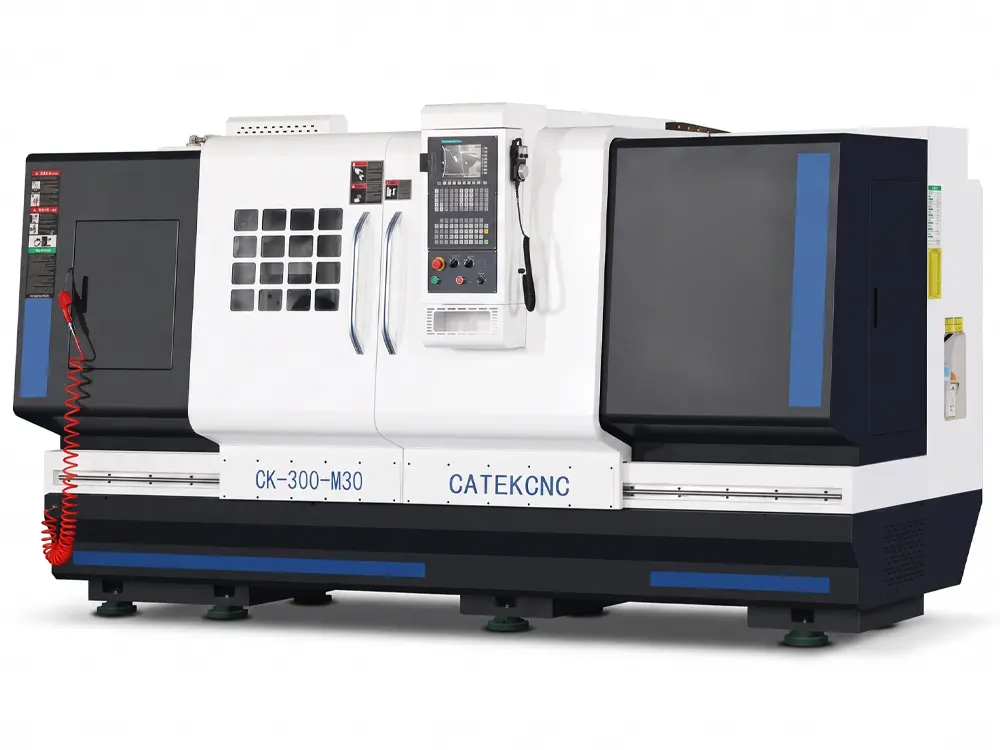
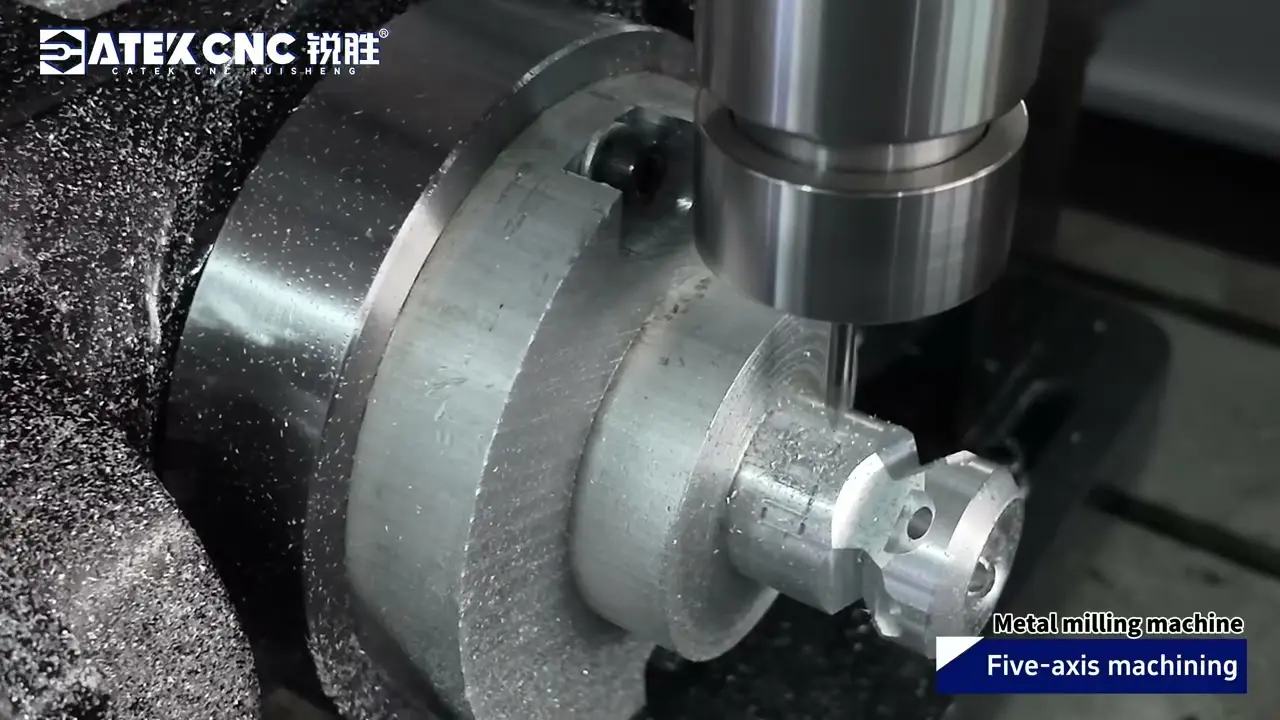
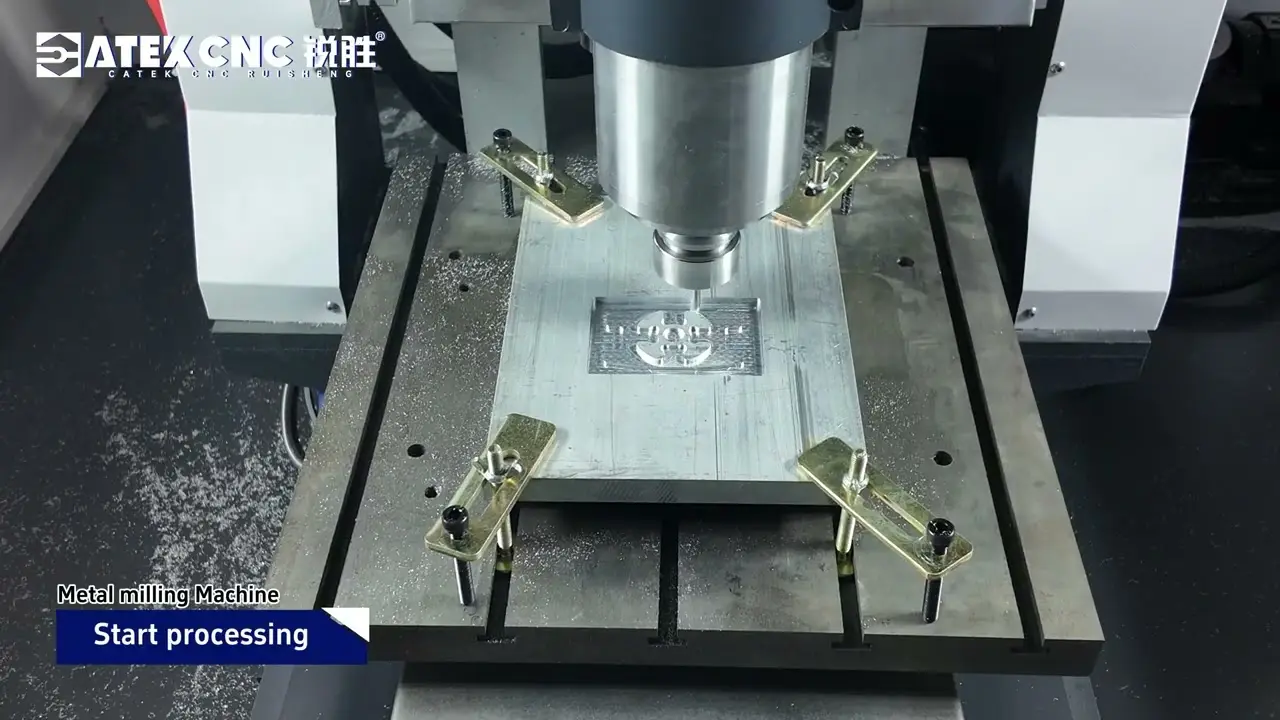
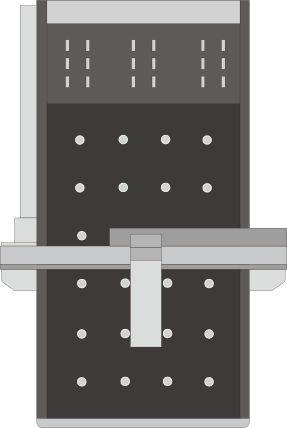
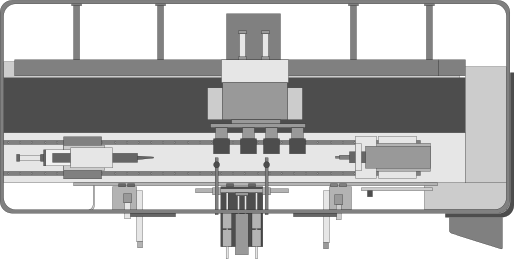
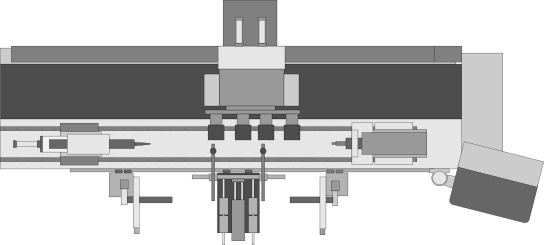
CNC metal processing machines is a specialized composite CNC equipment designed for metal machining. This type of machine is equipped with a water-cooled spindle and a coolant spray system to dissipate heat generated during metal milling and flush away metal chips. The machine offers three-axis, four-axis, and five-axis options. For complex spatial structures of metal parts, an automatic probe can be optionally added to achieve precise measurement of the workpiece and correction of the CNC model. It can be fitted with a tool magazine containing various machining tools to perform milling, drilling, tapping, reaming, boring, engraving, and other operations on the workpiece. It is widely used in industries such as mechanical manufacturing, automotive, mold-making, hardware tools, and furniture manufacturing. It can process various metal parts, such as gears and shafts in mechanical transmission components; engine blocks and cylinder heads in the automotive industry; and injection molds and stamping dies in the mold-making industry.
-
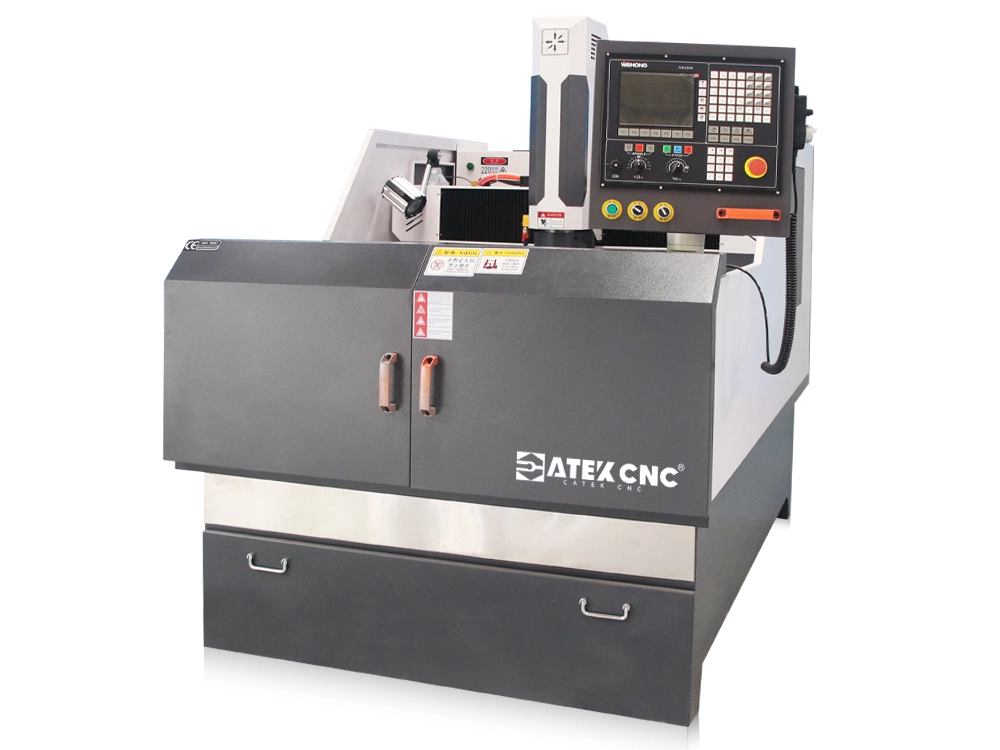
Affordable Semi-Enclosed Linear ATC CNC Metal Milling Machine
-
CK-690D
-
5.0(11)
This CNC metal milling machine features a semi-enclosed protective cover, comes with a linear tool magazine capable of holding five tools, offers complete functionality, and is affordably priced.$5,680.00~$7,570.00 -
-
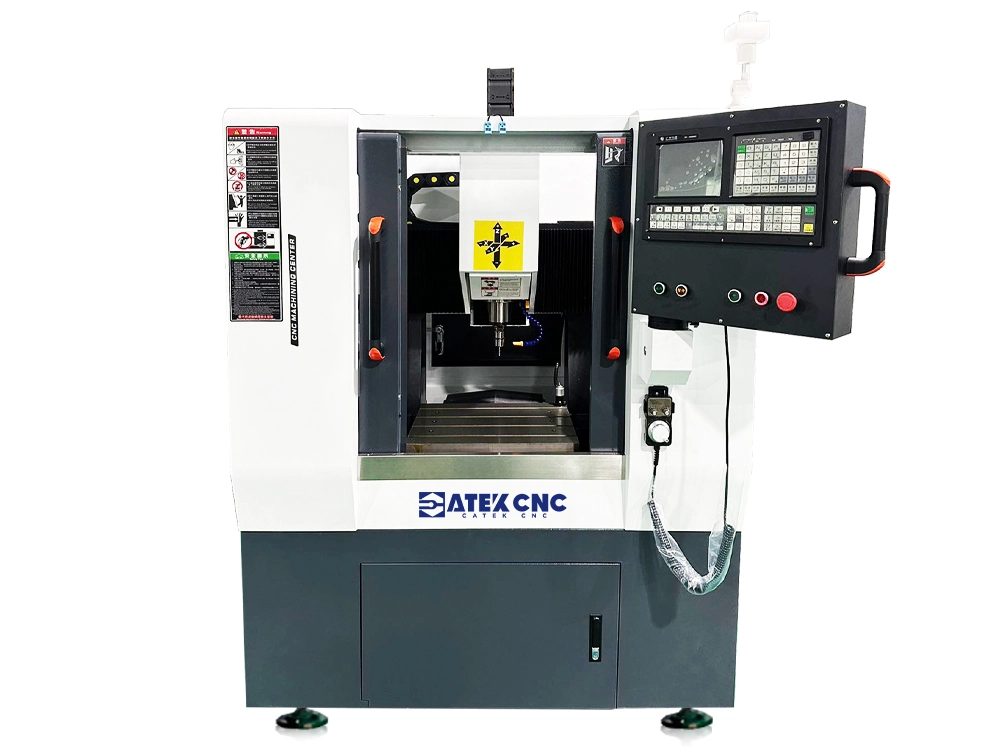
High Precision CNC ATC Metal Milling Machine
-
CK-600D
-
5.0(7)
This vertical metal milling machine comes with a fully enclosed housing, automatic coolant spray/filtration system, lubrication, auto tool changer, and tool setter for versatile metal part machining.$9,700.00~$14,000.00 -
-
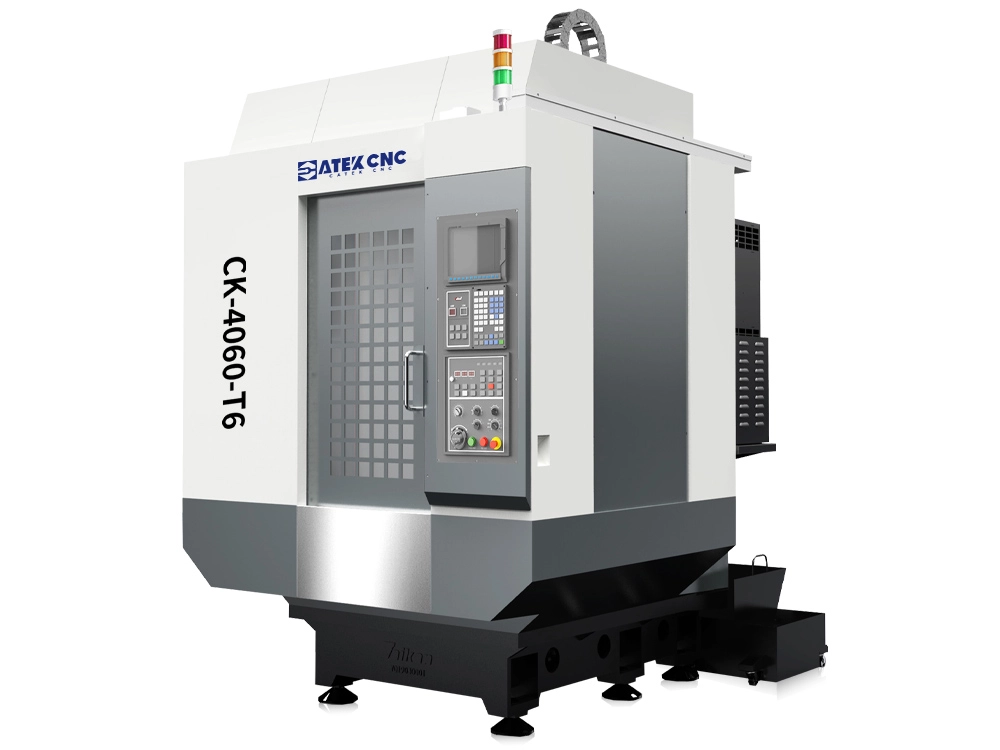
Metal Drilling and Milling Vertical Machining Centers for Sale
-
CK-4060-T6
-
5.0(3)
This CNC metal machining center integrates milling, drilling, and tapping, featuring an automatic tool-changing arm-type magazine, widely used for metal parts processing and mold manufacturing.$16,800.00~$35,600.00 -
-
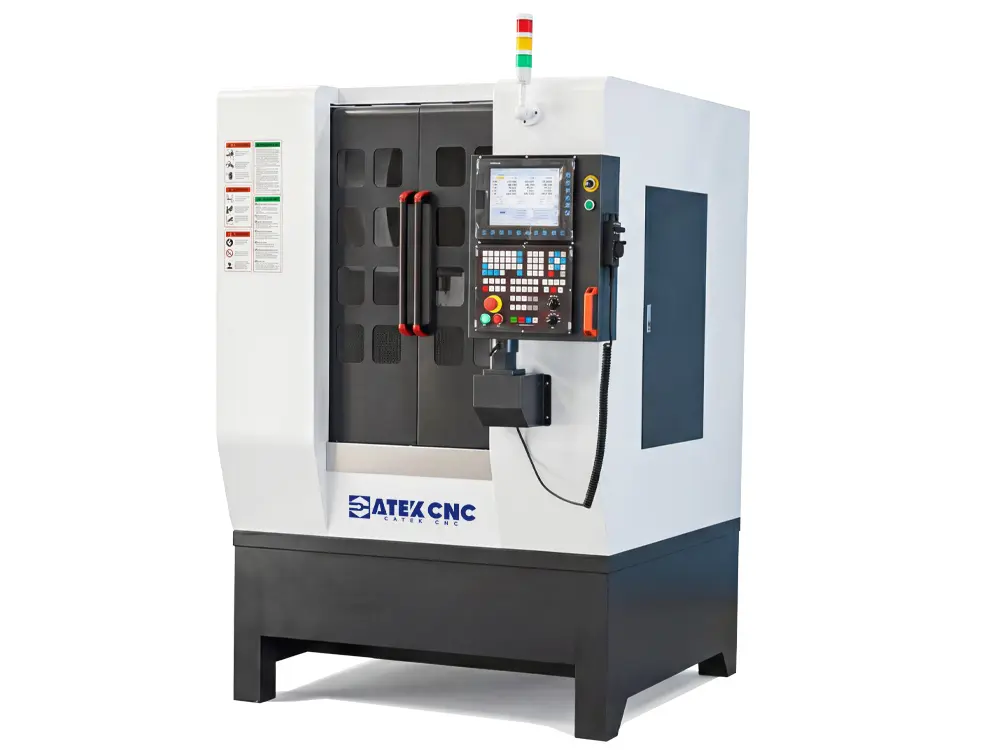
Trunnion-Type 5-Axis Metal Milling Machine
-
CK-6060-5S
-
5.0(4)
This is a 5-axis CNC metal milling machine featuring a trunnion-type 5-axis design, equipped with an infrared touch probe and automatic tool changer, specifically designed for precision 3D machining of small parts.$16,800.00~$27,800.00 -
HERE ARE SOME RELATED VIDEOS OF CNC MACHINES
-
00:46
CNC Metal MachineOct 29, 2025Vertical CNC Metal Machining Center With Clamp-Arm Tool Changer and Probe
This video shows the details of the CK-4060-T6 vertical metal machining center and the process of machining metal parts.
-
02:17
CNC Metal MachineDec 06, 2025Powerful 5-Axis Trunnion CNC Milling Machine Machining Metal Parts
Powerful 5-axis trunnion CNC metal milling machine, effortlessly handles both 5-axis and 3-axis planar machining!
-
00:45
CNC Metal MachineDec 06, 2025Highly Cost-Effective Semi-Enclosed CNC Metal Milling Machine
This video demonstrates the machining and automatic tool change capabilities of a highly cost-effect
USE ENGRAVING-MILLING MACHINES TO PROCESS VARIOUS METAL PARTS
In 2026, do you want to know and purchase a metal CNC metal carving-milling machine to expand your business? This purchase guide will provide detailed explanations on various aspects of CNC metal CNC metal carving-milling machine machines, including their definition, working principle, components, application fields, selection points, maintenance and upkeep, etc. Whether you are a small studio, a small processing factory, a personal studio, a training school, a start-up enterprise, an amateur enthusiast, an engineer, a manufacturing practitioner, an agent, a distributor, or an enterprise owner who intends to purchase equipment, this purchase guide can enable you to gain a comprehensive understanding of the knowledge related to such machines. The functions of this type of machine include, but are not limited to, precision engraving and milling, drilling and tapping milling, high-speed cutting, high-speed drilling, high-gloss chamfering, mold processing, fixture processing, casting processing, and precise processing of 3D curved surfaces. Multiple processes can be fully automated on one machine. If you are preparing to enter or are currently engaged in the metal processing industry, having a CNC metal precision milling machine suitable for your business is very necessary. It will be your most reliable partner, helping your business soar to new heights.
What is a CNC Milling Machine for Metal?
CNC (Computer Numerical Control) metal engraving-milling machine is a high-precision machine tool controlled by computer programs. It realizes fully automatic processing according to the processing programs (G-code) written by technicians. It uses high-speed rotating cutting tools to perform high-precision and high-efficiency physical processing such as cutting, engraving, drilling, milling, and tapping on the surface of metal materials. It is suitable for processing complex geometric shapes, fine patterns, or high-precision parts and molds. Its core feature is physical contact processing, where the material is directly removed by the high-speed rotation of the engraving spindle.
Specifically, The CNC milling machine can be further divided into CNC metal milling processing center and CNC metal engraving machine. In terms of definition, there is not much difference between these two machines. The main difference lies in the design structure and functions of the machines. CNC metal milling processing center has more powerful functions and is mainly used for some heavy cutting scenarios, such as the processing of large molds or materials with high hardness. Generally, it has an ATC automatic tool changing function, which can automatically change the tools to complete complex processes such as drilling, boring, and tapping, and the machine structure will also be more robust. The engraving machine has a relatively small engraving area, usually below 600mm*900mm, and is mainly used for fine surface engraving processing. It has a small processing volume and good processing effect, and is suitable for processing small-sized precision parts such as seals, badges, and molds.
Compared with standard CNC routers, a CNC metal machine is built with a more rigid structure, higher spindle power, and enhanced stability, making it suitable for heavy-duty cutting and industrial production. It is widely used as a CNC machining center in modern manufacturing industries.
How Does a CNC Milling Machine Work?
-
Create the required 3D models or line patterns in design files by using CAD software(for model design) , and then convert the imported design files into executable paths (G-code) using CAM software(for generating processing paths). When exporting the engraving paths, attention should be paid to the settings of various processing parameters, such as the planning of processing paths, feed speed, and processing depth, then generate instructions such as M-code and F-code for controlling the machine.
-
The compiled NC program is transmitted to the CNC system through data transmission interfaces (such as USB, local area network, etc.). The CNC controller is a computer system specifically used for controlling the movement of CNC machines. It receives and parses the instructions generated by the CAM software and converts them into electrical signals that the machine can understand.
-
Digital electrical components start to move and process according to the controller signals received. The frequency converter controls the spindle motor to start at the specified speed, then drives the motor to precisely control the moving speed and position of each axis (X, Y, Z, A, etc.) and the feed rate, feed speed, and cutting depth of the tool. Ball screws, linear guides, etc. convert the rotational motion of the motor into the linear motion of the tool to ensure high-precision processing. High-speed spindle motors drive the tools (such as milling cutters, drills, engraving knives, etc.) to rotate at high speeds (6000-36000 revolutions per minute) to achieve metal cutting and engraving and other tasks. At the same time, the cooling system prevents the tool and the workpiece from overheating through air cooling or liquid cooling (cutting fluid). During the processing, the processing parameters such as processing speed and feed rate can be adjusted in real time according to the processing effect to adapt to different materials and different processing requirements, ensuring good processing results and avoiding tool overload and breakage.
The Components of The CNC Metal Milling Machine
The numerical control metal router mainly consists of three parts: the machine tool structure components, the numerical control system, and the transmission system. Below, we will introduce the composition and types of these three major components respectively for your reference.
- Machine Tool Structure Components
-
Currently, there are four main types of bed structures available on the market, namely cast iron, welded steel plate, natural marble, and minerals. Each type of bed structure has its own characteristics and application fields that are slightly different.
-
Cast iron structure: Gray cast iron is one of the most commonly used materials for machine beds. By selecting high-quality gray cast iron materials, melting them in a melting furnace, and pouring them into molds for overall casting, it can achieve high compressive strength similar to steel. However, it still requires 90 days of aging treatment to ensure that the bed has high shock absorption, high rigidity, and high stability, enabling it to not only ensure the accuracy of the machine body but also meet the requirements of high-speed milling of metals.
-
Steel plate welded bed frame: The steel plate welded bed frame is lightweight and can withstand large pressure and tension. The welding process allows for the manufacture of complex-shaped bed frames, and through treatments such as tempering, welding stress can be eliminated to improve accuracy and stability. However, the machine tool with a welded structure requires high welding technology and needs a professional large-scale tempering furnace for at least three tempering treatments, as well as vibration aging treatment to ensure that the welding stress is completely eliminated, achieving the best performance.
-
Natural marble bed frame: This type of bed frame is made from natural marble grinding and processing. It has a very low thermal expansion coefficient, is almost unaffected by temperature, has good insulation performance, high stability, high wear resistance, and is zero-magnetic. However, it has insufficient ability to resist twisting, impact, and pressure. It is mainly used in precision measurement and detection equipment and high-precision machine tools.
-
Mineral bed frame: As a new type of non-metallic composite material, it is made with epoxy resin as the adhesive, adding mineral particles such as quartz stone, pebbles, basalt, and marble as aggregates, and adding steel wire fibers or other fiber nanomaterials to enhance the structure. After thorough stirring, it is poured into the mold for casting. During the casting process, structural connection components need to be pre-embedded at designated positions. Because this bed frame is cast at room temperature, it has the characteristics of no internal stress in the structure, small thermal expansion and contraction coefficient, good shock absorption performance, good corrosion resistance, and good insulation performance. It is widely used in the high-precision machine tool field.
-
- NC System
-
For metal processing, the stability, anti-interference ability and precision requirements of the machine control system are relatively high. Usually, an independent control numerical control system is adopted. In the selection of frequency converters and drive motors, vector frequency converters are chosen to control the engraving spindle, and servo drive systems are used to control the movement of each axis to ensure the performance of the machine and the stability of the engraving process.
-
DSP Handle-Type System: This system is connected to the machine tool through signal lines and uses control handles to input instructions. It adopts an advanced adaptive speed forward-looking control algorithm and has carried out various intelligent optimizations for the cutting speed, such as multi-stage preprocessing, continuous high-speed processing of small line segments, S-curve acceleration and deceleration, etc. The system can automatically select the most efficient algorithm to improve efficiency. Moreover, it does not require additional computers, and its stability is higher. This type of numerical control system is easy to operate, inexpensive, but its comprehensive functionality is not as complete as panel-type control systems, and it is suitable for machines with simple functions.
-
Panel-type System: The operation interface is intuitive, the functions are complete and integrated, the stability is strong, the output control accuracy is high, and the operability is relatively high. Users can directly modify the program on the panel. But its disadvantages mainly lie in high technical threshold, high equipment cost and high learning cost. It is often used in relatively high-end machine tools and is suitable for processing complex products. Common brands include FANUC, SIEMENS, Mitsubishi, Hidahan, Makino, Syntec, VHB, GSK, etc.
-
- Frequency Converter
-
The common control methods of frequency converters can be classified into two types: V/F control and vector control. Vector control can achieve the control and regulation of motor torque; while V/F control can only realize speed regulation by controlling the output frequency of the motor and cannot achieve real-time control of the output torque of the motor. For constant torque loads, both V/F control and vector control are applicable, but in process scenarios where it is necessary to adjust the output torque of the motor, V/F control is not competent and vector control must be used instead.
-
V/F control: It is mainly targeted at asynchronous motors. To ensure that the magnetic flux and output torque remain unchanged, when the frequency of the motor changes, the ratio of voltage (V) an d frequency (F) needs to be maintained approximately constant. Therefore, this method is called constant voltage-frequency ratio control, which is V/F control. The advantages of V/F control are simple control, strong universality, and low price. The disadvantage is that when a sudden load is added, the motor will have a transient skipping phenomenon, causing torque and speed oscillations. After a period of time, it can only reach a balance under a larger slip. V/F control is generally used in scenarios where the requirements for speed and accuracy are not very strict or the load variation is small.
-
Vector control: It is an advanced motor control technology that imitates the control principle of DC motors. By decomposing and controlling the stator current of the AC motor, it realizes the independent regulation of motor torque and magnetic flux, thereby significantly improving the stability and control accuracy of the spindle motor. Vector control not only allows for the regulation of voltage and frequency but also provides precise control capabilities for phase. With the development of computer technology and digital signal processors, vector control technology has been widely applied in various high-performance variable frequency speed regulation systems. Such frequency converters have relatively high prices.
-
- Servo Drive Motor
-
There are two main servo motor systems widely used in the field of engraving machines: Pulse Servo Motor System and Bus Servo Motor System. Which one to choose depends on the specific application requirements and equipment configuration.
-
Pulse control mode: The pulse control mode is simple and intuitive, and it is easy to implement the basic position control function. For some machines with low precision requirements, pulse control is already sufficient to meet the needs. Machines using pulse control have relatively lower costs because no complex communication protocols are required. This type of servo motor control is simple, inexpensive, and highly adaptable to CNC systems, and is often used in mid-to-low-end machines.
-
Bus control mode: The bus transmission has checksum verification functions. When the system is disturbed, it will alarm and stop the motor, without skipping steps or erroneous operations. The bus has strong anti-interference ability. In addition to sending control instructions, it can also view motor parameters such as speed, position, current, and voltage in real time and feed them back to the control system to form a full closed-loop control of the system. Bus control is usually combined with common protocols (CAN, Ethernet, Modbus, etc.), and all connections can be completed with just one network cable. When paired with absolute value servo motors, there is no need to worry about the loss of the origin position, and after each startup, the system does not need to return to the origin. It is often used in high-end machines with high requirements for stability and precision.
-
Application Scope
Applicable materials: Various materials can be processed with high precision, including metals (such as steel, iron, stainless steel, copper, aluminum, etc.), alloys, hardware products, as well as ceramics, graphite, plexiglass, acrylic, wood, bakelite and artificial materials.
Processing technology: It can realize a variety of complex processes such as high-gloss chamfering, fine engraving and milling, high-speed drilling, high-speed milling, high-speed cutting, mold processing, fixture processing, three-dimensional surface finishing, etc. to meet different production needs.
Application industries and products: It is widely used in 5G, 3C, automotive parts, precision parts manufacturing, various mold production, precision medical equipment, disc-shaped parts processing, small plate parts processing, shell product manufacturing and other industries. Specific application scenarios include milling and grooving of aluminum alloy parts, ceramic material processing, aluminum alloy wheel profile cutting, brass seal engraving, carbide tooth hole processing, acrylic product milling and engraving, bakelite processing, copper and aluminum relief production, hot stamping mold production, mold steel milling, fixture manufacturing, etc.
Suggestions on Selecting CNC Metal Milling-Engraving Machines
- Type selection
-
Metal milling machines are mainly used for milling metal materials and are suitable for workpieces of larger size and requiring higher cutting force. Metal engraving machines focus on high-precision, small-size fine processing, such as engraving, tiny parts processing, etc. If you need high-precision small parts or complex patterns, you may be more suitable for engraving machines; if it is conventional cutting processing, CNC milling machines may be more suitable.
Comparison item/type CNC Metal Engraving Machine CNC Metal Milling Machine Design Positioning High precision, small cutting amount (fine processing) Large cutting volume, heavy cutting (roughing) Structural Design Integral casting, usually with movable table Thickened material, super rigidity, suitable for heavy-duty cutting Spindle Speed High(12000-60000 RPM) Low(500-15000 RPM) Guide Rails and Screw Rods Precision linear guides, high-precision lead screws with small pitch Hard rails, screws with large pitch Drive Motor Small inertia servo motor, fast response speed, suitable for small displacement control High-power servo motor, with large torque Surface Finish Can directly achieve mirror effect (Ra 0.1~0.8μm) Generally Ra 1.6~3.2μm (subsequent finishing or polishing is required) Cutting Depth Small (single-knife cutting depth 0.01~0.5mm) Large (single-knife cutting depth 5~10mm) Typical Applications Used for processing smaller workpieces (≤600*900mm). It is a device designed for high-precision and fine processing. It is usually used for processing with small cutting volume and complex details (such as precision molds, 3C electronic product parts, relief, micro-hole processing, etc.) It can efficiently complete the rough machining, semi-finishing and finishing of metal materials, and is suitable for the production of parts with large cutting volume and high rigidity requirements (such as automotive parts, molds, structural parts, etc.) Price 2800USD-14280USD 7500USD-52000USD - Configuration selection
-
Processing materials: Material hardness determines machine power. For soft metals (copper, aluminum), spindles below 3.5KW can be selected, and the spindle speed is usually (24,000 RPM). Carbide (steel, titanium): Try to choose a high-torque, high-power spindle above 3.5KW.
Note: Cutting fluid system must be used for processing stainless steel materials, and spray cooling is not enough to meet processing requirements.
Processing accuracy: If the accuracy requirement is within ±0.05mm, the price of the corresponding model is generally cheaper. If the accuracy is required to be ±0.01mm, the configuration standard of the whole machine will be very high (for example, it is recommended to choose a grinding screw above C5 for the screw grade), and the price will be much higher. Therefore, when choosing processing equipment, you should choose a reasonable model based on your actual accuracy requirements to avoid blindly pursuing models with too high accuracy, which will cause unnecessary cost increases.
Production scale: If it is a small batch customization, manual tool change is sufficient. If it is a mass production, it is recommended to select the automatic tool change function.
- Functional expansion selection
-
-
Multi-axis: Four axes (rotational axes) are suitable for cylindrical engraving, and five axes are suitable for processing complex curved surfaces.
-
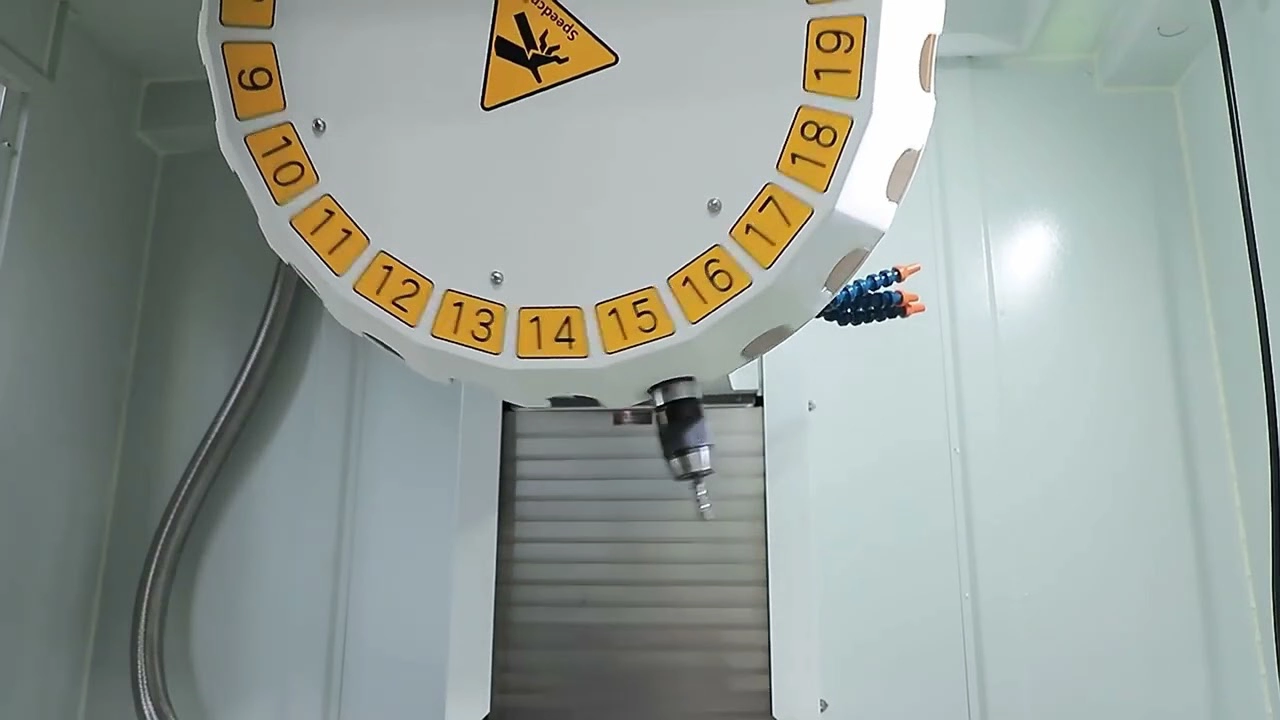
Automatic tool change system (ATC): Improves the processing efficiency of various processes (tool magazine capacity 6-24 tools).
-
- Size selection
-
-
Small workpieces (mobile phone cases, jewelry): stroke 300×300mm, repeat positioning accuracy ≤0.0015mm.
-
Medium-sized workpieces (molds, mechanical parts): stroke 600×900mm, grating ruler closed-loop control.
-
Large workpieces (auto parts): gantry structure, stroke ≥1500mm, equipped with automatic tool change (ATC) function.
-
Maintenance
The maintenance and upkeep of machines are extremely important factors that affect the processing accuracy, processing effect and the service life of the machines. It mainly includes the daily cleaning of the machines, regular checks on the oil, gas and water circuits, as well as precision tests and adjustments once every six months or once every year.
- Daily cleaning
-
The main content of this step is to clean the hygiene. The peripheral sheet metal protective covers can be wiped clean directly with cleaning agents, while the internal ones can be cleaned with the high-pressure water gun provided by the machine to remove the residues (note: please use cutting fluid to avoid corrosion of the machine). First, clean up the metal debris in the machine. After the cleaning is roughly completed, we will open the protective cover of the transmission device and clean the residues inside. After the cleaning is done, dry the oil with a dry cloth and gently wipe the oil stains on the internal sheet metal with a cloth. The guide rail protective cover needs to be removed separately, cleaned thoroughly, and then reinstalled. The standard for machine cleaning is that the paint shows its original color and metal can reflect light.
- Regular inspection
-
Regularly inspect the oil circuits, air circuits, water circuits and main components of the machine can avoid many mechanical failures caused by improper maintenance, thereby extending the machine's service life and the stability of daily processing.
-
Oil circuit: Adjust the oil injection interval time of the electronic oil pump to one minute to allow the oil to be injected quickly. Then observe the oil outlets to see if there is any oil. Finally, we need to run the equipment to observe the lubrication condition of the screw guide rail.
-
Air circuit: Mainly check the moisture in the air circuit. The air circuit of the engraving-milling machine is mainly used for the control of solenoid valves and cylinders. If there is water in the air circuit, it will greatly reduce the service life of solenoid valves and cylinders. We need to add lubricating oil to the water separator regularly.
-
Water circuit: Check the ratio of the cutting fluid. It is necessary to mix the cutting fluid in advance and then pour it into the built-in water tank of the machine. Many rust problems on workbenches and protective covers are related to the ratio of cutting fluid.
-
The inspection of main components: the inspection of the screw, guide rail and bearings is mainly judged by whether there is abnormal noise during the machine's operation. When the accuracy is out of tolerance, it can also be judged whether there is a fault. For machines with automatic tool changing function, the surface of the tool magazine needs to be cleaned. The gear oil in the cam box needs to be replaced once every five years. Observe the forward and reverse rotation of the tool head, the up and down movement of the tool sleeve and the movement of the mechanical arm. Check if there is any error in the height and angle of the tool magazine tool change. Rotate the main shaft at high speed to check if there is any abnormal noise. Clean the main shaft taper hole, check the main shaft runout. Clean the filter screen of the cooling fan of the control cabinet. Generally, it needs to be cleaned once a month.
-
- Precision inspection
-
-
Levelness: The primary step is to recalibrate the machine's levelness. All subsequent precision inspections are based on the equipment being in a horizontal state for measurement. This calibration is divided into dynamic levelness calibration and static levelness calibration. Set the static level to the 0:0 state, and adjust the dynamic level to the optimal state within the adjustable range. Use a dial indicator to measure the 9 points on the worktable to detect the flatness of the worktable. The detection result of these 9 points not only represents the flatness of the worktable but also reflects the wear condition of the guide rails.
-
Verticality: In the X/Y axis, X/Z axis, and Y/Z axis directions respectively. Take the X/Y axis as an example. First, measure the Y-axis with a dial indicator and adjust it to be horizontal. Then measure the X direction with the indicator and observe the data of the left and right pointers. The difference between the left and right pointers is the error value of 90 degrees for the X/Y axis. The same applies to the other two axes.
-
Spindle precision: First, install a detection rod on the spindle to measure the runout of the farthest end of the core rod. The standard for a new machine is: for a 300mm-long detection rod, the runout at the farthest end should be within 5 μm. Then measure the front and side generatrixs of the core rod. This precision mainly reflects the deviation between the headstock and the Z-axis guide rails. If there is a deviation, it is mostly caused by machine collision.
-
Accuracy of spindle dial test: On the worktable, use a dial indicator to draw a circle and mark the measurement values at 8 points. This precision mainly reflects the overall verticality of the Z-axis to the X/Y axis.Generally, if there are knife marks on the smooth or flat surface, it means that there is an error in the precision.
-
The backlash: Many people know about backlash, but they don't know how to detect it. Let's take the Y-axis as an example. First, attach the dial indicator to the worktable and let the pointer press on the spindle. Set the gear position to X10, press the pointer one grid at a time inward, press several grids, then retreat one grid, and observe the error between the pointer and the previous position. This error value is the machine's backlash. After measuring the value, it needs to be adjusted in the parameters of the numerical control system. For Linear guide machine, it generally should be within 5 μm. If the error is too large, it is mostly due to problems with the screw rod and bearing.
-
Repeatability positioning precision: Equipment coordinate misalignment is usually caused by positioning problems. Generally, if the backlash parameters of the numerical control system are consistent with the actual situation, there will be no major problems with repeatability positioning. The main consideration is the thermal elongation factor of the screw rod.
The above precision should be inspected once every half a year or one year. Minor deviations need to be adjusted in time to avoid rapid wear of components and affect the service life.
-
CUSTOMER REVIEWS
-
I purchased this CNC metal milling machine for my end client, so both price and quality were important to me. This purchase was not just about completing one order, it was about finding a long-term, dependable supplier.
So far, my client is satisfied with the machine’s performance. The equipment offers good value and meets our expectations. Looking forward to a continued partnership.
MusabDec 05, 2025 -
I contacted CATEKCNC through their website and was assisted by Angie. We worked together to select the perfect milling machine configuration based on my client's specific requirements. The process was smooth, and after payment, the shipment was dispatched very quickly. Most importantly, my end-client is very satisfied with the machine. Thank you, Angie and the CATEKCNC team!
NewsMay 17, 2025 -
I mainly work with aluminum and occasionally stainless steel. This CNC metal milling machine is unbelievably affordable, yet it performs really well. To be honest, apart from the exterior looking a bit different from those expensive models, it handles all my machining tasks just as effectively.
HudsonFeb 01, 2026 -
Our workshop has been using this metal milling machine to process steel and aluminum. This machine is robust and durable, provides precise cutting, and remains stable even during continuous operation. I really like the user interface; it's clear, easy to understand, and quick to learn.
OstashevskiyJan 13, 2026 -
I’m Sergei from Ukraine, and honestly, this CNC ATC Metal Milling Machine has been a solid investment for our workshop. We process a lot of metal parts daily, and the automatic tool changer really saves us time — no more stopping the machine again and again. The machine runs stable, even during long working hours, which is very important for us here.
What I also like is the precision. The finished parts come out clean, and it reduced our rework a lot. Installation was easier than expected because the team provided clear videos and support. For anyone in Ukraine looking for a reliable CNC ATC Metal Milling Machine, this one is definitely worth considering.
SergeiApr 05, 2026 -
After receiving the machine, I tried processing carbon steel and aluminum. The processing was quite stable. Although it took some time to adjust the feed rate for different monitors, once set up, the processed parts were very precise. Overall, this machine is good.
SunilMar 25, 2026 -
This CNC metal milling machine is affordable, simple to use, and offers great value for money. The service has also been good. I encountered one issue during use, but your technical support team resolved it for me very quickly.
VegaAug 26, 2025 -

Greetings from Colombo, SriLanka! I am the owner of a small metal processing factory, mainly undertaking local construction fittings and mechanical parts processing. After three months of use, the CNC milling machine has fully met our requirements. The automatic tool change function is very convenient, and the machining accuracy is extremely high.
KumarJul 09, 2025 -
A CNC metal milling machine has always been my dream- goodness knows how many videos I’ve watched about these machines over the past year! Now, this machine is right in front of me. It can’t compare to those super high-end models, but its price is really affordable, and it has all the core functions I need.
CholNov 02, 2025 -
Antes de comprar esta fresadora CNC para metales, estaba muy preocupado por el pago anticipado. Pero el servicio al cliente me tranquilizó y me brindó una solución práctica, recomendándome utilizar un agente de carga de mi país. Ayer, el agente de carga me informó que la máquina ya había llegado al puerto de Puerto Quetzal . ¡Finalmente me siento aliviado! La máquina cumple con lo prometido y el soporte fue excelente.
MoralesJul 06, 2025