MEET CATEKCNC

CNC Plasma Cutting Machine for Metal Cutting

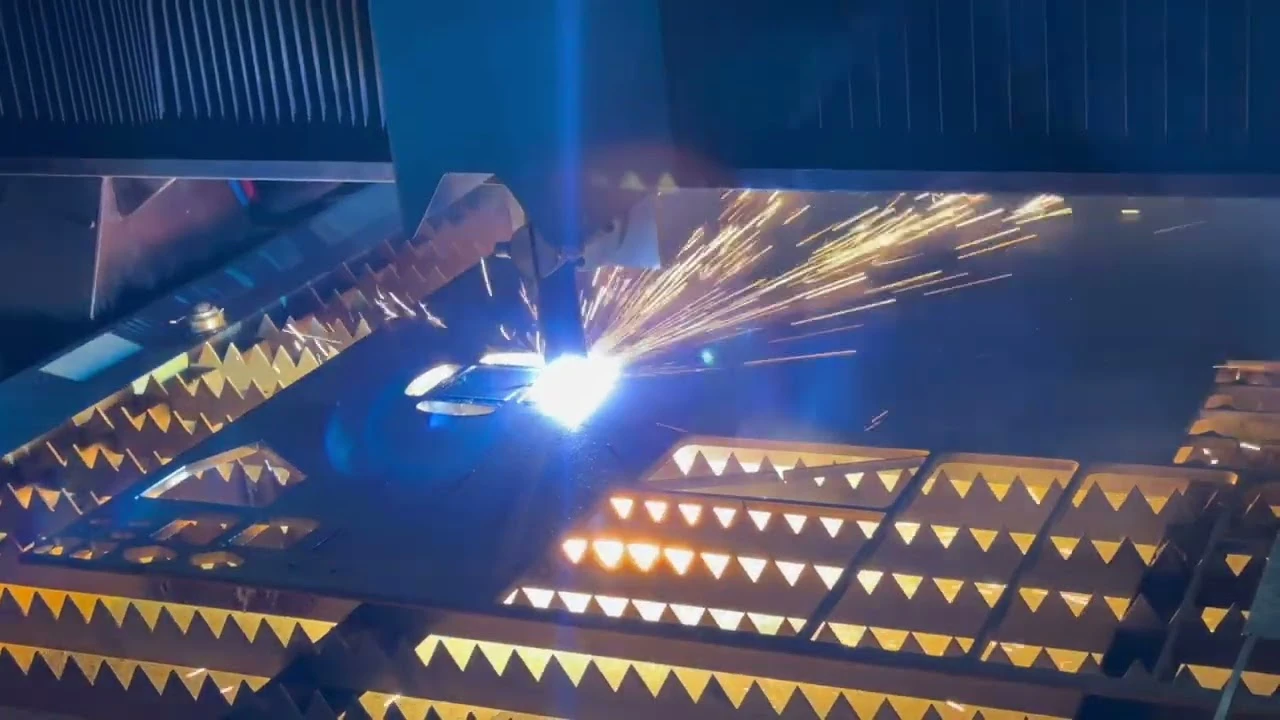
Plasma cutting is a long-standing metal cutting solution that provides a variety of processing types. It is not affected by the high reflectivity of non-ferrous metals, has low requirements for metal surface quality, and provides relatively good cutting quality and processing speed. In addition, it is very cost-effective and has mature and stable technology. Plasma CNC cutting machines use CNC technology to digitize the cutting process, providing low-cost, high-quality solutions for fully automatic metal processing, and are commonly used in machinery manufacturing, automobiles, ships, construction, aerospace, metal processing and other industries.

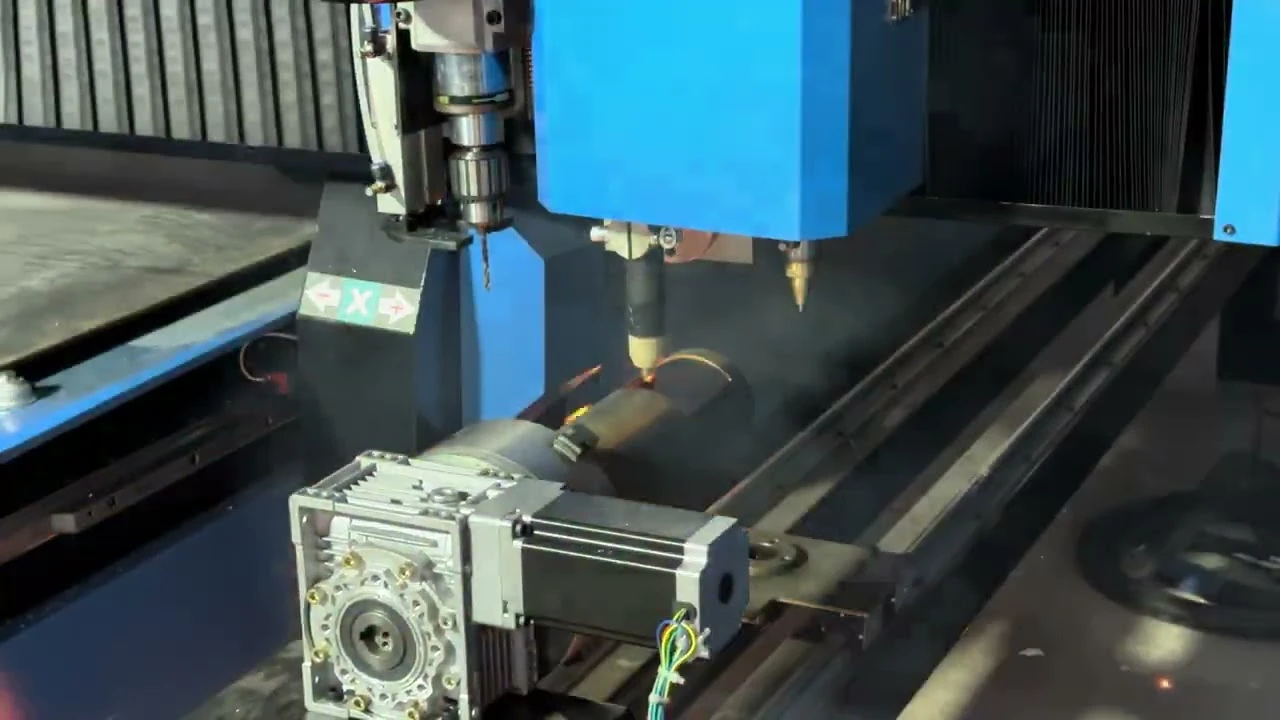
The various common metals that can be cut by CNC plasma cutting machines include: iron series (iron, carbon steel, stainless steel, ferroalloy steel, tinplate, hot-rolled steel, cold-rolled steel, forged steel, cold-drawn steel), aluminum series (aluminum, aluminum-silicon alloy, aluminum-magnesium alloy, aluminum-copper alloy, aluminum-zinc alloy), copper series (copper, brass, bronze, cupronickel), titanium series (titanium, TA7, TB2, TC4), etc. Various metal plates (sheet metal processing, building steel structure, automobile body) can be processed by the flat workbench, and various metal pipes (round pipes, square pipes, I-beams, H-beams) and profiles (angle steel, channel steel, T-beams) can be processed by the rotary axis.

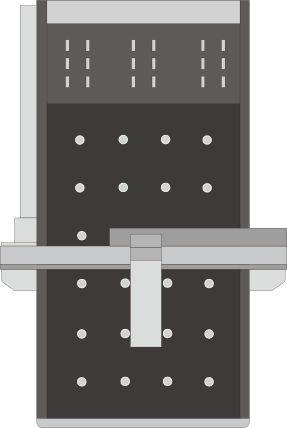
CATEKCNC's CNC plasma cutting machines provides a standard 4x8ft (1300mm*2500mm) workbench and a slightly larger 5x10ft (1500mm*3000mm) workbench. The maximum diameter of the pipe cutting device is 200mm, 300mm, 400mm, 500mm, and the processing size can be customized according to your requirements.

Showing 1–12 Of 4 Results
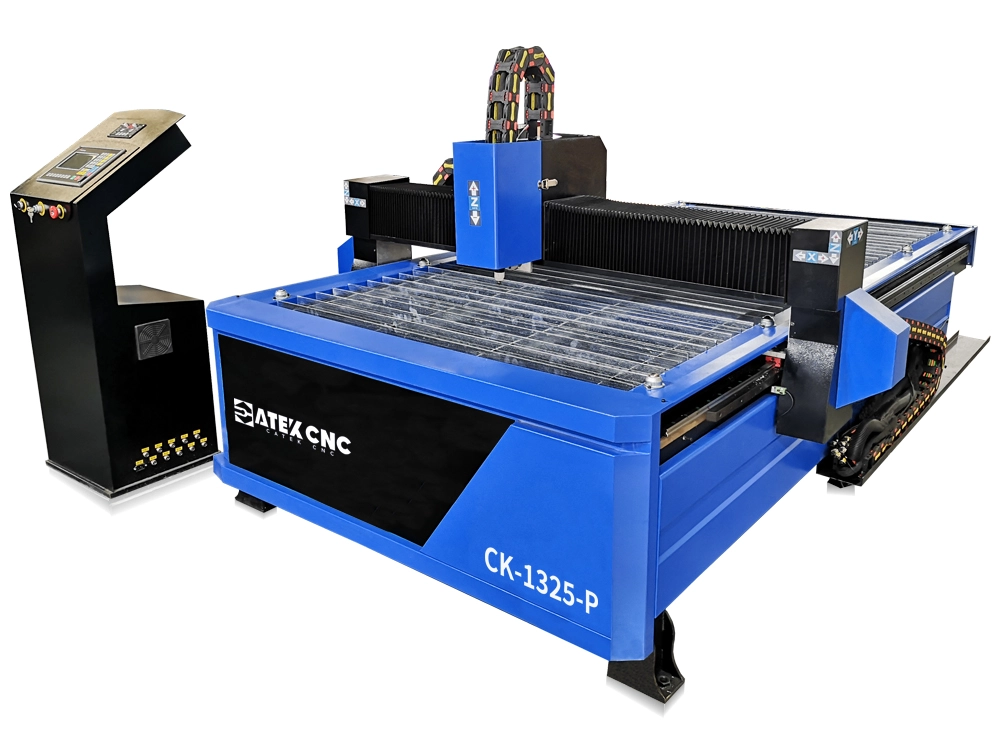
  • Cheap 4x8ft CNC Plasma Metal Plate Cutting Machine
    This 4x8 ft CNC plasma cutter cuts various metal sheets , such as iron, aluminum, copper, stainless steel, carbon steel, alloys etc., unaffected by reflectivity or surface conditions.
    $4,000.00~$7,600.00
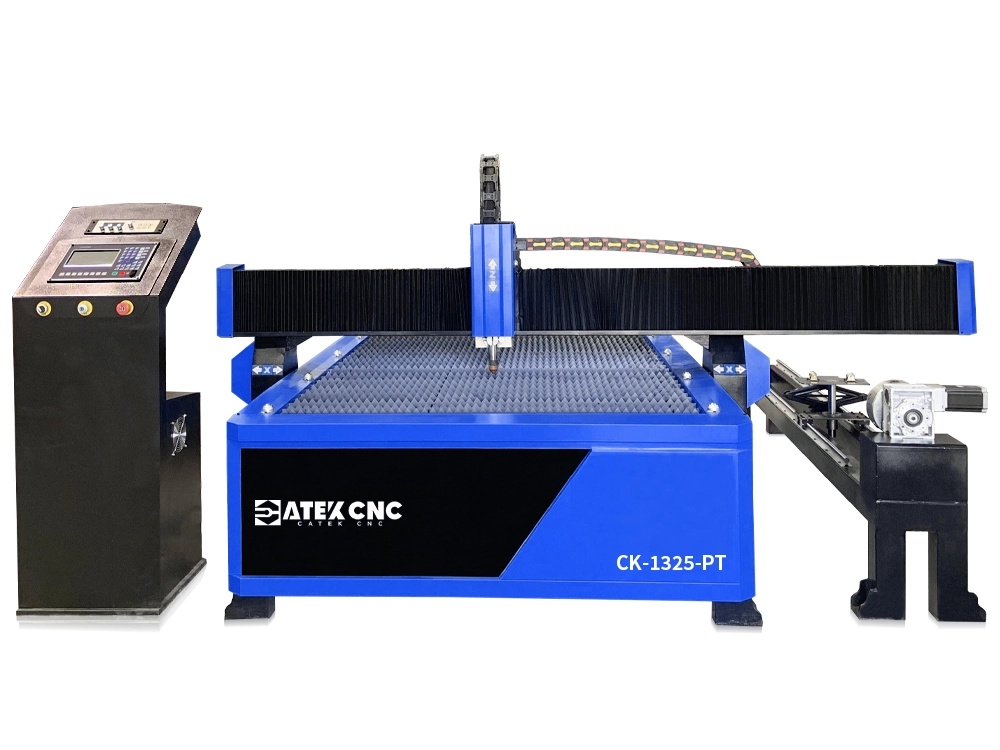
  • 4x8ft CNC Plasma Cutting Machine for Sheet and Pipe
    This plasma cutter handles both sheet metal and pipe cutting, and it enabling short section, cutting, opening and through-line cutting for round, square, oval, and obround tubes.
    $5,180.00~$8,780.00
  • Hot
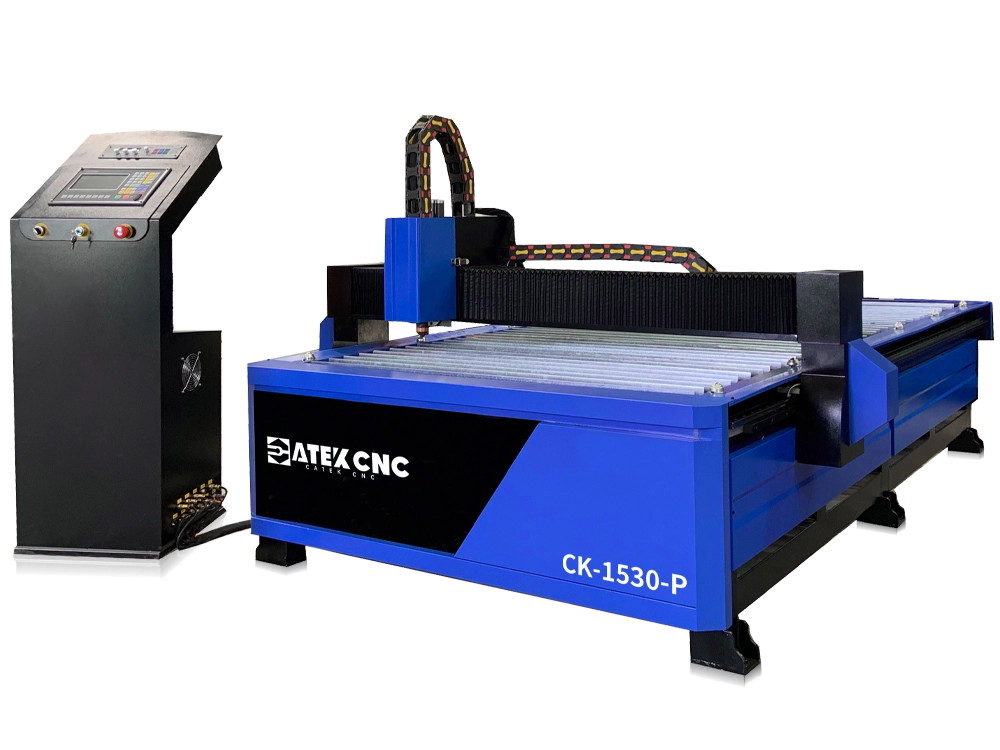
    High Precision 5x10ft CNC Plasma Cutter for Metal Plate
    This 5x10 ft CNC plasma cutter shares the same configuration as the CK-1325-P model but features a larger workbench for cutting bigger metal sheets.
    $4,600.00~$8,200.00
  • Hot
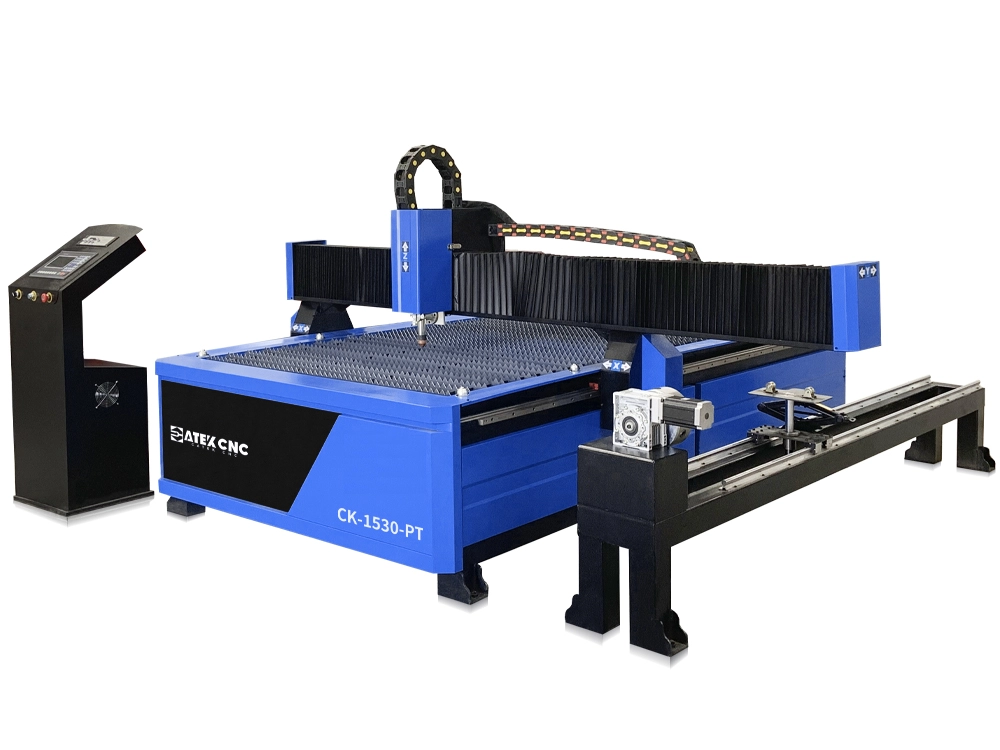
    5x10ft CNC Plasma Cutting Machine for Sheet and Pipe
    This CNC plasma sheet & tube cutter features a 5x10ft workbench with tube clamping/rotating device, capable of processing various ferrous and non-ferrous metals.
    $5,780.00~$9,380.00

PICK CNC PLASMA CUTTER TO PROCESS METAL MATERIALS

By combining traditional plasma cutting technology with computer numerical control (CNC) technology, it becomes possible to control the plasma cutting path via a computer, which is the essence of CNC plasma cutting machines. CNC plasma cutting machines are widely used in the metal processing industry, leveraging the high temperature and high-speed erosion characteristics of plasma jets to quickly cut various metal materials. Compared to traditional metal cutting methods, plasma cutting offers more advantages. With the development of CNC and plasma cutting technologies, today's plasma cutting machines not only possess basic metal cutting functions but can also be integrated with other machines to form production lines or connected to robotic arms for automated production, bringing more innovation and development opportunities to the future metal industry.

CNC plasma cutting machines have a wide range of applications. They can not only cut metal sheets of various lengths, widths, and thicknesses but also handle metal pipes of various diameters. This extensive applicability makes them an ideal choice for various metal processing enterprises, capable of meeting cutting needs across different fields. The operation of plasma cutting machines is very simple, allowing even beginners with no prior experience to quickly get started. The control system supports various nesting software, which can automatically nest and layout based on the sheet size, maximizing material utilization to over 95%, effectively reducing material waste and lowering costs.

Compared to fiber laser cutting machines, CNC plasma cutting machines are more economical, with procurement costs significantly lower than those of fiber laser cutting machines. When cutting metals of the same thickness and size, the price of a plasma cutting machine is only one-fifth that of a comparable fiber laser cutting machine. Additionally, plasma cutting machines have low requirements for the surface condition of materials; they can directly cut materials even if the surface is rusty, oily, or dirty. When processing non-ferrous metals, which have higher laser reflectivity, the laser energy of fiber lasers is easily reflected, leading to reduced cutting efficiency or even damage to the laser. In contrast, plasma cutting uses a high-temperature plasma arc to melt the metal, unaffected by the material's optical properties. Moreover, plasma machines consume less gas during operation, effectively controlling overall operating costs and achieving a high return on investment.

With 20 years of production and after-sales experience in the CNC industry, CATEKCNC can perfectly address all your concerns and questions before purchasing a plasma cutting machine. Below is a detailed introduction to CNC plasma cutting machines for your reference.

What is a CNC Plasma Cutting Machine?

A CNC plasma cutting machine is a highly efficient CNC metal cutting machine that combines modern CNC technology with plasma cutting technology. It uses computer nesting software for programming and controls the cutting path through a CNC system. By utilizing a high-speed ionized gas flow to generate a high-temperature plasma arc, it instantly melts the metal and blows away the molten slag with the high-speed gas flow, achieving precise cutting of metal materials. The main structure of a plasma cutting machine includes the CNC system, plasma power supply, gas system, cutting torch, drive/transmission system, and cutting worktable. It can cut various conductive metals such as iron, aluminum, copper, stainless steel, and carbon steel, with a high-quality cutting surface and minimal thermal deformation.

The control system of a CNC plasma cutting machine features advanced functions such as automatic kerf compensation, power-off continuation, breakpoint recovery, and arbitrary positioning cutting. During the cutting process, if the plate is not fully cut or missed, the machine can directly re-cut the missed section without needing to restart from the beginning, effectively saving time and improving efficiency. It also supports offline processing, allowing operation without a computer connection. Plasma cutting uses conductive ionized gas, known as plasma, which can reach extremely high temperatures. When combined with different working gases, it can cut various metals that are difficult to process with traditional oxygen cutting, especially achieving better results with non-ferrous metals (such as copper, aluminum, and titanium). Plasma cutting is a non-contact processing method, meaning no mechanical parts directly touch the workpiece during processing, preventing surface scratches. Additionally, plasma cutting has a small heat-affected zone, and the cut edges do not develop mechanical stress, ensuring high processing accuracy and burr-free results.

Working Principle of CNC Plasma Cutting Machines

A plasma cutting machine creates a high-voltage environment through its plasma power supply. When cutting is initiated, a high-frequency arc is generated between the electrode and the workpiece, ionizing the compressed gas that is introduced, forming plasma composed of highly ionized gas. The temperature of this plasma can reach between 25,000°C and 40,000°C, possessing extremely high energy. As the compressed gas passes through the nozzle of the cutting torch, it is accelerated and focused, forming a high-speed plasma jet. The high-temperature plasma arc rapidly melts or vaporizes the local area of the metal workpiece, while the high-speed plasma jet blows away the molten metal slag from the cut, creating a neat incision. During cutting, the CNC system controls the process, with cutting paths and operating speeds set via CNC programming software. The drive and transmission system then moves the cutting torch precisely along the predetermined trajectory, cutting out the specified shapes or patterns.

Compared to traditional handheld plasma cutting machines, CNC plasma cutting machines achieve fully automated processing. They can perform cuts of various complex shapes controlled by the CNC system without the need to manually move a cutting torch. Although handheld models offer higher flexibility, they are less precise and pose safety risks.

Cutting Methods of CNC Plasma Cutting Machines

CNC plasma cutting machines integrate both plasma cutting and flame cutting functionalities. Plasma cutting utilizes a high-temperature plasma arc to melt the metal and expels the molten material with a high-speed plasma stream to create a cut. This method excels in processing various non-ferrous metals and thin metal sheets. On the other hand, flame cutting generates a high-temperature flame by mixing oxygen with fuel gas, heating the steel plate to its melting point, and then spraying high-pressure oxygen to oxidize the metal, forming a cut. This method is suitable for cutting thick carbon steel plates, especially those over 30mm, as it offers lower costs and higher stability for such applications.

A single machine equipped with both functions allows users to switch between plasma and flame cutting based on the thickness and type of material being cut, eliminating the need to purchase two separate machines. Additionally, by employing edge-sharing cutting and optimizing work paths, the machine can reduce the preheating time and gas waste associated with flame cutting.

Advantages of CNC Plasma Cutting Machines

  • High cutting speed and processing efficiency, with cutting speeds far exceeding traditional methods, shortening production cycles.
  • Controlled by a CNC system, offering high cutting precision and minimal thermal deformation. It is a non-contact processing method, causing no damage to the material surface.
  • Can be equipped with a water table to avoid dust, smoke, and noise, reducing pollution.
  • Compatible with different working gases, capable of cutting various types of metal sheets and tubes, covering industries such as sheet metal processing, automotive, and construction.
  • Separate control of oxygen, fuel gas, and plasma working gas inputs, ensuring no interference and safe operation.
  • The control system supports multiple languages, features a user-friendly interface, and allows direct operations such as graphic scaling, rotation, mirroring, and matrix arrangement, saving layout time. It supports G-code operation and is compatible with nesting software like Fastcam, offering flexible usage.
  • The control system has built-in processing parameters, allowing flexible selection based on different processes for convenient use. It is equipped with a parameter backup function to prevent parameter loss due to improper operation.
  • Multiple different drawings can be arranged on the same sheet, fully utilizing materials, improving material utilization, and reducing waste. · Supports simulation processing, allowing preview of cutting paths in advance.
  • Supports common-line cutting, reducing piercing times, protecting the torch, saving cutting time, and improving efficiency.
  • Intelligent corner speed limiting automatically adjusts speed at corners based on material thickness, preventing overburning during cutting.
  • Equipped with automatic kerf compensation, capable of automatically identifying internal and external cuts and intelligently generating lead-in and lead-out lines.
  • Both flame cutting and plasma cutting can be optionally equipped with capacitive torch height control and arc voltage automatic adjustment functions for convenient operation.

Components of CNC Plasma Cutting Machines

CNC plasma cutting machines are precision cutting devices that integrate technologies from multiple fields, including mechanical, CNC, plasma, and software. They primarily consist of six main components: the CNC system, cutting worktable, plasma power supply, plasma torch, drive/transmission system, and gas system. These components work together to achieve efficient and precise cutting.

Digital Control System
The core part of the CNC plasma cutting machine, responsible for receiving, interpreting, logically processing, and executing cutting programs. After inputting the design drawings and parameters into the CNC system, it controls the movement trajectory and cutting speed of the cutting head to process the cutting path, thereby completing the workpiece cutting.
Cutting Worktable

Desktop plasma cutting machines use a bed made of thickened steel pipes welded together, which undergoes stress relief and annealing treatments to resist high temperatures and prevent deformation. The table surface uses a toothed slat worktable to reduce the contact area with the workpiece, effectively minimizing adhesion. Portable and gantry-type plasma cutting machines do not have a worktable and are typically placed directly on the ground, with raw materials placed directly beneath the machine.

(Note: The worktable size of plasma cutting machines can be customized freely.)

Plasma Power Supply
A critical component of CNC plasma cutting machines, primarily using Huayuan and Hypertherm plasma power supplies. Huayuan plasma power supplies are cost-effective and offer high value for money, while Hypertherm plasma power supplies are more stable but also more expensive. The plasma power supply converts input AC power into high-density DC power. Through a high-frequency arc ignition device, it generates an arc between the electrode and the nozzle, which transforms into a high-temperature transfer arc upon contact with the workpiece, instantly melting the metal.
Plasma Torch
Composed mainly of an electrode, nozzle, vortex ring, and protective cover. It compresses the arc generated by the plasma power supply through the nozzle to increase the energy density of the arc. Simultaneously, high-pressure gas is ionized into plasma between the electrode and the nozzle, rapidly melting the metal. During processing, high-speed airflow is used to blow away the molten metal, creating a clean cutting seam.
Drive/Transmission System
Responsible for the precise movement of the cutting trajectory. It mainly consists of two types: servo motors and stepper motors. Stepper motors are simple in structure, stable in operation, and low in cost, making them suitable for machines with lower precision requirements and cost constraints. Servo motors offer high precision and fast response, making them ideal for high-precision processing scenarios. The transmission system primarily includes racks, gears, and square guides, working in conjunction with the drive system to achieve high-precision operation and processing.
Gas System
Provides oxygen, nitrogen, air as the working gas for generating plasma. It can also be used to blow away molten metal slag during operation. The gas control valve can be linked to the CNC system to enable automatic switching of gas types and automatic adjustment of flow/pressure, enhancing processing efficiency.

Products That CNC Plasma Cutting Machines Can Process

CNC plasma cutting machines have extremely strong material adaptability and can process various types of metal sheets and tubes. During processing, it is necessary to optimize and adjust the cutting parameters according to the characteristics of the material and the performance of the machine to achieve the best cutting quality and processing efficiency.

Applicable Materials:

Carbon steel, alloy steel, stainless steel, tool steel, spring steel, silicon steel, iron, manganese steel, aluminum, aluminum alloy, copper, red copper, bronze, titanium, titanium alloy, galvanized sheet, aluminum-zinc coated sheet, metal-clad sheet, lead, tin, and other metal materials. Various patterns can be cut on metals.

Applicable Industries:

  • Construction industry: Steel beams, metal frames, metal wall studs, metal stair railings, bridge structural components, etc.
  • Advertising industry: Metal advertising letters, metal signs, decorations, handicrafts, LOGO cut-out panels, metal medals, etc.
  • Furniture and decoration: Iron gates, iron railings, metal screens, iron tables and chairs, storage cabinets, etc.
  • Shipbuilding: Ship decks, cabin partitions, cabin pipelines, ship accessories, etc.
  • Automotive industry: Door panels, engine covers, trunk lids, car frames, exhaust pipes, automotive components, etc.
  • Rail transit: Carriage frames, rails, rail connectors, etc.
  • Pipeline engineering: Pipe structures, sewer pipes, gas pipes, seamless steel pipe cutting, etc.
  • Furniture and home appliances: Refrigerator shells, air conditioner shells, microwave ovens, electric oven shells, etc.

Types of CNC Plasma Cutting Machines

Classified by Structure:

Portable CNC Plasma Cutting Machine
  • Structural features: No worktable, uses a cantilever design with a cross-shaped structure. It employs a central rack and rail to drive the beam movement and can be placed directly on steel plates for processing. Lightweight, compact, easy to transport, and highly flexible.
  • Performance: Relatively slower cutting speed, suitable for small to medium-sized sheet cutting. Ideal for scenarios requiring frequent relocation. Cost-effective.
Gantry CNC Plasma Cutting Machine
  • Structural features: No worktable, adopts a large gantry frame structure for enhanced stability. Occupies a large area and supports processing sizes of 3000*8000mm or larger.
  • Performance: High cutting speed and thickness capacity. Supports complex shapes and mass production. Suitable for large-scale metal sheet processing enterprises.
Desktop CNC Plasma Cutting Machine
  • Structural features: Gantry design with a worktable. The drive system is integrated with the worktable, and the Y-axis (beam movement) uses dual-side drive for stable operation. Focused on efficient cutting of various sheets with faster speed and higher precision.
  • Performance: Balances cutting speed and precision, suitable for medium-sized sheets. Worktable sizes typically include 4*8 feet, 5*10 feet, 5*13 feet, 5*16 feet, and 5*19 feet (customizable).

Classified by Function

CNC Plasma Plate and Tube Integrated Cutting Machine
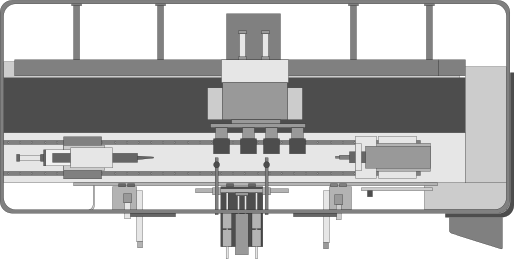
  • Structural features: Combines a chuck-holding rotary cutting device with a desktop plasma cutting machine. Adds tube rotary cutting functionality to sheet cutting. The CNC system allows switching between modes to meet diverse processing needs, saving machine investment costs and floor space.
  • Performance: High cutting speed and efficiency. Integrates sheet and tube cutting in one machine, making it ideal for enterprises with both sheet and tube processing requirements.
CNC Plasma Bevel Cutting Machine
  • Structural features: Equipped with a 360° plasma rotary cutting head. The CNC system enables rotary bevel cutting, with adjustable bevel angles. Capable of complex bevel cuts such as V, Y, X, and K types.
  • Performance: Integrates standard vertical cutting and bevel cutting. Can perform bevel cuts at ±45° without requiring secondary bevel processing on other machines, effectively increasing production efficiency by over 50%.

Optional Configurations for CNC Plasma Cutting Machines

  • Marking and engraving device: Uses a steel needle marking device to label processed materials, making it easier to classify finished workpieces.
  • Drilling device: Equipped with a drilling assembly, it can automatically drill holes after cutting, solving the issue of CNC plasma cutting machines being unable to cut small holes.
  • Tube cutting rotary axis: Optional rotary axes with diameters of 200mm, 300mm, or 400mm can be installed. When synchronized with the linear axis, it enables pattern cutting or tube cutting on round or square tubes.
  • Others: Customizable options include the plasma cutting worktable, servo motors, software, control systems, and plasma power supplies.

Technical Specifications of CNC Plasma Cutting Machines

Type CNC plasma cutting machine
Brand CATEKCNC
Cutting Type Plasma cutting + flame cutting
Processing Type Non-contact plasma arc processing
Applicable Materials Various metal sheets and tubes
Maximum Cutting Thickness 200mm
Maximum Cutting Speed 0-12000mm/min
Plasma Power Supply Huayuan / Hypertherm
Control System Starfire, FL
Application Software Fastcam, Smartnest, Hinest, Starcam, Tubemaster, etc.
Price Range $3,980−$28,000

Maximum cutting thickness of different plasma power supplies

Huayuan plasma power supply
Power Thickness
63A 8mm
100A 15mm
120A 20mm
160A 30mm
200A 35mm
300A 50mm
400A 60mm
Hypertherm plasma power supply
Power Thickness
45A 8mm
65A 10mm
85A 12mm
105A 18mm
125A 25mm
200A 30mm

What Is a Plasma Cutting Water Table?

A water table (water pan) is a water tank device installed on the worktable of a plasma cutting machine. During cutting, both the workpiece and the torch are submerged in water, which absorbs smoke, metal dust, harmful gases, and arc light. It also rapidly cools the workpiece and nozzle, reducing thermal deformation. There is no need for additional smoke and dust removal equipment, and it can prevent spark splashes from causing fire accidents. Underwater plasma cutting can also effectively eliminate noise and radiation generated during the cutting process, making it more environmentally friendly.

CNC Plasma Cutting Machine Nesting Software

CNC plasma cutting machines support various nesting software, such as Fastcam, Smartnest, Hinest, Starcam, and Tubemaster. Among these, Fastcam is the most commonly used nesting software that supports automatic programming. It offers features like automatic shared edges, automatic bridge cutting nesting, automatic continuous cutting, and remnant material nesting management. It is easy to operate, allowing even beginners who are not familiar with computers or AUTOCAD software to quickly learn and master it. The automatic programming function enables beginners to quickly master the editing of cutting paths, such as setting lead-in and lead-out lines, kerf compensation, shared edge bridging, and piercing. This improves nesting and cutting efficiency, reduces waste of processing materials and consumables, and enhances material utilization.

The Price of CNC Plasma Cutting Machines

Before selecting a CNC plasma cutting machine, it is crucial to define your cutting requirements and functional configuration needs. The final price is influenced by factors such as the plasma power supply, cutting table, motor, control system, and transmission system. However, overall, CNC plasma cutting machines are more affordable compared to fiber laser cutting machines and can accommodate a wide range of budgets. The price for an entry-level 4*8 feet CNC plasma cutting machine starts at $3,980. A Huayuan 63A plasma power supply costs only $550, while Hypertherm plasma power supplies are priced higher, with an entry-level 45A Hypertherm power supply costing $3,200. The price for an industrial-grade 5*10 feet CNC plasma cutting machine starts at $4,200, and adding a 200mm rotary tube cutting device requires an additional $1,000. Additionally, you need to consider the machine's transportation costs, customs clearance fees, and taxes.

After-sales service and technical support are also critical. Choosing a supplier that provides high-quality after-sales service and technical support can help you quickly master the machine's operation and promptly address any issues that may arise. Before purchasing, it is recommended to request the supplier to perform a test cut on your cutting sample to verify whether the machine's cutting performance meets your requirements.

Common Issues with CNC Plasma Cutting Machines

What to do when the nozzle frequently burns out during CNC plasma cutting?
  • Incorrect nozzle aperture size: If the nozzle aperture is too large or too small, it can affect the stability of the plasma arc and cutting quality, leading to overheating or overcooling of the nozzle, which may cause it to burn out.
  • Improper air pressure: If the air pressure is too high or too low, it can affect the formation and maintenance of the plasma arc, causing nozzle wear or clogging, which may result in nozzle burnout.
  • poor gas quality: Impurities such as moisture, oil, or dust in the gas can affect the quality and stability of the plasma arc, leading to nozzle corrosion or clogging, which may cause the nozzle to burn out.
  • Incorrect cutting distance: If the cutting distance is too close or too far, it can affect the focus of the plasma arc and the cutting effect, causing the nozzle to come into contact with the workpiece or be exposed to heat rebound, leading to nozzle burnout.
How to adjust air pressure during CNC plasma cutting?
  • Based on material thickness and cutting speed: For thicker materials and slower cutting speeds, the air pressure should be higher; for thinner materials and faster cutting speeds, the air pressure should be lower.
  • Based on cutting current and voltage: For higher cutting currents and voltages, the air pressure should be higher; for lower cutting currents and voltages, the air pressure should be lower.
  • Based on torch and nozzle size: For larger torches and nozzle apertures, the air pressure should be higher; for smaller torches and nozzle apertures, the air pressure should be lower.
  • Based on cutting environment and gas quality: In environments with higher temperatures, higher humidity, or more impurities in the gas source, the air pressure should be higher; in environments with lower temperatures, lower humidity, or fewer impurities, the air pressure should be lower.
Why does the CNC plasma cutting machine produce excessive kerf Angle or severe tilt?
  • Plasma cutting torch not perpendicular to the workpiece: Adjust the torch to ensure it is perpendicular to the workpiece.
  • Nozzle aperture wear: If the nozzle aperture becomes elliptical, replace the nozzle.
  • Misalignment between electrode and nozzle: Check if the electrode and nozzle are concentric. If they cannot be adjusted, replace the electrode or nozzle.
  • Air hose blockage causing insufficient airflow: Clear any blockages in the air hose.

Maintenance of CNC Plasma Cutting Machines

Daily Maintenance

  • Clean the machine guide rails, worktable, and machine surface to remove metal dust and slag after daily work, ensuring the machine remains clean.
  • Before daily operation, check the gas system to ensure proper gas flow.
  • Clean the torch nozzle and motor contact surface daily to avoid instability in the plasma arc.
  • Before daily use, inspect the torch lifting limit switch and motor wiring to ensure normal operation.
  • After completing work, turn off the gas and power supply, and drain the gas from the pipelines.
  • Check the slag accumulation in the machine's drag chain daily and clean it promptly.

Regular Maintenance

  • Regularly inspect the guide rails and rack lubrication to maintain lubrication in the transmission parts.
  • Regularly check the oil level in the lubricating oil reservoir and refill it as needed.
  • Regularly inspect the screws in the machine's transmission and other areas for looseness and tighten them promptly.
  • Regularly clean the dust inside the plasma power supply using dry compressed air to prevent operational issues.
  • Regularly check all cable connections in the control cabinet to prevent faults caused by loose connections.

CATEKCNC has long been dedicated to the research and production of CNC cutting machines. Rooted in technological innovation and driven by customer needs, we are committed to providing high-precision, high-reliability intelligent CNC cutting solutions. CATEKCNC consistently fulfills its mission to make cutting smarter. Choosing us means not only selecting a CNC cutting machine but also gaining a value partner that covers the entire lifecycle of the machine. It also means leveraging our 19 years of practical expertise to empower your production and processing. Contact our sales experts to obtain a customized cutting solution for free!

Last Updated:
2026-03-12

CUSTOMER REVIEWS

  • Máquina og̃uahẽma, aipeguã hína. Pe fábrica omba’apo porãite, opa mba’e oho porãite.

    Meaurio
    py
    May 07, 2025
  • From a hands-on perspective, the control system of this equipment is very user-friendly, and our technicians got up to speed quickly. The cutting thickness range covers the mainstream plate specifications we process daily, and the energy consumption is significantly lower than the old equipment we used before. After-sales service response is also prompt, and remote guidance resolves most minor issues.

    Bilinzozi
    tz
    Dec 21, 2025
  • I was hesitating between importing a machine, buying locally, or sourcing from Europe. When I inquired about the price, I was shocked to learn that shipping from China to Southampton cost only $660, including packaging. I immediately placed an order for a CNC plasma cutter and am now eagerly awaiting its arrival.

    Manning
    gb
    Nov 23, 2025
  • I purchased this CNC plasma cutting machine for my client and also bought a compressor alongside it. I must admit, I don't have much experience in this area. Fortunately, Cici was very knowledgeable and patiently explained all the functions to me.

    My client has now received the machines and is very satisfied with me. Thank you for the great support!

    Dennis
    tz
    Sep 28, 2025
  • They told me that Chinese New Year is coming up soon in China, and if I placed the machine order before the 21st, there was a good chance it would ship before the holiday. Otherwise, I’d have to wait a few more weeks. Luckily, I was able to receive this CNC plasma cutter in early February.

    Asaf
    il
    Feb 02, 2025
  • In addition to the plasma cutter machine itself, they generously included 5 electrodes as a gift. I also purchased an additional 40 nozzles and 20 electrodes, as these are consumables. It is very cost-effective to buy these components from China.

    Aleman Reyna

    mx
    Aug 20, 2025
  • Compared to American CNC plasma cutters, this machine is cheaper even with shipping. I have been using it for nearly five months and the cutting effect is not much different from my previous machine.

    Thomas

    us
    Jun 08, 2025
  • Esta máquina me ayuda a procesar láminas metálicas grandes y metales de diferentes espesores. Con la ayuda de los técnicos de CATEK, la instalé y me enseñaron a usarla. Sin duda, es una excelente opción.

    Carmona
    mx
    Jan 22, 2026
Last Updated:
2026-03-12
Share this:
Menu