Affordable Professional Stone Cutting and Engraving Machine
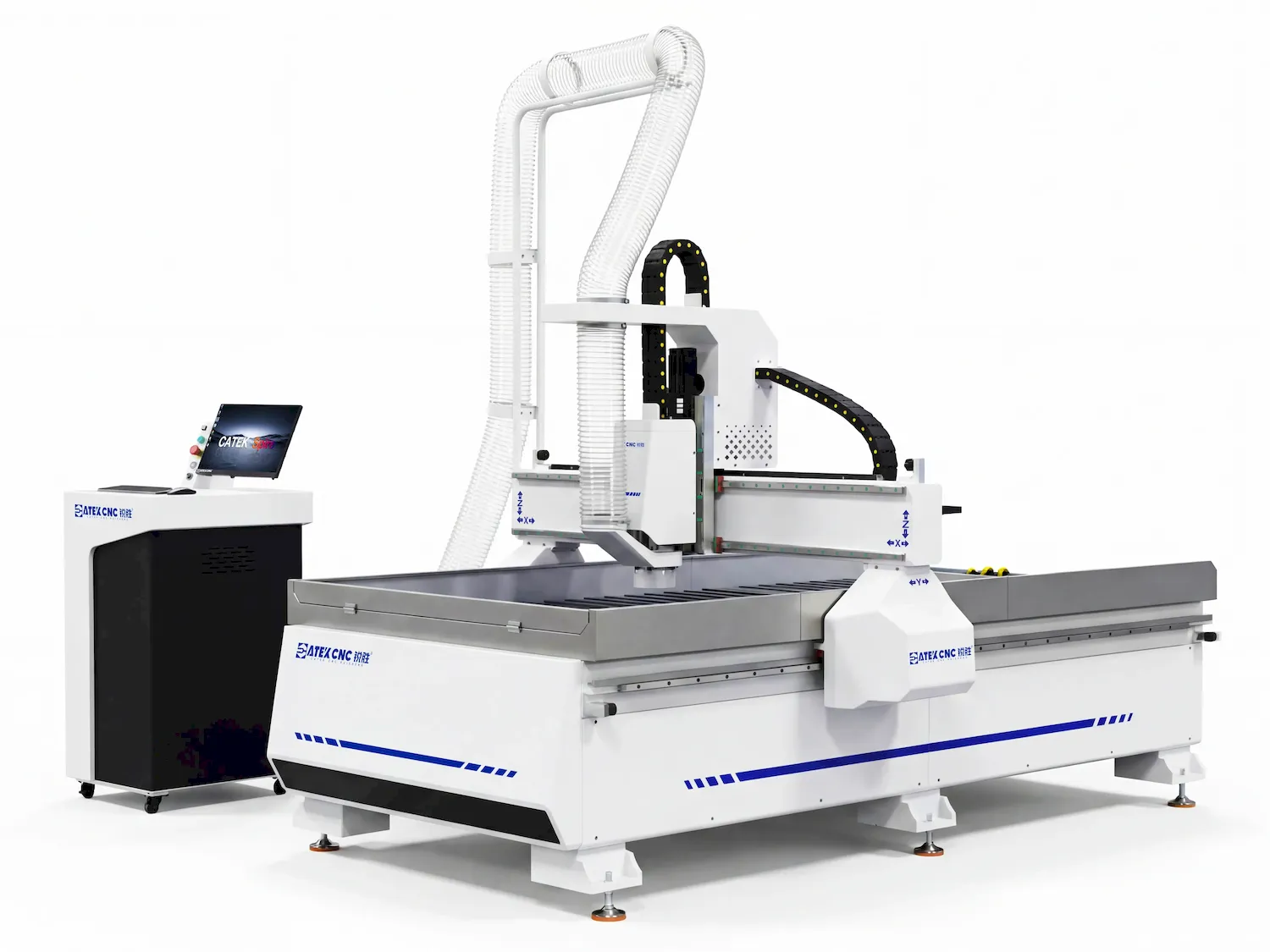
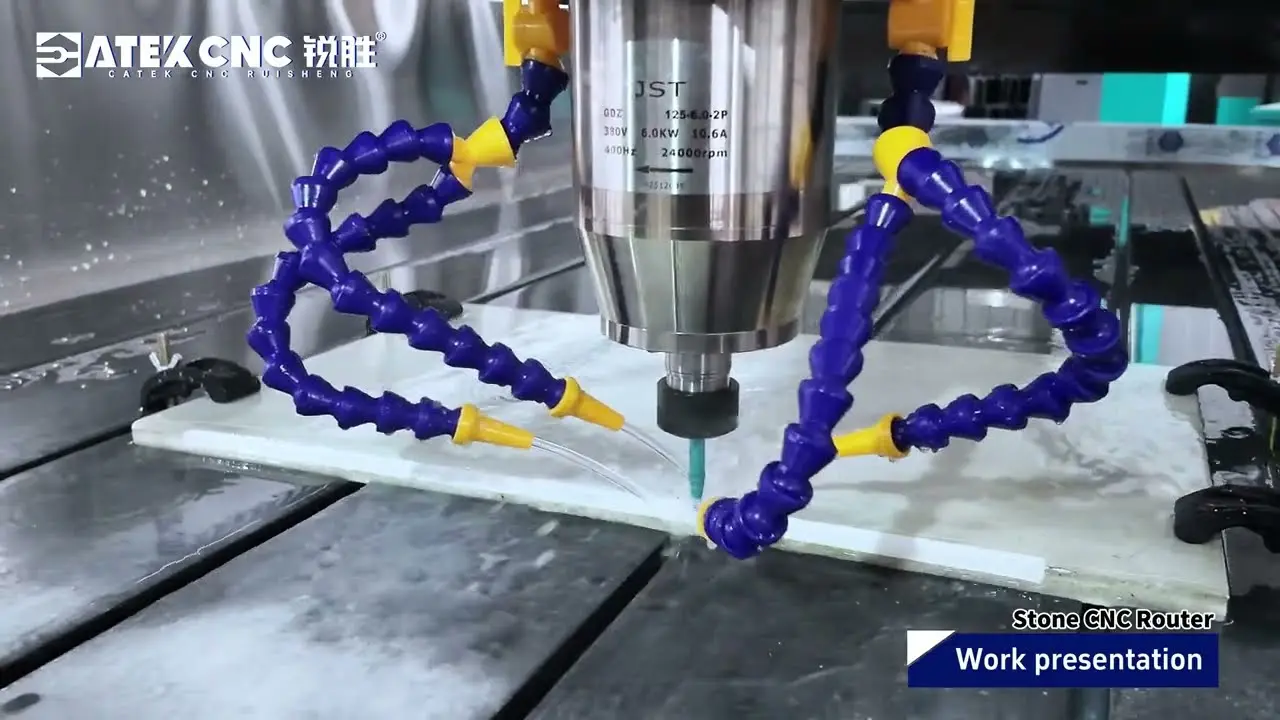
Stone CNC routers is an automated equipment that utilizes saw blades or milling cutters for cutting, milling, and fine engraving of stone materials. Given the unique properties of stone, this type of CNC router is equipped with high-power water-cooled spindles and cooling spray systems, requiring the use of coolant to effectively cool the tools during processing. Commonly used processing tools include high-wear-resistant tools such as stone-sintered cutters and diamond cutters. This type of machine offers various options, including three-axis, four-axis, and five-axis configurations. Among them, four-axis and five-axis models can precisely process different parts of the workpiece at optimal angles by rotating the processing tools or the workpiece itself.
Stone CNC routers are suitable for a variety of stone materials, such as marble, granite, quartz stone, bluestone, sandstone, and artificial stone. They can perform processes like planar or three-dimensional cutting, engraving, hollowing, polishing, and matte finishing. These machines are widely used in producing various stone products, including shopping mall/scenic area signage, plaza engravings, tombstones, monuments, calligraphic stone carvings, feature walls, bathroom cabinets, statues, and more.
-
Spire
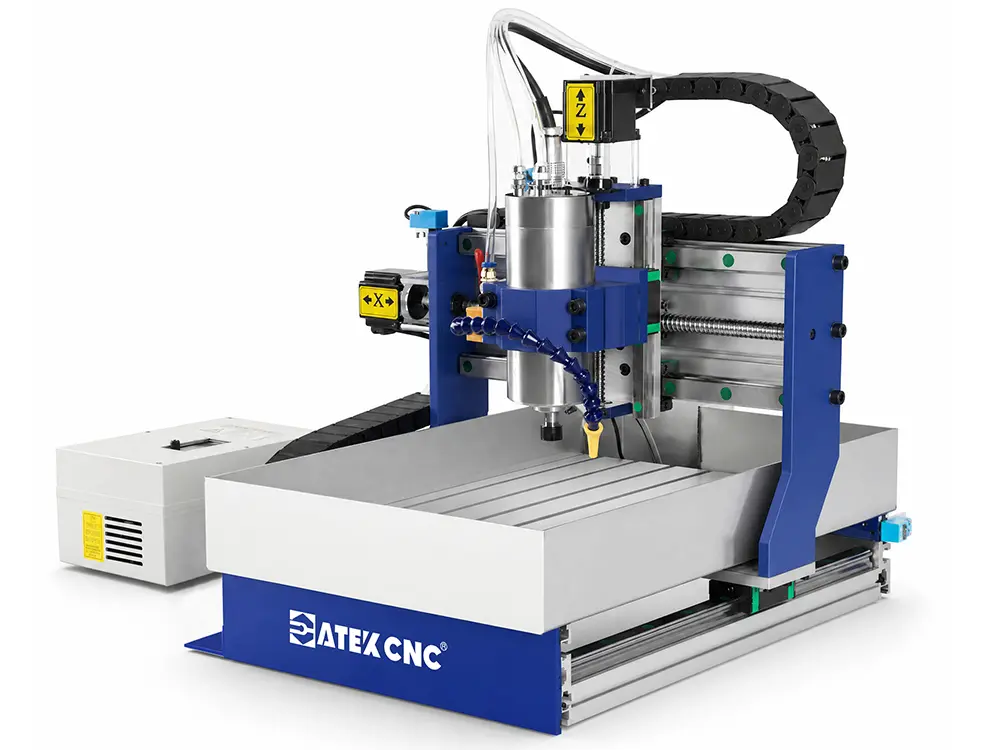
Spire 1325 CNC Router Machine with Flood Cooling
-
CK-1325-WSP-W
-
5.0(0)
This machine is a CNC router of the Spire Series with an extremely wide processing range, featured with a flood cooling system and a water-cooled spindle, and it can process a variety of materials including wood, stone, aluminum, copper, stainless steel, and more.$4,580.00~$13,980.00 -
-
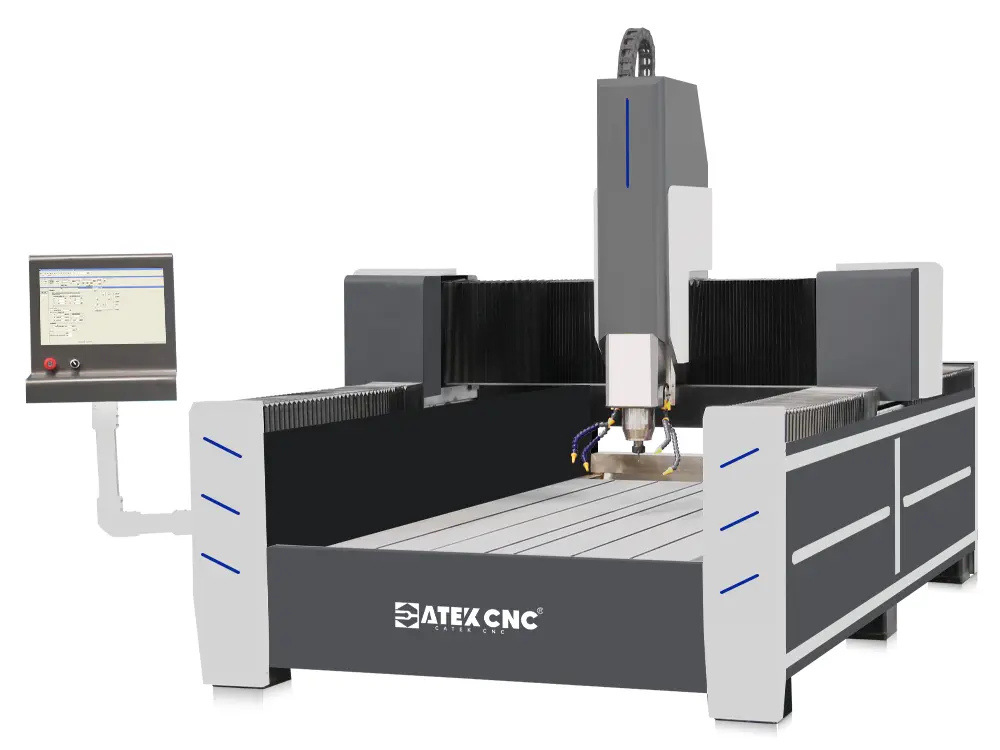
The Most Popular 4*8ft CNC Stone Router Machine
-
CK-1325-S
-
5.0(2)
This is a 4x8 feet CNC stone router machine, a widely deployed model specifically designed for various types of stone engraving applications.$4,780.00~$9,980.00 -
-
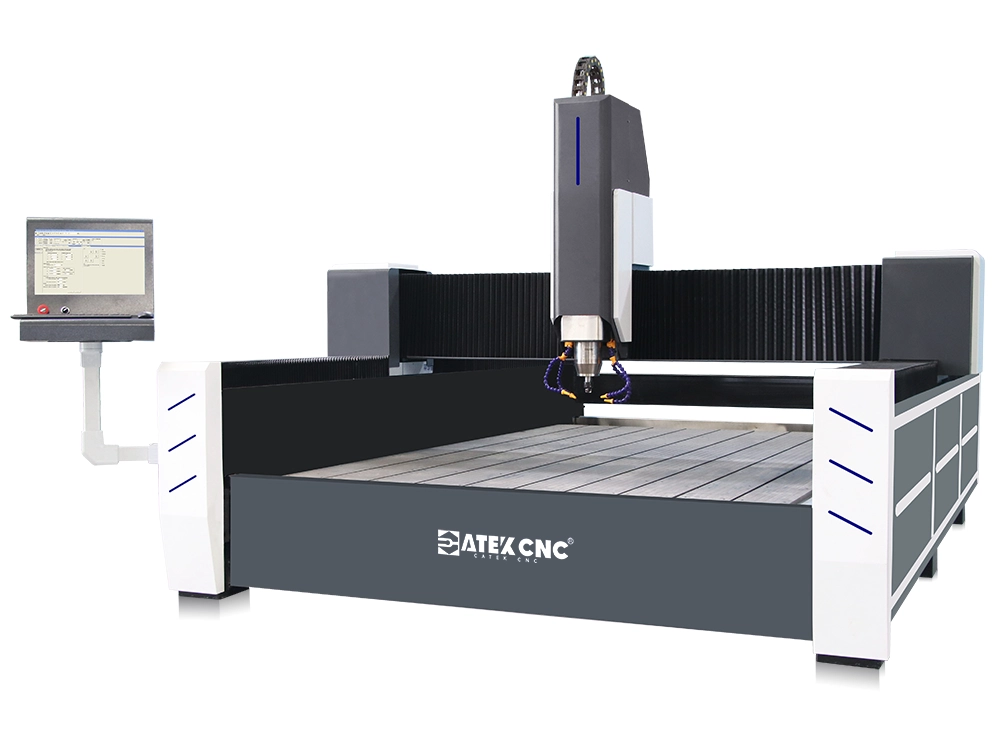
Affordable 7*10ft CNC Stone Router Machine
-
CK-2030-S
-
5.0(1)
This is a 7×10 ft CNC stone router, which is suitable for engraving various stone products such as tombstones, background walls and more.$6,850.00~$9,850.00 -
-
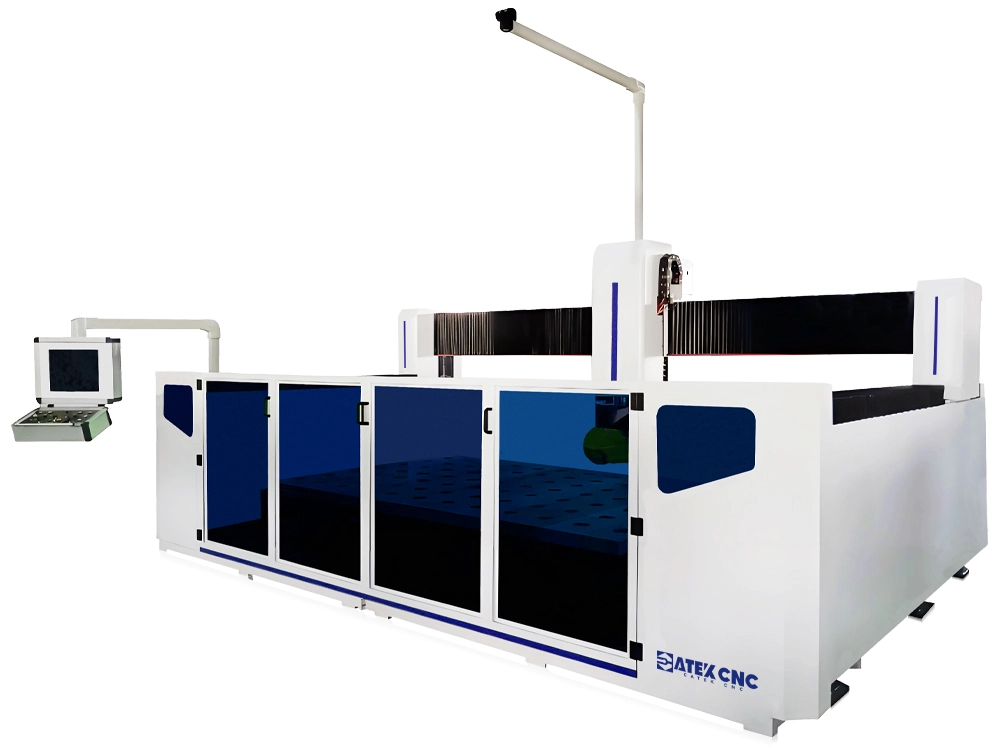
Five-Axis CNC Stone Bridge Saw for Cutting Marble and Granite
-
CK-2032-S5
-
5.0(0)
This 5-axis CNC bridge cuttier features dual rotary axes for 45° spindle tilt, an 85° tilting worktable, material handling suction cups, and a wide-angle camera, suitable for various stone processing tasks.$24,900.00~$31,900.00 -
THE FOLLOWING ARTICLES MAY HELP YOU
-
Other
What Is the Transmission System of CNC Machine?
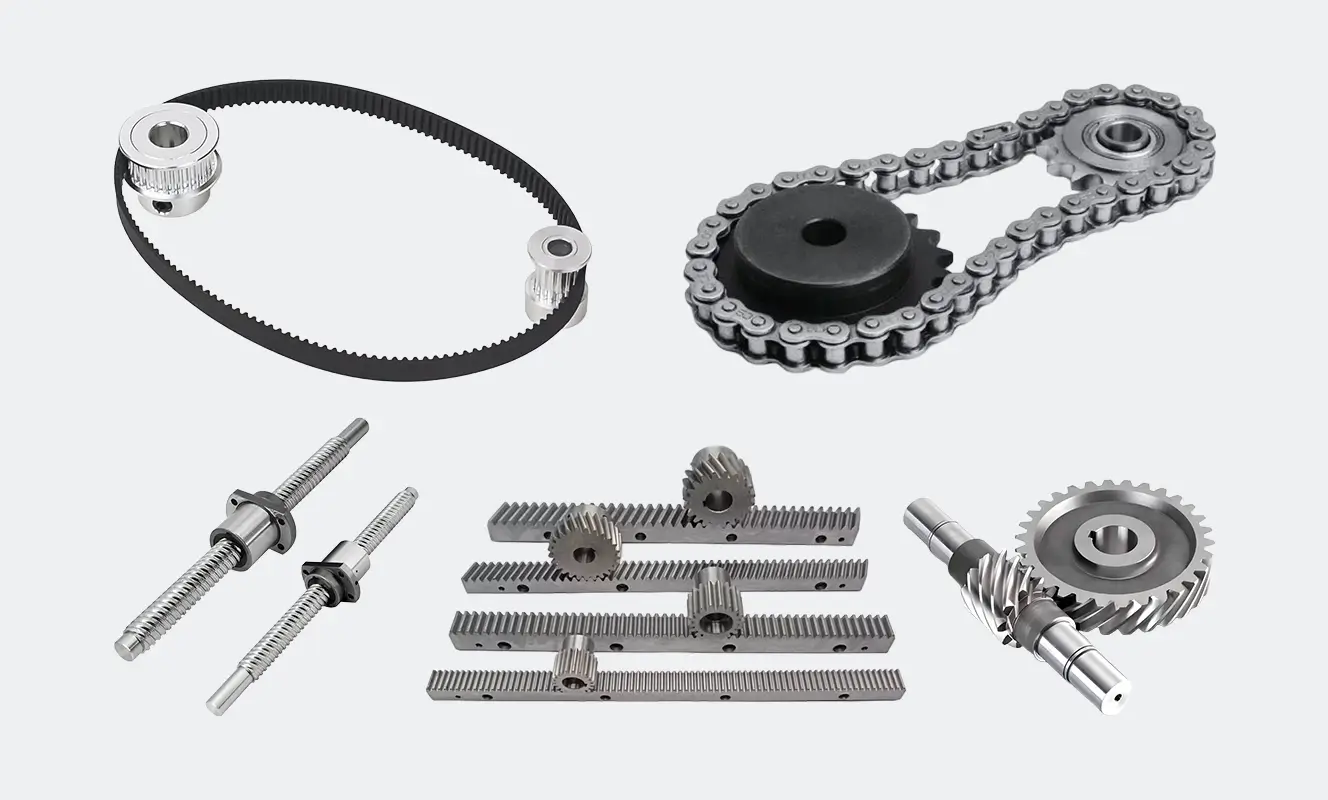
In CNC machines, the transmission system refers to the collective term for a series of mechanical components and devices that convert the power from the transmission system into precise and stable linear or rotary motion required by the machine's execution parts. Its primary function is to transmit power and transform the nature, direction, and speed of the motion. Specifically, in CNC router machines and CNC lathes, the transmission system mainly converts the rotational motion of various motors...
-
Other
What Is a Servo Motor?
To understand what a servo motor is, you first need to know several relevant professional terms.Open-Loop ControlA control system in which the output quantity has no impact on the system's control is called an "open-loop control system".Open-loop control is a control method that acts on the controlled object unidirectionally only through preset instructions. Its core feature is the absence of a feedback loop in the system structure. After the controller generates an operation instruction based o...
HERE ARE SOME RELATED VIDEOS OF CNC MACHINES
-
01:02
CNC RouterJan 14, 20267x10ft CNC Stone Router Machine Carving Patterns on Engineered Stone
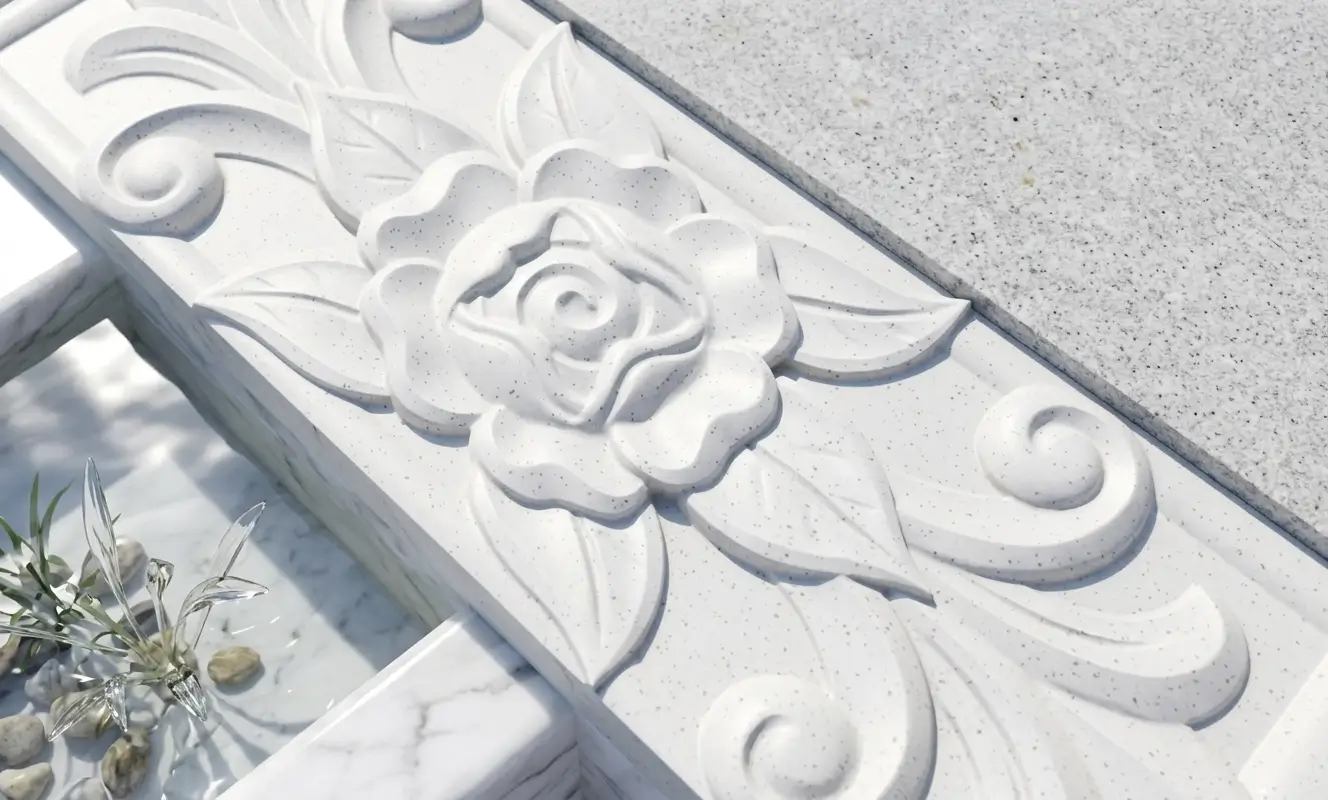
Here we show how a CNC stone router machine performs professional engraving on engineered stone.
HERE ARE SOME FUN PROJECTS FOR CNC MACHINES
-
CNC RouterStone CNC Router Machining Project – Quartz Stone Engraving with 2030 CNC Stone Router
In the stone processing industry, precision, stability, and durability are essential. Whether producing tombstones, architectural decorations, relief carvings, or custom stone signs, choosing the right stone cnc router directly affects productivity and final quality.This project article introduces a real stone engraving project completed with the 2030 stone cnc router, explains the full machining workflow, highlights machine configuration advantages, and recommends different models for various s...
CHOOSE THE CNC STONE ROUTER THAT SUITS YOU
Stone, a gift from nature, is carefully carved by craftsmen and becomes a piece of exquisite art. Only craftsmen who have really carved stones know the time and energy it takes to carve a simple stone into a perfect handicraft. Traditional hand carving is hard and tiring. Because the stone is hard, it is also dangerous,and due to the large amount of dust in the stone carving process, it also has a certain impact on human health. Nowadays, with the blessing of CNC technology, stone carving has become simpler. Whether you are carving decorative stone reliefs, sculptures, figures, or milling of cabinet countertops, or tombstone engraving, CNC stone router machines can complete them fully automatically.
Stone CNC routers are different from other types of machines. Their engraved products are heavy and the material hardness is high. And there needs to be circulating water to cool the tool. CATEKCNC pioneered a three-layer fully welded thickened countertop with a strong load-bearing capacity, easily bearing more than 7 tons. At the same time, it adopts a single-sided double-rail and double-sided four-rail design. On higher-end models, we use a single-sided three-guide design, which is milled once by a large gantry machining center to ensure machining accuracy and stability. At the same time, since stone processing requires circulating water for tool cooling, the working environment humidity is relatively high, so for guide rails and racks of the CNC stone router, traditional lubrication methods can no longer meet the lubrication requirements. We use oil immersion technology, which allows the transmission device to work in the immersion of lubricating oil, effectively preventing rust and corrosion, and greatly improving the stability of the machine's work and the durability of the machine.
Introduction of CNC Router for Stone
Due to the special nature of stone, its hardness is relatively high. Stone CNC routers need to cut the stone many times during the process, so the rigidity of the machine is relatively high, and the spindle power should be relatively high. On the other hand, because stone processing cannot be separated from the cooling of circulating water, the waterproof design of the whole machine has relatively high requirements. Not only that, the coating on the surface of the machine also needs special treatment to enhance the corrosion resistance of the machine and ensure the service life of the machine as well as the stability and precision of the processing.The main difference between stone routers and other routers lies in the design of the mechanical structure, and the difference in the CNC system is not significant.
-
Bed: Unlike CNC routers that process softer materials, the frame of a stone CNC router is generally a sunken table. This design can greatly shorten the height of the gantry bracket, improve the rigidity of the gantry beam, and ensure the stability of processing. At the same time, we use a three-layer full welding process for the platform for loading materials to ensure its good load-bearing capacity and prevent the table from being deformed due to repeated loading and unloading of heavy stones. The gantry beam is made of 10mm thickened seamless square steel, which is very stable, greatly reduces the vibration during stone engraving, and can also increase the service life of the tool. And the frame and sheet metal will undergo an electroplating process before painting to improve the anti-rust effect and corrosion resistance.
-
Transmission structure: Since many structural parts of the stone CNC router are made of thickened steel plates, the transmission system requirements are relatively high. For all machines, we use ground screw shaft to ensure transmission accuracy, and all racks are imported from Germany with helical racks to increase torque. In terms of guide rail layout, a multi-track design is used to further increase the load-bearing capacity.
-
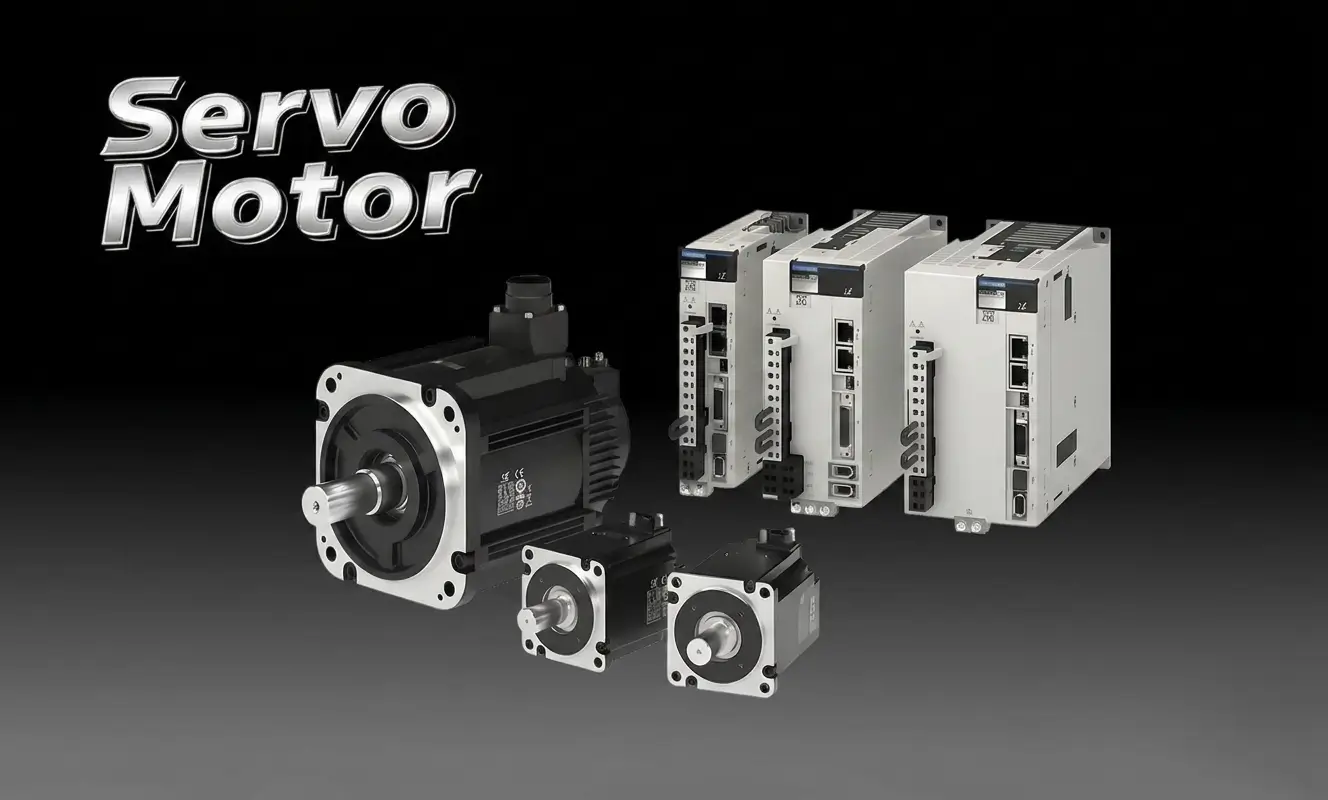
Motor drive: It is driven by a high-power AC servo motor and equipped with a Japanese SHIMPO reducer to ensure the torque output of the whole machine, and can also perform high-speed stone engraving. While improving stability, it also ensures processing accuracy, and the processing efficiency is greatly improved compared to traditional routers.
-
Engraving spindle: In stone engraving, a constant power spindle is generally used, and vector inverter control is adopted, which greatly improves the stability during the engraving process. In terms of spindle power, except for small jade craft engraving machines, we generally use high-speed variable frequency water-cooled spindles above 5.5KW. Used with a water cooler, intelligent temperature control ensures the service life of the spindle.
-
Cooling system: Because stone carving is a process of grinding stones with diamond tools, during the processing, circulating water needs to be sprayed onto the tools continuously for cooling. The machine will adopt thickened stainless steel water channels, which have extremely strong corrosion resistance. Full welding technology is used to ensure no water leakage.
-
CNC system: The control mode of the stone CNC router is no different from that of other types of routers. The control systems used are quite similar. Common control systems include Mach3, DSP, NC-studio, Syntec, etc. In terms of programming, CAD/CAM software such as these are also used.
Configuration
| Brand | CATEKCNC |
|---|---|
| Plane Max Processing Size | 600mm*900mm(2*3'), 1200mm*1200mm(4*4'), 1300mm*2500mm(4*8.2'), 1500mm*3000mm(5*10'), 2000mm*3000mm(6.6*10') |
| Maximum Processing Diameter | 30mm-1500mm(1-59'') |
| Processing Capability | 2D line cutting, font engraving, shape milling, 2.5D plane relief, 3D stereo engraving, etc. |
| Number of Axes | 3-Axis(X,Y,Z), 4-Axis(X,Y,Z + A), 5-Axis(X,Y,Z + A/B or A/C)) |
| Structure Type | Large gantry router, vertical router, portable small router |
| Spindle Power | 2.2KW-22KW high speed variable frequency constant power water-cooled spindle |
| Motor Type | AC synchronous servo motor (stepper motor optional) |
| Spindle Speed | 6000-24000/rpm |
| Lubrication | Electronic oil injection system/wet oil immersion of transmission structure |
| Machine Structure | 10mm thickened crossbeam/cast iron bracket/three-layer channel steel thickened tabletop |
| Processing Accuracy | 0.01mm |
| Repeat Positioning Accuracy | ±0.02mm |
| Tool Shank Diameter That Can Be Clamped | 3mm, 4mm, 6mm, 12.7mm, 20mm, etc. |
| Transmission Mode | TBI ball screw/Taiwan Hiwin square rail/German helical rack |
| Processable Materials | It can be used for font engraving, relief carving, intaglio carving, line carving, cutting and hollowing on marble, granite, jade, bluestone, black stone, ceramics, glass, rock slab, artificial stone, quartz stone and other stone materials. |
| Control System | Mach3, NC-studio, Syntec, DSP, LNC, etc. |
| Compatible Software | Artcam, AutoCAD, Type3, powermill, ug(nx), etc. |
| Optional Parts | Multi-head engraving (processing multiple workpieces at the same time), automatic tool change function (ATC), saw blade (stone roughing or shape cutting), rotating axis (3D carving), swing-head four-axis engraving head, five-axis machine head, optical scanner (automatically adjusts Z-axis height for uneven stone) |
Different Structural Types of Stone Machines
- Gantry CNC Router
-
The beam has a large span, strong stability, and high load-bearing capacity (up to several tons). Suitable for processing wide-width stone (such as large decorative panels, cabinet quartz countertops, tombstone engravings, etc.)
- Vertical CNC Router
-
Vertical structure, the rotating axis is designed at the bottom of the machine, the material is clamped vertically, and it has strong load-bearing capacity. It is suitable for processing vertical stone and is often used in 3D carving of large figures, sculptures, etc.
- Small Jade Carving Machine
-
Suitable for processing and engraving small workpieces, such as handles, bracelets, necklaces, desktop stone ornaments, etc.
Application Scope of Stone CNC Router
-
Tombstone carving: used to carve text, patterns, portraits, religious patterns on tombstones, supporting English and other multi-language fonts and complex patterns.
-
Architectural decoration: stone background walls, stone lines, building exterior walls, columns, floor tile mosaics, European components (such as Roman columns, window frames), etc.
-
Artwork carving: stone carvings, statues, human statues, animal statues, abstract sculptures, complex curves, stone carvings, etc.
-
Home decoration: decorative patterns or hollowing and relief crafts on cabinet countertops, stone wash basins, stone furniture (such as stone tables, stone benches), coffee tables, screens, dining tables, bars or ornaments.
-
Crafts production: used to make small stone crafts, such as seals, badges, desktop ornaments, etc.
-
Industrial molds: stone mold processing, used for casting or FRP carving processing.
How to Choose a Cost-Effective CNC Router to Process Stone?
CNC stone routers may be used in different scenarios, such as personal studios, small businesses or large factories, and their uses can be divided into home and industrial home use. Different application scenarios may have different requirements for the power, size and precision of the machine. So what aspects do we need to focus on when choosing a router?
- Machine processing capabilities
-
We need to choose a three-axis, four-axis or five-axis machine based on the actual processed products. Different types of machines are suitable for engraving tasks of different complexity. If you only need 2D cutting or 2.5D relief, you only need to choose an ordinary three-axis router; if you need to engrave a relief with a curve, or if you need 3D engraving, you need to choose a machine with more than four axes.
- Spindle power
-
Spindle power affects processing efficiency. Since stone is usually hard, it needs to be equipped with a high-power spindle motor. Generally speaking, the higher the spindle power, the higher the work efficiency, especially suitable for processing hard stone. For small or home scenarios, it is recommended to choose a water-cooled spindle of 3.5KW or more; for large engraving machines, it is recommended to use a spindle with a power of 5.5KW or more to ensure sufficient engraving force and speed.
- Processing range
-
The processing size of the machine is also very important. You need to choose the right machine according to the size of the stone you usually process. For ordinary flat engraving machines, you need to consider not only the processing length and width, but also the thickness. The engraving thickness of the standard model is 200mm. You can customize the heightened machine according to actual needs to engrave thicker stones.
- Machine structure
-
You should choose a light or heavy frame according to the hardness difference of the processed stone. If you want to engrave a harder stone such as granite, the rigidity of the whole machine of the light engraving machine will not meet the processing requirements, and the vibration of the machine during the processing will be relatively large, and it is impossible to achieve high-precision processing standards. The type of guide rails and lead screws also directly affects the durability and precision of the machine. The ground screw shaft is more stable and accurate than the cold-rolled lead screw shaft, but the cost may be higher. It is necessary to choose the appropriate machine structure configuration according to actual needs. Buyers can consult the manufacturer to understand the advantages and disadvantages of various structural types to help them judge and choose.
- Control system and software
-
Software and control system are also key points. Many users may not be familiar with programming, and whether they need training or technical support is also a problem that may be encountered after purchase, especially for first-time users. Generally speaking, when purchasing a new machine, the manufacturer will provide free training and technical support for the operation and programming of the CNC system.
- Budget
-
Balance performance and cost as much as possible according to your own budget. The price of machines using international first-line brand components will be higher, but the machine performance will be better and more reliable. If the budget is limited, we can choose spare parts from other brands with similar performance, which will not reduce the performance of the machine excessively while reducing the cost.
Finally, when purchasing a machine, you also need to consider your own potential needs, such as whether to upgrade the machine when the business expands in the future, or whether it involves processing special stones of different hardness such as marble and granite. It is recommended to purchase it all at once to avoid problems such as poor processing results or even inability to process due to insufficient machine configuration after business upgrade.
Types and Selection of Stone Carving Tools
The tools used in CNC stone routers are usually diamond tools or carbide tools. Because the hardness of stone is relatively high, ordinary tools cannot meet the processing requirements. There are many types of tools on the market, which are mainly divided into the following three types.
- Stone-sintered knife
-
Using corundum as the raw material and metal powder as the binder, multiple layers of corundum are sintered at high temperature and high pressure. It has high hardness and excellent wear resistance. The joint of the knife head is firm, resistant to wear and damage, with good shape retention, accurate size, capable of withstanding heavy load grinding, and not prone to breakage or burning.
Sintering knives are mainly used for text engraving, pattern engraving, line cutting, hollowing out, relief engraving, cutting, bottom milling, etc. of granite, sandstone or other hard stones. If you need to engrave soft stones such as marble, it is recommended to use fused diamond knives. Because fused diamond knives have better engraving effects, faster engraving speed, and lower prices. We still suggest that users choose appropriate knives according to the material. If you choose a cheap tool simply to save tool costs, it may cause other costs such as electricity and labor to increase due to factors such as a decrease in engraving speed, and the final result will be more costly than gain. In fact, in the current stone relief engraving processing, the electricity cost is generally higher than the knife cost.
Due to the high hardness of the stone, the sintered knife will wear and deform during use. Therefore, most of the mainstream granite relief on the market are mainly simple relief with large size. The used knives are mostly ball-end knives with large R-angle knife tips. For overly complex relief engraving of granite, if you need to use cone-shaped ball-end knives with 3-4mm small-angle knife tips, please reduce processing parameters such as speed to avoid excessive deformation of the knife head and resulting in a decline in engraving effect.
- Melted diamond cutting knife
-
The manufacturing process of fused diamond knife is to attach artificial diamond grains to the surface of the knife bar after being fired by electric furnace and other equipment. This type of knife is cheap but its wear resistance is not as good as sintered knife. Fused diamond knife is generally used for relief carving of soft stone such as marble and bluestone, with the advantages of fast carving speed and good carving effect.
There are three important size parameters for selecting this type of knife: shank diameter, tip size, and blade length. For example, "1/2 6X100" means that the shank diameter is 12MM, the tip size is 6MM, and the cone head blade length is 100MM.
Regarding the choice of shank diameter, it is mainly to choose a reasonable knife body strength to prevent the knife from breaking. Due to the different hardness of stones, the carving depth and speed are also different. In addition, different routers have differences in details such as structural rigidity and spindle verticality, which makes everyone have different requirements for shank strength. Generally speaking, when performing relief carving, the mainstream shank diameter is more than 8MM. For reliefs within 20mm, 8MM handle diameter can be preferred; for reliefs above 20mm, 10MM handle diameter is recommended. If the router has excellent performance and the user has the need for high-speed engraving, a large diameter handle can be selected as much as possible to meet the requirements of high-speed processing.
In terms of tool tip selection, if the engraving accuracy requirements can be met, a model with a larger tool tip should be selected as much as possible. Because the larger the tool tip, the longer the life. For example, a 6MM large tool tip can meet the engraving accuracy requirements, so try not to choose a 3MM or 4MM small tool tip.
In terms of blade length selection, it is necessary to consider the flatness of the stone and the engraving depth. A blade length with a certain margin should be selected to prevent external grinding of the handle. For example, if the engraving depth is 26MM, a tool with a blade length of 30MM should be selected; if the engraving depth is 15MM, a tool with a blade length of 20MM should be selected.
- PCD polycrystalline diamond knife
-
High-speed steel carbide polyethylene diamond, referred to as PCD material, is made of diamond powder and metal binder sintered at high temperature and high pressure. It uses vacuum welding technology and micro-grinding technology during manufacturing to optimize the sharpness and strength of the blade. Its hardness can reach 8000HV, which is about 10 times that of cemented carbide; its thermal conductivity is 700W/MK, which is 5 times that of cemented carbide. The friction coefficient is 0.1-0.3, and the adhesion with non-ferrous metals and non-metallic materials is very small.
This kind of tool is often used for engraving, and has the characteristics of high hardness, long service life, high engraving precision and good effect. According to feedback from many users, its average engraving life can reach more than 10,000 words.
Common Causes and Solutions for Malfunctions of CNC Stone Routers
- The CNC Router's Motion Axis Is Unresponsive or Stuck
-
-
The control card is loose or faulty. At this time, the power supply of the machine should be cut off, the inside of the control cabinet should be cleaned, and the plug or terminal board should be checked for looseness. If it is loose, tighten it.
-
Drive failure. Check whether the indicator light or display on the driver is normal. If not, you can check again after powering off and restarting.
-
Drive motor failure. Swap the driver of the normal shaft with the faulty shaft. If it still does not work properly, check the line or motor connection between the driver and the motor.
-
The coupling is broken or loose. After cutting off the power supply, open the machine protection cover to check whether the screws on the connection between the motor and the lead screw are tight or broken. If they are broken, they should be replaced immediately.
-
The lead screw is broken or the nut is faulty. After powering off, manually push the slide plate to check whether there is any lead screw jam or breakage, and check whether the screw is loose or misplaced.
-
The slider is faulty. Check whether the slider is damaged or clogged with stone powder due to inadequate lubrication. It should be carefully checked and cleaned.
-
Drive parameter setting. Check whether the parameters of each axis in the software system parameters are consistent with the initial parameters, and check whether the drive parameters have changed. Adjust them to the correct values according to the user manual.
-
- The Machine Cannot Process According to The Set Path
-
-
The file path is incorrect. Check whether there are issues with the entered path code, whether the path simulation is normal, and whether there is any code missing or garbled.
-
Electrostatic interference. Check whether the machine wiring is damaged and whether the ground wire is properly connected.
-
There are problems with software settings. Check the software settings to see if there are any disordered CNC system parameters caused by operational errors or accidental touches.
-
Drive failure or incorrect settings. Check whether the drive power supply and display are normal, and whether the drive parameters have changed.
-
Data cable failure. If it is a control card or DSP control system, check whether the data cable connecting the handle or computer to the machine is tight. If it is tight, check for damage, or unplug the plug to check whether the pins are normal.
-
Computer system problem. If it is a machine controlled by computer software, check whether the computer has malfunctioned, and use anti - virus software to detect whether it is infected with a virus, etc.
-
- Milling Groove or Milling Bottom is Not Smooth
-
-
The spindle is not perpendicular to the table. Since the stone is hard, there are often impacts and vibrations during the processing. If there is a lack of timely and effective maintenance for a long time, the spindle may tilt slightly. At this time, we can use a percentage or micrometer to correct the verticality of the spindle.
-
The tool has a problem. Check whether the tool quality is qualified, check whether the tool is tilted or damaged, and replace the new tool if necessary and process again.
-
CNC system problem. Change the processing drawing and process again, check whether the processing process is normal, so as to check whether there is a problem with the control system.
-
- The Spindle Stops and The Rotation Sound Is Abnormal
-
-
The plug is loose. After the power is turned off, check whether the aviation plug connecting the inverter and the engraving spindle is loose or short-circuited.
-
The inverter is set incorrectly or has its own fault. Check whether the inverter display number is normal. If an error occurs, the meaning of the error code should be determined according to the user manual, such as overload, overcurrent, etc., and the cause of the fault should be located according to the error code.
-
Control card failure. At this time, we can click the RUN button on the inverter to check whether the spindle is running normally. If it can, the control card and the inverter connection line or the control card itself is faulty.
-
Internal reasons of the spindle. Failure of the spindle rotor motor or bearing will cause the spindle to stop rotating or make abnormal noises. If there is a spare spindle, you can replace it with a new spindle for testing, or contact an engineer to troubleshoot the cause of the fault.
-
- The Machine Cannot Return to The Mechanical Origin Normally
-
-
The direction of movement is opposite. Check whether the system parameter settings or driver settings are normal. You can change the direction of movement by changing the motor direction or replacing the line in the system parameters.
-
Limit switch failure. Check whether the photoelectric limit switch indicator is normal and whether the line is damaged. If there is a problem, replace the limit switch with a new one in time.
-
Drive or motor failure. At this time, you can take over manually, control each axis and then observe whether the movement is normal. If everything is normal, consider checking other reasons.
-
- Automatic Tool Setting Problem
-
-
There is insulating material on the surface of the tool setting instrument. The tool setting instrument can only sense metal contact. If there is an insulating object blocking it, the tool setting action cannot be completed. At this time, the foreign object should be removed and tested again.
-
Static electricity interference. Use an test pen to check whether static electricity interferes with the work of the tool setting instrument, and check whether the ground terminal block screws are loose, and check whether the ground wire is connected in place.
-
Tool setting instrument circuit failure. Check whether the connection line between the tool setting instrument and the control system is damaged or not. If there is no problem, it can be considered that the tool setting instrument is faulty.
-
CUSTOMER REVIEWS
-
Communication was surprisingly smooth despite the 12-hour time difference with China. We're very pleased to have finalized the deal, and the machine arrived safely today.
SalvatierraDec 17, 2025 -

Using this 2030 stone CNC for countertop and tombstone engraving. Working area is big and helpful for large slabs. Machine runs many hours every day without problem.
SergioFeb 25, 2026 -

From the very first day the machine arrived, Pihris has been helping me. Even now, as I use this CNC router machine for stone processing, I remain grateful for the assistance over these past months. Wishing you all the best.🙏❤️
WilliamNov 25, 2025