MEET CATEKCNC

Cheap and Affordable CNC Lathe for Wood Turning

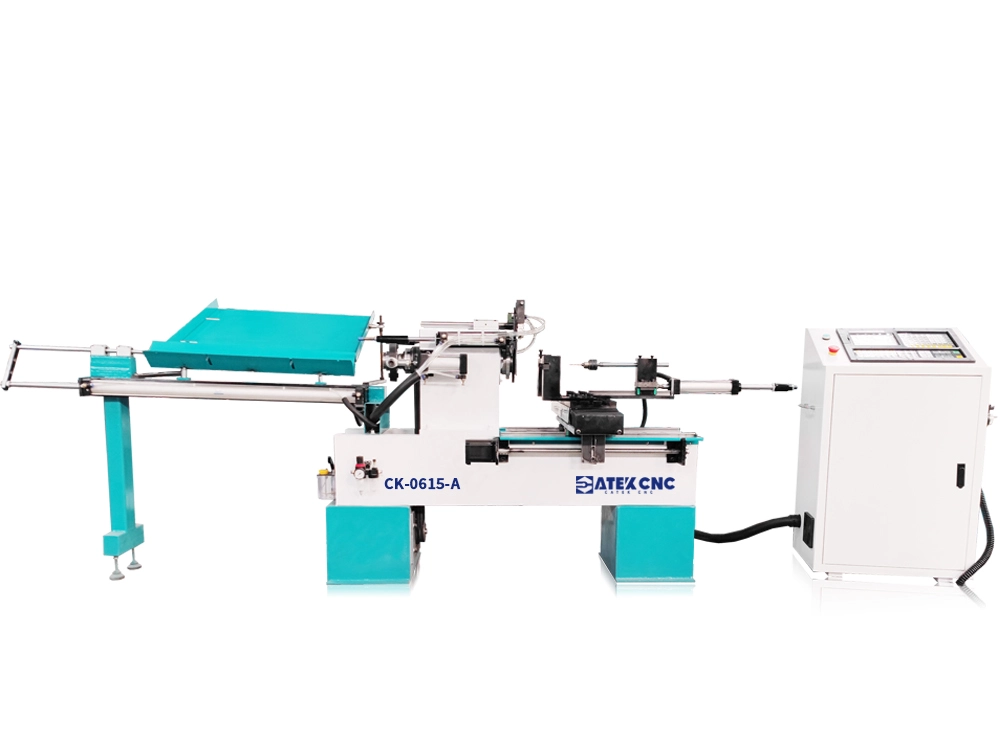
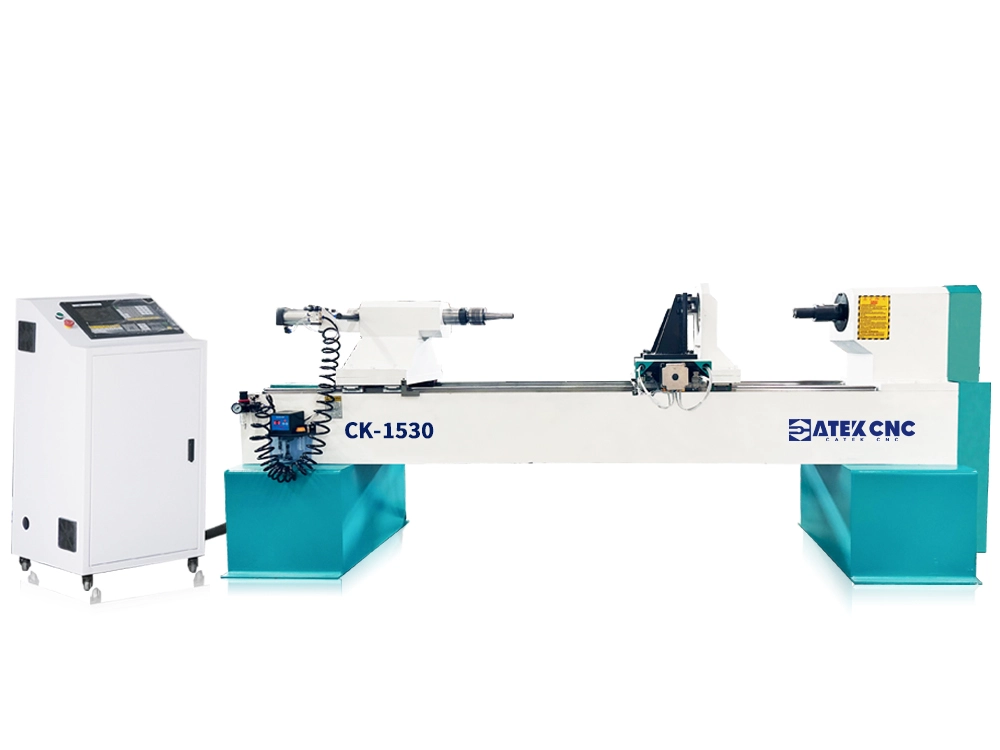
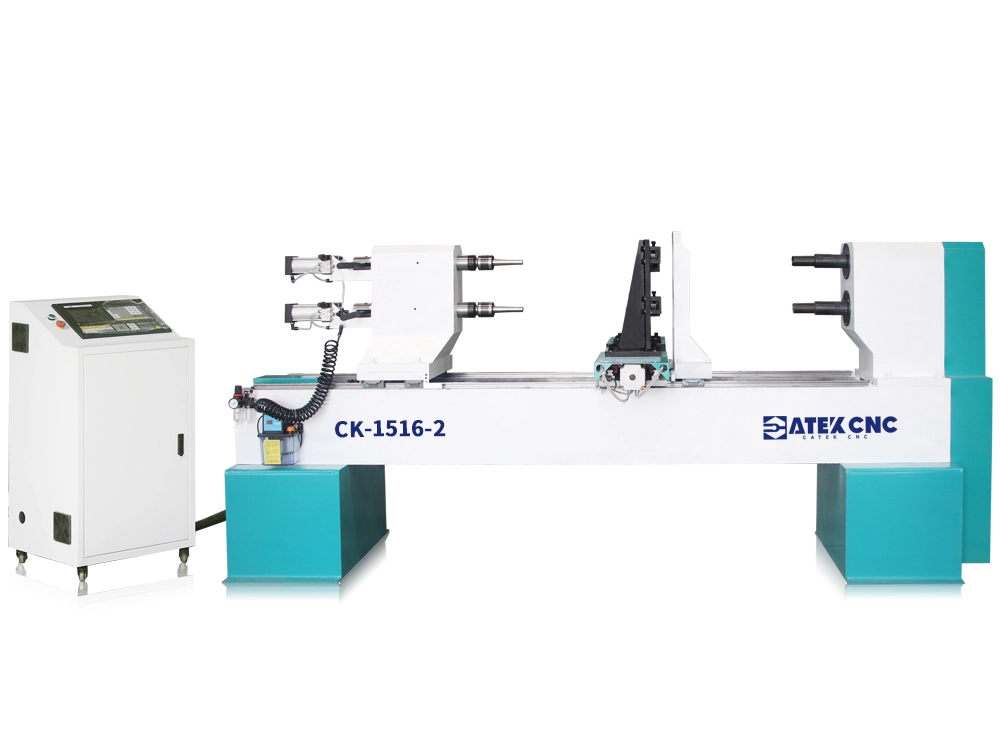
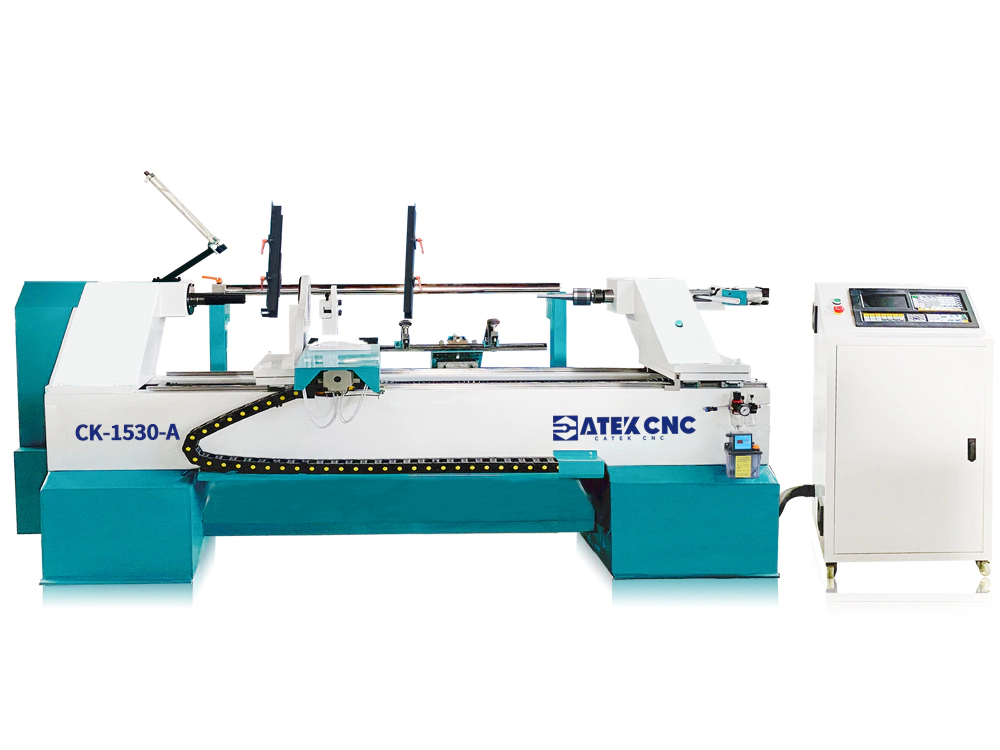
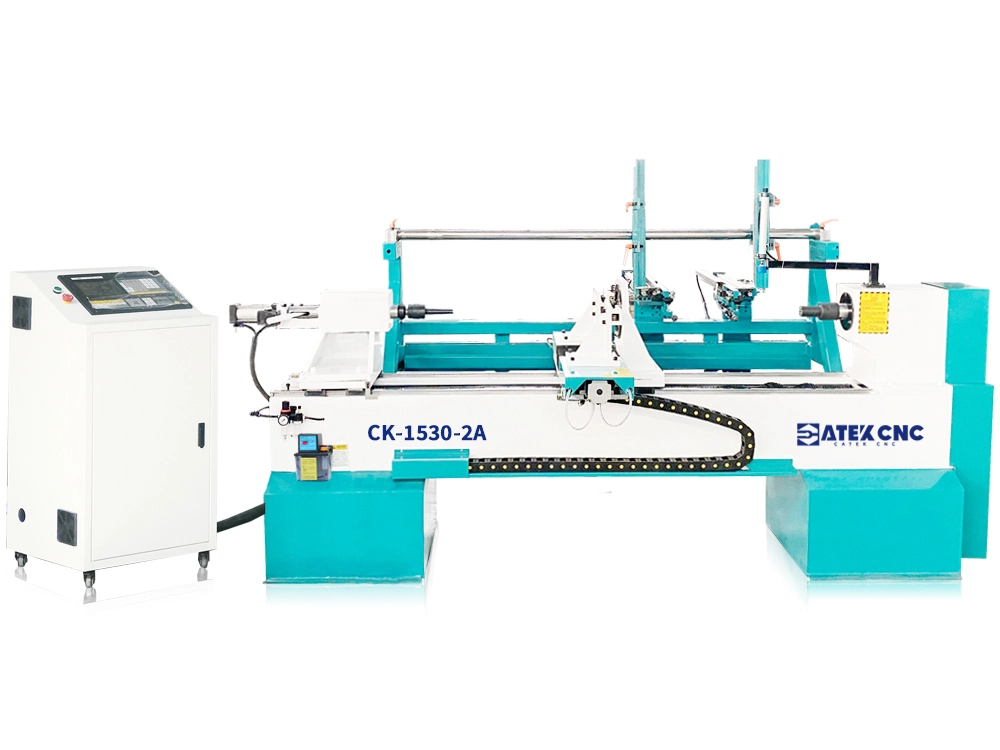
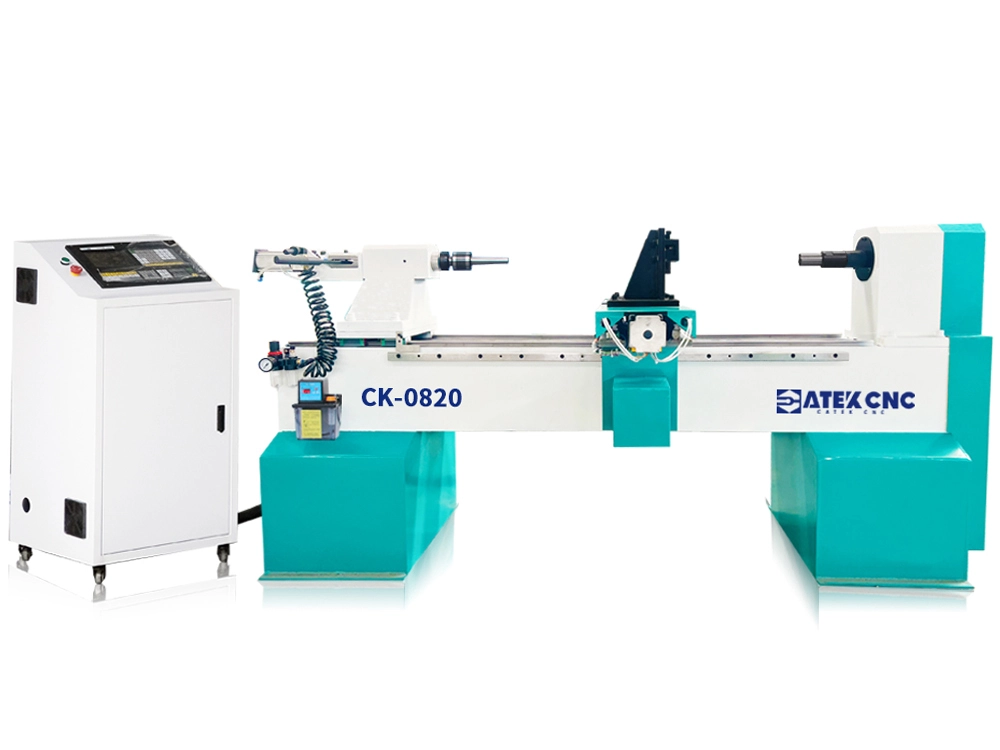
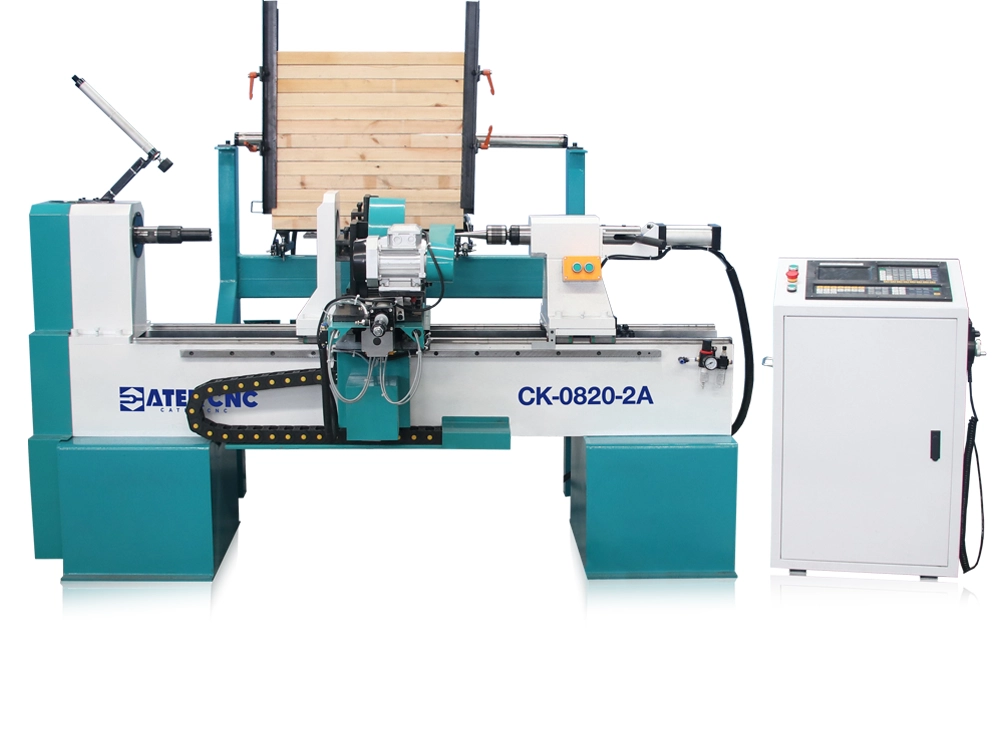
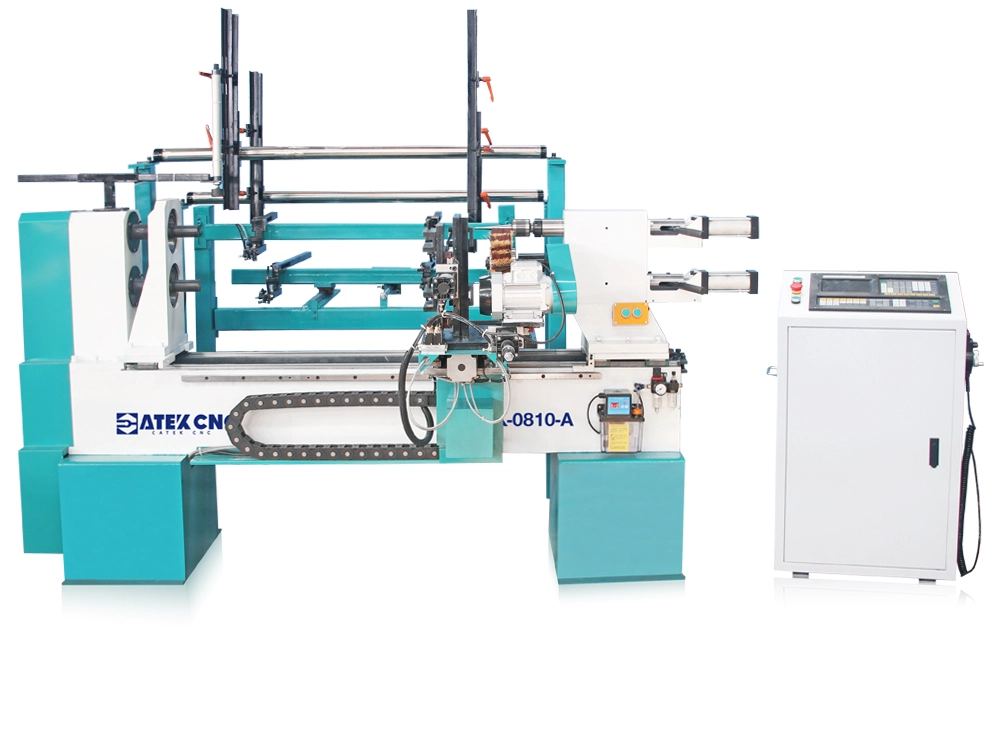
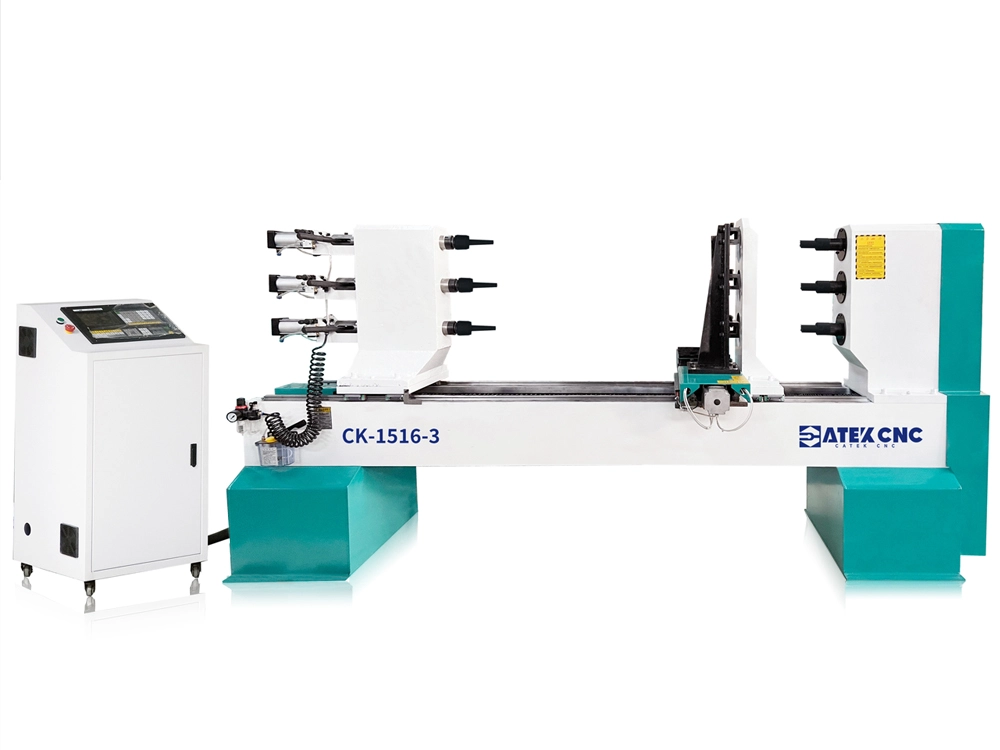
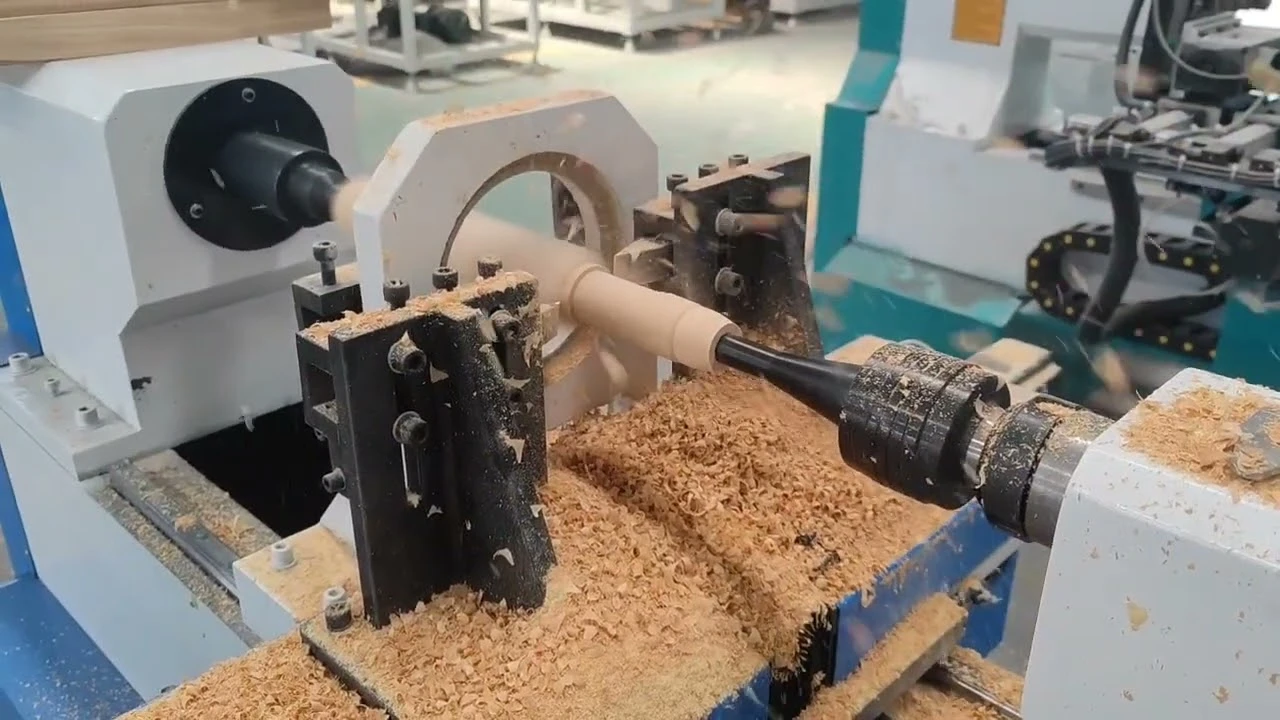
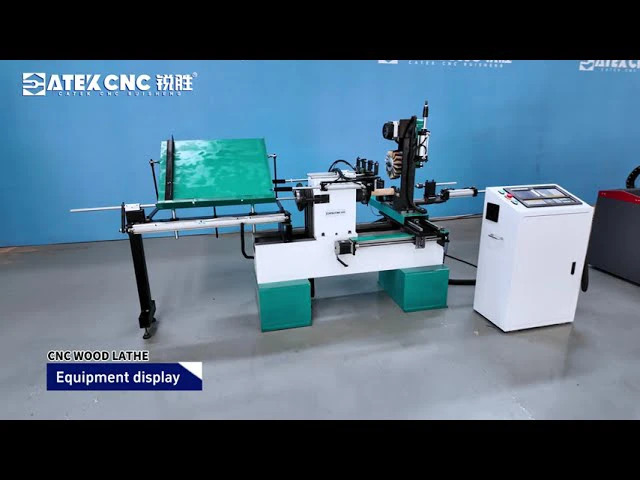
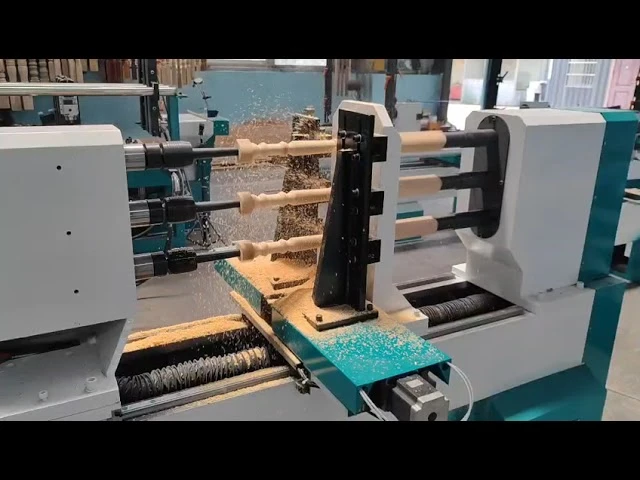
CNC turning wood lathes is one of the most typical wood lathes, used for processing products composed of rotating curves. This type of machine is mainly used for internal and external diameter turning of square or cylindrical non-metallic materials, capable of machining simple geometric shapes such as cylinders, cones, and spheres, as well as combined shapes like bottles, dishes, and waistline columns. This type of lathe is easy to maintain and simple to operate. It can be equipped with a single turning tool or two symmetrical turning tools—one for rough machining and one for forming. The symmetrical distribution not only reduces vibration caused by the inertia of high-speed material rotation but also improves production efficiency. The cutting amount of the forming tool used for finishing is very small, which can also effectively enhance the surface smoothness of the product. If you need to process multiple products simultaneously, we can also provide multi-station lathes. This type of lathe is equipped with multiple machining stations, each with a corresponding set of lathe centers and turning tools, thereby increasing productivity to 2–4 times that of a single-spindle lathe and effectively ensuring product consistency during mass processing. We also offer chucks for users to choose from, which can clamp the workpiece at one end for turning the end face, suitable for machining wooden bowls, matryoshka dolls, drawer handles, and more. For the mass processing needs of woodworking factories, automatic loading and unloading devices are available. After filling the blanks into the material bin, batch fully automated processing of workpieces can be achieved.

Showing 1–12 Of 9 Results

A WIDE VARIETY OF LATHES FOR WOOD TURNING TO CHOOSE FROM

Do you want to know how to select a CNC wood turning lathe that best suits you, and learn about the detailed information and price of the machine? The following article will be of great help to you. Here,we have introduced in detail the functions, application scope, working principle, and usage methods of the CNC wood lathe. CATEKCNC has never been stingy about sharing our valuable and professional advice and experience with the manufacturing industry worldwide. We would be very honored if this can help you.

Introduction

The wood turning lathe only has basic turning functions, so its function is relatively simple compared to the multi-functional lathe. It is mainly used for surface and internal rotation processing of wood.

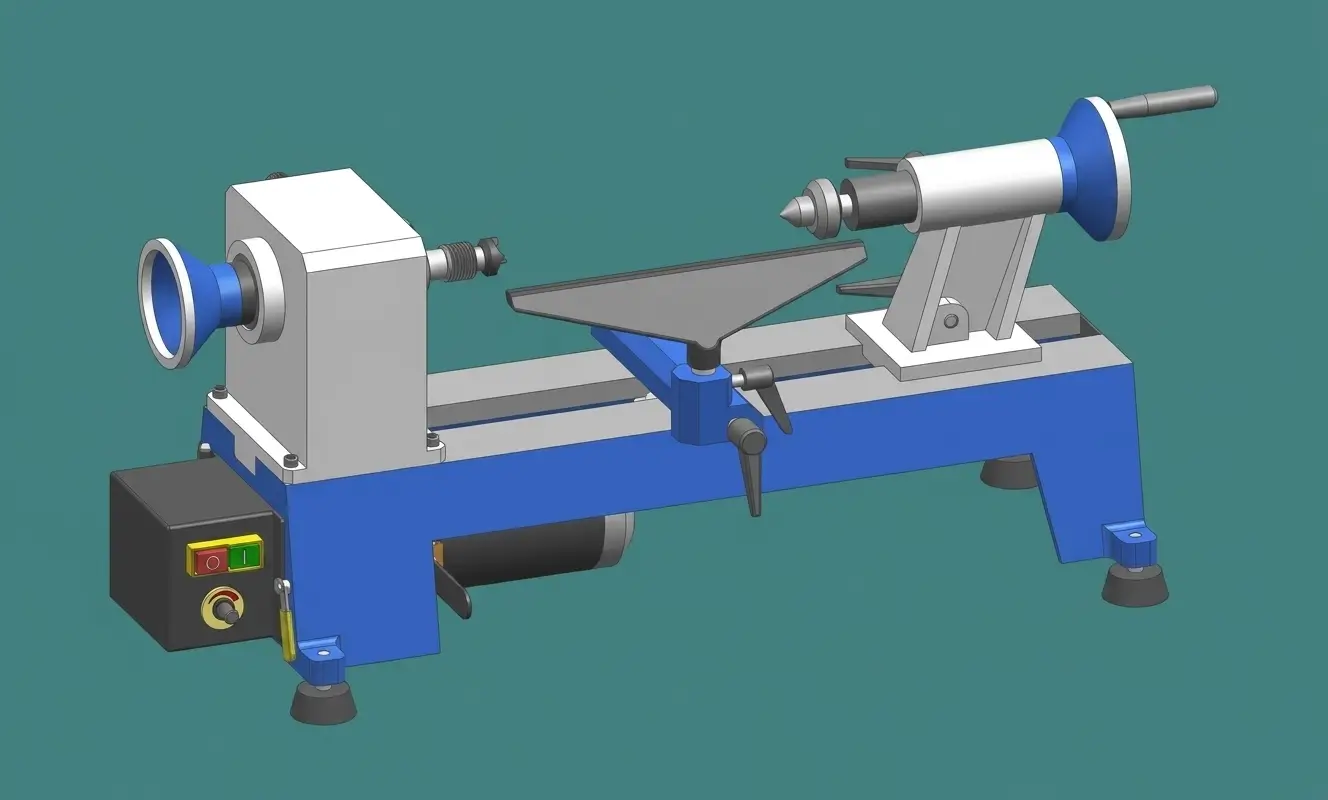
This type of lathe is inexpensive and easy to maintain, and is suitable for personal workshops or factories that only need to turn or perform simple drilling operations on the inside and outside of the material.In fact, in some aspects, not lathes with more expensive and more comprehensive functions are suitable for everyone.for example, our mini wood lathes are equipped with a collet to fix wood, which is more suitable for cross-section processing of small-sized workpieces,and it is perfect for processing small handicrafts.

How to Program and Operate a Wood Turning Lathe?

Whether you are a novice or an expert, you can easily master our lathe making skills. Usually for novices, we recommend the use of our self-developed software, which we call auxiliary design software, the use of this software is very simple, you only need to enter the diameter, length, shape and other relevant parameters, you can automatically generate a pattern, in the software you can visualize the product you want to deal with the drawing, for each part of the shape, you can also be flexible to make adjustments again. If you are an expert and have already mastered drawing software such as JD/CAD/ARTCAM, you can use the above software directly to draw the corresponding design drawings.

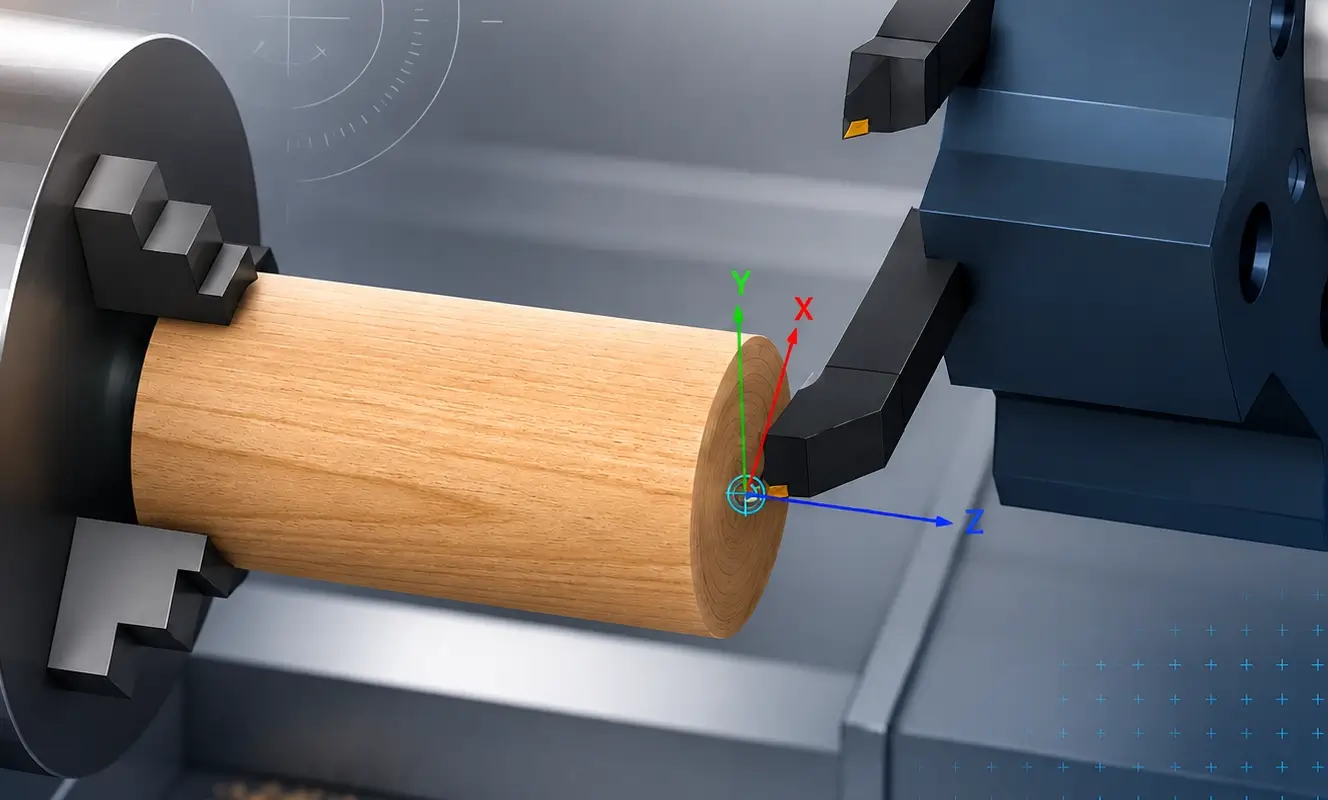
After designing the drawings of the products to be processed, the operation of the machine is 70% complete, now we only need to use a USB flash drive to copy the drawings to the control system of the lathe, and then the system will automatically generate the G code for the machine to use, without having to manually program. Next, you only need to align the tool with the cross-section surface of the material to be machined, then zero the machine's coordinate system, click on Auto, and then click on the Start button to start the automatic machining of the workpiece.When batch processing the same product,there is no need to repeat the tool setting when processing the new workpiece after the previous workpiece is completed, just click the Start button. If you experience a power outage or want to pause machining when you are in a hurry to leave work, you don't have to worry, after restarting the machine, it will remember our last machining point and continue to start machining.

What Other Kits Can Be Added To CNC Wood Turning Lathe To Further Improve Production Efficiency?

Although this type of lathe has a relatively simple function, we still provide some kits for you to choose.

  • Drill bit: We can equip you with a fixture to hold the drill, which is not rotatable, as the drilling of a turned wood lathe is done by rotating the workpiece. The maximum diameter of the clamping drill can be equipped according to your needs.

  • Inner hole tool: The inner hole tool is usually a round tool bar with a diameter of 10mm, 15mm, 20mm, 25mm, etc. It will be installed on the tool holder parallel to the material, and the turning work inside the material will be performed through the automatically generated G code.

  • Sanding: We usually have three sanding methods for you to choose from: 1. Sisal wheel sanding type; 2. Drum sanding belt type; 3. Sanding belt strip type. All three types of sanding are driven by motors, and the surface is sanded as the material rotates.

  • Automatic loading and unloading: Our automatic loading and unloading structure is a set of devices that automatically loads the material from the silo onto the machine by means of a pneumatic cylinder linkage and automatically tops off the material after processing is completed. After more than ten years of upgrading, the current automatic loading and unloading device has become very mature and very suitable for batch processing in factories. Often only one person is needed to operate more than a dozen CNC woodworking lathes, saving a lot of labor costs. For personal studios, we also highly recommend choosing this function because it eliminates the repetitive and tedious process of loading materials.

  • CNC turret (automatic tool changer): With this turret, our lathe can be equipped with 5 different types of tools, even drill bits, and can complete extremely complex turning processes, such as internal hole turning, right-angle cutting, ball cutting, cutting operations, etc.

  • Dust collection device: The machine tool can be equipped with a pipe interface for installing a dust collection device, which can be used with our dust collector or connected to the central dust collection device of your factory. The interface size can be customized, generally 100mm.

Application Scope

Since it can only be turned, it is suitable for processing various symmetrical rotating products such as columns, rods or rings without bevels, grooves or carvings.

Applicable Materials

Oak, beech, pine, fir, ash, maple, acrylic, etc.

Application Industry

  • Furniture: Round table legs, sofa legs, clothes hanger rods, stair columns, Roman columns, bedside columns, etc.

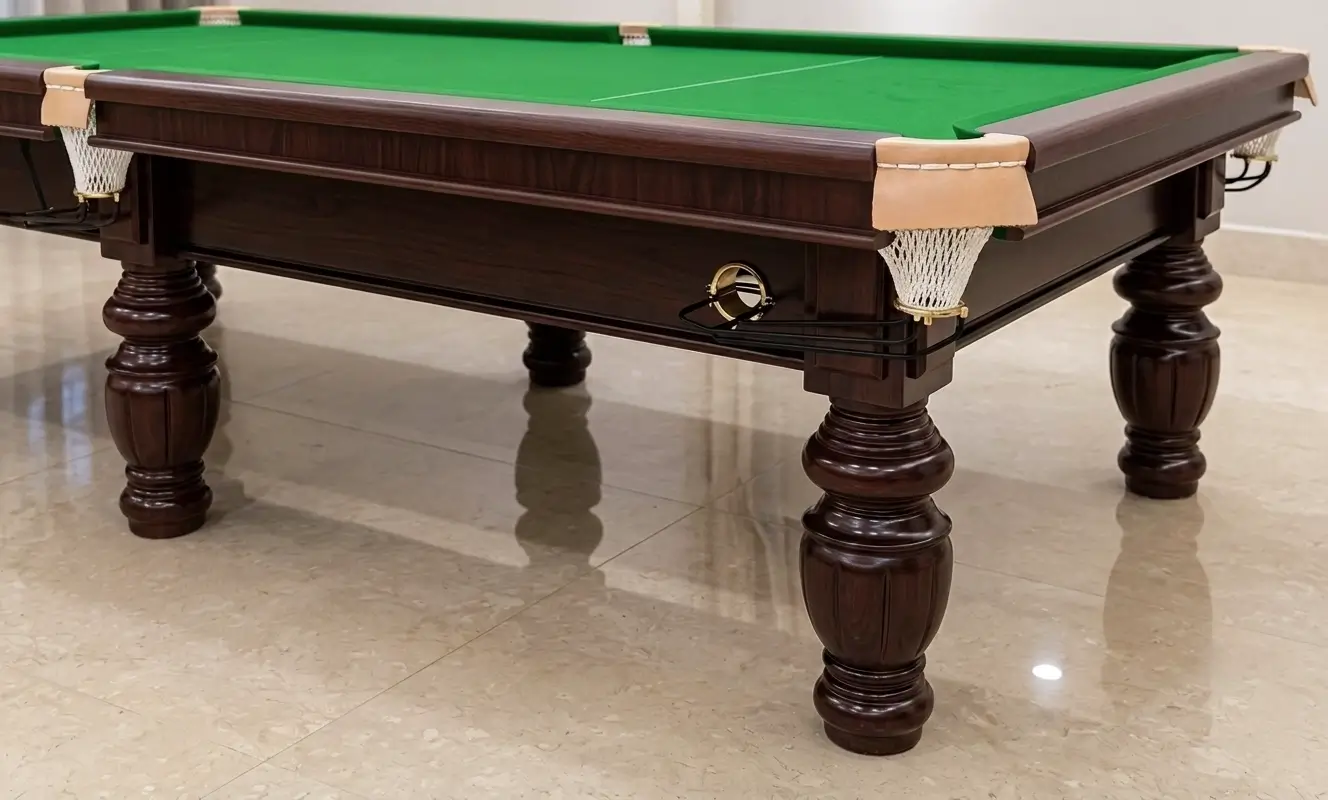
  • Sports: Baseball bats, pool cues, bowling balls, chess pieces, etc.

  • Crafts and daily necessities: Bracelets, wooden bowls, wooden barrels, wooden plates, etc.

Optional Machine Types

Processing Method Special alloy tool for CNC lathe,80-800 grit sandpaper,Fixed drill bit
Control Type Computer numerical control
Optional Color The standard colors are two-color stitching: green and white, blue and white, orange and gray, green and gray, blue and orange. Color cards are available and we provide free color customization service.
Bed Heavy gray iron cast bed
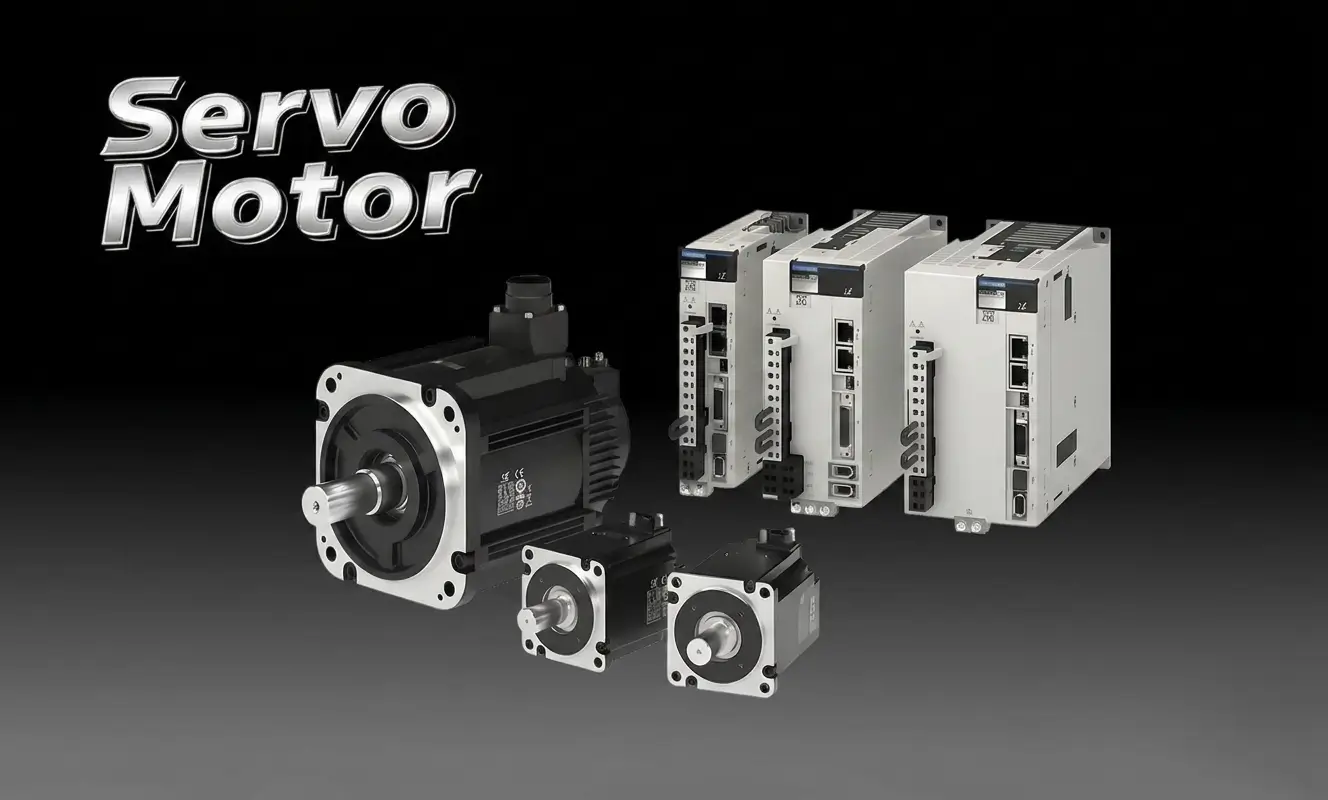
Optional Motor Brand YAKO, Yaskawa, Panasonic, Delta, Leadshine, Donlim, etc.
Spindle(Drive Workpiece) Speed 0-6000r/m
Optional Inverter BEST,Delta,Folinn,Hpmont,etc.
Electrical Part Schneider, Delixi, Chint, Omron, etc.
Optional Guideway Taiwan Hiwin/PMI high precision 25 linear square rail/25 slider
Transmission Mode XY axis 25TBI ball screw drive, Z axis uses high-precision helical rack/TBI 32 ball screw
Control System CATEK-1000TC, DSP, MACH3, NC-studio, Syntec, Siemens, FANUC, Mazak, Mitsubishi.
Software Artcam, type3, CAD drawing, CDR, solidworks UG powermill,auxiliary design, etc.
File Format G code, u00, mmg, plt, dxf, dbf, txt
Processing Dimensions(length * diameter)
  • 3000 * 500mm

  • 2500 * 400mm

  • 2000 * 300mm

  • 1500 * 300mm

  • 1500 * 160mm * 2

  • 1500 * 160mm * 3

  • 800 * 200mm

  • 80 * 150mm

(Other processing sizes can be customized for you)

Processing Station 1~4
Function Turning, facing, drilling, sanding, etc.
Optional Parts All kinds of turning tools, four-jaw chuck, steady rest, automatic tool changer, sanding wheels or belts, automatic loading and unloading system, semi-enclosed or fully enclosed protective cover, dust collector

What Is The Difference Between Single-Knife And Double-Knife?

The "double-knife" we refer to here refers to two machining knives on both sides perpendicular to the workpiece. These two knives can be of the same type or different types, and can be fed at the same time or only one knife can be controlled.

When processing large-diameter workpieces, a double-knife lathe can be equipped with two turning knives of the same type, and the two knives can be fed simultaneously to increase turning efficiency. It can also be equipped with different types of knives to achieve different types of processing.

Single-knife lathes are simple to operate and can save some costs, and when fine machining is required, double-knife lathes usually also stop feeding the knife on one side to better control the machining accuracy.

What Are The Workholding Devices?

Drive Center And Revolving Center

In CNC woodworking lathes, the most common method of clamping workpieces is to use a combination of drive center and revolving center. The drive center is located on one side of the headstock, and has various hardened teeth on it (a more primitive manual woodworking lathe might be a nail-shaped device into which the wood is hammered.). These teeth bite into the workpiece and connect with the workpiece. The drive center can be controlled by the control system to rotate, thereby driving the workpiece to rotate.

When clamping the wood to the spindle, it is necessary to center it to ensure the stability of the workpiece rotation. Our CNC woodworking lathe can be equipped with an automatic centering frame to assist you in completing this step.If it is equipped with an automatic loading system, the automatic centering frame is not needed because the automatic loading system will directly put the wood into the appropriate position of the spindle.After the workpiece processing is completed, the clamping device will automatically release and the workpiece will be automatically collected into the preset unloading port. Then the next piece of wood will be automatically sent in and clamped for processing, and this cycle would be continue. We also have an induction device. If the material bin is empty or the material is not fixed properly, the lathe will automatically stop processing until new materials are added to the material bin or the material is clamped in place before the machine resumes operation.

The revolving center is at one end of the tailstock. Although it does not have a driving force, it has three high-lubricity bearing inside that can rotate with the wood, which can avoid damage to the wood caused by friction, and the spindle can also have a relatively high speed.

Chuck

A chuck is a device that uses jaws to clamp a workpiece. Currently, the most common chucks are three-jaw chucks, four-jaw chucks, and six-jaw chucks. A three-jaw chuck can be used to clamp cylindrical, regular triangle, regular hexagonal and other light and regular shaped workpieces; a four-jaw chuck is generally used to fix square materials; a six-jaw chuck can be used to clamp plastic and other thin-walled pipes and other workpieces. Generally speaking, the more jaws a chuck has, the less pressure a single jaw exerts on the workpiece under the same clamping effect, thus reducing the deformation and breakage probability of the workpiece.

Chucks are generally used for cross-section processing of workpieces, such as processing bowls, plates, and chess products. Chucks are also suitable when the workpiece is too slender, because if the spindle and tailstock are used for clamping, it is easy to cause the workpiece to deform. At this time, it is most appropriate to use a chuck or collet with a steady rest.

Collet

A collet can be seen as a special chuck, which is usually a cylindrical sleeve and is usually used to process cylindrical wood. The wood is squeezed into the sleeve, and the workpiece is rotated by high static friction, it can effectively fix such as workpieces with the tailstock squeeze. Collet is suitable for processing workpieces with smaller diameters, and workpieces with different diameters require collets of different diameters. There is also a pneumatic collet, which can actively tighten after the workpiece is placed, making it more convenient to place the workpiece and the clamping effect is better, and it can adapt to workpieces of various diameters. If automatic loading is required and a collet is needed, a pneumatic collet is a must, and our 0615 handicraft mini lathe is of this type.

Steady Rest

The steady rest is a bracket installed between the headstock and the tailstock. It is used to support the slender cylindrical workpiece when processing it, bearing part of the workpiece's own weight and the force applied to the workpiece by the processing tool, reducing the risk of workpiece vibration or even breakage. On a CNC woodworking lathe, it cannot adjust the diameter, so a corresponding steady rest should be used for each diameter of wood. The steady rest can move horizontally along the direction of the bed, so it needs to be placed in front of the turning tool along the processing direction. During processing, it moves forward with the turning tool as the processing progresses, and the part of the wood clamped by the it is unprocessed.

Cost and Pricing of The Machines

The cost of a wood turning lathe is usually determined by the size of the machine, the optional (added) functions, the brand of electrical components and controllers. A basic lathe can be purchased for less than $4,000. If you have higher requirements for the machine configuration or functions, you can add configurations according to your needs. For example, the optional Yaskawa servo requires an additional cost of about $1,500, while the Leadshine servo only costs $420. The price of the added function kit ranges from $280 to $720. We provide free color customization. In short, a machine with more comprehensive functions and higher configuration will be more expensive, and the machine price ranges from about $4,000 to $6,000. The basic machine configuration is already very good, and we should consider more whether its functions can meet our processing needs.

Are CNC Wood Lathes Safety?

This machine is very safe as long as you follow the machine's instructions exactly. Even if the material breaks due to misuse or wood problems, the machine is equipped with induction and physical protection devices to ensure the safety of the operator, if you are really worried, you can also choose to install a semi-enclosed or fully enclosed protective cover, adding this device is not only safe, but also in the acoustic and dust-proof will be very good. Electrical parts, we only use the first line of well-known brands certified by professional organizations, the cable we also only use the certified national standard of high-flexible anti-bending cable, so as to ensure the quality of the machine and the safety of electricity.

Machine Purchasing Process

  1. Initial communication

    After fully understanding the machine tool or directly contacting our sales experts, determine the machine model, processing size, color and voltage, etc.

  2. Calculate the price

    We will tell you the machine price and transportation-related costs respectively, so that you can freely choose a transportation company. At the same time, we will also help you compare transportation prices from multiple parties and choose the most cost-effective and safest transportation company.

  3. Signing a contract

    As a formal and professional company, we will issue you a mutually beneficial contract and PI (Proforma Invoice). After your confirmation, we will pay the deposit for the machine and reach a preliminary cooperation.

  4. Arrange production

    We will make a detailed configuration production order for the machine and send it to our production workshop for the production of the machine. At the same time, we will confirm with you whether the production order meets the contract requirements.

  5. Machine delivery

    After the machine is produced, it will first be strictly inspected by our internal quality inspection department to ensure that the quality of the machine is qualified, and then we will send you the acceptance video, pictures, etc. of the equipment.

  6. Equipment transportation

    After you confirm that the machine fully meets the contractual agreement between the two parties, pay the remaining balance of the equipment, we will pack the machine, and send you photos of the packaging process. It will be safely delivered to your country and region by a professional transportation company.

  7. Customs clearance at the port

    We will provide all the documents required for the equipment to enter your country or region for customs clearance to ensure smooth customs clearance.

  8. After-sales and technical support

    Our equipment will provide a free three-years warranty service, and there will be 1-on-1 after-sales technicians to provide you with professional, lifelong free technical guidance through email, WhatsApp, phone, video call, etc. If you need, we can also come to your door to install, train and repair the machine.

Things to Note after The CNC Wood Lathe Arrives at The Port

  1. Check the integrity of the outer packaging

    After receiving the machine, the first thing to do is to check whether the mark is correct, whether the outer packaging is intact, and whether there is any obvious damage.

  2. Initial examination

    After confirming that there is no obvious damage to the outer packaging, open the packaging (wooden box or waterproof film) and check whether the machine configuration, functions and accessories are correct and complete against the checklist.

  3. Equipment Installation

    After placing the machine in the appropriate position, move the control cabinet from the top of the machine to the ground and place it in the appropriate operating position. Install the parts (revolving center, chuck, turning tool, etc.). When wiring the control box, it must be done by professionals or after consulting our after-sales experts to ensure that the sequence of the naught wires and live wires is correct and reliably grounded to avoid malfunctions or unexpected consequences. Due to transportation requirements, we usually drain the lubricating oil. Please add oil according to the specified amount to ensure that the oil circuit is unobstructed and the lubrication system is clean, and ensure that all parts of the wood lathe are kept in good lubrication.

  4. Debugging

    Before operation, check whether the lathe parts have been installed in place and tighten them to ensure firmness. If an external air source is required, ensure that the pressure is above 0.6 MPa, and reconfirm the sequence of the zero line and the live line before starting the machine. After starting the machine, check whether the motion axis moves normally, whether the motor rotates in the correct direction, check whether there is any abnormal noise when the bearing rotates, and check whether the lathe protective cover, sensor and system alarm device can work normally.

  5. Maintenance

    Please cut off the power supply in time after get off work, and blow away the wood chips and dust attached to the machine guide rails and other transmission parts when leaving get off work every day to avoid collision with the electric control box and CNC system.

CNC Wood Lathe Repair and Maintenance Guide

It includes daily maintenance, regular inspections and solutions to common problems.

Daily Maintenance

Daily inspection: Including checking the air pressure system and guide rail lubrication system. Ensure that the air pressure is 0.4-0.8 MPa, and the oil level of the electronic oil injection system should be higher than the minimum calibration line.

Weekly inspection: Check the machine tool parts slider and guide rail screw lubrication system every week, remove the surface wood chips and clean the inside of the dust cover, open the slider oil seal to remove the fine dust and sludge inside, and ensure the normal operation of the machine tools.

Monthly inspection: Check the machine's external power supply and air compressor to ensure that the power supply voltage floats within 10% and the frequency is 50hz/60hz. If there is any abnormality, measurement and adjustment are required. The air compressor should ensure that it can provide the machine with a pressurized air source normally.

Quarterly inspection: Mainly check the machine tool bed, transmission system and guide rail lubrication system, confirm that the machine tools have no obvious displacement, whether the transmission accuracy is deviated, and whether the bearing is working normally. If there is any problem, contact the after-sales expert in time for guidance and solution.

Semi-annual inspection: Check the cylinder lubrication system, bearing lubrication system and X, Y, and Z axes of the machine tool. If there is any problem, drain the original lubricating oil of the machine in time and inject new lubricating oil, and test whether it is normal.

Regular Inspection

Dust prevention management: It is very important to keep the control cabinet sealed. Frequent opening of the cabinet door will allow wood chips and dust from the processing process to enter the control cabinet, resulting in a decrease in insulation resistance and even damage to electrical components. Therefore, unless necessary, try to open the cabinet door as little as possible and ensure that the control cabinet door is tightly closed.

Cleaning the control cabinet: When carpentry is working, it is inevitable that fine dust will enter the control cabinet through the gap, so it is necessary to use an air gun to clean the dust and wood chips attached to the electrical components inside the control cabinet regularly. Be sure to clean after power is turned off.

Heat dissipation management: Check the cooling fan, internal spindle inverter, drive and main motor cooling fan on the CNC system control cabinet every day to see if they are working properly. Check whether there is too much wood chips and dust on the filter every 3 months. If it has affected the normal operation of the fan, it must be cleaned in time to prevent the electrical components from being overheated and causing short circuits or even damage.

Solutions to Common Problems

The turning tool does not move: If it is in automatic mode, you should first check the correctness of the processing program. If there is no problem, you should check whether the machine tool system alarms and whether the driver and inverter are powered normally. In manual mode, make sure that the manual button is lit and the button corresponding to the XYZ axis is pressed on the machine. If the problem still exists after excluding the above situations, please contact our after-sales experts to assist you in troubleshooting and solving the problem.

The main motor does not rotate: First determine whether the inverter alarms (usually low or high voltage and motor overload will cause the inverter alarm). The inverter alarm is a necessary measure to protect the safety of the machine. If an alarm occurs, first determine the cause of the alarm, then release the alarm, and the main motor can work normally.

Last Updated:
2026-02-11

CUSTOMER REVIEWS

  • This small CNC wood lathe is exactly what I wanted. It can automatically feed the material, perform cutting and turning on its own, and I've added an extra turning tool on the side to hollow out the wood end face.

    Safarli
    az
    Aug 09, 2025
  • I was surprised that this CNC small wood lathe could perform so well! It completely exceeded my expectations. This wood lathe is optimized for small crafts processing. The clamping device is very stable to ensure that the material will not shift during processing. Before purchasing, the salesperson Cici determined the appropriate chuck for me according to my processing size, and provided me with the machine drawings for free, and also gave me some extra turning tools. I highly recommend this machine.

    David
    mx
    Feb 15, 2025
  • I needed some chess pieces to be machined, and at first I was worried about the quality of the machine-made products. So I went directly to their factory to see for myself, and they showed me the machine-made products on the spot. They even sent a special person to pick me up at the airport, and I was very satisfied. :)

    Imran Khan
    pk
    Nov 20, 2024
  • This CNC wood lathe is very practical for my business. I was worried it would be too complicated to operate, but the learning curve is actually quite low. Even my workers picked it up quickly. A big plus is the simple auxiliary design software they included—it’s very convenient and makes drawing patterns much easier than I expected.

    Sou
    kh
    Mar 06, 2026
  • Bought this automatic feeding CNC wood lathe for our small wood workshop. The auto-loading saves us a lot of time and effort. Easy to set up, works consistently. Customer support helped me adjust settings for local wood. Good value for money.

    Suksawat
    th
    Nov 29, 2025
  • Baru menerima mesin ini. Saat ini saya masih menggunakan sisa bahan kayu untuk menguji dan mempelajari cara kerjanya. Saya yakin tidak lama lagi saya bisa mengoperasikan mesin CNC bubut kayu ini untuk produksi.

    Syaleh
    id
    Apr 17, 2025
  • I am very grateful to Mr. Wang, the supplier's technician. He is very patient and has very solid skills. He taught me from the simplest and solved a series of difficult problems for me.

    Olumide
    ng
    Dec 18, 2024
  • This CNC wood lathe is a perfect fit for my products! It’s super fast for batch processing, and I’ve been using it for three months now, zero issues so far.

    Rijal
    np
    Jan 01, 2026
  • This is the second time I buy a CNC wood lathe from China. This CATEKCNC lathe can process three workpieces at a time. Compared with the single-station CNC wood lathe I bought from other suppliers before, it has increased my production efficiency by 3 times! And the three workpieces can be turned at the same time with high precision, which reduces my production pressure a lot.

    Ergemlidze

    us
    Dec 13, 2024
  • This CNC woodworking lathe is great! I have used it to process several stair posts. The turning effect is very beautiful, and it is fast and automated. This is a CNC machine that fully meets my needs and has fully met my expectations.

    Guerrero
    ar
    May 30, 2025
Last Updated:
2026-02-11
Share this:
Menu