


{{goods.model}}
French Client Evaluates CNC Wood Lathe and 5-Axis Woodworking Solutions
From long hardwood table legs to complex spiral stair balusters, a recent visit from a French client to CATEKCNC focused on a key question: how can the right CNC wood lathe help manufacturers produce complex wooden components more efficiently, consistently, and with less manual intervention?

During the factory visit, the client outlined several specific machining requirements, including long-part wood turning, 5-axis RTCP machining, milling, drilling, sanding, and automatic loading and unloading.
Beyond the machining process itself, the evaluation also covered dust extraction, machine enclosure design, maintenance access, and integration with the client's existing workshop equipment.
These requirements reflect a challenge faced by many furniture and woodworking manufacturers: finding a CNC wood turning machine that can handle different workpiece geometries while maintaining machining consistency and supporting a more efficient production workflow.
At CATEKCNC, we approach these projects by looking beyond machine specifications. The goal is to understand what customers need to manufacture, identify the technical challenges involved, and determine which machine configuration best matches their production requirements.
1.CNC Wood Lathe for Machining Long Hardwood Table Legs: From Turning Precision to Surface Quality
In solid wood furniture manufacturing, producing table legs with consistent lengths and uniform shapes is a common requirement, but achieving the desired results depends on a variety of factors. Workpiece alignment, rotational stability, cutting conditions, and tool movement all affect the quality of the finished product.
For this application, a French customer focused on machining a complete table leg from beech or oak, with workpiece dimensions of approximately 80 × 80 × 800–1,000 millimeters.
This CNC woodturning lathe is capable of machining longer workpieces while maintaining stable turning conditions. We paid particular attention to the alignment of the chuck and tailstock, workpiece runout, and vibrations that may occur during machining. These factors are critical because instability can lead to an uneven workpiece contour, visible marks on the surface, and the need for additional finishing operations.
How the Finished Table Leg Reflects Machine Performance
Once turning is complete, the finished table leg serves as a direct reference for evaluating the machine’s performance. The consistency of the contour, the smoothness of the turned surface, and the presence or absence of visible chatter marks all help determine whether the machining process is suitable for its intended use.
For furniture manufacturers, good turning quality is not only about appearance but also about subsequent processes. If the turned surface is uneven, workers may need to spend extra time sanding or trimming before painting, finishing, or assembly.
A properly configured CNC woodworking lathe can help manufacturers standardize repetitive shapes and reduce reliance on manual turning skills. When the machining program, workpiece support, and cutting parameters are properly matched, this process can also ensure more consistent production across different batches of products.
Therefore, for this French client, evaluating a single solid hardwood table leg provided an opportunity to assess how well the wood lathe meets the practical requirements of furniture component production—from workpiece stability to the quality of the finished contour.
II. 5-Axis CNC Woodworking for Spiral and Twisted Wooden Balusters
Spiral and twisted wooden balusters require more than standard wood turning. Their shapes combine rounded profiles with twisted, three-dimensional surfaces, making precise machining important for achieving the desired design.
During the factory visit, the French client explored the 5-axis CNC woodworking machine by focusing on a hardwood baluster with a diameter of approximately 100–150 mm. The machining process involved creating the baluster's curved profile and spiral shape, with particular attention to the areas where turning and 3D milling meet.
Checking the Shape and Surface Finish of the Finished Baluster
For a spiral baluster, the finished workpiece needs to maintain a consistent shape along its length, with smooth transitions between the rounded and twisted sections. Obvious steps, uneven surfaces, or excessive tool marks can affect the appearance of the final product and increase the amount of manual finishing required.
The client therefore paid attention to the 5-axis RTCP machining performance, particularly how the machine coordinated its movements when machining complex curves and changing tool angles. These factors are important when producing decorative wooden balusters, staircase components, and other architectural woodwork with intricate designs.
With 5-axis CNC wood machining, manufacturers can produce complex shapes in fewer setups, reducing the need to repeatedly reposition the workpiece manually. This can make production more convenient when manufacturing decorative components with different profiles and designs.
For furniture and architectural woodworking manufacturers, the 5 axis CNC wood lathe main advantage is the ability to machine intricate wooden shapes with greater flexibility while maintaining control over dimensional accuracy and surface quality.
III.CNC Milling and Drilling for Hardwood Furniture Components
In addition to turning table legs and machining decorative balusters, the French client also considered how the CNC wood lathe machine could handle square hardwood components used in furniture manufacturing.
The workpiece was a piece of hardwood measuring approximately 100 × 100 × 1,000 mm. The machining operations included CNC milling and drilling, which are commonly required when producing wooden frames, furniture structures, and other components that need accurately positioned holes and flat surfaces.
After machining, the key details to examine are the flatness of the milled surfaces, the positions of the drilled holes, and whether the machined features match the intended design. For a long wooden component, accurate positioning is particularly important because even a small deviation can affect how the part fits with other components during assembly.
The client also considered the machine's stability when cutting hardwood. Excessive vibration can leave visible marks on milled surfaces or affect the consistency of the finished part. Cutting conditions, including the tool, feed rate, and cutting depth, all influence the final result.
For furniture manufacturers, combining milling and drilling in a CNC machining process can reduce repeated workpiece handling and make it easier to produce components with consistent dimensions. Recording the machining time also helps estimate how efficiently the process could fit into regular production.
IV.Wood Sanding: Reducing the Work Required After Machining
Once a wooden component has been machined, its surface finish determines how much additional work is needed before painting, coating, or assembly.
This was another aspect of the French client's evaluation. Using a machined table leg or decorative baluster, the client planned to examine the surface after sanding and compare the time required with conventional manual sanding.
Curved wooden parts can be particularly time-consuming to finish by hand. The operator may need to work carefully around rounded profiles, grooves, and twisted surfaces to remove tool marks without changing the shape of the component.
The condition of the surface before sanding therefore matters. If the CNC machining process leaves a relatively consistent finish, the subsequent sanding stage may require less correction. If deep tool marks or uneven areas remain, more manual work may be necessary.
The comparison between CNC machining and sanding would help the client understand how the two processes work together. The aim is not simply to produce the correct wooden shape, but to reduce unnecessary finishing work while achieving the required surface quality.
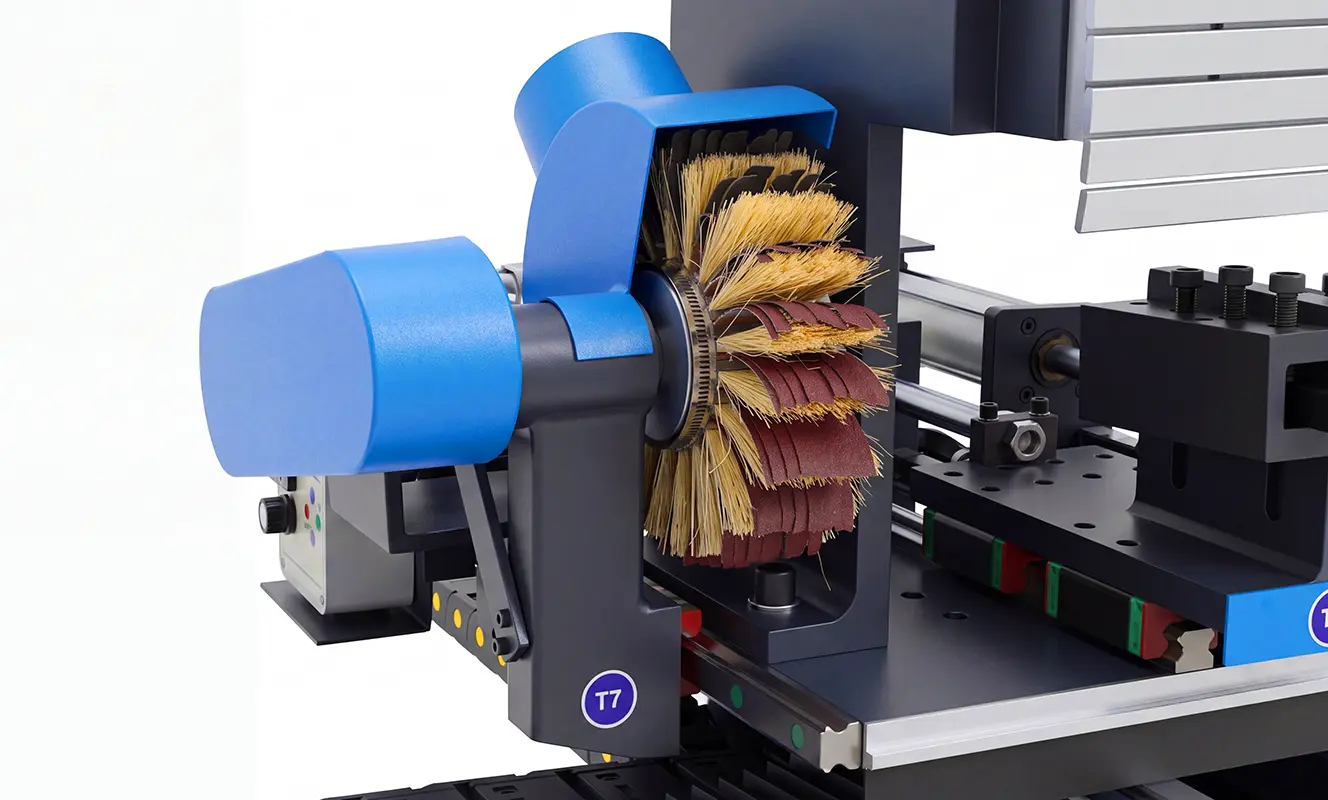
V.Automatic Loading and Unloading for More Efficient Production
For manufacturers producing wooden table legs, balusters, and other repeated components, loading and unloading can take up a significant part of the production cycle.
During the visit, the French client also examined the automatic loading and unloading system and how it could be integrated into the CNC woodworking process.The key consideration was how the system handles each workpiece before and after machining. The material needs to be positioned correctly for processing, while the finished component must be removed safely and efficiently before the next cycle begins.Reliable handling is particularly important when machining long wooden parts. The loading arrangement must accommodate the workpiece dimensions without interfering with the machine's movements or creating unnecessary delays.
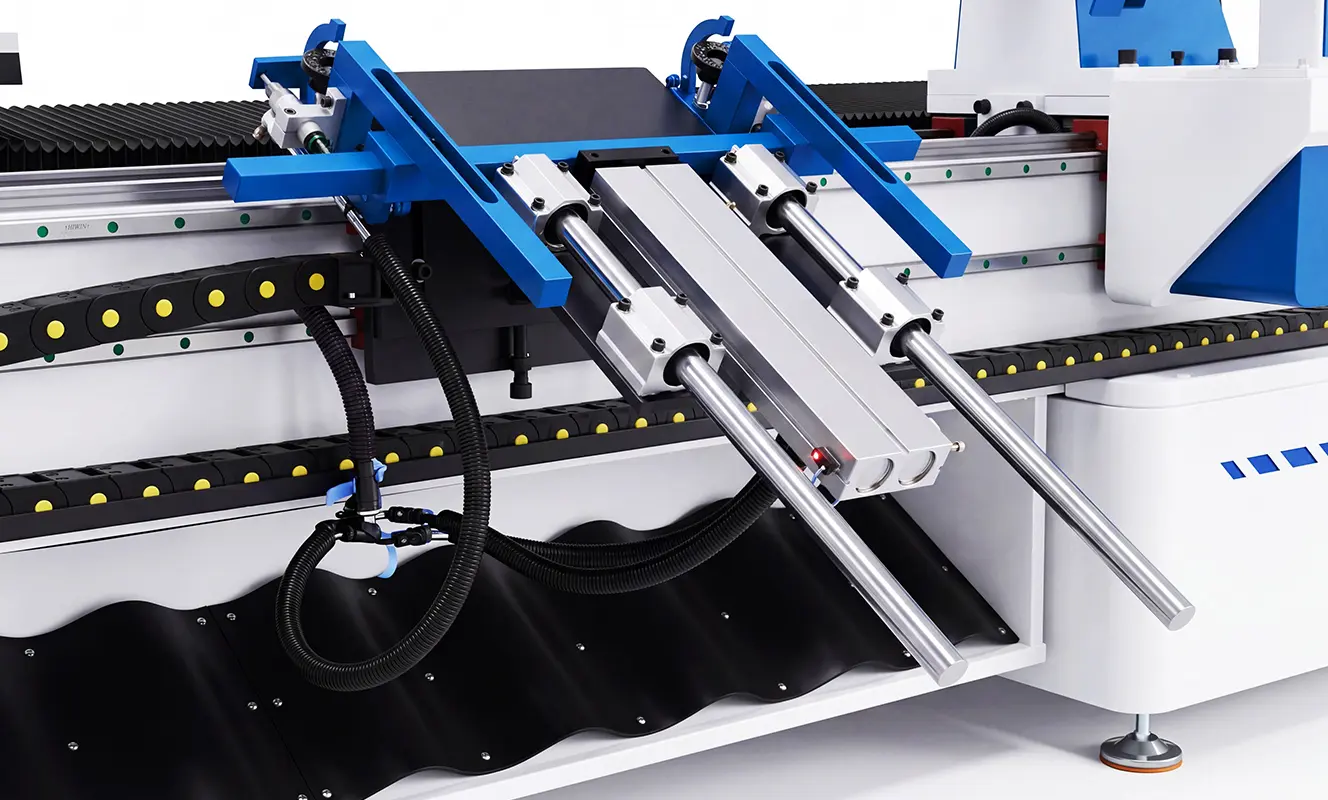
The client observes the loading and unloading process and record the time required for handling. This would help distinguish the time spent cutting the wood from the time spent preparing each workpiece.
For workshops producing large batches of similar components, automatic loading and unloading can reduce repetitive manual handling and help maintain a more consistent production rhythm. Its practical value depends on the reliability of the handling system, the dimensions of the workpieces, and the number of parts the workshop needs to produce.
VI.Measuring CNC Machining Time and Spindle Load
Machining quality is important, but manufacturers also need to understand how long each component takes to produce and how the machine operates under different cutting conditions.
During the evaluation, the French client planned to record the CNC machining cycle time for the different workpieces. The measurements would cover the time needed for the relevant machining operations, providing a practical reference for estimating production capacity.
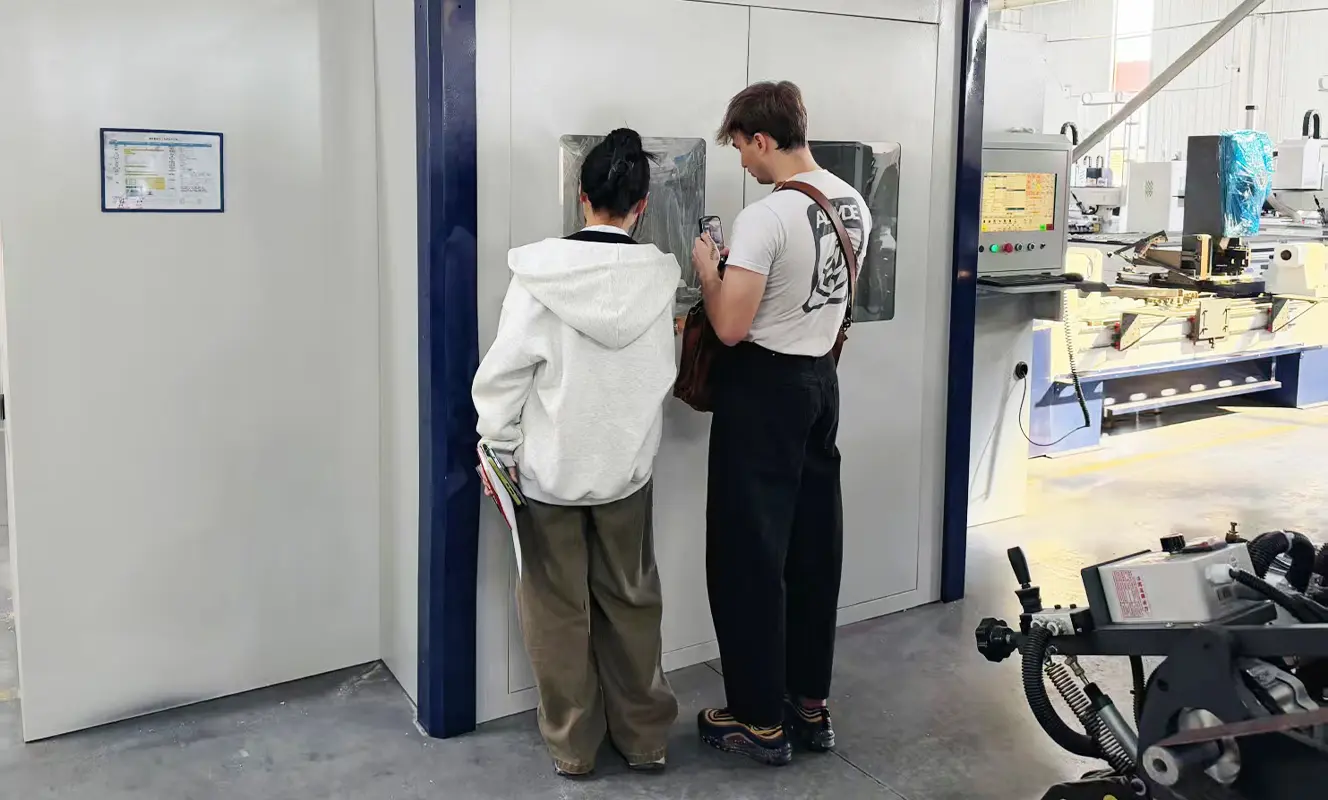
The client also planned to record CNC spindle load from the machine controller during machining. These readings can help operators observe how the spindle responds when cutting different hardwood components and working with different toolpaths.
For example, machining a long table leg, milling a flat surface, and producing a complex spiral profile place different demands on the machine. Comparing the recorded operating data with the finished workpieces helps provide a more complete picture of the machining process.
Cycle time and spindle load should not be considered in isolation. The wood species, cutting tools, feed rate, cutting depth, and programmed toolpaths can all influence the readings and the final result.
By combining machining-time records, spindle-load readings, and inspections of the finished samples, manufacturers can make a more informed assessment of whether a CNC machine suits their production requirements.
VII.Fully Enclosed CNC Wood Lathe: Dust Collection, Safety, and Installation
During the factory visit, the French client also discussed the fully enclosed CNC wood lathe and how it could fit into his existing workshop. In addition to machining performance, dust collection, operating safety, and installation space were important considerations.
The client already had a dust collection system with an airflow capacity of approximately 5,000 m³/h. To determine whether it could work with the machine, both sides discussed the extraction connection, required airflow, and operating pressure. A suitable connection between the machine enclosure and the existing dust collection system would be important for removing wood dust and chips during machining.
The client was also interested in how well the enclosure could contain dust during operation and how easily wood chips could be collected and cleaned out after machining. These details matter in everyday production, where effective dust extraction can help keep the workshop cleaner and reduce the time spent on machine maintenance.
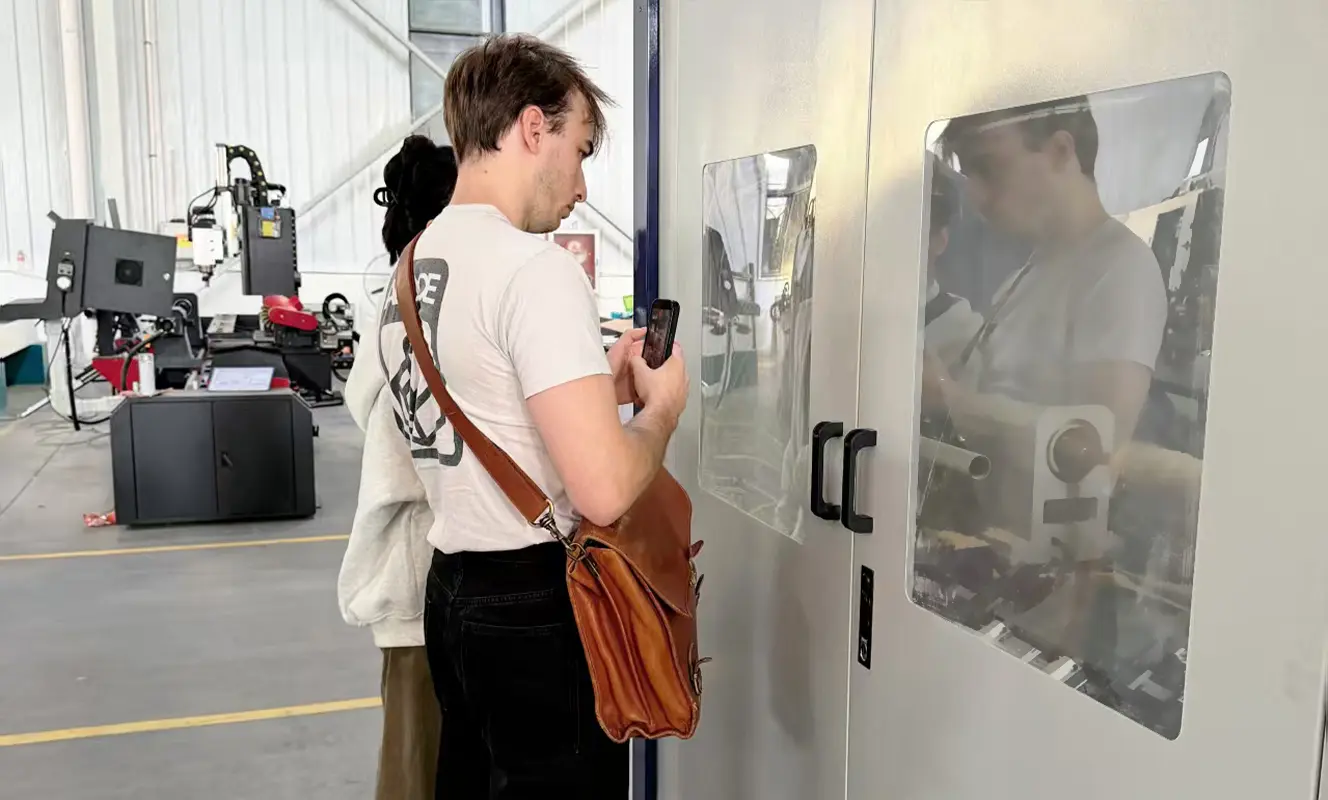
Safety, Maintenance, and Workshop Space
The discussion also covered the enclosure's safety features, including door interlocks, emergency stops, observation windows, and internal lighting. These features help operators monitor the machining process while supporting safe machine operation.
Since the client needed to process workpieces up to approximately 1,500 mm long, the enclosure also had to provide enough space for loading and unloading. Easy access to key components, such as the spindle, tool changer, belts, and lubrication points, was another consideration, as it would make routine maintenance more convenient.
Transportation and installation were also part of the discussion. With reference packaging dimensions of approximately 4,450 × 2,250 × 2,250 mm, the client wanted to understand whether the enclosure could be disassembled for shipping and how the machine would fit into the available workshop space. The possibility of installing the enclosure at a later stage was also discussed, subject to the machine design and applicable safety requirements.
By discussing dust extraction, safety features, maintenance access, and installation requirements in advance, CATEKCNC can help customers evaluate a CNC wood lathe configuration that better suits their workshop and production needs.
VIII.French Client Satisfied with CNC Woodworking Samples
During the factory visit, the French client had the opportunity to see the CNC wood lathe and 5-axis CNC woodworking machine in action and examine the finished wooden components produced during the demonstrations.
The samples included turned hardwood table legs, spiral balusters with complex shapes, and square wooden components machined through milling and drilling. Seeing the finished parts in person allowed the client to better understand how the equipment could handle different woodworking applications, from conventional turning to more intricate decorative designs.
The client was pleased with the machining results and appreciated the opportunity to inspect the finished workpieces up close. The samples also provided a practical reference for evaluating surface quality, machining accuracy, and the suitability of the equipment for his woodworking projects.
Before returning to France, the client took the machined samples with him for further inspection. Having the physical workpieces available makes it easier to review the details, discuss production requirements with his team, and consider how the CNC woodworking solutions from CATEKCNC could be applied to future manufacturing needs.
IX.Conclusion
The visit provided the French client with a closer look at CATEKCNC's CNC wood lathe and 5-axis CNC woodworking solutions, including their applications in hardwood turning, decorative baluster machining, and furniture component production.
At CATEKCNC, we understand that every woodworking business has different production requirements. Whether you need to manufacture wooden table legs, intricate spiral balusters, or customized furniture components, our team can help you explore suitable CNC machining solutions based on your workpiece design, material, and production needs.