


{{goods.model}}
2026 Best Fiber Laser Tube Cutting Machines for Various Metal Tube Cutting Applications
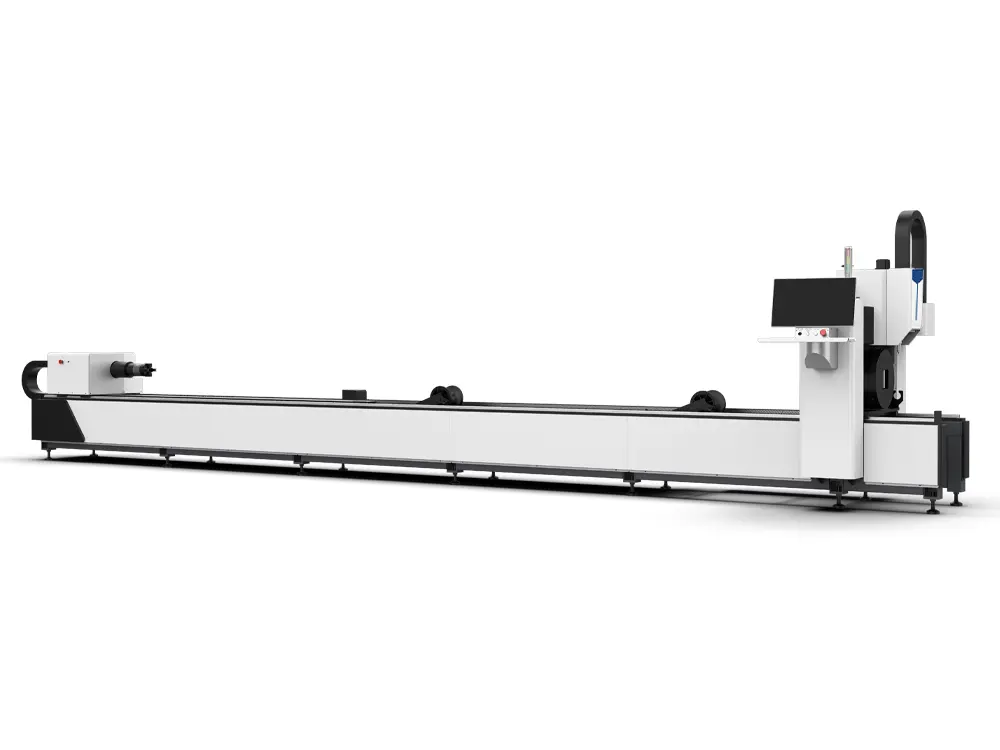
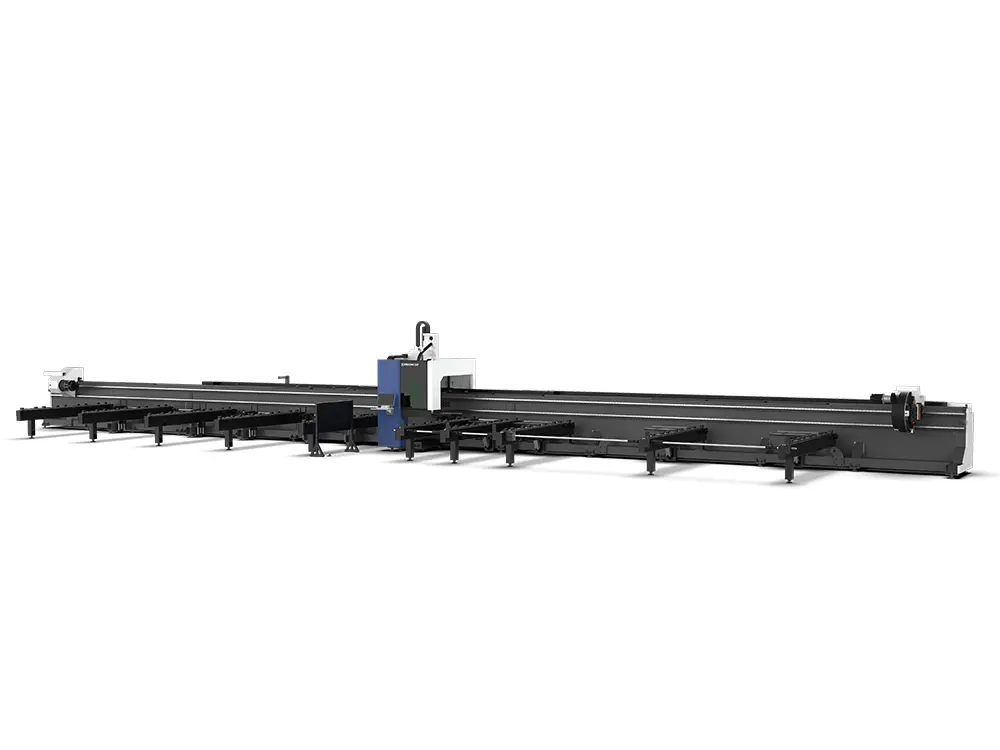
Fiber laser tube cutting machines are specially designed for high-precision cutting of various metal tubes and profiles. They can process a wide range of workpieces, including round tubes, square tubes, rectangular tubes, oval tubes, angle steel, channel steel, and H-beams, while performing multiple operations such as fixed-length cutting, tube intersection cutting, bevel cutting, hole cutting, slot cutting, and complex contour cutting. With high efficiency, excellent precision, and a high level of automation, fiber laser tube cutting machines are widely used in industries such as steel structure manufacturing, construction machinery, automotive manufacturing, rail transportation, agricultural machinery, fitness equipment, advertising signage, railings and architectural decoration, and storage rack manufacturing.
To meet different production scales, processing requirements, and budget considerations, CATEKCNC provides fiber laser tube cutting machines in various configurations, including compact, medium-sized, and large-format models. Key configurations such as laser power, chuck quantity, servo systems, CNC control systems, and automatic loading and unloading solutions can all be customized according to customer requirements, providing tailored tube laser cutting solutions for different application scenarios.
Showing 1–12 Of
7 Results
-
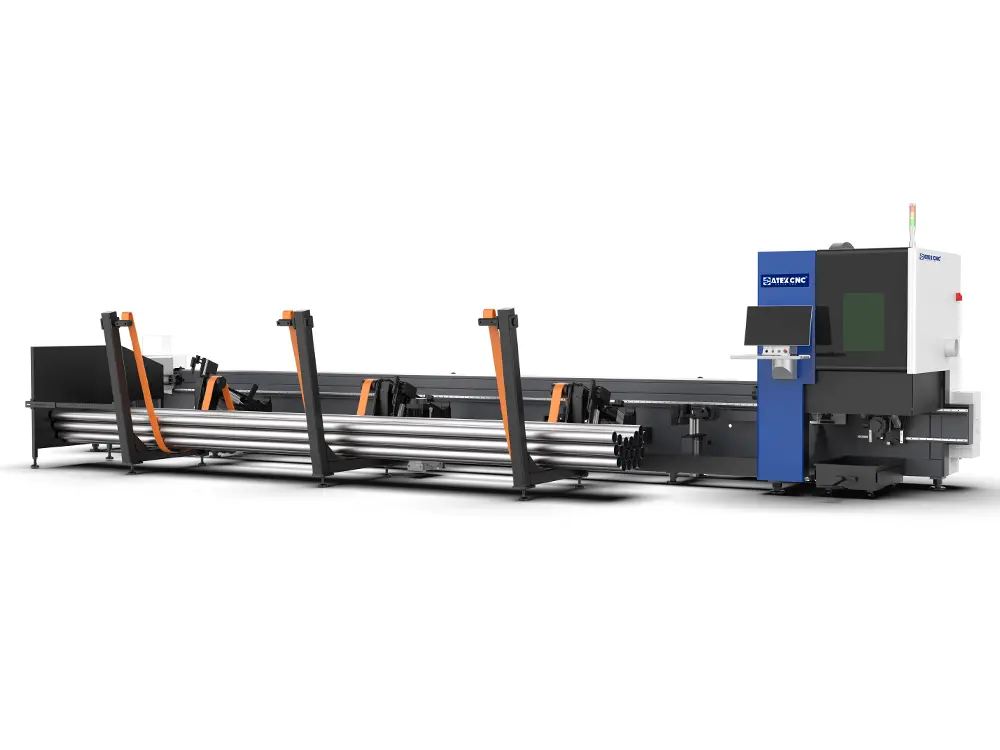
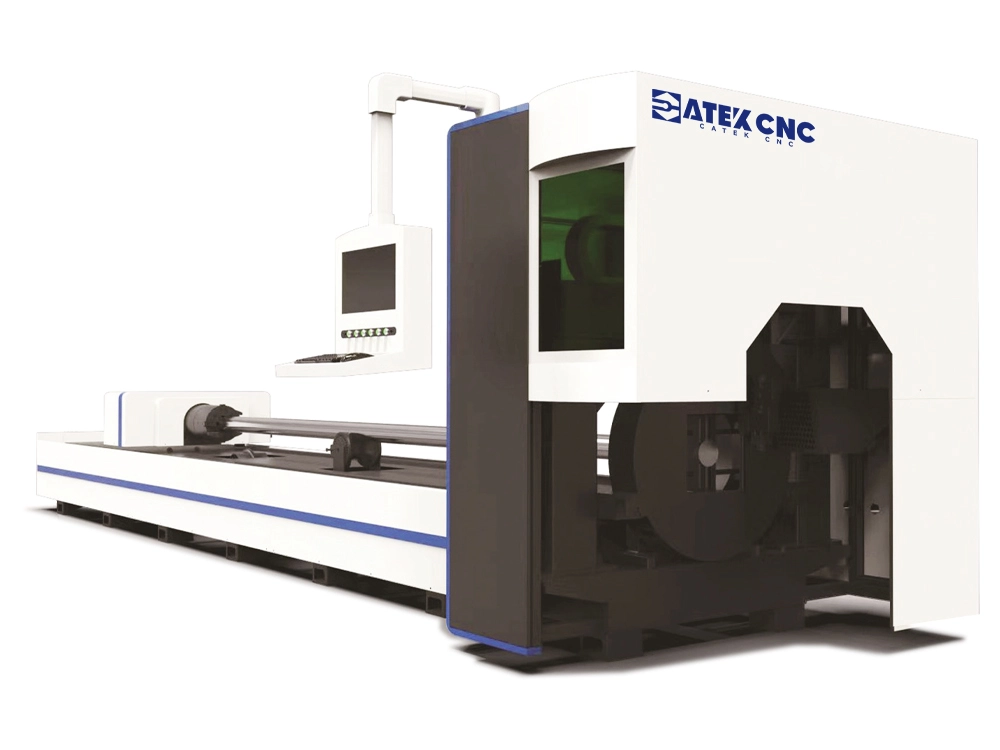
 This is a compact fiber laser tube cutting machine designed to process various metal tubes up to 6,500 mm in length and with diameters ranging from 10 to 120 mm. It is an ideal solution for budget-conscious users.$18,990.00~$38,990.00
 -
Hot
Fiber Laser Cutting Machine for High-Speed Batch Cutting of Small-to-Medium Diameter Metal Tube
-
 V12-F Pro
 -

This fiber laser cutting machine is specifically designed for the high-speed batch processing of small-to-medium metal tubes, capable of handling metal tubing with diameters ranging from 8mm to 120mm.$35,800.00~$56,800.00 -
-
This 2-chuck fiber laser tube cutting machine features an automatic loading system, providing a highly cost-effective solution for metal tube cutting and processing.$32,990.00~$65,990.00
-
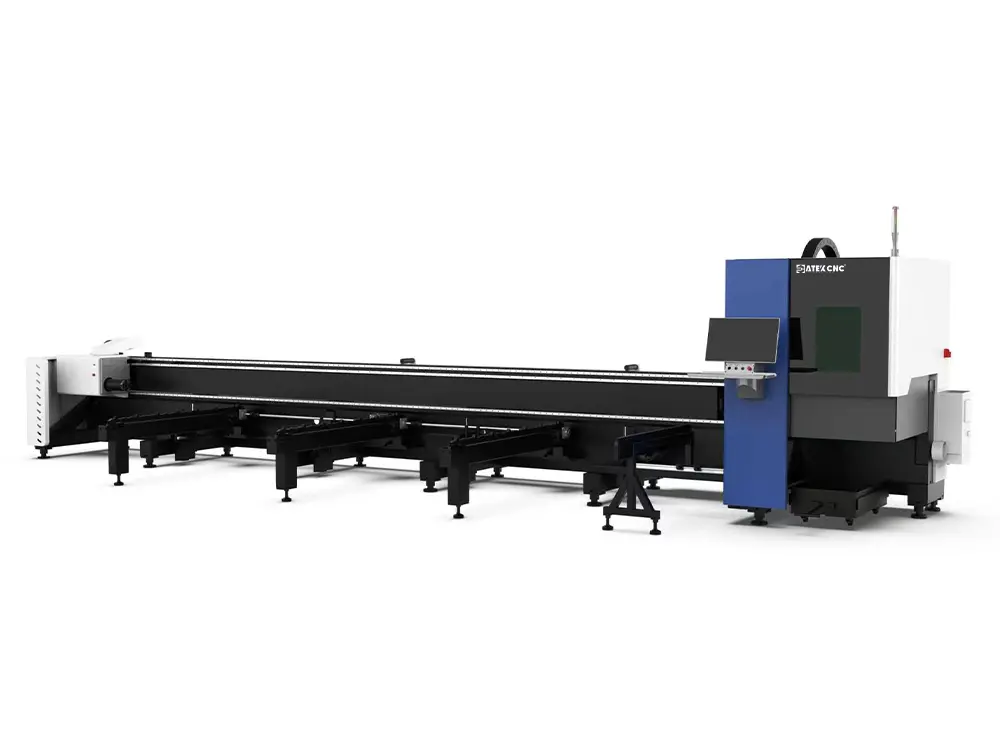
This large metal tube fiber laser cutter is specially designed for tube processing, featuring a large-diameter automatic rotary axis, dual pneumatic chucks, and variable-diameter wheel supports.$16,000.00~$29,000.00
-
The TK35-120-120 is a horizontal three-chuck fiber laser tube cutting machine with a maximum laser power of 12,000 W. It is capable of performing both precision cutting and bevel cutting on a wide range of metal tubes and profiles.$76,900.00~$115,900.00
-
Hot
Best-Selling 3-Chuck Fiber Laser Tube Cutting Machine with Bevel Cutting Capability
-
TKS35V-120F-120F
-
This 20kW fiber laser tube cutting machine features advanced bevel cutting capability and an automatic loading and unloading system for efficient tube processing.$103,999.00~$116,999.00 -
-
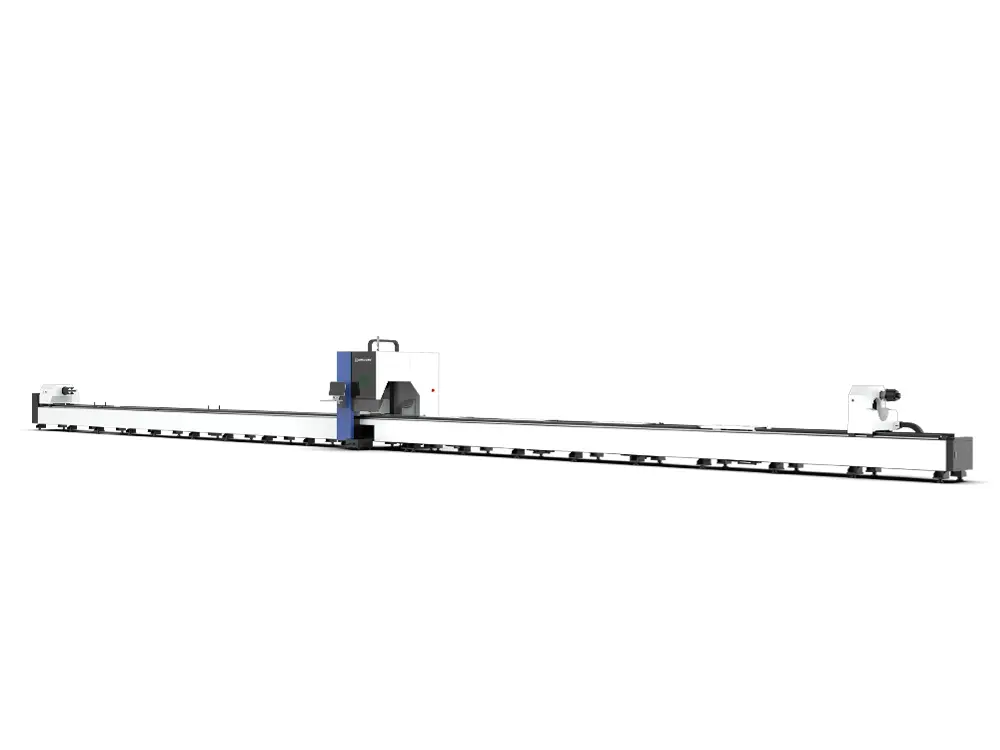
This is an industrial large fiber laser cutting machine, which is equipped with four chucks with "Smart Decoupling Technology" and can efficiently process various heavy-duty metal tubes.$285,000.00~$435,000.00

THE FOLLOWING ARTICLES MAY HELP YOU
-
Laser Cutting Machine
How to Choose a Fiber Laser Cutting Machine?
Step 1: Conduct an In-Depth Analysis of Your RequirementsThis is the most critical step, determining the direction of all subsequent choices. Please answer the following questions:What materials will be cut?Carbon steel: This is the most common application, and all fiber laser machines excel at it.Stainless steel/aluminum/brass: Higher-pressure nitrogen is required as an assist gas to achieve an oxide-free cut surface. This places higher demands on laser stability and gas pressure.Highly reflect...
-
Laser Cutting Machine
What Are the Factors Affecting Fiber Laser Cutting?
There are numerous factors affecting the cutting speed of fiber laser cutting machines, which can be primarily categorized into laser parameters, characteristics of the processed material, cutting process parameters, and machine performance.Laser ParametersThe cutting principle of fiber laser cutting machines involves using high-energy laser beams to melt and cut materials. Therefore, laser parameters are the most direct factors influencing cutting speed.Laser power: For the same material and wi...
-
Laser Cutting Machine
What Are the Types of Laser Cutting Machines?
Laser cutting uses laser instead of physical cutting tools or high-temperature flame cutting. Due to the characteristics of laser, it has significant advantages over traditional cutting.In addition to the power of laser cutting, the optical properties of the laser have the greatest impact on cutting,Such as wavelength, pulse width, pulse repetition frequency, etc.Depending on the type of laser, the current industrial laser equipment is mainly divided into fiber laser, CO2 laser and YAG laser.Fib...

HERE ARE SOME RELATED VIDEOS OF CNC MACHINES
-
00:46
Laser Cutting MachineJun 06, 2025
Low-Cost, High-Efficiency Fiber Laser Sheet Metal Cutting Machine
The video introduces a fiber laser metal cutting machine with a maximum processing size of 3000*1500mm.
-
00:55
Laser Cutting MachineJun 06, 2025
Fiber Laser Cutting Machine Cutting Stainless Steel Plate
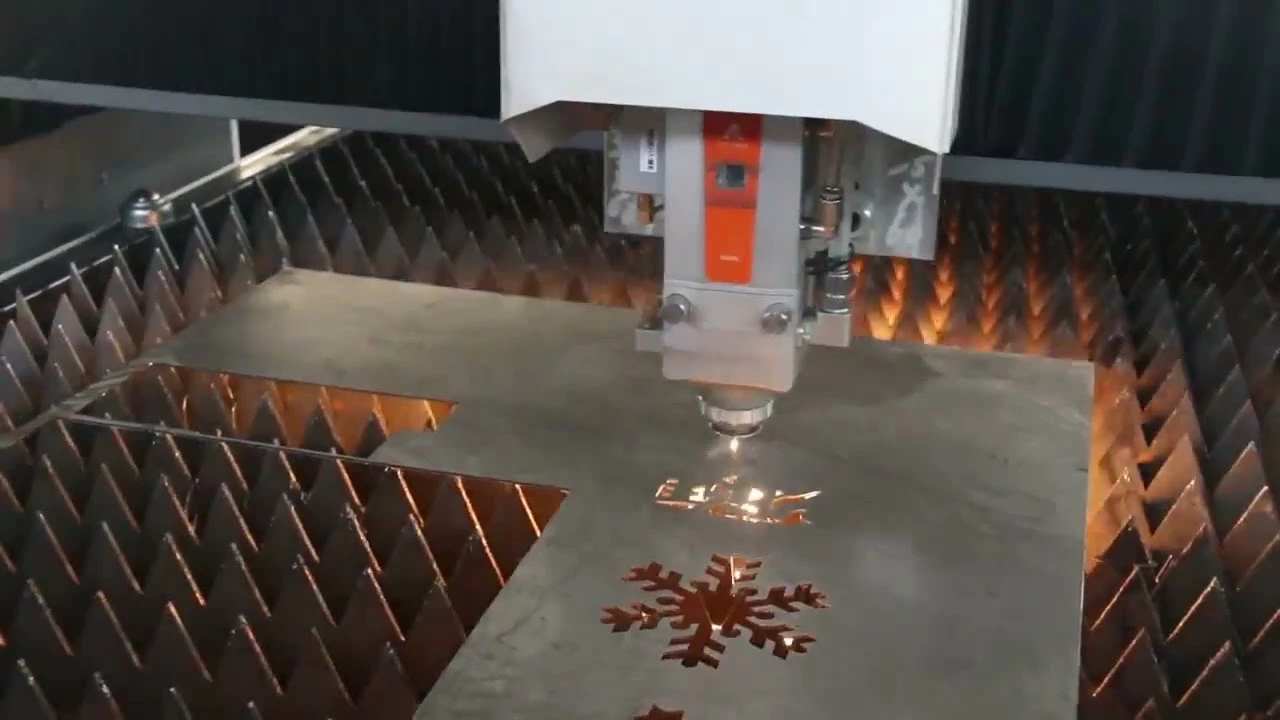
This video demonstrates the capability of a fiber laser cutting machine in cutting snowflake patterns and intricate Chinese characters on stainless steel plates.
-
00:55
Laser Cutting MachineMay 27, 2025
Fiber Laser Sheet & Tube Integrated Cutting Machine
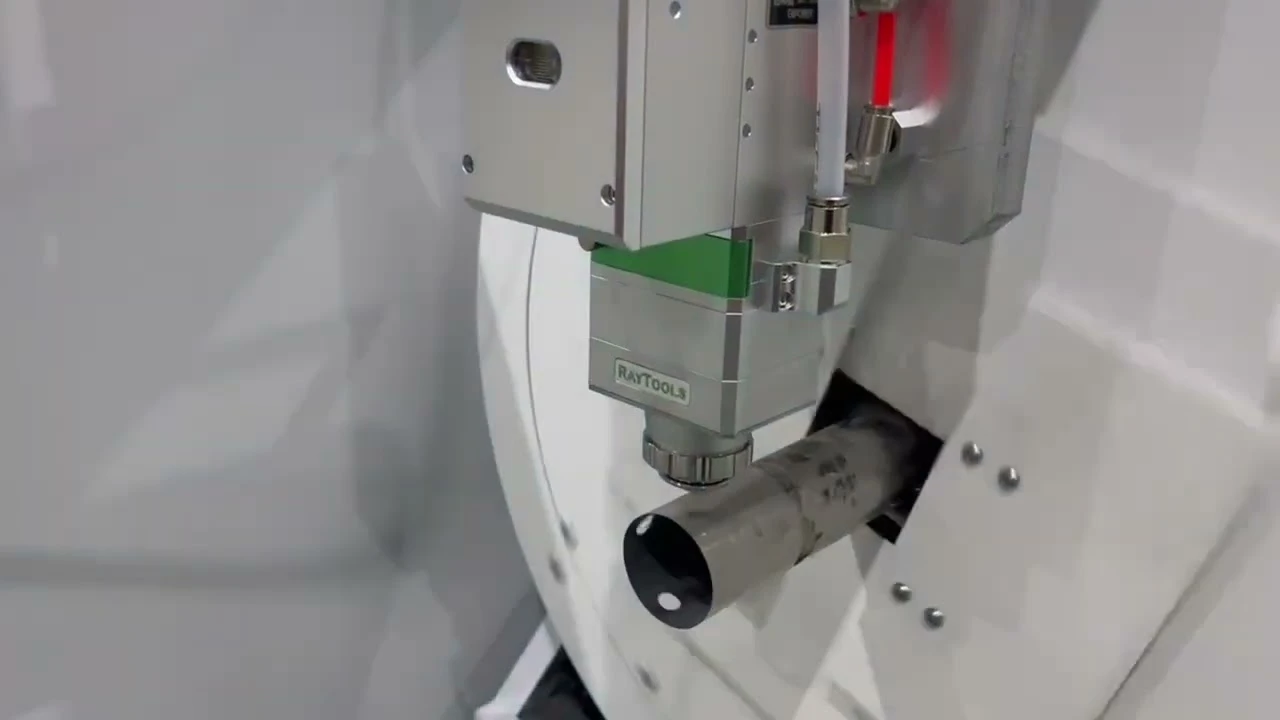
This video demonstrates examples of a fiber laser sheet-and-tube cutting machine cutting carbon steel plates and stainless steel metal tubes.
HERE ARE SOME FUN PROJECTS FOR CNC MACHINES
-
Laser Cutting Machine
Making Stainless Steel Hollow Letter Light Box Sign by Laser-Cut
The visual effect of the hollow light box is similar to that of the metal backlight characters, but it seems to be better in terms of its atmosphere. Whether it is placed on the door or indoors, it is very eye-catching. The hollow light box sign is generally a whole. The graphic content is combined in the form of hollow metal and a transparent plate glued inside. In the bright light state, only the graphic information that needs to be displayed will be transparent. The advertising effect is very...
-
Laser Cutting Machine
Fiber Laser Cutting Machine for Metal Tube Cutting Project
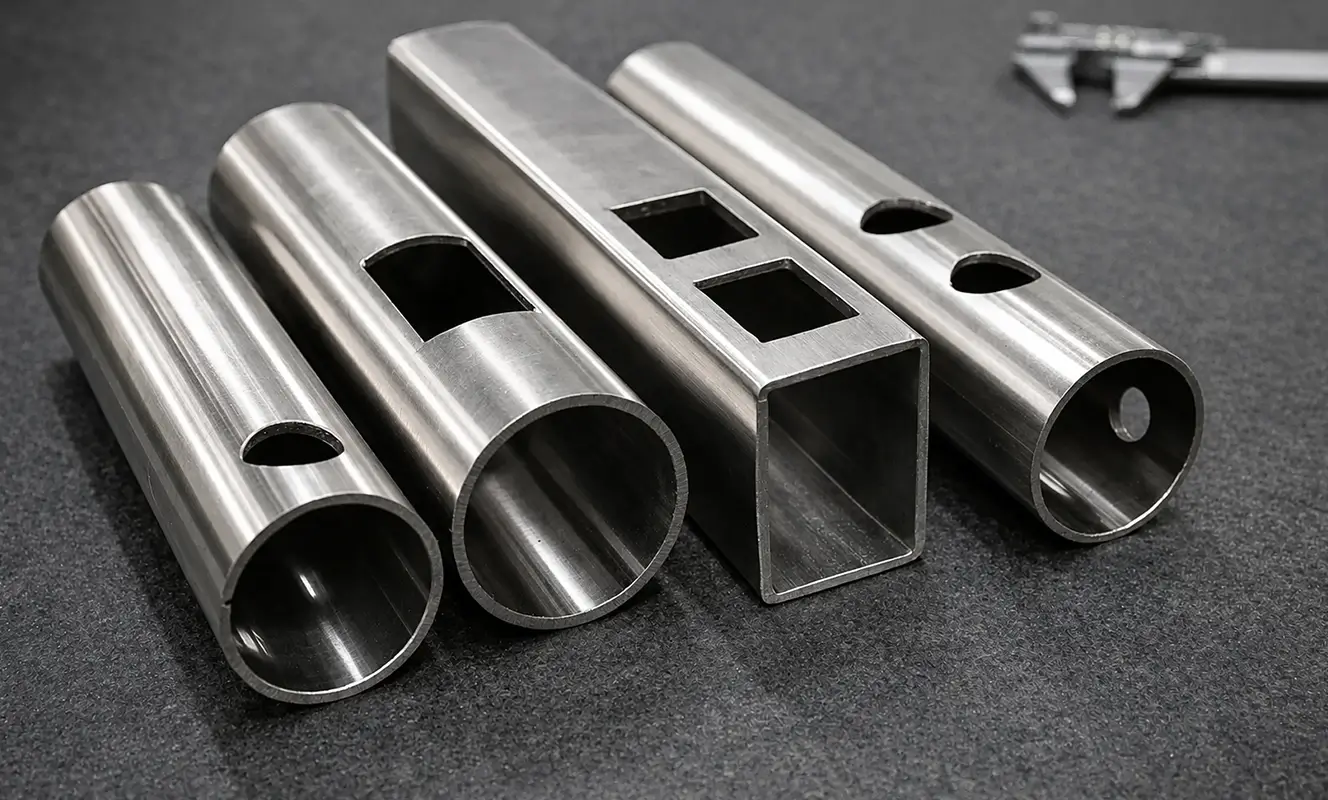
This project focuses on the application of a fiber laser cutting machine for high-efficiency metal tube cutting in industrial production. By utilizing the CATEKCNC fiber laser tube cutter, the client successfully achieved precise processing of round, square, and rectangular tubes across a range of materials, including stainless steel and carbon steel.Through the integration of advanced CNC fiber laser tube cutting technology, the project significantly improved cutting accuracy, reduced material ...


FIBER LASER TUBE CUTTING MACHINE FOR METAL TUBE CUTTING
Metal tubes offer a high strength-to-weight ratio. Compared with solid materials, their hollow cross-section design significantly reduces weight while maintaining excellent load-bearing capacity and structural stability. As a result, metal tubes are widely used in automotive manufacturing, steel structures, construction machinery, furniture, fitness equipment, and other industries.
In the early stages of metal tube processing, production mainly focused on fixed-length cutting, which was typically carried out using mechanical equipment such as saw machines and circular saws. Although these processing methods feature simple structures and relatively low costs, they are mainly suitable for basic cutting operations. For additional processes such as hole drilling, slot cutting, angled cutting, and complex joint structures, extra machining steps are still required, resulting in more complicated workflows and limited production efficiency.
With the development of steel structure and equipment manufacturing industries, the application of metal tubes has gradually expanded from simple support components to high-precision structural parts. Products such as automotive crash beams, steel structure trusses, and construction machinery frames not only require higher dimensional accuracy but also involve complex processing requirements, including holes, notches, and end connection profiles. To meet the needs of mass production for complex structural components, CNC tube processing equipment has been developed, improving automation levels and machining consistency through automatic feeding, rotary clamping, and CNC positioning.
Fiber laser tube cutting machines are advanced metal tube processing equipment developed by integrating laser cutting technology with CNC technology. The machine uses chucks to clamp and rotate the tube for precise positioning, allowing the laser beam to perform multi-angle machining around the tube. With a single clamping operation, it can complete multiple processes including tube cutting, hole cutting, slotting, and intersection line cutting, integrating workflows that traditionally required multiple machines into one complete processing solution. In addition, laser processing is a non-contact machining method that does not apply mechanical pressure to the tube, making it particularly suitable for thin-wall tubes, precision structural components, and complex-shaped parts.
With more than a decade of technical experience and extensive manufacturing expertise in laser tube cutting equipment, CATEKCNC provides customized tube laser cutting solutions based on customers’ tube materials, diameter specifications, machining complexity, production capacity requirements, and workshop layout. Our product range covers horizontal and side-mounted machine configurations, with options including two-chuck, three-chuck, and four-chuck systems to meet various application requirements, from precision cutting of light and heavy metal tubes to intersection line cutting, complex bevel processing, and high-volume automated production.
In addition, CATEKCNC provides a complete service system covering pre-sales consultation, solution design, equipment manufacturing, installation and commissioning, operator training, and after-sales support, ensuring long-term stable production and reliable operation for customers.
What Types of Tubes Can a Fiber Laser Tube Cutting Machine Cut?
Materials
Fiber laser tube cutting machines are capable of processing a wide range of metal materials, including carbon steel, stainless steel, aluminum and aluminum alloys, copper and copper alloys, alloy steel, and other commonly used metals.
Tube Types
The machine can process various tube profiles, including round tubes, square tubes, rectangular tubes, oval tubes, U-channels, C-channels, H-beams, channel steel, angle steel, T-sections, irregular tubes, and other structural profiles.
Machining Types
A fiber laser tube cutting machine can perform multiple machining processes, including fixed-length cutting, hole cutting, slotting, intersection line cutting, bevel cutting, and complex contour processing.
What Industries Use Fiber Laser Tube Cutting Machines? What Typical Products Can Be Processed?
Steel Structure Industry: Typical applications include steel beams, steel columns, truss structures, support structures, connection nodes, and architectural steel components.
Construction Machinery Industry: Applications include excavator booms, loader frames, crane structural components, agricultural machinery frames, equipment support frames, and mechanical equipment connectors.
Automotive Manufacturing Industry: Typical products include automotive crash beams, seat frames, chassis structural components, body reinforcement beams, exhaust system tubes, and battery trays for new energy vehicles.
Solar Energy and New Energy Industry: Applications include solar mounting structures, solar tracking systems, energy storage equipment frames, EV charging station supports, and structural components for new energy equipment.
Fitness Equipment Industry: Typical applications include treadmill frames, fitness equipment frames, strength training equipment structures, stationary bike supports, and sports facility components.
Metal Furniture Industry: Applications include table and chair frames, bed frames, office furniture supports, display racks, storage racks, and metal decorative structures.
Rail Transit Industry: Typical products include vehicle body frames, carriage support beams, seat brackets, handrail structures, equipment mounting frames, and vehicle connection components.
Railing and Architectural Decoration Industry: Applications include stair handrails, balcony railings, road barriers, metal screens, decorative partitions, and landscape structures.
Window, Door, and Curtain Wall Industry: Typical applications include aluminum alloy door and window frames, curtain wall structures, decorative profiles, connection components, and support structures.
Advertising and Display Industry: Applications include exhibition booth structures, display racks, advertising frames, light box supports, and custom metal structures.
What Types of Fiber Laser Tube Cutting Machines Are Available?
Compared with fiber laser sheet cutting machines, fiber laser tube cutting machines have relatively fewer structural variations. This is mainly because tube processing requires specialized functions such as rotary clamping, stable support, and multi-angle machining. Therefore, the machine structure is primarily optimized around the bed layout, chuck system, and auxiliary support mechanism.
Based on the overall machine structure, fiber laser tube cutting machines can mainly be divided into two types: horizontal-type fiber laser tube cutting machines and side-mounted fiber laser tube cutting machines. Based on the number of chucks used in the tube clamping system, they can also be classified into two-chuck, three-chuck, and four-chuck fiber laser tube cutting machines.
Technical Specifications of Fiber Laser Tube Cutting Machine
| Type | Fiber Laser Tube Cutting Machine |
|---|---|
| Brand | CATEKCNC |
| Laser Type | Fiber Laser |
| Center Wavelength | 1080nm |
| Processing Type | Non-contact laser processing |
| Cooling System | Industrial chiller (for laser system cooling); air conditioner (for electrical cabinet cooling) |
| Application Materials | Various metal tubes and profiles |
| Maximum Cutting Thickness | Up to 80 mm |
| Tube Cutting Capacity | Customized solutions available. Standard models can process round tubes with diameters from 10–730 mm, square tubes with side lengths from 8–520 mm, and tube lengths from 6000–12000 mm. |
| Laser Power Options | 1500W, 2000W, 3000W, 4000W, 6000W, 8000W, 10000W, 12000W, 15000W, 20000W, 30000W, 40000W, 60000W, 80000W, 120000W |
| Laser Source Options | Reci, Raycus, JPT, Maxphotonics, IPG, BWT, and other brands |
| Laser Cutting Head Options | Raytools, WSX, Au3tech, Bochu, and other brands |
| CNC System Options | BOCHU, Weihong, Au3tech, and other brands |
| Compatible Software | FastCAM, SIGMA NEST, Lantek, Adobe Illustrator, LightBurn, LaserGRBL, CorelDRAW, AutoCAD, SolidWorks, CypCut, CypNest, TubePro, TubesT, Camduct, and more. |
| Machine Categories | Horizontal fiber laser tube cutting machine, side-mounted fiber laser tube cutting machine, two-chuck fiber laser tube cutting machine, three-chuck fiber laser tube cutting machine, four-chuck fiber laser tube cutting machine |
| Price Range | $16,000–500,000 |
What Are the Structural Types of Fiber Laser Tube Cutting Machines? How Can Long-Term Stable Processing Be Ensured?
Based on different machine structure layouts, fiber laser tube cutting machines can mainly be divided into two types: horizontal-bed structures and side-mounted structures.
The horizontal-bed structure is currently the most widely used design in the market, featuring mature technology and high overall stability. This structure adopts a wide machine bed, with two sets of linear guide rails and rack-and-pinion transmission systems installed along the length of the bed. The tube clamping and laser cutting systems are positioned above the machine bed.
The side-mounted structure places the tube clamping and cutting systems on one side of the machine bed. This design lowers the overall center of gravity and makes loading and unloading of large tubes and profiles more convenient. Since the cutting system is mounted laterally, these machines are usually equipped with wider side supports to ensure structural stability and maintain a balanced center of gravity.
For fiber laser tube cutting machines, the machine bed structure is the foundation for maintaining long-term high-precision and stable processing performance. CATEKCNC machine beds are manufactured using thick-walled large-diameter steel tubes and welded through a full-welding process. After welding, the bed undergoes annealing and vibration stress relief treatment to effectively eliminate residual stress generated during welding, reduce structural deformation during long-term operation, and ensure consistent machining accuracy over the machine’s service life. The key mounting reference surfaces of the machine bed are precision-machined using high-accuracy milling equipment to ensure excellent flatness and parallelism of installation surfaces, providing a stable foundation for the transmission system.
For side-mounted fiber laser tube cutting machines, since both the cutting system and transmission system are located on the side of the machine bed, the overall center of gravity is shifted laterally. Therefore, these machines require higher structural rigidity and greater resistance to lateral deformation. CATEKCNC adopts widened machine foot designs to increase the contact area between the machine and the foundation. In addition, multiple triangular reinforcement structures are incorporated to improve lateral support strength, enhancing installation stability and structural rigidity to ensure long-term processing accuracy and reliability.
What Laser Generator Configurations Are Available for Fiber Laser Tube Cutting Machines?
The laser generator is the core energy source of a fiber laser cutting machine. It generates a high-energy-density laser beam and delivers the laser energy stably to the laser cutting head through an optical fiber. The laser source’s output power, beam quality, and operational stability directly affect the machine’s cutting capability, processing efficiency, and long-term reliability.
CATEKCNC uses mature and reliable industrial-grade fiber laser sources and provides multiple power configurations, including 1500W, 3000W, 6000W, 12000W, and 20000W, allowing the equipment to cover a wide range of applications from precision cutting of thin-wall tubes to high-efficiency processing of medium and thick tubes.
The fiber laser sources used feature high electro-optical conversion efficiency, typically exceeding 30%, improving the overall energy efficiency and long-term operating economy of the equipment. These lasers also provide excellent beam quality. These fiber laser sources also provide excellent beam quality. These fiber laser sources feature excellent beam quality. Under a configuration with a 100 μm output fiber core diameter, the beam parameter product (BPP) is typically below 4.5 mm·mrad, allowing the laser energy to be focused more effectively and improving the processing quality of small holes and complex contours.
What Type of Laser Cutting Head Is Required for a Fiber Laser Tube Cutting Machine? What Functions Do These Laser Heads Provide?
A fiber laser tube cutting machine requires a laser cutting head that matches the specific processing requirements and workpiece types. There are various types of laser cutting heads available on the market, and their basic functions are generally similar. For tube processing applications that only require vertical cutting, a standard three-axis laser cutting head is sufficient. If bevel cutting is required, a bevel cutting head should be selected. Combined with A/B rotary axes, it enables angled laser cutting.
It should be noted that laser cutting heads used for metal tube processing are not completely interchangeable with those designed for sheet metal cutting. During tube processing, the workpiece continuously rotates, causing the cutting path to constantly change along the tube surface. Therefore, tube laser cutting heads require higher dynamic response capability, height following performance, and multi-axis motion adaptability. In addition, tube processing often involves complex operations such as bevel cutting and intersection line cutting, and the workpieces frequently include structural profiles such as H-beams and channel steel. To avoid interference between the cutting head and the workpiece, tube-specific laser cutting heads usually feature a slimmer and elongated lower structure, allowing the nozzle to reach confined areas around the tube and profile.
Based on different product lines and processing requirements, CATEKCNC provides tube-specific laser cutting heads from leading industry brands such as Raytools and BOCHU. These cutting heads are specially optimized for tube and profile processing and can handle various materials, including round tubes, square tubes, rectangular tubes, angle steel, channel steel, and H-beams.
Depending on the specific model configuration, the laser cutting head can support multiple intelligent functions, including Auto-Focus, Cutting Gas Pressure Monitoring, Bottom Protective Cartridge Sealing, Protective Window Temperature Monitoring, and Focusing Lens Monitoring, improving equipment safety, processing stability, and operational convenience.
How Does a Fiber Laser Tube Cutting Machine Achieve High-Speed and High-Precision Motion Control?
During the machining process, a fiber laser tube cutting machine needs to perform frequent high-speed movements, rapid acceleration and deceleration, as well as complex trajectory tracking. Therefore, the response speed, positioning accuracy, and operational stability of the motion system are critical to overall machine performance.
A high-performance transmission system is the key to achieving high-speed and high-precision motion control. It drives the linear axes and rotary axes to achieve accurate movement and positioning. The system mainly consists of linear guides, rack and pinion systems, ball screws, servo motors, and gear reducers. The precision, rigidity, and coordination of these components directly affect machining efficiency, cutting accuracy, and long-term operating stability.
- Linear Guide
Linear guides mainly provide support and guidance for the motion system. Their accuracy and running stability directly influence the motion performance of a fiber laser tube cutting machine. Excessive friction in the guide system increases the driving force required during movement, affecting the response speed of linear axes and potentially causing unstable acceleration and deceleration. Meanwhile, excessive clearance between guide components may introduce additional displacement errors, reducing positioning accuracy and machining stability.
CATEKCNC fiber laser tube cutting machines are equipped with high-precision HIWIN linear guides from Taiwan. These guides use a recirculating ball structure, converting sliding friction into rolling friction. Their friction coefficient is approximately 1/50 that of traditional sliding guides, significantly reducing motion resistance and enabling high-speed, smooth operation.
In linear guide design, there is often a trade-off between low clearance and smooth movement. HIWIN linear guides utilize a double-arc contact groove design combined with preload technology, reducing clearance and improving rigidity while maintaining excellent running smoothness. In addition, some guide series feature self-aligning capability, which can compensate for minor installation deviations and ensure highly accurate, stable, and smooth movement.
- Rack and Pinion System
In fiber laser tube cutting machines, the rack and pinion system is mainly used for long-axis movement along the machine bed. CATEKCNC uses YYC precision racks as the transmission component for linear-axis drive.
YYC racks are manufactured from high-quality alloy steel and undergo advanced heat treatment processes, providing high surface hardness and excellent wear resistance while maintaining good core toughness. This combination delivers strong impact resistance and fatigue resistance, ensuring reliable operation under high-speed and continuous machining conditions.
Compared with ordinary racks that only undergo surface hardening, YYC racks feature full-depth tooth hardening. Even after subsequent grinding or repair processes, the internal hardness of the rack teeth remains high, helping extend service life.
With advanced manufacturing technology and strict quality control, YYC racks provide excellent transmission accuracy. The cumulative pitch error can be controlled within 0.015–0.022 mm over any 300 mm length, effectively ensuring high positioning accuracy and stable movement of the linear axis.
- Ball Screw
Ball screws are used for Z-axis control of the laser cutting head because they can achieve extremely high micro-feed accuracy. CATEKCNC fiber laser tube cutting machines adopt high-precision TBI ball screws from Taiwan.
A ball screw transfers motion through rolling balls between the screw shaft and nut, requiring only approximately one-third of the driving torque of traditional ACME lead screws. This significantly reduces friction, improves transmission efficiency, and enhances response speed.
TBI ball screws adopt a Gothic arch raceway design, allowing the steel balls to achieve four-point contact with the raceway. This design improves contact rigidity while allowing precise preload adjustment. By applying an appropriate preload to the nut, axial clearance can be reduced to nearly zero, achieving high rigidity and positioning accuracy while maintaining smooth operation.
Taking TBI C0-grade ground ball screws as an example, the cumulative lead error can be controlled within ±0.003 mm over a 100 mm travel distance. This provides the laser cutting head with stable and precise Z-axis micro-positioning capability, allowing the focal height to be finely adjusted according to different cutting conditions and improving overall cutting quality.
- Servo System
The Servo motors provide power for the linear axes and rotary axes of a fiber laser tube cutting machine and enable precise control of position, speed, and acceleration. They are one of the key components that determine the machine’s high-speed and high-precision machining performance.
Motion control motors commonly used in the market can generally be divided into three types: open-loop stepper motors, closed-loop stepper motors, and servo motors.
Open-loop stepper motors operate through pulse control and do not provide position feedback. Since the controller cannot monitor the actual motor position in real time, excessive loads or high acceleration can easily cause missed steps or motor stalling, resulting in accumulated positioning errors.
Closed-loop stepper motors add an encoder based on the open-loop stepper motor design, enabling real-time position feedback and partial correction of missed steps. They offer improved positioning accuracy and stability compared with open-loop stepper motors. However, since they still operate based on discrete stepping principles, their output torque decreases significantly during high-speed acceleration, deceleration, and frequent direction changes, which may lead to tracking errors.
Servo motors use a fully closed-loop control system. Based on encoder feedback, they continuously adjust output torque and speed throughout the motion process to accurately follow the target trajectory, rather than only correcting errors after they occur. Therefore, even during high-speed linear-axis movement, rapid acceleration/deceleration, and frequent reversing operations, servo motors can maintain excellent dynamic response and positioning accuracy, making them more suitable for high-speed and high-precision equipment such as fiber laser tube cutting machines.
Many manufacturers highlight the rapid traverse speed of their machines as a key performance indicator. However, rapid traverse speed alone does not accurately represent actual laser cutting efficiency. Most cutting processes involve closely arranged contours, internal cutouts, and sharp corners, meaning that a fiber laser cutting machine spends approximately 80% of its operating time accelerating and decelerating rather than moving at maximum speed. In addition, fiber laser cutting is a high-energy-density, non-contact machining process. Since piercing and cutting themselves can be completed extremely quickly, the motion system often becomes the limiting factor affecting overall machining efficiency. Compared with conventional CNC equipment, fiber laser cutting machines therefore require servo systems with significantly higher dynamic performance.
CATEKCNC recognizes the critical role of servo systems in cutting speed and quality. According to different product positioning and performance requirements, CATEKCNC provides servo solutions from leading brands including Yaskawa, Inovance, FANUC Corporation, Delta, and Leadshine, all based on bus-based absolute encoder architectures.
By "bus-based," we mean that the controller communicates with servo drives through high-speed industrial fieldbus protocols such as EtherCAT. Compared with traditional pulse control, this approach provides faster data transmission, higher synchronization accuracy, stronger noise immunity, and simpler wiring, ensuring precise multi-axis coordination even under high-speed movement, rapid acceleration/deceleration, and frequent reversals.
By "absolute," we refer to a servo motor equipped with an absolute encoder, which records motor position in real time. In case of power loss or emergency stop, the machine can restore its position without homing and supports breakpoint-resume functionality, thereby reducing auxiliary time and material waste.
For users requiring higher dynamic performance, CATEKCNC can equip machines with the BOCHU S9 series EtherCAT servo system, achieving a maximum acceleration of up to 2G. Combined with high-speed cutting technologies, this configuration can significantly improve machining efficiency in applications involving complex contours, dense small holes, and frequent direction changes, delivering approximately 50%–80% higher processing efficiency compared with conventional machines.
- Gear Reducer
A gear reducer is used together with the servo motor and serves as an important connection between the servo system and the transmission system. Its main function is to reduce the output speed of the servo motor, increase output torque, and transmit power to the transmission mechanism in a stable and precise manner, thereby improving the load capacity, positioning accuracy, and operational stability of the motion system.
For fiber laser tube cutting machines, the gear reducer not only plays a role in power transmission but also directly affects the machine’s dynamic response, repeat positioning accuracy, and motion smoothness during direction changes. Excessive backlash in the reducer may cause positioning errors and negatively affect cutting quality.
According to different product positioning and performance requirements, CATEKCNC can equip machines with precision planetary gear reducers from brands such as TECHMECH, KOFON, SHIMPO, and Motoreducer. These reducers feature transmission efficiencies of over 95% and backlash of less than 3 arcmin, effectively minimizing transmission errors and ensuring that motion commands from the servo system are accurately transferred to each motion axis. The internal structure adopts a long-life lubrication design, enabling maintenance-free operation over extended periods under normal working conditions and improving the long-term reliability of the machine.
How Does a Fiber Laser Tube Cutting Machine Hold and Position Tubes?
A fiber laser tube cutting machine uses a dedicated tube clamping system to secure and position the workpiece. The system typically consists of one or more chucks, which clamp the tube through jaws and drive it to rotate and index, enabling multi-angle cutting operations.
The clamping system usually consists of two or more chucks. Driven by pneumatic or electric mechanisms, the chucks securely grip the tube through their jaws and rotate the workpiece to the required position. Depending on different machining requirements, the chucks can accommodate various types of tubes and profiles, including round tubes, square tubes, rectangular tubes, elliptical tubes, angle steel, and channel steel. Since workpieces may have different cross-sectional shapes, tube cutting machines are typically equipped with interchangeable chuck jaws to improve adaptability for different materials and profiles.
In a dual-chuck configuration, the tube is held by two chucks, commonly referred to as the front chuck and rear chuck. The front chuck usually adopts a through-hole design, allowing long tubes to pass through the chuck body. During machining, the laser cutting head processes the section of the tube extending beyond the chuck. After the current section is machined, the rear chuck moves the tube forward, bringing the next section into the cutting area and enabling continuous processing of long tubes.
CATEKCNC has conducted extensive research and development on tube clamping systems to support a wider range of tube and profile machining applications. We provide dual-chuck, three-chuck, and four-chuck configurations, with multiple chuck sizes available, including 120 mm, 230 mm, 350 mm, 550 mm, and 730 mm models. For detailed information on the relationship between chuck specifications and applicable workpiece dimensions, please refer to "What Are the Common Chuck Sizes for Fiber Laser Tube Cutting Machines? What Workpiece Sizes Can Different Chuck Sizes Handle?".
Economy models and small-to-medium-sized fiber laser tube cutting machines typically adopt a dual-chuck structure, balancing machining accuracy and equipment cost. For applications involving long tubes, heavy-duty profiles, high-precision machining, or automated production, three-chuck or four-chuck configurations can be selected. By increasing the number of support points, multi-chuck systems further improve tube stability during machining.
In addition to enhancing structural support, multi-chuck systems can also enable functions such as optimized remnant material utilization and simultaneous loading during machining through coordinated movement between multiple chucks, further improving material efficiency and production productivity.
For more information about the structural characteristics, application scenarios, and selection recommendations of different chuck configurations, please refer to "How to Choose the Number of Chucks for a Fiber Laser Tube Cutting Machine? What Are the Differences Between Different Chuck Configurations?".
How to Choose the Number of Chucks for a Fiber Laser Tube Cutting Machine? What Are the Differences Between Different Chuck Configurations?
Currently, fiber laser tube cutting machines available on the market mainly include dual-chuck, three-chuck, and four-chuck configurations. Increasing the number of chucks is mainly intended to improve clamping stability during long tube processing, reduce machining vibration, and enable functions such as low-remnant cutting and continuous feeding.
Dual-Chuck Fiber Laser Tube Cutting Machine
The dual-chuck configuration is currently the most widely used structure on the market and is suitable for most conventional tube cutting applications.
The two chucks securely clamp the tube and drive it to rotate for indexing, allowing the laser cutting head to perform circumferential cutting around the tube. In a typical dual-chuck structure, the front chuck usually adopts a through-hole design, allowing the tube to pass through the chuck body. The laser cutting head is positioned in front of the front chuck and cuts the section of the tube extending beyond the chuck. The front chuck is generally fixed, while the rear chuck can move along the machine axis to push the tube forward, enabling continuous processing of long tubes.
Remaining material after cutting has always been a major challenge in metal tube processing. Since the laser cutting head is normally positioned in front of the front chuck, the section between the rear chuck and front chuck cannot be fully processed, resulting in remnant material. This not only reduces material utilization but also increases scrap handling costs.
To improve material utilization, the industry has developed various remnant optimization technologies, with the minimum remaining material reduced to approximately 40 mm. In addition to increasing the number of chucks, some specialized technologies can also achieve short-remnant or zero-remnant cutting with dual-chuck machines:
-
1. Front Chuck Forward Movement
This technology allows the front chuck to move toward the machine end while the rear chuck continues feeding the tube forward. As a result, the laser cutting head can enter the area between the two chucks and complete cutting closer to the tube end.
-
2. Single-Chuck Clamping
At the final stage of tube cutting, the rear chuck first feeds the remaining tube section into the clamping range of the front chuck. The rear chuck then releases its grip, and the front chuck independently holds the tube to complete the final cutting process.
Since only one chuck provides support during machining, this method usually requires specially designed high-wrap clamping jaws or an increased clamping length to improve holding stability. It is mainly suitable for shorter tubes, lighter workpieces, and profiles with relatively high rigidity and regular cross-sections.
-
3. Rear Chuck Forward Movement
Since the outer diameter of the rear chuck is usually smaller than that of the front chuck, during the final stage of tube cutting, the front chuck remains open while the rear chuck continues moving forward and enters inside the front chuck, allowing the two chucks to overlap.
This enables further forward feeding of the tube and allows the cutting area to move closer to the tube end. This solution is commonly used on fiber laser tube cutting machines where the front chuck cannot move, and it requires specific matching dimensions between the two chucks.
Three-Chuck Fiber Laser Tube Cutting Machine
Three-chuck fiber laser tube cutting machines are generally used for processing long tubes exceeding 6 meters. By adding an additional supporting chuck, the system improves tube stability during machining.
The three chucks (typically consisting of two front chucks and one rear chuck) can simultaneously support the tube, effectively reducing vibration, deflection, and deformation caused by tube rotation, thereby improving machining accuracy.
In addition, three-chuck structures can achieve zero-remnant cutting. All three chucks can move according to the machining stage. During long tube processing, multiple chucks work together to support the workpiece. As the tube gradually becomes shorter, the rear chuck can release its grip, while the front chucks pull the remaining tube section into the machining area between the two front chucks, further improving material utilization.
Four-Chuck Fiber Laser Tube Cutting Machine
Some high-end fiber laser tube cutting machines are equipped with a four-chuck structure, typically consisting of one rear chuck and three front chucks.
Since stable tube clamping generally requires at least two chucks, a four-chuck system can achieve functions that are difficult to accomplish with conventional dual-chuck or three-chuck configurations by combining different chuck groups.
At the beginning of machining, multiple chucks can simultaneously clamp and support the tube, significantly improving stability when processing long and heavy workpieces.
As the tube length decreases, only two chucks are required to maintain stable clamping, while the remaining chucks can be used to load the next tube. This enables a continuous production mode where loading and cutting occur simultaneously, effectively improving production efficiency.
What Are the Common Chuck Sizes for Fiber Laser Tube Cutting Machines? What Workpiece Sizes Can Different Chuck Sizes Handle?
| Chuck Diameter | Tube Wall Thickness | Round Tube | Rectangular Tube | Square Tube | Angle Steel | Channel Steel | H-Beam | |
|---|---|---|---|---|---|---|---|---|
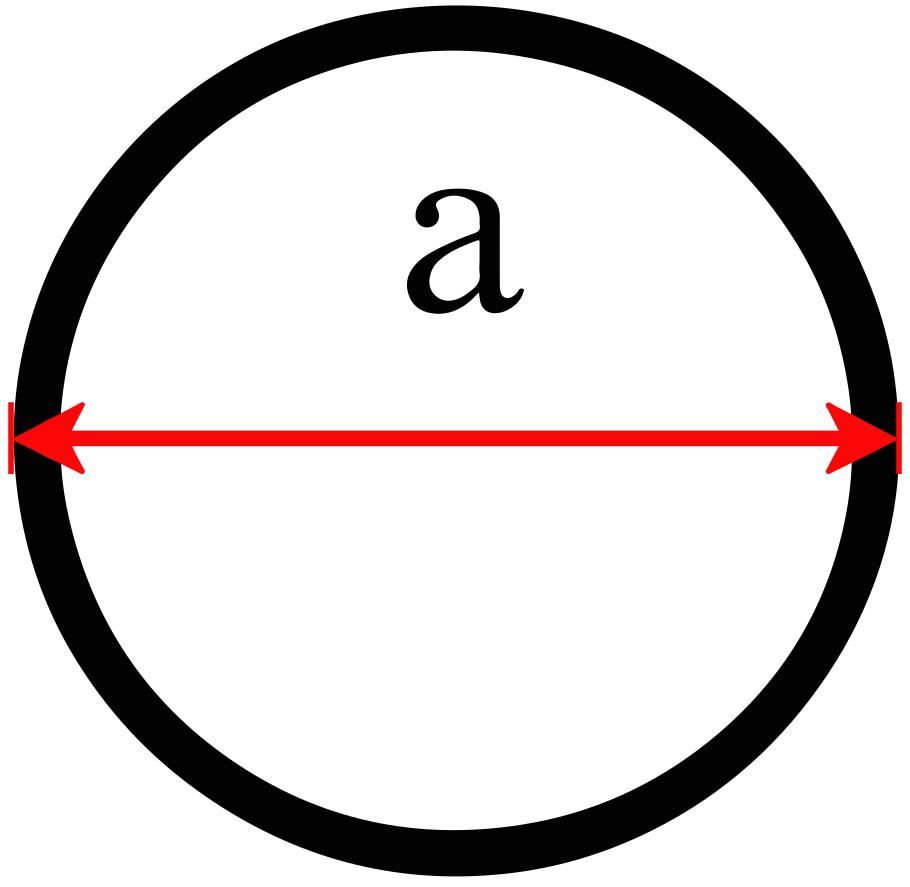 | 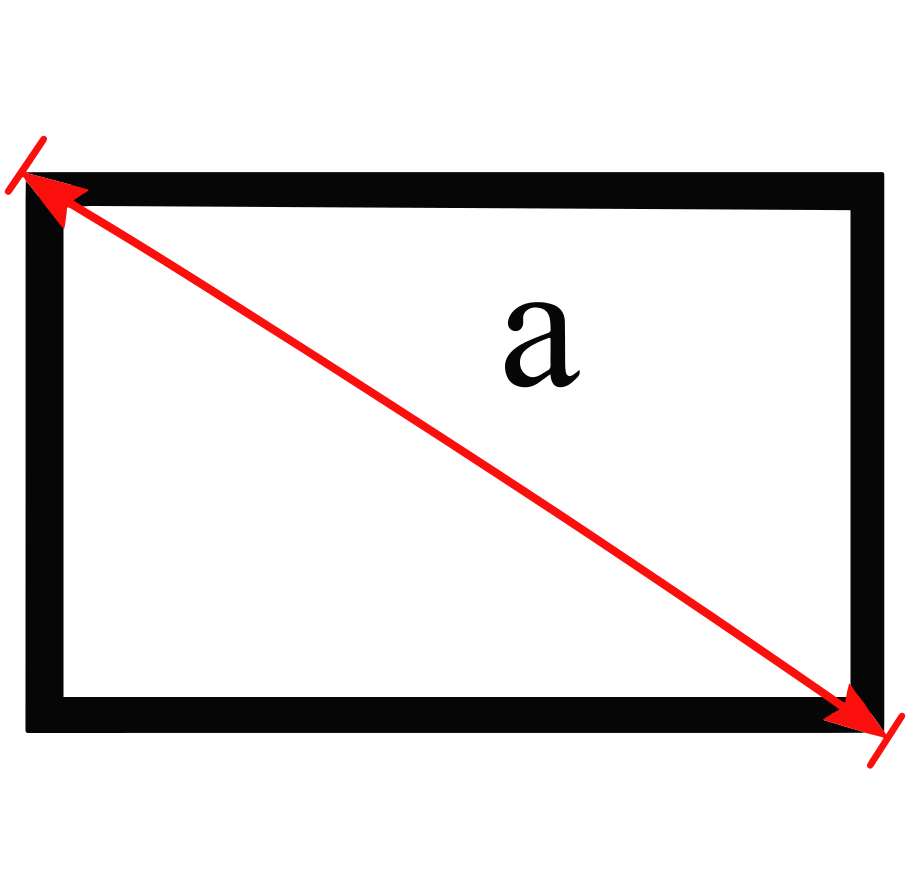 | 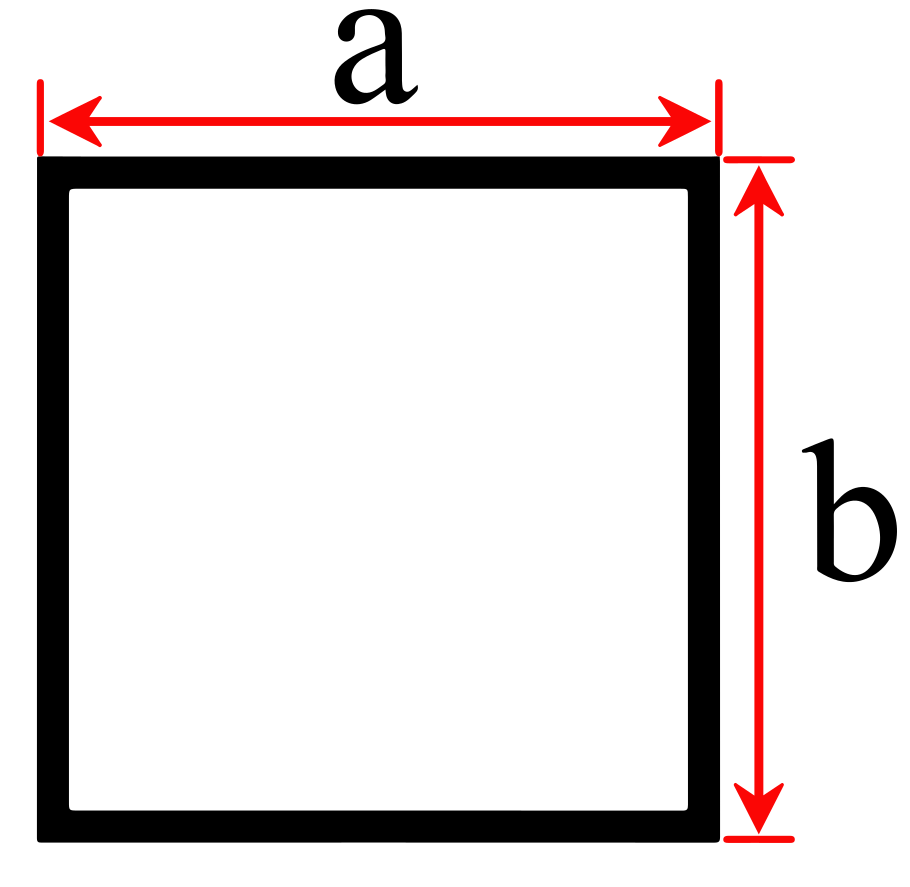 | 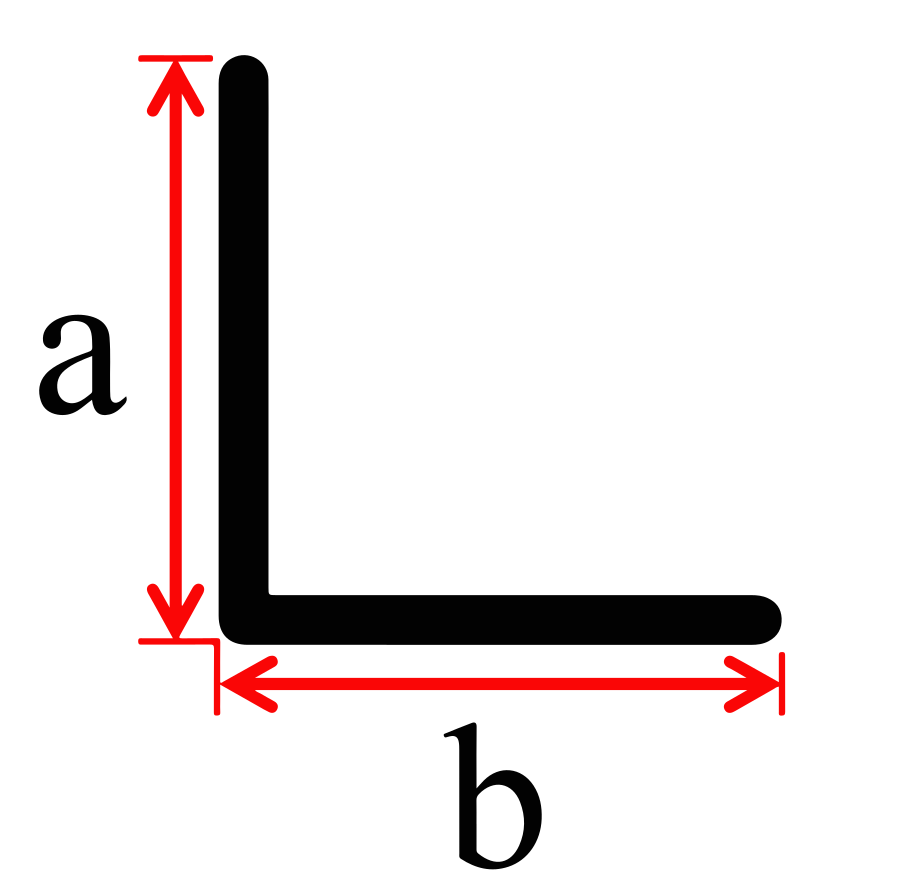 | 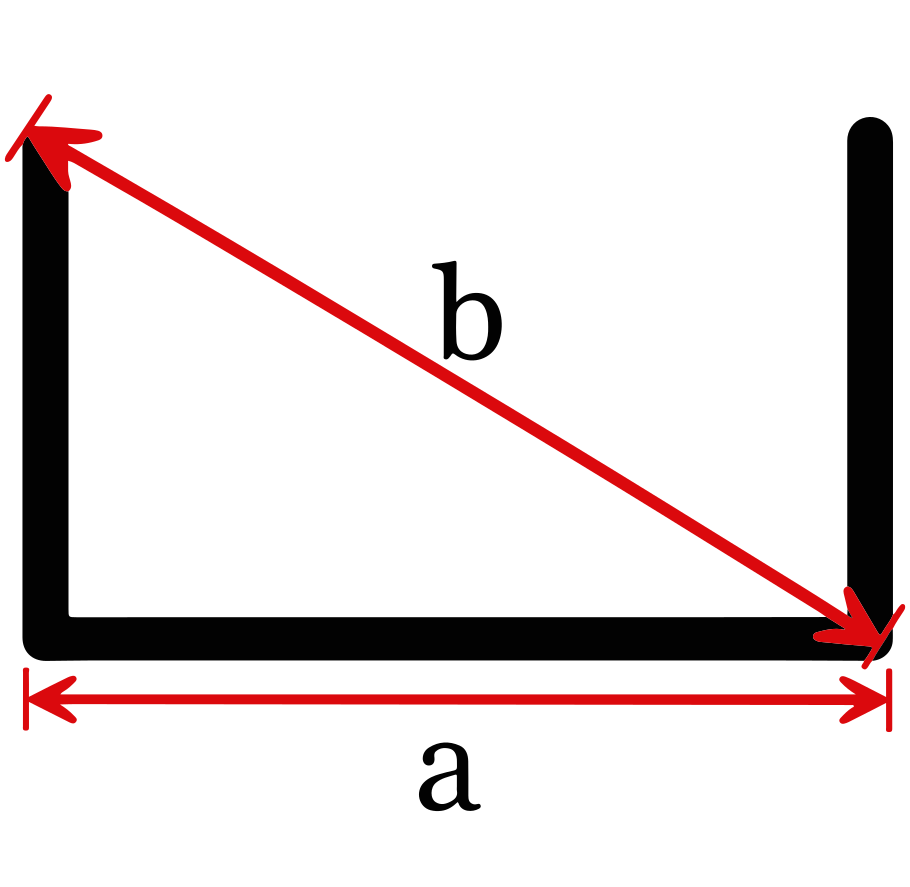 | 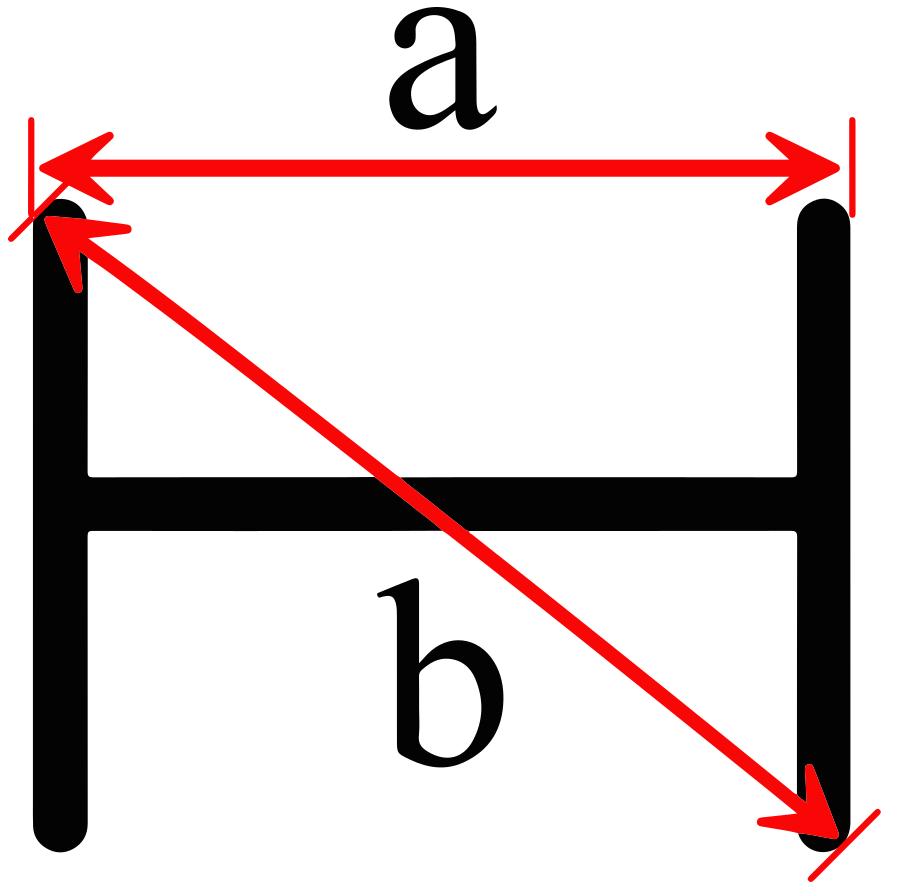 | |||
| 120 Chuck | 120 mm | >0.8 mm | a = 10–120 mm | a < 170 mm | a = 10–120 mm b = 15–120 mm | a = 20–80 mm b = 20–80 mm | a = 20–80 mm b < 84 mm | a = 20–80 mm b < 84 mm |
| 230 Chuck | 120 mm | >0.8 mm | a = 15–230 mm | a < 325 mm | a = 15–230 mm b = 15–230 mm | a = 15–150 mm b = 15–150 mm | a = 15–150 mm b < 212 mm | a = 15–150 mm b < 212 mm |
| 350 Chuck | 350 mm | >1.0 mm | a = 20–350 mm | a < 490 mm | a = 10–350 mm b = 20–350 mm | a = 20–220 mm b = 20–220 mm | a = 20–220 mm b < 300 mm | a = 20–220 mm b < 300 mm |
| 550 Chuck | 550 mm | >3.0 mm | a = 40–550 mm | a < 750 mm | a = 40–550 mm b = 40–550 mm | a = 40–400 mm b = 40–400 mm | a = 40–420 mm b < 550 mm | a = 40–550 mm b < 650 mm |
| 690 Chuck | 730 mm | >3.0 mm | a = 120–730 mm | a = 120–630 mm b ≤ 730 mm | a = 120–520 mm b = 120–520 mm | a = 120–520 mm b = 120–520 mm | a = 200–520 mm b ≤ 730 mm | a = 120–630 mm b ≤ 730 mm |
Note:
The above data represents the standard clamping ranges of CATEKCNC chucks for different types of tubes and profiles. For special tube shapes, the actual clamping range may be affected by the chuck structure and jaw design.
The following dimensional requirements should also be considered:
- For a 120 mm chuck, the long side of a rectangular tube should be between 92 mm and 120 mm, and the short side should be ≥41 mm.
- For a 230 mm chuck, the long side of a rectangular tube should be between 160 mm and 230 mm, and the short side should be ≥76 mm.
- For a 350 mm chuck, the long side of a rectangular tube should be between 220 mm and 350 mm, and the short side should be ≥134 mm.
CATEKCNC provides additional chuck specifications and customized chuck jaw solutions to meet different tube cutting requirements.
How Does a Fiber Laser Tube Cutting Machine Prevent Deflection of Long Tubes During Processing?
Due to their own weight, long tubes are prone to sagging or vibration during machining. Therefore, fiber laser tube cutting machines are usually equipped with auxiliary support devices to improve processing stability and cutting accuracy.
Since fiber laser tube cutting machines can process not only round tubes and square tubes but also various profiles such as angle steel, channel steel, and H-beams, the cross-sectional shapes of workpieces vary significantly. As a result, auxiliary support systems are available in different structural designs to accommodate different types of materials.
For tubes with relatively smooth cross-sections, such as round tubes and elliptical tubes, U-shaped rollers are commonly used for support. This support device features a roller with an arc-shaped groove of continuously varying width. By rotating the support roller, different sections of the groove can be positioned to contact tubes of various diameters, allowing the system to adapt to different tube specifications. The groove design allows part of the tube to fit into the support surface, improving stability. Compared with conventional flat supports, U-shaped rollers provide a larger contact area with the tube, reducing radial runout during tube rotation and improving cutting accuracy.
For rectangular tubes and profiles with edges, such as angle steel and channel steel, another type of support device is required. This system supports the workpiece through rollers, preventing rotation interference caused by sharp edges of the profile. Through retractable structures on both sides, the device forms a U-shaped support frame that receives tubes or profiles from the loading platform and transfers them into the machining area. Once cutting begins, the clamping structure automatically retracts to avoid interfering with the rotation of the workpiece.
Another type of support device is also available. This device is positioned within the tube cutting area and features a flat plate-like structure that provides support for tubes or profiles during machining. After processing is completed, the support plate can be lowered or rotated, allowing the finished workpiece to be smoothly transferred into the collection system.
During actual operation, all of the above auxiliary support systems are coordinated and controlled by the CNC system. The support height can be automatically adjusted according to tube rotation, positioning, and machining status. These systems are generally referred to as follow-up support devices or adaptive support systems. They effectively reduce vibration and deformation during long tube processing, ensuring higher machining stability and accuracy.
How Does a Fiber Laser Tube Cutting Machine Achieve Intelligent Processing Control?
A fiber laser tube cutting machine achieves intelligent processing control through the integration of a CNC system and dedicated tube cutting software. As the control center of the machine, the CNC system is responsible for managing laser output, multi-axis motion coordination, tube rotation positioning, and execution of machining programs. With professional tube cutting software, functions such as drawing import, automatic nesting, and toolpath planning can be realized, improving overall processing efficiency.
Based on different product positioning and customer budgets, CATEKCNC provides two mainstream EtherCAT-based CNC control systems: Weihong and BOCHU. Weihong CNC systems are widely used in cost-effective machines due to their proven stability, user-friendly operation, and excellent cost performance. BOCHU CNC systems offer more advanced intelligent process functions and motion control capabilities, making them more suitable for applications requiring higher processing efficiency, automation levels, and cutting quality. Both systems have been extensively validated in the market and provide a wide range of dedicated functions for metal tube processing:
Beam Scan Centering
Beam scan centering is an automatic alignment function for fiber laser tube cutting machines. The system scans the edge position of the tube, automatically calculates the actual tube center, dimensions, and installation deviation, and establishes an accurate machining coordinate system. It can automatically compensate for positioning errors caused by loading deviations, tube dimensional variations, or rotational misalignment, thereby improving the accuracy of hole positions, intersection cuts, and complex contours. This function also reduces manual alignment time and improves machining consistency. This feature requires the optional contour scanner.
Face-Based Machining Sequence Optimization
This function automatically optimizes the cutting sequence to reduce unnecessary tube rotation and laser head idle travel, effectively shortening non-cutting time and improving overall processing efficiency. It is particularly useful when machining tubes with a large number of holes, complex contours, or continuous multi-face processing requirements, as it significantly reduces time losses caused by tube rotation and laser head movement.
Flying Cutting
Flying cutting, also known as scanning cutting, is an efficient cutting method for regularly arranged features such as round holes, rectangular holes, and oblong holes on tubes. When these patterns follow a certain layout, the CNC system can automatically optimize the cutting path, enabling continuous machining of adjacent contours during motion. This reduces frequent acceleration/deceleration, piercing operations, and idle movements, significantly improving cutting efficiency.
This function is especially suitable for tube products used in industries such as fitness equipment, storage racks, metal furniture, and display structures, where numerous regularly arranged holes are required. In batch processing applications involving repeated hole patterns, flying cutting can typically improve processing efficiency by approximately 20%–50%. The more holes a workpiece contains and the more regular their arrangement, the greater the efficiency improvement.
Over-Arris Leapfrog
Over-arrise leapfrog is a high-speed rapid traverse technology designed to optimize non-cutting movements of the laser head during tube cutting. When the cutting head needs to cross tube edges, corners, previously cut contours, or other obstacles, traditional methods usually adopt a segmented motion process: Z-axis lifting → horizontal movement → Z-axis lowering. Leapfrog technology integrates these three movements into a continuous three-dimensional curve trajectory, allowing the cutting head to simultaneously complete lifting and lowering movements during travel, similar to a frog jumping over an obstacle, hence the name “Leapfrog.”
Compared with conventional rapid traverse methods, the leapfrog technology effectively reduces idle travel time, minimizes motion impact caused by frequent acceleration and deceleration, and improves overall efficiency during multi-hole, complex contour, and multi-face machining processes. The CNC system automatically calculates the optimal jump height and travel path based on tube geometry, cutting trajectories, and safety clearance requirements, reducing the risk of nozzle interference or collision with the workpiece while ensuring machining safety.
Note: The CNC system configuration varies depending on the machine model. The functions described above are for reference only, and the actual configuration is subject to the specific machine model.
What Is the Purpose of the Cooling System in a Fiber Laser Tube Cutting Machine?
The chiller is mainly used to provide constant-temperature cooling for key components such as the laser source and laser cutting head, ensuring stable operation during long-duration machining and extending the service life of critical components.
CATEKCNC selects dedicated fiber laser chillers from S&A and Hanli, both equipped with dual cooling circuits that independently cool the laser cutting head and laser source. The temperature control accuracy can reach approximately ±0.5–1.5°C. Depending on the model, the chillers can be equipped with high-head circulation pumps featuring a lifting height of approximately 30–70 m and a maximum flow rate of 60–150 L/min, meeting the circulation requirements of high-power fiber lasers and long-distance cooling pipelines. In addition, these chillers are equipped with multiple safety protection functions, including flow monitoring, water temperature monitoring, liquid level alarms, and over-temperature protection, preventing damage to the laser system caused by insufficient heat dissipation.
An optional electrical cabinet air conditioner is also available to regulate the internal temperature of the electrical control cabinet. It prevents electrical components from overheating due to excessive ambient temperatures, reducing the risk of equipment failures and improving long-term operating reliability.
Does a Fiber Laser Tube Cutting Machine Require Assist Gas? What Types of Assist Gas Are Available?
Yes. A fiber laser tube cutting machine requires dedicated assist gas to achieve high-quality cutting. Different assist gases are selected according to the material type, tube thickness, and processing requirements, and they directly affect cutting speed, cut surface quality, and oxidation resistance of the finished parts. The commonly used cutting gases and their applications are as follows:
Compressed Air
Compressed air is easy to obtain and has the lowest operating cost. It is suitable for economical cutting of common materials such as thin carbon steel, galvanized steel, and aluminum alloys. It is mainly used for conventional nesting cutting, simple contour cutting, and other basic production applications.
Compressed air can provide clean cut edges with relatively little dross, significantly reducing consumable costs. It is suitable for large-volume production of standard workpieces where cost efficiency is a priority.
Oxygen
Oxygen is mainly used for cutting medium and thick carbon steel, structural steel tubes, and other ferrous materials. By utilizing the exothermic oxidation reaction between oxygen and the heated metal, oxygen-assisted cutting accelerates material melting and removal, improving cutting speed and piercing capability for thicker tubes and plates.
It provides excellent cutting performance for heavy carbon steel applications, offering good cut perpendicularity and consistent striation patterns, making it a commonly used assist gas for structural steel processing.
Nitrogen
Nitrogen is a high-purity inert shielding gas with excellent oxidation prevention properties. It is primarily used for precision cutting of stainless steel, aluminum alloys, brass, titanium alloys, and other high-value metal materials.
During the cutting process, nitrogen effectively prevents oxidation and discoloration on the cut edge, minimizing burr formation and producing bright, smooth cut surfaces. This reduces or eliminates the need for secondary grinding and polishing while preserving the original surface properties of the material. It is widely used for precision tube components, high-end decorative profiles, and high-accuracy structural parts.
CATEKCNC can optionally provide pre-filtration systems and automatic cutting gas pressure regulation systems according to customer requirements.
The pre-filtration system effectively removes moisture, oil, and particulate impurities from the assist gas, improving gas cleanliness, reducing issues such as nozzle blockage and protective lens contamination, and enhancing the overall cutting quality of the fiber laser tube cutting machine.
The automatic gas pressure regulation system can automatically adjust assist gas pressure according to machining parameters, quickly matching optimal pressure settings for different materials and thicknesses. This improves processing consistency, reduces manual adjustment requirements, and minimizes the risk of incorrect parameter settings.
How Does a Fiber Laser Tube Cutting Machine Lubricate Its Transmission System?
The lubrication system is used to regularly lubricate moving components such as linear guides and rack-and-pinion systems, reducing wear and extending the service life of the machine.
CATEKCNC equips its fiber laser tube cutting machines with a fully automatic centralized lubrication system. The lubrication interval, lubrication duration, and lubrication frequency can be preset according to operating requirements, enabling automatic and precise lubrication of key moving components. This significantly reduces manual maintenance work. When the lubricant level is insufficient, the system will automatically trigger an alarm, and operators only need to refill the lubricant in time, making maintenance more convenient.
To reduce contamination caused by excess lubricant, CATEKCNC also provides an oil collection system. The system automatically collects excess lubricant generated during the lubrication process of moving components such as linear guides and rack-and-pinion systems, and transfers it into a dedicated collection container. This prevents lubricant from dripping onto the machine bed or workshop floor, improving equipment cleanliness.
How Does a Fiber Laser Tube Cutting Machine Maintain a Clean Working Environment?
During metal tube laser cutting, a large amount of smoke, metal particles, and small amounts of harmful gases may be generated. Without effective extraction, these contaminants can not only affect the working environment but may also contaminate the optical components inside the laser cutting head, reducing cutting quality and accelerating wear of internal machine components. Therefore, an efficient fume extraction system is essential for ensuring long-term stable operation and improving the workshop environment.
CATEKCNC equips its dust extraction system with Topsinn industrial dust collectors. Among them, the flagship TODC-12L industrial dust collector provides a maximum airflow capacity of up to 10,000 m³/h and a maximum static pressure of 5,000 Pa, fully meeting the fume extraction requirements of metal tube cutting applications. The system adopts a 12-cartridge high-efficiency filtration system with a filtration efficiency of up to 99.99%. It is also equipped with an automatic pulse-jet cleaning system, which periodically removes accumulated dust from the filter cartridge surface. This reduces manual maintenance requirements and helps maintain stable dust extraction performance throughout the long-term operation of the fiber laser tube cutting machine.
What Safety Protection Devices Are Equipped on a Fiber Laser Tube Cutting Machine, and How Do They Ensure Safe Operation?
A fiber laser tube cutting machine is equipped with multiple safety protection systems to reduce potential risks during laser processing, ensuring stable equipment operation and operator safety. The safety protection systems primarily include enclosed protective covers, travel limit protection, safety light curtains, and more.
For enclosed fiber laser tube cutting machines, the machine is equipped with a fully enclosed housing that effectively isolates the laser processing area from the surrounding environment. This prevents operators from being exposed to laser radiation, high-temperature slag, and metal sparks generated during cutting. In addition, the enclosed structure reduces external airflow interference in the processing area, improving smoke extraction efficiency and maintaining a cleaner working environment.
CATEKCNC equips all fiber laser tube cutting machines with both software limits and hardware limits. Software limits define the safe travel range of each motion axis through the CNC system. When the movement path approaches the preset limit, the system automatically stops operation. Hardware limits provide the final level of mechanical protection through limit switches installed on each axis, effectively preventing over-travel collisions caused by program errors, incorrect parameter settings, or control system failures.
Compared with fiber laser sheet cutting machines, fiber laser tube cutting machines incorporate multiple movable chucks. These chucks must perform synchronized clamping, feeding, and coordinated movements during processing, which introduces the risk of interference or collision between chucks. To address this issue, CATEKCNC equips some models with mechanical hard limit protection for chucks, further improving operational safety and reducing the risk of equipment damage.
CATEKCNC fiber laser tube cutting machines can also be optionally equipped with safety light curtains. Using high-precision infrared beam detection technology, the safety light curtain continuously monitors the hazardous area. Once a person or foreign object enters the protected zone, the system immediately sends an alarm signal and stops machine operation, providing a higher level of safety protection.
How Much Does a Fiber Laser Tube Cutting Machine Cost?
The price of a fiber laser tube cutting machine is mainly influenced by factors such as machine structure, laser power, number of chucks, automation configuration, and the brands of core components. Since different processing requirements require different machine configurations, the following examples provide typical application scenarios and corresponding price ranges for reference.
For standard tube processing requirements within 6 meters, a compact or standard two-chuck fiber laser tube cutting machine is usually sufficient. A machine equipped with a 1500W laser source typically starts at around $16,000. Upgrading to a 3000W laser source increases the price to approximately $30,000. If a side-mounted structure with an automatic loading and unloading system is selected, the machine price generally starts from around $33,000.
For large-diameter or long-length tube processing, large-format machines typically accommodate tubes up to 12 meters long. Since longer tubes demand higher clamping stability, these machines are usually equipped with three-chuck or four-chuck configurations. A three-chuck fiber laser tube cutting machine generally costs between $77,000 and $120,000, while a four-chuck model with an automatic loading/unloading system can reach approximately $440,000 due to the integration of more complex feeding, positioning, and control systems.
If bevel cutting capability is required, the machine needs to be equipped with a bevel laser cutting head and corresponding rotary axis system. This configuration typically requires an additional investment of approximately $30,000.
The price of a fiber laser tube cutting machine is influenced by many factors and can vary significantly. Since these machines generally represent a relatively large investment, it is important to carefully evaluate your requirements before making a decision. We recommend consulting with our professional sales team for detailed advice and a suitable solution.
We provide two convenient contact options: WhatsApp online consultation and a quotation request form. You can click either of the following buttons to get in touch with us:
What Optional Functions Are Available for Fiber Laser Tube Cutting Machines? How Do These Functions Improve Processing Convenience?
1. Bevel Cutting
Metal tubes and profiles often require welding during final assembly, and bevel preparation plays an important role in improving welding quality. A fiber laser tube cutting machine can be equipped with an optional bevel cutting function. To enable bevel cutting, the machine usually needs to be equipped with a bevel-capable laser cutting head, additional A/B rotary axes, and a corresponding upgraded CNC control system.
The bevel cutting function changes the angle between the laser beam and the tube surface, creating an angled edge on the workpiece. It can produce various bevel types, including V-shaped, X-shaped, Y-shaped, and K-shaped bevels. Compared with traditional manual grinding or mechanical machining methods, laser bevel cutting can complete welding preparation simultaneously during the cutting process, reducing secondary processing steps while improving production efficiency and processing consistency.
2. Weld Seam Detection System
Metal tubes are usually not manufactured from seamless materials. Instead, many tubes are formed by rolling steel strips and welding them together, which results in a longitudinal weld seam along the tube surface.
Because the material structure, hardness, and surface condition of the weld seam differ from those of the base material, placing critical processing areas—such as holes, connection surfaces, or bevel edges—on the weld seam may result in reduced cutting quality, increased dross formation, and dimensional accuracy deviations.
CATEKCNC offers an optional weld seam detection system. The system uses vision sensing technology and intelligent recognition algorithms to automatically detect and accurately locate the weld seam position on welded tubes before processing.
Based on the detected weld seam position, the system can automatically adjust the cutting path according to processing requirements and avoid machining directly on the weld area, thereby improving cutting quality and dimensional accuracy.
3. Enclosed Protective Cover
Unlike fiber laser sheet cutting machines, tube cutting machines are typically equipped with a fixed laser head, resulting in a relatively fixed processing zone. Furthermore, given their long and narrow bed configuration, the protective enclosure need only cover the actual cutting area.
An enclosed protective cover is usually equipped with a laser safety viewing window. The window is made of laser protective filter glass that complies with CE safety requirements. For the 1070–1080 nm fiber laser wavelength range, the protection level can reach OD6+, meaning that laser intensity in this wavelength range can be attenuated by more than one million times. This effectively blocks harmful laser radiation while allowing operators to clearly observe the cutting process.
To further improve process visibility, CATEKCNC also offers an optional machining monitoring system. The system uses industrial cameras installed inside the processing area together with an independent monitoring display, allowing operators to observe the cutting process in real time without opening the protective enclosure.
This helps operators identify processing abnormalities promptly while improving operational convenience, safety, and production efficiency.
4. Automatic Loading System
Tube cutting applications often involve batch production, making automatic loading systems highly valuable for improving production continuity and reducing labor intensity. By eliminating frequent manual material handling, automatic loading systems can significantly improve processing efficiency and overall automation levels.
CATEKCNC has developed multiple professional automatic tube loading solutions according to different production requirements. These systems can mainly be divided into the following types:
Belt-Type Tube Loading System
This system is equipped with a belt-type storage rack, where bundled tubes are temporarily stored in a suspended loading area. During the loading process, the conveyor belt is tensioned and moves the tubes forward onto the chain conveyor system.
The chain conveyor then transfers the tube to the front feeding gripper, which clamps the tube and accurately feeds it into the laser tube cutting machine. After the cutting process is completed, the gripper returns to its initial position and waits for the next loading cycle.
This system features a large storage capacity and can accommodate multiple tubes at one time. However, it has certain requirements regarding tube dimensions and weight, making it more suitable for automatic loading of small and medium-sized tubes.
For higher levels of automation, additional modules such as material sorting and tube alignment systems can be integrated to further improve the automation level of the loading process.
Chain-Type Tube Loading System
This system is designed for loading large and heavy tubes or structural profiles. Unlike the belt-type system, it does not use a storage rack. Instead, the chain conveyor is divided into multiple loading positions, where operators place workpieces in advance.
During loading, the conveyor moves forward and transfers the tube to the feeding gripper. The gripper then clamps and feeds the workpiece into the fiber laser tube cutting machine.
This system is suitable for heavy-duty tube processing applications, including engineering machinery, large steel structures, and curtain wall structural profiles.
5. Automatic Unloading System
In addition to automatic loading, an automatic unloading system can further improve the automation level of laser tube cutting operations, reduce manual handling requirements, and lower labor intensity.
CATEKCNC provides multiple automatic unloading solutions to meet different production requirements:
Flip-Type Unloading System
This system is installed within the processing area of the fiber laser tube cutting machine and can provide follow-up support for tubes during the cutting process.
After machining is completed, the system uses flipping or lifting movements to allow the finished tube sections to smoothly fall into the collection device below.
This solution is mainly suitable for automatic unloading of medium-length tube sections.
Conveyor Unloading System
This system adopts a conveyor platform structure. After cutting, the finished tube sections fall onto the conveyor platform and are transported to the side of the machine through the conveyor belt before entering the collection area.
It is mainly suitable for automatic unloading of short tube sections.
Chain-Type Unloading System
The structure of this system is similar to the chain-type tube loading system, but it operates in the opposite direction.
After the tube is processed, the unloading system extends its gripper to clamp the finished tube section and removes it from the fiber laser tube cutting machine. The processed workpiece is then transferred to the collection area through the chain conveyor system.
This system is suitable for automated unloading of long tube sections.
Last Updated:
2026-09-07 14:21:49
CUSTOMER REVIEWS
-
We bought this fiber laser cutting machine mainly for tube work, and it’s been a nice upgrade for our shop. We’ve been cutting stainless steel tubes with different angles and joints, and the bevel cuts have made a noticeable difference. The parts come off the machine pretty much ready for the next step, so we’re not spending as much time cleaning up or adjusting the cuts before welding. The setup took a little time to get familiar with, but once we got our settings dialed in, the results have been very consistent. It’s been working well for the type of tube fabrication we do.
Allis Aug 27, 2026
 -
Just got the fiber laser cutting machine installed in our shop, so we haven't really put it into full production yet. First impression is good. The machine looks solid and everything arrived as expected.
The installation went pretty smoothly. We had a few questions during the setup, especially with the electrical connection and machine settings, but the CATEKCNC technical team was easy to reach and helped us get things sorted out. They also guided us through the software and basic operation, which was helpful for our operator.
We bought this machine mainly for cutting metal tubes in batches, so we're looking forward to getting some real production work through it. We haven't run enough jobs yet to give a review on long-term performance, but so far the installation and technical support have been a good experience.Hopefully we'll be putting it to work regularly very soon.
Joshua
Aug 12, 2026 -
Compramos esta máquina principalmente para trabajar tubos, sobre todo tubos redondos y cuadrados para nuestros trabajos de fabricación. Nos ha facilitado bastante el trabajo, ya que podemos cortar los tubos a medida y hacer los agujeros en la misma máquina, sin tener que realizar tantos procesos después. Los cortes quedan limpios y la precisión ha sido bastante buena, especialmente cuando las piezas tienen que encajar bien antes de soldarlas. También nos gustó que la máquina sea relativamente compacta, porque no ocupa demasiado espacio en el taller. Hasta ahora estamos satisfechos con el funcionamiento. Para los trabajos con tubos que hacemos habitualmente, ha sido una incorporación muy práctica para nuestro taller.
David Sep 02, 2026
 -
I'm Rakesh from Ahmedabad running a pipe fabrication unit. After much research, purchased this 3000W fiber laser tube cutting machine from China 2 months back. Must say - it's working like a champion!
Rakesh May 01, 2025
 -
To be honest, this pipe laser cutting machine is even better than I expected. We mainly use it to cut stainless steel and low-carbon steel pipes, and the cut quality is excellent, requiring almost no secondary processing. The installation process went very smoothly; their team helped us quickly complete all the setup. After a few days of use, our operators were already completely familiar with the system.
Zafar Mar 27, 2026
 -
E kemi marrë këtë makinë kryesisht sepse na duhej një zgjidhje më kompakte për prerjen e tubave. Në punishten tonë hapësira është e kufizuar, kështu që përmasat e makinës ishin një nga gjërat që morëm parasysh. Deri tani jemi të kënaqur me mënyrën se si po punon.
Zakonisht presim tuba të rrumbullakët dhe katrorë për punë metalike, konstruksione dhe parmakë. Makina është relativisht e thjeshtë për t'u përdorur dhe operatori u përshtat me të pas pak kohe. Na pëlqen gjithashtu që mbetjet e tubit janë të vogla, sepse kur kemi shumë copa për të prerë, edhe kjo bën diferencë.
Për një punishte si e jona, nuk kishim nevojë për një makinë shumë të madhe. Kjo na përshtatet mirë sepse nuk zë shumë hapësirë dhe mund ta përdorim për punë të ndryshme. Deri tani ka qenë një zgjedhje e mirë për ne.
Liridon Aug 22, 2026
 -
Около трех месяцев назад наше предприятие решило приобрести волоконный лазерный резак для обработки крупногабаритных труб. Мы изучили множество поставщиков, пытаясь найти баланс между производительностью и ценой. Из-за невозможности осуществить банковский перевод возникли сложности, но коллега порекомендовал обратиться к китайскому производителю.
В итоге мы выбрали эту компанию. Их цены и комплектация аналогичны другим китайским производителям, но уровень сервиса действительно впечатлил. После получения оборудования они предоставили полную поддержку по доставке, сборке и обучению. Покупкой полностью доволен.
Lanovsky Jun 18, 2025
 -
Ovaj stroj smo uzeli nakon što nam je ručna obrada cijevi počela oduzimati previše vremena. Sada većinu pripreme možemo odraditi direktno na stroju, što nam je posebno korisno kada imamo više istih komada za izradu.Najčešće radimo manje i srednje promjere cijevi, a stroj se dobro snalazi i kada tijekom dana mijenjamo različite materijale i dimenzije. Kod serijskih poslova najveća nam je prednost što nema toliko prekida između pojedinih komada.Nakon što smo ga postavili i podesili za naše uobičajene poslove, korištenje je prilično jednostavno. U radionici nam je prvenstveno pomogao da ubrzamo obradu cijevi i smanjimo količinu ručnog rada.
Sasa Sep 03, 2026
Get quote