


{{goods.model}}
Russian Furniture Manufacturer Visits CATEKCNC to Explore Advanced CNC Woodworking Solutions
A Russian furniture manufacturer recently visited CATEKCNC during his trip to China, where he was attending an industry exhibition and exploring new manufacturing technologies. With years of experience in furniture production and previous experience purchasing a 5-axis CNC machine from Italy, the customer came to the CATEKCNC factory with a clear understanding of CNC machining and a practical interest in the latest woodworking solutions.
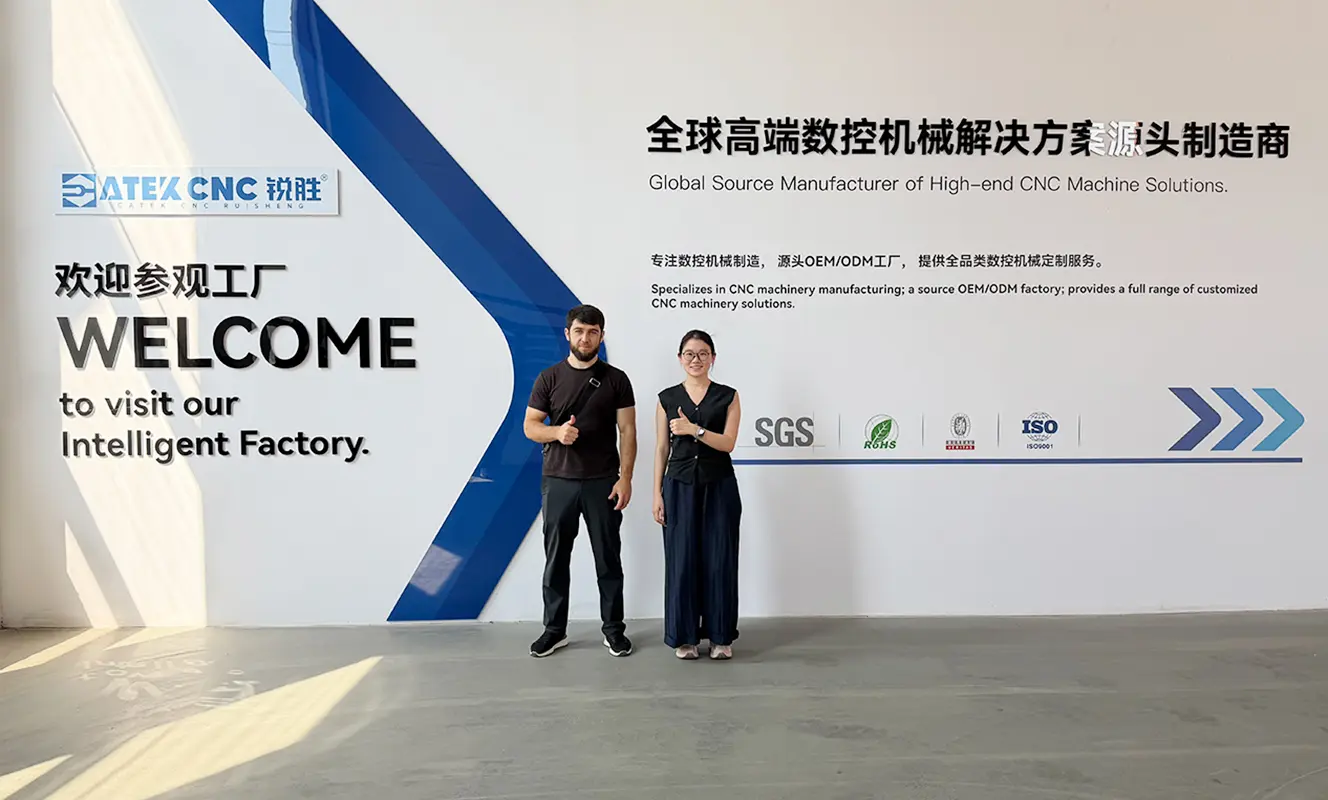
The customer is primarily engaged in the production of chairs and other furniture products. He also operates an import and sales business related to the automotive industry, giving him experience across both manufacturing and international trade.
During the visit, the customer spent considerable time discussing CATEKCNC's 5-axis CNC router, multifunctional 5-axis CNC wood lathe, and ATC CNC router. Rather than simply looking at machine specifications, the conversation focused on a more practical question: how different CNC technologies can improve furniture production, and how manufacturers can choose equipment that makes sense for their actual products and investment plans.
For CATEKCNC, this was also an opportunity to exchange ideas with an experienced CNC user and discuss the changing expectations of international manufacturers toward Chinese CNC machinery.
I.Different Furniture Components Require Different CNC Machining Machines
We discussed different CNC machining solutions based on the customer's furniture production. His main products are chairs, and different chair components can vary greatly in terms of shape and machining requirements. One CNC machine may not necessarily provide the most efficient solution for every stage of the production process.
For example, some chair components require conventional cutting, drilling, milling, or carving processes, while others involve curved surfaces, angled structures, or more complex three-dimensional shapes. For these more complicated parts, a 5-axis CNC milling machine allows the cutting tool to approach the workpiece from different directions, providing greater machining flexibility. When a component needs to be machined on multiple sides or contains complex contours that would normally require multiple setups, the advantages of a 5-axis CNC router become particularly clear.
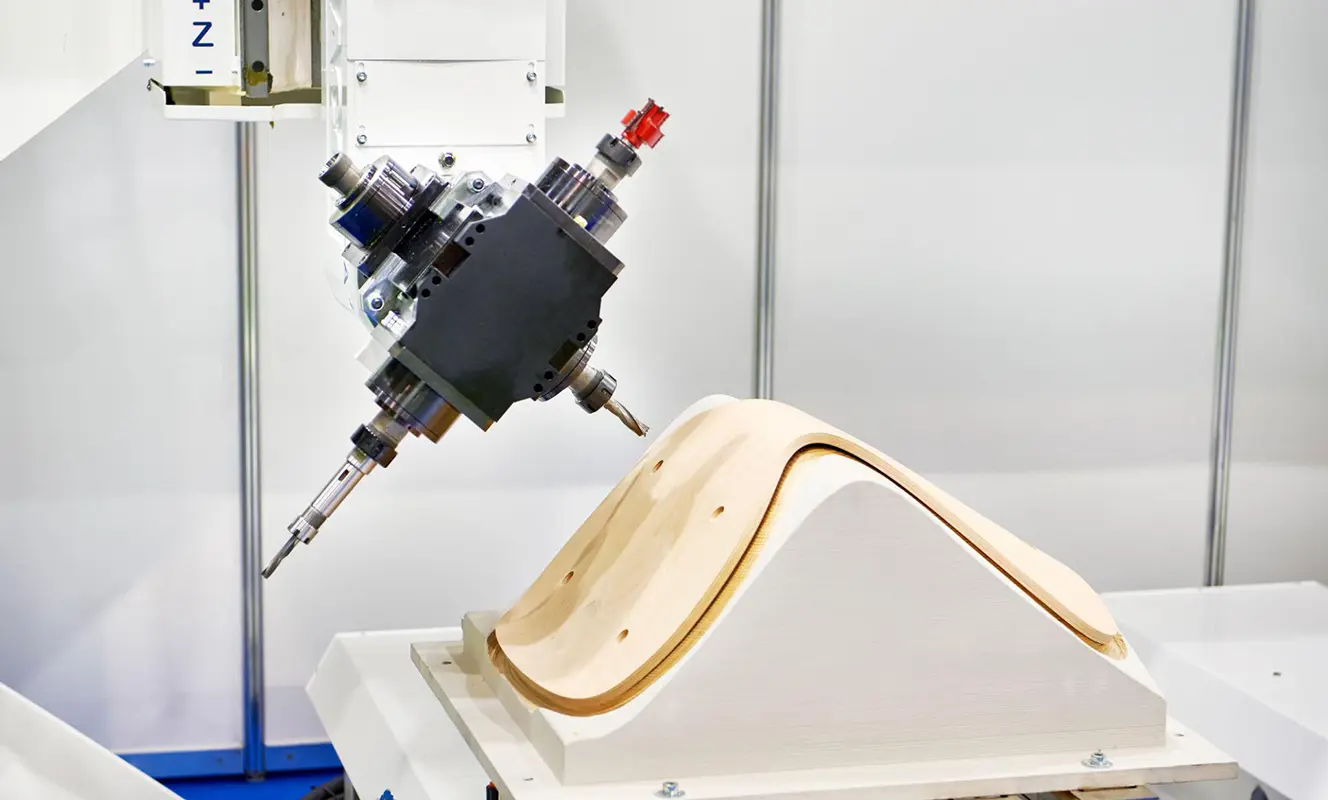
The customer was also highly interested in the 5-axis multifunctional CNC wood lathe, which is suitable for machining furniture components such as chair legs and other irregularly shaped wooden parts. Traditional furniture production may require separate machines for turning, cutting, carving, and other processes. For manufacturers producing more complex or customized furniture components, integrating multiple machining functions into one machine can help reduce the number of processes and simplify production.
At the same time, not every chair component requires five-axis machining. For more common furniture parts involving repeated cutting, drilling, grooving, milling, or carving operations, an ATC CNC router can be a more practical production solution. The automatic tool changing function allows multiple machining operations to be completed within a single program, which is particularly useful for manufacturers that need to efficiently process batches of similar components.
The customer did not focus on just one machine during his visit. Instead, the discussion covered several different CNC machine configurations. With his previous experience using a 5-axis CNC router, he was able to look at these machines from a practical production perspective: which components require multi-axis machining, which processes can be completed more efficiently with automatic tool changing, and which multifunctional machines can help reduce additional machining steps.
More importantly, this approach reflects a common consideration for furniture manufacturers when investing in CNC woodworking machines. The most suitable machine is not necessarily the one with the most functions, but the one whose capabilities match the products being manufactured. For a chair manufacturer, for example, the ideal equipment configuration may depend on the combination of chair components, design complexity, production volume, and whether the business focuses on standard products or customized products.
For this Russian customer, these practical considerations were particularly important because he was already familiar with the performance of European five-axis equipment. His visit to CATEKCNC gave him an opportunity to see how different Chinese CNC machine configurations could be applied to his existing furniture production and whether they could provide the right combination of machining capability, flexibility, and investment value he was looking for.
II.Exploring the Application of 5-Axis CNC Routers for Complex Furniture Components
The 5-axis CNC router was one of the main focuses of the customer's visit. For his chair and furniture manufacturing, the value of 5-axis machining lies mainly in its ability to process components with more complex shapes and multiple machining surfaces. Chair components are not always flat or simple. Curved chair backs, irregular frames, decorative parts, and other three-dimensional furniture components may require machining from different angles.
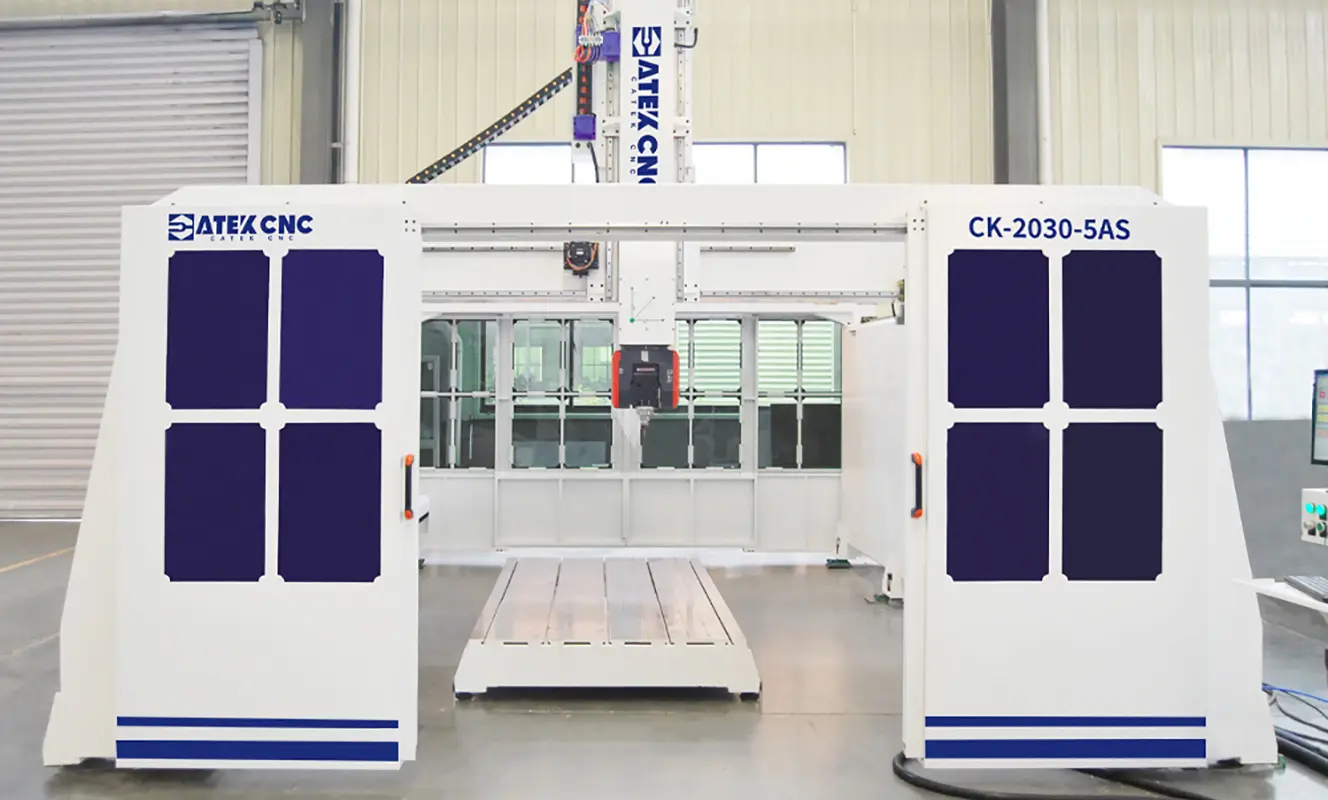
With a traditional 3-axis CNC router, some parts may require multiple repositioning and setups during machining. A 5-axis CNC machine can approach the workpiece from multiple directions, helping reduce the number of setups while allowing more complex machining operations to be completed.
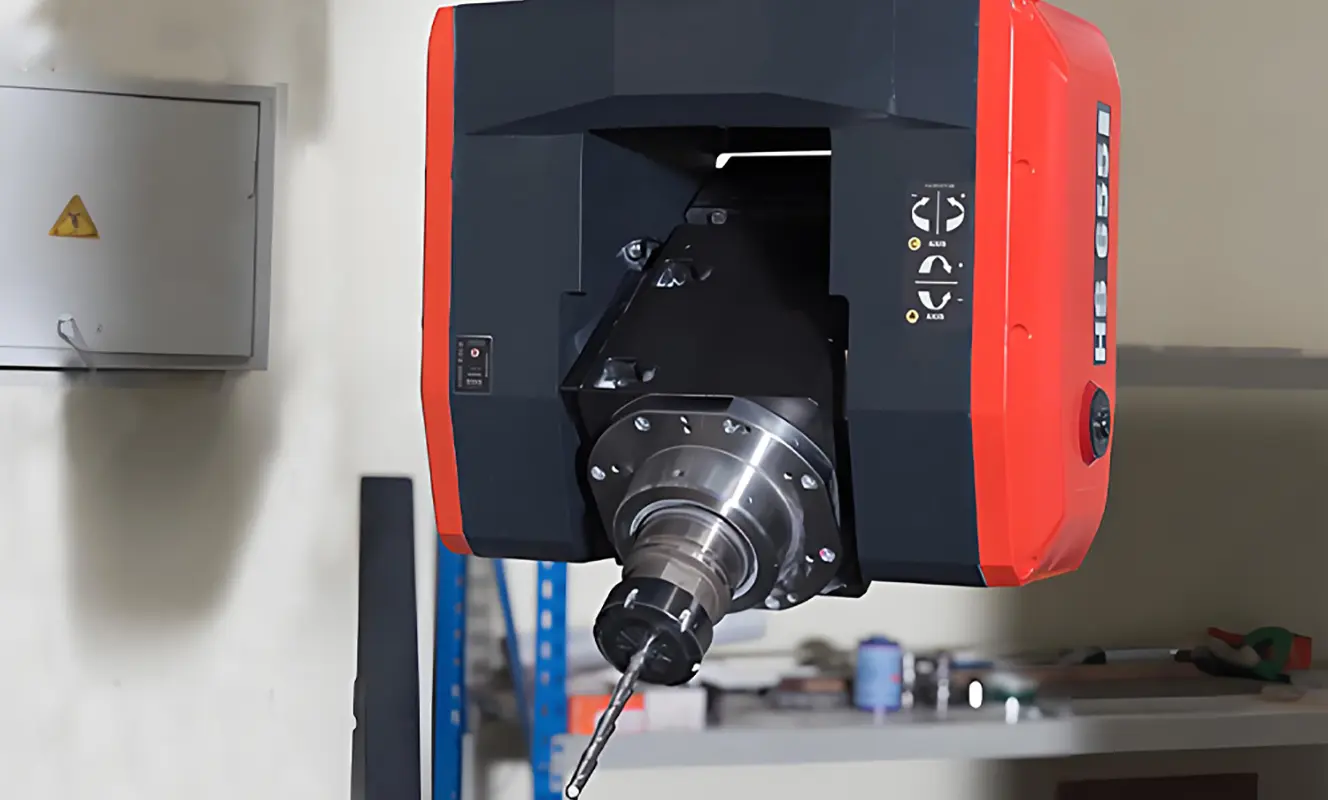
This was an important topic of discussion during the customer's visit. Since he had previously used a European-made 5-axis machining center, he was able to evaluate the CATEKCNC 5-axis CNC router based on his actual experience rather than simply comparing technical specifications on paper. As a result, the discussion focused more on practical issues such as machining requirements, machine configuration, flexibility, and how the equipment could be applied to his furniture production.
For a manufacturer that already has experience with 5-axis CNC machining, adding a new 5-axis CNC router is not simply a matter of replacing one machine with another. The more important question is whether the new equipment can provide the required machining capabilities while offering a configuration and investment level that fits the manufacturer's next stage of production.
III.Exploring a 5-Axis Multifunctional CNC Wood Lathe for Chair Components
Chair manufacturing often involves wooden chair legs, columns, posts, and other irregularly shaped components, which can be difficult to produce efficiently with a standard CNC wood lathe alone. These components may first require turning, but depending on the final design, they may also need carving, milling, drilling, or other shaping processes.
In this case, a 5-axis multifunctional CNC wood lathe can provide an effective production solution. Instead of treating turning and subsequent shaping as completely separate processes, it can integrate different types of machining into a single system.
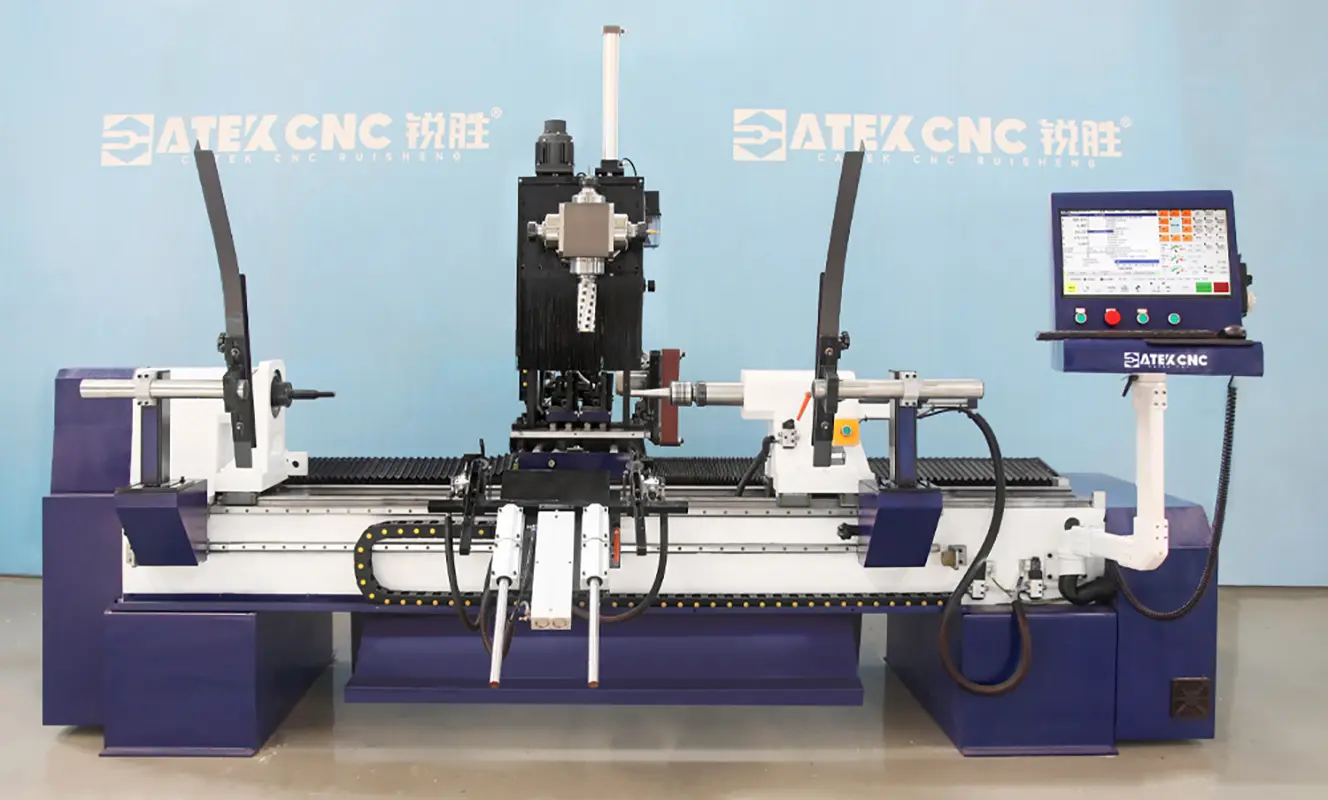
For the Russian customer, this was particularly important because furniture production is not limited to a single type of standardized component. Chair designs can change continuously, and manufacturers may need to produce both traditional turned parts and more customized decorative components. Having more machining capabilities on the same 5-axis CNC wood lathe can give manufacturers greater flexibility when working with different product designs.
The customer's interest in this machine also reflected a broader consideration in his production planning: how to make CNC woodworking machines suitable for a wider range of furniture components.
For manufacturers producing chairs and other wooden furniture, this can be an important factor when evaluating equipment. A multifunctional CNC wood lathe capable of handling different machining requirements can create more opportunities for product development, particularly when producing customized or high-value furniture components.
IV.Considering an ATC CNC Router to Improve Furniture Production Efficiency
The ATC CNC router provided a different solution for the customer's production requirements.
While 5-axis machining is important for complex three-dimensional components, many furniture parts rely more on a combination of conventional processes such as cutting, drilling, grooving, milling, and carving. For these applications, the automatic tool changing function can have a more direct impact on production efficiency.
For example, when machining furniture components that require multiple operations, an ATC CNC router can automatically change different tools according to the machining program. The operator does not need to stop the machine and manually change the tool between each operation, which can help make repetitive production more convenient and consistent.
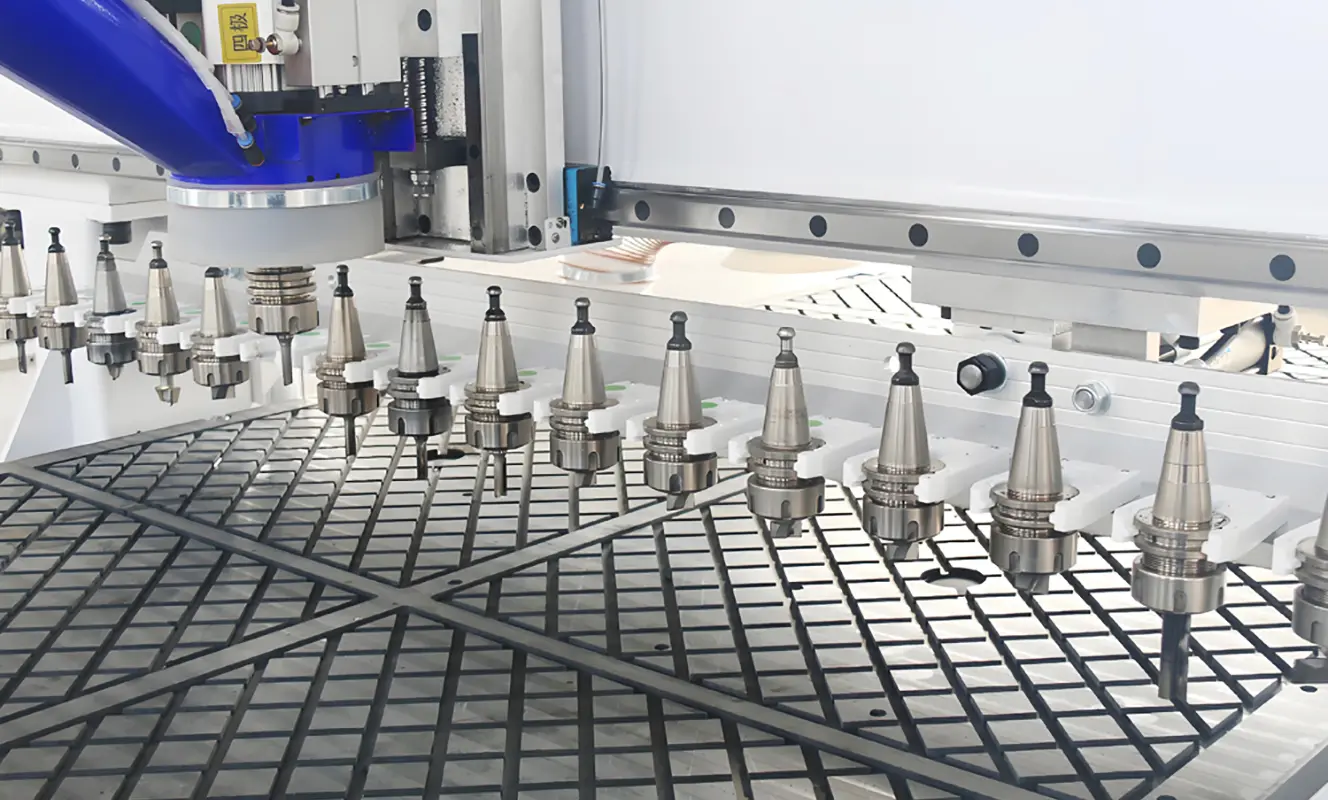
This makes an automatic tool changer CNC router particularly relevant to the customer's furniture manufacturing business. His products are not made entirely of complex 5-axis machined components; they also include standard furniture parts that require efficient batch processing. In these cases, a well-configured ATC CNC router for furniture can handle routine machining work without the additional complexity of a 5-axis system.
For the customer, evaluating the ATC CNC router alongside the 5-axis CNC router and multifunctional CNC wood lathe provided a more comprehensive view of the available solutions. Each machine is suited to different stages of furniture production, and the final equipment combination can be determined according to the actual products, machining processes, and production volume.
IV. Chinese CNC Machines vs. European CNC Machines
European CNC machine manufacturers have built a strong reputation across many industrial markets, particularly in the field of advanced machining technologies. At the same time, the Chinese CNC machine manufacturing industry has developed rapidly, with products ranging from entry-level woodworking machinery to advanced 5-axis CNC systems and automated production solutions.
Chinese manufacturers have several advantages, including a large industrial supply chain, competitive manufacturing costs, a wide range of component suppliers, and extensive experience producing equipment for international markets. As a result, customers can purchase CNC machines from China with advanced configurations at more competitive prices.
Of course, not all Chinese CNC machine manufacturers offer the same level of quality. For overseas buyers, a more effective approach is to examine the actual machine structure, key components, machining results, quality control, factory experience, and technical support, rather than judging the equipment based solely on its country of origin.
For CATEKCNC, this is also an important part of working with international customers. This Russian customer had previously used a European 5-axis CNC router, which provided a useful reference for this visit. At the same time, the factory tour gave him the opportunity to see the equipment in person, discuss his furniture applications with the technical team, and gain a deeper understanding of what Chinese CNC machine manufacturers can provide in terms of products and services today.
V.CATEKCNC Provides Customized CNC Solutions
For CATEKCNC, every customer has a different production setup. Some customers need to process standard furniture components in large quantities, while others need to machine more complex parts or customized products. Therefore, the CATEKCNC team does not recommend the same machine to every customer. Instead, the team first takes the customer's actual production needs into consideration.
Different furniture components require different machining methods. During the discussion, the technical team looked at how a 5-axis CNC router, multifunctional CNC wood lathe, and ATC CNC router could be used to process different components in the customer's furniture production.
CNC machines can also be configured according to the specific application. Details such as working area, spindle power, tool changer, rotary functions, and control system can be adjusted based on the customer's products and machining processes. With this custom CNC solution, the machine can be configured around the workpiece, rather than requiring the customer to change the production process to fit a standard CNC machine.
For overseas furniture manufacturers, this type of communication is particularly important before investing in a CNC machine for furniture manufacturing. By sharing drawings, product samples, or machining requirements with the CATEKCNC technical team, customers can discuss a suitable machine configuration in advance and avoid paying for functions they do not actually need.
For this Russian customer, the factory visit provided an opportunity to communicate face to face and understand how different CNC woodworking machine configurations could fit into his future production.
VI.Conclusion
The visit gave the Russian customer a closer look at CATEKCNC's CNC equipment and, more importantly, an opportunity to discuss his actual furniture production with the technical team. With his experience in chair manufacturing and previous use of a European 5-axis CNC machine, the conversation focused on practical production needs rather than simply machine specifications.
For CATEKCNC, visits like this are also an important part of working with international customers. A face-to-face discussion makes it easier to understand the products being manufactured, the challenges in the current process, and what the customer expects from a new CNC woodworking machine.
As more furniture manufacturers look for flexible and cost-effective equipment for expanding their production, CATEKCNC will continue to provide custom CNC solutions based on each customer's products and machining requirements.