


{{goods.model}}
US Customer Visits Factory for 5 Axis CNC Router Inspection
On June 1, 2026, CATEKCNC hosted several clients from the United States. The clients participated in a comprehensive factory tour, technical discussions, and on-site inspections of CNC equipment. The client is a diversified manufacturing company with a production base in Dubai, United Arab Emirates, serving multiple industries including furniture manufacturing, architectural structural component fabrication, mold manufacturing, and custom CNC machining services.
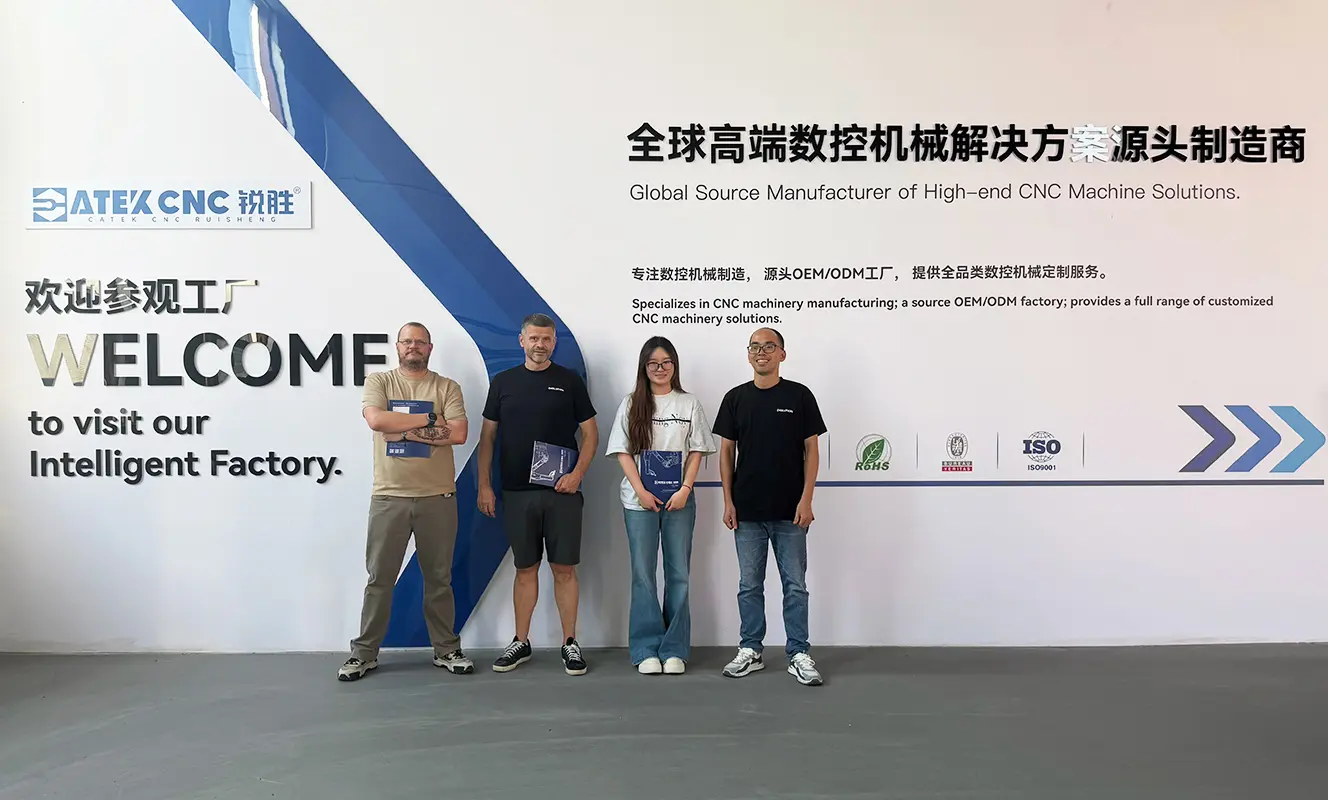
This visit served as a more in-depth assessment of industrial CNC manufacturing capabilities, particularly in high-precision 5-axis CNC machining and efficient CNC cutting solutions for sheet metal production.
In recent years, an increasing number of international buyers—especially those from the manufacturing sectors in the United States and the Middle East—have chosen China as their primary sourcing hub for CNC machines. The combination of cost-effectiveness, manufacturing capabilities, and customization flexibility makes Chinese CNC machine manufacturers highly competitive in the global market.
I. Client Background
The U.S. client visiting us has a complex and diverse production structure. Their headquarters and business development department are located in the United States, while their primary manufacturing base is in Dubai, serving clients across multiple industries.
Their production scope includes:
- Furniture manufacturing for residential and commercial projects
- Advertising and signage production for international markets
- Mold and prototype development for industrial applications
- CNC machining outsourcing services for various materials
- Custom manufacturing projects requiring both 2D and 3D machining capabilities
Given the breadth of their production scope, the client requires a CNC solution that is not limited to a single application. Instead, they need a production system capable of combining efficient panel processing with advanced 3D surface machining capabilities.
This requirement led them to focus their evaluation during this site visit on two core machines: 5-axis CNC router machines and automatic tool changer (ATC) CNC router machines.
II. Tour of the 5-Axis CNC Router Machine
The highlight of this factory tour was a detailed inspection of our 5-axis CNC router and a live machining demonstration, which showcased the advanced CNC machining capabilities of the CATEKCNC product line.
This U.S.-based client operates manufacturing facilities in both the United States and Dubai, resulting in a diverse range of project requirements. Their business spans furniture manufacturing, architectural component production, prototype development, and providing custom CNC machining services to a wide range of clients.
Consequently, they are not satisfied with single-purpose machines. What they truly need is a machining system capable of handling diverse production tasks—particularly complex 3D machining—without compromising stability or efficiency.
Therefore, under the guidance of our technical team, the five-axis CNC router machine became the focal point of this tour.
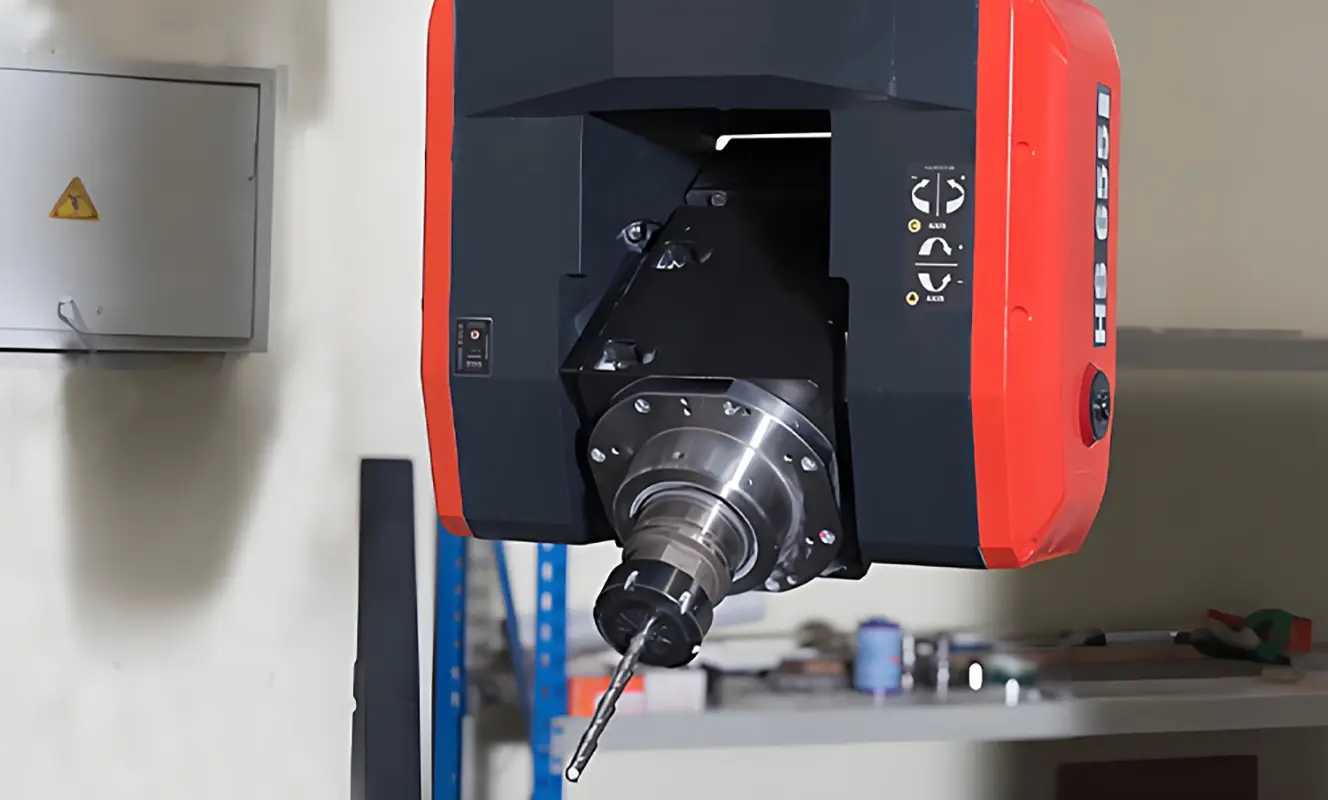
Compared to standard 3-axis CNC routers and 4-axis machines, five-axis simultaneous control allows for the precise, synchronized movement of all five axes through programming, enabling complex machining tasks by controlling two rotational axes. Simply put, the machine can machine different angles of a workpiece without the need for repeated repositioning or realignment. For clients working with complex shapes—particularly in mold manufacturing or 3D modeling—this plays a significant role in both precision and efficiency.
However, the clients were most interested not in the specifications themselves, but in the machine’s performance in actual production. During the demonstration, our engineers machined multiple 3D parts featuring curved surfaces, deep recesses, and multi-angle details. These are typical applications in mold production and architectural modeling—areas that align with our clients’ business operations in Dubai.
Throughout the process, the clients remained highly engaged, paying particular attention to the machine’s performance under the following conditions:
- Continuous execution of long 3D toolpaths
- Switching between different machining angles
- Machining curved surfaces in a single pass
- Performing extended cutting operations without interruption
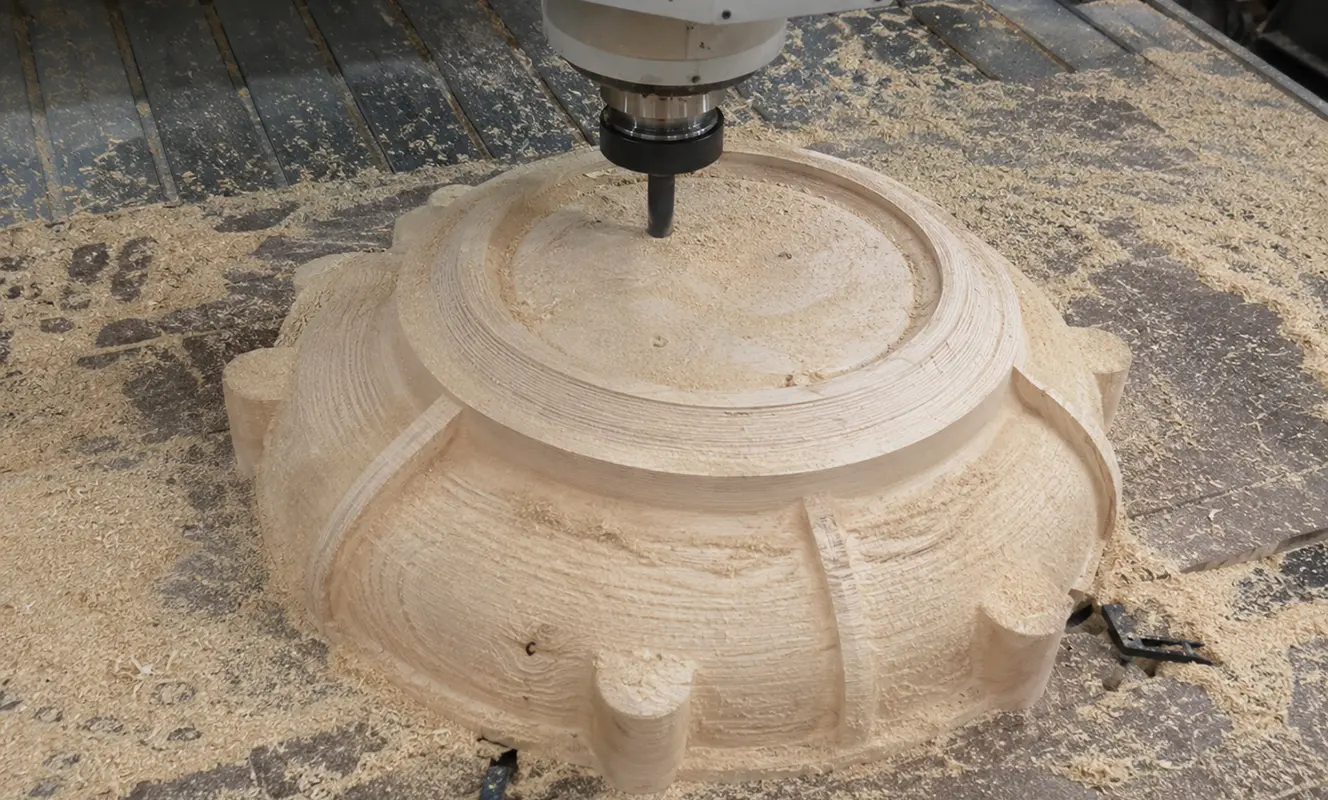
It was clear during this visit that the clients had come for more than just a review of the machine’s specifications. They were seeking to understand a critical question: whether a 5-axis CNC machine could truly support their future production expansion across various industries.
This is why they spent so much time gathered around the machine during the factory tour, asking questions and closely observing the various machining tests.
III. CNC Cutting Machines for Efficient Panel Production
Although the 5-axis CNC router was the primary focus, the client also took the time to evaluate our ATC CNC router, as panel cutting machines are indispensable in their actual production. At their Dubai facility, the majority of daily production still involves flat materials such as MDF, plywood, and other panels used in furniture and cabinet manufacturing.
For this type of work, they need a machine capable of reducing manual labor and ensuring a smooth production flow. The ATC CNC router machine fits perfectly into their workflow.
During the demonstration, they focused not only on the machine’s machining capabilities but also on how it integrates into their actual production line. They were particularly interested in how the automatic tool changer helps minimize downtime between different processing steps.
In fact, the ATC CNC router can continuously perform various operations, such as cutting, drilling, and engraving without the need for manual tool changes. For mass production, this helps maintain consistent output and efficiency.
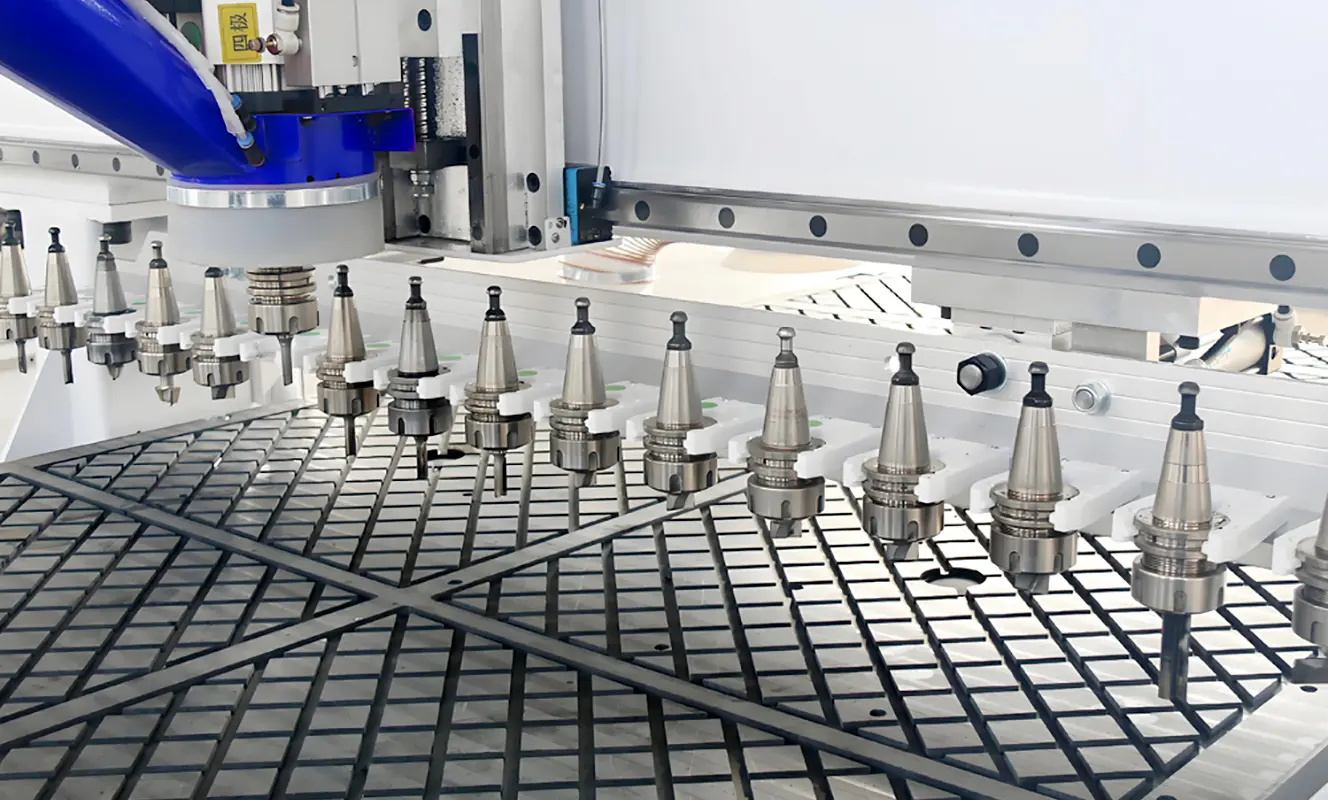
The client views this machine as a tool to enhance production efficiency for high-volume panel processing, making it ideal for furniture-related projects in their Dubai-based business.
At the same time, they made a clear comparison between this CNC nesting machine and a five-axis CNC router, recognizing the distinct applications of each:
- The ATC CNC router is better suited for panel processing and high-volume production.
- The five-axis CNC router is better suited for 3D machining and complex shapes.
Rather than choosing one machine over the other, they focused on how to combine the two into a single production system capable of supporting different types of customer orders.
From a practical standpoint, this combination provides them with greater flexibility within their U.S.-Dubai manufacturing structure, particularly when handling different industries and project types simultaneously.
IV. Technical Exchange and Cooperation
Following the machine inspection and on-site demonstration, both parties engaged in in-depth technical discussions, focusing on production requirements and future expansion plans. The discussions covered several key aspects, including configuration options for the 5-axis CNC router machine, spindle power selection, control system preferences, and machining accuracy requirements for different materials.
Our engineering team provided customized recommendations tailored to the client’s diverse industry needs, ensuring the solution could accommodate furniture production, mold manufacturing, and custom machining projects alike.
1. Understanding the Advantages of 5-Axis CNC Machining
In addition to watching live machining demonstrations, customers spent a significant amount of time discussing the operating principles and practical advantages of a 5-axis CNC router machine with our engineering team.
For many manufacturers, the difference between a standard CNC router and a true 5-axis CNC machining center goes beyond the number of axes. The real value lies in how the machine can approach the workpiece from multiple angles without the need for repeated repositioning.
Traditional CNC engraving machines typically move along the X, Y, and Z axes. While they are highly efficient for planar machining and traditional engraving, machining complex 3D parts often requires multiple setups and manual adjustments. Each additional setup increases machining time and can lead to positioning errors.
On the other hand, a 5-axis CNC router combines three linear axes with two rotary axes, enabling the spindle to reach different surfaces of the workpiece within a single machining cycle. This capability is particularly valuable for customers producing the following:
- Complex molds and tools
- Architectural models and sculptures
- Automotive and aerospace prototypes
- Large 3D foam or resin models
- Curved furniture components
- Composite parts with complex geometries
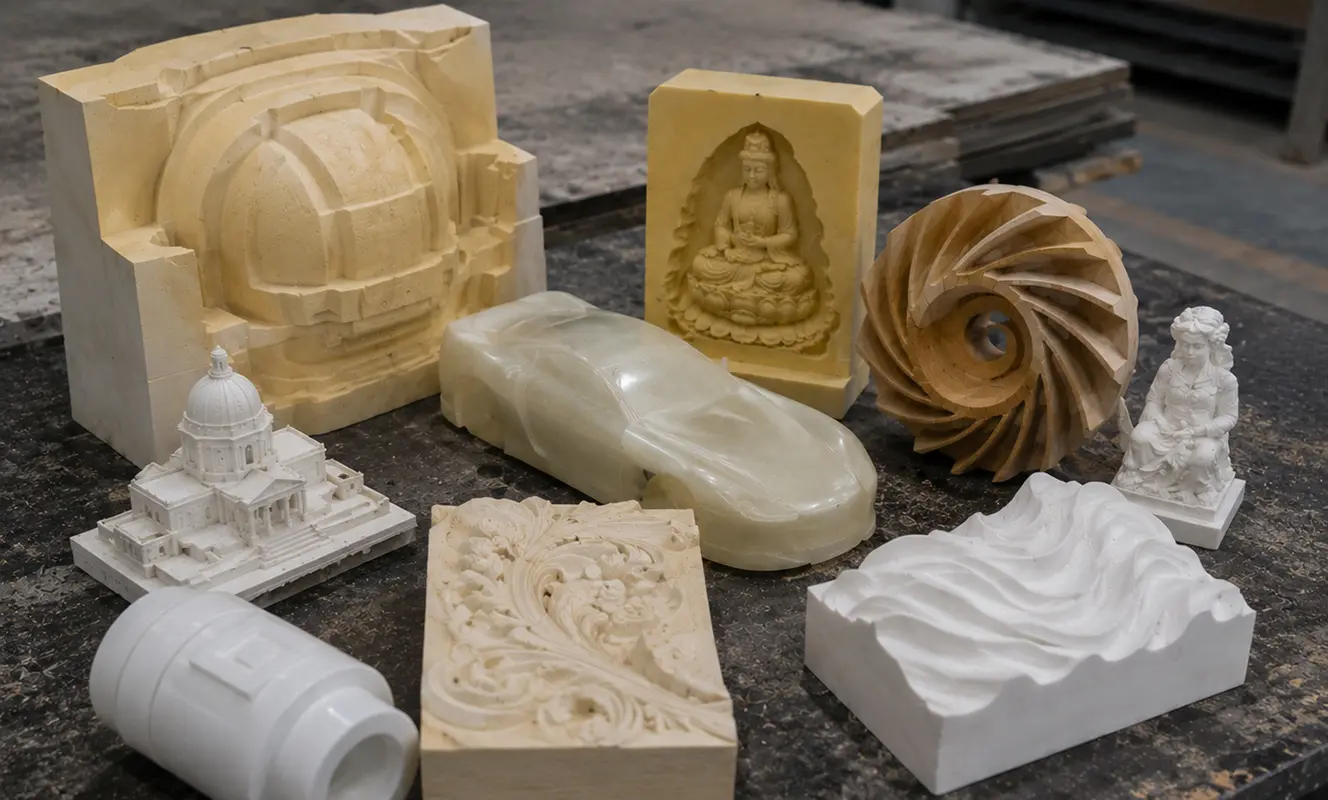
During the discussion, the customer also specifically mentioned how the machine reduces the need for secondary clamping operations. In industries with extremely high precision requirements, every time a workpiece is removed and repositioned, there is a risk of introducing dimensional deviations. A five-axis CNC machine eliminates this issue by enabling multi-angle machining in a single setup, thereby significantly improving production efficiency while maintaining precision.
2. Machine configurations that catch the customer’s eye
During the factory tour, the customer carefully inspected several key components of the machine, rather than focusing solely on the finished product samples.
As an experienced manufacturing company operating in Dubai, they understand that the performance of CNC machine depends not only on software and programming but also on the quality of their mechanical structure and core components.
Particular attention was paid to the following aspects:
- Heavy-duty machine frame and gantry structure
- High-performance 5-axis machining head
- Servo drive system and motion accuracy
- Precision guideways and transmission system
- Advanced CNC system
- Stability during continuous machining
The client noted that for long-run production, machine rigidity is just as important as machining speed. A stable machine structure helps reduce vibration, maintain surface quality, and extend tool life, all of which directly impact operating costs. This is particularly relevant to their production environment, where machines often run for extended periods to handle custom projects across various industries.
3. Why Do US and International Buyers Choose CNC Machines from China?
During the technical discussion, the conversation naturally expanded to global trends in CNC machine procurement, particularly why an increasing number of US buyers and international manufacturers are choosing Chinese CNC machine suppliers.
Cost-effectiveness is one of the most important factors. In many cases, Chinese CNC machine can save 30% to 60% in costs compared to European and American equipment, while maintaining excellent industrial performance.
Another key factor is China’s manufacturing ecosystem. Most high-end CNC machine manufacturers have established themselves as major production hubs in Asia. This industrial cluster provides robust supply chain support, a stable supply of components, and rapid customization capabilities.
For international buyers, particularly those operating in the US and Middle Eastern markets, several key factors influence their purchasing decisions:
- The quality and origin of core components such as spindles, servo motors, and control systems
- Total cost of delivery, including freight, taxes, and import duties
- Machine stability and long-term industrial performance
- Technical support and spare parts availability
- Customization capabilities based on production requirements
These factors are also central to the customers’ evaluation during this visit, as their business models require long-term scalability and multi-machine integration across diverse production environments.
V. Industry Background
Due to shifting demands in the manufacturing sector, global demand for 5 axis CNC router machines is growing rapidly. Industries such as mold manufacturing, aerospace prototyping, automotive design, and high-end furniture production are increasingly relying on multi-axis machining technology. Compared to traditional CNC machine,5-axis machining systems offer greater flexibility, shorter setup times, and higher machining accuracy for complex geometries.
For international buyers like the US client in this case study, investing in a 5-axis CNC system is not merely about purchasing equipment, but about enhancing their overall production capabilities.
Many companies that previously relied on traditional 3-axis equipment are now transitioning to 5-axis systems as customer demands grow increasingly complex. Designers are creating more intricate shapes, tighter tolerances, and customized products, all of which are difficult to manufacture efficiently using traditional methods.
VI. Frequently Asked Questions
1. Can a 5-axis CNC router reduce production time?
Yes. Compared to traditional 3-axis and 4-axis systems, a 5-axis CNC router can significantly reduce repositioning, clamping time, and manual adjustments by machining complex parts from multiple directions in a single setup.
2. What aspects should overseas buyers check before purchasing a CNC machine?
Buyers should evaluate the machine structure, spindle configuration, CNC system, servo motors, machining accuracy, after-sales support, software compatibility, and the supplier’s manufacturing experience. Factory visits and on-site machining demonstrations are typically the most effective ways to assess the machine’s actual performance.
3. Why is machine rigidity important for 5-axis machining?
A rigid machine structure helps minimize vibration during complex multi-axis movements. This improves surface finish, dimensional accuracy, and tool life, particularly during extended machining cycles.
4. Can 5-axis CNC routers and ATC CNC routers be used together?
Yes. Many manufacturers use ATC CNC routers for high-volume panel processing and 5-axis CNC routers for complex 3D machining. This combination enhances production flexibility and enables the handling of a wider variety of projects.
5. What materials can a 5-axis CNC router machine process?
Depending on the machine configuration, a 5-axis CNC router machine can process wood, MDF, foam, resin, plastic, composite materials, tooling plates, and certain non-ferrous metals, such as aluminum. Material compatibility can be customized to meet specific production requirements.
VII. Conclusion
The successful visit by this US customer, which operates a manufacturing facility in Dubai, demonstrates the continued global growth in demand for advanced CNC machinery, particularly in the areas of 5-axis CNC router systems and automated CNC cutting solutions.
As a professional CNC machine manufacturer, CATEKCNC remains committed to providing high-performance equipment, customized engineering solutions, and reliable global technical support to help customers expand their manufacturing capabilities across various industries and regions.