


{{goods.model}}
Fiber Laser Cutting Machine for Metal: Sheet Cutting vs. Tube Cutting
A fiber laser cutting machine for metal can be configured for different materials, workpieces and production requirements. However, a machine designed for flat metal sheets is not the same as one designed for tubes and profiles.
For sheet metal production, the key considerations are usually sheet size, material thickness, laser power and cutting efficiency. For tube processing, factors such as tube diameter, length, profile shape, chuck system and material support become equally important.
So, which type of fiber laser cutting machine is right for your production?
This guide compares fiber laser sheet cutting machines and fiber laser tube cutting machines, explains when a sheet-and-tube machine makes sense, and breaks down the key factors—including laser power, cutting size, table configuration and automation—that you should consider before choosing a machine.
I. What Is a Fiber Laser Cutting Machine?
A fiber laser cutting machine is a CNC-controlled metal cutting system that uses a fiber laser source to generate a highly concentrated beam of light.
The laser beam is focused onto the surface of the metal, creating enough energy to melt or vaporize the material. Assist gas helps remove molten metal from the cutting area, while the CNC control system moves the cutting head along the programmed cutting path.
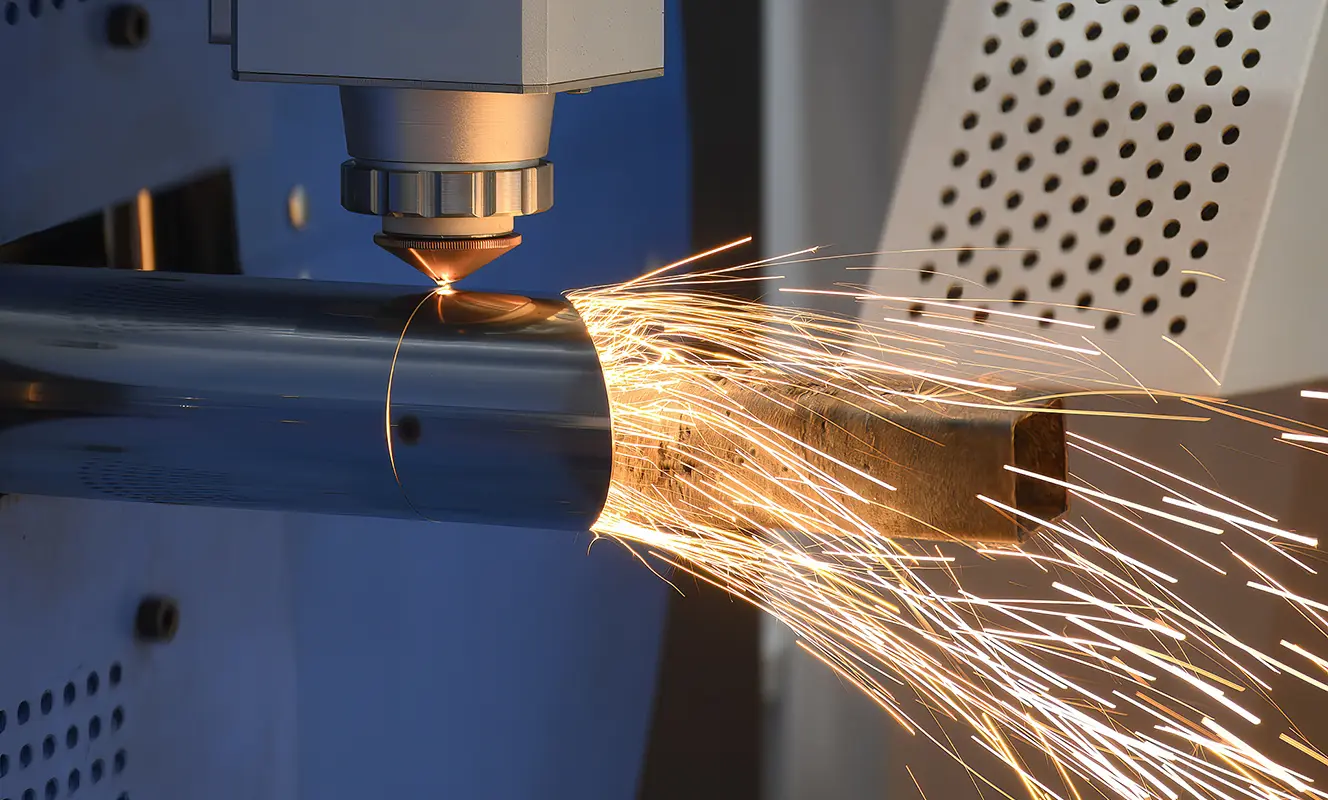
Unlike mechanical cutting methods that require direct contact between the tool and material, laser cutting is a non-contact process. This allows manufacturers to produce complex shapes, small holes and precise contours without using a traditional cutting tool.
Today, fiber laser metal cutting machines are widely used in sheet metal fabrication, machinery manufacturing, metal furniture, automotive components, electrical cabinets and many other industries.
1. How Does a Fiber Laser Cutting Machine Work?
Although a laser cutting system contains many components, the cutting process can be understood in a few basic steps.
First, the fiber laser source generates the laser beam. The beam is then transmitted to the cutting head and focused onto a small area of the metal surface.
The concentrated energy heats the material rapidly. Depending on the material and cutting parameters, the metal melts or vaporizes. Assist gas then helps remove the molten material and forms the cut.
At the same time, the CNC system controls the movement of the cutting head according to the CAD drawing or programmed cutting file.
The actual cutting result depends on much more than the laser source. The cutting head, machine bed, motion system, software, assist gas and cutting parameters all contribute to the final performance.
This is why two machines with the same laser power can produce different results if their overall configurations are different.
2. What Materials Can a Fiber Laser Cutting Machine Cut?
A fiber laser cutter can process many commonly used metals, including:
- Carbon steel
- Stainless steel
- Aluminum
- Galvanized steel
- Brass
- Copper
- Other metal alloys
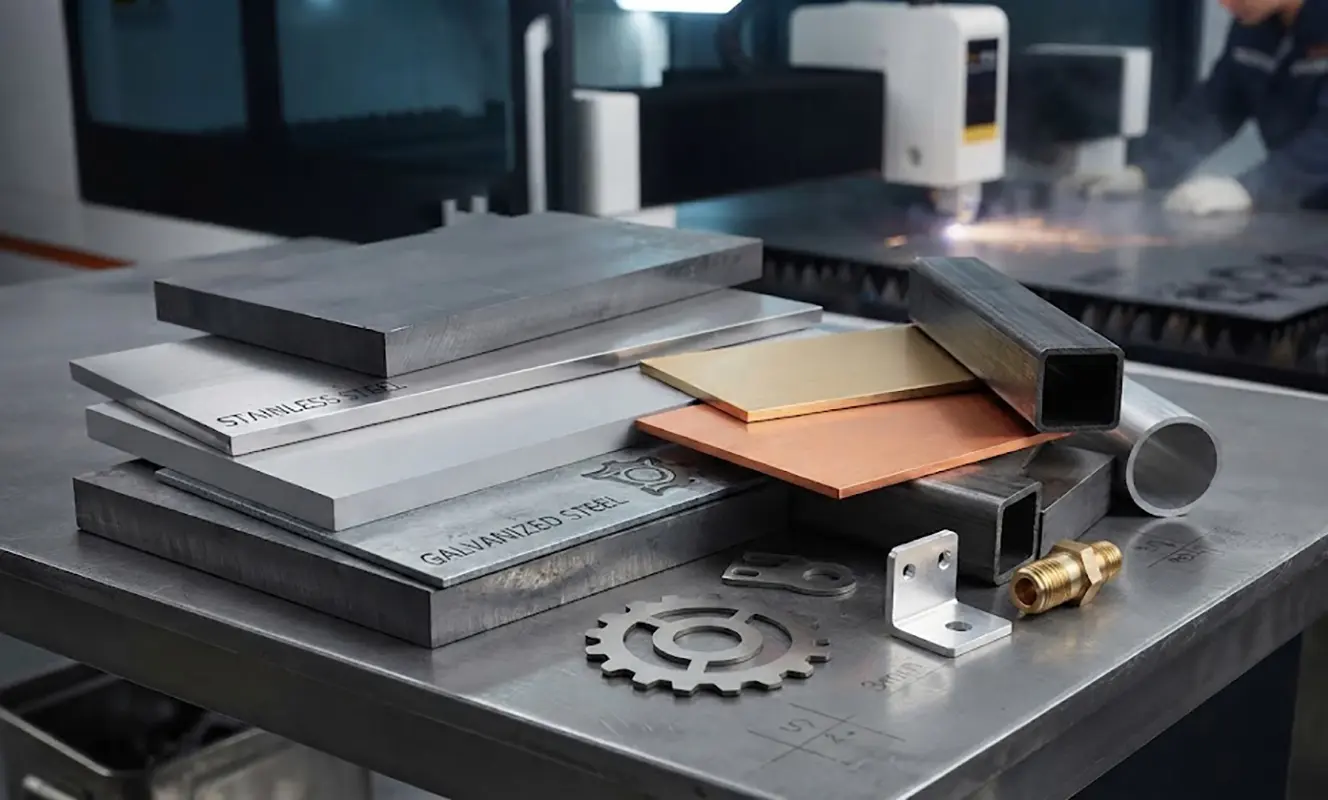
However, the maximum cutting thickness is not determined by laser power alone.
Material composition, reflectivity, thickness, assist gas, cutting head and machine configuration all affect the actual cutting capability.
For example, stainless steel and carbon steel may require different cutting parameters even when they have the same thickness.
For this reason, when purchasing a CNC fiber laser cutting machine, it is better to provide the manufacturer with your actual material list and thickness range rather than simply asking, “What is the maximum thickness this machine can cut?”
II. Fiber Laser Sheet Cutting Machine vs. Tube Cutting Machine
The biggest difference between sheet and tube laser cutting is the way the workpiece is supported and moved during cutting.
A sheet cutting machine uses a flat cutting table. The sheet remains supported on the table while the laser head moves across the working area.
A tube cutting machine uses a chuck or clamping system to hold the tube. The tube can rotate during cutting, allowing the laser to process different sides of the workpiece.
This difference affects the machine structure, software, workholding system and material handling method.
1. Fiber Laser Sheet Metal Cutter
Fiber laser cutters are specifically designed for cutting flat metal sheets. They are among the most commonly used machines in metalworking because they can handle a wide range of materials, thicknesses, and part geometries while maintaining consistent cutting accuracy.
During operation, the metal sheet is placed on the cutting table, and the laser cutting head moves along a preset program path. The CNC system controls the cutting head’s movement, while the laser source provides the energy required to cut the material.
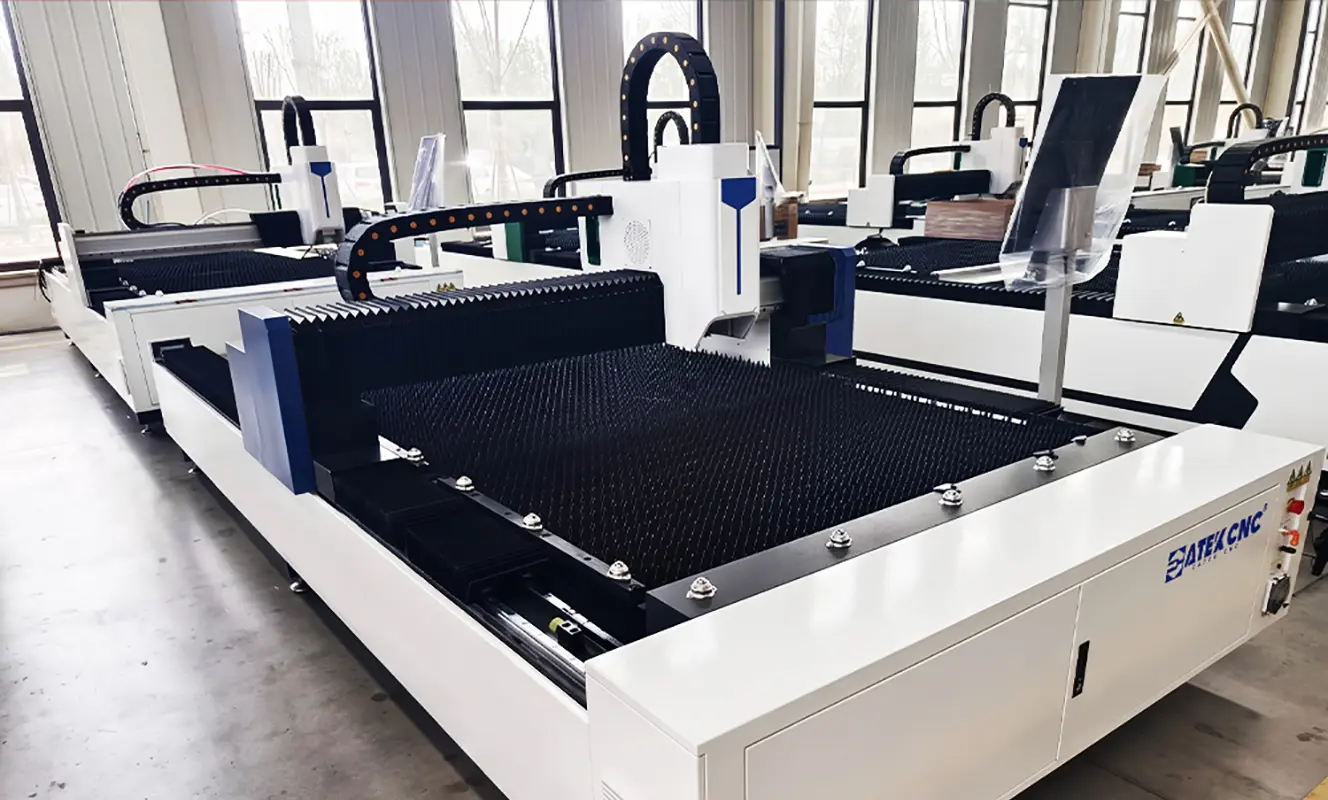
Compared to traditional mechanical cutting methods, laser cutting does not require a physical cutting tool to come into contact with the workpiece. This makes it ideal for directly machining complex contours, small holes, notches, and custom parts based on digital drawings. For manufacturers that primarily produce flat metal sheets, a dedicated fiber laser sheet metal cutting machine is typically the most straightforward solution.
What Factors Should Be Considered When Cutting Sheet Metal?
Choosing a sheet metal laser cutter isn’t just about selecting the machine with the highest laser power; it also requires considering a variety of factors.
Sheet Metal Dimensions
Start with the raw materials you use most frequently.
Common sheet metal cutting sizes include 4×8 feet, 5×10 feet, and 6×12 feet, though larger or custom work areas can also be provided depending on the specific application.
For example, if most of your material consists of 5×10ft sheets, choosing a machine with a corresponding work area allows you to process the entire sheet in one go without unnecessary repositioning.
A larger work area is also useful when producing large parts or nesting multiple parts on a single sheet.
However, bigger isn’t always better. Larger machines require more workshop space and may increase equipment investment. The optimal work area is one that meets your common sheet sizes and production needs.
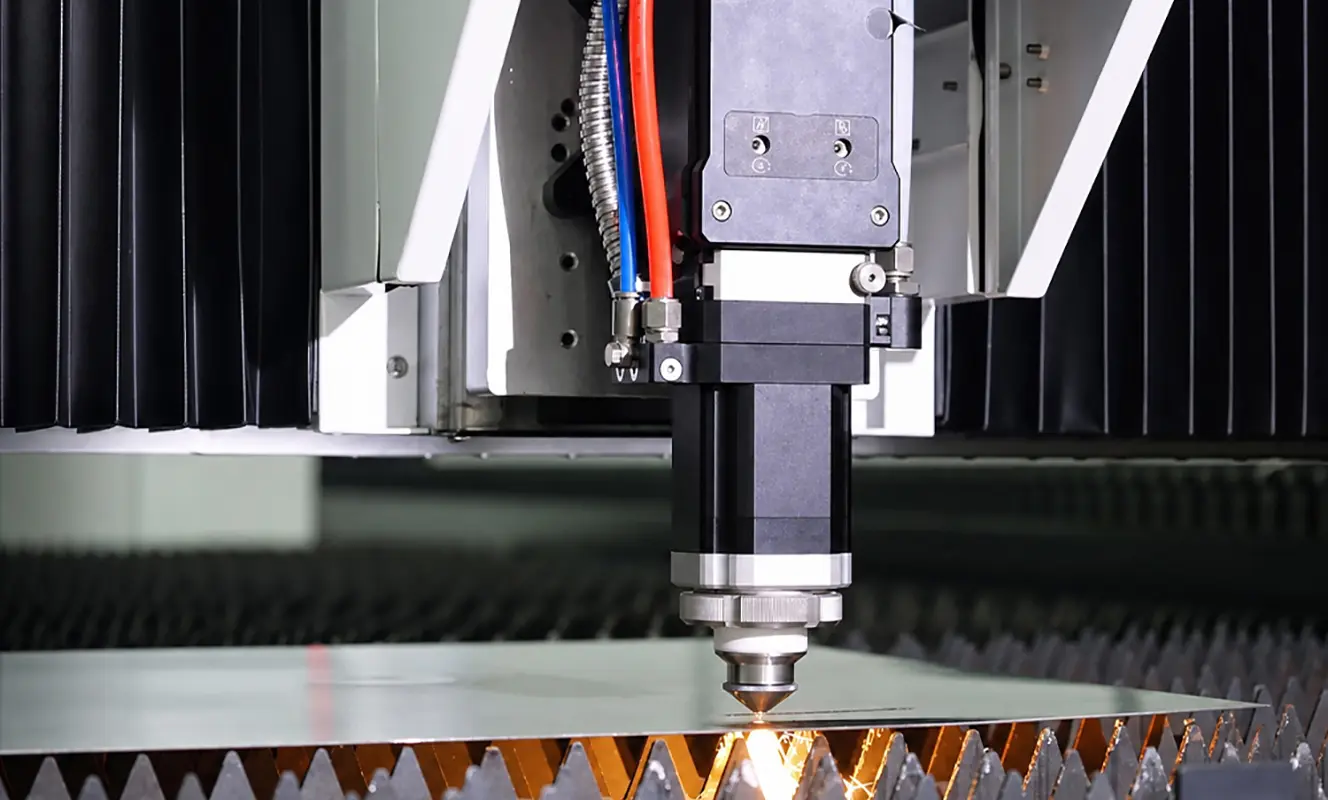
Material Type and Thickness
When cutting materials, you should consider their thickness.
A typical metal fabrication shop may process carbon steel, stainless steel, aluminum, galvanized steel, brass, or other metals. Different materials have different cutting characteristics, so the required laser power and cutting parameters will vary.
More importantly, consider the actual thickness distribution.
If most of your products consist of thin metal sheets 1–6 mm thick, but you occasionally cut thicker sheets, it may not be cost-effective to select an entire machine configuration based on these occasional processing needs. A better approach is to determine which materials you cut most frequently.
2. Fiber Laser Tube Cutting Machine
Fiber laser tube cutting machines are specifically designed for tubular materials and metal profiles. These machines use chucks or specialized clamping systems to secure and rotate the workpiece, thereby enabling the cutting process.
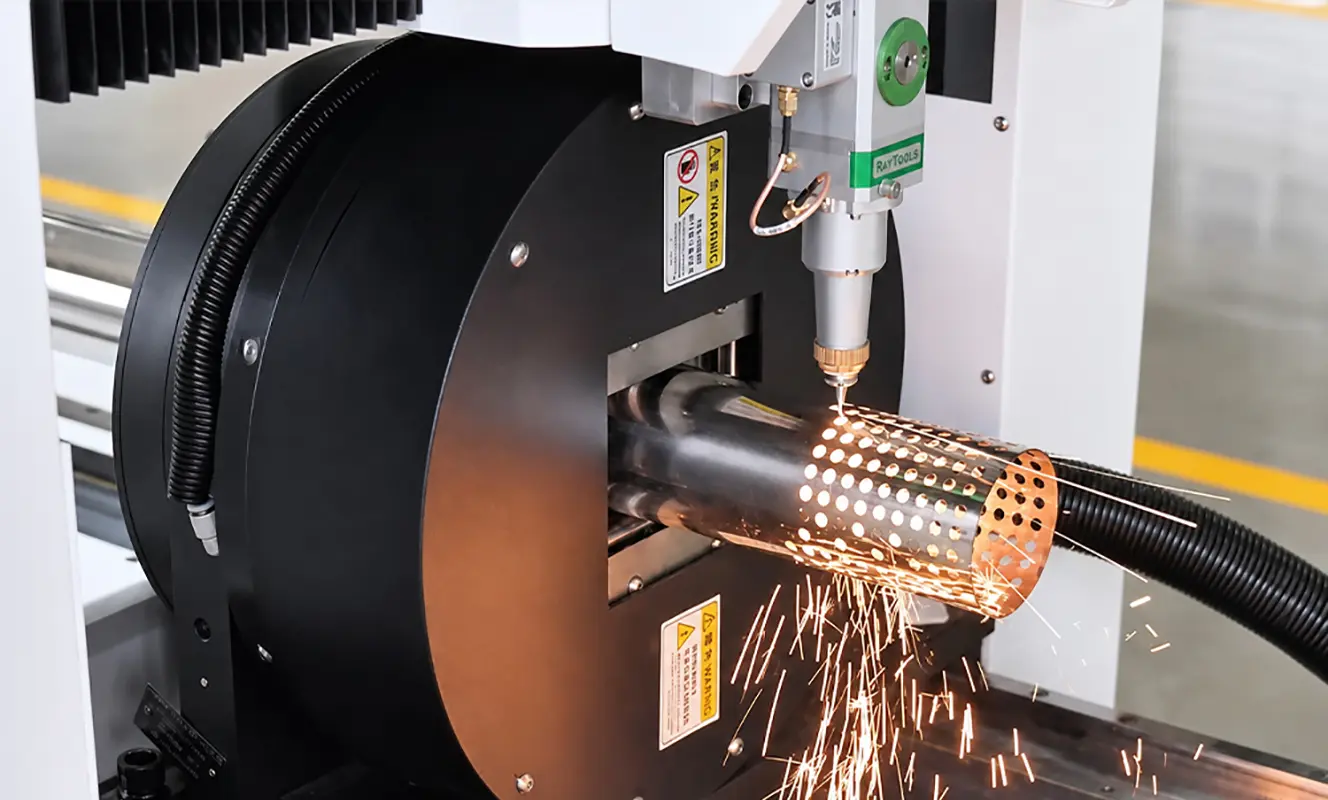
The tube can rotate around its own axis while the laser cutting head moves along a preset path. This allows the machine to not only machine the outer contour of the tube but also to create holes, slots, notches, and other features at various positions and angles.
This is one of the key advantages of fiber laser tube cutting. Unlike traditional processes, where tubes are first cut and then sent to another machine for drilling or slotting, many secondary machining operations can be performed directly by the laser cutting system.
Depending on the machine configuration, fiber laser tube cutting machines can process:
- Round tubes
- Square tubes
- Rectangular tubes
- Oval tubes
- D-shaped tubes
- Various metal profiles
- Other compatible cross-sections
Typical materials include carbon steel, stainless steel, aluminum, and other common metal alloys.
What Factors Should Be Considered When Cutting Tubes?
When selecting a fiber laser tube cutting machine, it is not enough to simply check its maximum cutting diameter. The tube’s dimensions, profile shape, wall thickness, weight, required cutting features, and production volume all influence the machine’s configuration.
Tube Diameter
First, determine the minimum and maximum tube diameters you typically process.
The chucking system must be capable of securely clamping both the smallest and largest workpieces within your production range. If your products encompass tubes of various diameters, ensure the machine can accommodate this range without compromising clamping stability.
You should also consider the frequency of processing each size. If most of your production involves much smaller tubes, it makes little sense to select a machine based solely on an exceptionally large diameter.
For manufacturers producing metal furniture or small frames, tube diameters may be relatively small. Structural and industrial applications, on the other hand, may require a larger cutting range.
Tube Length
Tube length is just as important as diameter. Machining long tubes requires sufficient machine travel and appropriate material support. For example, if you frequently process 6-meter-long tubes, you’ll need to configure the machine to accommodate the entire length of the workpiece and maintain stable support throughout the cutting process.
Long workpieces also present challenges during rotation. As the tube rotates, the unsupported sections may sway or vibrate, thereby affecting cutting accuracy.
Therefore, when selecting a CNC fiber laser tube cutting machine, consider not only the maximum tube length but also how to support the material along its length.
Tube Weight
Long and heavy tubes place higher demands on chucks, support systems, and the machine structure. If the workpiece is inadequately supported, vibrations or displacement during rotation can affect cutting stability and edge quality. For heavy-duty materials, consider the entire material support system rather than focusing solely on the chuck.
When communicating with the machine manufacturer, provide the diameter, wall thickness, length, and approximate weight of the workpieces you typically use. This information will help determine whether additional support or a different machine configuration is needed.
III. What If You Need to Cut Both Sheets and Tubes?
This is a common situation for general metal fabrication companies. A manufacturer may produce sheet metal panels and brackets while also processing tubes for frames or structural components. In this case, there are two possible approaches:
Option 1: Purchase separate sheet and tube laser cutting machines.
Option 2: Use a multifunctional sheet and tube fiber laser cutting machine that can process both types of material.
A combined machine can be useful when the production volume of either material is not high enough to justify a dedicated machine.
For example, CATEKCNC's 5×10 Multi-Function Fiber Laser Sheet and Tube Cutting Machine is designed to handle both flat plates and tubes in one system. The A3T Pro provides a 3000 x 1500mm sheet cutting area and supports tube processing up to 6000 mm in length and 120 mm in diameter, depending on the configuration. It can handle round, square and rectangular tube profiles.
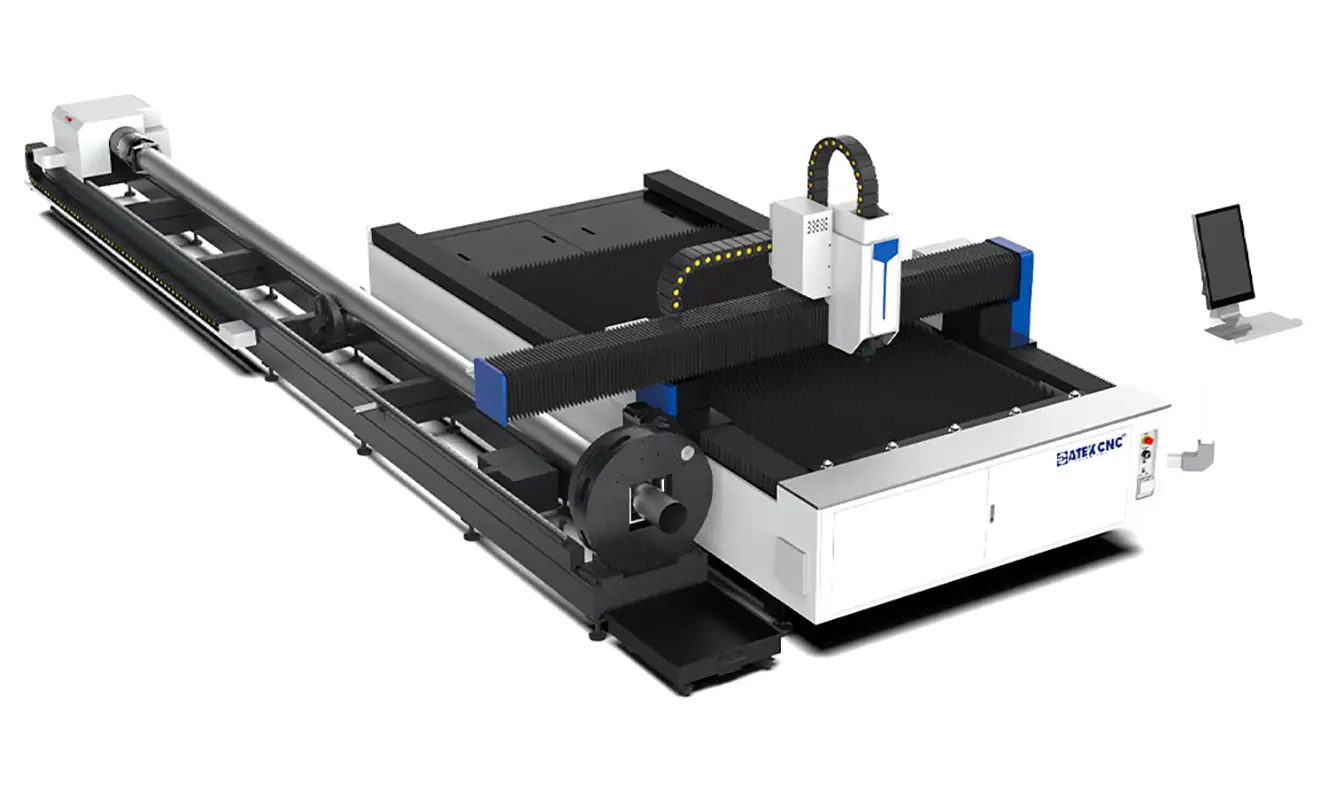
This type of machine can be particularly useful for:
- General metal fabrication shops
- Machinery manufacturers
- Metal furniture production
- Businesses with mixed sheet and tube orders
Workshops with limited floor space
IV. How to Choose the Right Laser Power?
Laser power is one of the first specifications buyers look at when comparing a fiber laser cutting machine, but it should not be the only factor used to make a decision. A higher-power laser can generally provide greater cutting capability and faster processing under suitable conditions, but that does not mean a 12kW machine is automatically a better choice than a 3kW or 6kW machine.
The right laser power depends on the material you cut, material thickness, required cutting speed, production volume and the thickness range you expect to handle in the future.
1.1.5kW–3kW Fiber Laser
A 1.5kW–3kW fiber laser cutting machine is suitable for many general metal fabrication applications, particularly when working mainly with thin and medium-thickness sheets.
It can be a practical choice for manufacturers producing metal panels, brackets, cabinets, signs and other common sheet metal components.
2. 6kW Fiber Laser
A 6kW fiber laser cutting machine provides greater cutting capacity and is suitable for manufacturers working with a wider range of material thicknesses or higher production volumes.
If you regularly process both thinner sheets and thicker metal, 6kW can provide more flexibility without moving directly to an extremely high-power system.
3.12kW and Higher Power
12kW and higher-power fiber laser cutting machines are generally more suitable for demanding industrial applications where thick metal and high production throughput are important.
If thick carbon steel or other heavy materials make up a significant part of your production, higher laser power can help improve cutting capability and processing efficiency.
VI. What Machine Configuration Do You Need?
Laser power is only part of the machine configuration. Two fiber laser cutting machines with the same laser source can have very different production efficiency depending on how the machine is configured.
The right configuration should be based on your production volume, material handling process, workshop conditions and how much automation you actually need. For many manufacturers, choosing the right table and automation system can have as much impact on productivity as choosing the right laser power.
1. Standard Cutting Table
For workshops with moderate production volumes, a standard cutting table is a practical choice.
The operator loads the metal sheets, starts the cutting program, and removes the finished parts once processing is complete. This setup is easy to operate and requires a relatively reasonable initial investment.
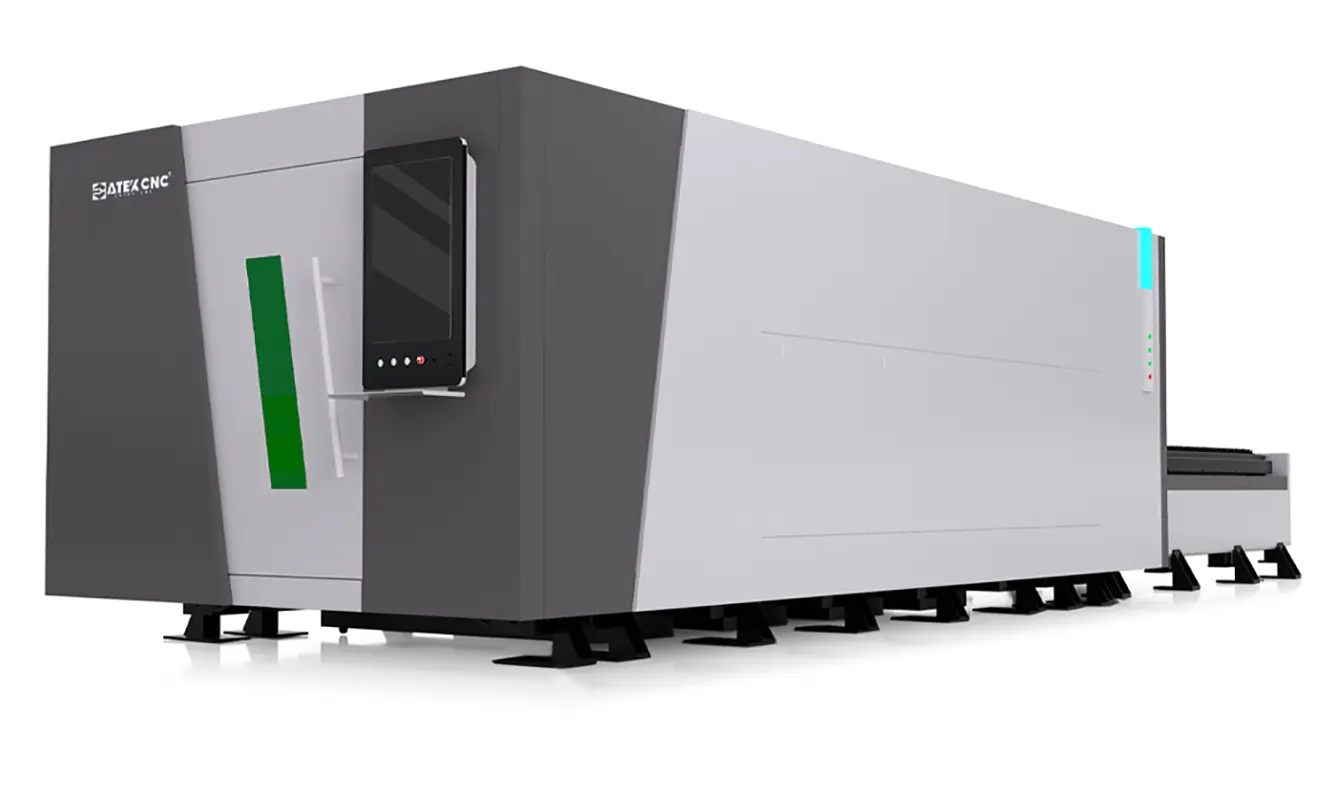
2. Shuttle Table
As production volume increases, the loading and unloading process can become time-consuming. This is where a shuttle-type fiber laser cutting machine demonstrates its advantages.
With a swivel table, the operator can prepare the next sheet of material while cutting the current one. Once cutting is complete, the tables swap positions, allowing the next sheet to enter the cutting area without waiting for the operator to finish the entire loading process.
This helps reduce non-cutting time and keeps the laser active for longer periods during the production cycle.
Therefore, for manufacturers with frequent production batches or multiple shifts, a swivel table may be more valuable than simply opting for a higher laser power.
3. Enclosed Laser Cutter
Enclosed fiber laser cutting machines house the cutting area within a protective enclosure, resulting in a more integrated machine configuration. This design is commonly used in professional manufacturing environments that prioritize safety, workspace organization, and automated production.
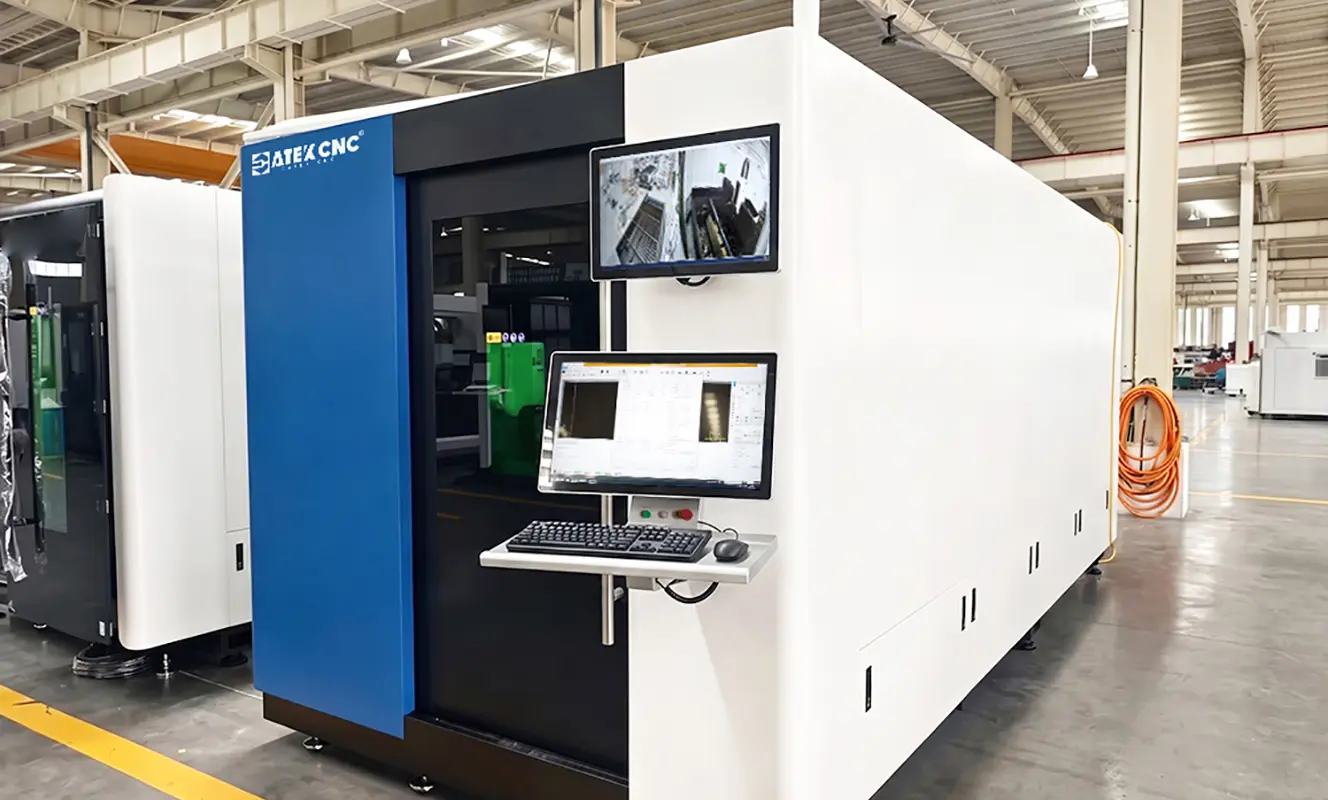
Enclosed machines can also be integrated with indexing tables and other automation systems, making them suitable for manufacturers seeking to establish a more continuous production workflow.
However, whether an enclosed design is necessary depends on your workshop and production requirements. This should be considered in conjunction with the machine’s overall layout, material handling, and operating conditions.
4. Automatic Loading and Unloading
Operators may need to repeatedly load raw materials, remove finished parts, and prepare the next batch of materials. As production volume increases, these repetitive tasks can limit machine utilization, even if the laser itself has sufficient cutting capacity.
An automatic loading and unloading system can reduce manual labor and help create a more continuous workflow. Therefore, the decision to automate should be based on production volume and labor requirements.
VI. Fiber Laser Cutting Machines for Different Metal Applications
The best fiber laser cutting machine for metal depends not only on the material being processed, but also on the products you manufacture and the way those products are produced.
1.Sheet Metal Fabrication
For general sheet metal fabrication, a fiber laser sheet cutting machine is usually the most versatile option.
Many fabricated parts start as flat sheets and are then cut into brackets, panels, covers, mounting plates, machine housings or other components. These parts may contain different hole sizes, slots, internal corners and irregular contours.
For example, a machine manufacturer may need to produce ten different brackets from the same type of stainless steel sheet. With a CNC fiber laser, these different parts can be arranged through nesting and cut in the same production cycle without changing a mechanical cutting tool.
This makes a sheet laser cutter particularly useful for customized fabrication and small-to-medium batch production, where part designs may change frequently.
For this application, pay attention to the material thickness you process most often, rather than choosing the machine according to the thickest material you may occasionally cut. If production volume is high, exchange tables and automatic loading can also have a significant effect on overall productivity.
2. Metal Furniture Manufacturing
Metal furniture is a good example of an application where tube cutting and sheet cutting may both be required.
Take a metal chair as an example. The main frame may be made from round or square tubes, while the seat support, mounting plates or decorative components may be made from sheet metal.
A conventional production process might require tube cutting, drilling and notching as separate operations. A fiber laser tube cutting machine can integrate many of these features into the tube cutting process.
For example, holes can be cut for fasteners, notches can be created where two tubes need to connect, and angled cuts can be produced at the tube ends.
This can reduce secondary processing and make assembly easier.
If a manufacturer produces mostly tubular furniture, a dedicated tube laser is generally more appropriate. If both sheet and tube components account for a significant part of production, a sheet and tube fiber laser cutting machine may provide a more flexible solution.
3. Electrical Cabinets and Equipment Enclosures
Electrical cabinets and equipment enclosures require many accurately positioned openings. A cabinet panel may need holes for switches, cable entry points, ventilation openings, mounting points and other components. These features need to be positioned accurately because dimensional errors can make later assembly difficult.
A fiber laser sheet cutting machine can cut the external profile and internal openings directly from the same digital drawing.This eliminates the need to manually measure and drill every opening and makes it easier to reproduce the same panel repeatedly.
For cabinet manufacturers, another important consideration is material utilization. Since many components may be relatively small compared with the full sheet, efficient nesting can help reduce material waste.
4. Automotive and Transportation Components
Automotive and transportation components often combine flat sheet parts with tubes or profiles.Flat components such as brackets, mounting plates and panels can be processed using a sheet laser, while tubular frames and structural components may require a tube laser.In higher-volume production, the focus shifts from simply being able to cut the part to how quickly the entire production cycle can be completed.
For example, if a laser finishes cutting one sheet in several minutes but the operator needs significant time to remove the sheet and load another one, part of the machine's potential capacity is being lost.This is where an exchange table or automated loading system can become valuable.
Therefore, for high-volume automotive-related production, machine selection should consider cutting speed and material handling efficiency together.
5. Metal Doors, Windows and Decorative Products
Metal doors, windows, screens and decorative panels often involve customized shapes and repeated patterns.
A customer may order the same basic product in several different patterns or dimensions. Traditional tooling can become inconvenient when designs change frequently.
With a CNC laser metal cutting machine, the cutting design can be changed through the digital file. This makes laser cutting particularly suitable for customized production.
For decorative applications, however, cutting quality is important. Very small features, narrow slots and intricate patterns require suitable cutting parameters and machine stability.
6. Structural and Construction Components
Structural components place different demands on a laser cutting machine because the materials can be thicker, heavier and larger.For flat structural plates, the appropriate fiber laser cutting machine for metal should be selected according to plate thickness, working area and required production capacity. For tubular structures, the machine also needs to handle the tube diameter, length, weight and profile shape.
A fiber laser tube cutting machine can produce these features directly, potentially reducing separate drilling and notching operations.For heavy and long tubes, however, the chuck and material support system should be evaluated carefully. The machine needs to maintain stable movement while the workpiece rotates; otherwise, vibration can affect cutting accuracy.
7. Metal Signs and Advertising Products
Metal signs and advertising products often involve thin stainless steel, aluminum or carbon steel sheets with customized shapes, letters, logos and decorative patterns.In this type of production, flexibility is often more important than extreme cutting capacity. Manufacturers may need to change designs frequently and produce relatively small quantities of different products.
A CNC-controlled fiber laser sheet cutting machine can handle these changes through digital cutting files, making it suitable for customized sign production without the need for dedicated tooling.
VII.FAQ
1.What gases are used for fiber laser cutting?
The most commonly used assist gases are oxygen, nitrogen and compressed air. The choice depends on the material, thickness and the required edge quality. Oxygen can be useful for carbon steel, while nitrogen is often preferred when a cleaner, oxidation-free edge is required, particularly for stainless steel and aluminum.
2. Can a fiber laser cut reflective metals such as copper and brass?
Yes, fiber lasers can be used to cut reflective metals such as copper and brass, but these materials require suitable laser power, cutting parameters and machine configuration.
Because highly reflective metals behave differently from carbon steel or stainless steel, the recommended configuration should be based on the actual material and thickness you intend to process.
3. What is the difference between laser cutting and plasma cutting?
Both technologies can cut metal, but they are suited to different applications. Laser cutting is generally favored when precision, smaller features, cleaner edges and detailed shapes are important.
Plasma cutting can be attractive for certain thicker-material applications where extremely high precision is not the primary requirement.
The better choice depends on your material, thickness, tolerances and production requirements.
4. Can laser cutting replace drilling?
For many applications, yes. A laser can produce holes and other openings directly during the cutting process, eliminating a separate drilling operation.
However, laser cutting is not a replacement for every type of drilling. Deep holes, tapped holes and certain precision machining operations may still require additional processes after laser cutting.
5.Can a fiber laser cutting machine cut metal parts with complex shapes?
Yes. Since the cutting path is controlled by CNC software, a fiber laser can produce irregular contours, small openings, curved edges and other complex 2D shapes without changing mechanical tooling. This makes it suitable for both standard components and customized metal parts.
VIII.Conclusion
Choosing the right fiber laser cutting machine for metal starts with your actual production requirements—not simply the highest laser power or the lowest machine price.
Whether you mainly process sheet metal, tubes and profiles, or need a combination of both, consider the material, typical thickness, workpiece type, production volume and required automation together. A well-matched configuration can improve cutting efficiency while avoiding unnecessary investment.
CATEKCNC provides fiber laser sheet cutting machines, tube cutting machines and sheet-and-tube solutions for different metal fabrication applications. If you are not sure which configuration fits your production, sharing your material specifications and several typical part drawings is a practical way to determine the right solution.