


{{goods.model}}
Plasma Cutting Machine in Metal Fabrication: Advantages, Disadvantages
In today's metal fabrication industry, selecting the right metal cutting equipment enhances efficiency, reduces costs, and maintains competitiveness. For decades, plasma cutting machines have been a trusted solution in heavy industrial processing, widely used in steel fabrication shops, construction machinery plants, and general metalworking facilities.
However, as precision manufacturing standards continue to rise, fiber laser cutting machines have gradually become the new benchmark for modern production. To help manufacturers make informed decisions, this article will explore the practical advantages and disadvantages of plasma cutting systems and explain why many companies are upgrading to fiber laser technology.
I.What Is a Plasma Cutting Machine?
Plasma cutting machines are highly efficient metal cutting devices that combine traditional plasma cutting technology with modern CNC systems to perform automated, precise, and reliable cutting on various metal materials. Unlike handheld plasma torches used in simple workshop cutting, CNC plasma cutting machines employ computer-controlled motion to cut along pre-set paths, ensuring consistent results even for complex shapes and high-volume production.
The core principle of plasma cutting machines involves generating an ultra-high-temperature ionized gas jet (known as plasma) to melt and separate metal. When a plasma arc forms between the cutting torch and the workpiece, the high-temperature, high-velocity gas stream melts the metal surface, while a powerful gas flow blows away the molten material, creating a clean, precise cut.
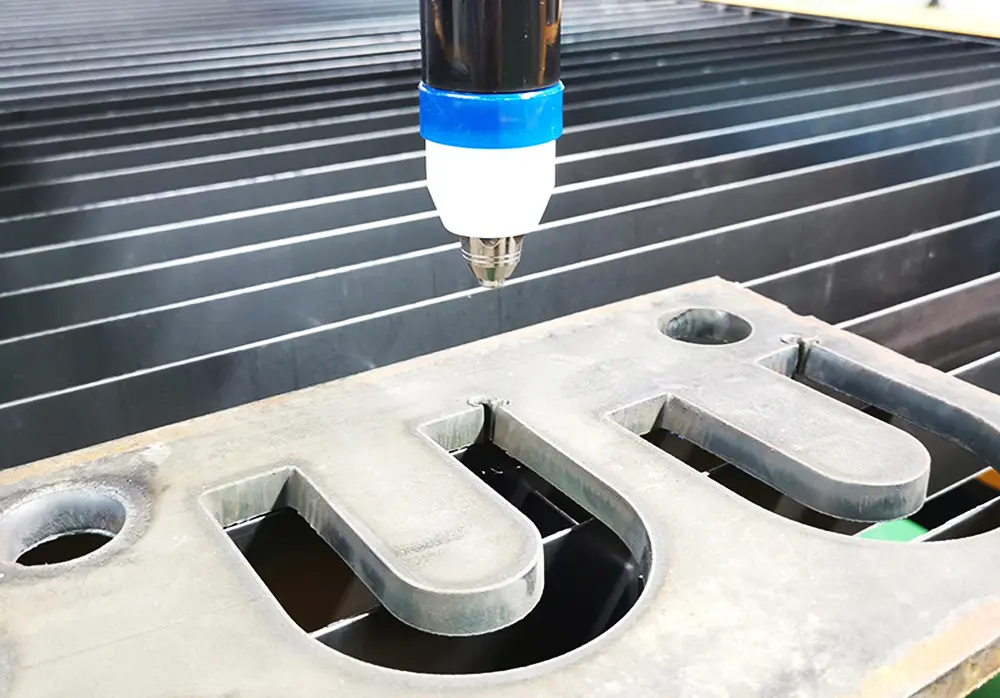
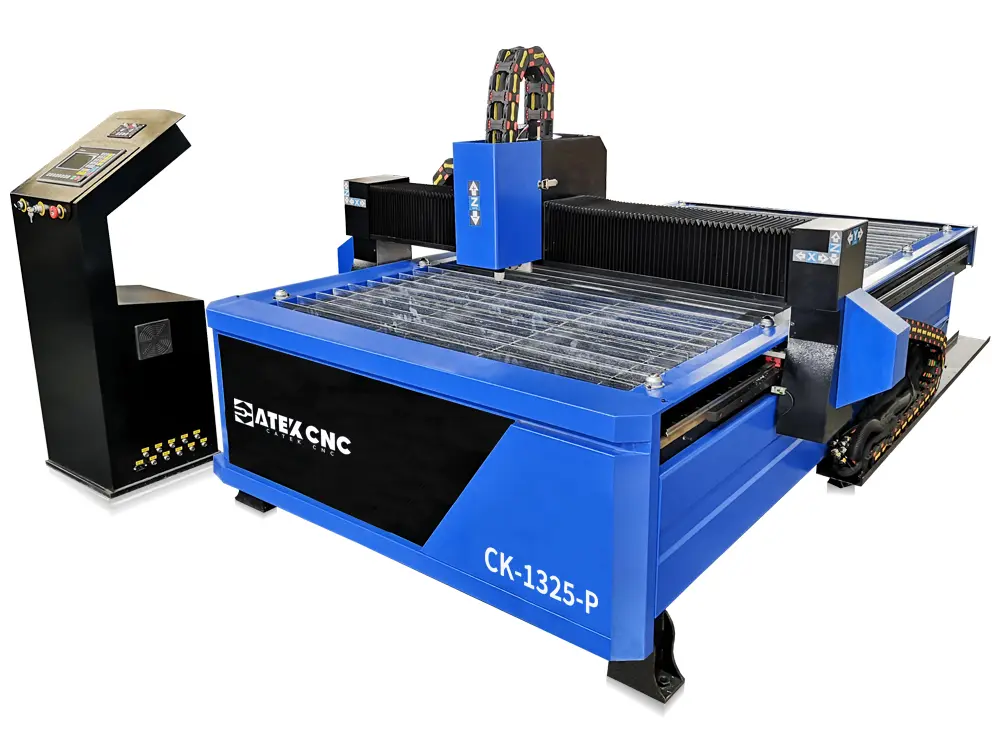
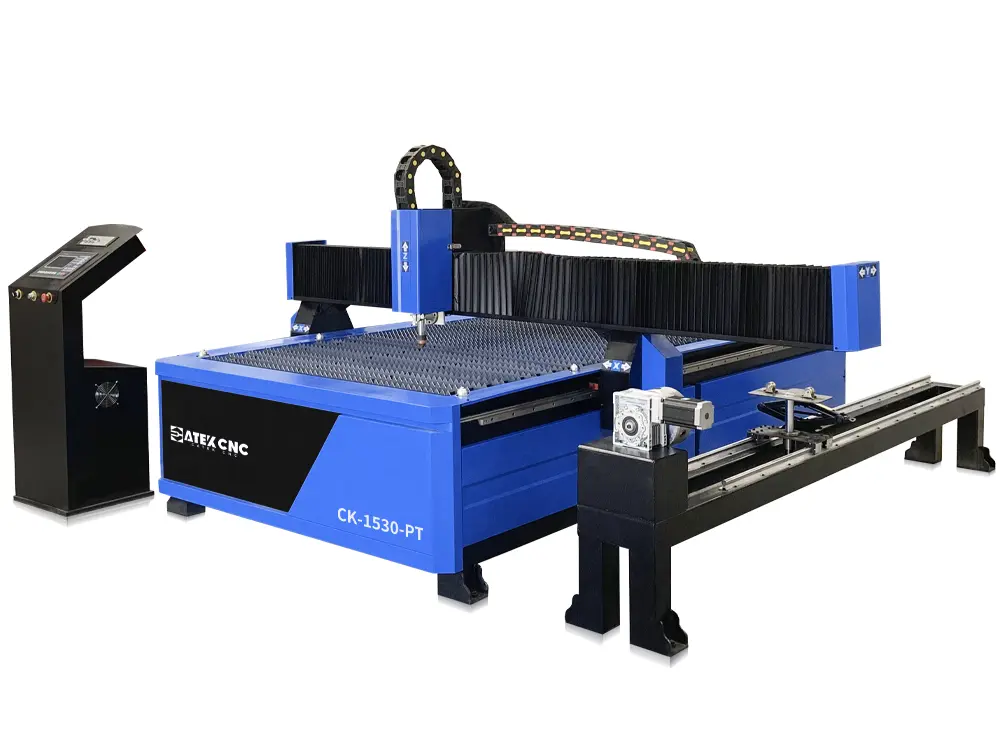
The core of CATEK CNC plasma cutters lies in advanced models like the CK-1325-P and CK-1530-PT, both designed to meet the practical production demands of metal fabrication shops. The CK-1325-P is a 4×8-foot CNC plasma cutter that has become a popular choice for general sheet metal processing due to its balanced work area, stable structure, and cost-effective performance. The CK-1530-PT features an expanded 5×10-foot worktable, not only boosting production capacity but also enabling simultaneous sheet and tube cutting on a single machine.
The true utility of these CNC plasma cutters lies not only in their size but also in their structural reliability and intelligent control systems. They incorporate heavy-duty gantry frames and high-precision linear guides, ensuring stable operation even during extended cutting tasks. Combined with powerful control systems, operators can cut carbon steel, stainless steel, aluminum, and other metals.
In daily production, the plasma cutting machine CK-1325-P provides ample space for processing medium-sized metal sheets. Working with nesting software, it enhances material utilization and reduces waste. For manufacturers focused on sheet metal part processing, this model strikes a balance between production efficiency and investment costs.
Conversely, the CK-1530-PT prioritizes enhanced flexibility. Its integrated rotary axis enables automatic processing of round, square, and even oval tubing without manual repositioning. This significantly boosts efficiency and reduces labor intensity, making it ideal for workshops frequently handling both flat plates and tubular structures. Manufacturers avoid investing in two separate systems, accomplishing multiple production tasks with a single CNC plasma cutter.
Compared to traditional handheld plasma cutters, these industrial-grade plasma cutters deliver superior precision, repeatability, and cutting efficiency. The automated CNC system minimizes human error, ensures consistent quality across batches, and boosts overall production efficiency. For structural steel fabrication, mechanical component production, custom metal craftsmanship, and general metalworking, this CNC plasma cutter represents a professional industrial cutting solution.
II.Advantages of Plasma Cutting Machines
1. Superior Performance in Cutting Thick Metal Plates
One of the most notable advantages of plasma cutting machines lies in their exceptional performance when cutting thick metal plates. In heavy industries such as steel structure construction, bridge engineering, shipbuilding, and large-scale machinery manufacturing, thick carbon steel plates are widely used. Plasma cutting systems demonstrate remarkable stability and penetration capability when processing materials exceeding 20mm in thickness.

Unlike some high-precision technologies optimized for thin sheets, CNC plasma cutters maintain reliable cut quality and stable cutting speeds even when processing thick steel plates.
2. Low Initial Investment Costs
Another significant advantage of plasma cutting systems is their relatively low acquisition cost. Compared to fiber laser cutters, CNC plasma cutters require substantially less initial investment. This cost difference is more accessible for small and medium-sized workshops, especially those in their early development stages. For businesses with limited budgets needing to expand production capacity, plasma cutting equipment lowers the entry barrier while delivering reliable productivity.
3. Lower Requirements for the Work Environment
Plasma systems do not rely on complex optical components like fiber lasers, making maintenance and operation relatively straightforward. Operators can quickly learn to use the system.
III.Disadvantages of Plasma Cutting Machines
Despite these advantages, the technical limitations of plasma cutting machines have become increasingly apparent as manufacturing standards evolve.
1. Low Cutting Precision
The most significant drawback of plasma cutting lies in its precision. Since plasma cutting relies on thermal melting, the cut seam is typically wide with a large heat-affected zone, often resulting in rough edges and slag formation. This poses significant limitations in industries demanding high dimensional accuracy and edge quality.
2. Poor Performance on Thin Metal Sheets
While plasma cutting systems excel at processing thick plates, efficiency and edge quality decline when handling thinner materials. In contrast, fiber laser cutters can cut thin sheets and medium-thick plates at higher speeds with smoother results. Consequently, manufacturers focused on high-volume thin-sheet production often find plasma cutting technology less competitive.
3. Rough edges
Plasma cutting frequently requires secondary processing. Many production runs necessitate grinding and finishing to remove slag or improve edge smoothness. While the machines themselves may be relatively inexpensive, these additional labor and time costs increase overall production expenses in the long run.
IV. Why Fiber Laser Cutting Machines Are Replacing Plasma Cutting Machines in Many Industries
As global manufacturing moves towards higher precision, automation, and efficiency, fiber laser cutting machines have gradually transitioned from a high-end option to the mainstream standard in modern metal processing. While plasma cutting machines still have value in some heavy-duty applications, more and more industries are turning to fiber laser systems to meet increasing demands for quality and productivity.
1. High Cutting Precision
The most direct difference between plasma cutting and fiber laser cutting technologies lies in cutting precision. Fiber laser cutting machines use high-energy-density, high-intensity laser beams that can melt and vaporize metal in a highly controllable and focused manner. Compared to CNC plasma cutting machines, this significantly reduces kerf width and substantially minimizes thermal deformation.
In actual production, the CK-1530-F fiber laser cutting machine can cut smoother edges and more precise dimensions. Components can often be removed from the machine without additional grinding and directly bent, welded, and assembled. This level of quality is essential for industries such as precision sheet metal processing, electrical housings, and automotive parts manufacturing.
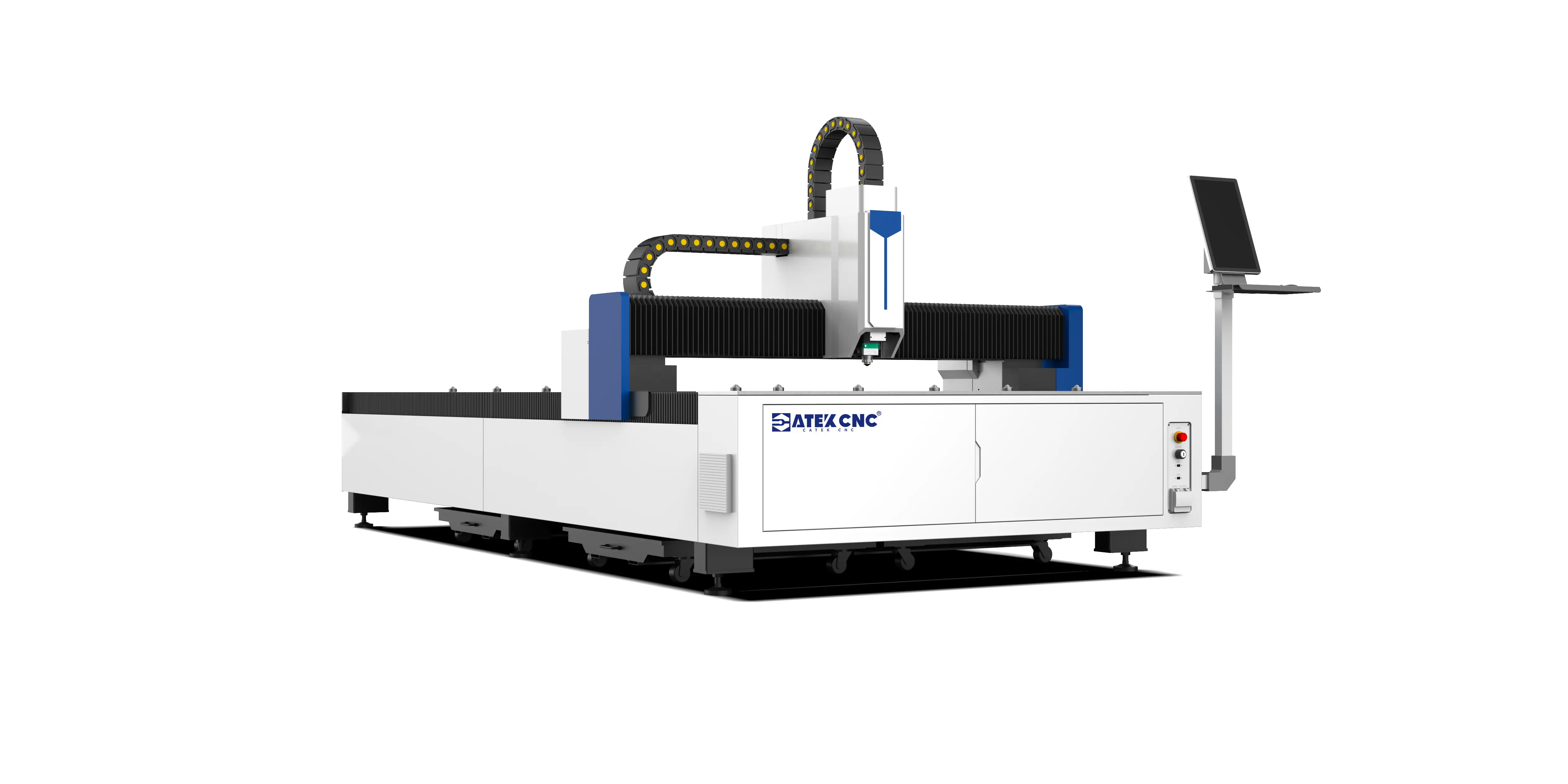
As customer expectations rise, manufacturers are unwilling to accept the consequences of rough edges and over-processing. Against this backdrop, fiber laser cutting machines demonstrate significant advantages.
2. Faster Cutting Speed for Thin Plates
Speed is another major reason why fiber laser cutting machines are replacing plasma cutting systems in many workshops. When cutting thin and medium-thick plates (typically less than 12mm), fiber laser systems operate at speeds far exceeding those of traditional plasma cutters. The laser beam maintains a stable energy concentration, enabling rapid piercing and high-speed contour cutting without sacrificing precision.
Higher cutting speeds directly improve production efficiency. Factories can complete more orders in the same amount of time, increasing overall capacity. By investing in fiber laser cutting equipment, manufacturers are better able to handle urgent or high-volume orders.
3. Breakthroughs in Fiber Laser Technology Drive Down Equipment Costs
In the past, fiber laser cutters were expensive machines only affordable to large manufacturers. However, with continuous breakthroughs in fiber laser technology, the cost of fiber laser systems has significantly decreased in recent years. Laser sources have become more stable, energy-efficient, and easier to maintain, while many core components have achieved mass production. CATEKCNC's fiber laser cutting machines offer exceptional value, starting at just $5,500. Consequently, the overall price point of fiber laser cutting machines has become far more attractive to small and medium-sized manufacturers.
Today, many workshops that previously relied on plasma cutters are upgrading to fiber laser technology. This shift is driven by a significantly lower investment threshold compared to the past, coupled with substantial improvements in productivity, precision, and automation capabilities.
4.Lower Post-Operating Costs
While the initial cost of a fiber laser cutting machine is higher than that of a CNC plasma cutter, its long-term operating efficiency usually compensates for this difference. Laser systems typically require fewer consumables than plasma cutting equipment. Due to the more precise cutting process and minimal slag production, post-processing costs are significantly reduced. Fewer grinding steps, fewer finishing steps, and lower labor input all contribute to reducing overall costs.
V. Plasma Cutting Machines vs. Fiber Laser Cutting Machines: Which Should You Choose?
Choosing between a CNC plasma cutting machine and a fiber laser cutting machine depends on your production needs.
A plasma cutting machine is a good choice if:
- You primarily cut carbon steel thicker than 20mm
- Precision is not your primary goal
- You have a limited budget
- You operate in the heavy industry sector.
A fiber laser cutting machine is a better choice if:
- You primarily process thin or medium-thickness metal sheets
- You work with precision sheet metal
- You require high precision and clean edges
- You want an automated production line
- Your goal is to reduce long-term operating costs
Choosing the right metal cutting equipment is not a matter of personal preference; it directly impacts production efficiency, product quality, and long-term profitability. Both CNC plasma cutting machines and fiber laser cutting machines have their advantages, and the best choice depends on your specific production needs, material types, and business objectives.
VI. Complete Metal Cutting Equipment Solutions
As a professional metalworking equipment manufacturer, we offer comprehensive industrial cutting and machining solutions to meet diverse production needs. Our products include high-performance metal cutting machines and advanced metal milling machines capable of processing a wide range of metals and suitable for various applications.
Our solutions encompass:
- Fiber laser cutting machines for high-precision sheet metal processing
- Fiber laser cutting machines for cutting tubes of various shapes
- Enclosed Fiber Laser Cutting Machine with Dual-Shuttle Table for flexible, multi-material production
- Heavy-duty plasma cutting machines for thick plates and structural steel
- Industrial metal milling machines for forming, drilling, and finishing metal parts
With our comprehensive range of equipment, we can provide customized solutions based on your material type, thickness range, output, and budget. Whether your focus is on cutting, drilling, milling, or forming, our equipment delivers greater efficiency, precision, and overall competitiveness to your production processes.
VII. Conclusion
Plasma cutting remains an economical solution for thick metal processing and heavy industrial applications. However, fiber laser cutting machines are rapidly becoming the preferred choice due to their high precision, efficiency, and automation.
Understanding the strengths and limitations of each technology can help you make more informed decisions.
If you are planning to upgrade your metal cutting or expand your production line, please contact us today. We will provide you with customized industrial cutting solutions to meet your needs.