


{{goods.model}}
[Function Description]
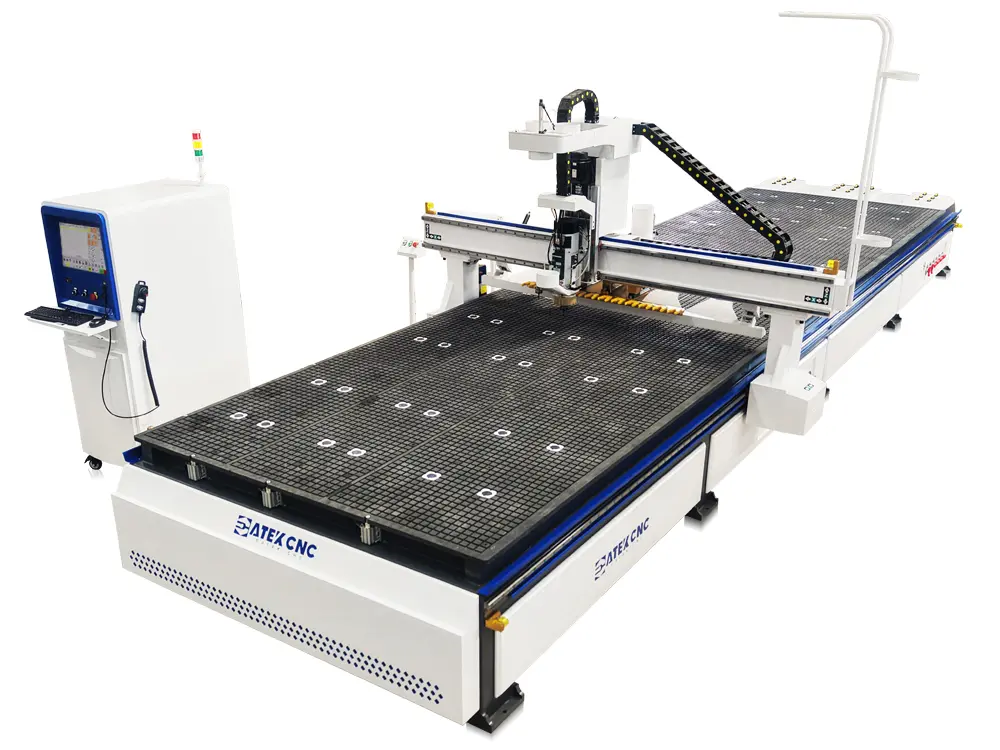
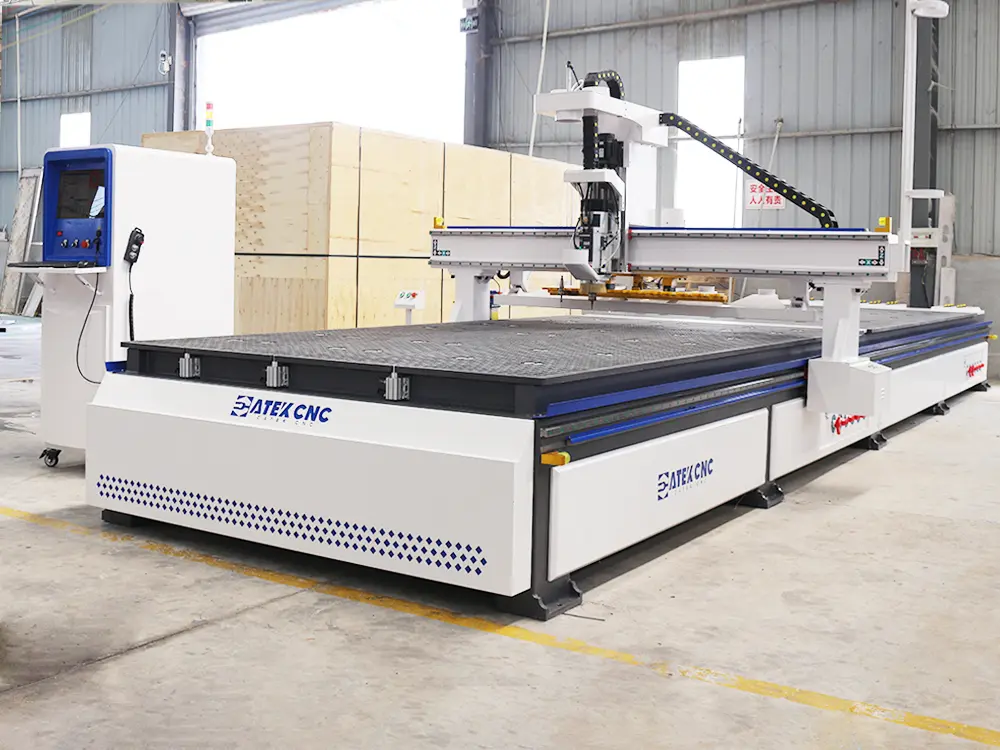
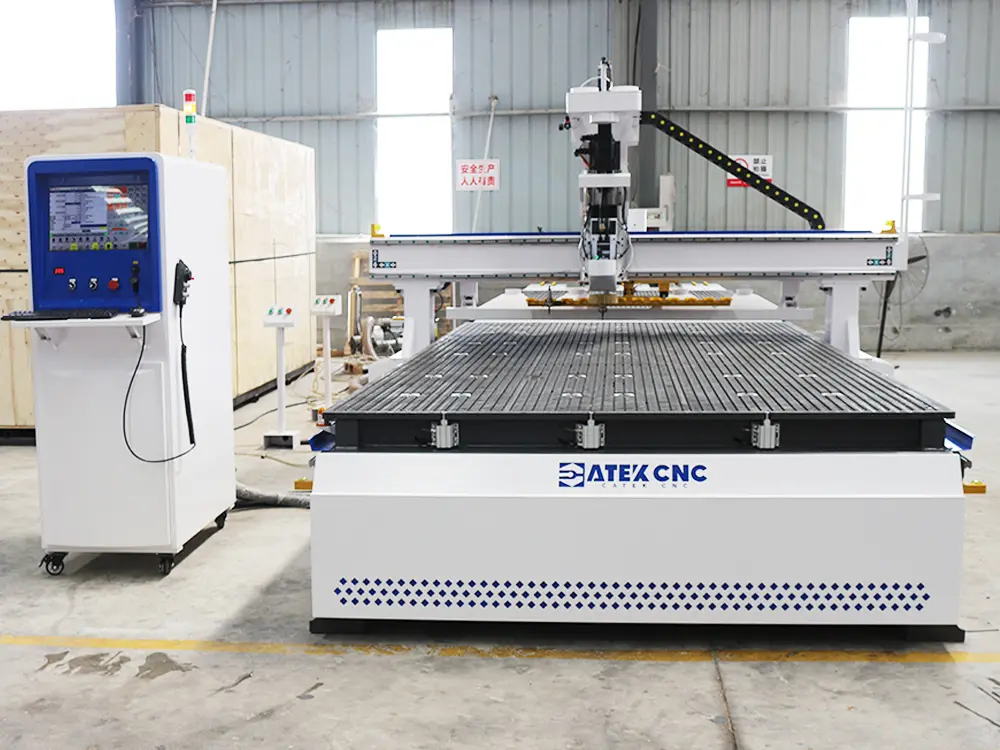
The CNC nesting machine is built for manufacturers who need to keep large-panel production moving with less manual handling and fewer interruptions. Its two 7×13 ft worktables allow one panel to be machined while the next panel is being loaded and positioned, helping reduce idle time between jobs. With automatic tool changing, large-format working space, and vacuum panel holding, the machine can handle cutting, milling, drilling, and grooving in one workflow. It is well suited for manufacturers looking to improve production continuity and handle larger batch orders with less manual waiting.
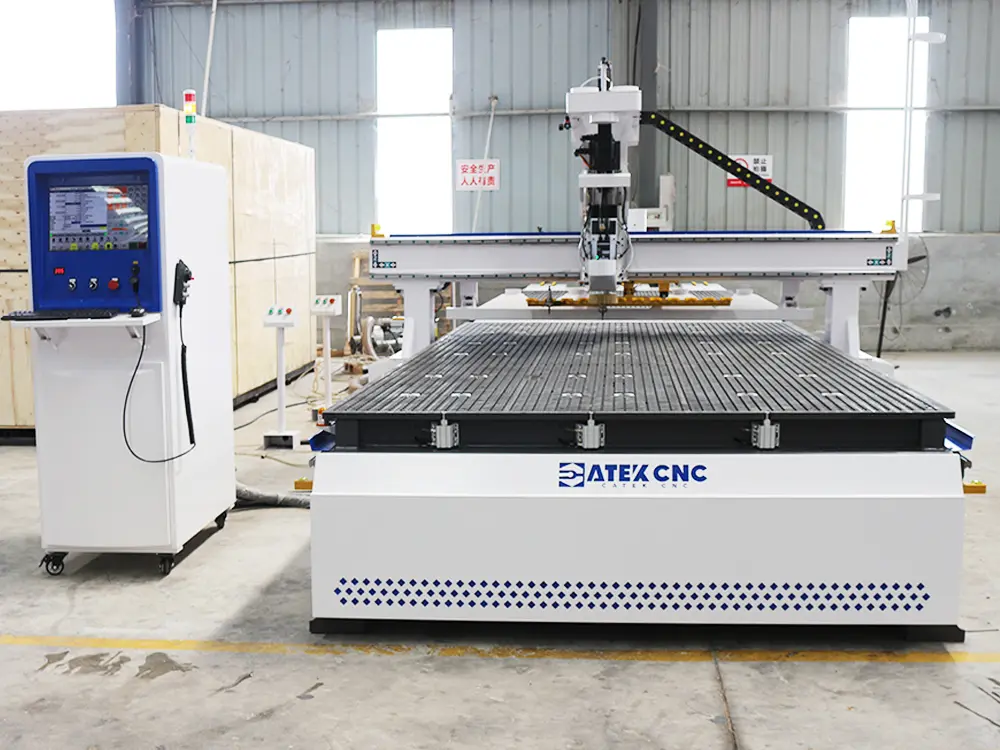
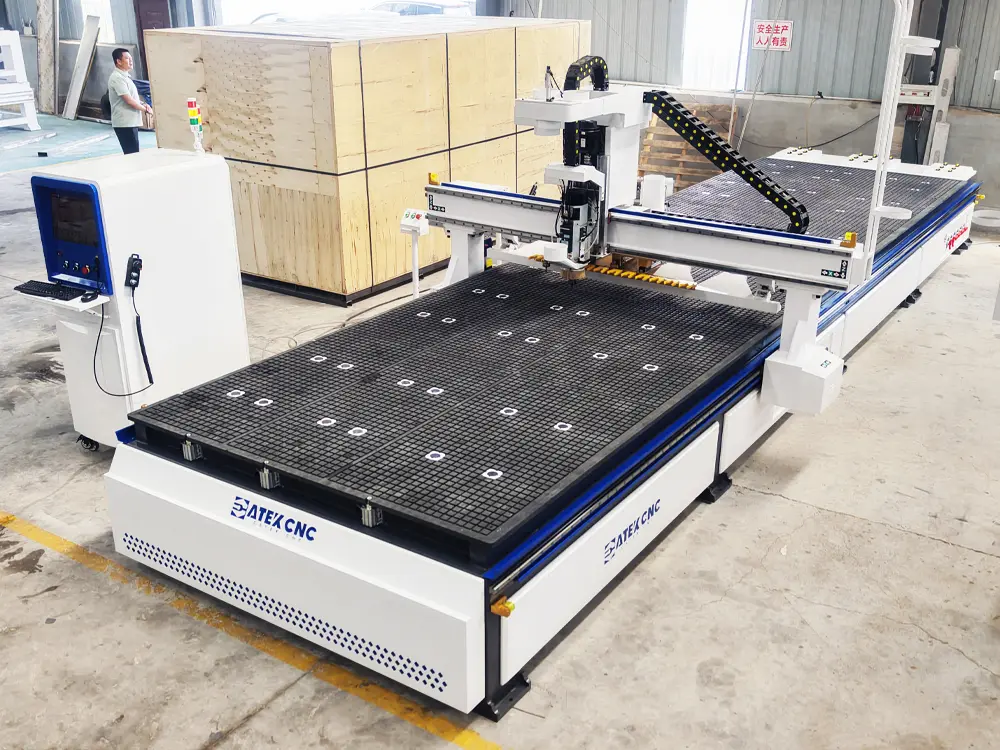
The CK-2140-2WT ATC CNC nesting machine is specifically designed for the continuous, batch processing of large-size panels. The machine is equipped with two independent worktables, each measuring 2100x4000 mm (7x13 ft), capable of meeting the processing needs for the vast majority of common panel sizes on the market. The two worktables operate in an alternating processing mode: while one worktable is in operation, the operator can simultaneously perform loading, unloading, and panel positioning on the other worktable. Once the current process is complete, the other worktable can immediately begin processing, thereby effectively reducing machine downtime and significantly improving production efficiency and equipment utilization.In addition to the continuous production capacity provided by the dual workbenches, the dual table ATC CNC nesting machine also prioritizes stability and automation during the machining process. The machine is equipped with an automatic tool changer that automatically selects the required tools based on different machining processes, enabling continuous multi-step machining. Once tool changing is complete, the automatic tool setter immediately detects and calibrates the tool length; the entire process requires no manual adjustment, ensuring consistent machining accuracy for every step.
Details of the Dual Table ATC CNC Nesting Machine
- Dual Worktables
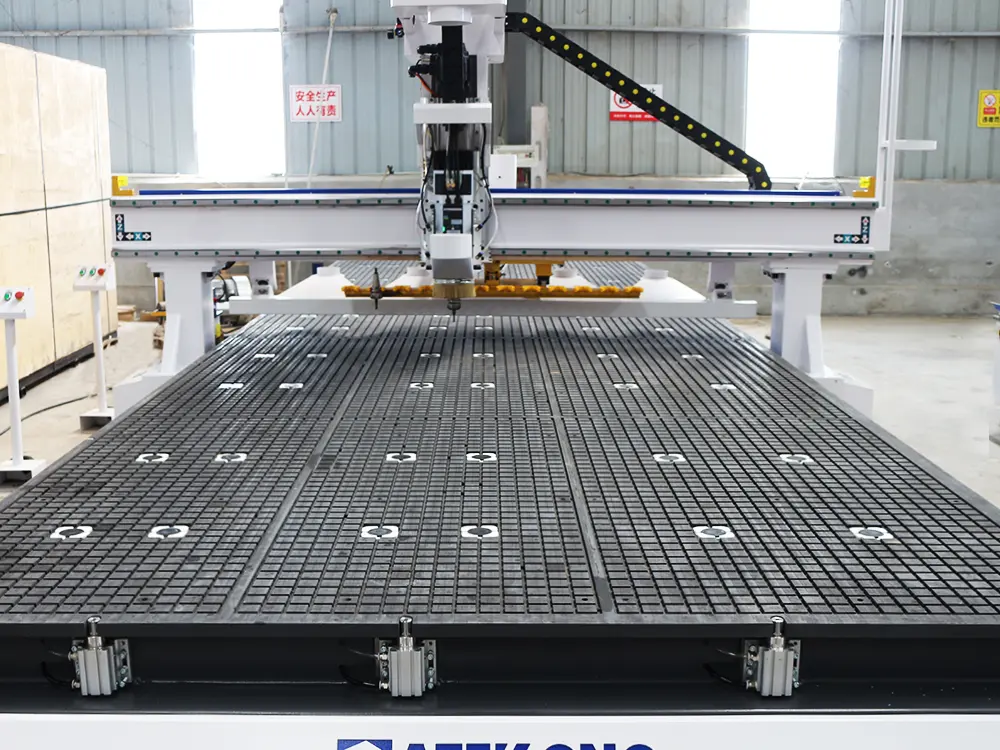
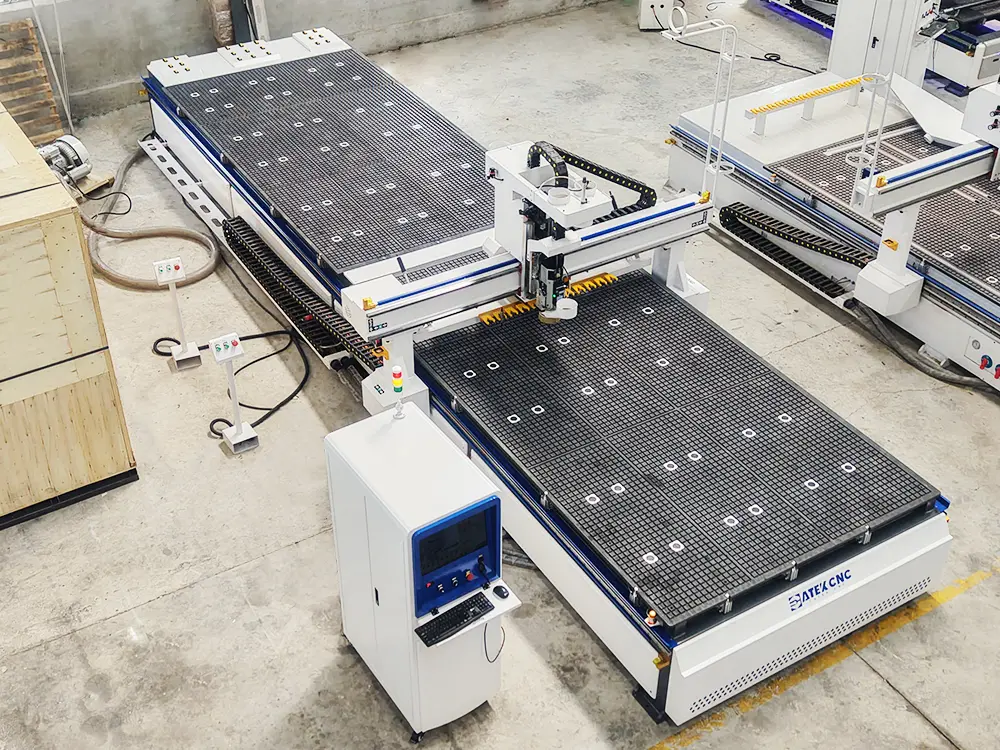
The dual table CNC nesting machine is equipped with two independent worktables that operate alternately during processing. While one worktable is machining, the other can be used for loading, unloading, and panel positioning. This alternating workflow enables seamless production continuity during high-volume processing, significantly improving production efficiency and machine utilization.
Each worktable measures 2100x4000 mm (7x13 ft), providing a working area of up to 8.4 m² (90 sq. ft.). The large-format worktables can accommodate almost all common panel sizes on the market, making the dual table ATC CNC nesting machine well suited for large-panel processing and continuous batch production.

- Vacuum Clamping System
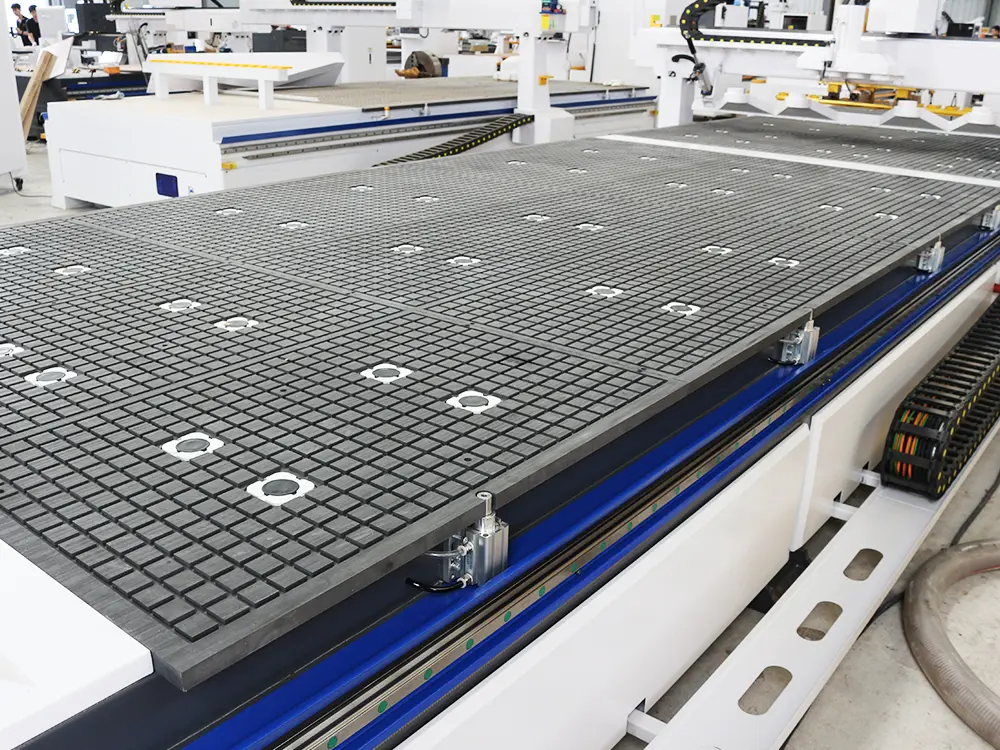
The CNC nesting machine uses a vacuum clamping system to quickly secure panels without requiring mechanical clamps, helping prevent surface damage during machining.
The vacuum clamping system is divided into multiple zones that can be flexibly adjusted according to the size of the sheet material, effectively conserving energy while ensuring reliable clamping performance.
- Quick Panel Positioning System
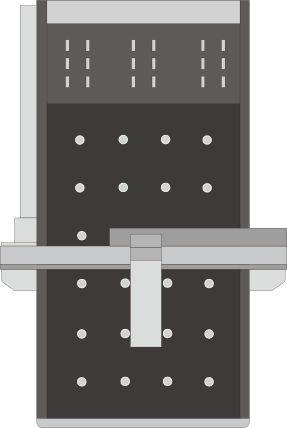
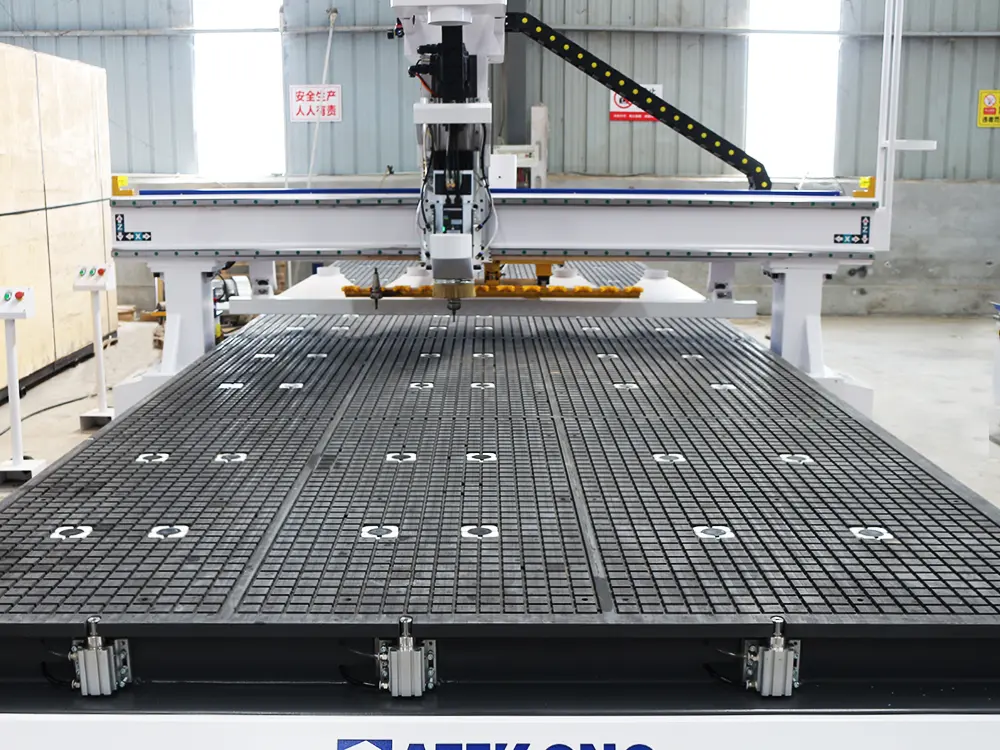
Both worktables are equipped with a quick panel positioning system. The system uses seven positioning cylinders (pneumatic positioning pins) arranged in an L-shape along two adjacent edges of each worktable to enable fast and accurate panel positioning.
After the panel is loaded, the positioning cylinders automatically extend. The operator only needs to push the panel against the positioning pins to complete the initial workpiece positioning, significantly simplifying the positioning process and improving loading and clamping efficiency.
- GDZ 9.5kW ATC Spindle
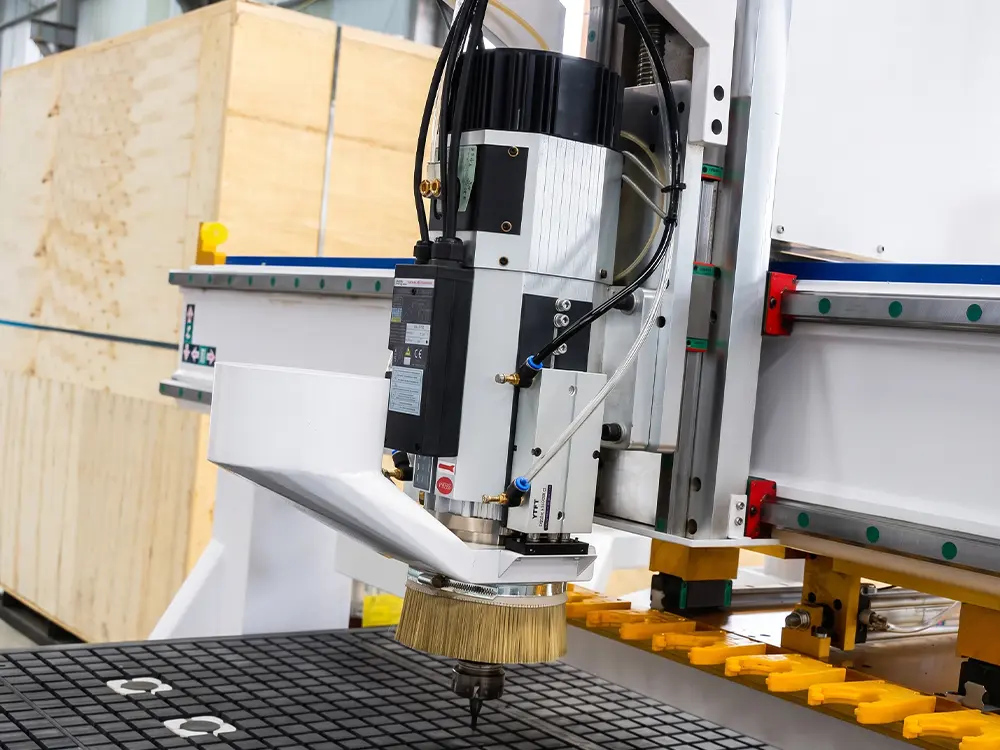
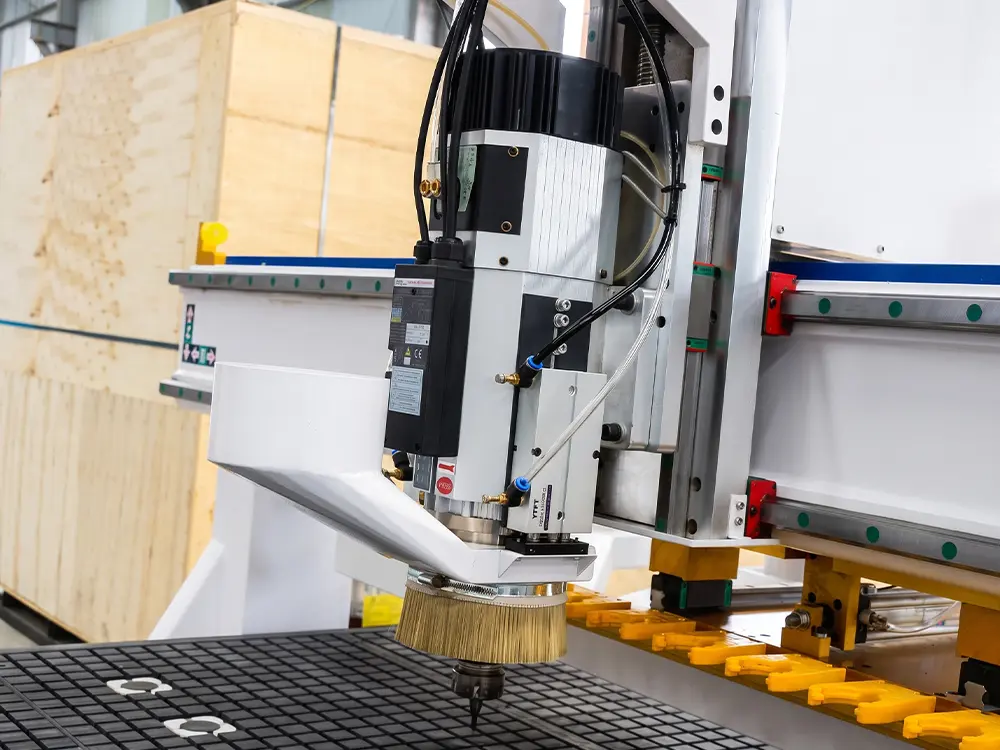
The GDZ 9.5kW ATC spindle uses a standard ISO30 tool interface and reaches a maximum speed of 24,000 rpm, providing reliable high-speed cutting performance for the ATC CNC nesting machine. An independent cooling fan is installed at the rear of the spindle to ensure stable operation during long periods of continuous machining.
Compared with a water-cooled spindle, this air-cooled design does not require an additional complex cooling system, simplifying machine maintenance and operation. It also eliminates the risk of coolant freezing in low-temperature winter environments.
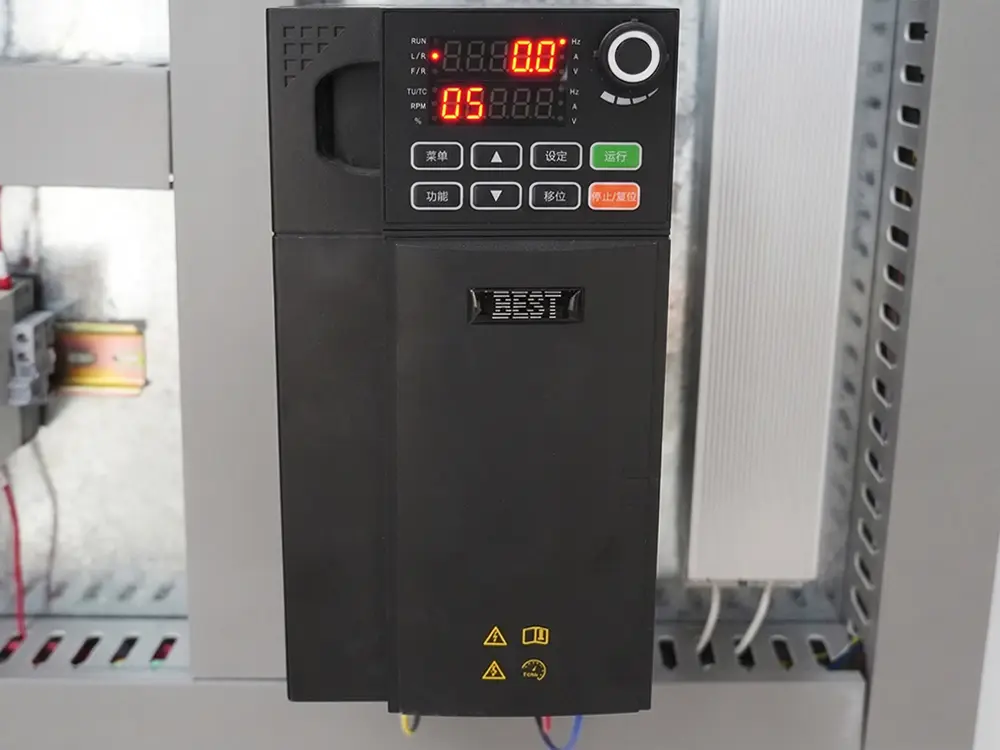
- BEST Variable Frequency Drive (VFD)
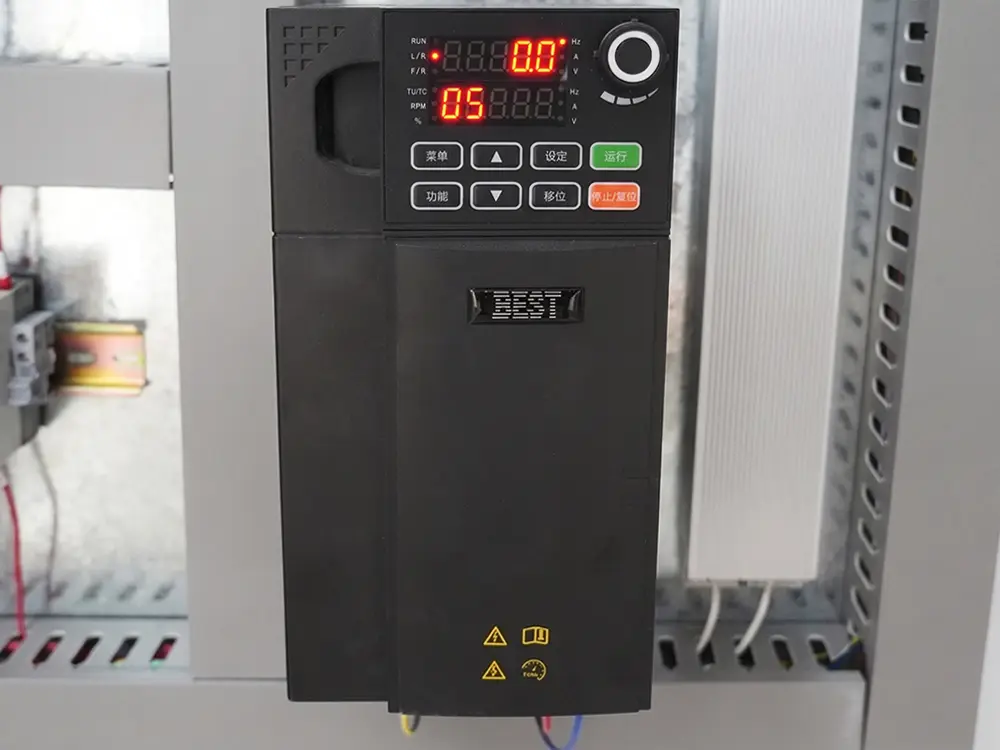
The spindle is precisely speed-controlled by a BEST variable frequency drive (VFD). It supports SVC vector control for both asynchronous and synchronous motors, with a speed regulation range of up to 1:500. It provides 150% load capacity at zero speed, with output torque control accuracy of up to 5% and linearity of 3%, ensuring precise and stable spindle control during CNC machining.
In addition, the BEST VFD integrates multiple fault detection and protection functions, including IGBT self-check and power-on self-check. These functions can identify potential system risks in advance, helping improve the operational safety and reliability of the ATC CNC nesting machine.
- Linear Tool Changer
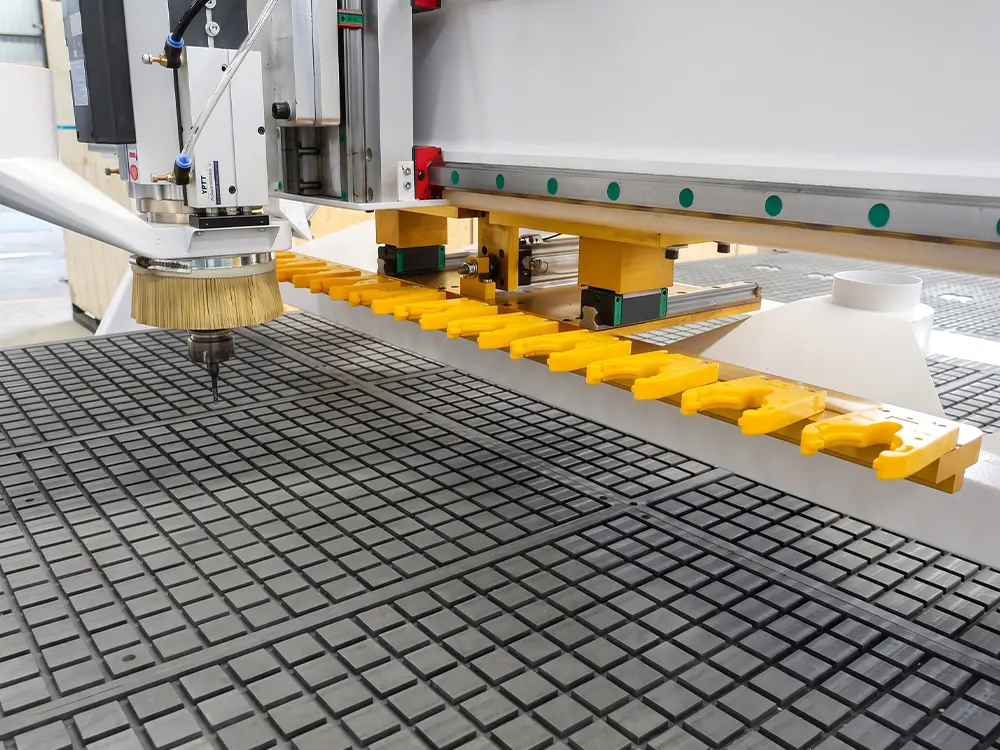
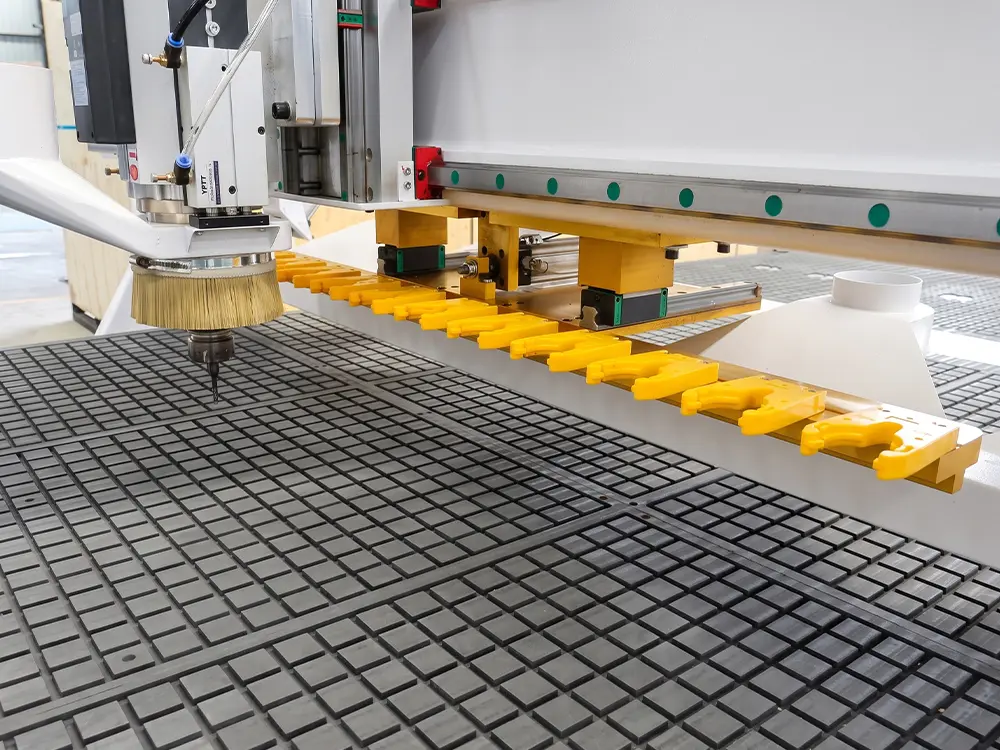
The linear tool changer can hold up to 12 ISO30 standard tools, meeting the requirements for multi-process machining and frequent tool changes during complex processing tasks.
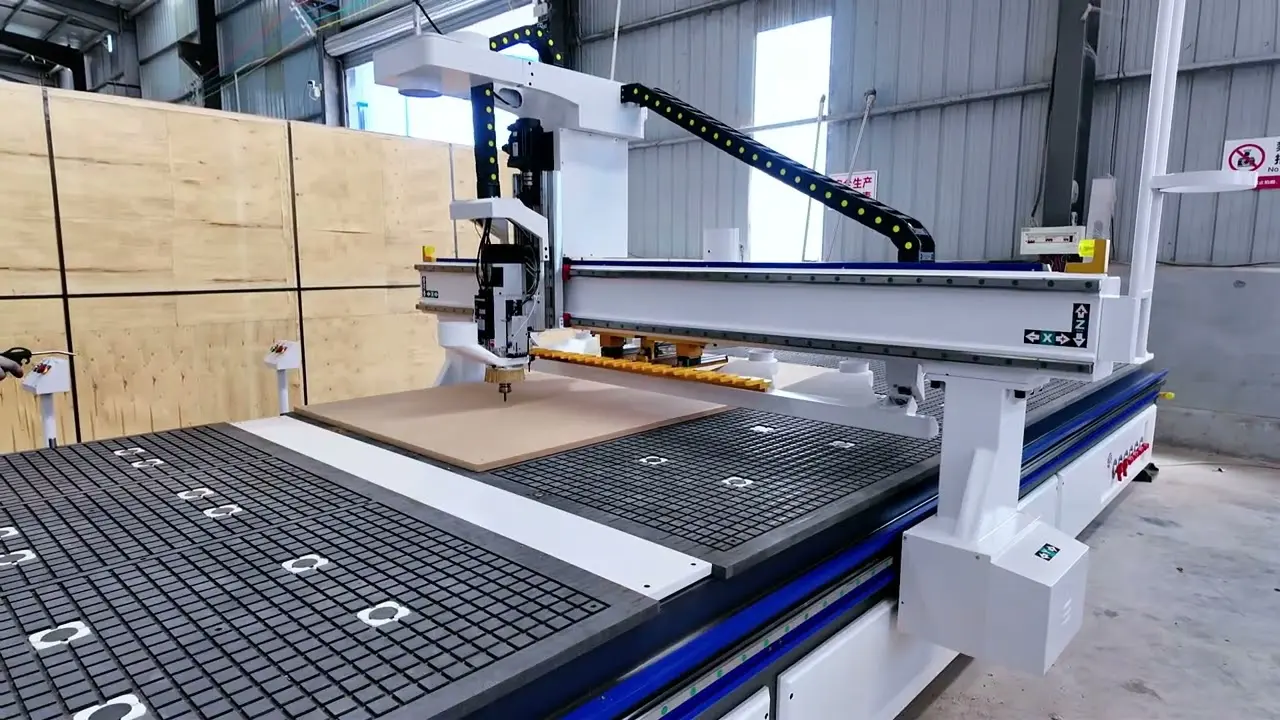
The tool changer is installed beneath the gantry and remains retracted when not in use, helping keep the machining area clear and preventing interference with the cutting process. When a tool change is required, the tool changer automatically extends through its pneumatic system, allowing the spindle to move to the designated position and complete the automatic tool change.
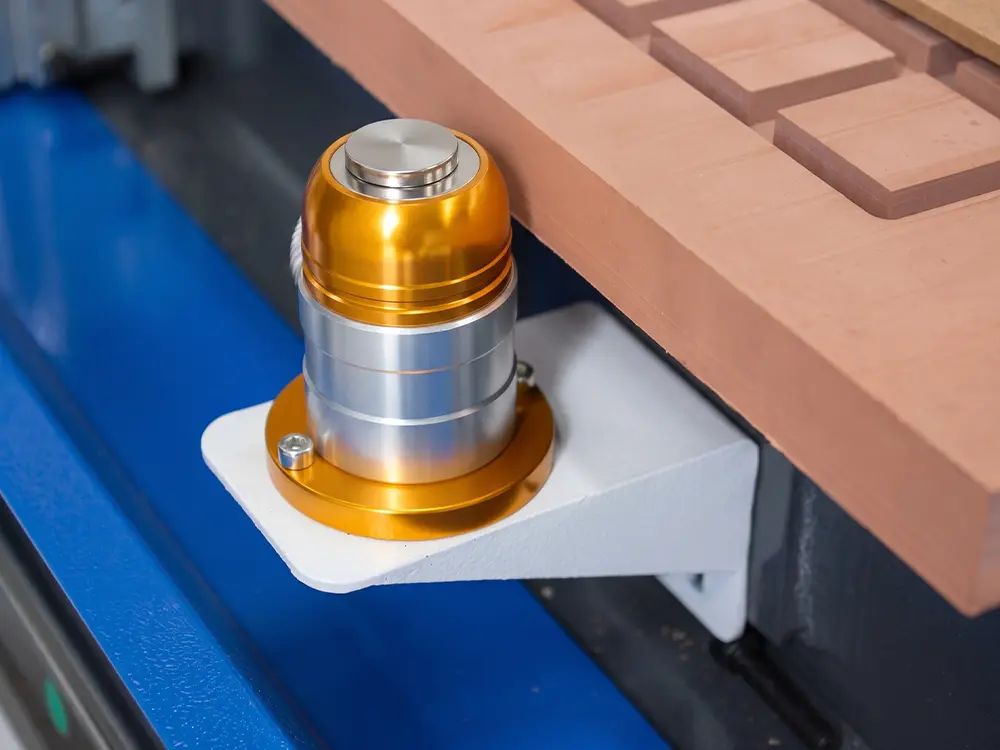
- Automatic Tool Setter
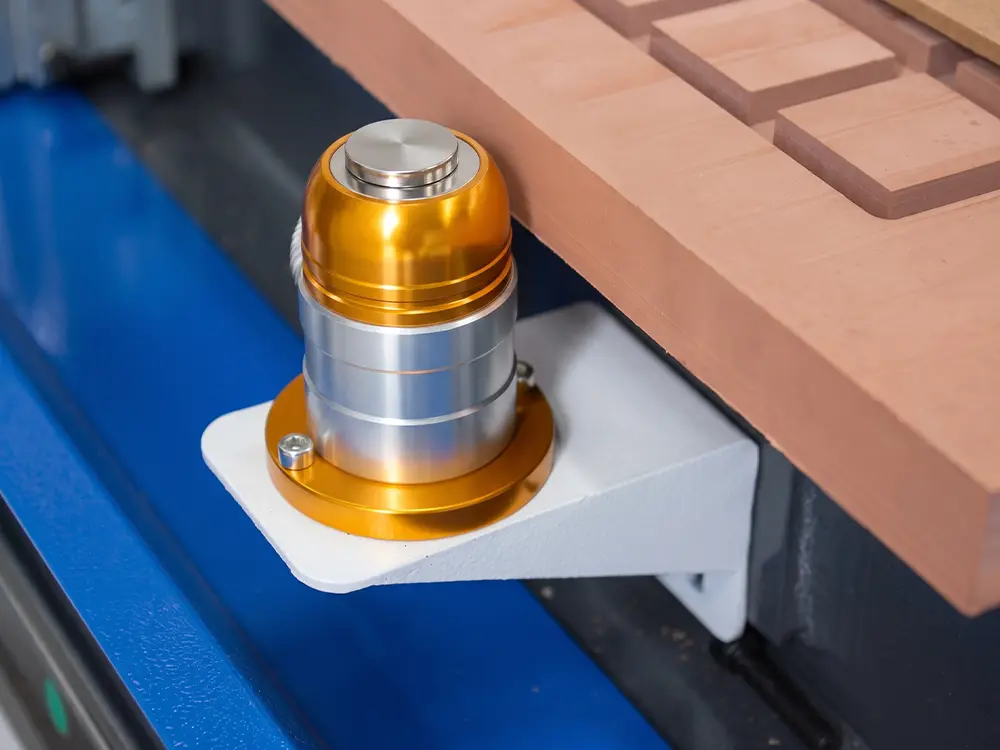
The CNC nesting machine is equipped with an automatic tool setter. After each tool change, the system automatically detects the tool length and generates the corresponding tool compensation parameters. This automatic measurement process helps prevent machining coordinate deviations caused by differences in tool length, ensuring consistent machining accuracy and stable processing performance during continuous multi-tool operations.
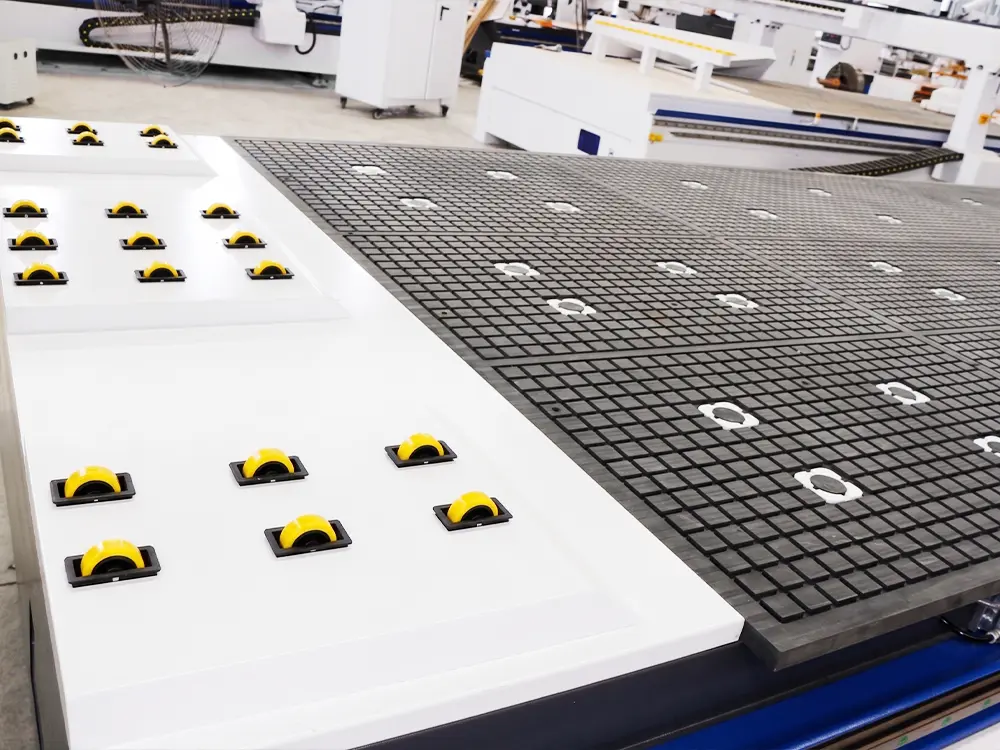
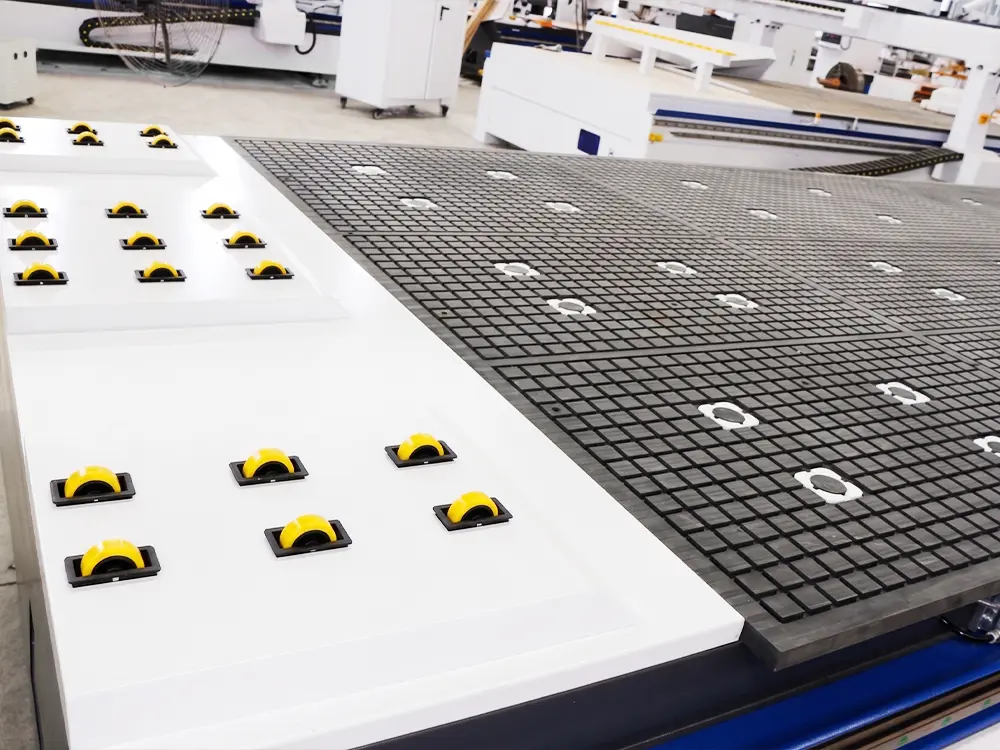
- Auxiliary Loading Rollers
The loading rollers are used to assist with the loading process. Operators simply need to place the sheet material on the rollers and let it roll forward, which greatly improves the convenience of loading large-size sheets.
- Transmission System
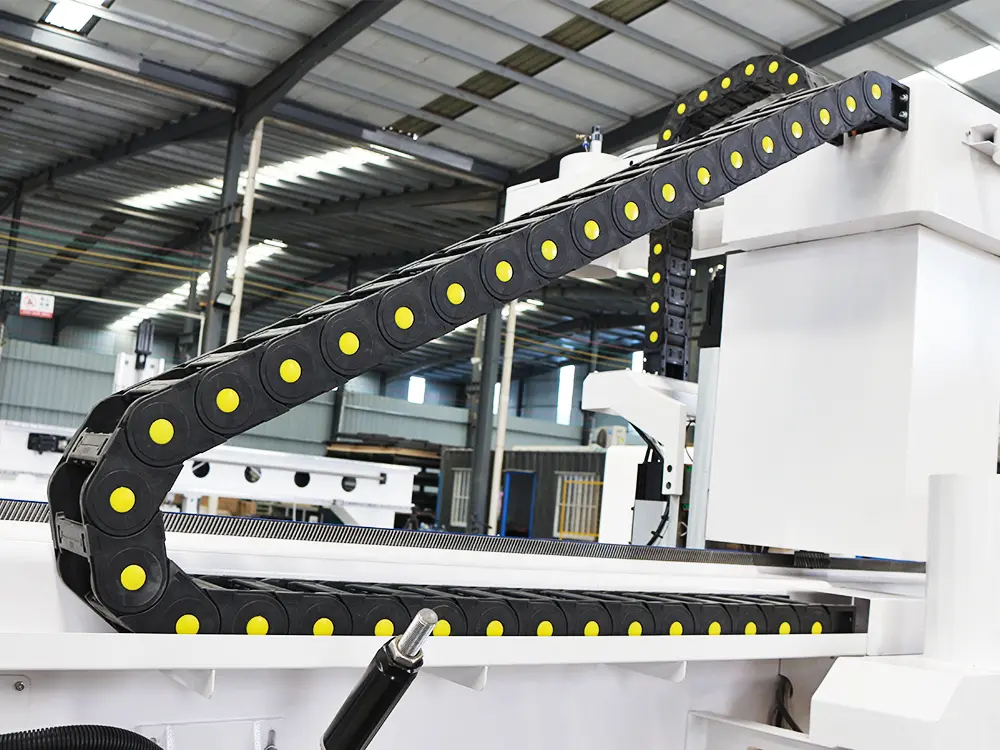
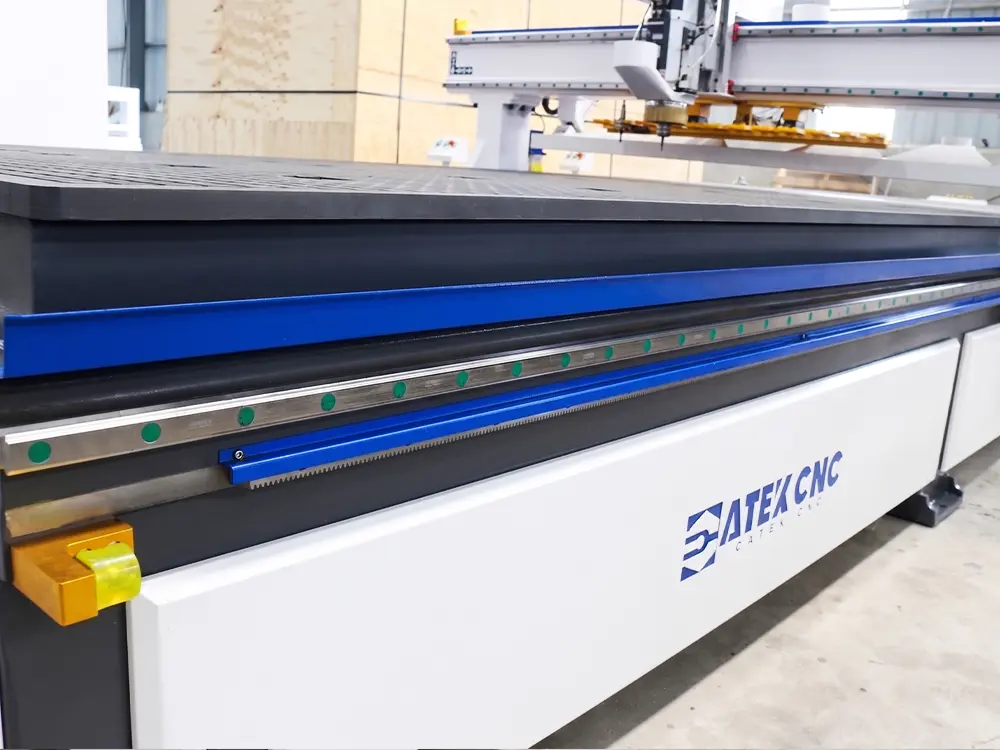
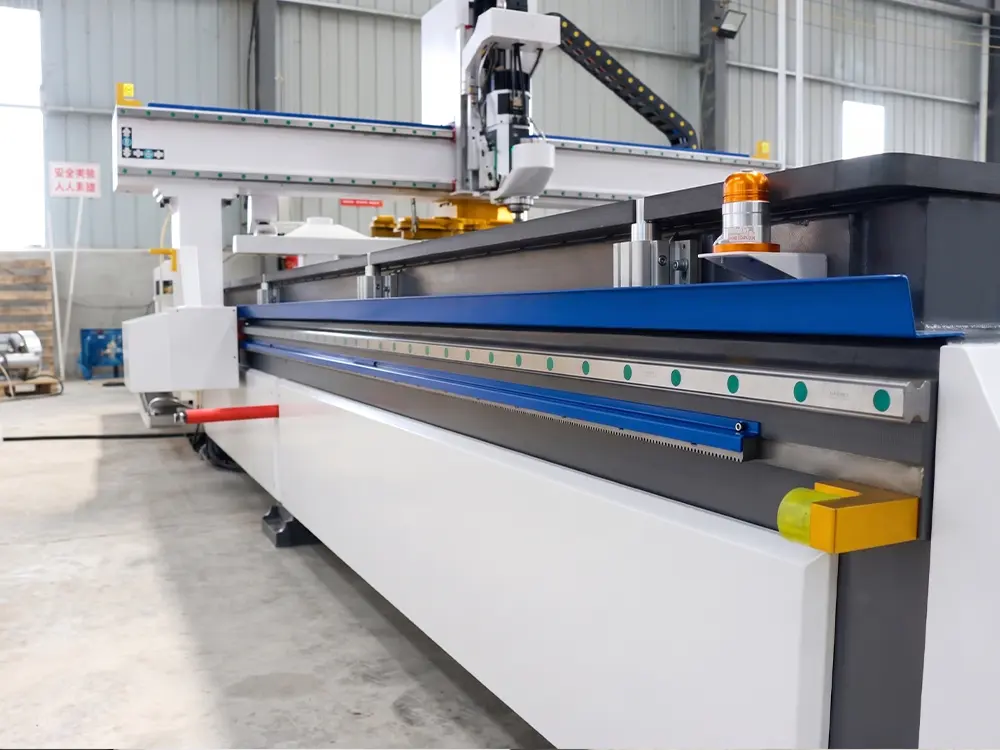
The X and Y axes of this CNC nesting machine utilize YYC precision rack-and-pinion drives, while the Z axis employs a TBI precision ball screw. All three linear axes are equipped with HIWIN linear guideways to ensure excellent positioning accuracy.
Each axis is equipped with dual limit protection at its ends, including photoelectric limit switches and mechanical buffer limit devices, to prevent accidents caused by overtravel.
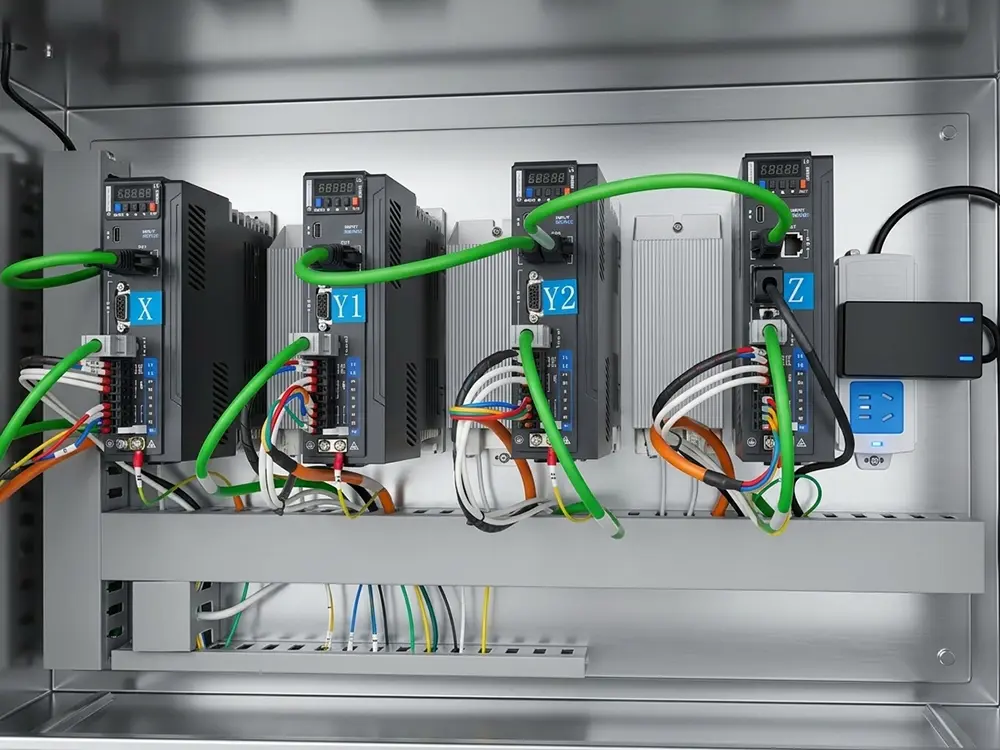
- Servo System
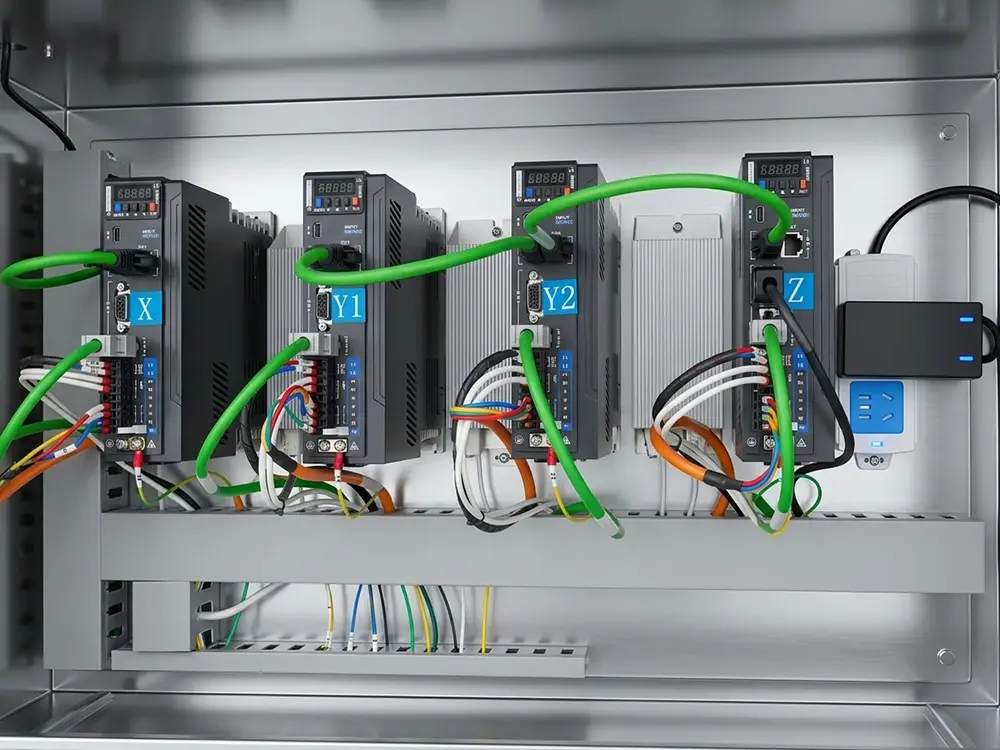
The three linear axes of this CNC nesting machine are driven by 1,500W Leadshine servo motors. The Y-axis adopts a dual-motor synchronous drive structure, with one servo motor installed on each side of the gantry.
The dual-sided drive effectively improves the gantry's operating stability and helps reduce deviation, twisting, and jamming caused by uneven force distribution.
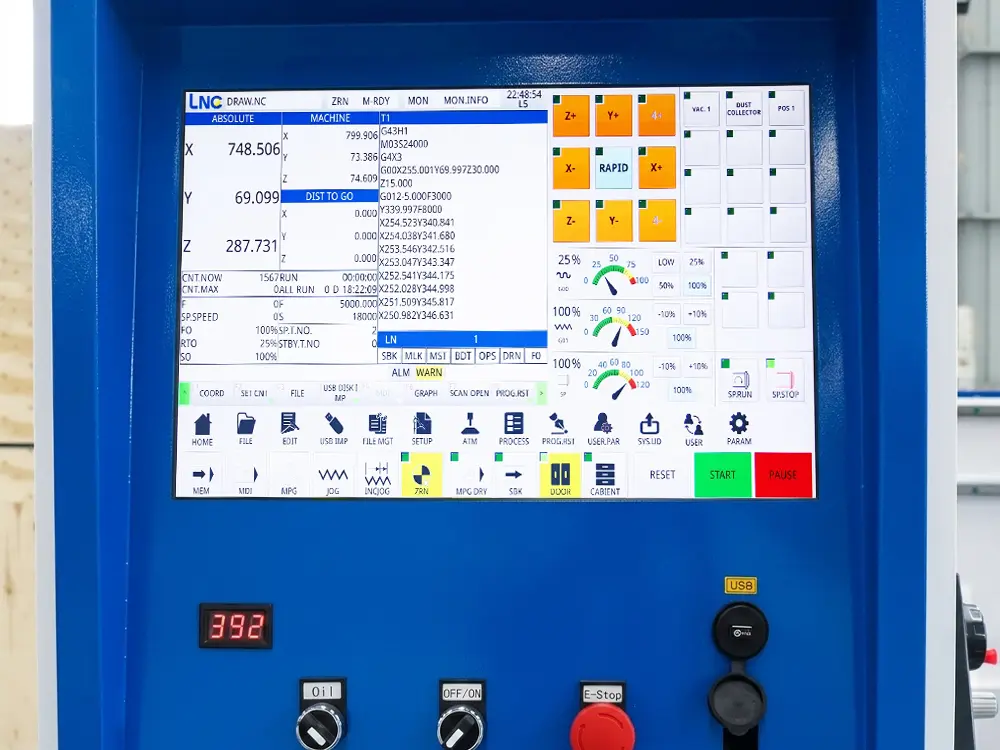
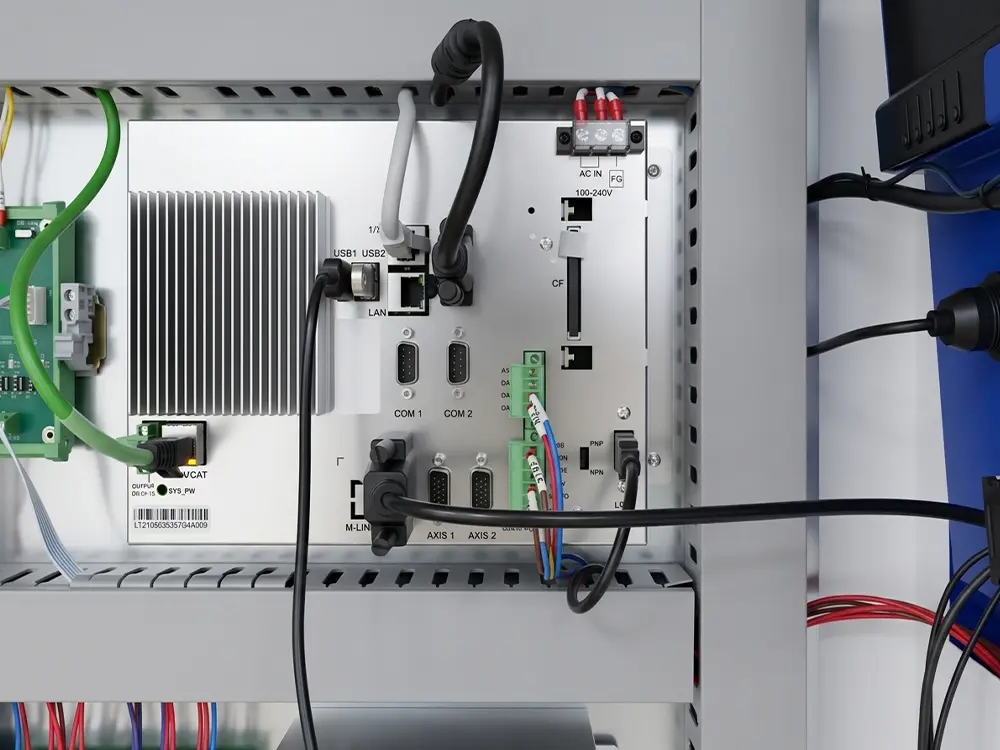
- Control System
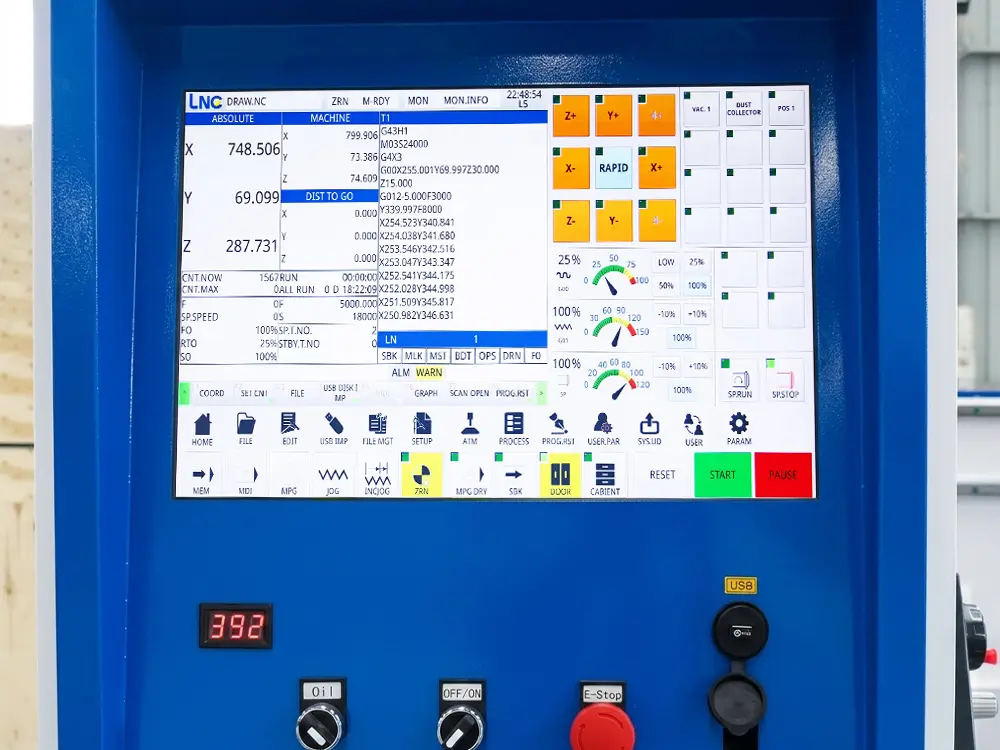
The CK-2140-2WT CNC nesting machine is equipped with the LNC MW2200 control system. Human-machine interaction is facilitated via a keyboard and mouse, making operation simple and intuitive and significantly reducing the learning curve.
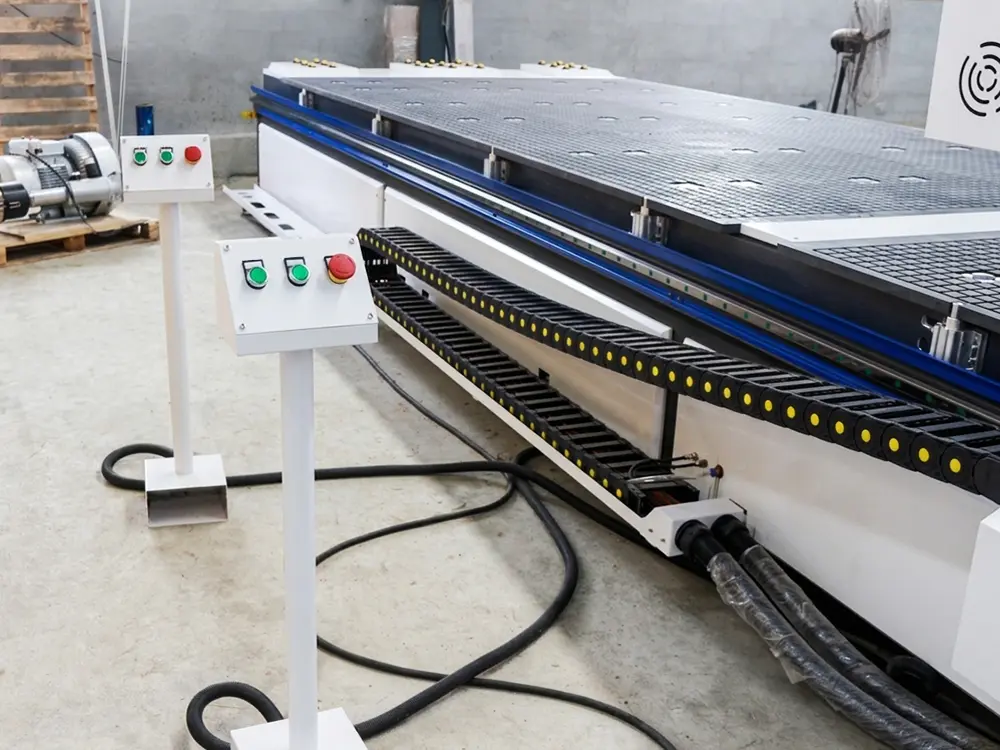
The control panel integrates commonly used functions such as lubrication control switches, the machine power switch, and an emergency stop button. It also features a USB port with a dust-proof cover for importing and exporting machining programs and drawing files.
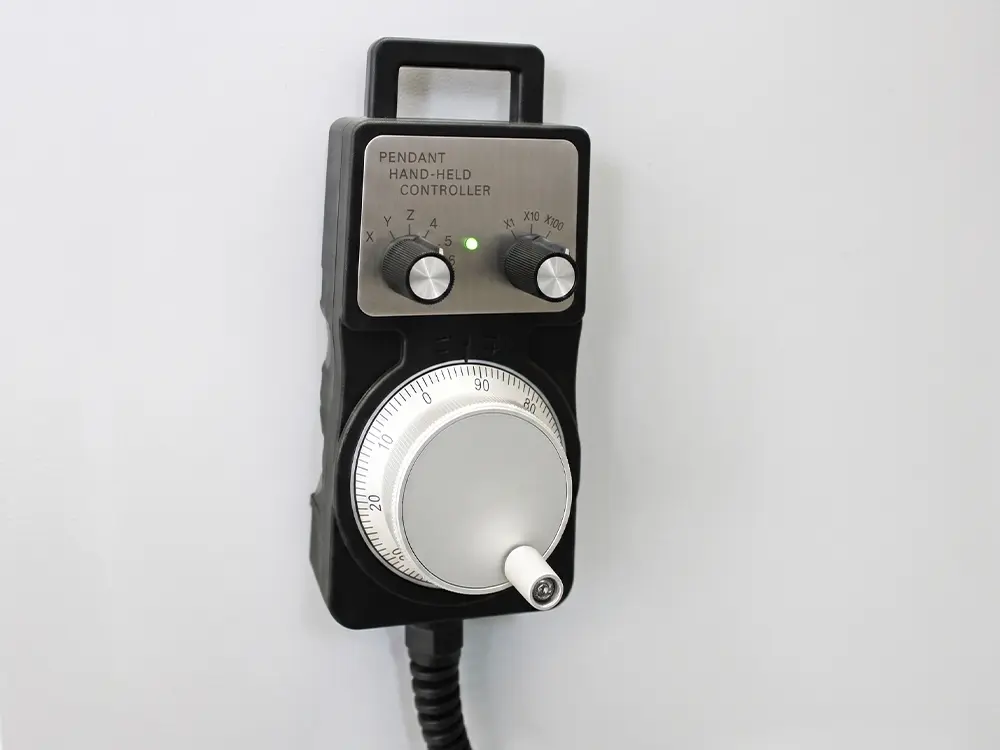
- MPG
MPG provides a flexible and convenient manual control method for equipment commissioning, parameter setting, and daily operation. Operators can use the handwheel to quickly select axes, adjust feed rates, and manually move each axis, effectively improving equipment commissioning efficiency and enhancing the convenience of the operation process.
- Convenient Control Units
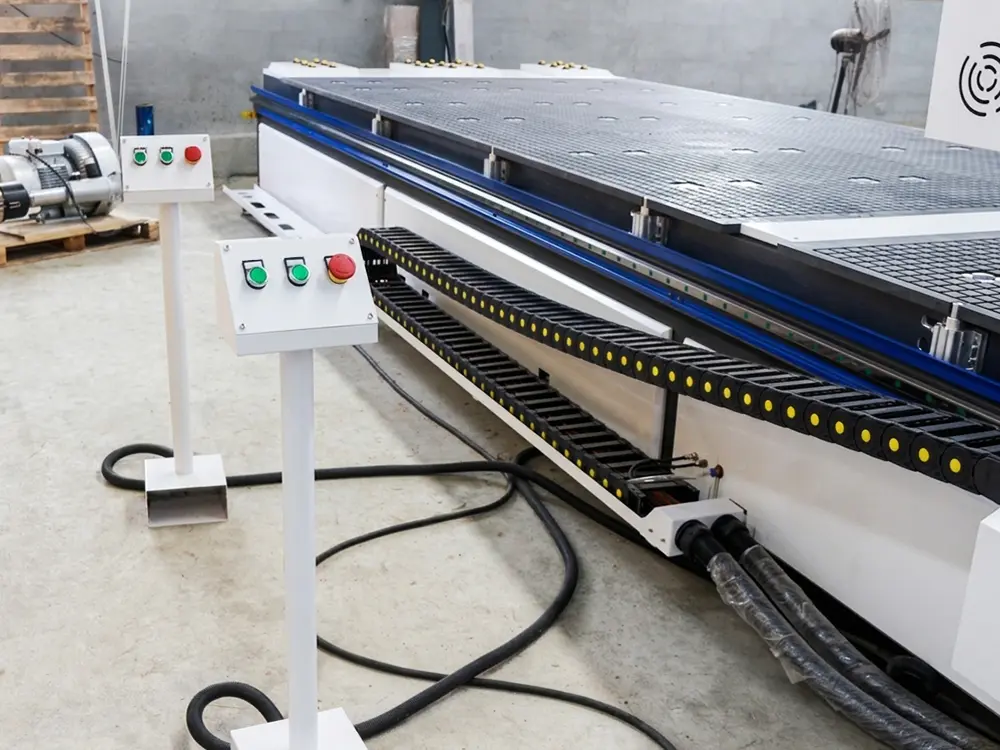
Two convenient control units are responsible for the start, emergency stop, and positioning cylinder controls of their respective workstations, and can be moved flexibly. Operators can perform routine operations without having to frequently move back and forth between the workstation and the control cabinet, effectively improving the convenience of equipment operation.
Specifications of the Dual Table ATC CNC Nesting Machine
| Model | CK-2140-2WT |
|---|---|
| Working Size | 2100x4000x200mm (two worktables) |
| Gantry | Reinforced, stress-relieved steel gantry |
| Machine Bed | Heavy-duty machine bed with independent anti-interference control cabinet |
| Spindle | Changsheng 9.5kW air-cooled ATC spindle |
| Tool Changer | 12-position linear tool changer |
| Tool Setting | Automatic tool setter |
| Tool Holder & Collet | ISO30/ER30/φ20 |
| Worktable | 9-zone, 36-hole vacuum table × 2 |
| Positioning | 4+3 positioning cylinders (pneumatic pop-up pins) |
| Drive System | 1.5kW Leadshine bus-type absolute servo motors (Z-axis with brake) |
| Transmission | HIWIN linear guides + YYC ground helical racks (X/Y axes) + TBI ball screw (Z axis) |
| Reducer | Japanese Shimpo planetary gear reducers |
| Cables | High-flex, bend-resistant pure copper cables |
| Dust Collection | 3kW double-barrel bag dust collector |
| Vacuum Pump | 11kW water-ring vacuum pump |
| Control System | Taiwan LNC MW2200 control system |
| Handwheel | 3-axis electronic pulse handwheel |
| Lubrication System | Centralized lubrication system |
| Safety System | Omron limit switches |
| Working Voltage | AC 380V |
| Repeat Positioning Accuracy | ±0.02 mm |
| Maximum Processing Speed | 25,000 mm/min |
| Maximum Rapid Traverse Speed | 60,000 mm/min |
| Machine Dimensions | 9400 × 3100 × 2100 mm |
| Weight | 4250kg |
How Does a Dual Table CNC Nesting Machine Improve Processing Efficiency?
In CNC woodworking nesting, the loading and unloading of large-format panels is often an important factor affecting production efficiency. A single panel can weigh tens or even hundreds of kilograms, and loading it usually requires multiple people to work together and takes considerable time. If the machine lacks an auxiliary panel positioning system, operators also need to repeatedly measure and calibrate the panel to ensure machining accuracy. After machining is completed, sorting and organizing a large number of parts and clearing leftover material will also take up considerable labor time.
These time-consuming tasks may be acceptable in small-batch production, but in continuous batch processing, the repeated loading, unloading, positioning, and waiting gradually accumulate, eventually becoming a hidden bottleneck restricting production capacity. More realistically, operators must constantly monitor the machine so that they can complete unloading and reload the next panel as soon as machining is finished—otherwise, the machine will remain idle and waste additional production time. However, the machining cycle of a single panel is often relatively long, occupying a significant amount of the operator's attention and making it difficult to handle other processes. If the operator leaves midway, the machining may finish earlier than expected, causing the machine to remain idle, creating a dilemma.
The dual table CNC nesting machine is equipped with two worktables—Table A and Table B. When Table A is being processed, the operator can simultaneously complete panel loading and positioning on Table B. Once machining on Table A is completed, the gantry immediately moves to the prepared Table B to continue processing, while the operator turns to prepare the next panel on Table A. Since the machine can hold two panels at the same time, one panel is being processed while the other has already been prepared. As the machining of both panels takes a considerable amount of time, the operator does not need to remain beside the machine at all times. After completing loading, the operator can move on to other processes, thereby freeing up labor and improving overall efficiency.
How Does a CNC Wood Nesting Machine Hold Panels in Place?
Because CNC wood nesting machines typically need to perform continuous, high-volume panel nesting, traditional mechanical clamps have certain limitations in such applications. When panels are cut, the original clamping points often can no longer effectively hold the separated individual workpieces, resulting in reduced clamping stability. In addition, traditional clamps occupy a certain amount of clamping space, which may restrict the tool's machining path. At the same time, mechanical clamping can easily cause surface indentations or damage when processing softer panels or melamine-faced panels, affecting the quality of finished products.
The CATEKCNC CK-2140-2WT CNC wood nesting machine uses a vacuum clamping system to quickly secure panels. The system is powered by an 11kW variable-frequency vacuum pump to generate suction. The worktable surface is equipped with vacuum holes and covered with a PVC board featuring a grid-patterned groove structure. By installing sealing strips inside the grooves, designated areas can form independent vacuum chambers, securely holding the panels against the worktable. After machining is completed, the workpiece can be quickly removed by simply releasing the vacuum and allowing air to enter.
The vacuum system is divided into 9 independent zones and is equipped with a total of 36 vacuum holes. The airflow in each zone can be independently adjusted through control valves located on the side of the machine, effectively reducing energy consumption while improving clamping stability for panels of different sizes.
This clamping method is simple to operate and responds quickly. Since the entire worktable can be used for panel positioning, no additional space needs to be reserved for mechanical clamps. This allows the machining area to be fully utilized while avoiding interference between clamps and spindle movement. At the same time, the flexible negative-pressure clamping method does not apply concentrated pressure to the panel surface, making it particularly suitable for processing panels with high appearance-quality requirements.
The vacuum clamping system is suitable for a variety of panel processing applications, including solid wood panels, medium-density fiberboard (MDF), plywood, acrylic sheets, and PVC panels.
How Does the CK-2140-2WT CNC Wood Nesting Machine Make Loading Large Panels Easier?
The CK-2140-2WT CNC wood nesting machine supports processing full-size large-format panels. However, these panels are usually heavy and often require multiple operators to work together during manual handling. At the same time, because of their large dimensions, panels can easily collide with or scratch surrounding surfaces due to unstable handling during movement and positioning, affecting the surface quality of the workpiece.
To reduce the difficulty of loading large-format panels, the CK-2140-2WT CNC nesting machine is equipped with auxiliary loading rollers in front of one of the worktables, arranged in 3 rows and 7 columns. During loading, the operator only needs to place the panel on the rollers and push it forward, effectively reducing movement resistance and the physical burden of manual handling. At the same time, the rollers help the panel move smoothly, improving loading stability and reducing the risk of collisions caused by improper operation.
The rollers are made of wear-resistant nylon, offering good wear resistance and low friction characteristics. They can reduce contact resistance as the panel moves and lower the risk of surface scratches. Even when processing relatively sensitive materials such as painted panels and acrylic sheets, the rollers can better protect the appearance and surface quality of the workpiece.
What Are the Advantages of Leadshine Servo Motors on a CNC Wood Nesting Machine?
The CK-2140-2WT CNC wood nesting machine is equipped with four sets of 1,500W Leadshine L5 series servo systems, providing high-speed, precise, and stable motion control for the machine. The servo system supports multiple communication protocols, including EtherCAT and Modbus. Its speed loop bandwidth can reach up to 2.5 kHz, and it supports a 125 μs EtherCAT bus synchronization cycle, enabling fast response and high-precision position control.
The Leadshine L5 series servo drive features intelligent control algorithms and supports a one-click auto-tuning function, which can automatically optimize control parameters and significantly reduce the difficulty of machine commissioning. At the same time, the system features vibration suppression and adaptive notch filtering, which can effectively reduce mechanical resonance and vibration during operation, allowing the machine to maintain smoother motion performance during high-speed machining.
The matching Leadshine ACM0H series servo motors can reach a maximum speed of 6,000 rpm, support 300% overload capacity, and are equipped with a 17-bit multi-turn absolute encoder as standard. The encoder can provide real-time feedback on the motor position, providing reliable support for the continuous and high-precision processing of the CNC wood nesting machine.
What Products Can a Dual Table ATC CNC Wood Nesting Machine Process?
The CK-2140-2WT CNC wood nesting machine is a high-efficiency machine designed for high-volume panel processing. Its dual worktable design significantly reduces loading and unloading waiting time. Combined with the automatic tool changer (ATC), it can continuously perform multiple processes on a single machine, including panel cutting, milling, drilling, and grooving. It is particularly suitable for large-scale production of large-format panels. The machine is widely used in the following industries:
Panel Furniture Manufacturing
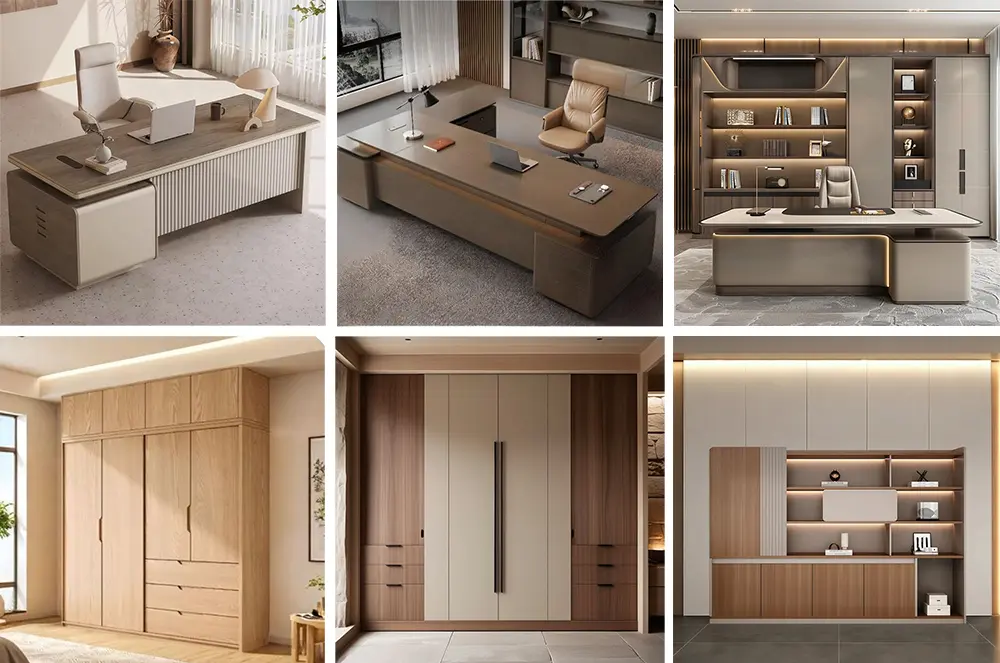
It can process various panel furniture components for wardrobes, cabinets, bookcases, TV cabinets, office furniture, and more, including side panels, door panels, shelves, back panels, drawer panels, and other components. Automatic nesting and continuous processing capabilities can significantly improve production efficiency, making the machine particularly suitable for high-volume furniture orders.
Office Furniture
The machine is suitable for processing panel components for office desks, conference tables, filing cabinets, partitions, screens, and other products. The dual large-format worktables support continuous processing of large panels, effectively improving efficiency in batch production.
Display Cabinets and Commercial Space Decoration
It can be used to process display cabinets, shelving, display stands, store decoration panels, and other products. High-precision cutting allows panels to be processed into various customized shapes, meeting the diverse design requirements of commercial spaces.
Architectural Decoration and Wood Products
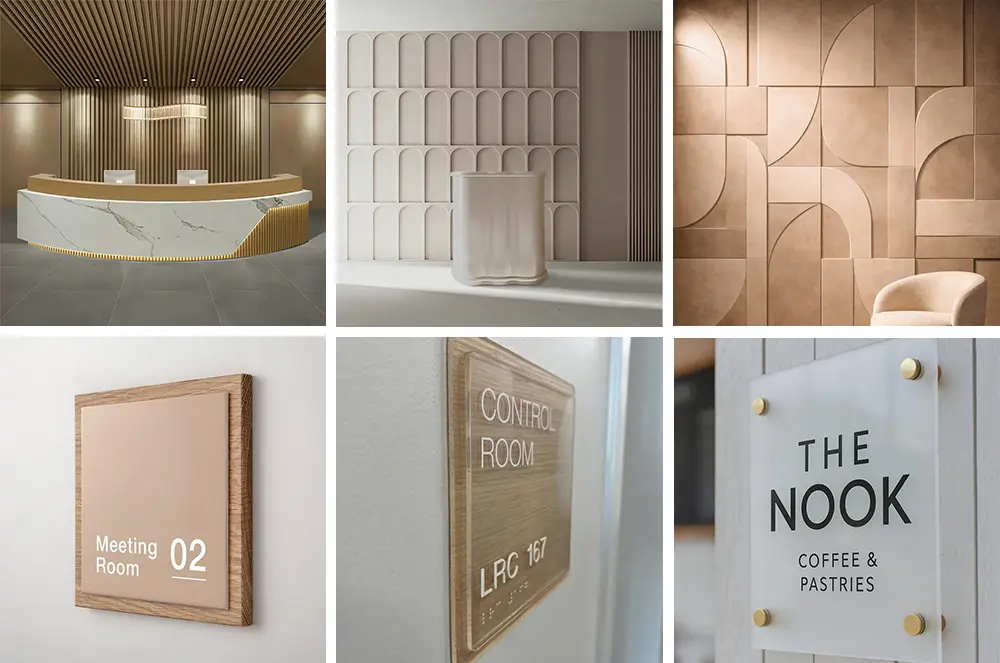
The machine can process wall panels, wooden partitions, ceiling decoration components, acoustic panels, and other wood-based decorative products. Its large-format processing capability reduces the need for panel splicing, improving production efficiency and finished-product consistency.
Advertising and Signage
The machine is widely used in the advertising and signage industry and can process advertising materials such as templates, acrylic, PVC foam board, two-color sheets, and Sintra board to produce signs, backboards for illuminated letters, advertising display boards, exhibition stands, and other products.
The large-format worktables allow full-sheet processing without pre-cutting, making the machine particularly suitable for high-volume production of advertising signs. Combined with the automatic tool changer, it can continuously perform multiple operations, including lettering, contour cutting, and drilling, effectively shortening production and delivery times.
Last Updated:
2026-08-15 16:54:06
| Model | CK-2140-2WT |
|---|---|
| Working Size | 2100x4000x200mm (two worktables) |
| Gantry | Reinforced, stress-relieved steel gantry |
| Machine Bed | Heavy-duty machine bed with independent anti-interference control cabinet |
| Spindle | Changsheng 9.5kW air-cooled ATC spindle |
| Tool Changer | 12-position linear tool changer |
| Tool Setting | Automatic tool setter |
| Tool Holder & Collet | ISO30/ER30/φ20 |
| Worktable | 9-zone, 36-hole vacuum table × 2 |
| Positioning | 4+3 positioning cylinders (pneumatic pop-up pins) |
| Drive System | 1.5kW Leadshine bus-type absolute servo motors (Z-axis with brake) |
| Transmission | HIWIN linear guides + YYC ground helical racks (X/Y axes) + TBI ball screw (Z axis) |
| Reducer | Japanese Shimpo planetary gear reducers |
| Cables | High-flex, bend-resistant pure copper cables |
| Dust Collection | 3kW double-barrel bag dust collector |
| Vacuum Pump | 11kW water-ring vacuum pump |
| Control System | Taiwan LNC MW2200 control system |
| Handwheel | 3-axis electronic pulse handwheel |
| Lubrication System | Centralized lubrication system |
| Safety System | Omron limit switches |
| Working Voltage | AC 380V |
| Repeat Positioning Accuracy | ±0.02 mm |
| Maximum Processing Speed | 25,000 mm/min |
| Maximum Rapid Traverse Speed | 60,000 mm/min |
| Machine Dimensions | 9400 × 3100 × 2100 mm |
| Weight | 4250kg |
01:56
You May Also Like
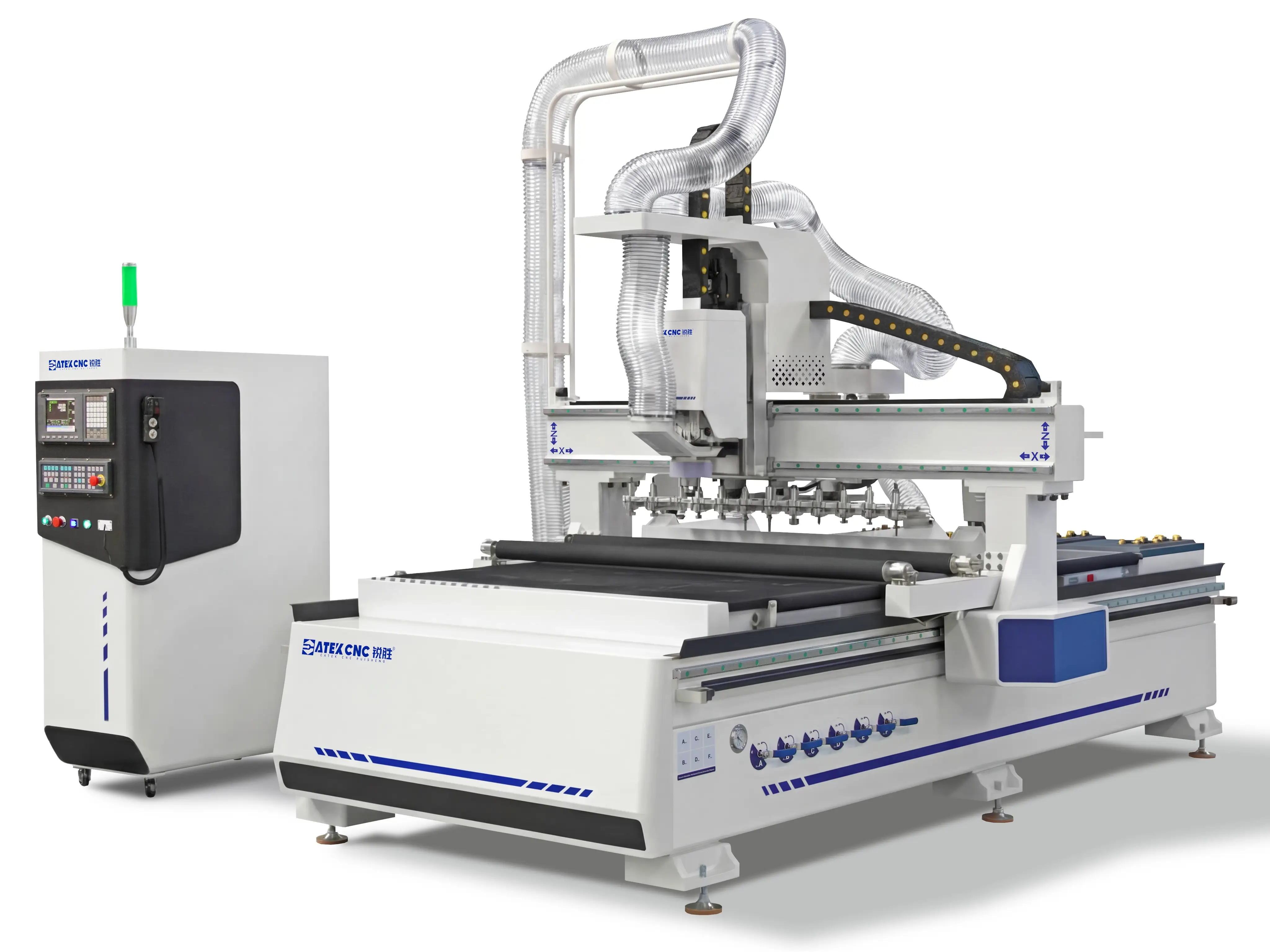
This model is the 4x8ft linear ATC CNC wood router from the Spire Series. Its appearance and mechanical structure have been fully redesigned, and it is equipped with Yaskawa servo motors and HSD spindles, along with exclusive VIP services.
$15,800.00~$32,800.00
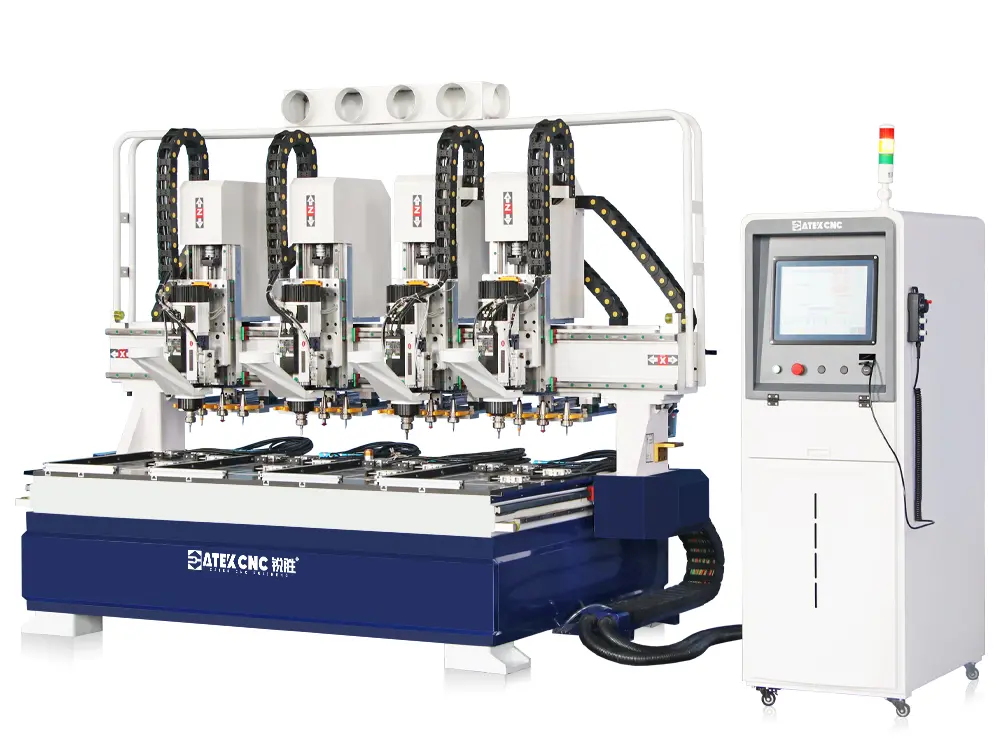
This CNC wood router features four workstations, each equipped with an automatic tool changer (ATC). The machine is designed to machine four identical workpieces simultaneously, making it ideal for high-volume production.
$14,990.00~$25,990.00
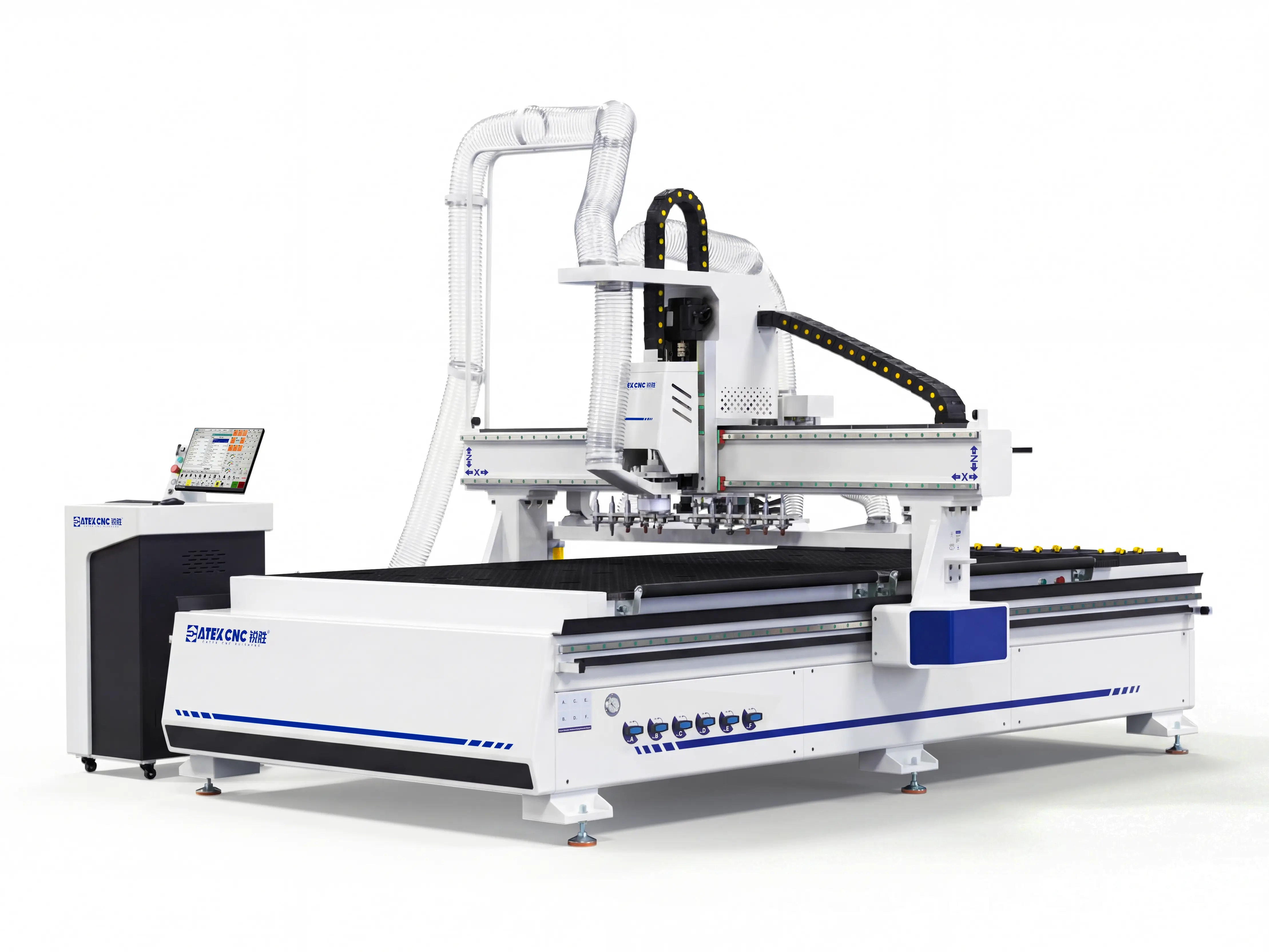
This is an 7x10ft (2100*3000mm) ATC CNC wood router from the Spire Series, highly adaptable to almost all machining sizes. It is equipped with a 9KW HQD ATC spindle, LNC servo system and control system, it delivers stable and efficient performance.
$13,800.00~$32,800.00
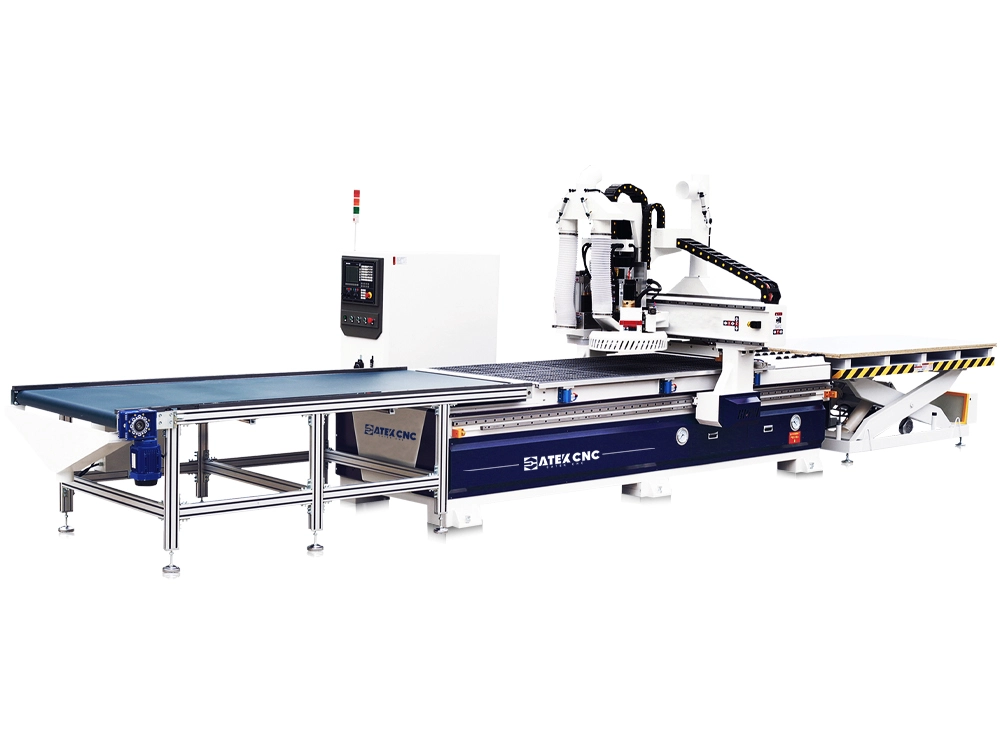
This best-selling CNC wood router features a vacuum adsorption workbench, carousel-style tool changer, and automatic loading/unloading system, enabling fully automated panel furniture production.
$11,800.00~$15,800.00
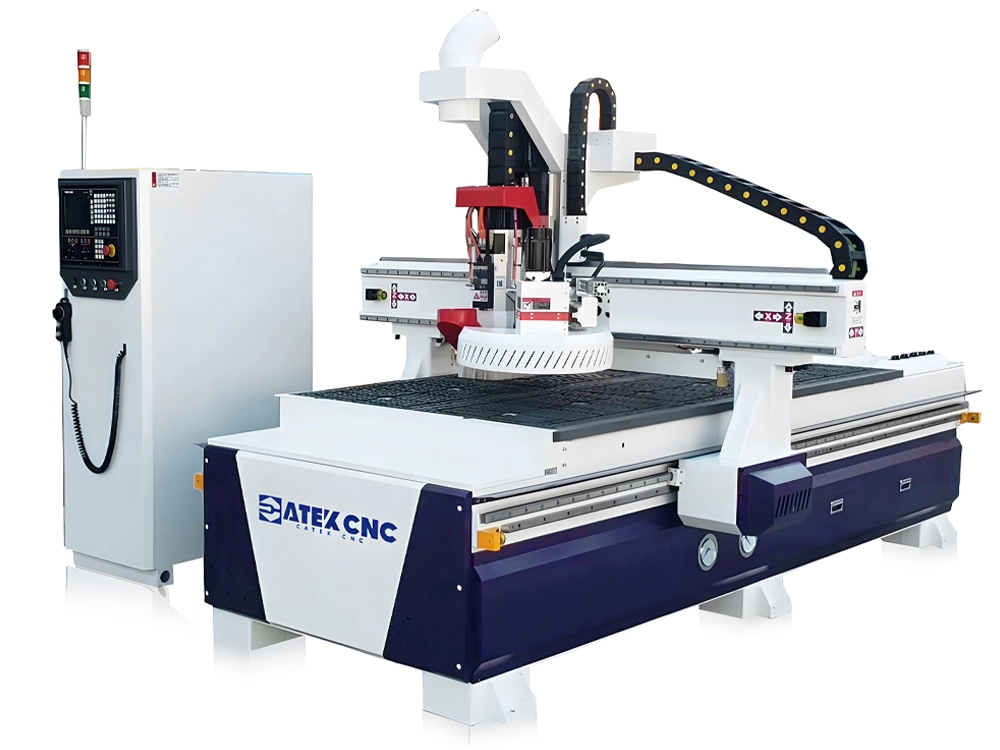
Equipped with a vacuum worktable and carousel-type tool changer for auto tool changeing, it's suitable for cutting, milling, grooving, and engraving wood doors, windows, and cabinets.
$9,700.00~$13,000.00
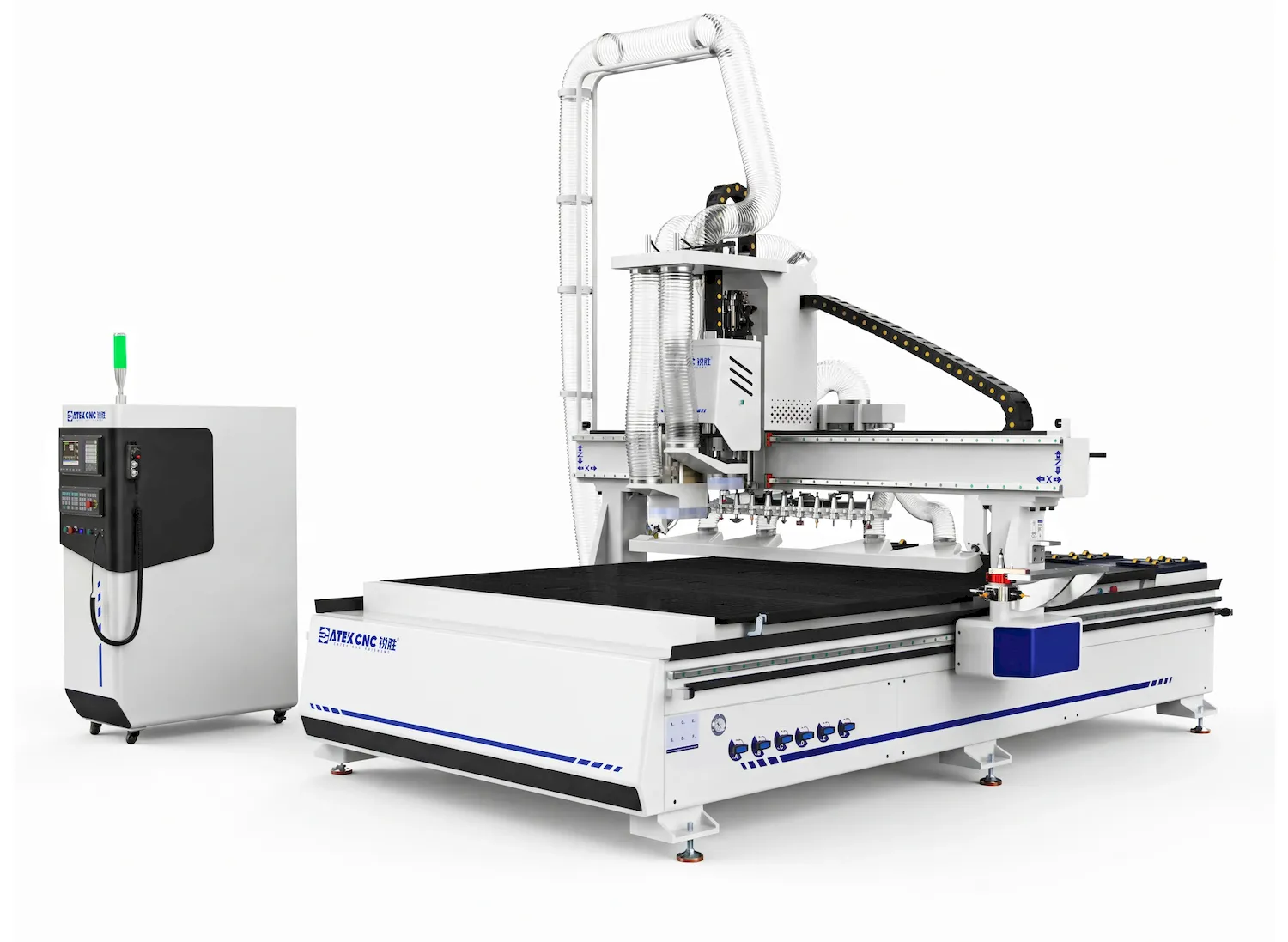
This is a 7x10ft linear ATC CNC wood router, equipped with a drill bank and 4-sided aggregate unit. It is highly efficient for drilling holes on panel furniture, as well as side drilling, slotting, milling and other machining.
$21,800.00~$32,800.00
REVIEWS
Let more people know what you share.