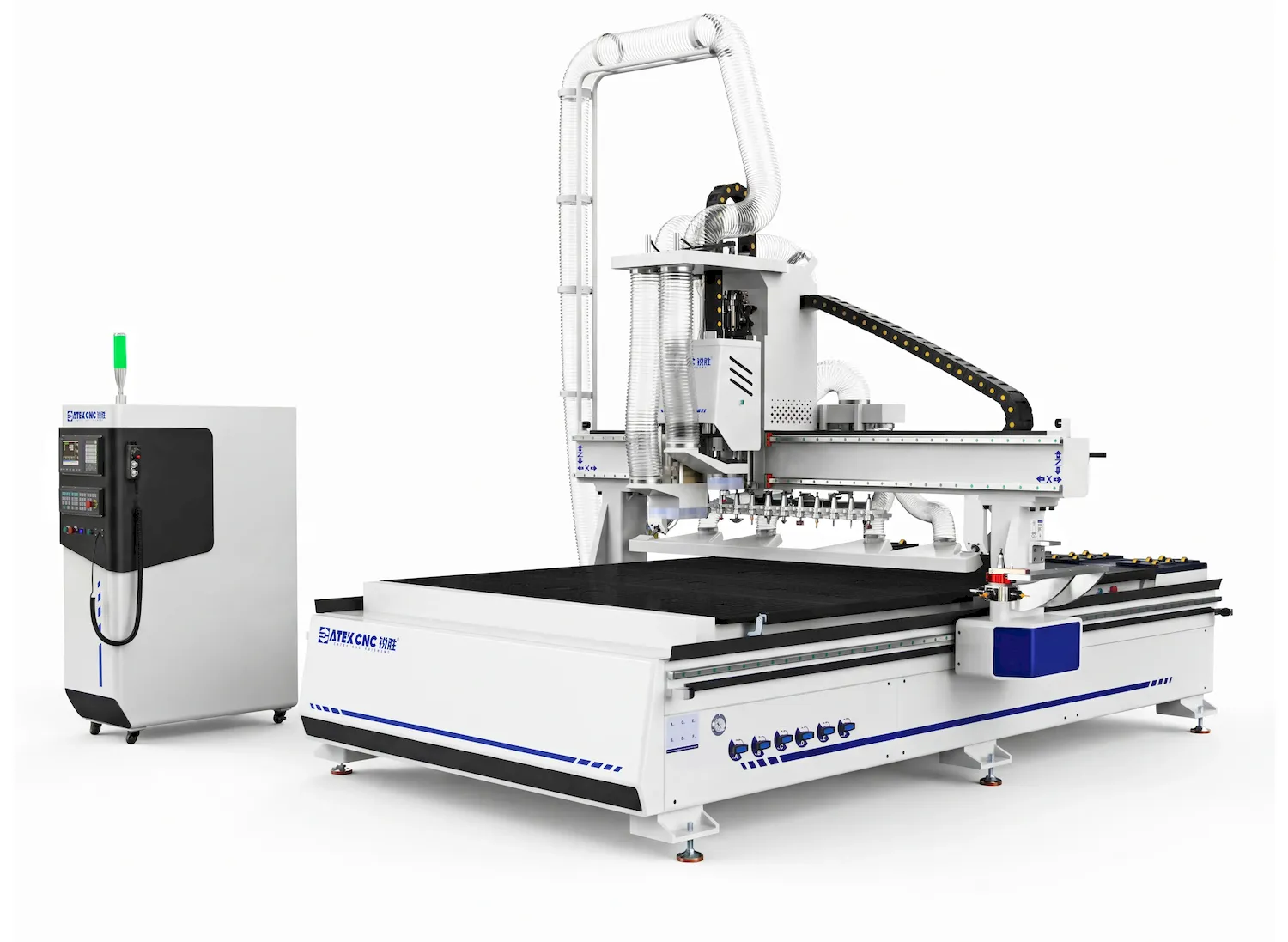
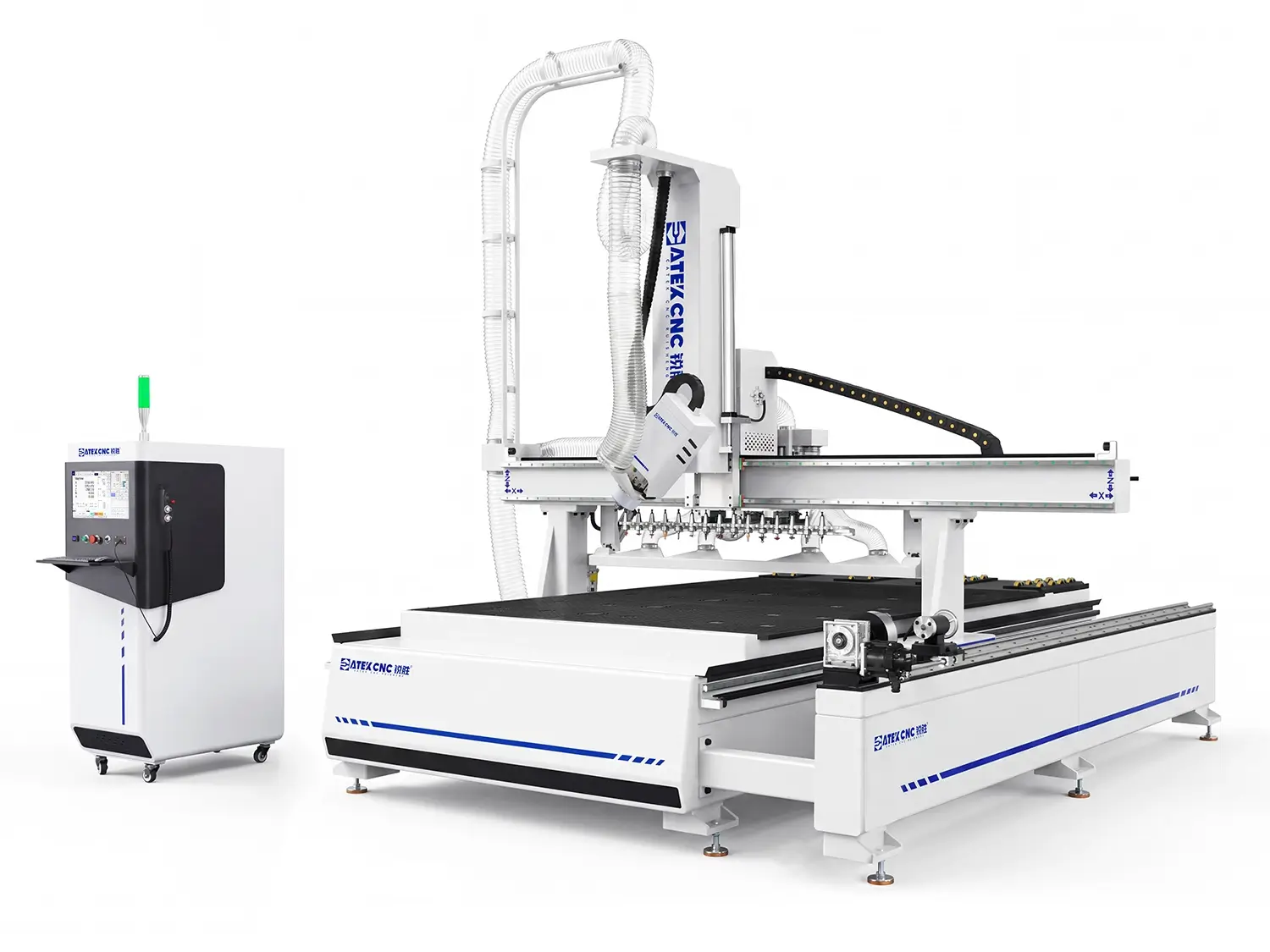
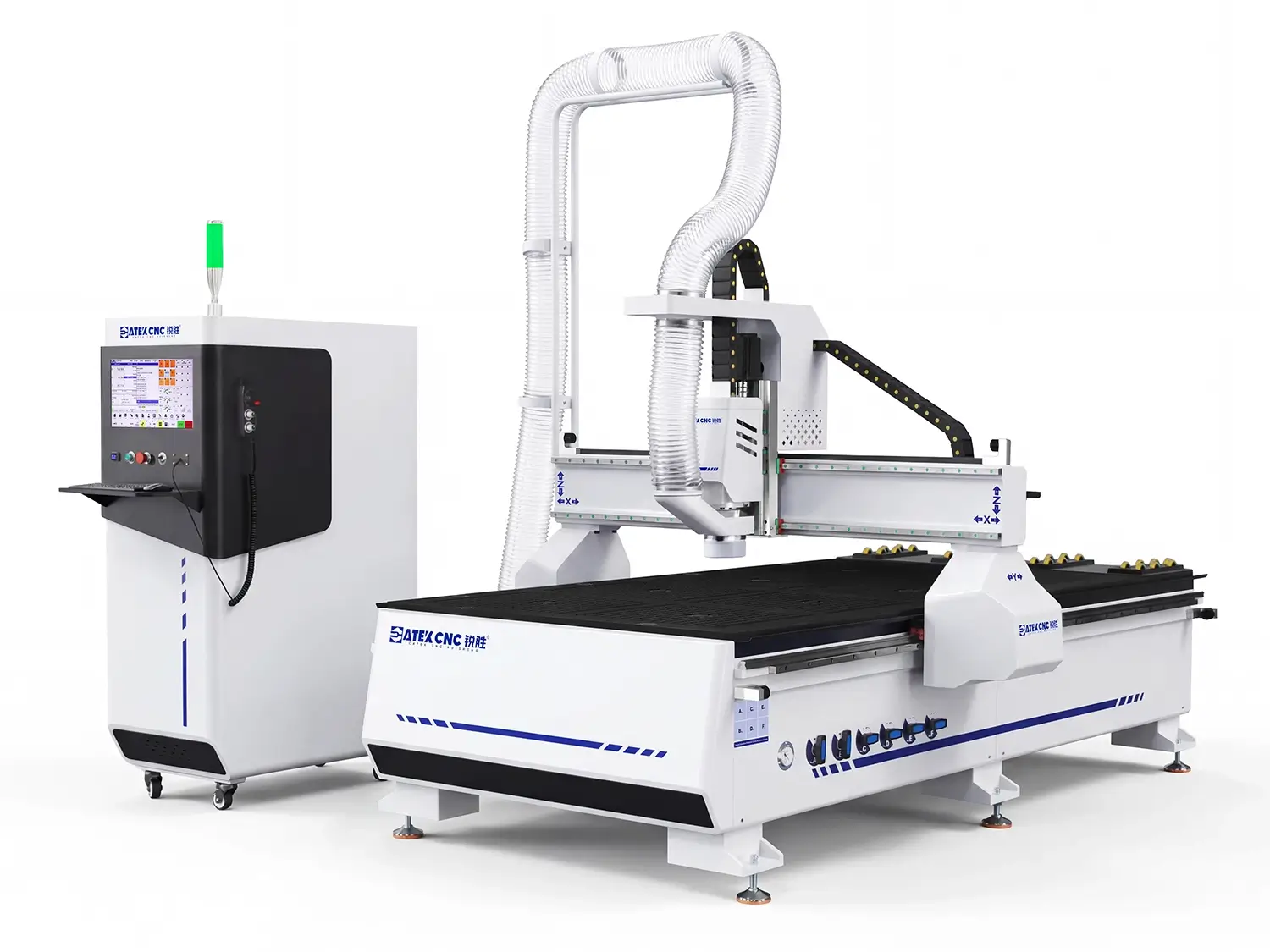
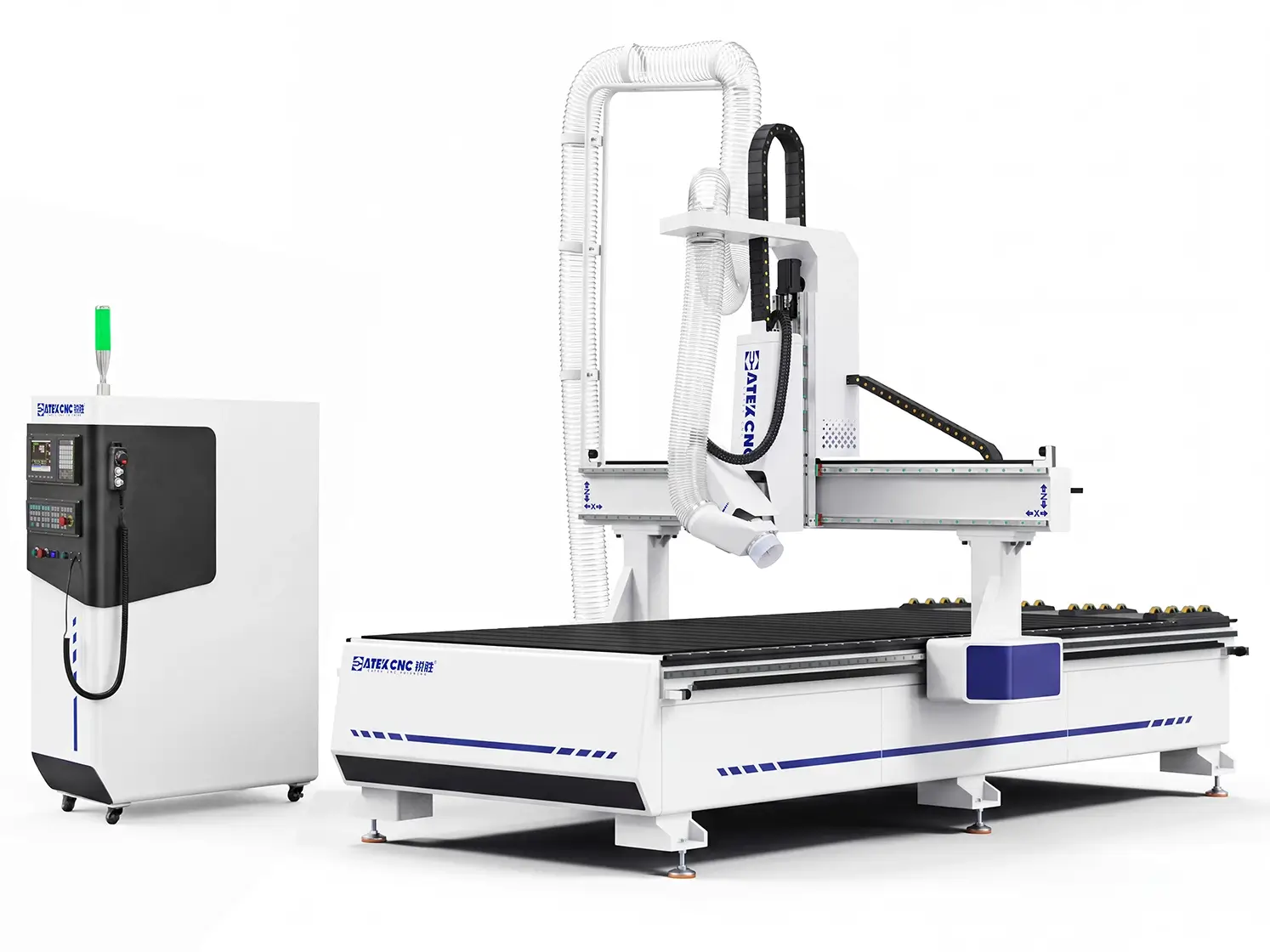
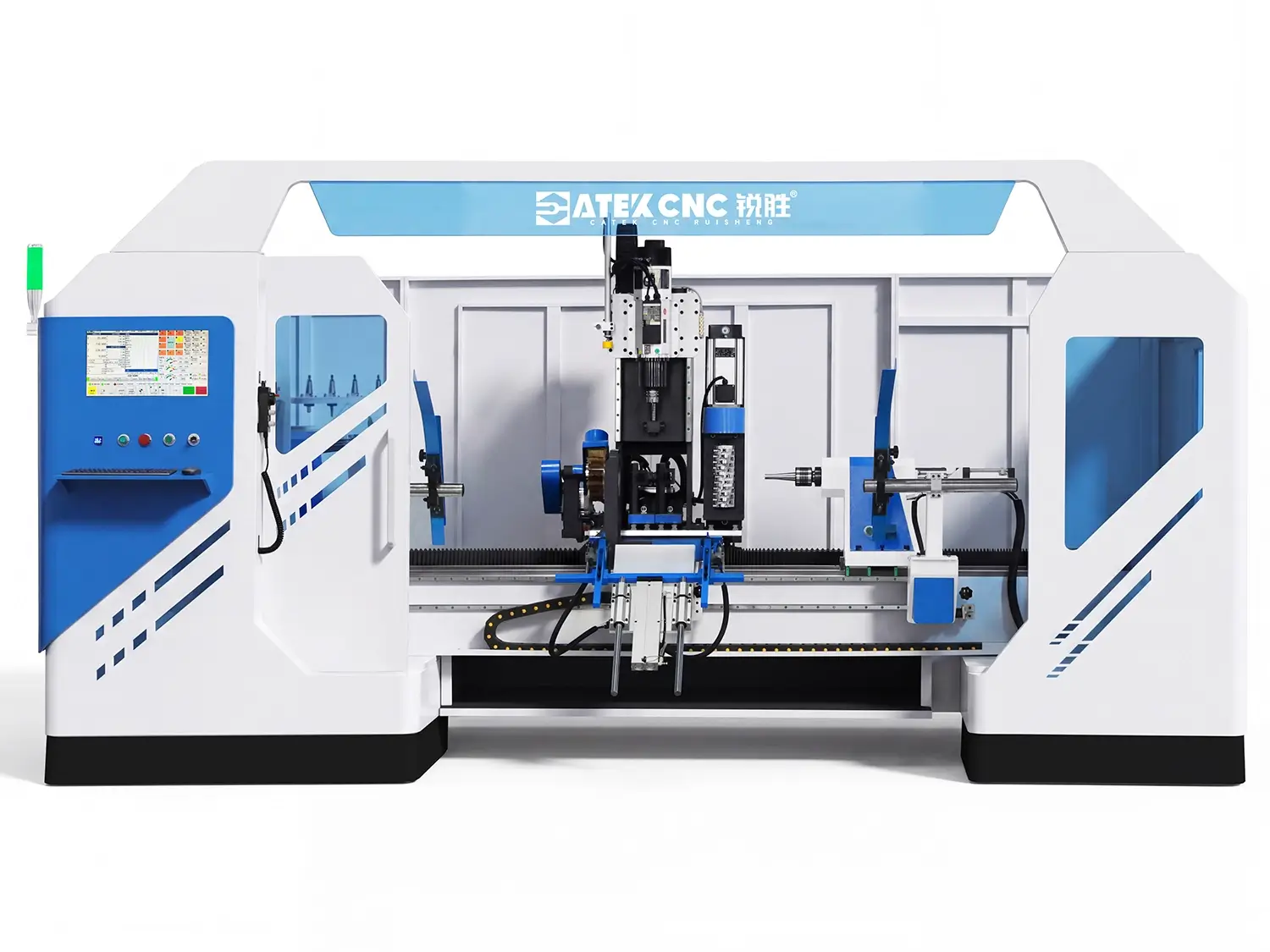
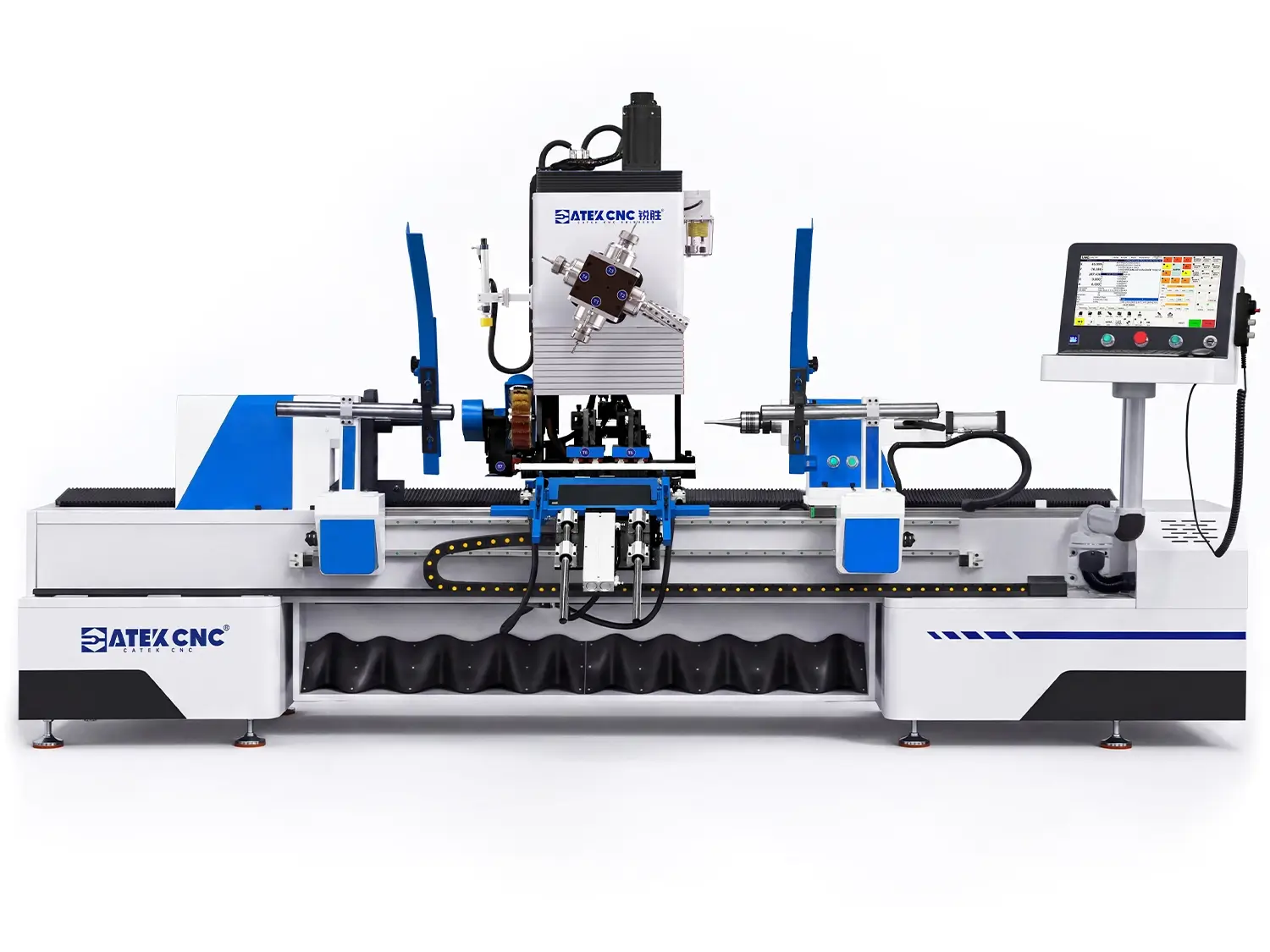
The Spire series is the high-end custom series of
CATEKCNC, featuring a completely redesigned exterior and mechanical
structure. It incorporates top-tier components from
first-tier suppliers and includes exclusive one-on-one
customer service.
Looks like you have not added anything to you cart. Goahead & explore top
categories.
{{goods.model}}
${{moneyFormat(goods.price * goods.num)}}
Total:
${{moneyFormat(total)}}
· Function Description ·
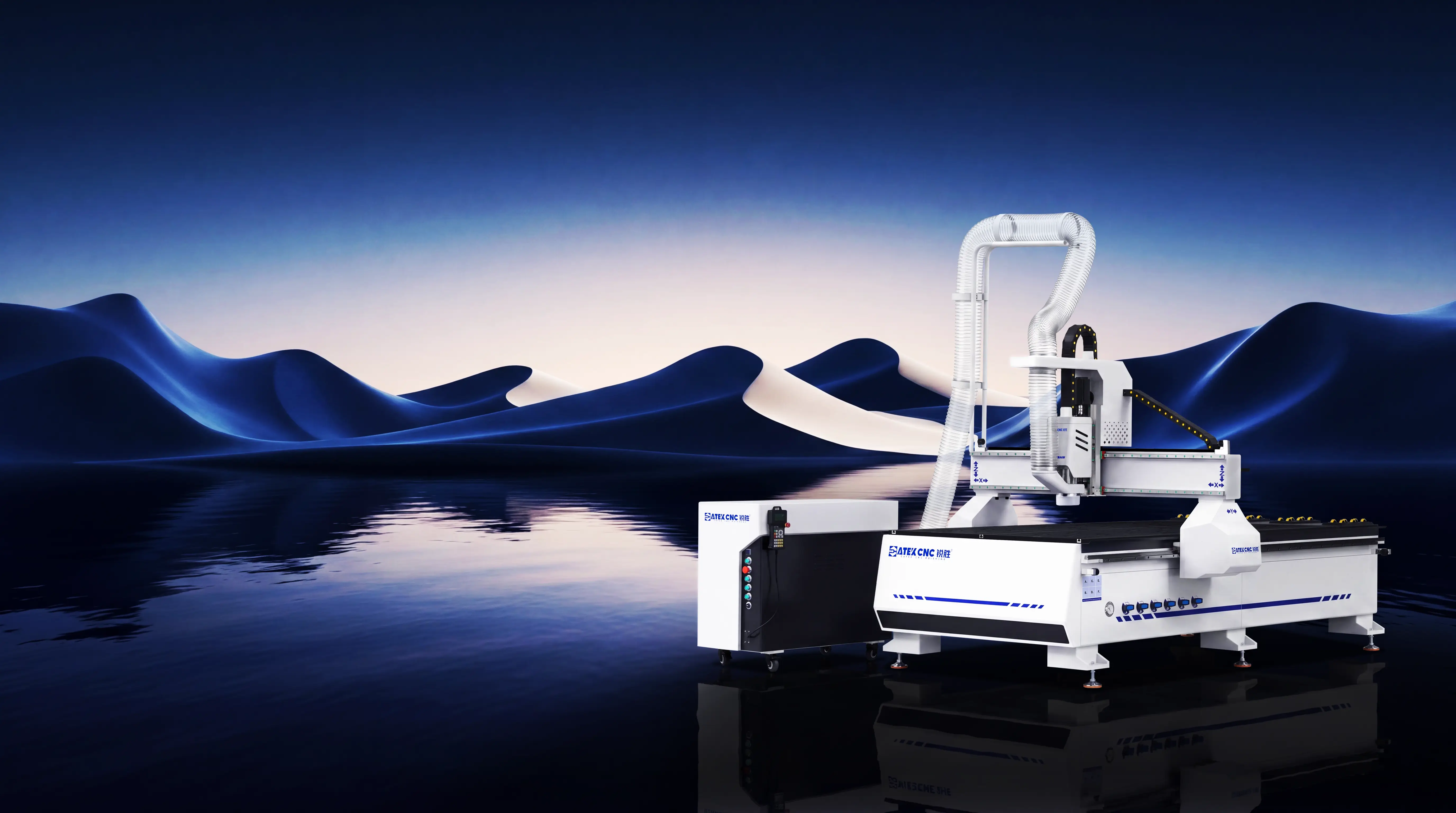
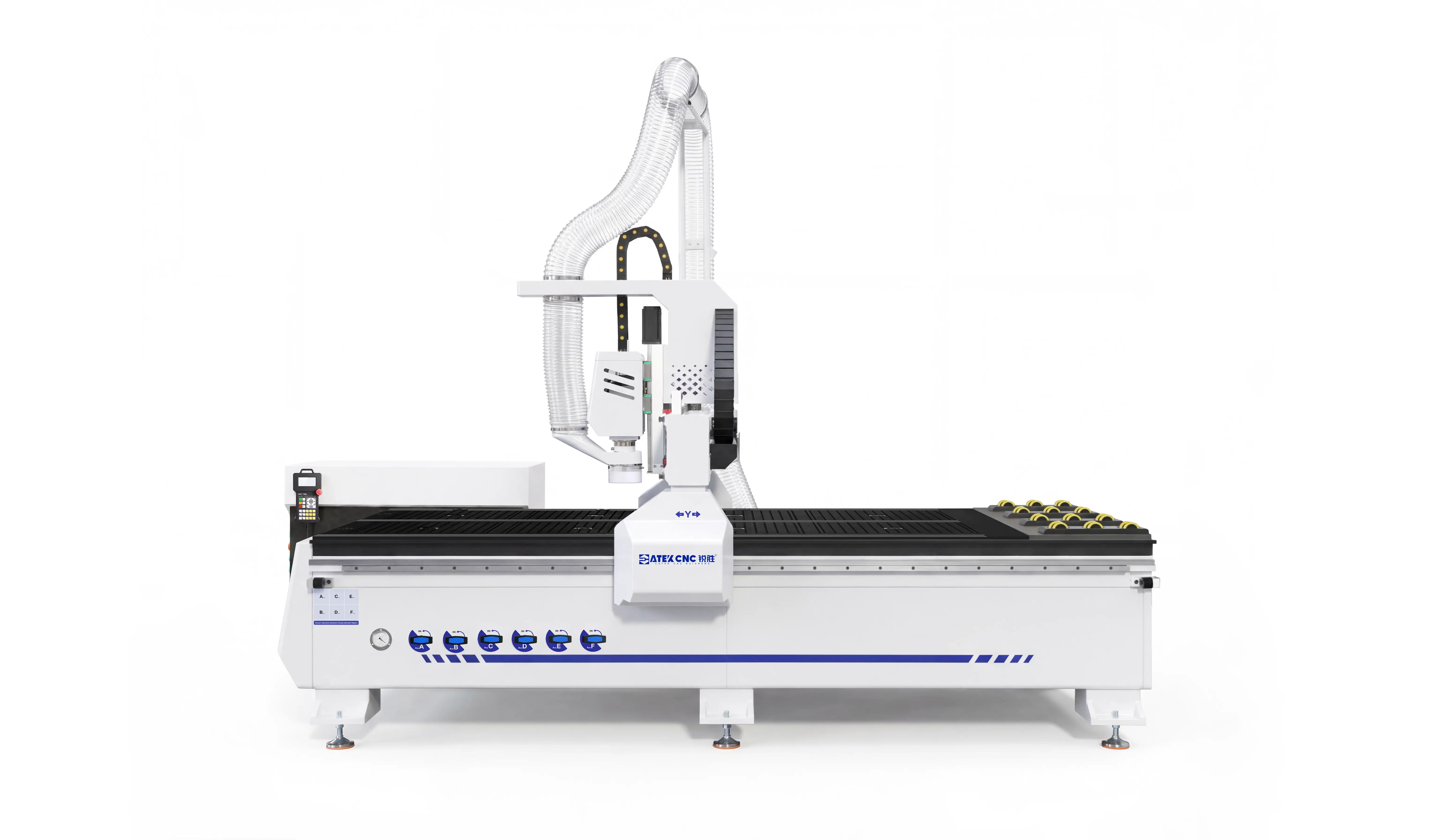
This cost-effective 4×8ft CNC wood router from the Spire Series features a dual-mode worktable that integrates vacuum hold-down and T-slot mechanical clamping on a single platform. This design offers greater flexibility for securing a wide range of workpieces across various machining requirements.
Precise Balance of Investment and Productivity, Flexible Workholding, and Simplified Operation.
The CK-1325-WSP-VT is a Spire Series CNC router that combines flexible workholding solutions with efficient machining performance. Featuring a working area of 1300 × 2500mm (4 × 8 ft), the machine adopts a dual-mode workholding design that integrates a vacuum table with aluminum T-slot, allowing users to select the most suitable clamping method for different production requirements.
For high-volume panel processing, the vacuum table securely holds workpieces in place, significantly improving loading and unloading efficiency. It is widely used in the production of cabinetry, furniture, signage, musical instruments, and other panel-based products.
For non-standard, irregularly shaped, or 3D workpieces, the T-slot table can be used with mechanical clamps to provide flexible and secure workholding. This makes the machine well suited for applications such as mold manufacturing, model making, toy production, and prop fabrication.
In addition, the vacuum table and T-slot clamping system can be used together to further enhance workholding stability. When machining large panels, vacuum suction combined with mechanical hold-down clamps helps prevent material movement. For smaller workpieces, where sufficient vacuum pressure may be difficult to achieve due to limited sealing area, T-slot clamps can be used to provide reliable supplemental fixation, ensuring secure and consistent machining results.
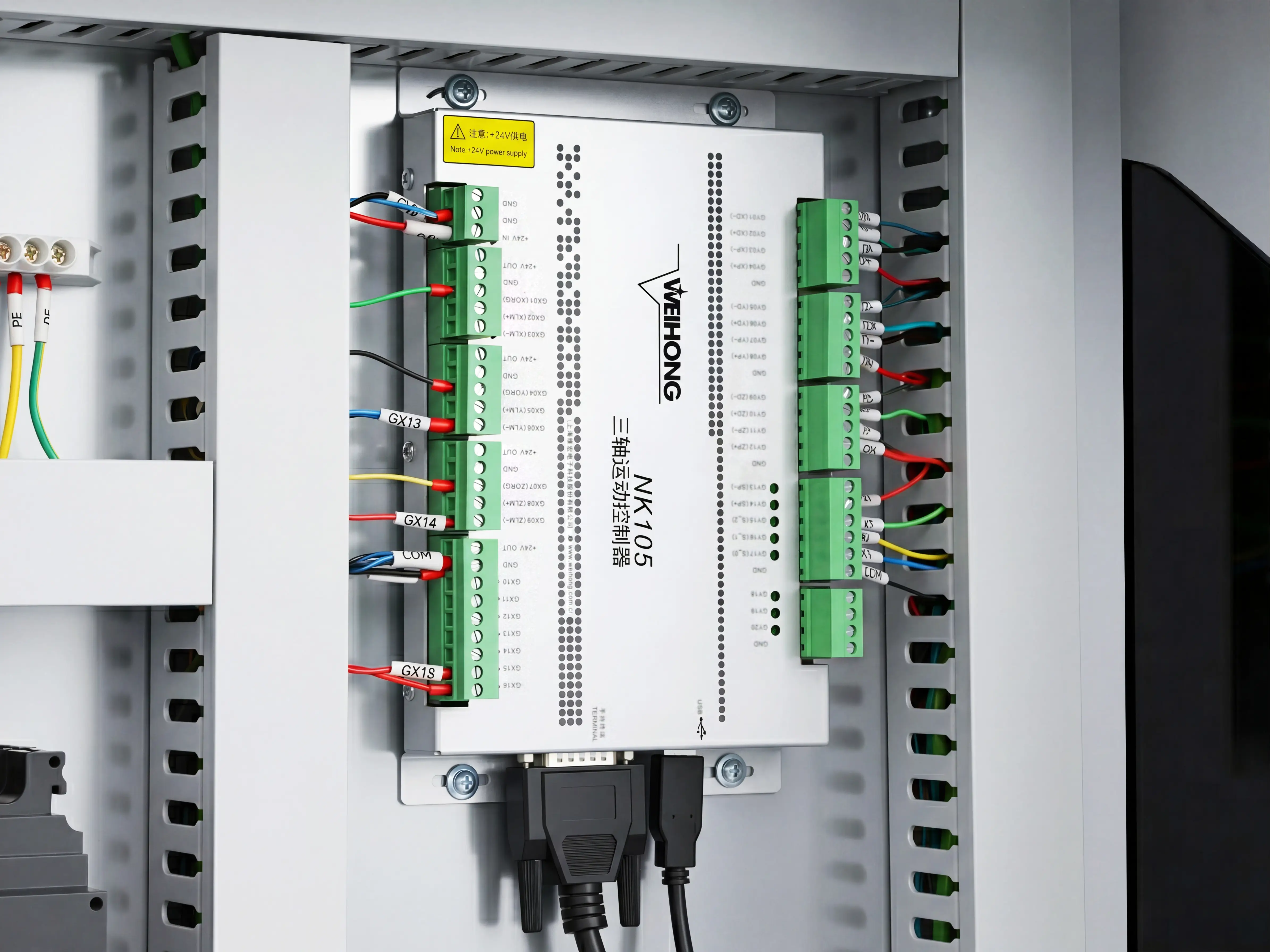
The machine is equipped with a 3.5kW high-speed water-cooled spindle and a servo drive system, both independently developed by CATEKCNC. This configuration is optimized for standard machining applications, delivering stable production performance with a more cost-effective investment. Paired with the Weihong NK105 handheld controller, operation is intuitive and user-friendly, allowing machining to begin with minimal setup. Its robust machine structure, smooth transmission system, and comprehensive safety features ensure dependable long-term continuous operation.
As a member of the Spire Series, the CK-1325-WSP-VT offers a more economical purchase price without compromising on service standards. It is manufactured in strict accordance with Spire's production processes and quality-control system, and is backed by the full range of Spire support services, including an exclusive five-year extended warranty, lifetime maintenance service, and 24/7 after-sales support. With a lower investment threshold and the same high-level service commitment, the CK-1325-WSP-VT provides comprehensive assurance for reliable, long-term machine performance.
Core Advantages of Spire 1325 CNC
Router: Four Dimensions to Reshape the Standards of
High-Efficiency Production
01.
Dual-Mode Worktable, Convenient Workholding Across Diverse Applications.
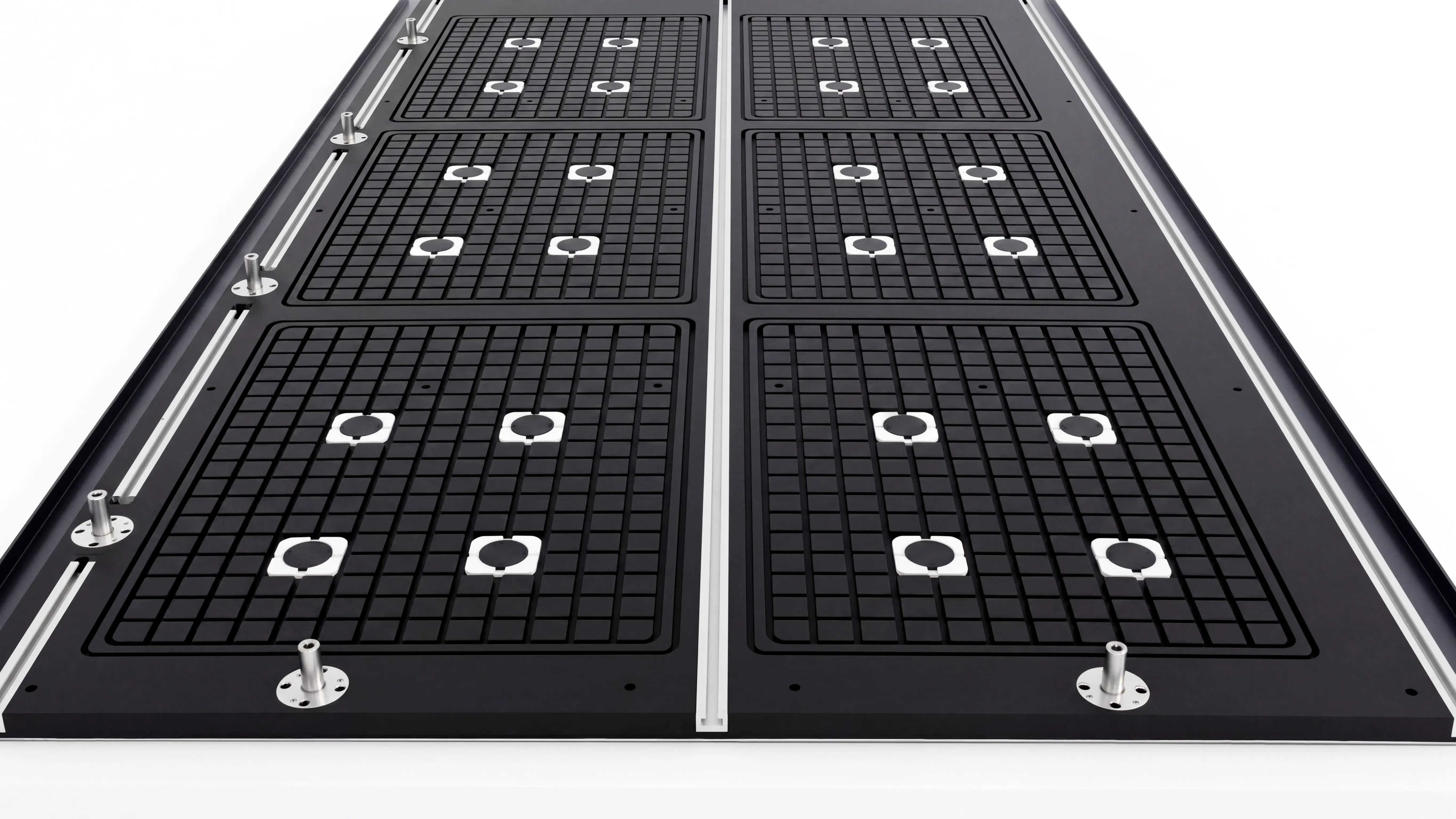
The vacuum table is constructed from high-strength rigid PVC and precision-machined as a single piece, with integrated aluminum T-slot. Equipped with a 6-zone, 24-hole vacuum hold-down system, it supports two workholding methods to accommodate different production requirements. For high-volume panel processing, the vacuum hold-down system can be used independently to secure workpieces quickly and efficiently, reducing setup time and significantly improving productivity. For prototyping, small-batch production, or machining irregularly shaped parts, the T-slot table can be used independently with hold-down clamps for flexible and reliable workholding. The two systems can also be used together, with vacuum suction securing the panel while T-slot clamps provide additional support at the edges and corners, creating a dual-hold configuration for enhanced stability during machining.
The CNC router is equipped with a 3.5 kW spindle independently developed by CATEKCNC, providing reliable performance for common machining operations such as cutting, drilling, and grooving in materials including wood, acrylic, and similar substrates. Compared with higher-power spindle configurations, it offers lower energy consumption and reduced operating costs while maintaining the performance required for everyday production tasks. Paired with a BEST variable frequency drive (VFD) and a CW5200 chiller, the system is capable of 24-hour continuous operation. With power output precisely matched to typical machining requirements, this cost-effective configuration delivers comprehensive coverage of standard applications while offering excellent overall value and return on investment.
03.
Fast and Easy Setup, User-Friendly Operation.
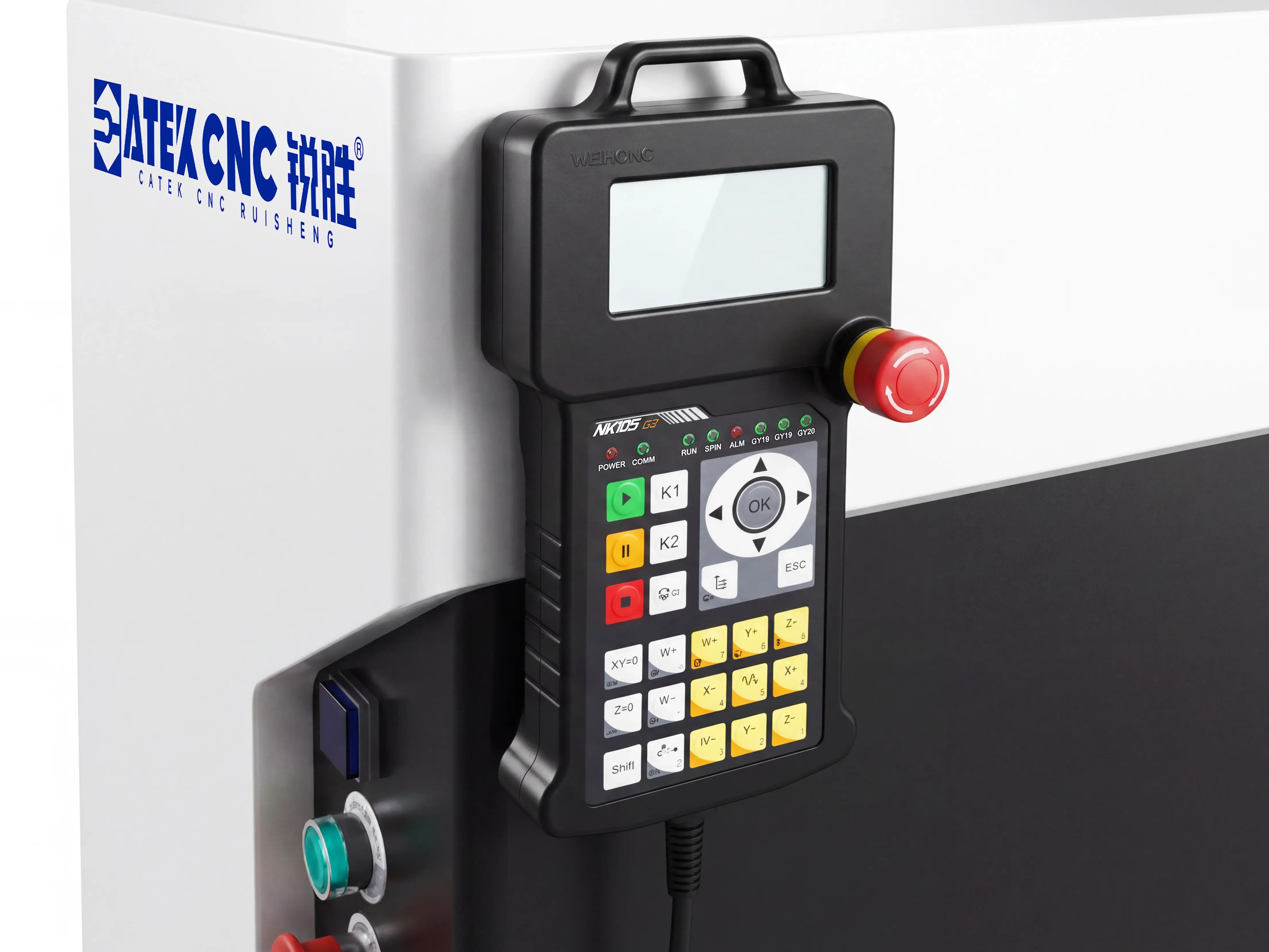
To simplify operation, the Spire 1325 is equipped with the Weihong NK105 G3 industrial handheld controller. Designed with an intuitive and easy-to-understand control interface, it allows operators to control the machine directly without connecting to a computer, enabling convenient operation while moving around the machine. Combined with automatic positioning and automatic tool setting functions, tasks that traditionally require multiple steps—such as workpiece positioning, clamping, and tool setting—can be completed with a single command. In addition, each machine is delivered with a complete set of illustrated guides and instructional videos. While maintaining industrial-grade operational stability, the system significantly reduces the learning curve, allowing even first-time operators to quickly achieve independent production and helping businesses lower training costs.
The Spire 1325 is more than just a high-performance machine—it is backed by comprehensive lifecycle support for complete peace of mind. Each machine is assigned a unique Spire serial number, providing access to an exclusive support program that includes a five-year warranty, dedicated one-to-one after-sales service, and 24/7 online technical support. In addition, The Spire provides lifetime maintenance support and free control system software upgrades. From installation and commissioning to long-term maintenance and technical assistance, every aspect of machine ownership is fully supported to ensure stable production and a worry-free operating experience throughout the machine's service life.
Choosing the Spire 1325 CNC Router means
choosing
Higher return on investment
Featuring a cost-effective configuration with a 3.5 kW water-cooled spindle, the machine delivers excellent machining performance while maintaining low operating costs. By effectively controlling overall expenses, it helps maximize profitability and achieve a stronger return on investment.
Greater flexibility in machining
The combination of a vacuum table and aluminum T-slot clamping system provides versatile workholding options for different applications. Together with an intuitive control system, setup and operation are significantly simplified, making it easy to handle a wide range of machining requirements.
Its user-friendly design reduces reliance on highly skilled operators, while its stable and reliable performance minimizes downtime caused by equipment failures. The result is sustained productivity growth, lower operating costs, and greater long-term value for your business.
More reassuring full-process guarantee
While benefiting from exceptional cost performance, you also receive a five-year extended warranty and dedicated engineering support. This comprehensive service package ensures consistent machine performance, helping you maintain higher productivity, reduce costs, and maximize long-term returns.
Heavy-Duty Frame, The Foundation of Precision and Stability
Heavy-Duty Bed Base Dedicated to Spire
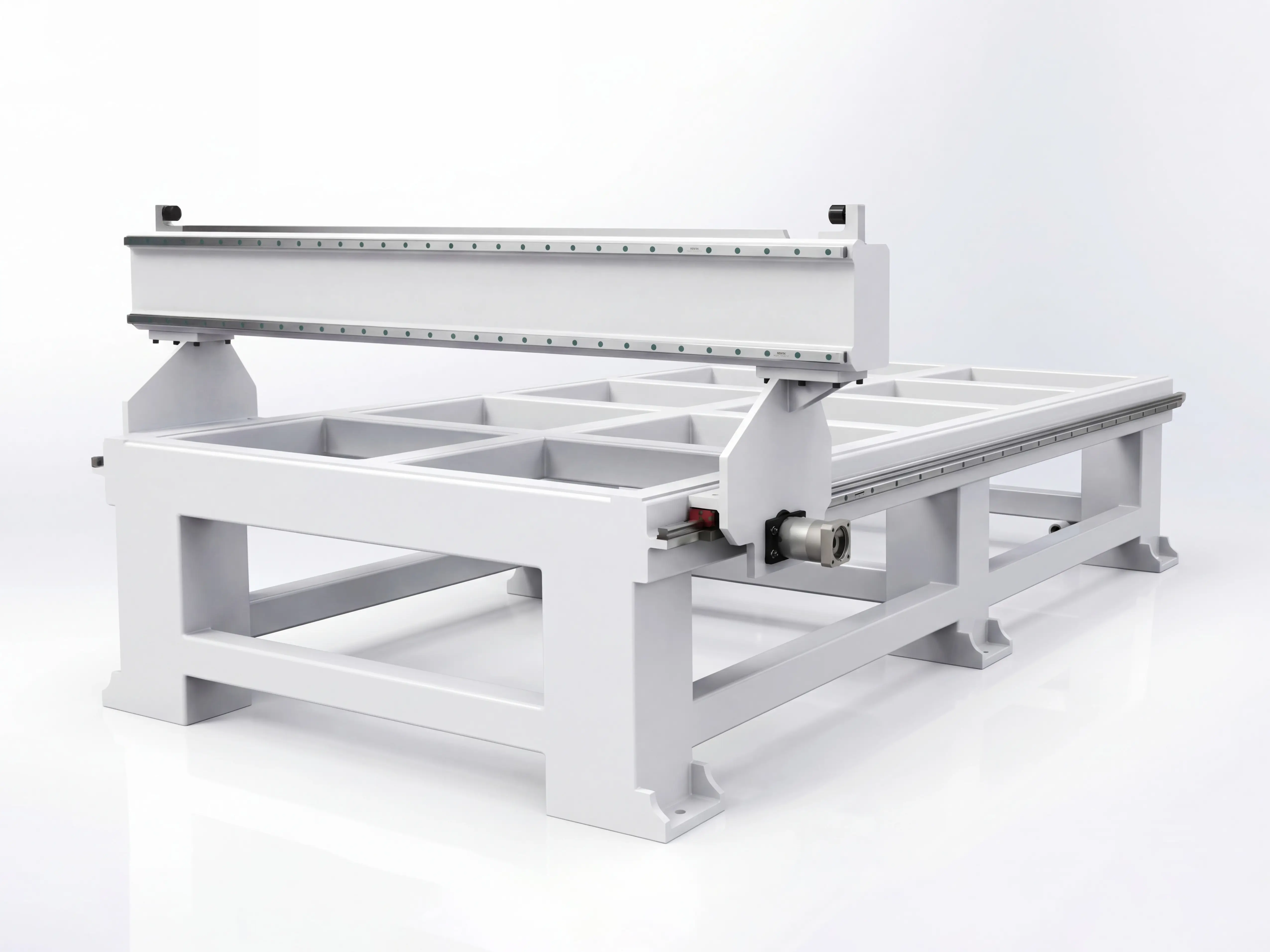
The entire machine frame is fabricated from heavy-duty welded steel tubing and further enhanced through structural optimization exclusive to the Spire Series. After welding, the frame undergoes both vibration aging and annealing stress-relief treatments to eliminate internal stresses, preventing deformation or weld fatigue caused by long-term vibration and ensuring long-term structural stability from the foundation up.
The dual stress-relief process releases residual elastic stresses generated during fabrication, minimizing flatness and parallelism deviations of the mounting surfaces. This provides greater accuracy at critical installation interfaces, ensuring precise assembly of transmission components and reducing the risk of positioning errors during long-term operation.
Reinforced mounting areas are incorporated at key transmission component locations. Thickened steel plates are added to the guide rail and rack mounting surfaces, which are then precision-machined in a single operation using a five-axis gantry milling machine. This design helps distribute concentrated cutting loads more effectively, counteracts lateral stresses generated during high-speed operation, and significantly improves local bending resistance for enhanced machine rigidity and durability.
Heavy-Duty Reinforced Gantry
The machine is equipped with a high-strength reinforced gantry beam, with additional steel strip reinforcement welded to critical load-bearing areas such as the guide rail and rack mounting sections. All transmission system mounting surfaces on the gantry beam are precision-machined using a gantry milling machine, achieving exceptional surface flatness and ensuring smooth, accurate, and stable X-axis motion.
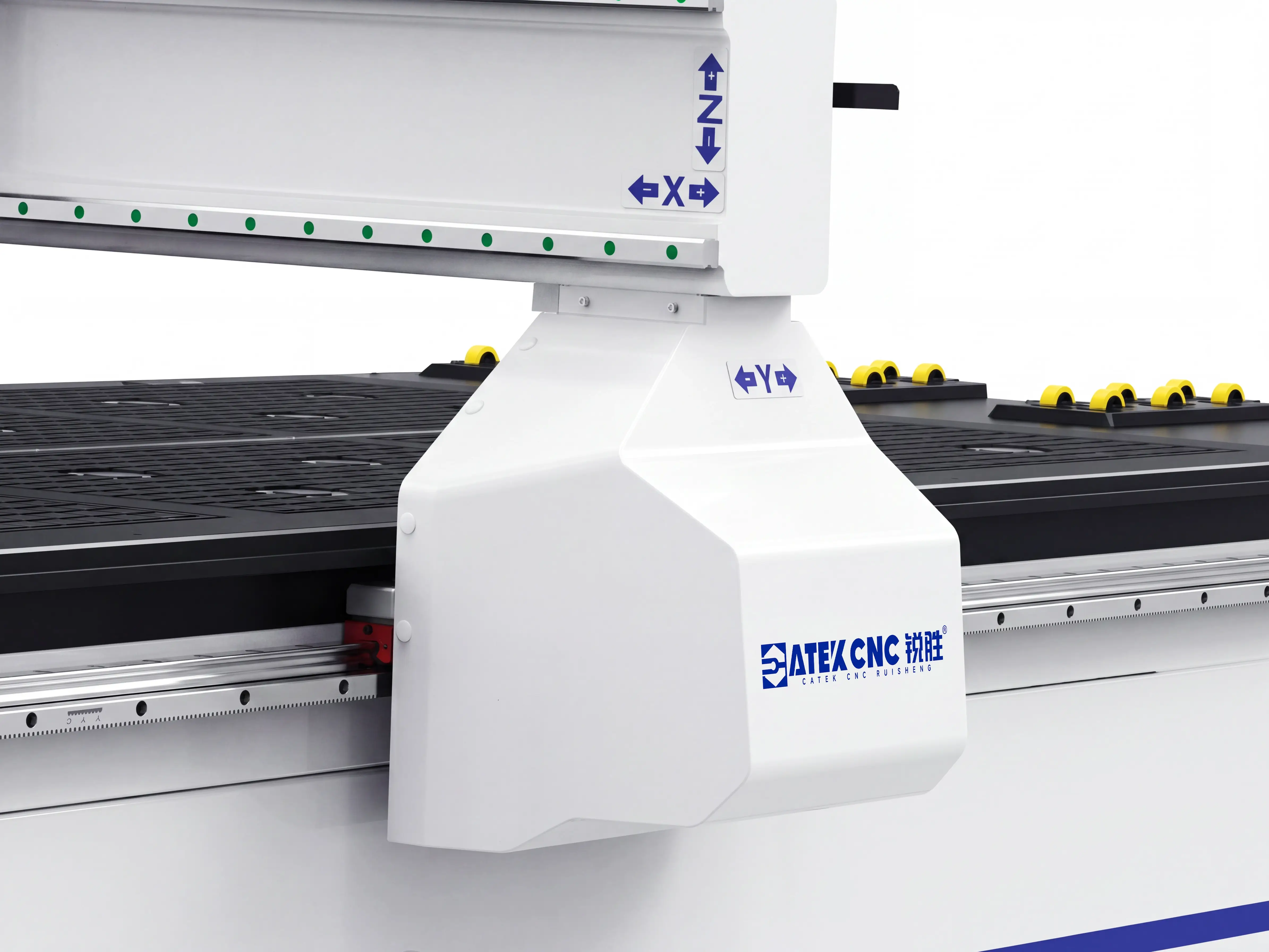
High-rigidity cast iron gantry columns are installed on both sides of the machine frame. With excellent vibration-absorption properties, they effectively suppress high-frequency vibrations generated during high-speed spindle cutting and frequent acceleration and deceleration cycles. This helps prevent vibration transmission to the gantry beam and machine frame, reducing tool chatter that can cause edge chipping or uneven surface finishes, while improving overall machining quality and surface smoothness.
All mating surfaces between the machine frame, gantry columns, and gantry beam are precision-machined using a milling process to ensure tight fitment and uniform load distribution, forming a robust gantry structure. The extremely tight assembly tolerances minimize play at connection points, preventing loosening or vibration during heavy-duty machining and ensuring safe, reliable, and long-term machine operation.
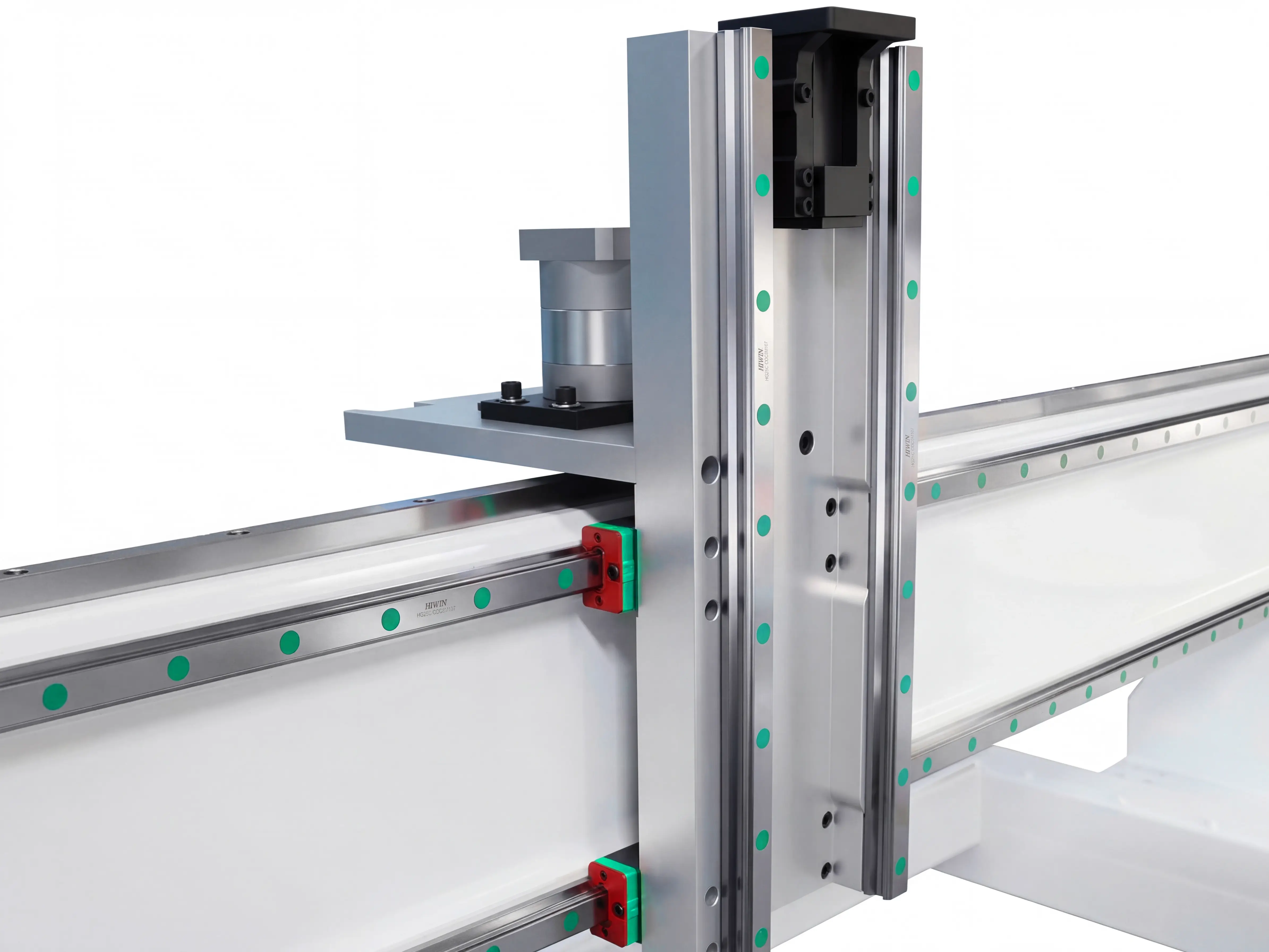
The machine is equipped with a 46mm-thick aluminum Z-axis mounting plate, significantly thicker than those typically found on comparable machines in the industry. Manufactured from a single piece of aluminum alloy with no welding or joints, it provides exceptional structural rigidity and resists bending or deformation even when supporting the complete spindle and motor assembly, ensuring consistent Z-axis machining accuracy.
The lightweight properties of aluminum alloy effectively reduce the load and inertia of the Z-axis motion system. This allows smoother and more stable lifting, lowering, and fine-positioning movements, minimizing vibration and positioning deviations during high-speed directional changes.
The mounting plate is treated with a hard anodizing process, providing outstanding surface hardness as well as excellent wear resistance, corrosion resistance, and oxidation resistance. Even under long-term intensive operation, it remains highly resistant to wear and aging, helping maintain machining accuracy over time while extending the overall service life of the machine.
High-Strength Leveling Feet
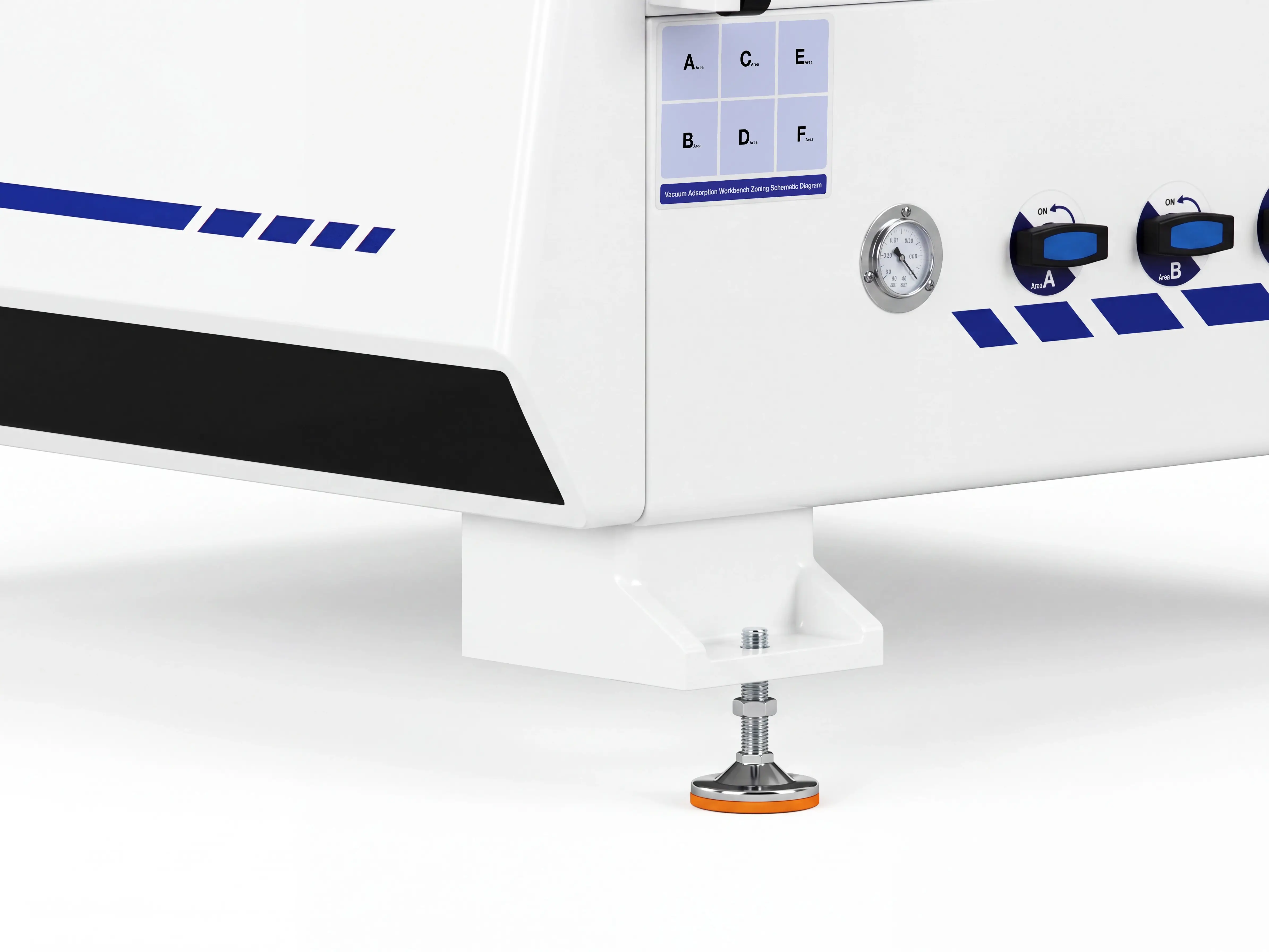
The machine frame is supported by six support legs, each equipped with an adjustable leveling foot. Evenly distributed across the frame, the six support points help balance the machine's weight and the loads generated during material processing, preventing minor frame deformation caused by uneven stress distribution.
Each leveling foot features a threaded adjustment mechanism for precise height adjustment. When installed on uneven or sloped workshop floors, the height of each support leg can be independently fine-tuned, allowing quick and accurate machine leveling without the need for shims. This design ensures compatibility with a wide variety of workshop environments.
The base of each leveling foot is fitted with a non-slip vibration-damping rubber pad, providing both shock absorption and enhanced stability. The rubber material helps absorb low-frequency vibrations generated during machine operation, reducing structural resonance, while its high-friction surface prevents unintended machine movement during machining. The result is smoother, safer, and more reliable machine performance.
Click the icon labels to view different machine
parts
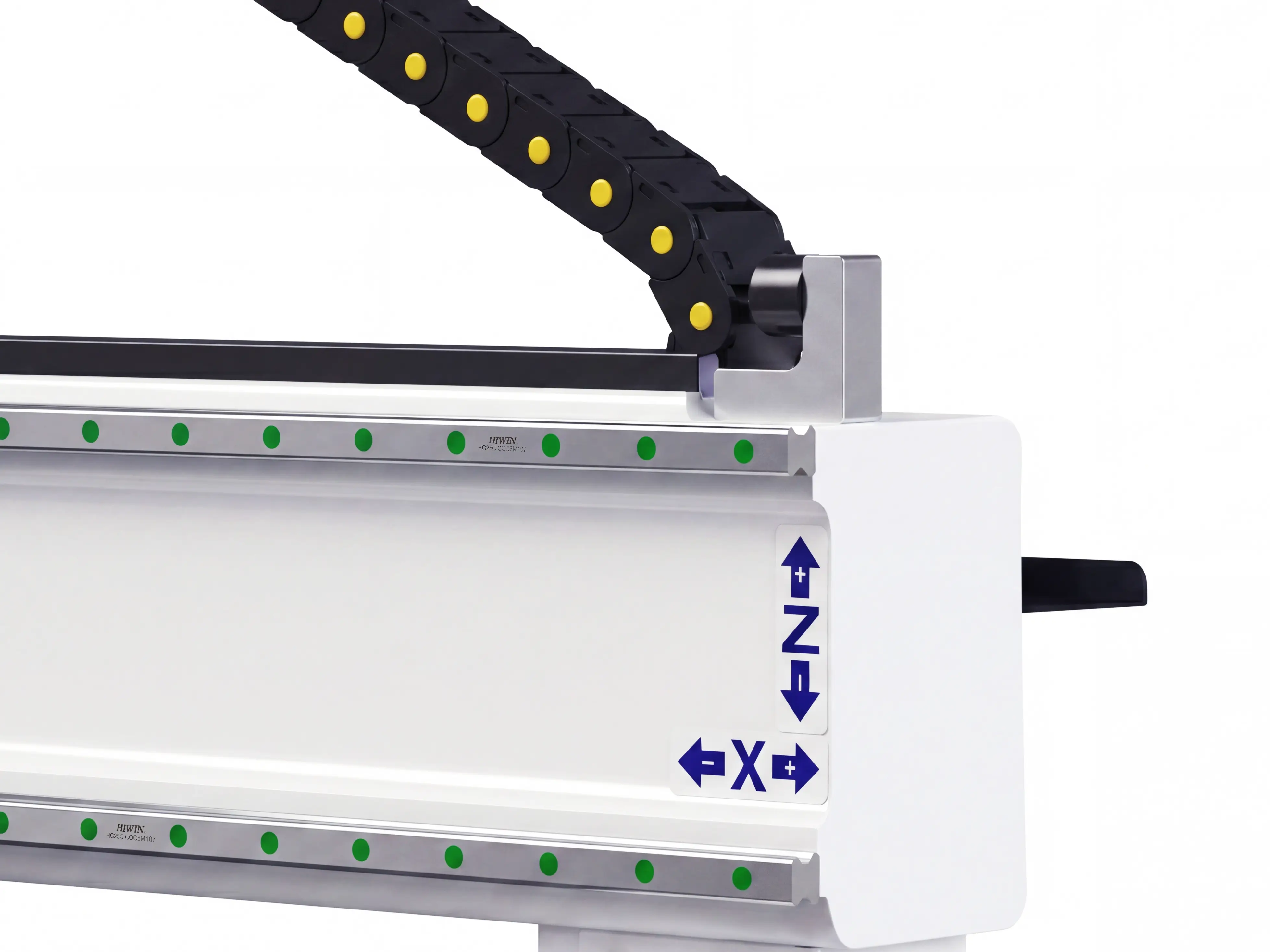
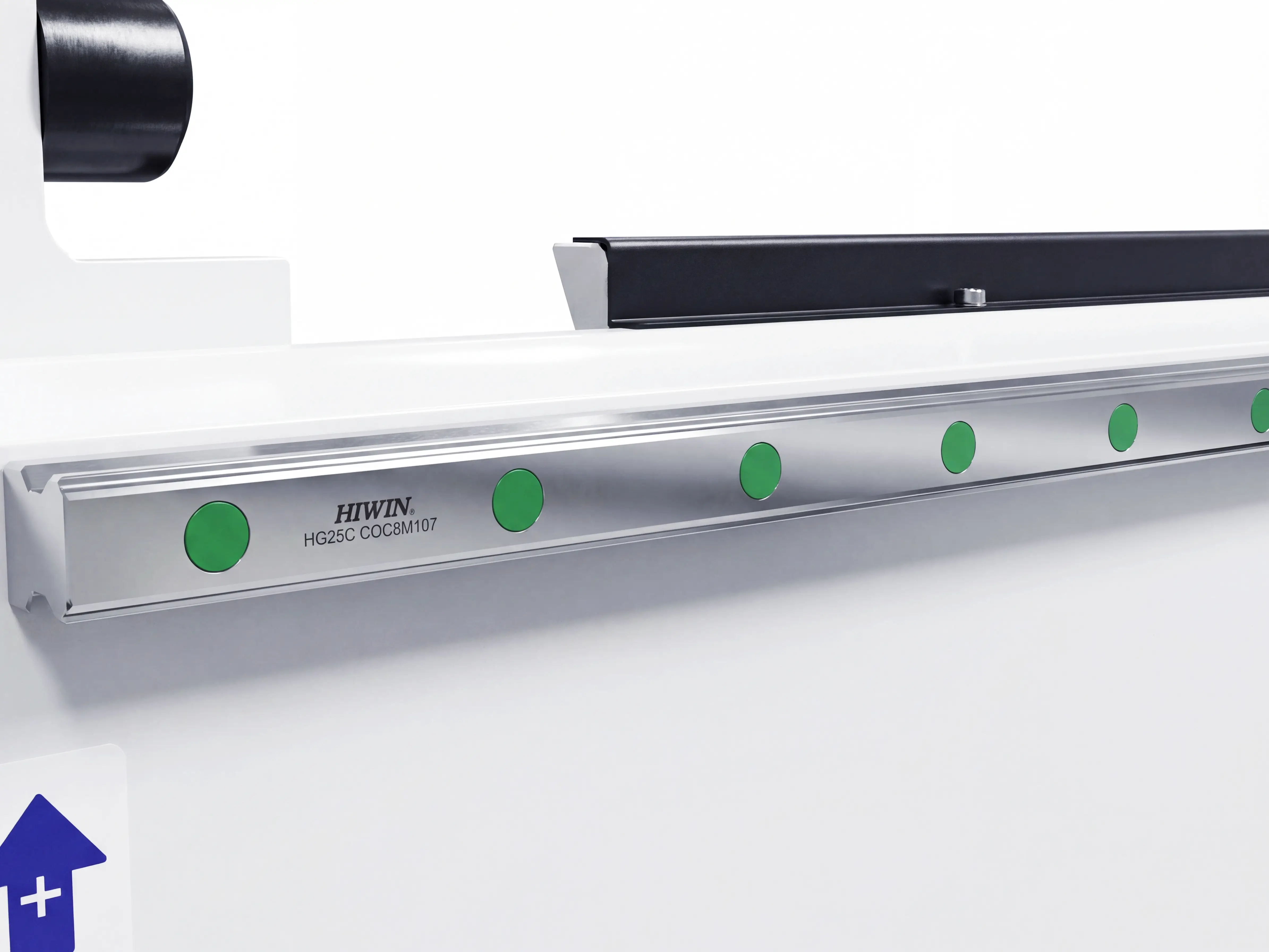
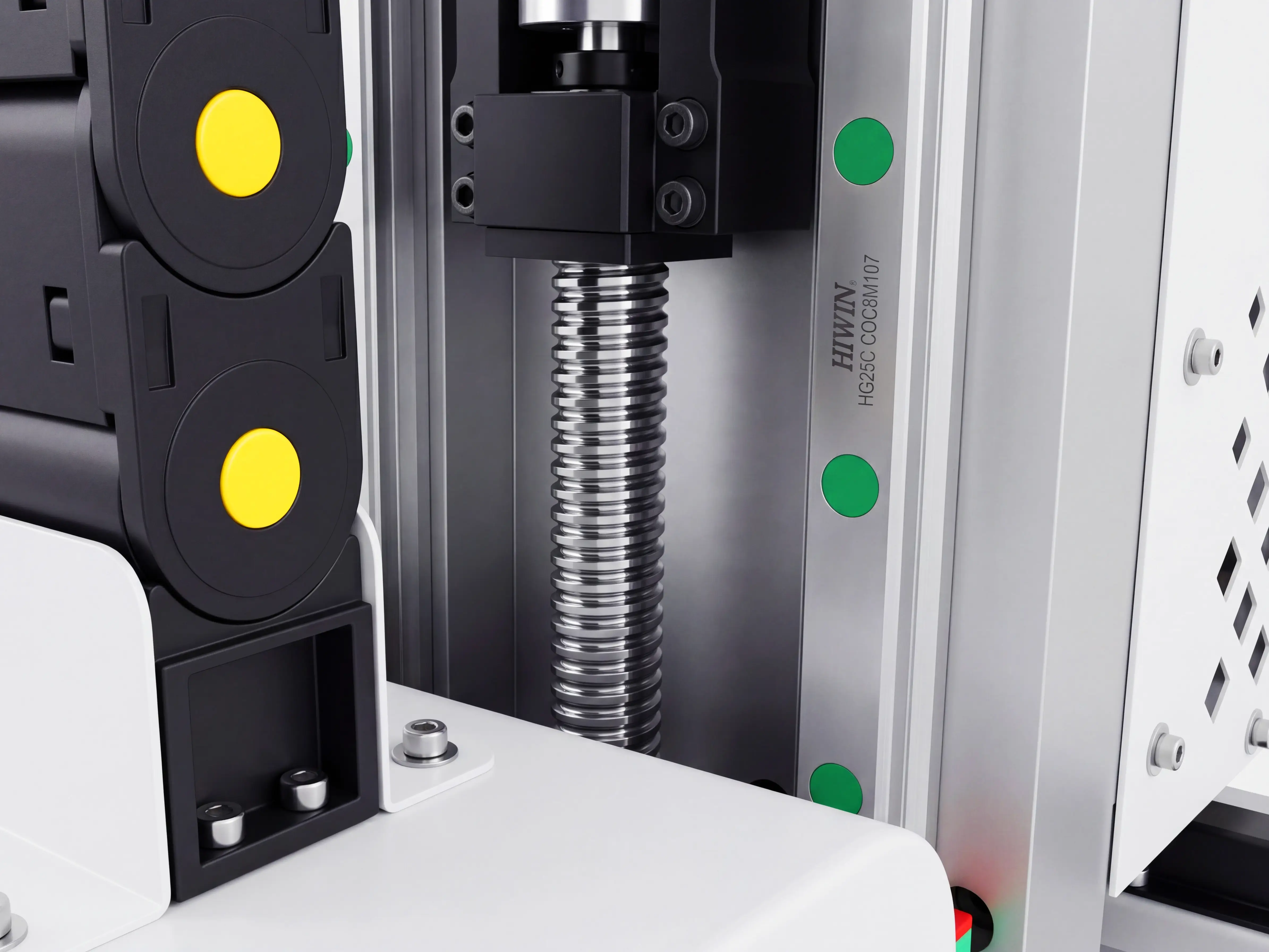
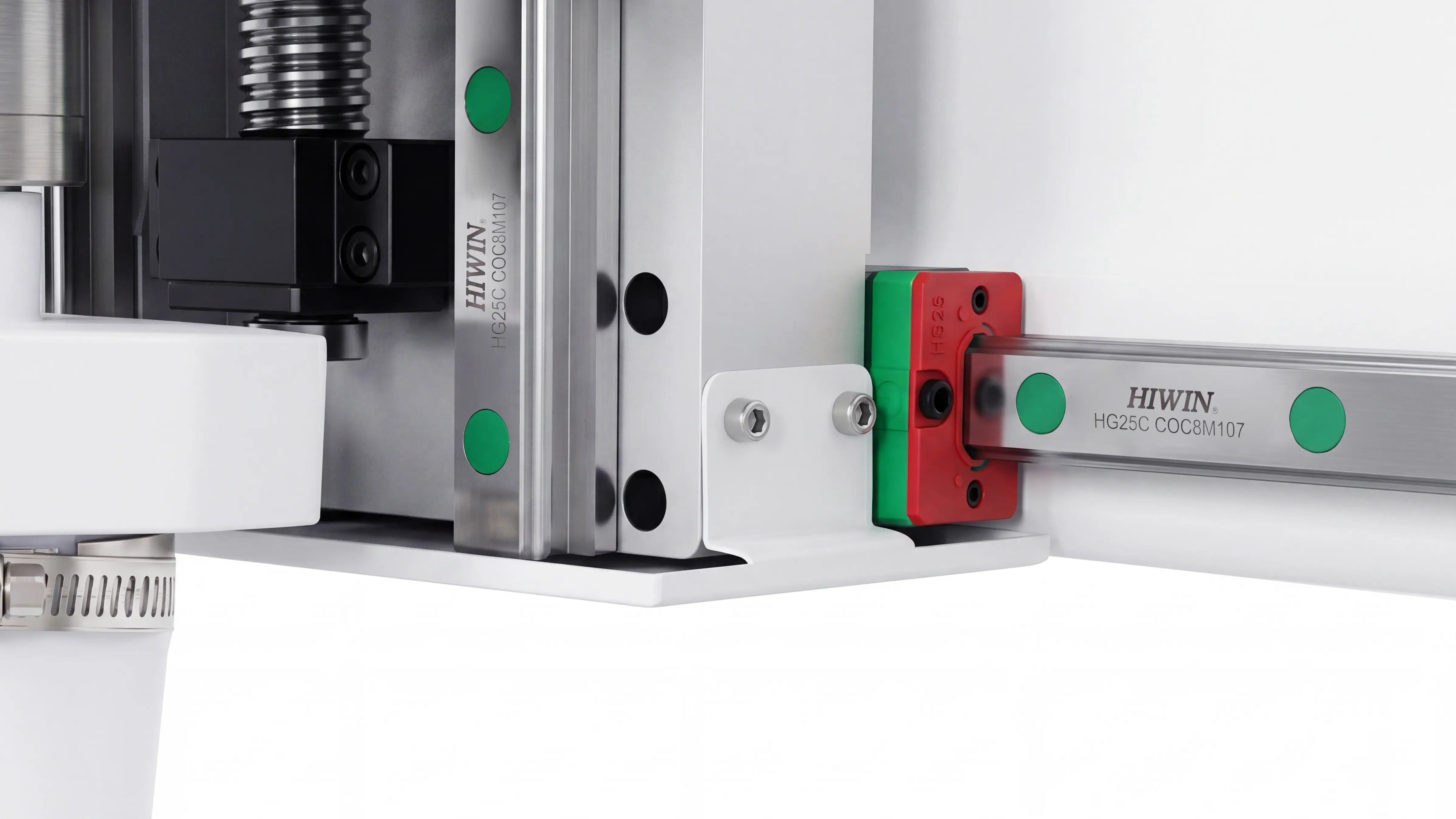
The X, Y, and Z axes are all equipped with 25mm heavy-duty linear guideways from HIWIN, Taiwan. The rail surfaces undergo a super-finished carburizing and hardening process, providing exceptional hardness, wear resistance, and scratch resistance. Even under continuous exposure to wood chips, dust, and fine abrasive particles commonly found in workshop environments, the rails maintain smooth motion with minimal wear, ensuring long service life and reliable performance.
The guideways feature a four-row ball-bearing design with optimized load distribution, providing balanced radial and lateral load-carrying capacity. Their self-aligning capability helps compensate for minor installation inaccuracies and assembly deviations, reducing the risk of deformation. This ensures excellent structural rigidity and stable operation during high-speed reciprocating motion, resulting in smooth and vibration-free machining.
Equipped with a dual-layer dust protection system that effectively prevents wood chips, dust, and other contaminants from entering the guide rail assembly. This helps eliminate the risk of binding, abnormal noise, or premature wear caused by foreign particles. With precise rail-to-block fitment, low running resistance, and smooth motion characteristics, the system maintains outstanding performance even during prolonged high-frequency operation.
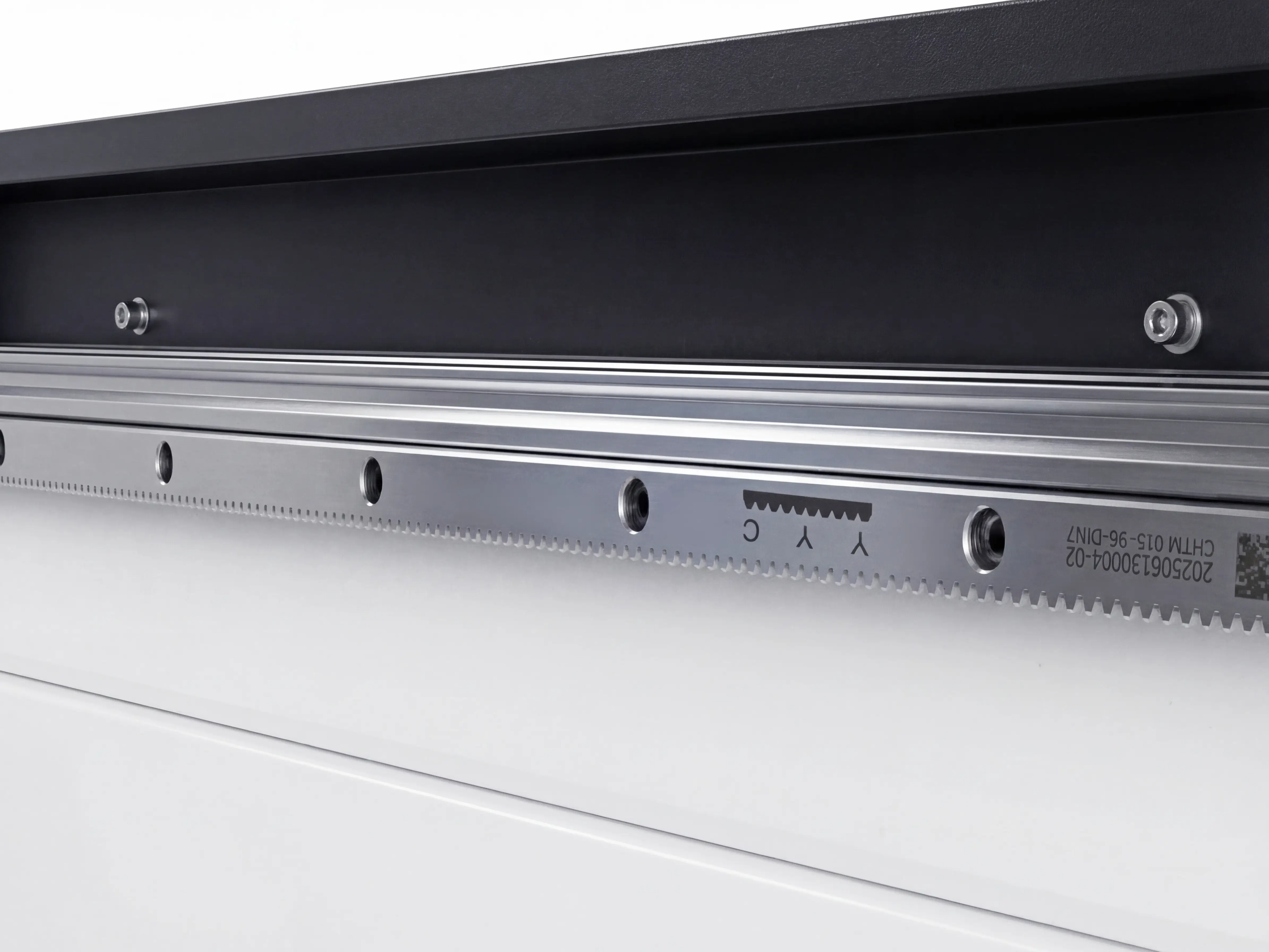
The CNC router utilizes YYC precision-ground helical rack and pinion systems from Taiwan. Featuring a progressive meshing design, the helical tooth profile provides greater tooth engagement and more uniform load distribution. The gear teeth are precision-ground to achieve high profile accuracy and minimal backlash, significantly reducing impact, vibration, and noise during operation. This ensures smooth power transmission and helps improve machined surface finish quality.
Manufactured from high-strength materials and treated with high-frequency hardening, the rack teeth achieve a surface hardness exceeding HRC 60. This provides outstanding wear resistance and fatigue strength, enabling the system to withstand the instantaneous impact loads generated during high-speed cutting. Even under prolonged high-frequency reciprocating operation, the rack remains highly resistant to wear and deformation, extending service life while reducing long-term maintenance costs.
The helical rack and pinion design delivers smooth transmission performance and high load-carrying capacity. Combined with precision grinding technology that minimizes pitch errors, it enables highly accurate linear axis positioning and motion control. Whether performing intricate engraving operations or high-volume cutting applications, the system ensures consistent dimensional accuracy. Its long-term transmission precision remains stable over time, helping maintain reliable and repeatable machining quality.
TBI (Taiwan) High-Precision Ground Ball Screw
The Z-axis is equipped with a TBI precision-ground ball screw from Taiwan, featuring a Gothic-arch groove design and precisely ground, highly uniform raceways. Its rolling-contact transmission achieves an efficiency exceeding 90% while requiring very low starting torque—a significant improvement over conventional lead screws. When properly preloaded, the system delivers high rigidity together with exceptionally smooth motion, eliminating stick-slip effects and ensuring stable, precise Z-axis movement.
The ball screw is manufactured from high-quality alloy steel and undergoes comprehensive heat treatment and deep surface hardening. With a raceway hardness exceeding HRC 58, it offers an excellent balance of hardness, toughness, and impact resistance. Under high-frequency reciprocating motion and continuous cutting loads, the screw maintains its dimensional stability and resists wear and deformation, providing outstanding fatigue resistance and long-term transmission accuracy.
A dual-nut spacer preload design is employed to effectively eliminate axial backlash. Combined with tightly controlled lead accuracy, the system minimizes positioning errors along the Z-axis and provides reliable precision for demanding and complex machining applications.
Diaphragm Coupling
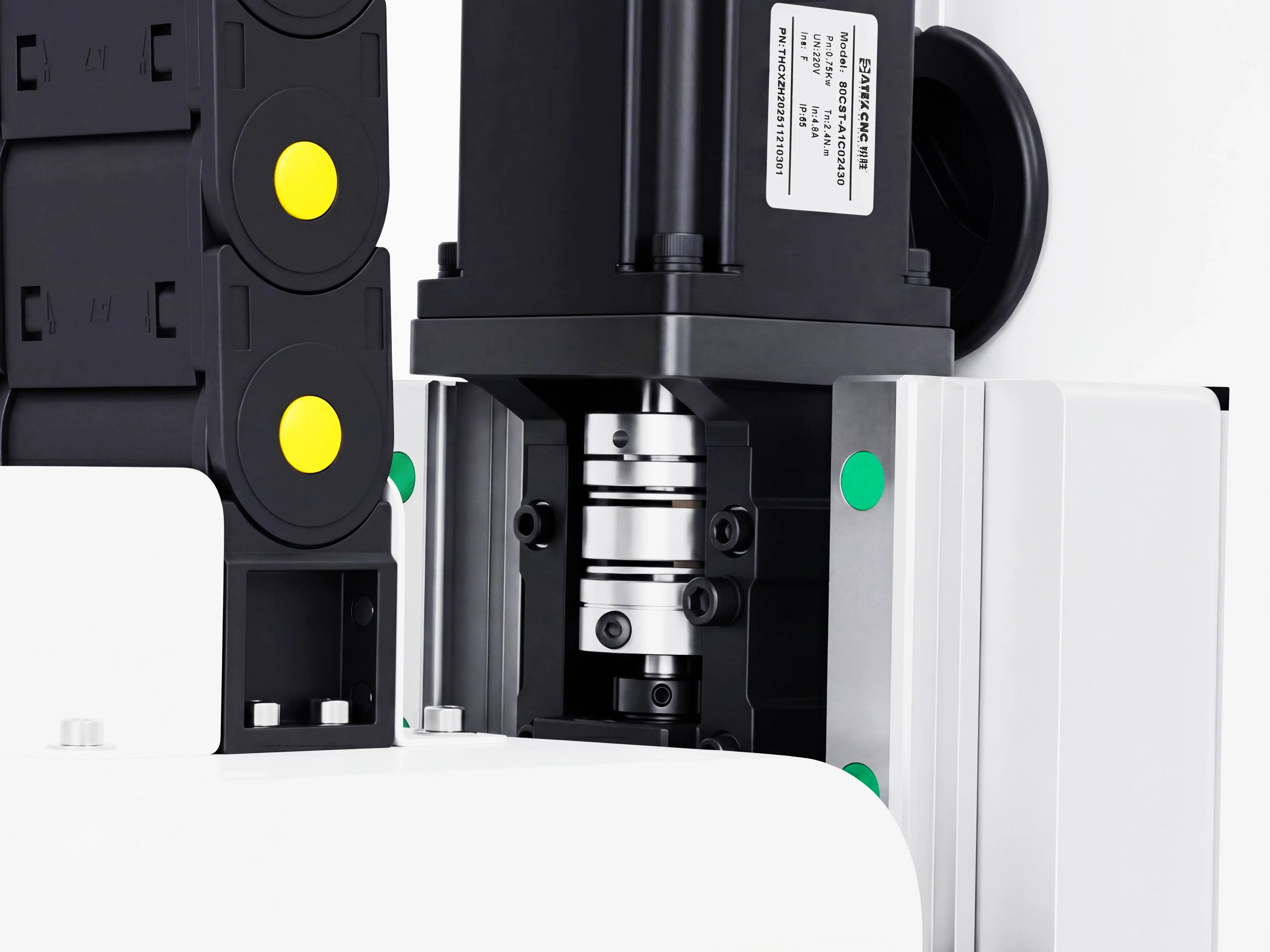
The Z-axis ball screw is connected to the servo motor through a precision coupling. The coupling features a one-piece aluminum alloy body combined with stainless steel diaphragm discs, allowing it to effectively compensate for axial, radial, and angular misalignment during installation. This design eliminates additional stresses caused by motor-to-screw misalignment, helping prevent premature bearing wear and ball screw deformation.
Compared with conventional jaw-type couplings, this diaphragm coupling does not introduce transmission errors caused by elastomer compression or deformation. As a result, it transfers servo motor torque to the ball screw with greater precision, contributing to improved positioning accuracy and machining performance.
The lightweight aluminum alloy body reduces the load on the Z-axis servo motor, enabling faster acceleration and deceleration response. The stainless steel diaphragm is manufactured as a single piece without welded joints, providing excellent fatigue resistance and corrosion resistance. The entire assembly requires no lubrication, contains no wearable elastomer components, and is virtually maintenance-free, significantly reducing long-term service and maintenance costs.
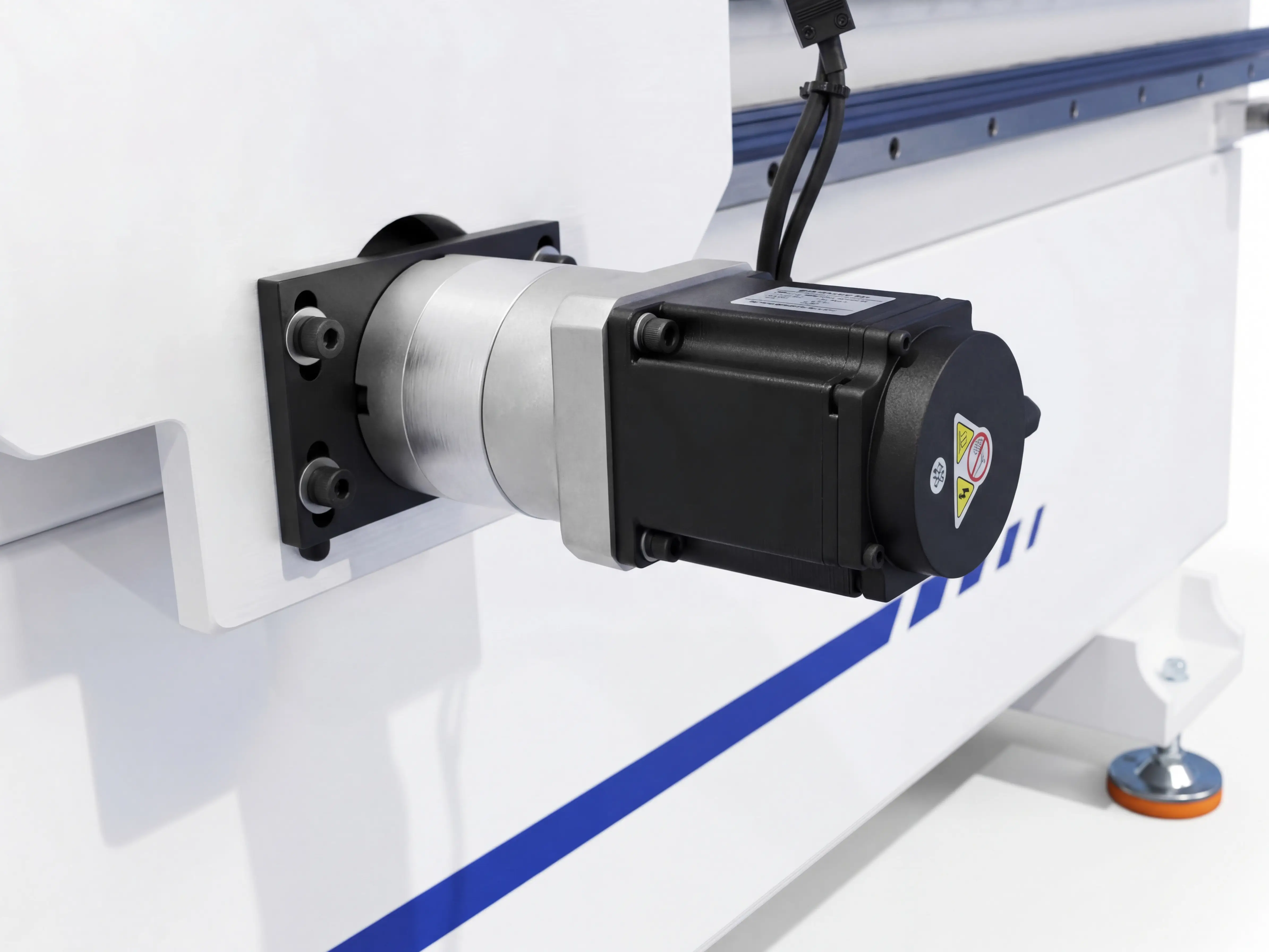
SHIMPO (Japan) Planetary Gear Reducers
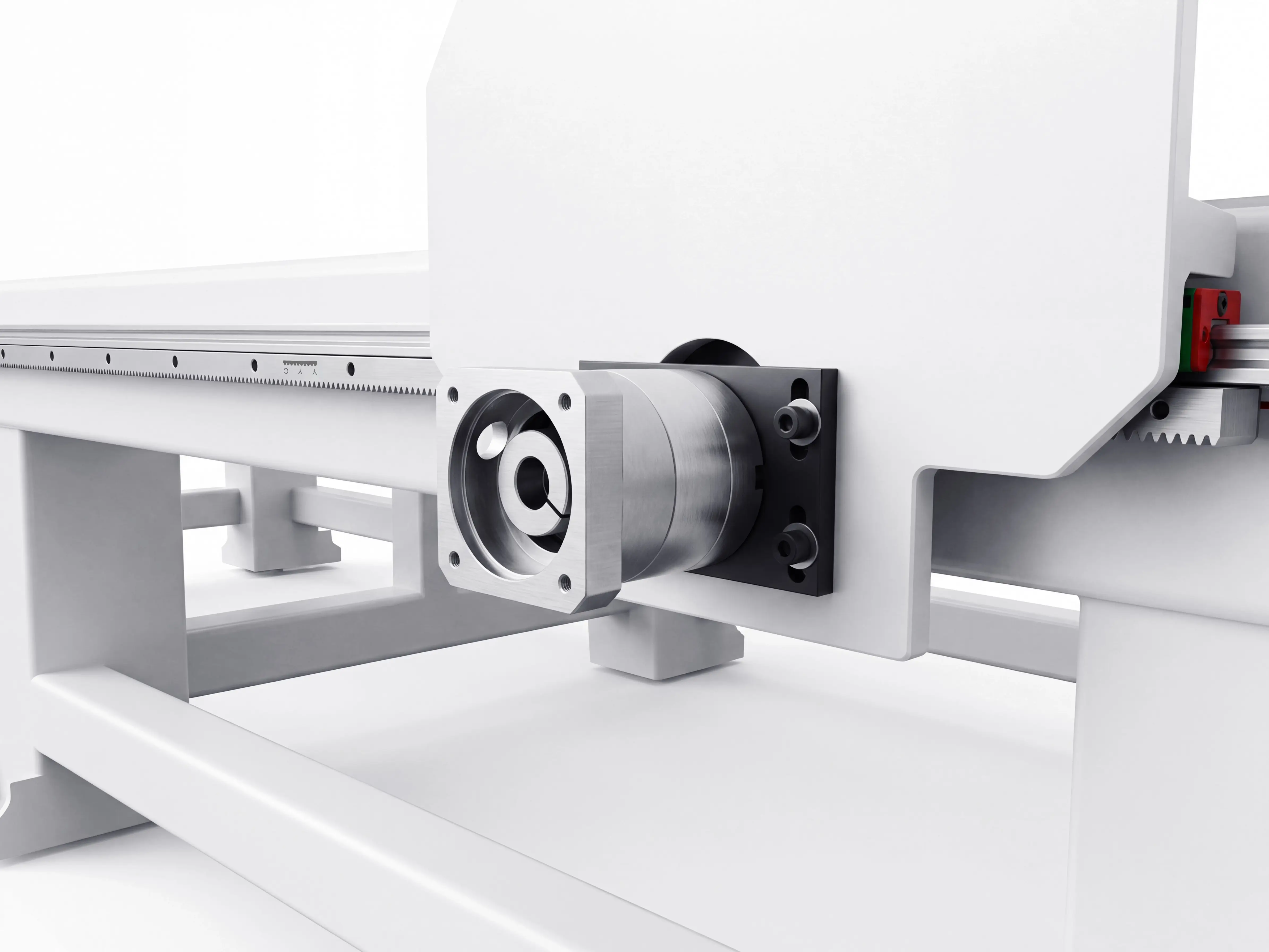
The X and Y axes are both equipped with Shimpo precision planetary reducers from Japan. Featuring a high-precision planetary gear design, these gearboxes effectively multiply the output torque of the servo motors while maintaining exceptional transmission accuracy. This ensures rapid response and precise positioning during high-speed, long-travel axis movements, providing stable power delivery for large-format panel cutting and intricate engraving applications.
The reducer gears are manufactured from premium alloy steel and undergo deep carburizing and hardening treatment. The hardened gear surfaces offer excellent wear resistance and durability, enabling the system to withstand the instantaneous impact loads generated by frequent acceleration, deceleration, and lateral cutting forces on the X and Y axes. Even under prolonged high-speed operation, the gears resist wear and deformation, ensuring long-term retention of transmission accuracy.
The reducer adopts a fully sealed design with a high level of protection against dust and debris intrusion, effectively preventing contaminants commonly found in workshop environments from entering the internal transmission system. It operates with low noise and low vibration, requires no routine maintenance, significantly reducing long-term maintenance costs while ensuring reliable performance.
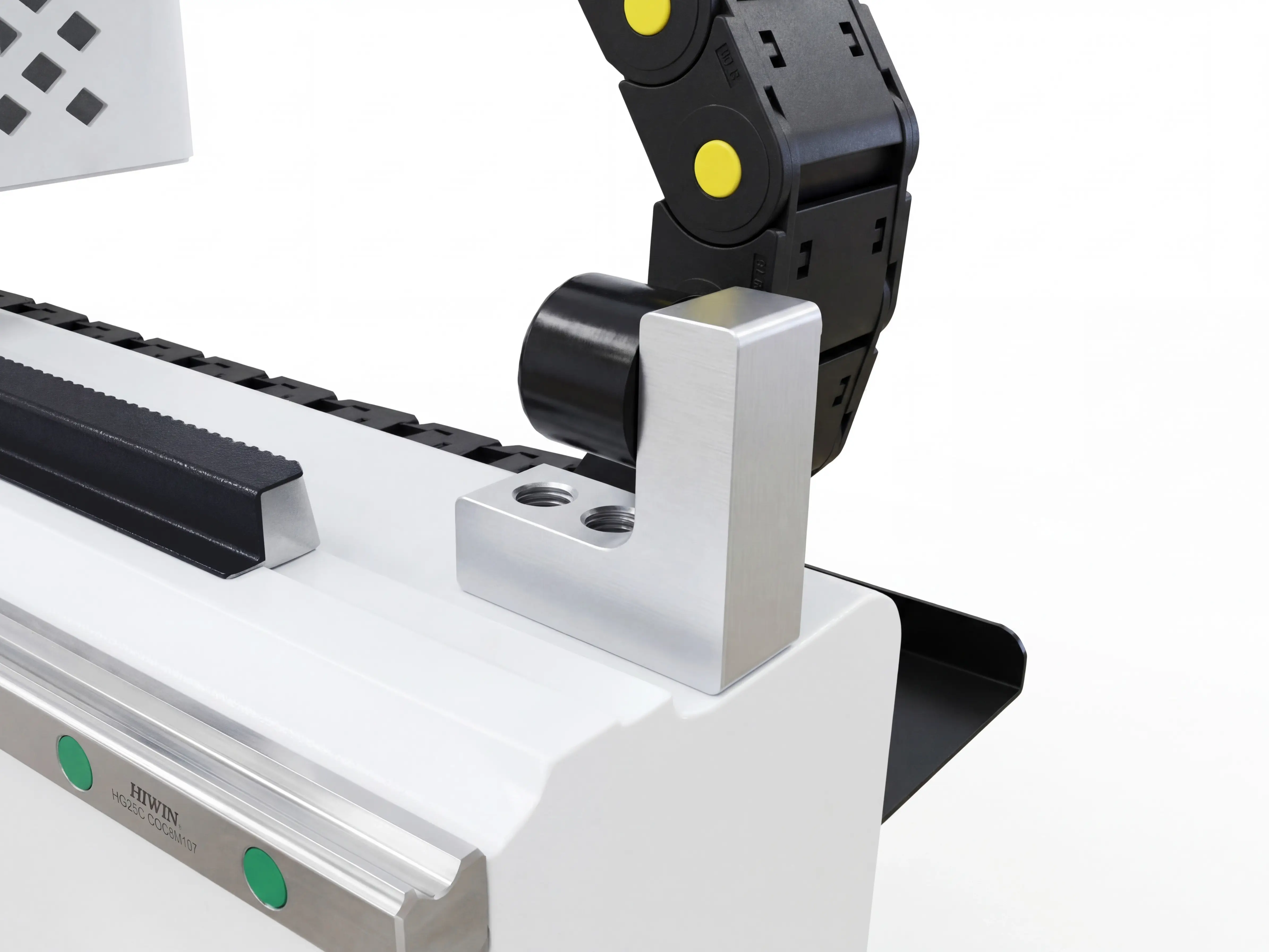
High-Strength Aluminum Alloy Limit Bumpers
High-strength limit bumpers are installed at the travel limits of the X and Y axes. The mounting base is machined from a single piece of aluminum alloy, providing excellent impact resistance and the ability to withstand the instantaneous forces generated by accidental high-speed axis overtravel without cracking or deforming.
A thick rubber damping pad is mounted on the impact surface of each collision stop. Utilizing the excellent shock-absorbing properties of rubber, it effectively dissipates a large portion of the kinetic energy generated during an impact, preventing direct contact between the moving axis assembly and the stop base and reducing the risk of mechanical damage.
In normal operation, overtravel events are detected by photoelectric limit switches, which immediately trigger the software limit system to prevent the vast majority of such incidents. As an additional safeguard beyond the photoelectric soft‑limit protection, the limit bumpers serve as the final line of defense. They help prevent damage and accidents in extreme situations, such as soft‑limit failure or excessive axis speed.
Click the icon labels to view different machine
parts
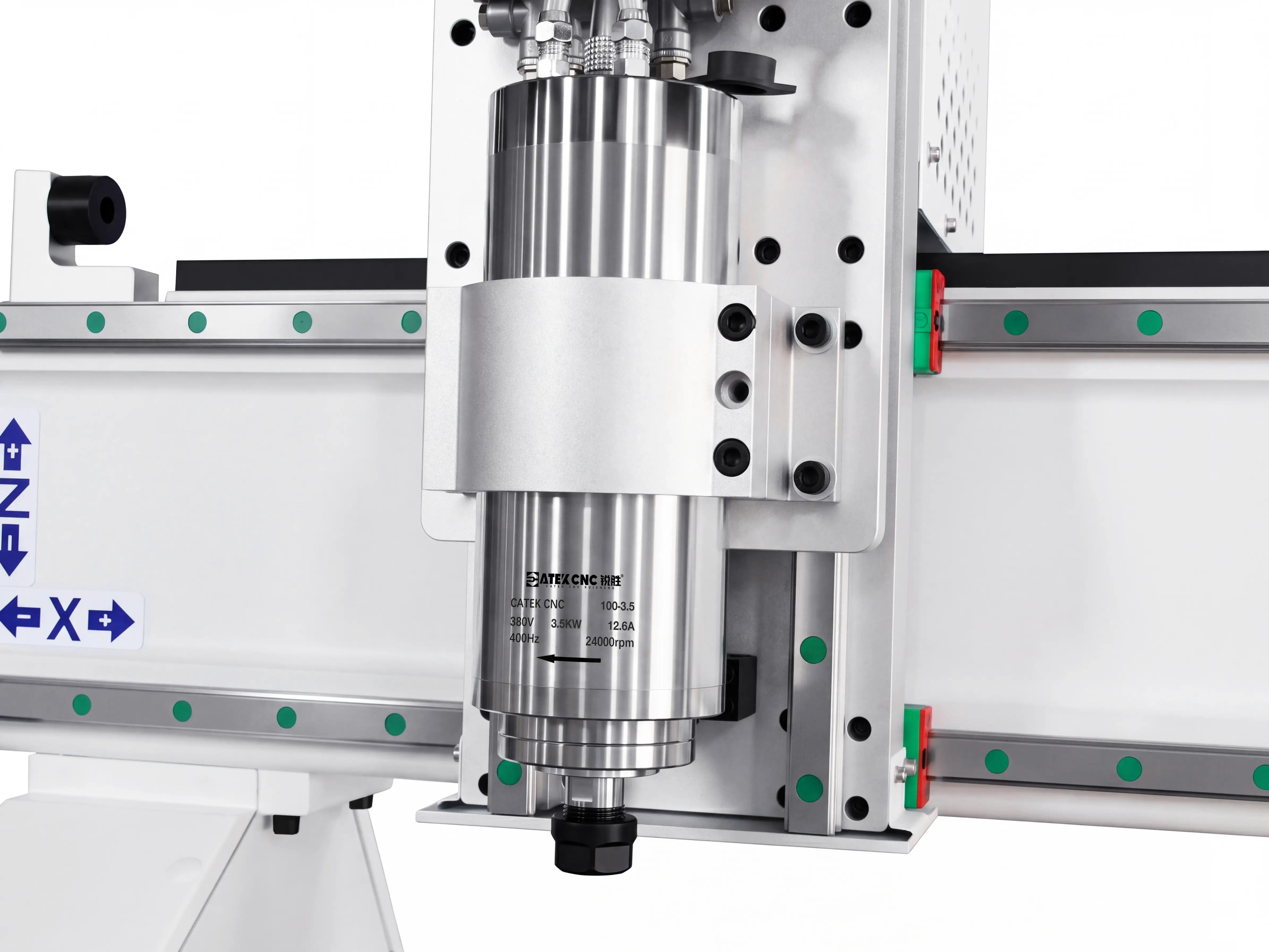
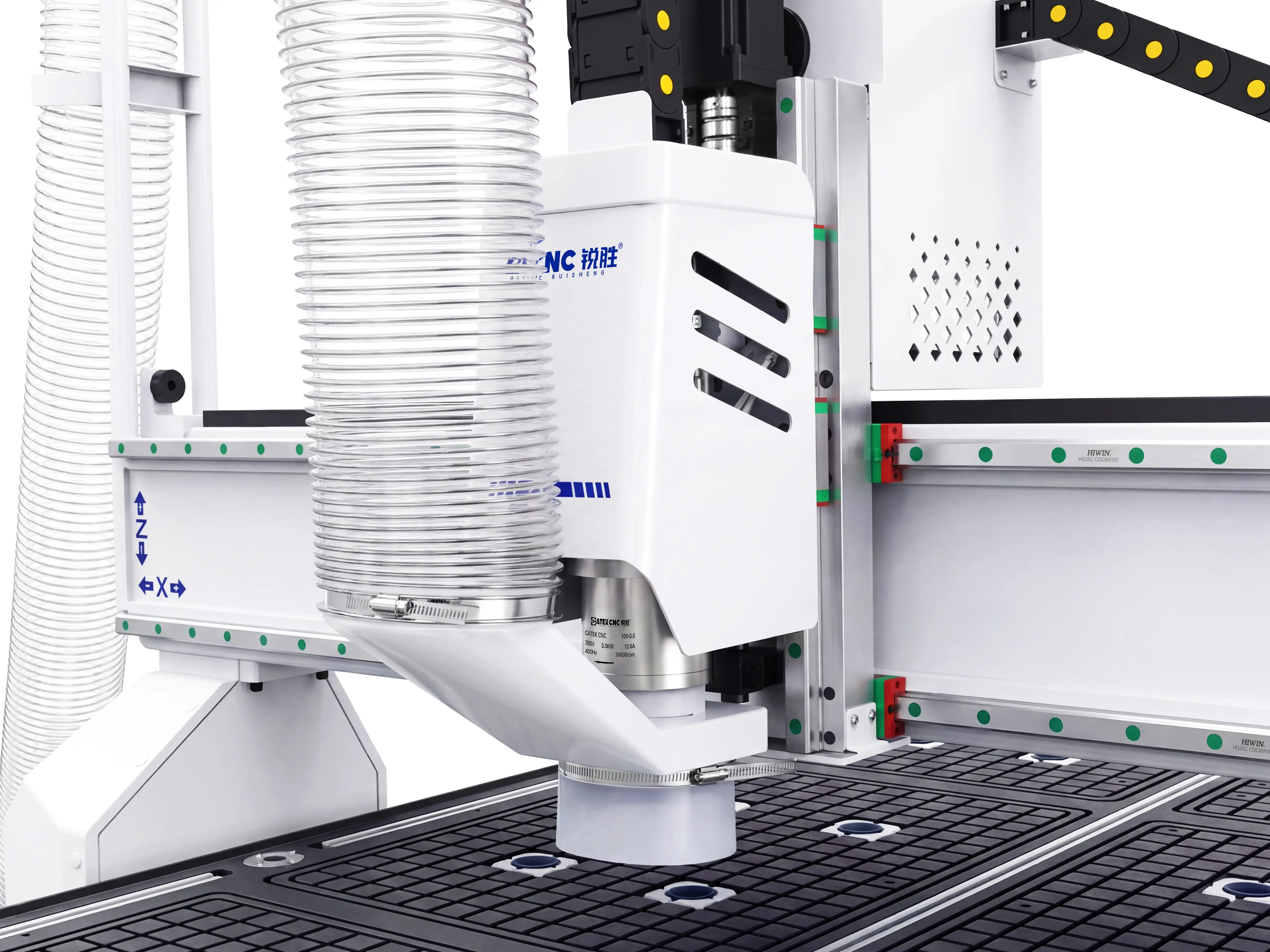
CATEKCNC Water-Cooled Spindle, Designed for Continuous Stable Machining
This 3.5 kW CATEKCNC high-speed water-cooled spindle is specifically designed for standard-duty machining applications, offering an outstanding balance of performance and cost-effectiveness. The spindle features a precision-integrated housing and is dynamically balanced to a grade exceeding G1.0, with a maximum speed of up to 24,000 rpm. Equipped with a high-precision ER20 collet system capable of holding tool shanks up to 13mm in diameter, it is compatible with a wide range of tooling for engraving, cutting, grooving, and drilling applications. The spindle can efficiently process materials such as solid wood, MDF, plywood, acrylic, and other common substrates, making it ideal for applications including sign manufacturing, musical instrument production, exhibition and booth construction, makerspaces, mold making, and many other machining tasks.
The spindle is cooled by an S&A CW5200 industrial chiller, which provides comprehensive cooling coverage of the spindle's primary heat-generating areas. The system rapidly dissipates heat generated during high-speed operation, effectively preventing accuracy drift and bearing wear caused by excessive temperatures. Its stable and reliable cooling performance supports 24-hour continuous operation, making it well suited for high-volume production environments.
Spindle speed is controlled by a BEST variable frequency drive (VFD), enabling stepless speed adjustment from 0 to 24,000 rpm. The VFD delivers fast response times and stable torque output across the operating range. Combined with the spindle's low-noise and low-vibration characteristics, this ensures smooth machining performance and excellent surface finish quality, helping improve both product quality and overall production efficiency.
CATEKCNC Servo System, Delivering Superior Motion Control
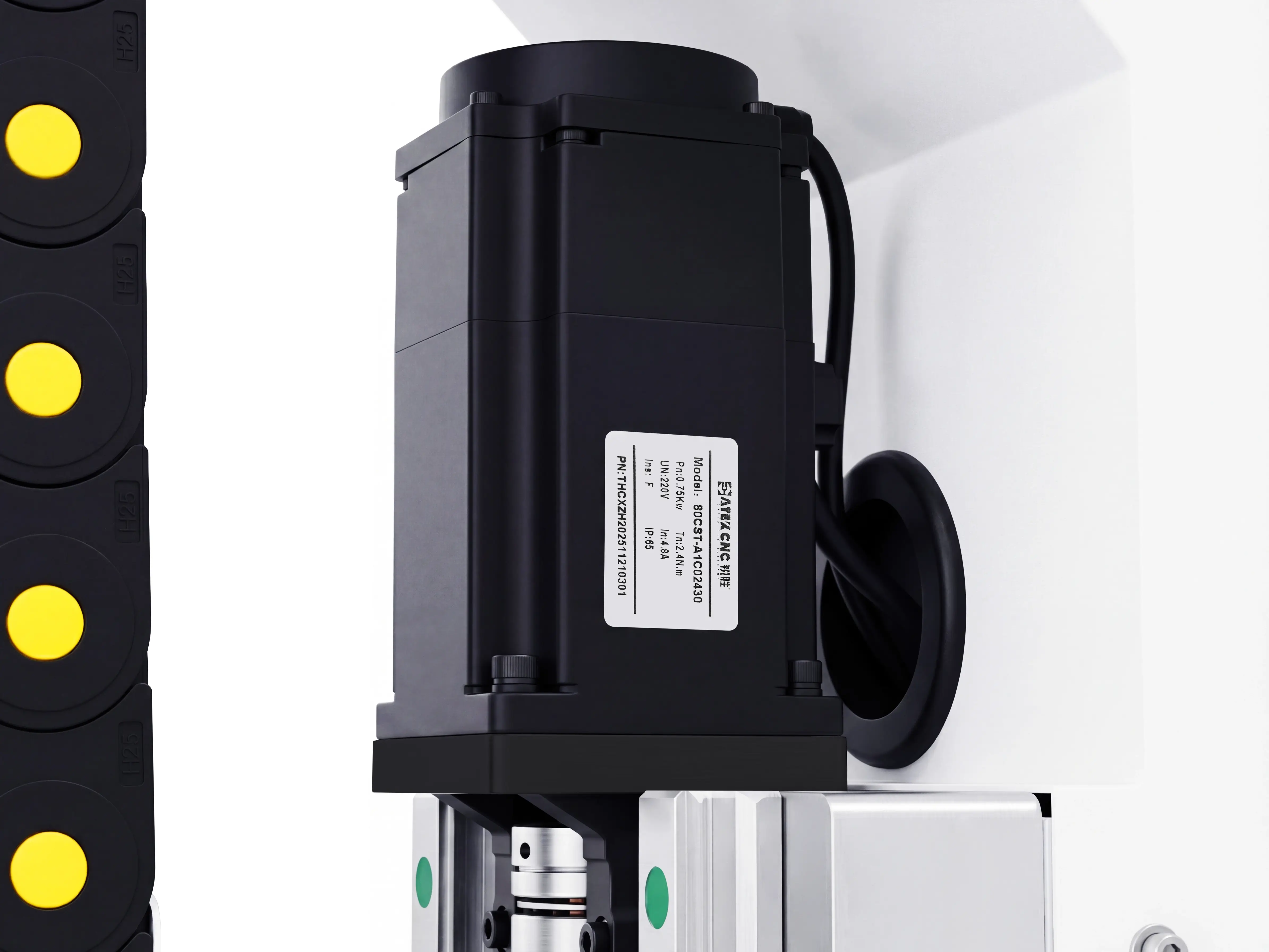
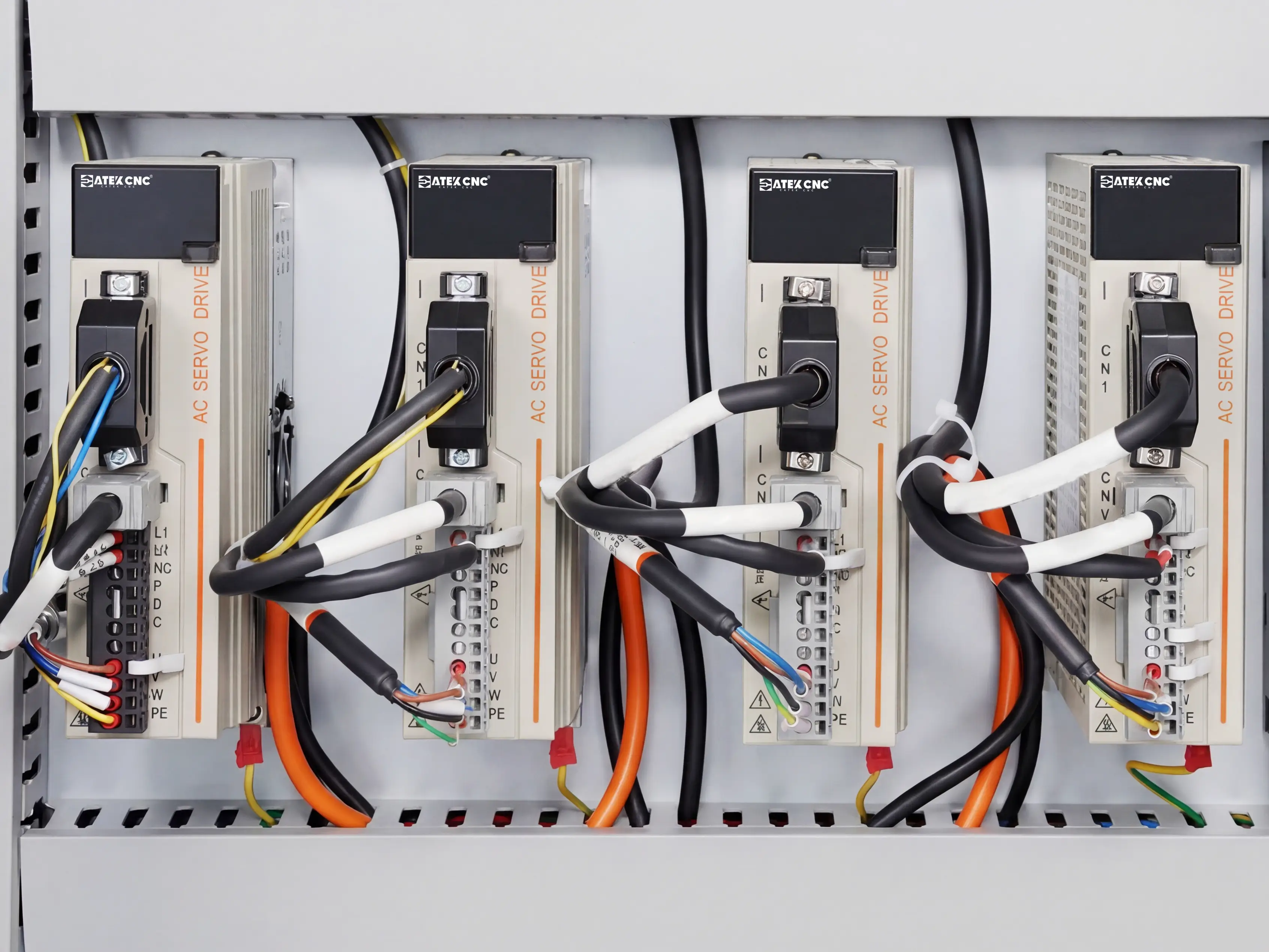
CATEKCNC Self-Developed 750W Servo System
The Spire 1325 CNC Router is equipped with four sets of CATEKCNC self-developed 750W high-performance servo systems. Specifically engineered for CNC router applications, these servo systems are optimized to match real-world machining requirements and offer key advantages including high speed, high torque output, low heat generation, and low operating noise. Equipped with high-resolution encoders, they provide fast response and smooth acceleration and deceleration without shock or vibration. Compared with conventional stepper motors, the servo system delivers more stable torque, quieter operation, and eliminates the risk of lost steps, significantly improving machining accuracy and overall reliability.
The Z-axis is driven by a 750W servo motor equipped with an electromagnetic brake. In the event of a power failure, emergency stop, or loss of servo enable signal, the brake engages instantly to lock the Z-axis position. This mechanical holding function effectively prevents the spindle from dropping under its own weight, reducing the risk of machine collisions and protecting tooling, workpieces, and operator safety.
The Y-axis utilizes a dual-servo synchronized drive system with two 750W servo motors. This configuration eliminates synchronization issues and gantry twisting that can occur with single-motor drives on long-travel axes. The dual-drive design provides greater acceleration capability, more stable braking performance, and significantly enhanced dynamic response and load-carrying capacity, ensuring smooth and accurate motion even during demanding machining operations.
Industrial Handheld Controller, Bringing Intuitive Control for CNC Router
Weihong NK105 G3 Handheld Controller
The Spire 1325 CNC Router is equipped with the Weihong NK105 G3 industrial handheld controller, which supports multiple language options to meet the needs of users worldwide. The controller enables fully standalone operation without requiring a connected computer, providing greater flexibility and convenience on the shop floor. It is compatible with a wide range of G-code file formats and supports direct file import via USB drive. Features such as power-loss recovery and breakpoint memory allow machining to resume from the exact interruption point after an unexpected power outage, helping prevent material waste and production delays.
The control system features a simple and intuitive operating logic with a clear, user-friendly interface that significantly reduces the learning curve. The entire machining process has been streamlined into three basic steps: import the machining file from a USB drive, set the workpiece origin, and start the job. The complete setup process typically takes less than ten minutes. Even operators with no prior CNC experience can quickly become productive after basic instruction, eliminating the need for extensive technical training.
Designed for industrial environments, the controller offers excellent resistance to electrical interference and reliable performance under demanding operating conditions. Stable command transmission ensures accurate execution of complex machining programs, while practical functions such as axis coordinate adjustment and feed-rate control provide greater operational flexibility. Through the handheld controller, operators can monitor machine status in real time, helping reduce production downtime and improve overall manufacturing efficiency.
World-Class Electrical Components, Providing Unmatched Reliability and Durability
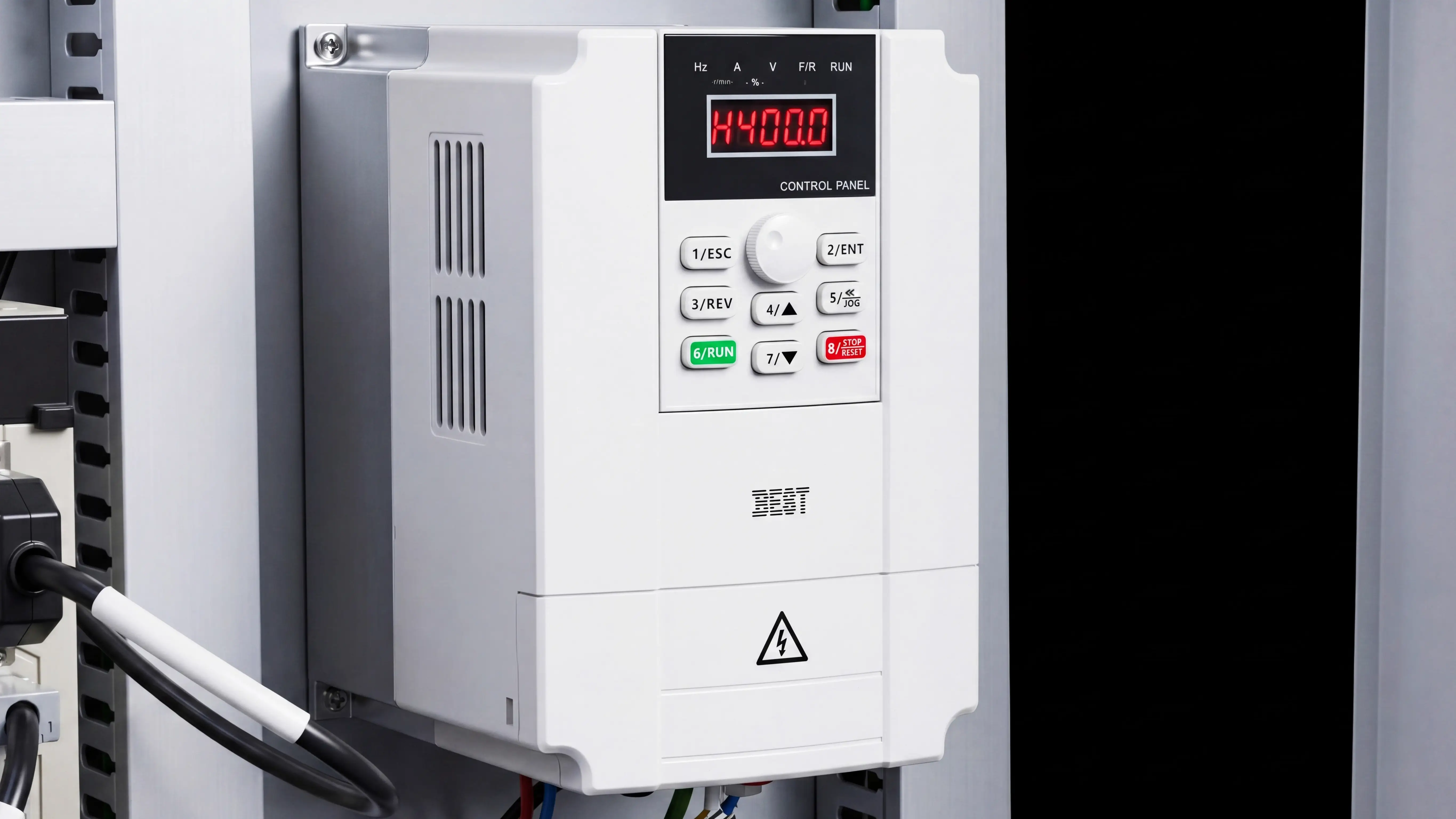
BEST Variable Frequency Drive
Interlock and
Short-Circuit Protection Switch
High-Quality
Power Switches
Schneider
Electrical Components
High-Reliability Aviation Plugs
Fully
Enclosed High-Strength Cable Carrier
High-Quality
Terminal Blocks
BEST Variable Frequency Drive
The spindle is powered by a 4 kW BEST variable frequency drive (VFD), utilizing advanced vector control technology to provide stepless speed adjustment from 0 to 24,000 rpm. Operators can easily optimize spindle speed according to different materials and machining requirements, ensuring stable power delivery for engraving, cutting, drilling, grooving, and other machining operations.
The VFD delivers stable torque output across both low- and high-speed ranges, preventing spindle stalling and speed fluctuations while ensuring smooth acceleration and deceleration without mechanical shock. Its exceptionally low electromagnetic interference (EMI) minimizes the risk of signal disruption to the control system and servo system, contributing to reliable and stable machine operation.
Comprehensive protection functions, including overcurrent, undervoltage, overvoltage, overheating, and overload protection, are built into the VFD. In the event of abnormal spindle loads or operating faults, the system can automatically disconnect power output to protect both the VFD and spindle from damage. With simple operation, maintenance-free daily use, and excellent long-term reliability, the VFD provides continuous, powerful, and safe performance for demanding machining applications.
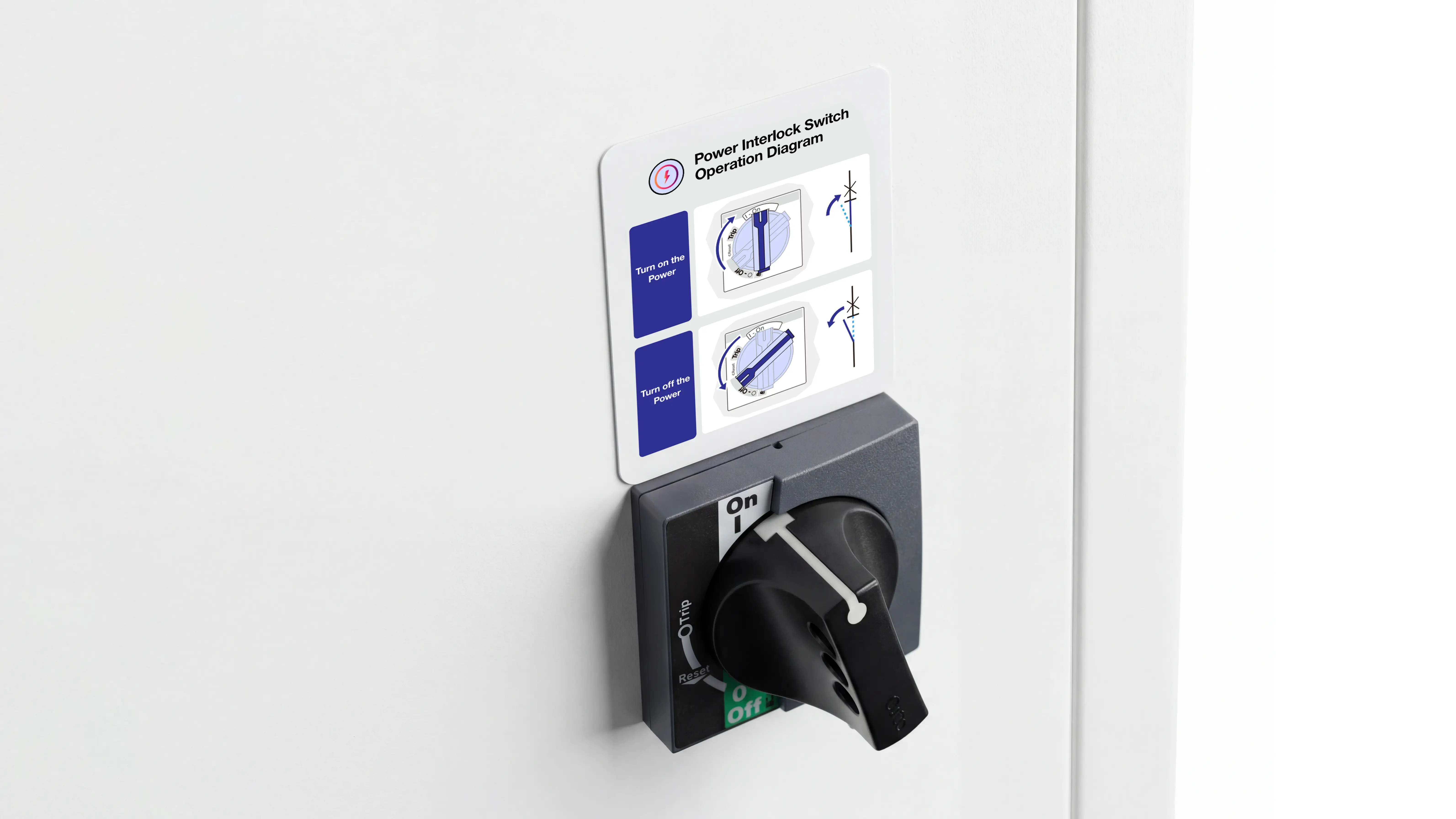
Control Cabinet Interlock and
Short-Circuit Protection Switch
The electrical control cabinet is equipped with a safety interlock switch that is fully integrated with the machine's electrical system. Designed for fast response and long-term durability, it provides a reliable layer of protection during machine inspection, maintenance, and servicing operations.
The interlock system utilizes a door-switch and circuit-locking mechanism. When the electrical cabinet door is opened, power to the internal circuits is automatically disconnected, ensuring that the cabinet remains de-energized and preventing accidental contact with live electrical components. Power can only be restored after the cabinet door is fully closed and the interlock switch has been reset, fundamentally enhancing electrical safety and eliminating potential hazards at the source.
This safety interlock provides critical protection during routine inspections, troubleshooting procedures, and preventive maintenance activities. By significantly reducing the risk of workplace accidents, it further reflects the high standards of reliability, safety, and operational stability that define the Spire Series.
High-Quality Power Switches
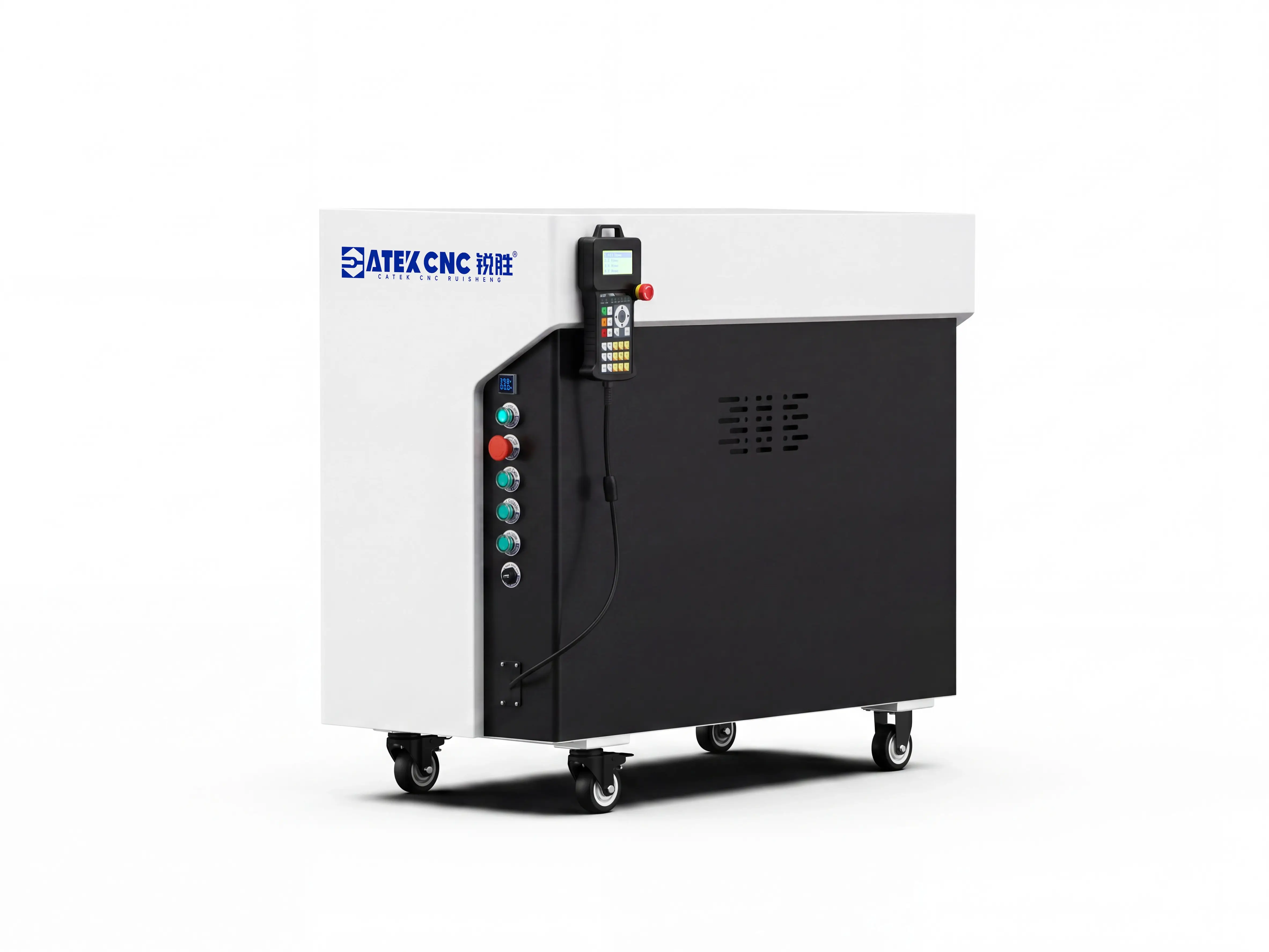
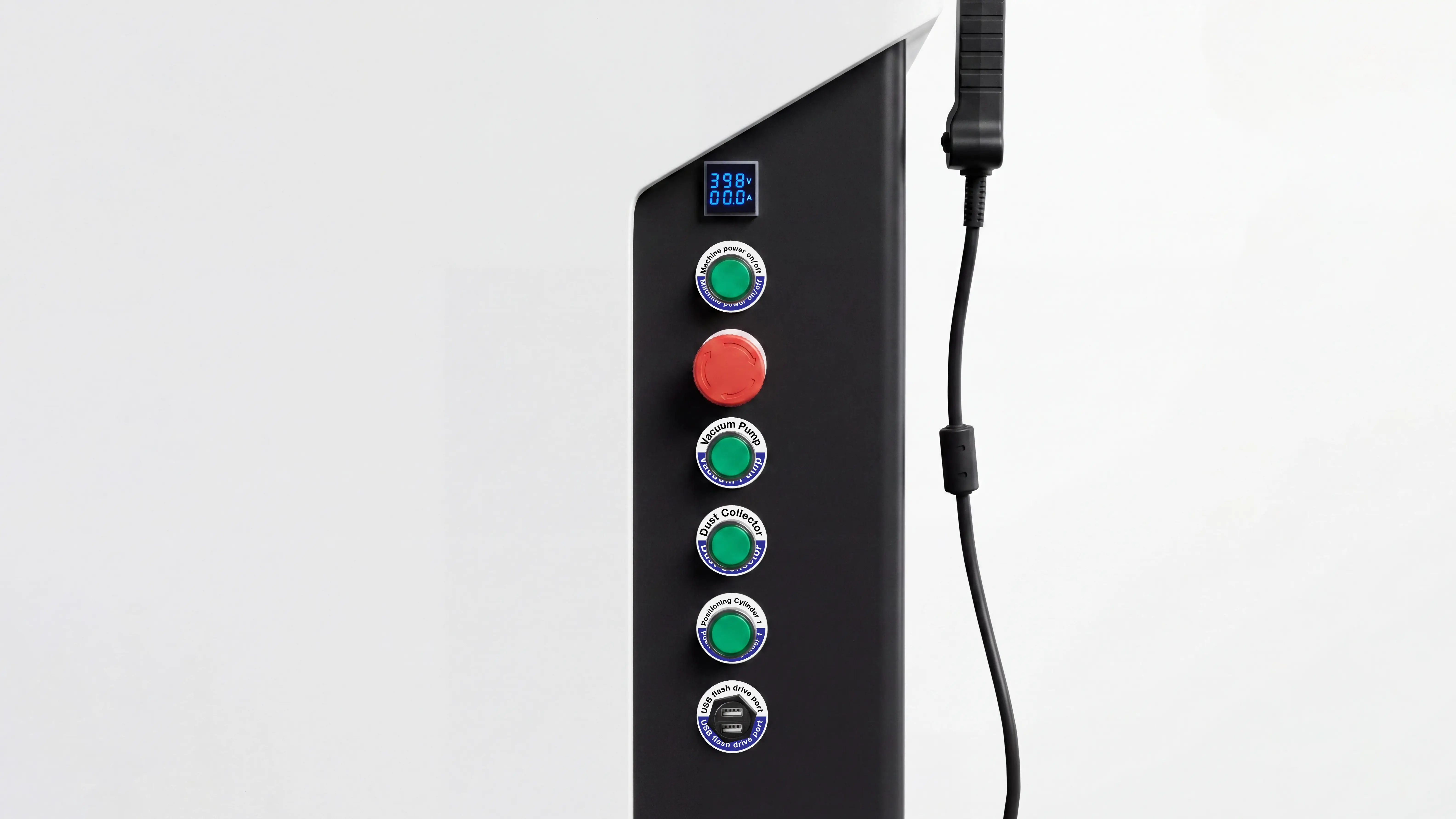
The control panel mounted on the electrical cabinet serves as the central interface for machine operation, including job start and stop functions, vacuum system control, dust collector control, and data transfer operations. All buttons, switches, and instruments are arranged vertically in a clean and organized layout, reflecting the Spire Series design philosophy of combining user-friendly operation, professional control, and industrial aesthetics.
At the top of the panel is a digital display meter that provides real-time voltage and current readings. The bright, high-visibility display ensures that electrical parameters can be easily monitored even in brightly lit environments, giving operators immediate insight into machine power conditions and helping identify abnormalities at an early stage.
Located beneath the display are dedicated control buttons for machine start-up, emergency stop, vacuum pump, dust collection, and positioning cylinders. All control components are supplied by Schneider Electric, a globally recognized leader in industrial automation and electrical equipment. Renowned for their reliability and durability, these components ensure long service life and dependable operation. Each function is assigned an independent control button, allowing operators to manage individual machine systems with precision and confidence.
Two USB-A ports are integrated into the lower section of the control panel, providing convenient connectivity for external devices. These ports enable operators to import and export machining programs via USB drives, perform system updates, and carry out other data-transfer tasks with ease.
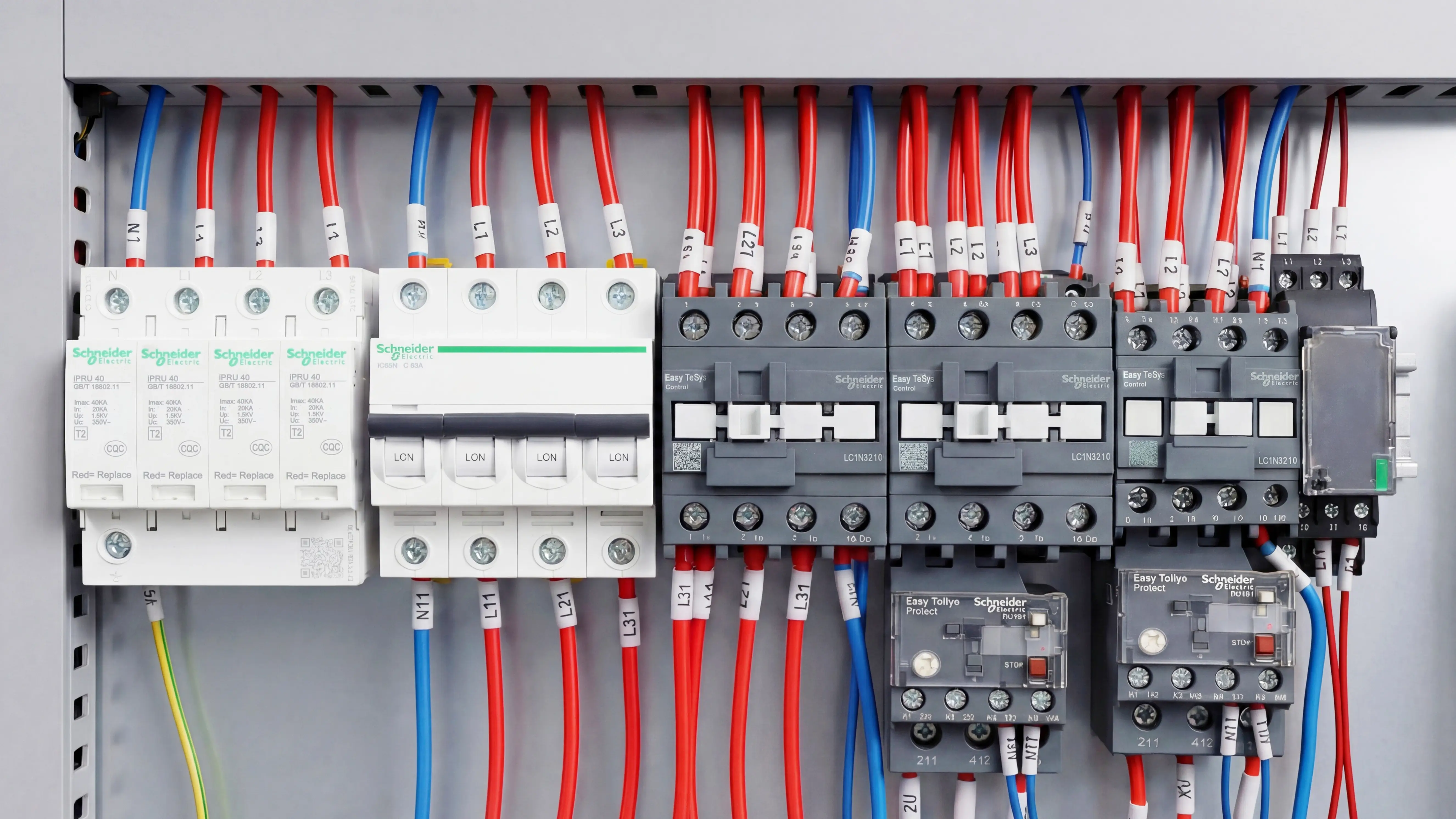
Schneider Electrical Components
The machine is equipped with a complete set of Schneider Electric components, including push buttons, circuit breakers, AC contactors, intermediate relays, phase sequence protection relays, and 24V switching power supplies. This comprehensive electrical configuration provides a stable and reliable foundation for machine operation, ensuring dependable performance in demanding industrial environments characterized by long operating hours, intensive workloads, and high production frequencies.
Schneider Electric components are renowned for their reliability, long service life, and strong resistance to electrical interference. The push buttons offer responsive operation, excellent dust resistance, and extended mechanical life. Circuit breakers provide precise overload and short-circuit protection, instantly disconnecting power when electrical faults occur. AC contactors and intermediate relays ensure fast and reliable signal transmission, while the phase sequence protection relay continuously monitors power supply conditions and immediately disconnects power while triggering an alarm if phase abnormalities are detected. The 24V switching power supply delivers stable low-voltage DC power to critical components such as the control system and sensors, ensuring consistent and reliable operation.
The entire electrical system is arranged in a clean and organized layout, with each component performing a clearly defined role while working seamlessly together to create a comprehensive electrical safety framework. By effectively protecting against electrical risks such as short circuits, phase loss, overloads, and voltage fluctuations, the system minimizes the likelihood of unexpected downtime, extends machine service life, and provides a solid foundation for the long-term reliability and productivity of the Spire Series.
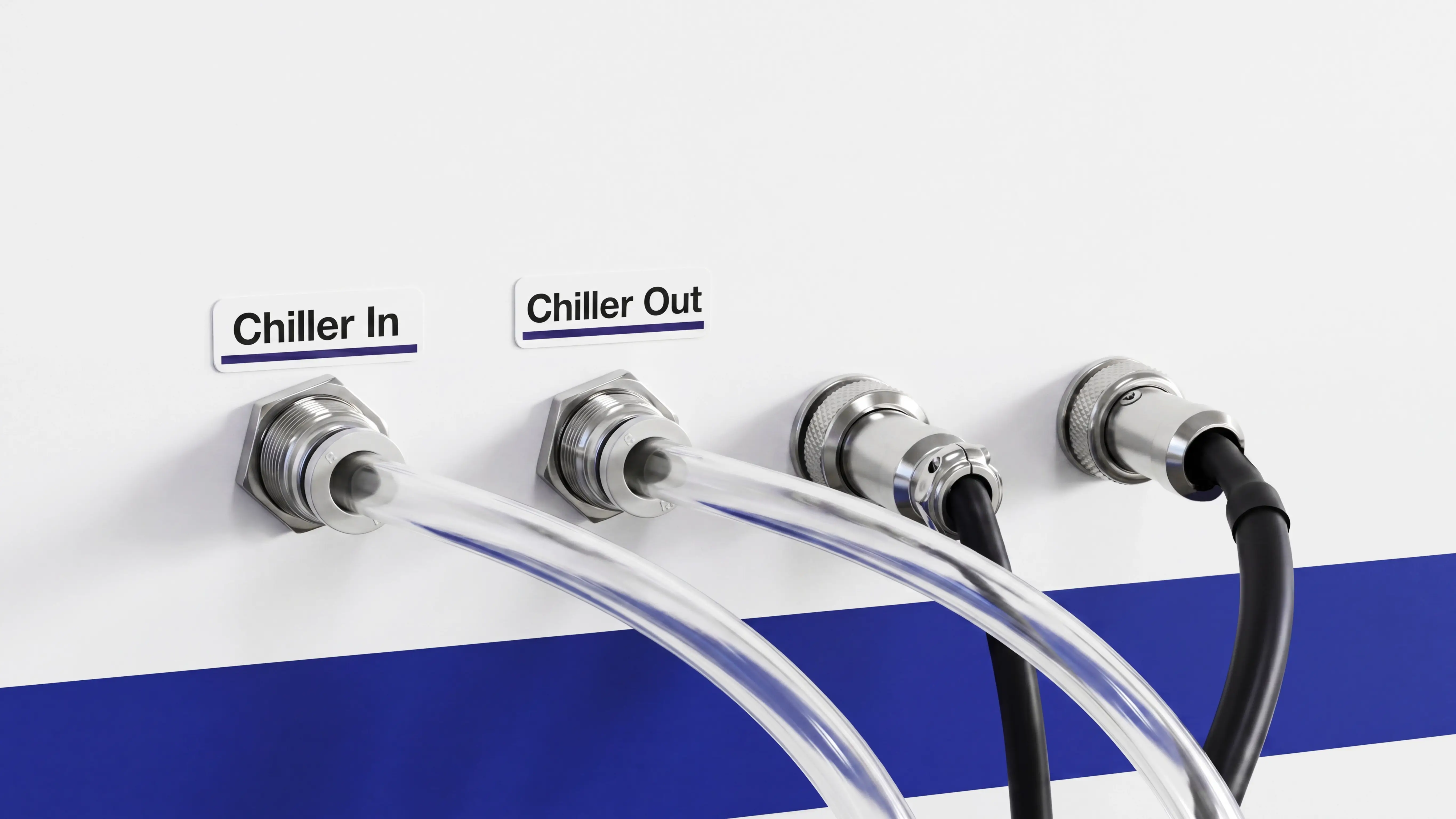
High-Reliability Aviation Plugs
The chiller's inlet and outlet lines are equipped with standard push-to-connect fittings, allowing quick and effortless installation or removal without the need for tools. These fittings provide excellent sealing performance and secure connections, eliminating the risk of water leakage during operation. This not only helps maintain a clean working environment around the machine but also prevents coolant leakage from affecting the safety and reliability of the electrical system.
The machine body is connected to the electrical cabinet supply via an industrial-grade aviation connector. Designed for both secure and efficient coupling, it enables rapid power connection and disconnection, significantly reducing installation time. Compared with conventional terminal wiring, the aviation connector offers superior resistance to vibration-induced loosening, ensuring stable electrical contact even during prolonged machine operation.
The combination of push-to-connect coolant fittings and aviation connectors enhances both practicality and durability. These designs simplify machine installation, maintenance, and relocation while improving the overall protection level of the system. Both connection types feature excellent wear resistance and aging resistance, making them well suited for demanding workshop environments and helping reduce the likelihood of electrical or fluid system failures.
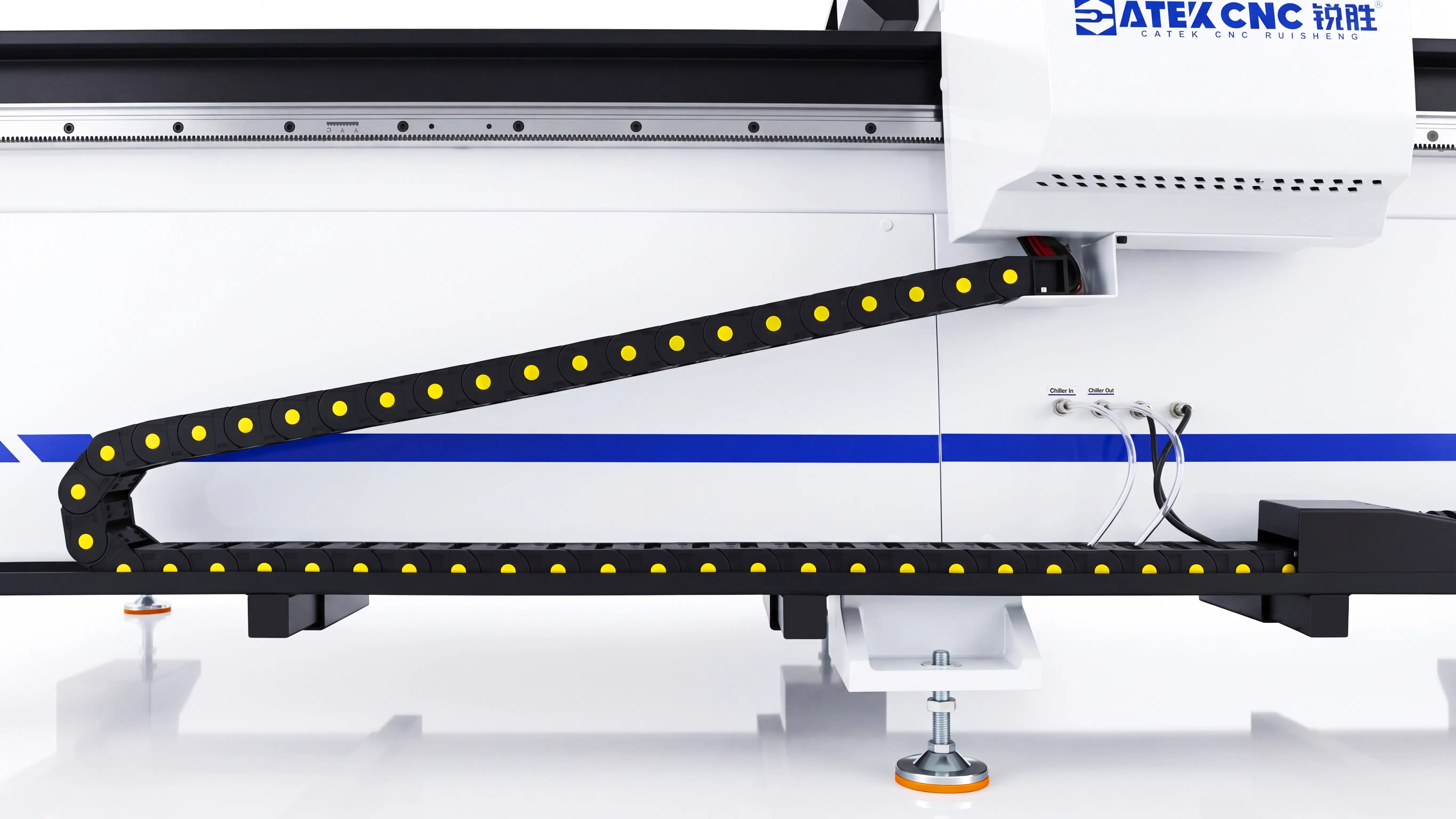
Fully Enclosed High-Strength Cable
Carrier
The X, Y, and Z axes are all equipped with fully enclosed cable carriers. Constructed from high-strength, flame-retardant engineering materials, these cable carriers operate smoothly with low friction and excellent fatigue resistance, capable of withstanding millions of reciprocating bending cycles.
The enclosed structure completely houses and protects electrical cables, pneumatic tubing, signal wires, and other routing systems. During long-term operation, it effectively reduces wear caused by repeated bending and friction while shielding internal lines from wood chips, dust, moisture, and other environmental contaminants, helping ensure the long-term stability and reliability of the machine's electrical and control systems.
The cable carrier system features a clean and well-organized layout, with each chain link designed for individual removal. This modular construction greatly simplifies routine inspection, troubleshooting, and maintenance, reducing service time and improving overall maintenance efficiency.
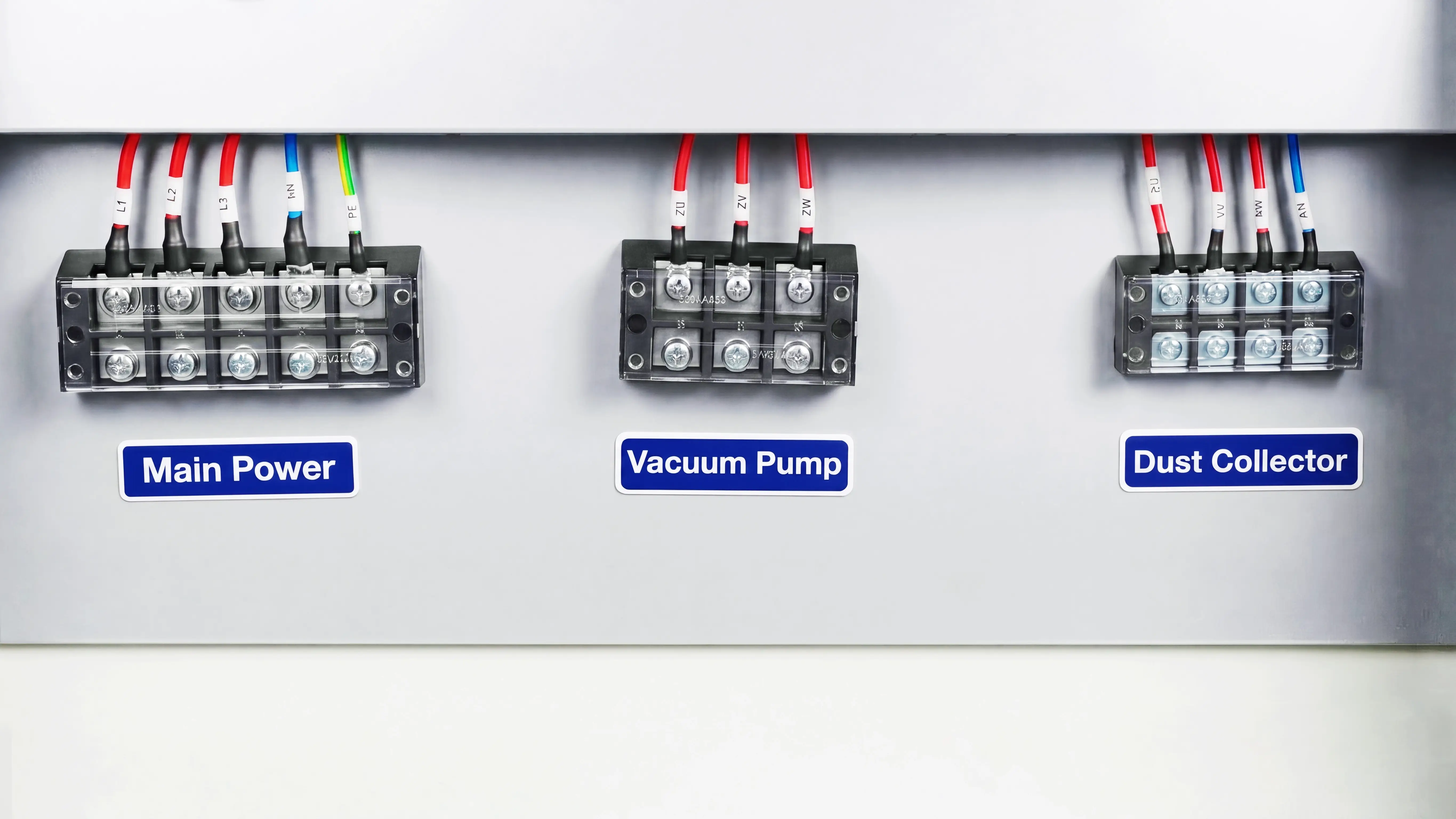
High-Quality Terminal Blocks
The electrical control cabinet is equipped with three independent terminal blocks, providing a standardized and well-organized layout for the machine's high-voltage electrical circuits. The vacuum pump, dust collector, and main machine power supply are allocated to separate wiring sections and systematically integrated within the cabinet. Each connection is securely terminated and clearly labeled, significantly enhancing the safety, serviceability, and long-term reliability of the electrical system.
Critical auxiliary equipment such as the vacuum pump and dust collector is fully integrated into the machine's electrical control system rather than relying on separate external connections. Their operation can be controlled directly through dedicated buttons on the control cabinet, providing a more intuitive and convenient user experience.
The independent circuit zoning design effectively minimize electromagnetic interference between different circuits while reducing the risk of localized heat buildup. This approach helps lower the likelihood of short circuits, electrical leakage, and poor electrical connections at the source. In addition, the clearly organized modular wiring layout simplifies troubleshooting, maintenance, and system inspection, significantly improving the machine's electrical safety, operational stability, and industrial-grade durability.
Automatic Tool Setting, Eliminating the Hassle of Tool Changes
Automatic Tool Setter
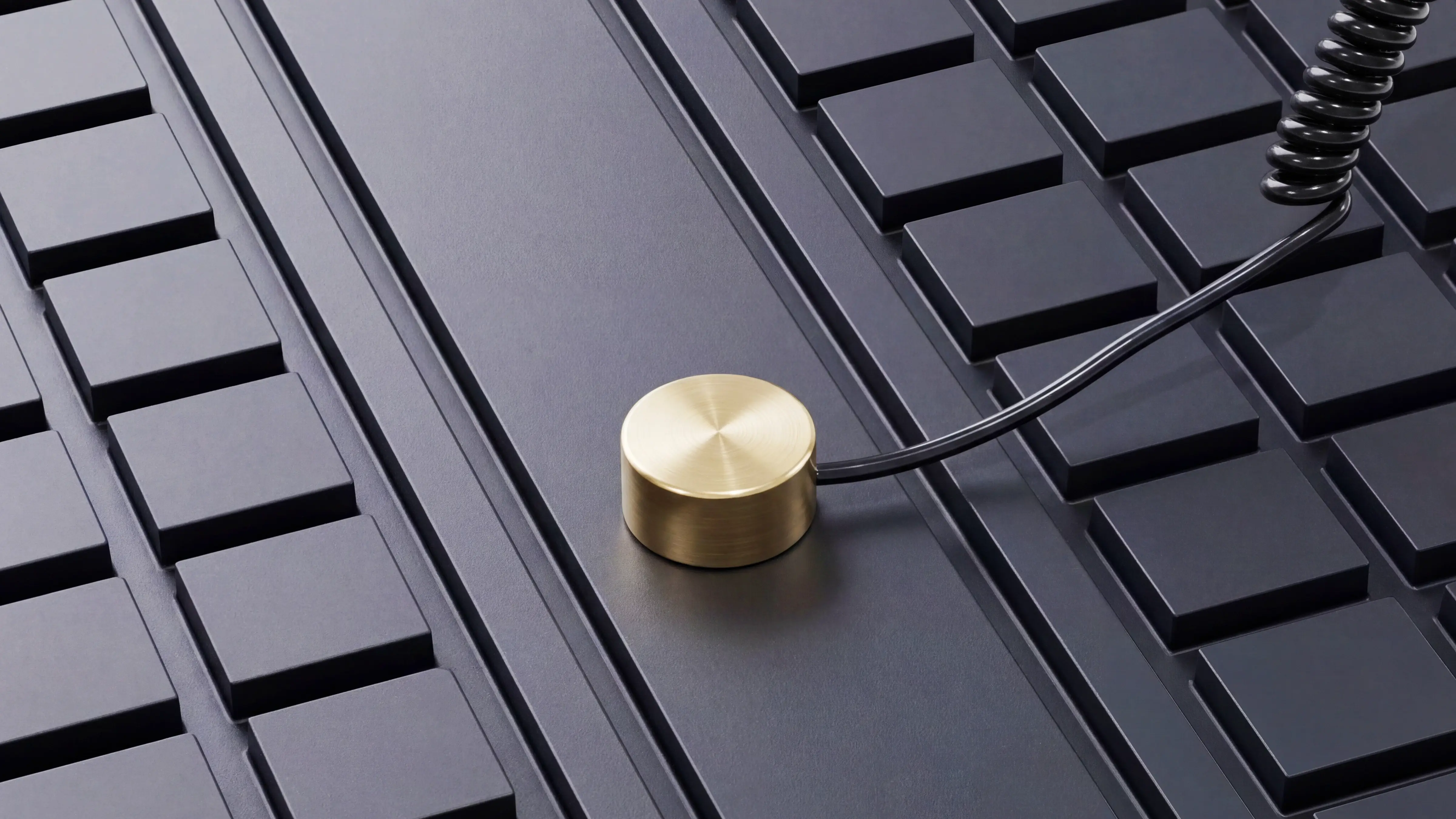
The CNC router machine is equipped with a high-precision contact-type automatic tool setter, specifically designed to streamline tool length calibration while significantly improving machining accuracy and production efficiency. Featuring an industrial-grade fully sealed sensor, it delivers precise measurement, stable signal transmission, and fast response. The system automatically measures tool length with micron-level accuracy and applies the corresponding tool offset compensation, eliminating errors associated with manual tool setting and ensuring consistent machining depth across multiple tool changes.
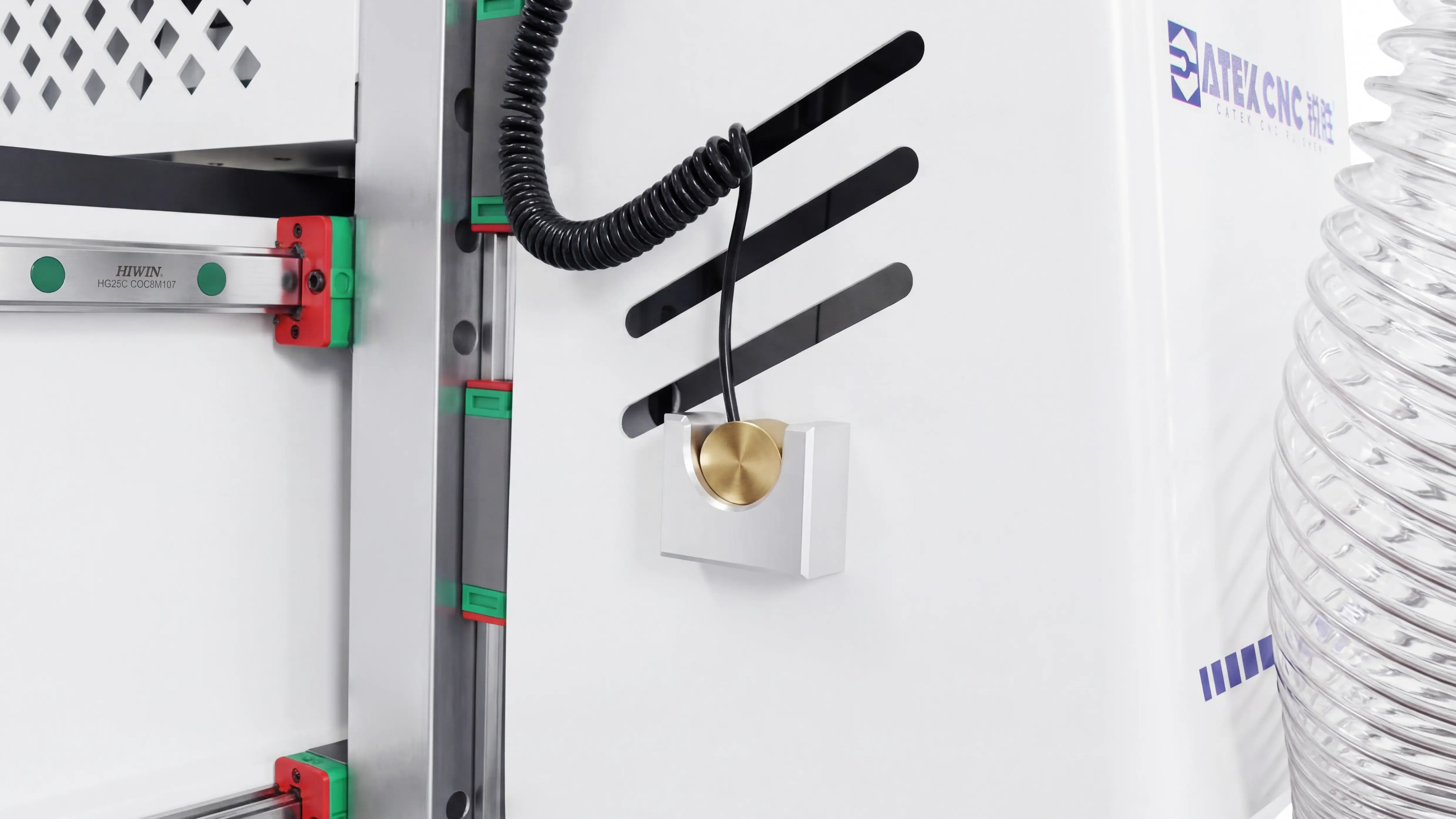
The tool setter is conveniently mounted on the left side of the spindle protective enclosure, providing easy access without occupying valuable worktable space. Its location prevents interference with the workpiece or spindle during machining operations. To perform automatic tool setting, the operator simply removes the tool setter from its holder and places it directly beneath the tool. After selecting the automatic tool-setting function in the control system, the Z-axis automatically moves downward at a controlled speed to detect contact. Once the measurement is complete, the Z-axis retracts automatically, and the system calculates and stores the tool length compensation value. The entire process is fully automated and requires no manual measurement or adjustment.
The automatic tool-setting process is both fast and accurate, typically requiring only a few seconds to complete—several times faster than conventional manual tool setting. It also helps prevent tool damage and workpiece marking caused by operator error, while ensuring a consistent reference height for every tool. This makes the system particularly valuable in applications involving frequent tool changes, significantly reducing setup time and improving both production efficiency and machining consistency.
Dual Clamping Modes, Tailored for Maximum Convenience
Dual-Mode Worktable
Vacuum Zone Control Switches
4+2 Positioning Cylinders
Auxiliary Loading Rollers
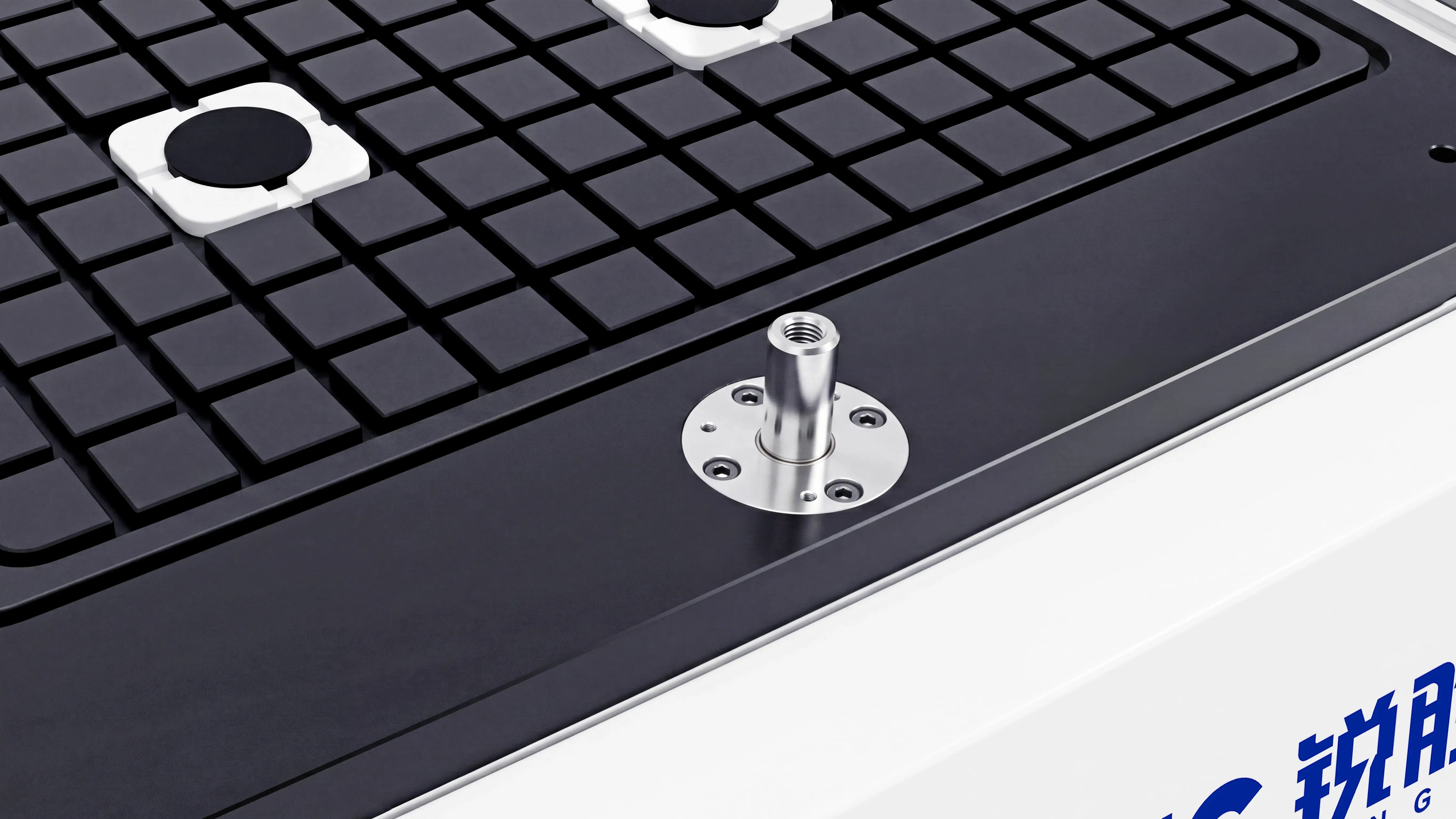
The worktable integrates both vacuum hold-down and aluminum T-slot clamping systems, allowing operators to switch flexibly between the two methods according to specific machining requirements. This dual-purpose design accommodates a wide range of applications. The vacuum system features six independent zones and 24 evenly distributed vacuum ports, enabling rapid and secure holding of large sheet materials without the need for additional fixtures and without causing damage to the workpiece surface. The aluminum T-slot system provides flexible mechanical clamping for workpieces of various shapes and sizes, making it particularly suitable for prototyping, custom production, and small-batch manufacturing.
The table surface is manufactured from high-hardness, wear-resistant PVC and is precision-machined as a single piece to ensure a flat and smooth working surface. It offers excellent resistance to water, corrosion, and contamination, while minimizing the accumulation of wood chips and dust for easier cleaning and maintenance. Standard aluminum T-slot rails are embedded directly into the table and securely integrated with the surface structure. These rails can be used with common clamping accessories such as hold-down clamps and bolts to provide strong mechanical fixation for workpieces, including solid wood, engineered stone, foam, and other large materials, ensuring stable positioning throughout the machining process.
The dual-mode-workholding design effectively supports different production requirements. For high-volume standardized production, the vacuum hold-down system can be used independently to secure sheet materials quickly and maximize setup efficiency. For customized production, prototyping, or irregularly shaped workpieces, the T-slot clamping system provides greater flexibility without being constrained by workpiece size or geometry. The two systems can be used separately or in combination, with vacuum hold-down serving as the primary workholding method and T-slot clamps providing additional reinforcement. This dual-locking approach delivers enhanced workpiece stability and greater machining reliability.
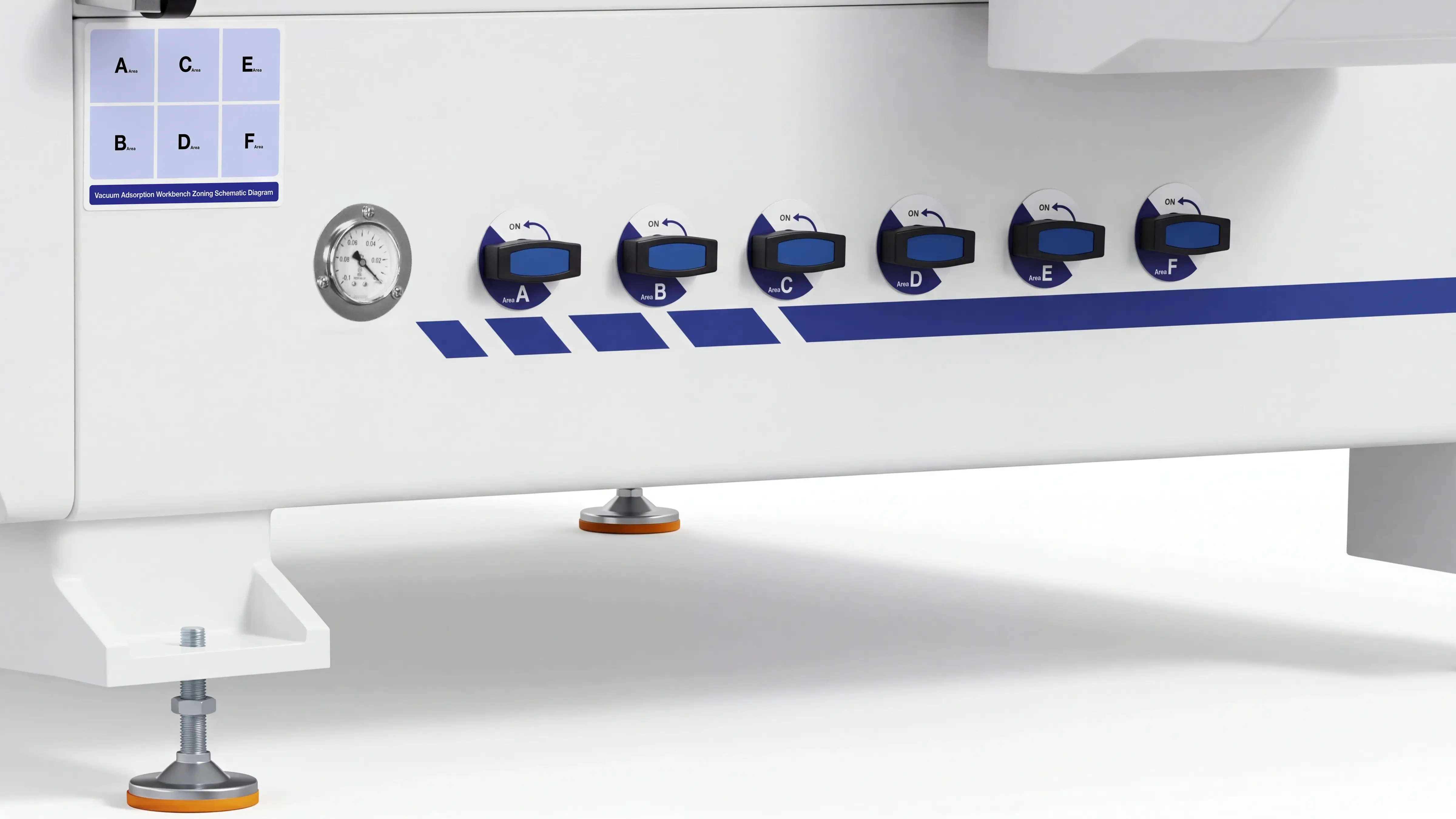
A vacuum control valve manifold is mounted on the side of the machine, consisting of 9 individual valves that correspond one-to-one with the 9 zones of the vacuum table. Based on the workpiece size and placement, operators can flexibly adjust the airflow for each independent zone. This significantly reduces unnecessary vacuum energy consumption while maintaining optimal, reliable hold-down forces.
The ball valves are machined from pure brass, offering exceptional corrosion resistance and high mechanical strength. Featuring a precision-engineered internal structure, the valves turn smoothly with minimal resistance, completely preventing sticking, jamming, or premature wear even during prolonged, high-frequency operation. This ensures an ultra-long service life that easily withstands the rigorous adjustment demands of daily production.
Each valve is clearly labeled with its corresponding vacuum zone identifier, supplemented by a complete vacuum table layout diagram on the right side of the manifold. This eliminates the need for guesswork or trial-and-error, making operations completely clear at a glance. Additionally, a vacuum pressure gauge is integrated on the left side of the valves to provide visual, real-time pressure readings. When running repetitive batches of the same workpiece, operators can precisely adjust the valves to match preset pressure values, ensuring flawless clamping consistency across production cycles.
The worktable is equipped with a 4+2 pneumatic positioning cylinder system designed for rapid and accurate panel alignment. Featuring four positioning cylinders along the Y-axis and two along the X-axis, the system precisely references two adjacent edges of the workpiece to establish a stable right-angle positioning datum. After loading a panel onto the table, the operator simply pushes the material against the raised positioning cylinders to achieve accurate alignment, eliminating the need for repeated adjustments or external measuring tools. This significantly reduces setup time and is particularly beneficial for high-volume panel processing and double-sided machining applications.
The positioning cylinders are controlled via dedicated buttons on the control panel, allowing one-touch extension and retraction. The system is simple to operate, highly responsive, and reliable in daily use. Compared with traditional manual stops, measuring guides, or marking methods, the pneumatic positioning system greatly reduces setup time, minimizes positioning errors caused by manual operation, and improves overall loading efficiency.
The cylinders are manufactured with industrial-grade wear-resistant seals and high-strength cylinder bodies, providing excellent resistance to impact, dust, and demanding workshop conditions. Fully integrated into the worktable structure, the cylinders extend quickly when positioning is required and retract completely below the table surface when not in use. Once retracted, they remain flush with the worktable, ensuring they do not interfere with normal machining operations.
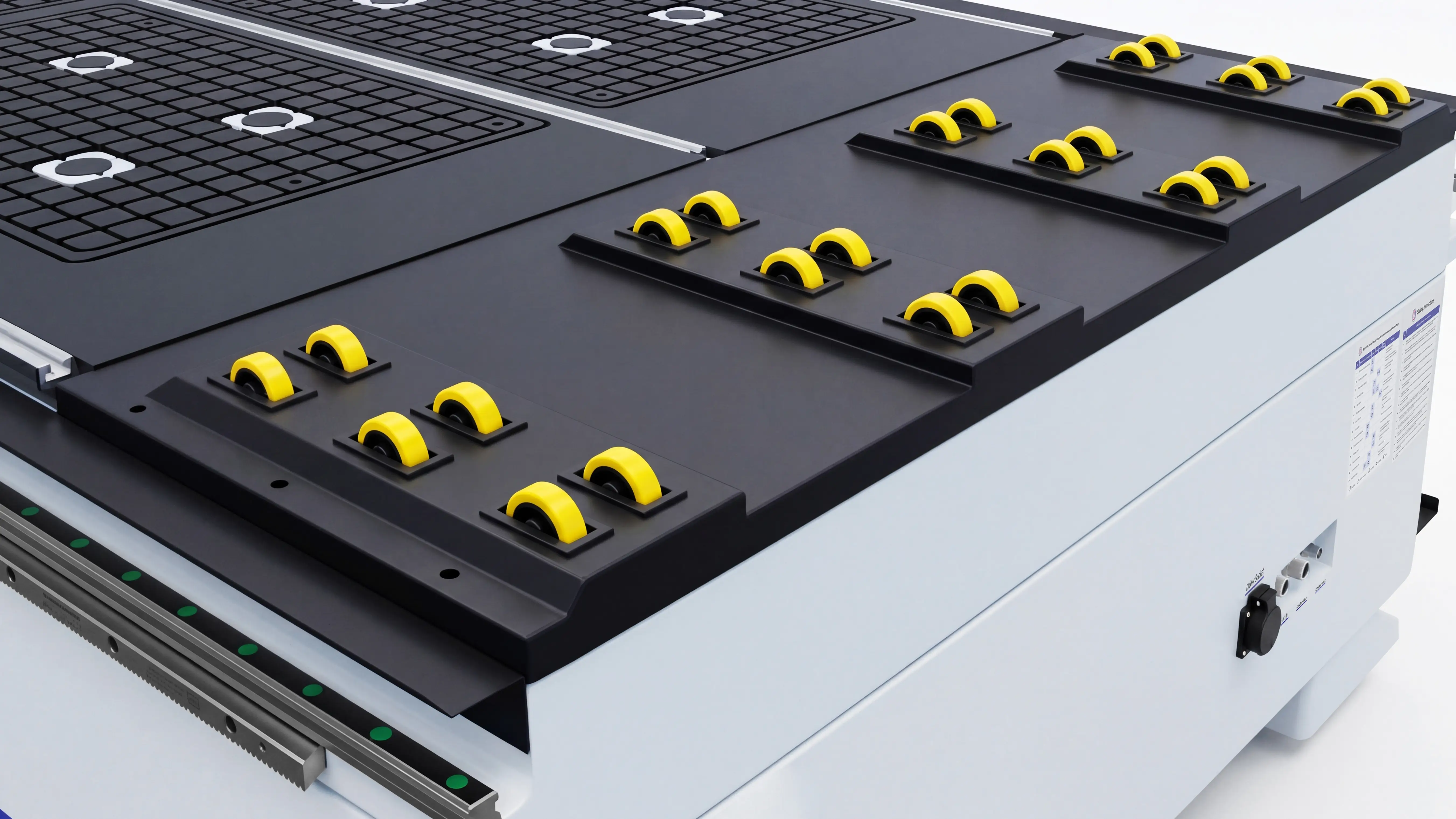
The rear of the machine is equipped with 24 auxiliary loading rollers arranged in a uniform matrix layout, providing extensive support coverage and even load distribution. Operators can place sheet materials directly onto the roller system and smoothly push them forward onto the worktable, reducing the risk of tilting, imbalance, or accidental impact during material handling.
The rollers are manufactured from high-hardness, wear-resistant materials and are designed to protect workpiece surfaces during loading. They effectively prevent scratches and surface damage, making them particularly suitable for materials with high surface-finish requirements, such as painted panels, acrylic sheets, and other decorative materials. This helps ensure that workpieces remain in excellent condition from the very beginning of the production process.
The auxiliary roller system significantly reduces the effort required to load heavy or large-format panels. A single operator can easily move large materials into position without the need for additional personnel, helping reduce labor requirements and associated costs. Whether handling standard-size sheets or oversized panels, the system enables smooth, safe, and efficient material loading, improving workflow efficiency and enhancing workplace safety.
Premium External Equipment, Matching Your CNC Router Machine
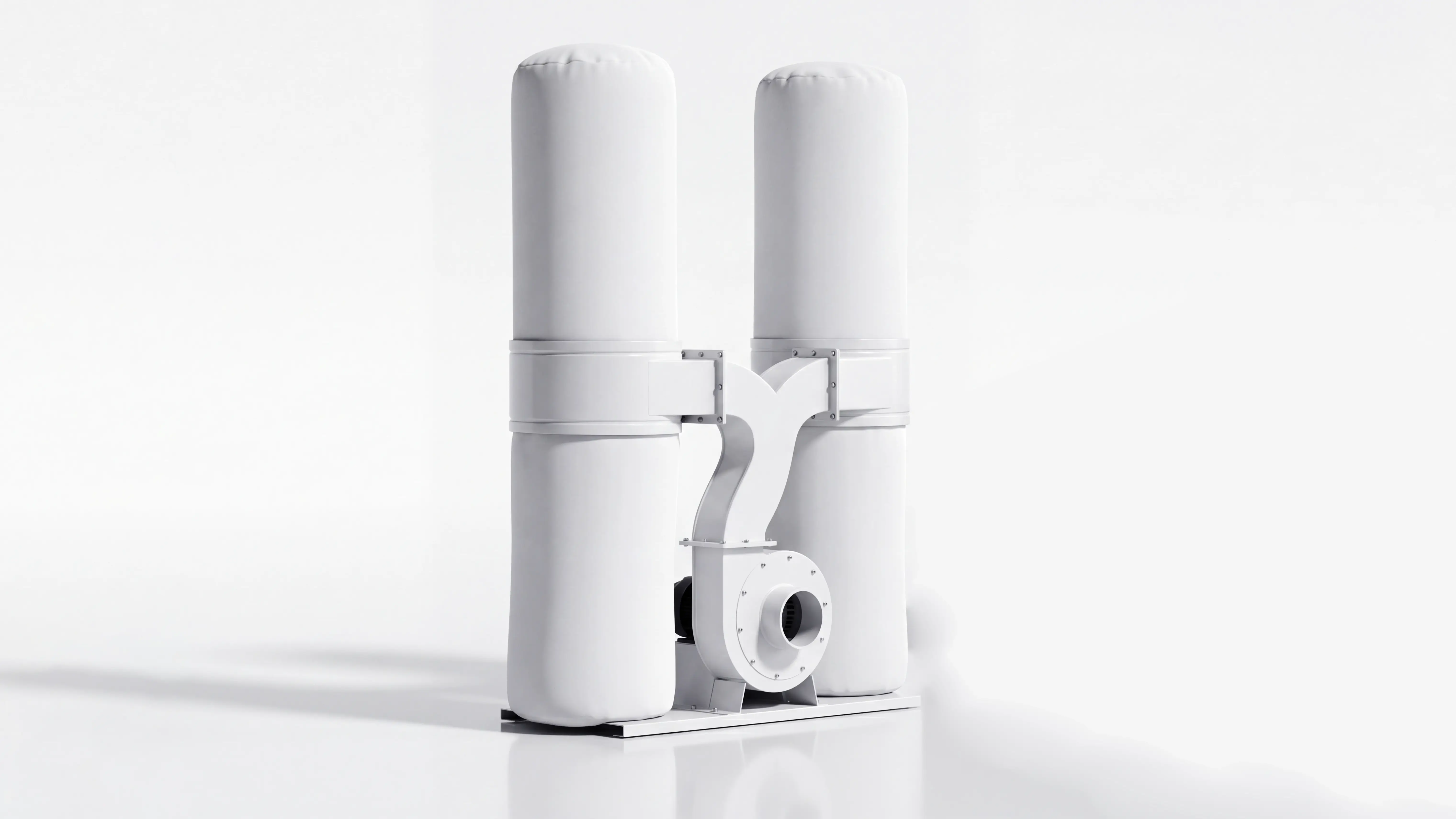
5.5KW Dual-Bag Dust Collector
The CNC router is equipped with a 5.5 kW dual-bag-type dust collector featuring a high-efficiency air-cooled design and an airflow capacity of up to 6,100 m³/h. It rapidly removes large volumes of wood chips and airborne dust generated during machining operations, helping maintain a cleaner workshop environment while reducing the accumulation of contaminants on critical components such as linear guideways, spindles, and ball screws. This contributes to improved machine reliability and extended service life.
The dust collection system is fitted with two large-capacity filter bags (each large collection bag consists of two smaller bags combined into a single assembly), each measuring 630mm in diameter, providing substantial dust and chip storage capacity. Compared with conventional dust collectors, it offers greater collection volume and higher dust extraction efficiency, allowing for extended continuous operation without frequent emptying or maintenance. This makes it particularly well-suited for long production runs and high-volume manufacturing environments.
Heavy-duty caster wheels are installed at the base of the dust collector, allowing it to be moved and repositioned easily as production requirements change. This mobile design enhances operational flexibility and enables the dust collection system to adapt efficiently to different workshop layouts and production configurations.
Dual-bag design
Cyclone dust collection
Dual 2.2kW Vortex Air-Cooled Vacuum Pumps
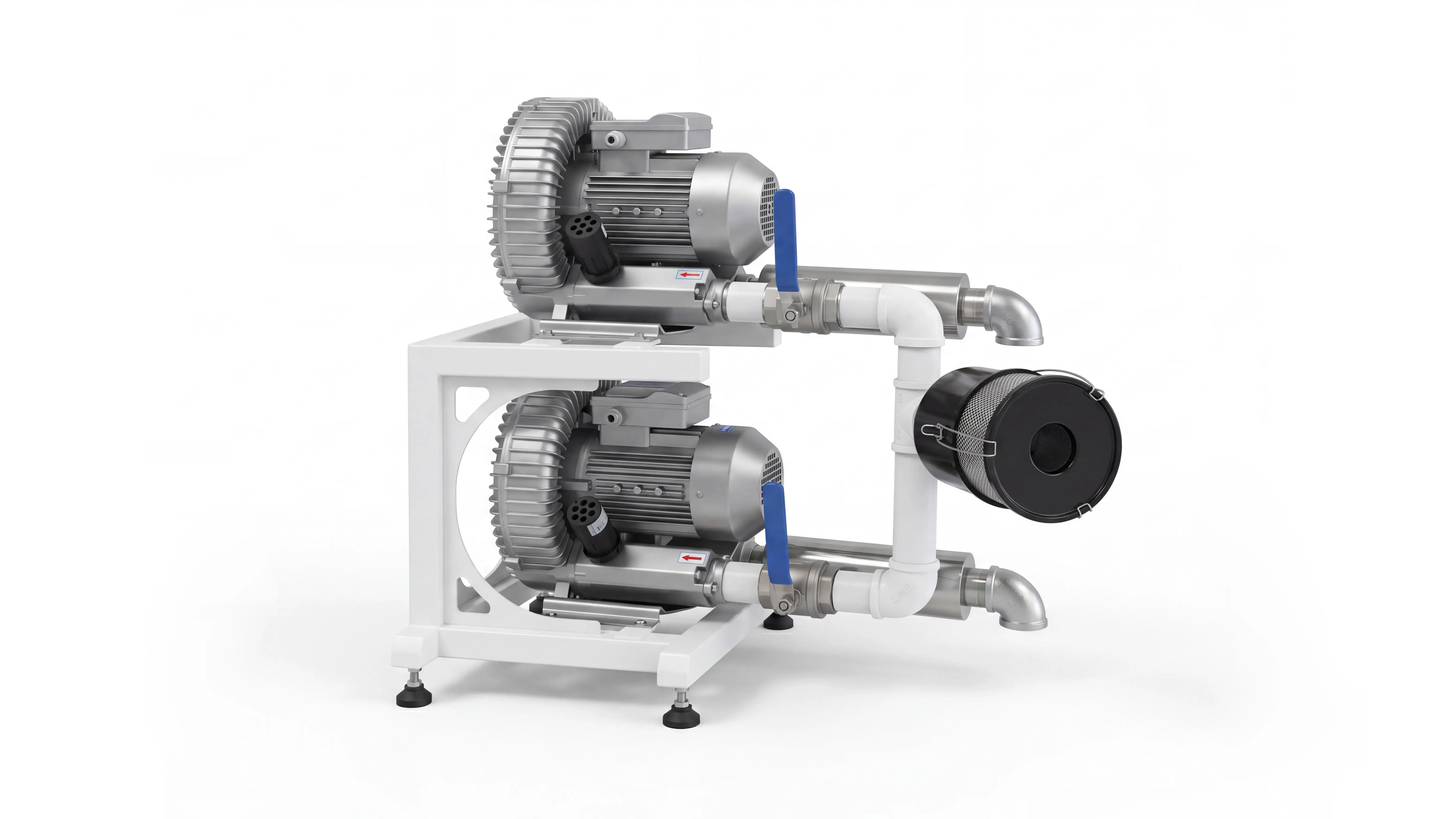
The machine is equipped with two 2.2kW air-cooled vortex vacuum pumps, capable of generating a maximum vacuum pressure of up to -66kPa and delivering a combined airflow capacity of up to 620m³/h. This powerful and stable vacuum performance securely holds a wide variety of sheet materials in place, effectively preventing workpiece movement during cutting, engraving, grooving, and other machining operations. The system is fully capable of handling the workholding requirements of large-format panels up to 1300 × 2500mm.
The dual-pump configuration provides excellent operational flexibility. Operators can select the appropriate operating mode based on workpiece size and vacuum requirements. For smaller panels, a single vacuum pump can be activated to provide sufficient hold-down force, while large sheets or full-table processing applications can utilize both pumps simultaneously. This approach ensures reliable workholding while optimizing energy consumption.
The pumps utilize a proven and reliable air-cooled design. Unlike conventional water-cooled or oil-lubricated vacuum pumps, they require no water, oil, or other consumable cooling media, making operation cleaner, more environmentally friendly, and easier to maintain. Their compact and straightforward construction contributes to high reliability and low failure rates, while routine maintenance is generally limited to simple dust removal, significantly reducing long-term maintenance requirements and operating costs.
Oil-free
-66KPa
620m³/h
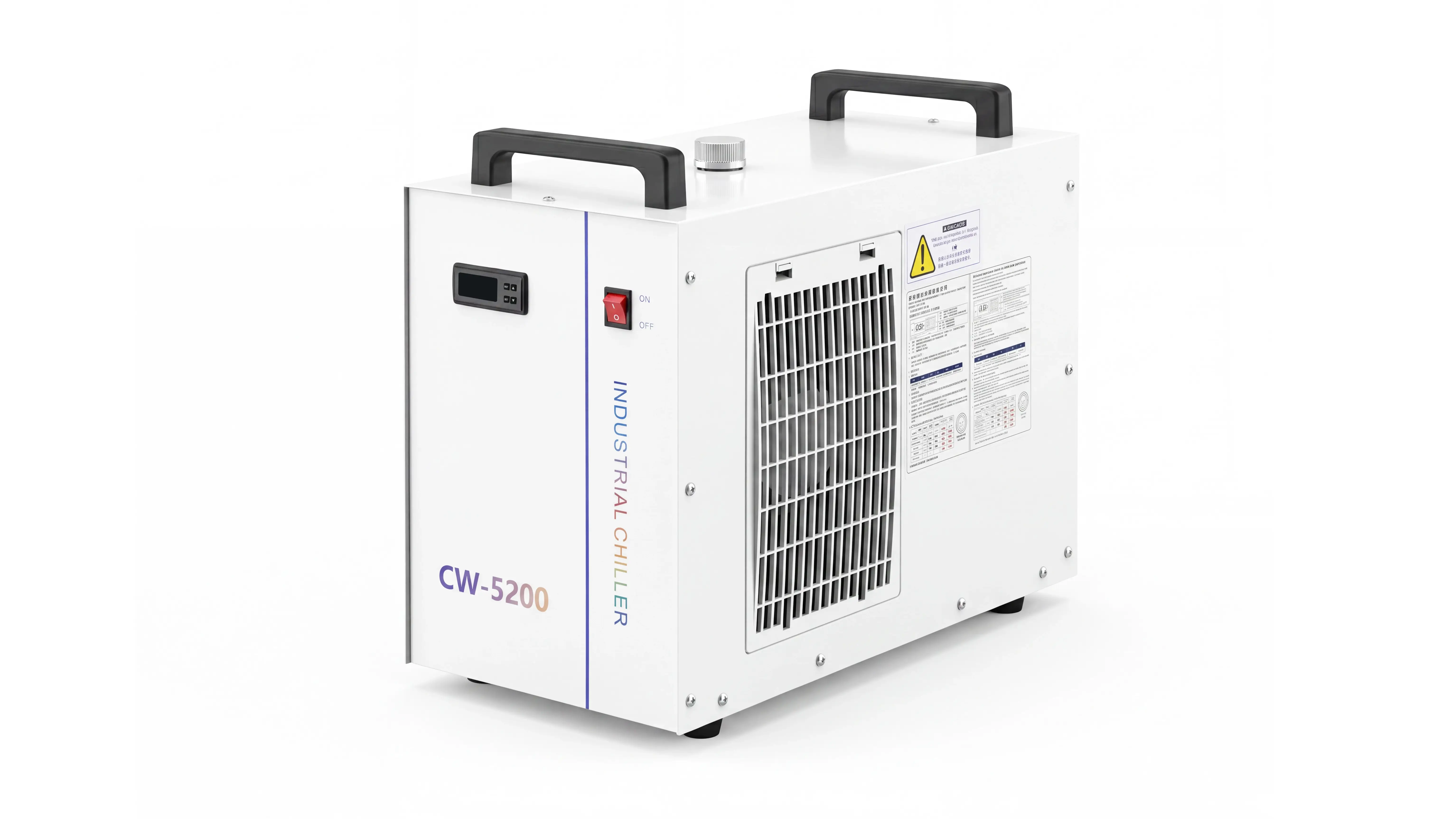
S&A CW-5200 Constant-Temperature Chiller
The machine is equipped with an S&A CW-5200 industrial water chiller, providing stable and reliable cooling for the water-cooled spindle. The chiller incorporates multiple safety protection features, including flow monitoring and over-temperature alarms, and is specifically designed to manage spindle heat generation during long-duration, high-speed, and high-load machining operations.
The CW-5200 features a high-precision temperature control system with a cooling capacity of up to 1,430W and temperature stability of ±0.3°C. It supports both constant-temperature and intelligent temperature-control modes, allowing automatic adjustment based on operating conditions. With consistent cooling performance, the system helps maintain stable spindle temperatures even during demanding machining applications, ensuring reliable performance, extending spindle service life, and supporting continuous industrial production.
Compared with oil-based cooling systems, the CW-5200 offers lower energy consumption, superior cooling efficiency, and eliminates the risk of oil contamination. Water filling and draining are simple and convenient thanks to dedicated fill and drain ports. A built-in display panel and visual water-level indicator provide clear monitoring of coolant temperature, operating status, and water level, allowing operators to quickly assess system performance at a glance.
1430W
5°C to 35°C
±0.3°C
Automatic Lubrication, Set It, and Forget It
Large-Capacity Automatic Lubrication System
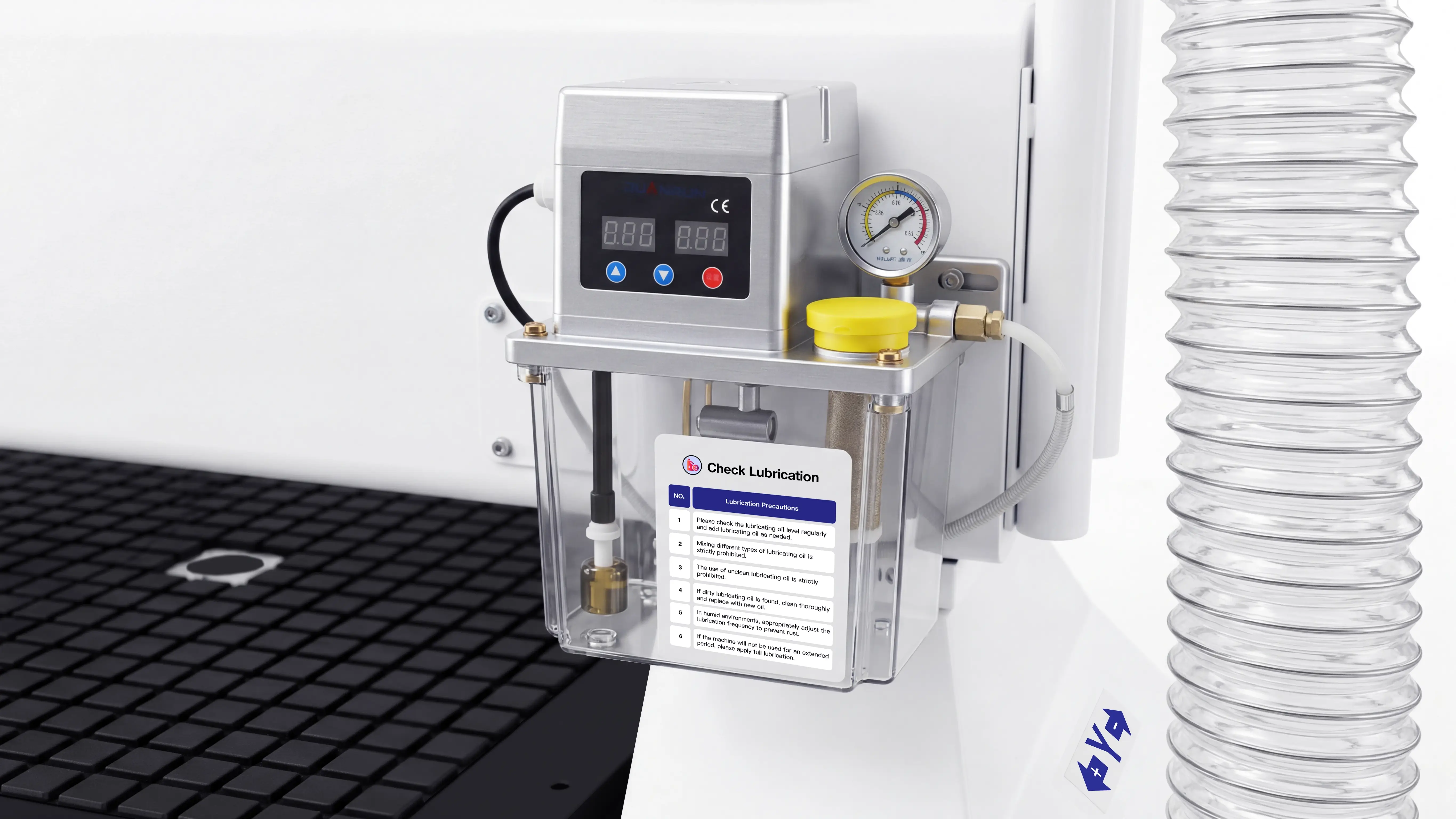
The machine is equipped with a fully automatic electric lubrication system designed for long-term, unattended lubrication of critical components. Featuring a large 1.5L oil reservoir, the system can support extended periods of continuous operation with a single refill, significantly reducing routine maintenance requirements and minimizing downtime associated with manual lubrication.
The lubrication system offers programmable operating parameters, allowing users to adjust lubrication duration and oil supply intervals according to actual machining conditions. This enables precise micro-volume, timed, and metered lubrication for optimal performance. An integrated high-precision pressure gauge provides real-time monitoring of lubrication circuit pressure, allowing operators to easily verify system status and quickly identify issues such as insufficient oil supply or blocked lubrication lines.
Once activated, the system automatically delivers lubricant to critical transmission components, including linear guide rails and ball screws, ensuring comprehensive and consistent lubrication coverage. By eliminating the inconsistencies and omissions often associated with manual lubrication, the system effectively reduces friction, operating resistance, and mechanical wear while helping suppress machine noise. This not only preserves transmission accuracy over the long term but also significantly extends the service life of key motion components.
Oil Drip Tray for Z-Axis
An oil collection tray is installed beneath the Z-axis linear guides and ball screw to capture excess lubricant discharged during automatic lubrication cycles and normal machine operation. This prevents oil from contaminating workpieces, the vacuum worktable, helping maintain a cleaner machining environment. The collected lubricant can also be filtered and reused, reducing lubricant waste.
The oil collection tray is designed to accommodate the full range of machine movement without occupying valuable machining space or interfering with Z-axis travel. Securely mounted with four hex socket screws, it can be removed quickly and easily when cleaning or maintenance is required.
By containing excess lubricant at the source, the tray significantly reduces routine cleaning requirements and eliminates the need for frequent removal of oil residue from the worktable and workpieces. This helps maintain a cleaner workshop environment, preserves the machine's professional appearance, and contributes to improved machining quality and a better overall operating experience.
Your Spire, We Support Every Step of the Way
Spire Series Exclusive Machine ID & Service
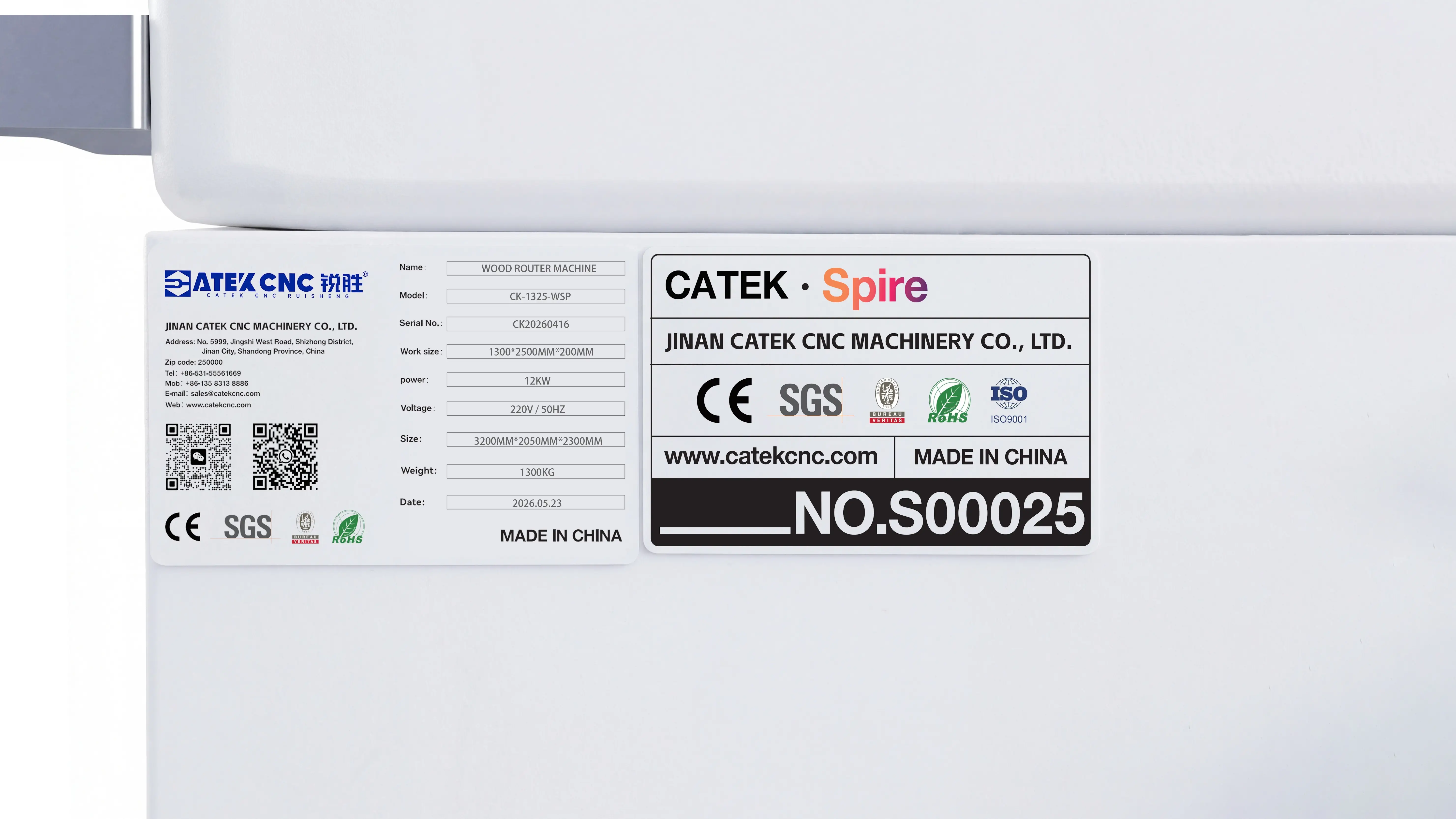
Every machine is equipped with an exclusive Spire nameplate and a unique serial number. Serving as the machine's "digital identity," this serial number enables complete traceability throughout its entire lifecycle—from assembly and factory quality inspection to production use and after-sales service. This ensures that every stage is managed in strict accordance with Spire's standardized quality control system.
The customers receive a comprehensive five-year warranty covering the entire machine, along with dedicated one-to-one support from Spire's professional after-sales team. Technical assistance includes installation and commissioning, operator training, troubleshooting, maintenance support, and machine inspections. The service network provides 24/7 online support and remote technical assistance, enabling rapid diagnosis and resolution of operational issues. In addition, the machine is backed by lifetime maintenance support, while control system and programming software updates are provided free of charge, ensuring long-term reliability and optimal performance.
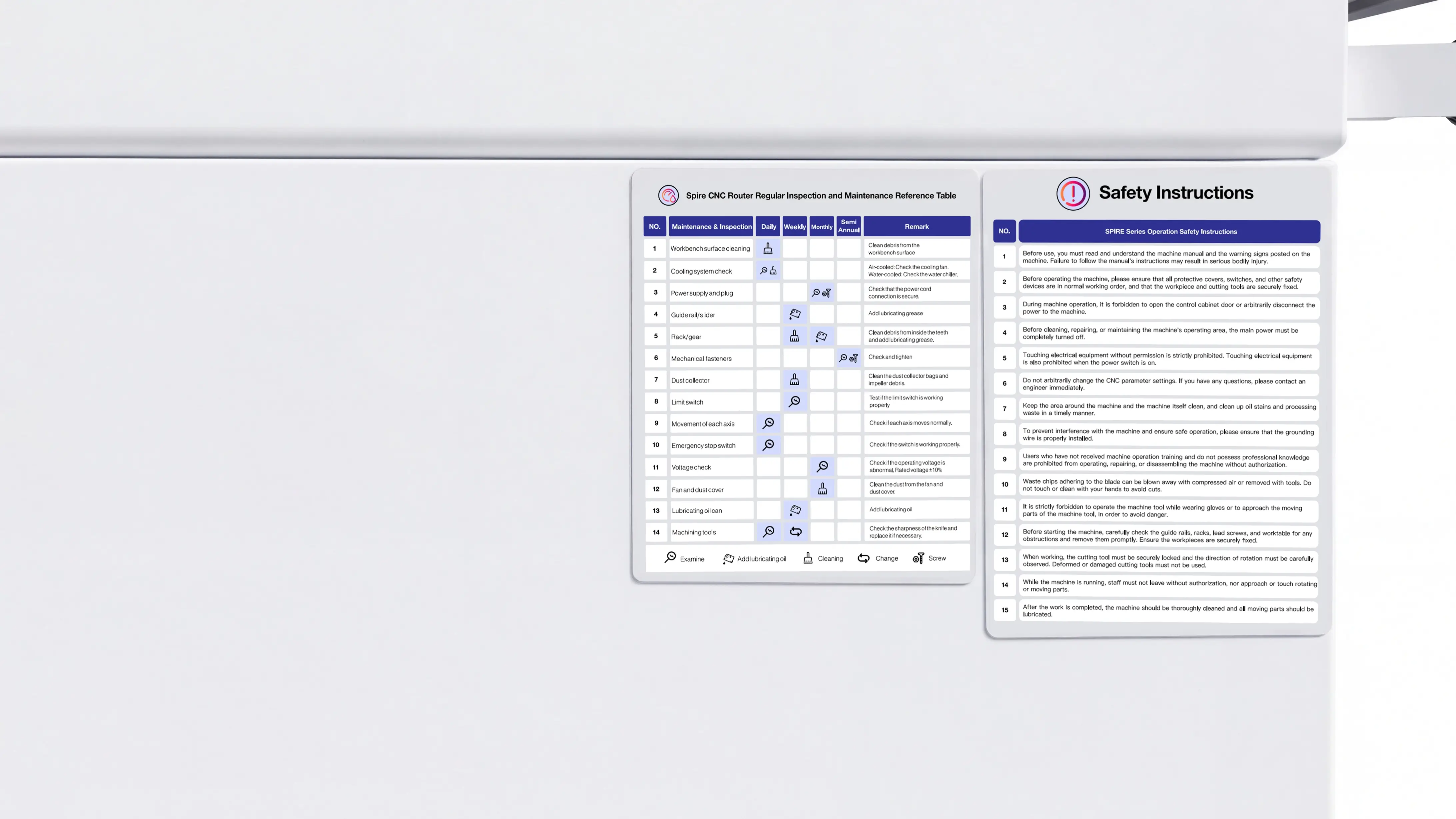
A comprehensive maintenance and safety guide is affixed to the rear of the machine, providing detailed information on maintenance intervals, lubrication requirements, inspection procedures for wear components, and recommended operating practices. This convenient reference helps operators follow standardized maintenance procedures, reduce the risk of operational errors, and maximize the service life of the machine.
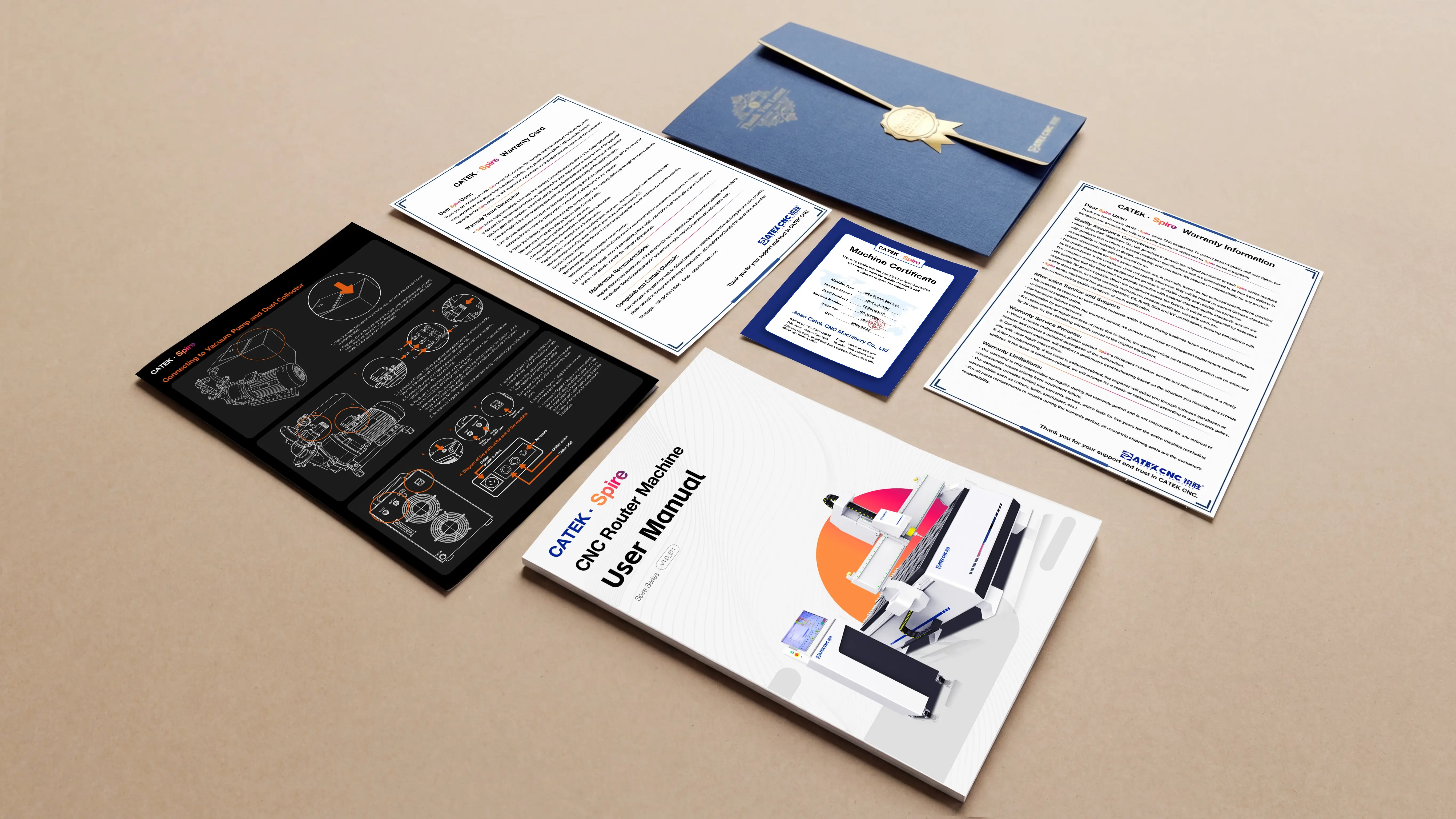
Spire Series Complete Documentation Kit
Every machine is supplied with a complete Spire documentation package, including a Certificate of Conformity, Warranty Card, Warranty Terms and Conditions, Quick Start Guide, and User Manual. This comprehensive and standardized documentation system covers all essential information, including safety guidelines, electrical wiring instructions, troubleshooting procedures, and after-sales support policies, enabling users to quickly become familiar with the machine and begin operation with confidence.
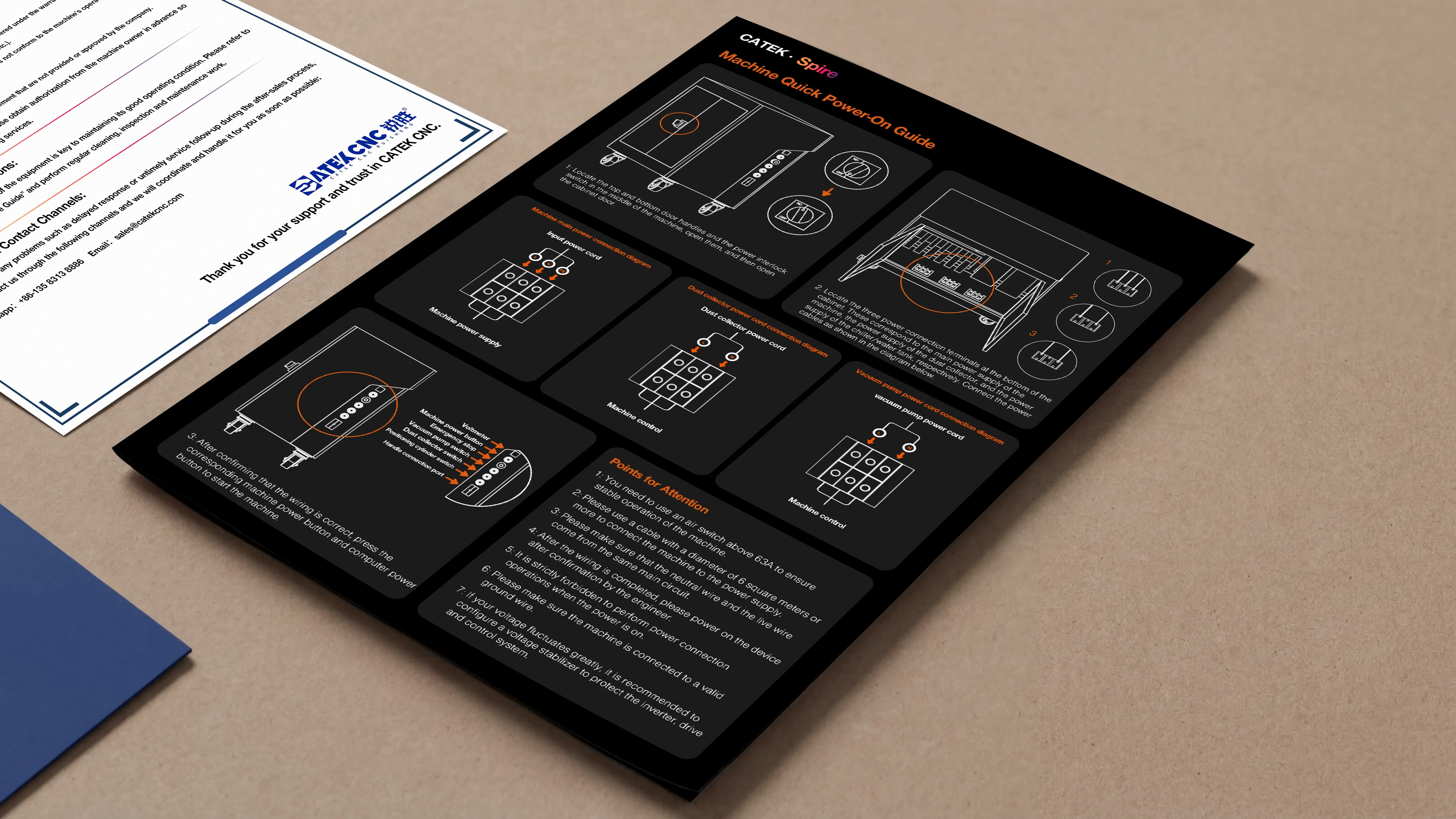
The Quick Start Guide is concise, practical, and easy to follow. It includes a complete machine component checklist, wiring diagrams for the vacuum pumps and dust collector, power connection procedures, and key operating instructions. In addition, it provides troubleshooting guidance for common operational issues. Even first-time CNC router users can follow the guide to complete basic machine setup and electrical connections independently, significantly reducing the learning curve before production begins.
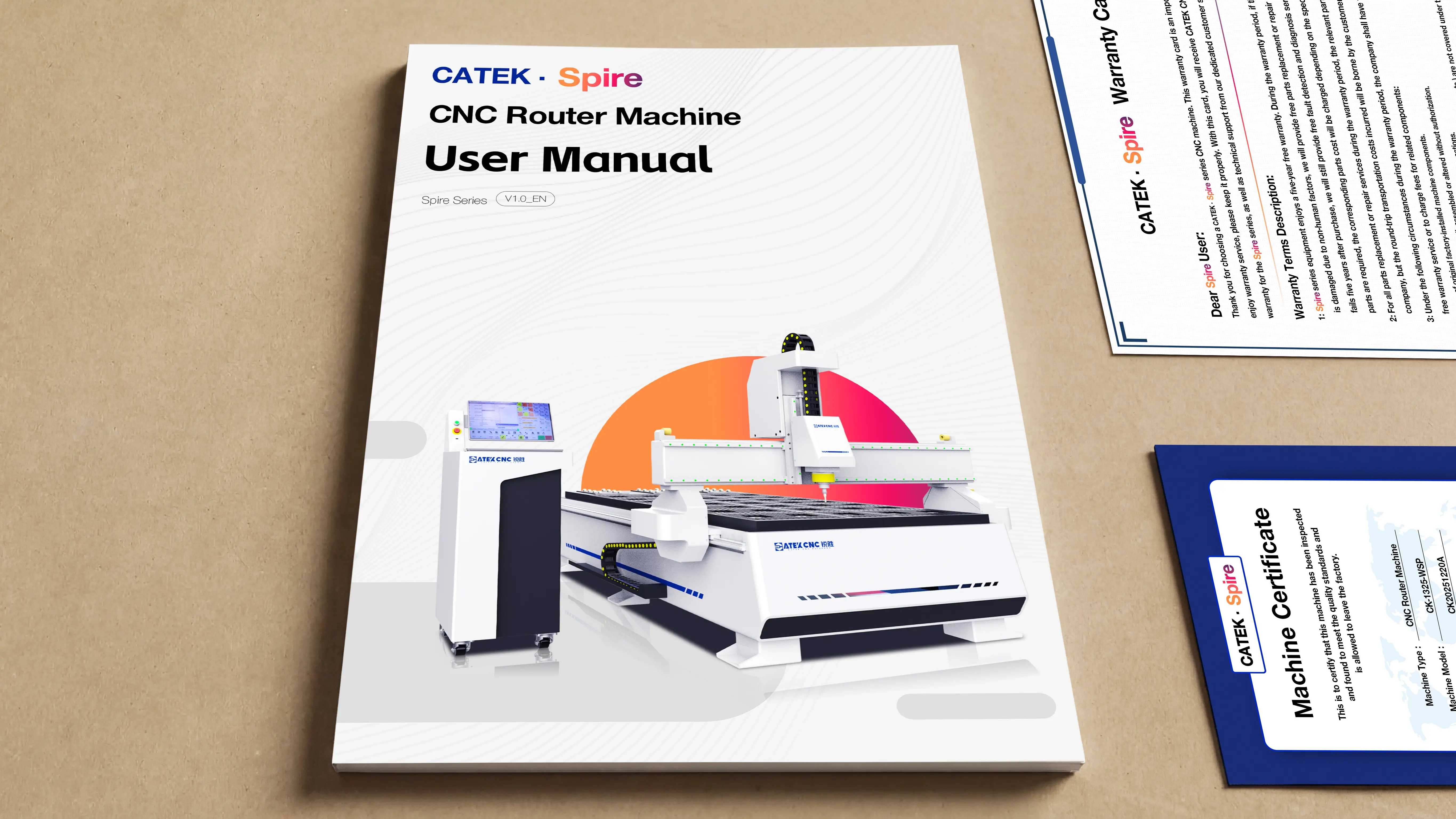
The User Manual provides detailed technical information in a clear, illustrated format, explaining the machine structure and installation procedures for individual components. It comprehensively covers machine installation and commissioning, standard operating procedures, preventive maintenance schedules, and troubleshooting methods for various fault conditions. Designed to support users throughout the entire machine lifecycle, the manual addresses everything from basic operation to advanced maintenance and repair. It helps reduce training requirements, minimize operator errors, and enhance the overall ownership and operating experience.
Everything Ready, Start Working Right Away
Free Accessory Kit for Diverse Machining Needs
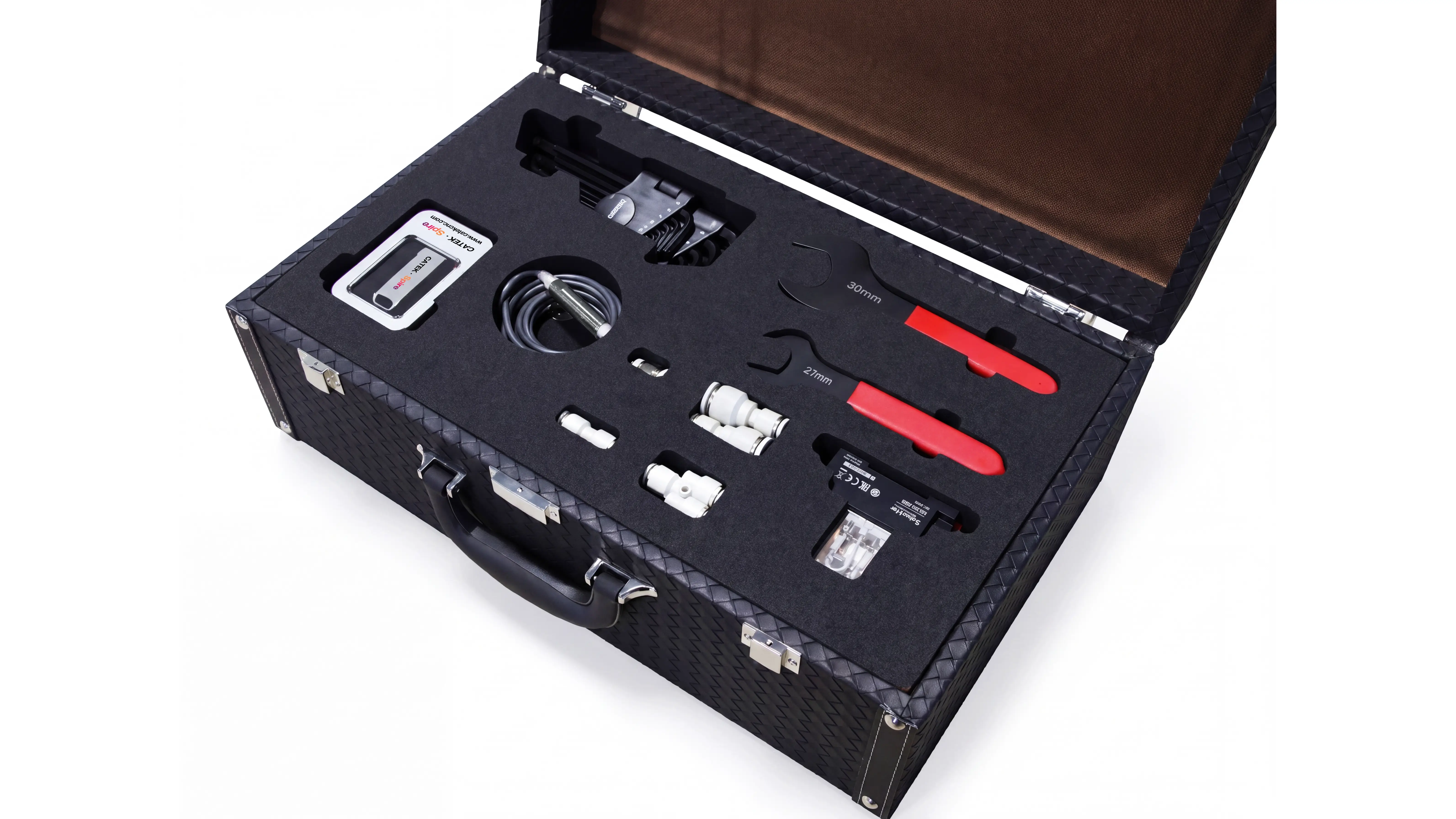
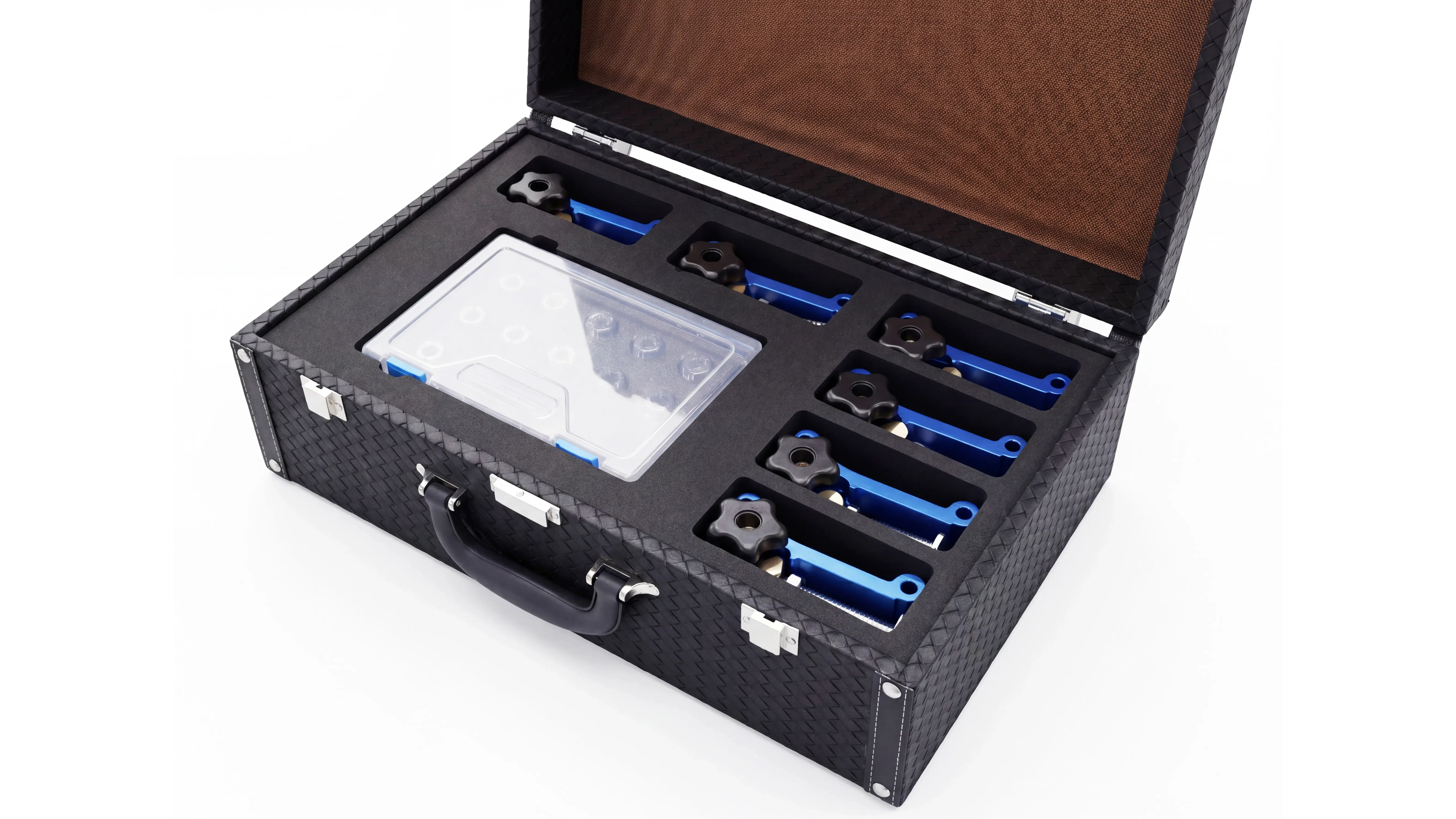
Each machine is supplied with an exclusive Spire double-layer impact-resistant toolbox, thoughtfully organized to separate industrial control components from precision tools. The toolbox includes spindle wrenches, a complete set of hex keys, a USB drive, spare pneumatic components, relays, limit switches, hold-down clamps, and a 13-piece set of AA-grade high-precision ER20 collets. With a comprehensive selection of tools and spare parts, it is fully equipped to support routine machining operations, machine maintenance, and service tasks.
A variety of commonly used replacement parts are included in the toolbox, allowing operators to quickly resolve minor issues and replace worn components when necessary. This helps minimize machine downtime and maintain production continuity. The included USB drive comes preloaded with a complete electronic documentation package, including the digital user manual, instructional videos, standard test files, and machine backup files. These resources provide clear and accessible guidance, enabling users to learn independently and significantly shorten the time required to become proficient with the machine.
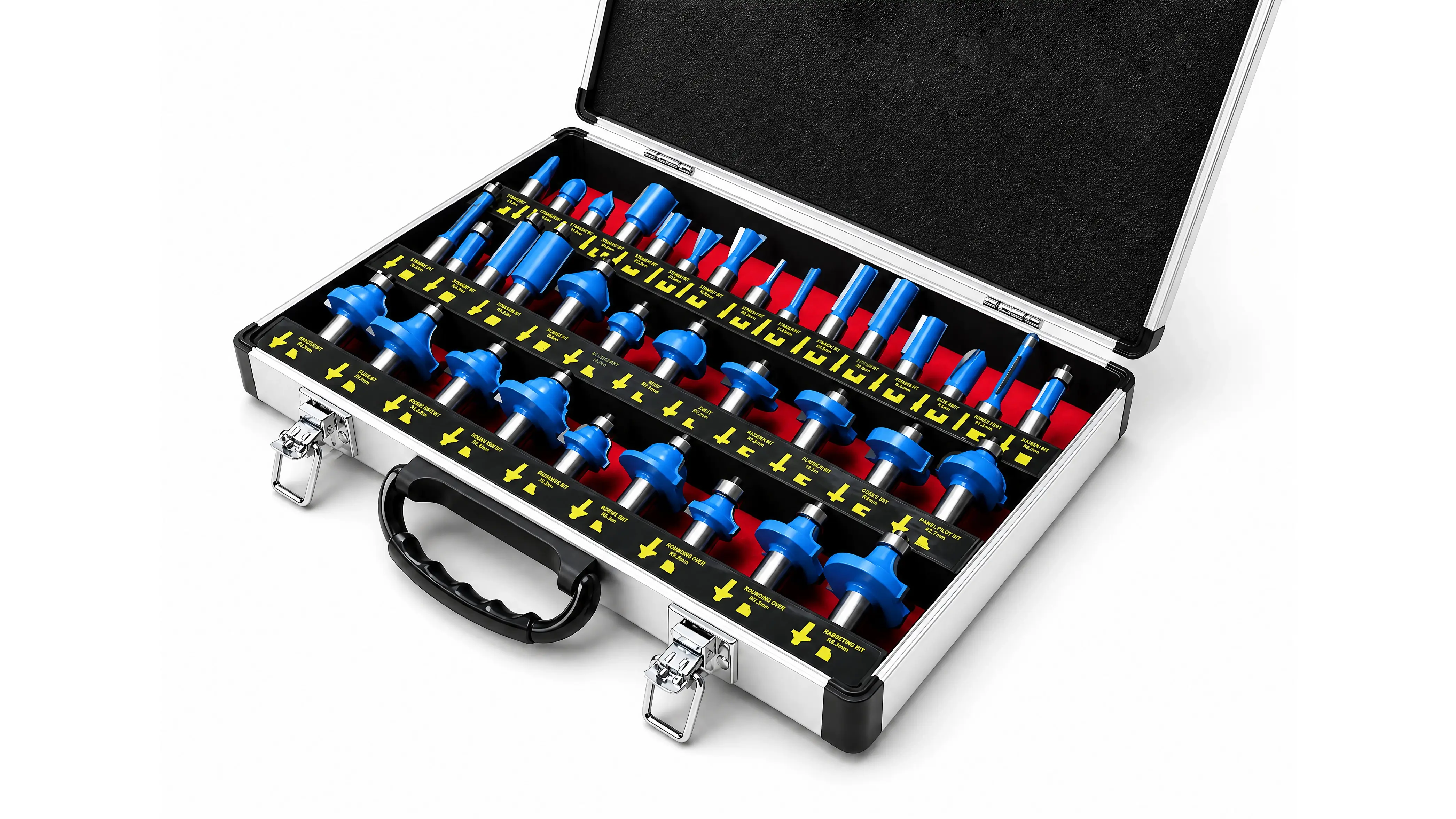
In addition, the machine is supplied with a 35-piece cutting tool set covering a wide range of machining applications. The assortment includes cutting bits, ball-nose bits, milling cutters, engraving tools, and chamfering and trimming tools. Suitable for operations such as cutting, profiling, grooving, engraving, chamfering, and edge finishing, the tool set is compatible with a variety of materials including wood, composite materials, sign-making boards, acrylic, and foam. This versatile package enables users to handle diverse machining requirements immediately after installation.
Toolbox First LayerToolbox Second
LayerMachining Tool Set
Applicable Industries
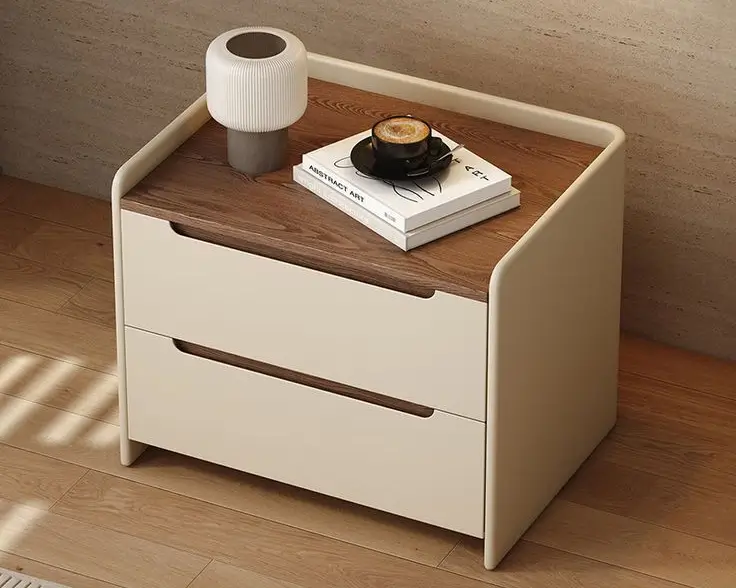
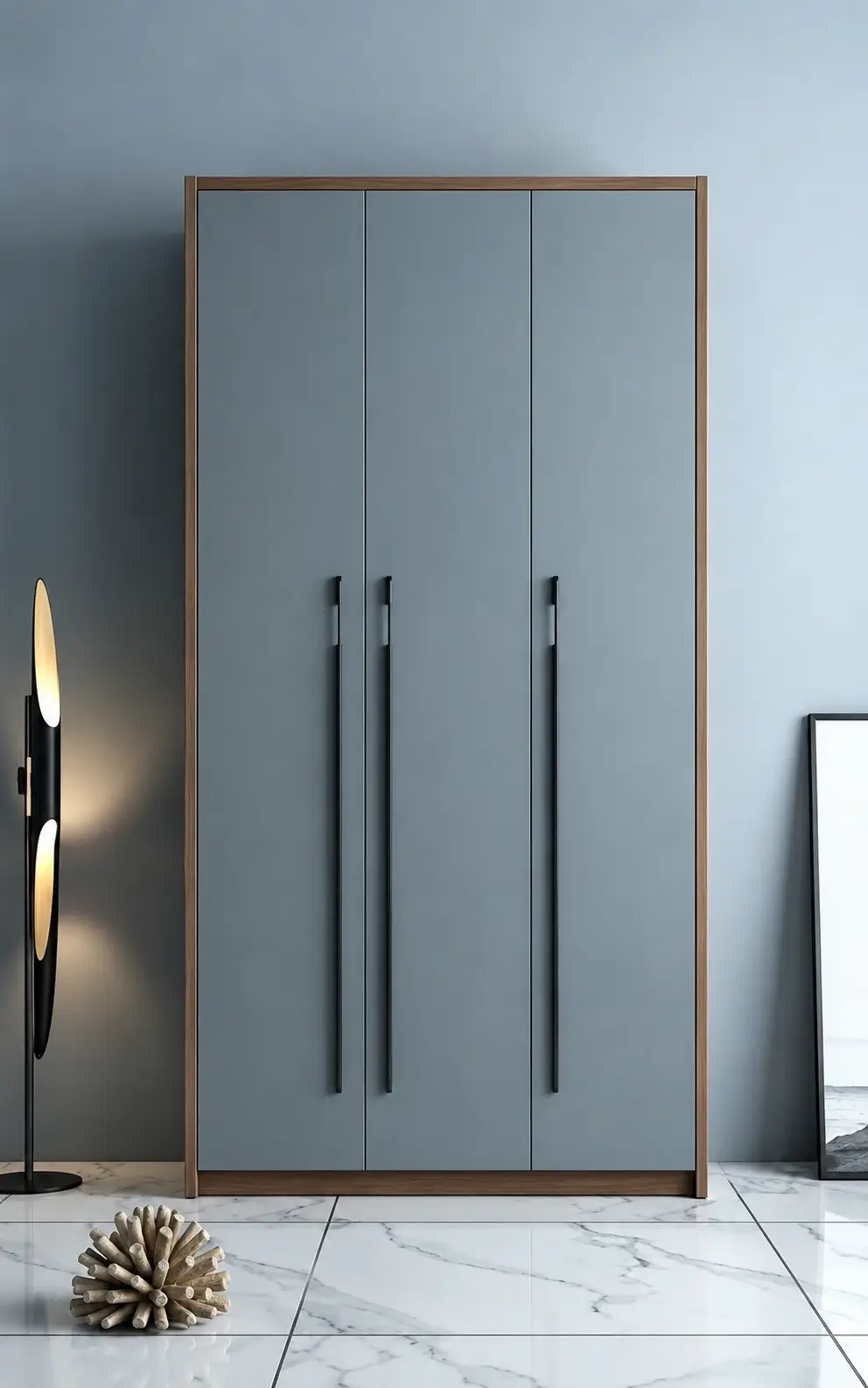
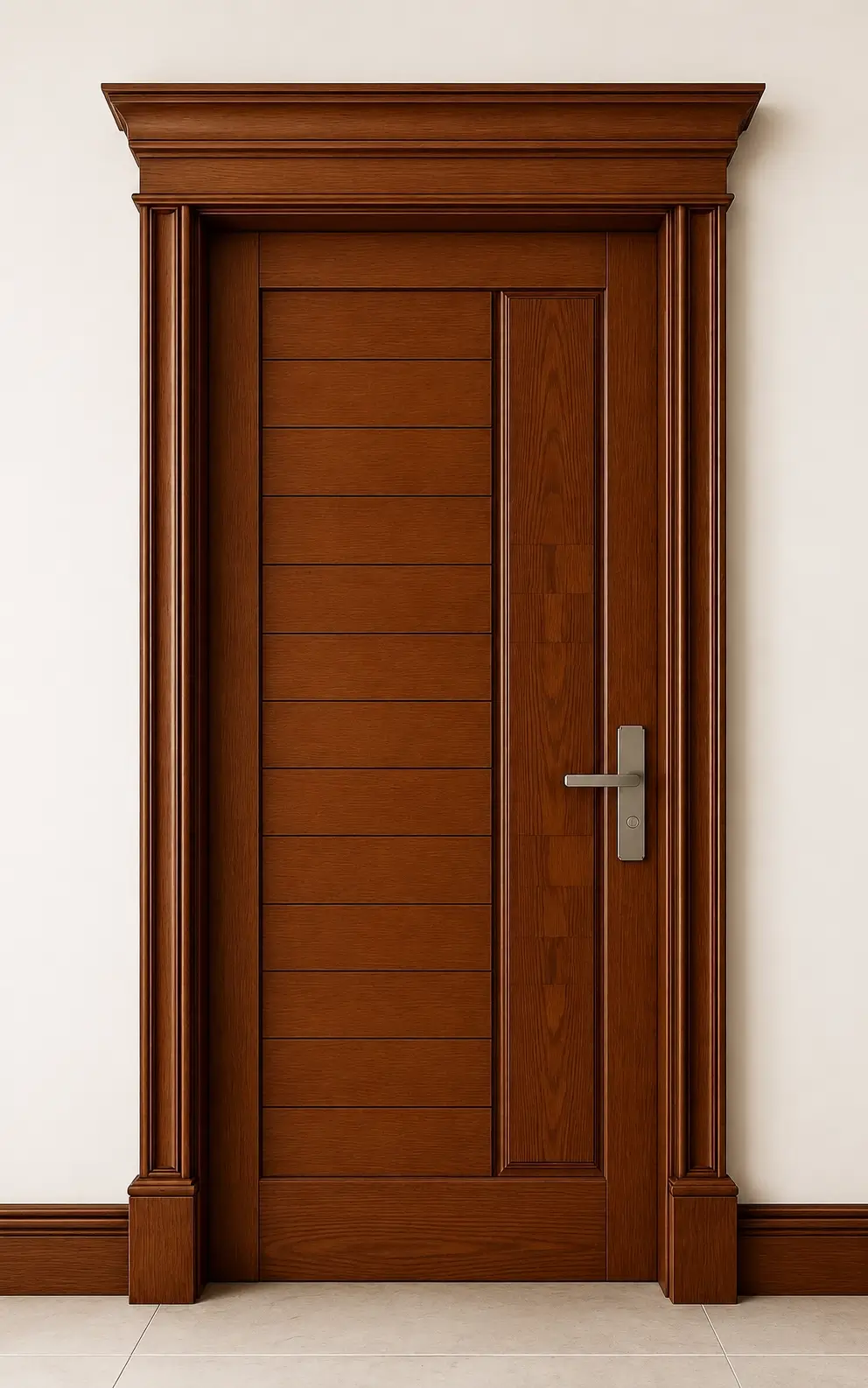
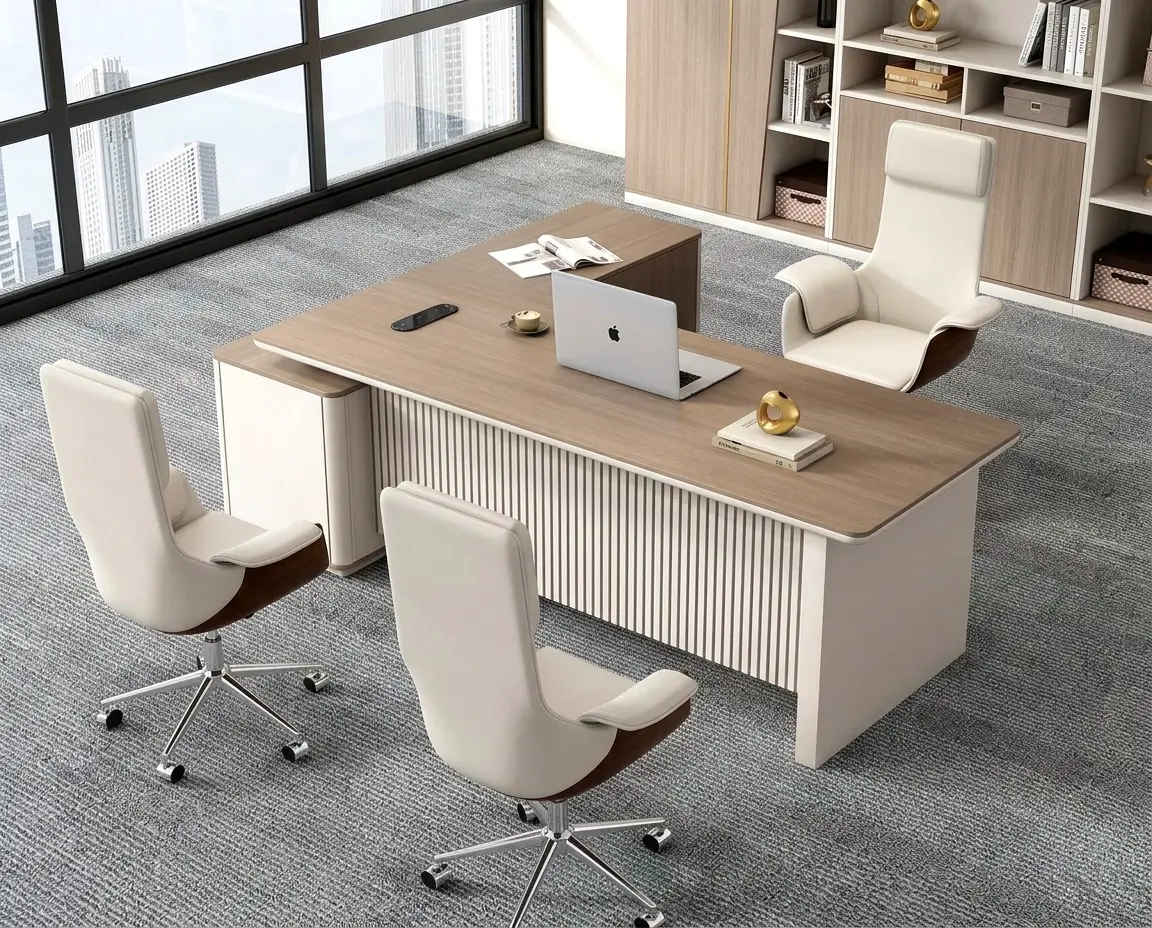
Whether it's furniture making, wooden doors, wardrobes, cabinets, or wood carving, billboards, musical
instruments, etc., The Spire can handle it all with ease.
Easily explore helpful answers to the questions our users ask
most,so
you can understand the Spire better
and get support instantly.
Contact Us Now!
+86 135 8313 8886
1. How should I choose between a vacuum table and a T-slot table for a CNC router? What are the advantages of each?
The primary advantage of a vacuum table is its efficiency when securing large sheet materials, while also preventing damage to the workpiece surface. During operation, the sheet is simply placed on the vacuum table and held securely by negative pressure, eliminating the need for clamps or fixtures. Workholding can be completed in just a few seconds, significantly reducing setup time and improving productivity. Vacuum hold-down is particularly well suited for surface-sensitive materials such as lacquered panels used in wine cabinets, shoe cabinets, wardrobes, bedside cabinets, and kitchen cabinets, as well as melamine boards and acrylic sheets. Most vacuum tables are divided into multiple zones, with each zone independently controlled. When machining smaller workpieces, operators only need to activate the relevant vacuum zones, improving suction efficiency and reducing energy consumption.
The main advantage of a T-slot worktable is its flexibility. Unlike vacuum hold-down systems, T-slot clamping is not restricted by the shape or size of the workpiece. By using standard hold-down clamps, bolts, and other common fixtures with the aluminum T-slots, operators can securely fasten irregularly shaped parts, thick materials, and heavy workpieces. This method provides strong clamping force and is particularly suitable for prototyping, custom production, and low-volume manufacturing where workpiece geometry varies frequently. In addition, T-slot clamping does not require a vacuum pump, resulting in lower operating costs and simpler system maintenance.
2. In what situations should vacuum clamping hold-down and T-slot clamping be used together?
It is recommended to combine vacuum hold-down and T-slot clamping in the following machining scenarios:
1. Small or narrow workpieces
When machining small parts or long, narrow workpieces—such as decorative moldings, trim pieces, or wooden trays—the contact area with the vacuum table may be too limited to generate sufficient holding force. In these cases, hold-down clamps attached to the T-slots can be used to secure the edges of the workpiece, preventing movement during machining.
2. Irregularly shaped or perforated workpieces
For irregularly shaped parts, components with cutouts, or workpieces containing multiple holes—such as custom display stands, model-making components, or specialty products—it can be difficult to create an effective airtight seal for vacuum hold-down. Supplementing the vacuum system with T-slot clamps ensures secure workholding and improves machining stability.
3. Heavy solid-wood or high-mass workpieces
When processing heavy materials such as solid-wood tabletops, thick hardwood slabs, or other large, high-weight panels, vacuum hold-down provides broad surface support across the workpiece, while T-slot clamps can apply additional pressure at critical load-bearing locations. This dual-locking approach offers maximum stability and safety during machining.
In general, whenever a single workholding method cannot guarantee complete workpiece security, combining vacuum hold-down with T-slot clamping provides the ideal balance of efficiency, stability, and operational safety.
3. What materials and products can the CK-1325-WSP-VT CNC Router process?
The CK-1325-WSP-VT CNC router is designed for a wide range of materials and applications across industries such as furniture manufacturing, sign making, interior decoration, prototyping, and craft production.
Wardrobes, cabinets, wine cabinets, beds, and other furniture components
Wooden doors, decorative wall panels, and interior architectural elements
Display racks, exhibition booths, and retail fixtures
Illuminated letters, logos, signs, lightbox panels, and advertising displays
Musical instrument components, including guitar and violin parts
Wood carvings, relief carvings, decorative patterns, and wave panels
Wooden molds, foam molds, wax patterns, and prototype models
Toys, crafts, and custom-made products
Solid-surface materials, foam products, ceramic molds, and specialty fabrication projects
4. Is a 3.5 kW water-cooled spindle sufficient for routine wood and acrylic machining? Does a higher-power spindle always provide faster machining speeds?
Yes. The CK-1325-WSP-VT CNC router is fully capable of handling routine machining operations on wood, acrylic, and other sheet materials, including cutting, drilling, grooving, and engraving. The machine is equipped with a CATEKCNC-developed 3.5 kW water-cooled spindle paired with a BEST variable frequency drive (VFD), providing reliable and efficient performance for everyday production tasks.
This spindle can easily process furniture components such as wardrobes, cabinets, wooden doors, and decorative panels, while also delivering the precision required for advertising applications including channel letters, signs, logos, and illuminated displays.
While spindle motors rated at 6 kW or higher are available on the market, they are often oversized for routine woodworking and sign-making applications. In many light- to medium-duty machining scenarios, the additional power provides little practical benefit while significantly increasing both the initial machine investment and ongoing electricity costs.
The CK-1325-WSP-VT is specifically designed for these common production requirements. For typical cutting and engraving applications, it delivers machining quality and surface finish comparable to higher-power machines, while offering substantially lower energy consumption and operating costs. For manufacturers focused on maximizing return on investment, it represents a practical and cost-effective solution that balances performance, efficiency, and long-term operating expenses.
5. What are the key features and advantages of the Weihong NK105 handheld controller compared with common CNC systems?
Compared with PC-based CNC systems such as Weihong NC Studio and Mach3, the Weihong NK105 handheld controller offers several distinct advantages:
First, it supports fully standalone operation. Machining files can be loaded directly from a USB drive, eliminating the need for a dedicated computer connection. This not only simplifies machine setup but also avoids potential issues associated with PC hardware, operating systems, and software compatibility.
Second, the controller features a simple and intuitive operating interface. After importing a machining file, the operator only needs to set the workpiece origin and start the program. The streamlined workflow significantly reduces the learning curve and allows even inexperienced operators to become productive quickly.
Third, the handheld design provides greater operational flexibility. Operators can move freely around the machine while monitoring the machining process, making positioning, setup adjustments, and machine operation more convenient. This improves overall efficiency and allows real-time observation of the workpiece and toolpath during operation.
6. How often should the water in a CW-5200 chiller be replaced, and what routine maintenance is required?
Under normal workshop conditions, it is recommended to replace the purified water in the CW-5200 chiller every three months. In woodworking environments with high levels of dust and airborne particles, the replacement interval should be shortened to approximately every two months to maintain optimal cooling performance and water quality.
Routine maintenance is straightforward and requires minimal effort. Operators should regularly check the water level through the sight window and replenish the system with purified water whenever necessary. In addition, the air intake and heat dissipation vents should be cleaned weekly to remove accumulated dust, wood chips, and debris, ensuring unobstructed airflow and efficient cooling performance.
During winter, when workshop temperatures may fall below 0°C. Operators should either add an appropriate antifreeze coolant to the system or completely drain the water from the chiller, hoses, and spindle cooling circuit. This helps prevent freezing and potential cracking of water lines or internal spindle cooling passages, protecting the cooling system from costly damage.
Last Updated:
2026-06-22 10:07:11
Technical Parameters
Series
CATEK ·Spire
Model
CK-1325-WSP-VT
XYZ Working Travel
1300*2500*200mm
Bed
Spire-specific machining center processed reinforced bed base, independent anti-interference
control cabinet
We use cookies to personalise content and ads, to provide social media features and to analyse our
traffic. We also share information about your use of our site with our social media, advertising and
analytics partners who may combine it with other information that you’ve provided to them or that
they’ve collected from your use of their services.
You may modify your privacy preferences at any time by accessing the "Your Privacy Choices" link
located at the bottom of the page.


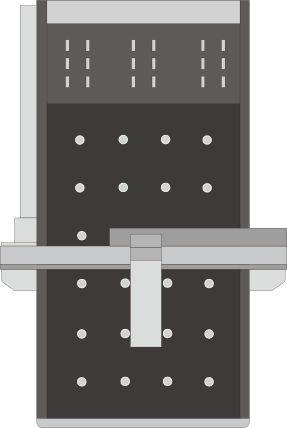
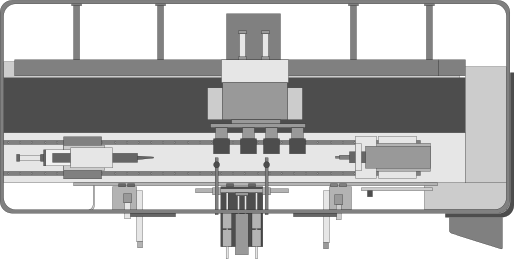














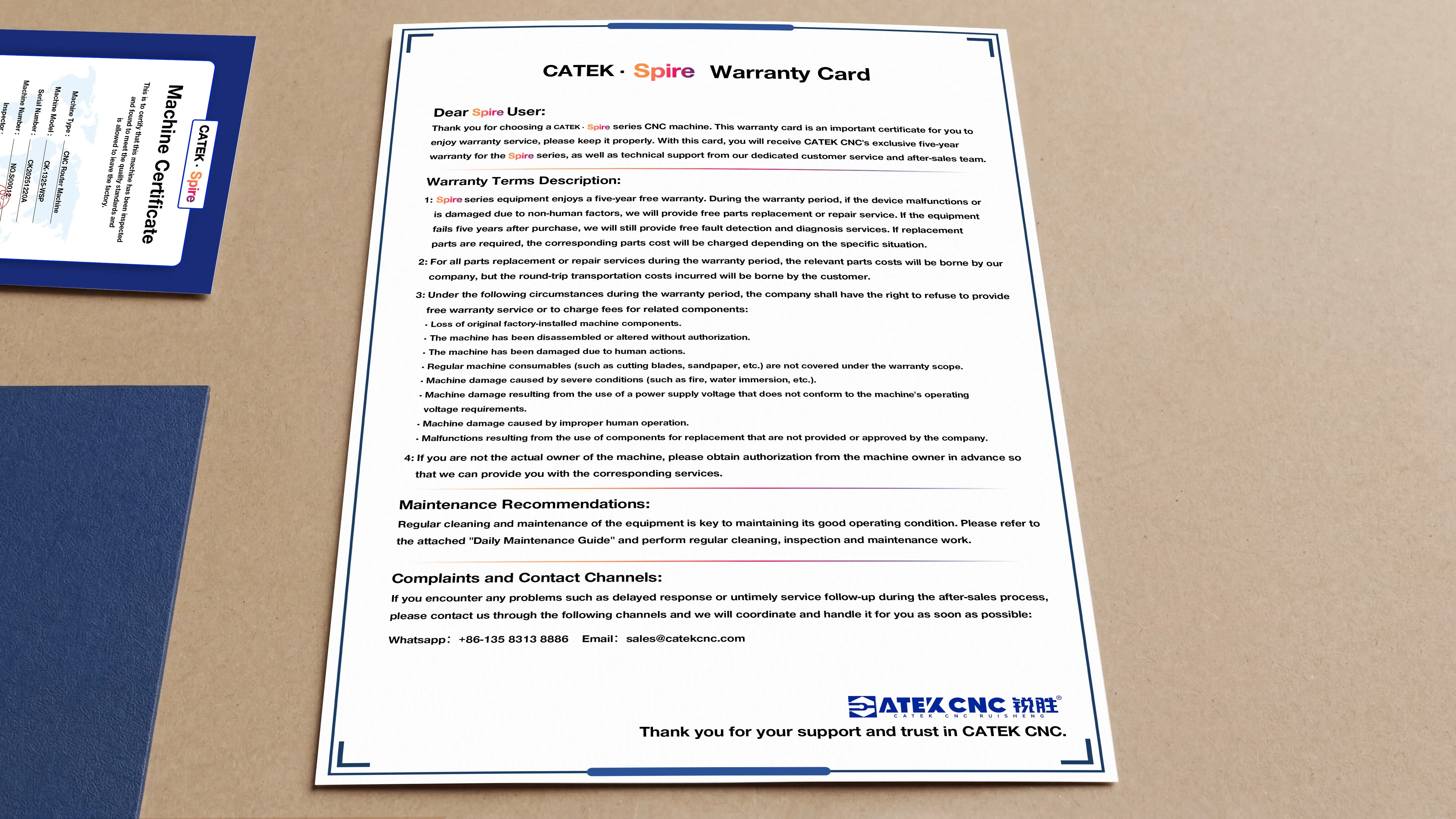




 Five-years free warrantyEnjoy Spire VIP service, providing free warranty and maintenance for the entire machine, bringing you a worry-free experience.
 Exclusive private customer service and after-sales team7*24 hours online service, on duty around the clock, to solve any problems for you as soon as possible.
 The matching CNC software is given for freeEnjoy lifetime free software upgrades, supporting software updates and free programming services.