


{{goods.model}}


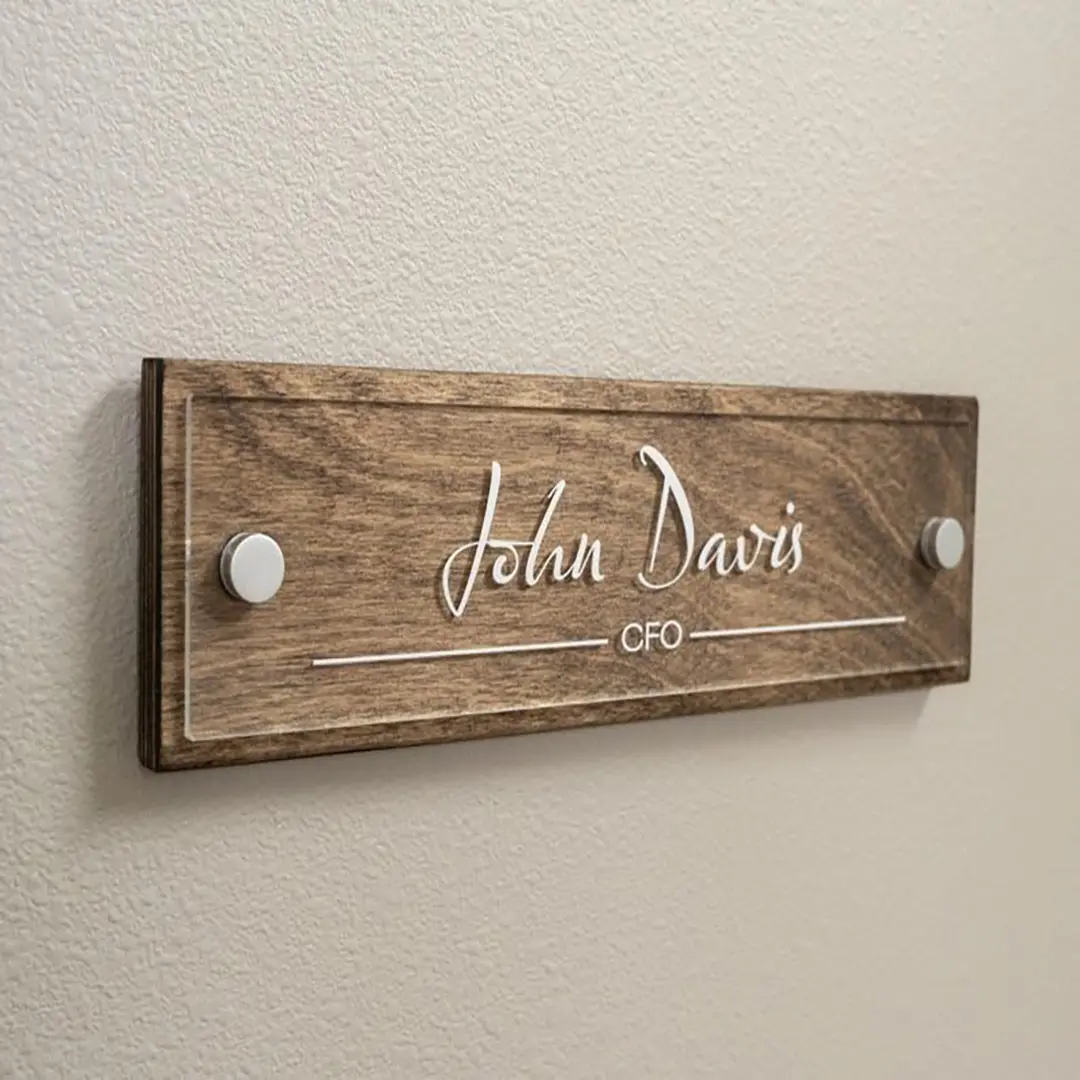



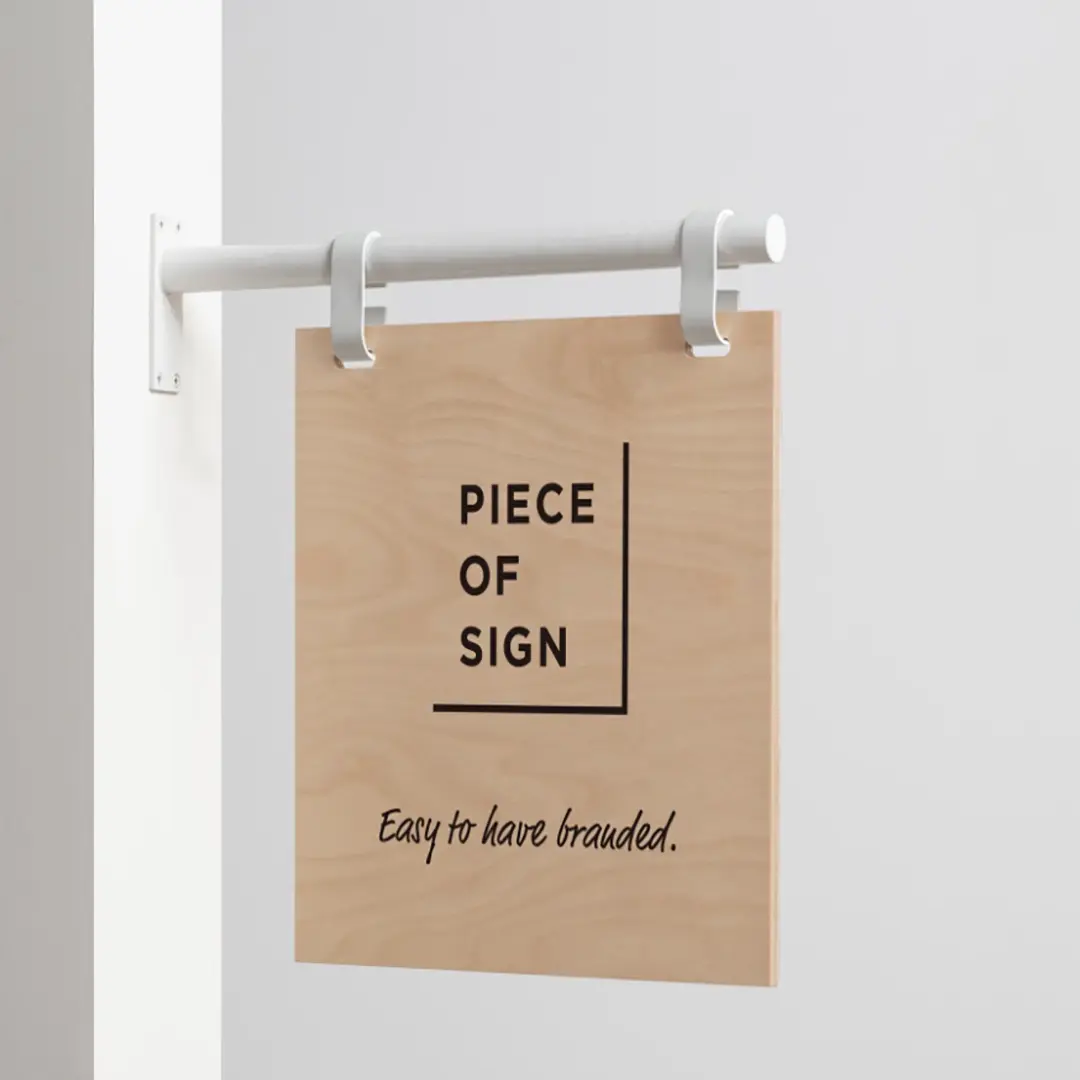
Application of 6090-T Mini ATC CNC Router in Advertising Sign Processing
To address space constraints and tedious tool changes in small sign shops, this project introduces the compact CK-6090-T ATC CNC router. By integrating multiple processes into a single automated workflow, it enables efficient custom signage production with minimal manual labor.
Related models
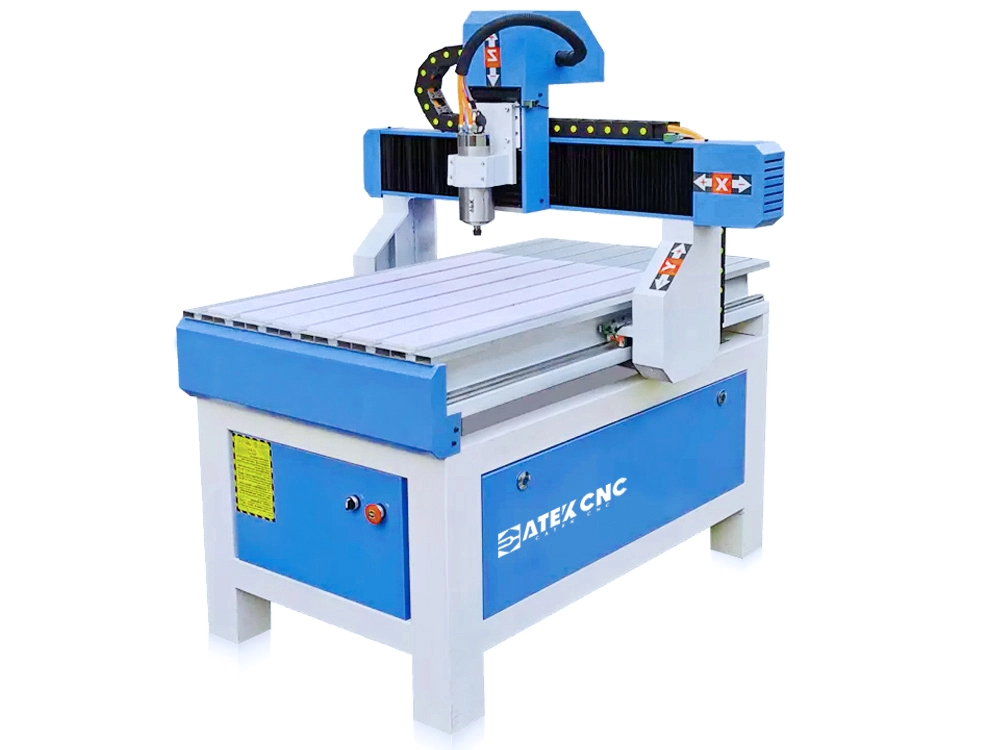
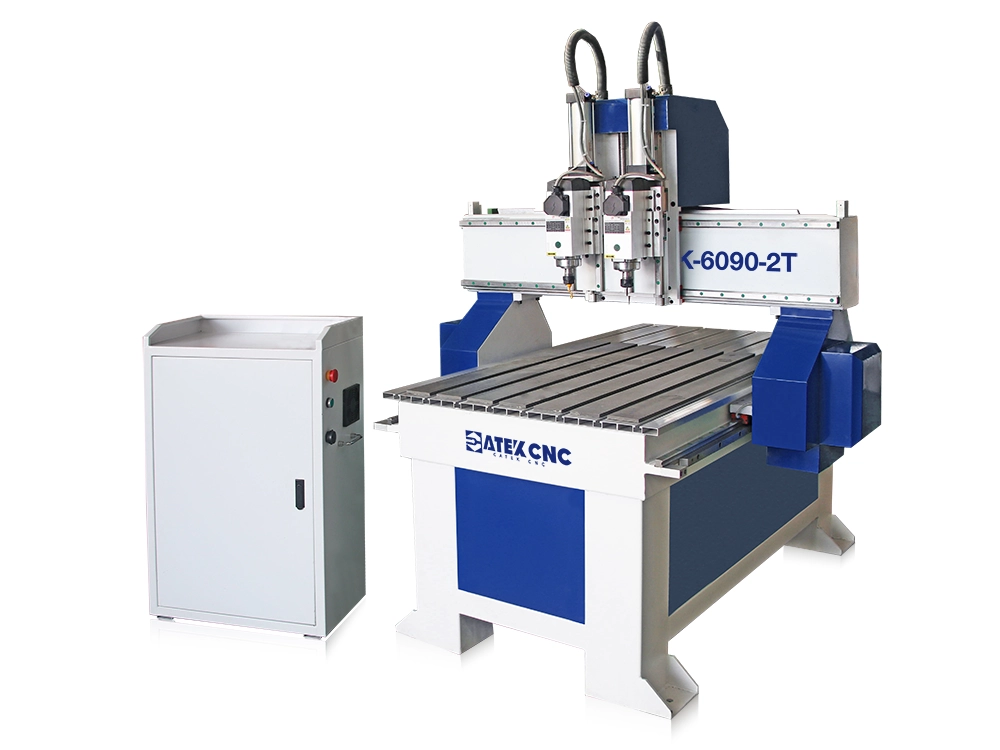
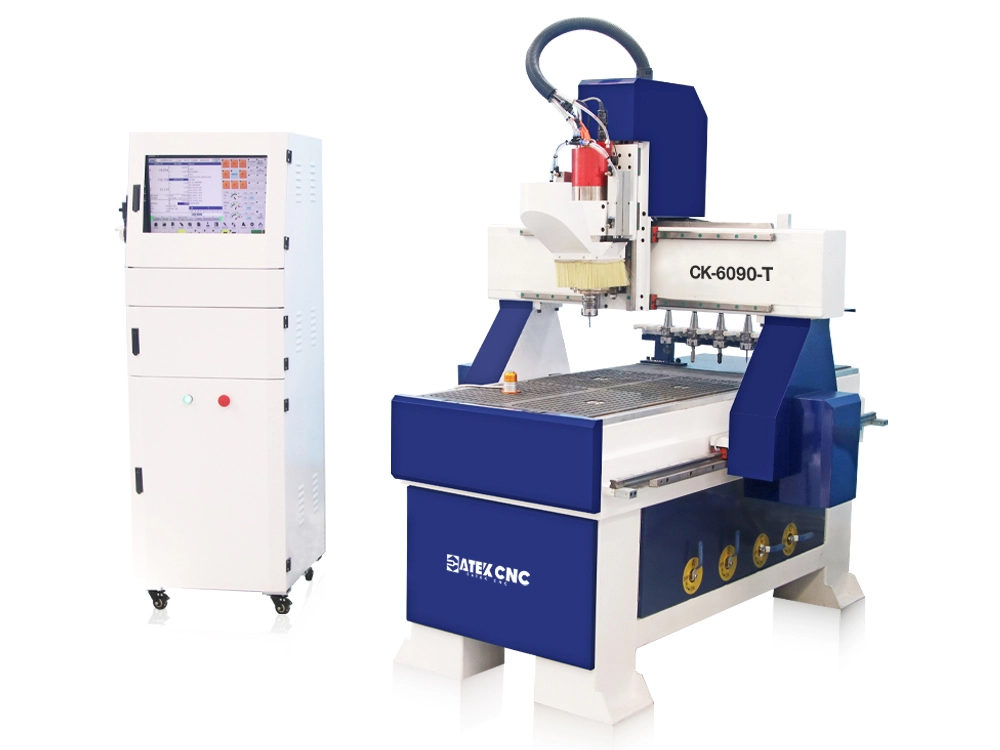
With the growing demand for small-scale, high-precision customized products in the advertising manufacturing industry, the traditional manual tool change mode suffers from low efficiency and unstable accuracy, making it difficult to meet high-efficiency production requirements. Customers face the problem that traditional equipment struggles to balance both efficiency and precision.
To address this pain point, this project adopts the 6090-T mini ATC CNC router. By leveraging its compact frame layout and advanced automatic tool change system, it demonstrates how this mini ATC CNC router can efficiently complete cutting, drilling, and engraving within a single machining cycle, significantly improving production efficiency and machining accuracy.
I.Introduction to the CK-6090-T Mini CNC Router
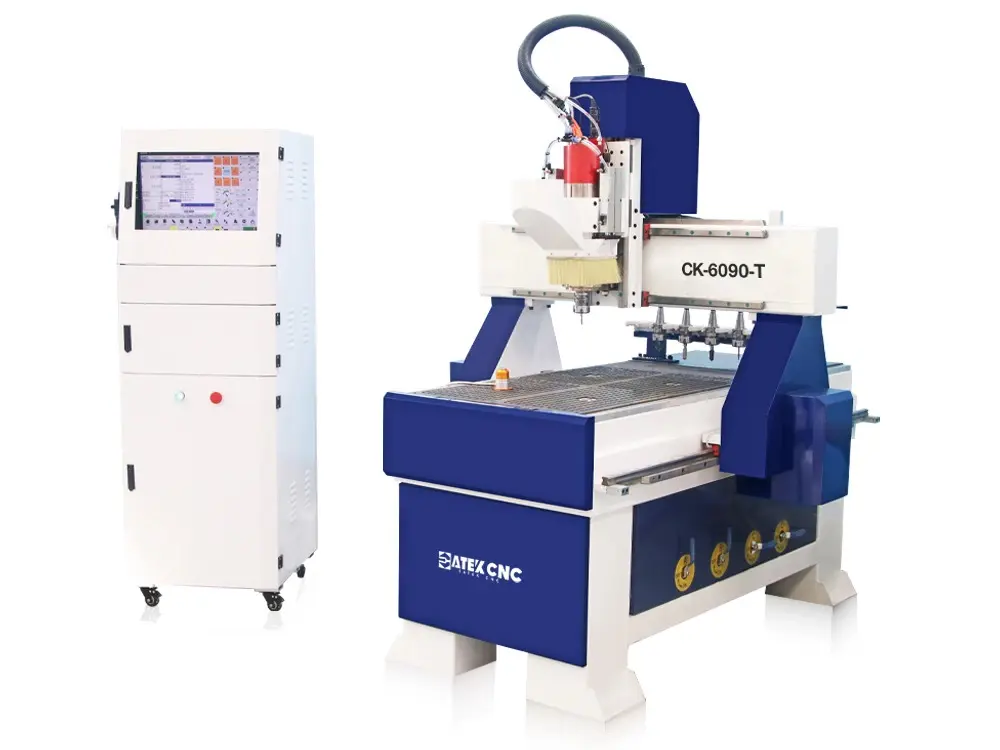
To meet the requirements of space utilization and multi-process switching in advertising sign production, this project selects the CATEKCNC 6090-T mini ATC CNC router. With its compact 600×900mm worktable design, this model accommodates common sheet sizes used in the advertising industry while minimizing workshop floor space without compromising industrial-grade machining accuracy.
In terms of system integration, the machine features a composite worktable combining vacuum adsorption and T-slots, along with a 6-station linear automatic tool change system. This enables rapid workpiece fixing and automatic tool changes during machining, effectively addressing the efficiency bottleneck of frequent manual tool changes in traditional processing.
For core power, the CK-6090-T mini CNC router is equipped with a 5.5kW water-cooled spindle and a high-rigidity frame, making it particularly suitable for long-duration precision engraving tasks. Additionally, the accompanying self-developed simplified CNC system significantly lowers the operational barrier, ensuring that operators can quickly get up to speed and shortening the conversion cycle from design to finished product. The CK-6090-T mini CNC router is widely applicable to a variety of materials and application areas.
Although this engraving machine is an entry-level product, we still strictly adhere to industry standards in terms of component quality and assembly processes to ensure durability, accuracy, and machining results. In addition, we provide design and programming software along with detailed tutorials free of charge, helping users progress from beginner to expert.
II.Limitations of Traditional Small Manual CNC Router
In the field of advertising sign processing, traditional mini manual CNC routers have long suffered from the following problems:
- Low tool change efficiency: An advertising sign typically requires multiple processes such as drilling, cutting, chamfering, and text engraving, each requiring a different tool. With a single-tool CNC router, the operator must manually remove, install, and re-zero the tool for each change, taking 5-8 minutes per change. In batch production, the cumulative time spent on tool changes can even exceed the actual cutting time.
- Unstable accuracy: After each manual tool change, the Z-axis zero point must be reset. Different operators have varying skill levels, and even the same operator cannot guarantee perfect consistency across different batches. This leads to issues such as inconsistent engraving depths and contour deviations within the same batch, directly affecting the finished product's appearance quality.
- High labor dependence: The entire machining process requires a dedicated operator to stay with the machine. The machine stops during tool changes, and the operator cannot leave. For small to medium-sized workshops, this means one worker can only tend to one machine, resulting in high labor costs and low output efficiency.
- Inability to handle complex orders: When an order requires three or more types of tools, frequent tool changes are not only time-consuming but also prone to errors. As a result, many workshops are forced to turn down orders with slightly complex processes, limiting their business expansion capabilities.
III.CK-6090-T Mini CNC Router Advantages in Advertising Signage
1. The CK-6090-T CNC router demonstrates the following core advantages in advertising sign processing:
Compact machine frame, designed specifically for sign-making workshops
The 600×900mm working area is specifically designed for small workshops, accommodating commonly used sign materials such as acrylic, PVC, and two-color board while balancing standard sheet sizes with workspace flexibility. The machine features a thickened steel tube welded bed, which undergoes aging treatment to eliminate internal stress and is then machined by a five-axis gantry mill, ensuring long-term stability and positioning accuracy.
2. 6-station linear automatic tool change system
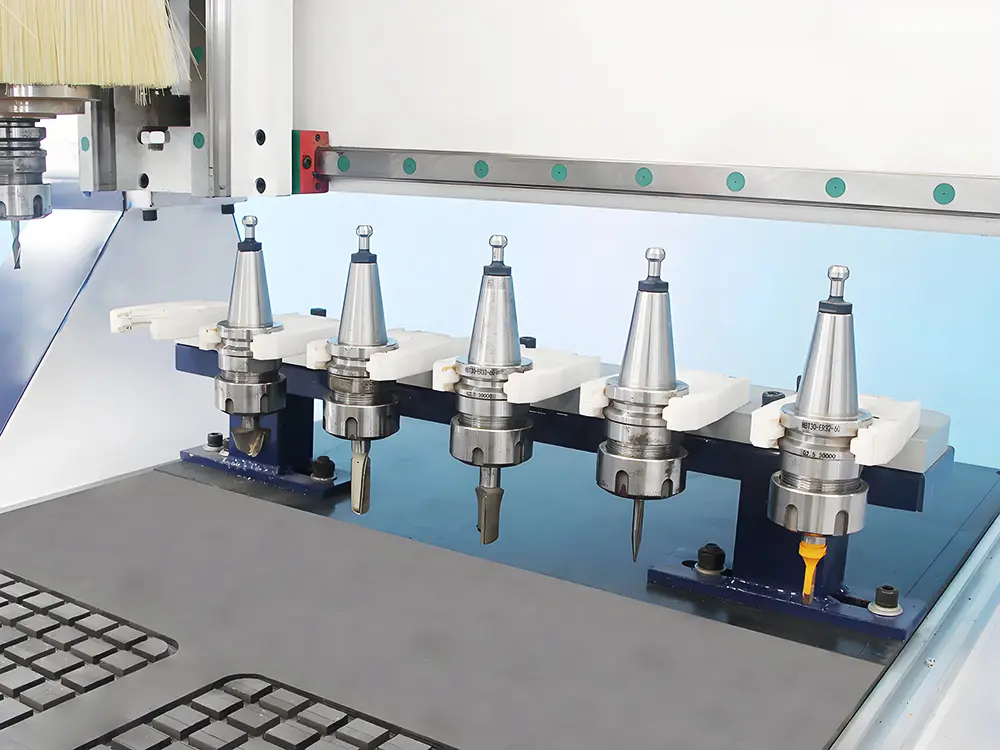
Producing advertising signs often requires multiple processes such as rough cutting, fine engraving, and drilling. This equipment is equipped with a 6-station linear automatic tool change system, which automatically switches tools according to processing needs, completely eliminating manual tool changes and significantly reducing human intervention and downtime. It is particularly suitable for efficient production of multi-process, small-batch orders.
3. Flexible clamping for quick switching between different sheet materials
Sign processing involves many batches and a variety of materials. The CK-6090-T CNC router features a composite worktable combining vacuum adsorption and T-slots: thin sheets are held by vacuum suction, while thick sheets or small pieces are secured with clamps.
4. High-precision transmission
Advertising fonts and logos demand extremely high standards of edge smoothness and detail accuracy. This CNC router features high-precision ground helical gears on the X/Y axes and a high-precision TBI ball screw on the Z axis, paired with high-precision linear guides and driven by servo motors. In actual machining, this effectively reduces the amount of post-processing sanding work required.
5. 5.5kW water-cooled spindle – no overheating during long, continuous operation
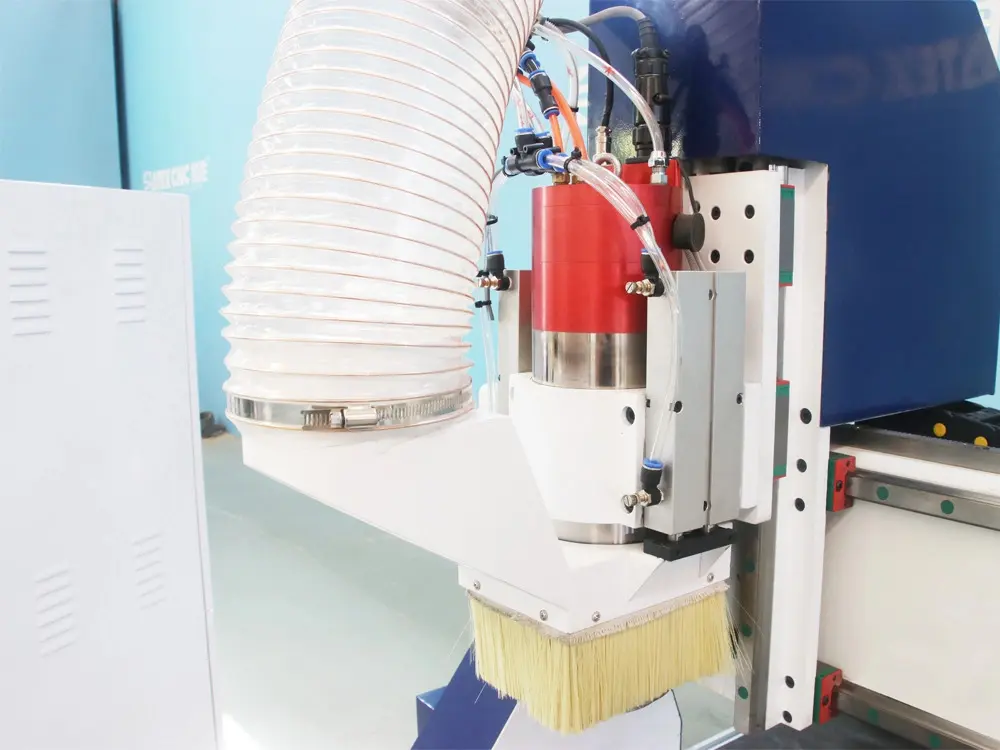
Advertising sign orders often come with urgent deadlines and require continuous overnight processing. Standard air-cooled spindles are prone to overheating and speed reduction during prolonged operation. The 5.5kW water-cooled spindle offers better heat dissipation, enabling stable long-term operation and ensuring consistent quality when processing large-batch orders.
6. The CNC system is simple and easy to learn.
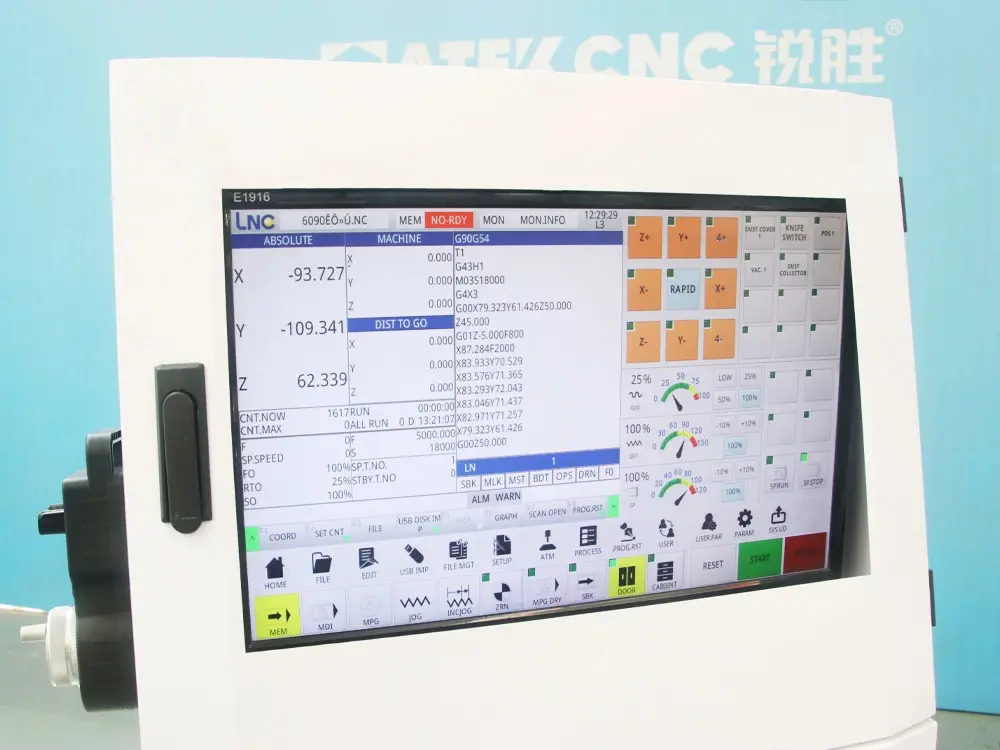
The CK-6090-T CNC router is equipped with the Taiwan LNC control system, which is easy to operate and lowers the learning curve, allowing even beginners to get started with ease.
IV.Advertising Signage Processing Solution for CK-6090-T CNC Router
Using the CK-6090-T ATC CNC router for advertising sign processing integrates processes that traditionally require multiple machines or frequent manual intervention into a smooth, automated workflow. Thanks to its 6-station linear automatic tool change system and 5.5kW water-cooled spindle, all steps from rough cutting and fine engraving to drilling are completed automatically in a single setup. This not only reduces manual operation errors but also ensures consistent product quality for small-batch, multi-variety orders, effectively alleviating the production capacity pressure caused by order fragmentation and tight delivery deadlines.The following describes the typical operating procedure for machining acrylic advertising signs using the CK-6090-T ATC CNC router in this project.
Operation Process:
1. CAM Programming
Generate toolpaths based on the sign's design requirements (outer contour, engraved texture, mounting holes), and assign tool numbers in the order of roughing → finishing → drilling. This step determines whether the subsequent automatic tool changes can be executed in an orderly manner.
2. Loading Tools
Load the tools specified in the programming into the 6-station linear tool magazine according to their assigned numbers. Since the machine automatically changes tools during processing, the operator only needs to complete tool loading once before starting, avoiding the tedious manual disassembly and assembly required for each tool change in traditional methods.
3. Securing the Sheet Material
Check the vacuum adsorption table for debris or scratches to ensure a clean and flat surface. Place the material (acrylic, PVC, or two-color board) flat on the worktable, and activate the vacuum adsorption in the corresponding zones based on the sheet size, or use the T-slots with clamps for fixation. Keeping the sheet stationary during high-speed cutting is the prerequisite for ensuring smooth edges and precise hole positions.
4. Automatic Machining
Confirm the cooling system is ready. After pressing the start button, the machine will automatically execute the following sequence:
- Automatically call the first tool and perform the preset machining.
- Upon completion of the current process, the spindle automatically moves to the linear tool magazine, quickly changes to the next tool, and uses the automatic tool setter to complete tool calibration.
- Continue executing the next process until all toolpaths are completed.
Throughout this process, the operator does not need to perform any manual tool changes or intervention and can handle other tasks simultaneously.
5. Part Removal and Post-Processing
After machining is complete, turn off the vacuum adsorption and remove the finished sign. Use a scraper or fine sandpaper to remove any small burrs on the edges. For acrylic materials, flame polishing or protective film application can be performed. For mass production of identical-sized sheets, the 2+2 positioning cylinders on the table enable quick positioning, allowing direct repetition of steps 3 and 4 for the next batch.
V.Feedback
This small workshop, which specializes in advertising sign processing, introduced the CK-6090-T. After three months of use, the owner described the changes in the factory as follows:
"Before we got the CK-6090-T, our sign production was always limited by workshop space. We had to use multiple machines working together, and the tool change process alone took up nearly 40% of our operating time. After using this compact machine for a few months, the most obvious improvement is that the entire process runs much smoother. The CK-6090-T's compact frame doesn't require extra space, and the automatic tool change system allows us to continuously process various materials like acrylic and PVC without frequent manual intervention, which has helped the factory save a lot on labor costs. Now, orders that used to take half a day can be shipped out within two hours."
VI.Conclusion
In this advertising sign processing case, the CK-6090-T ATC CNC router replaced the original traditional manual tool change machine. Previously, the customer was limited by the efficiency bottleneck of frequent tool changes and could only take on simple orders dominated by single processes. After switching to the new equipment, their ability to handle small-batch, multi-variety custom sign orders has significantly improved. Multiple processes such as cutting, engraving, and drilling are now integrated into a single setup, operators no longer need to frequently stop for manual intervention, and the processing time per batch of signs has been significantly reduced. The edge smoothness and hole position consistency of materials such as acrylic and PVC have also been stably controlled.
For other small to medium-sized sign workshops facing similar challenges, upgrading to an automatic tool change solution that matches their own scale is more practical than expanding the workshop or adding more staff.
Other Projects

Produce Chinese-Style Wood Door Using a CNC Router Machine
Chinese furniture is loved by some people for its solemn, simple, harmonious and elegant style, but its complex carvings and strict symmetrical aesthetic requirements make its processing more complicated. Now, with the help of CNC routers, you can save effort and complete the production of Chinese furniture quickly, and the production quality and consistency of mass production far exceed traditional manual labor.
How This 4-Axis ATC CNC Router Transforms Panel Furniture Production Efficiency
This project focuses on upgrading a panel furniture production line by introducing a fully integrated 4-axis ATC woodworking CNC router machine with automatic labeling and drilling functions. The goal was to replace a traditional multi-machine workflow with a more efficient, single-machine solution.By implementing this advanced CNC router for woodworking, the factory successfully streamlined its entire process, from labeling and cutting to drilling and output, while significantly reducing manual...

Application of 6090-T Mini ATC CNC Router in Advertising Sign Processing
To address space constraints and tedious tool changes in small sign shops, this project introduces the compact CK-6090-T ATC CNC router. By integrating multiple processes into a single automated workflow, it enables efficient custom signage production with minimal manual labor.

Cabinet Manufacturing Project Using 2130 Linear ATC CNC Router
In modern furniture manufacturing, improving efficiency and machining accuracy is essential for cabinet factories and panel furniture producers. This project introduces the use of a 2130 Linear ATC CNC router in cabinet production, showing how an automatic tool change CNC router can complete cutting, drilling, grooving, and engraving in one cycle.With a large working area, vacuum table, and high-speed spindle, the ATC CNC router for cabinet making allows manufacturers to process MDF, plywood, pa...