


{{goods.model}}


Fiber Laser Cutting Machine for Commercial Kitchen Equipment
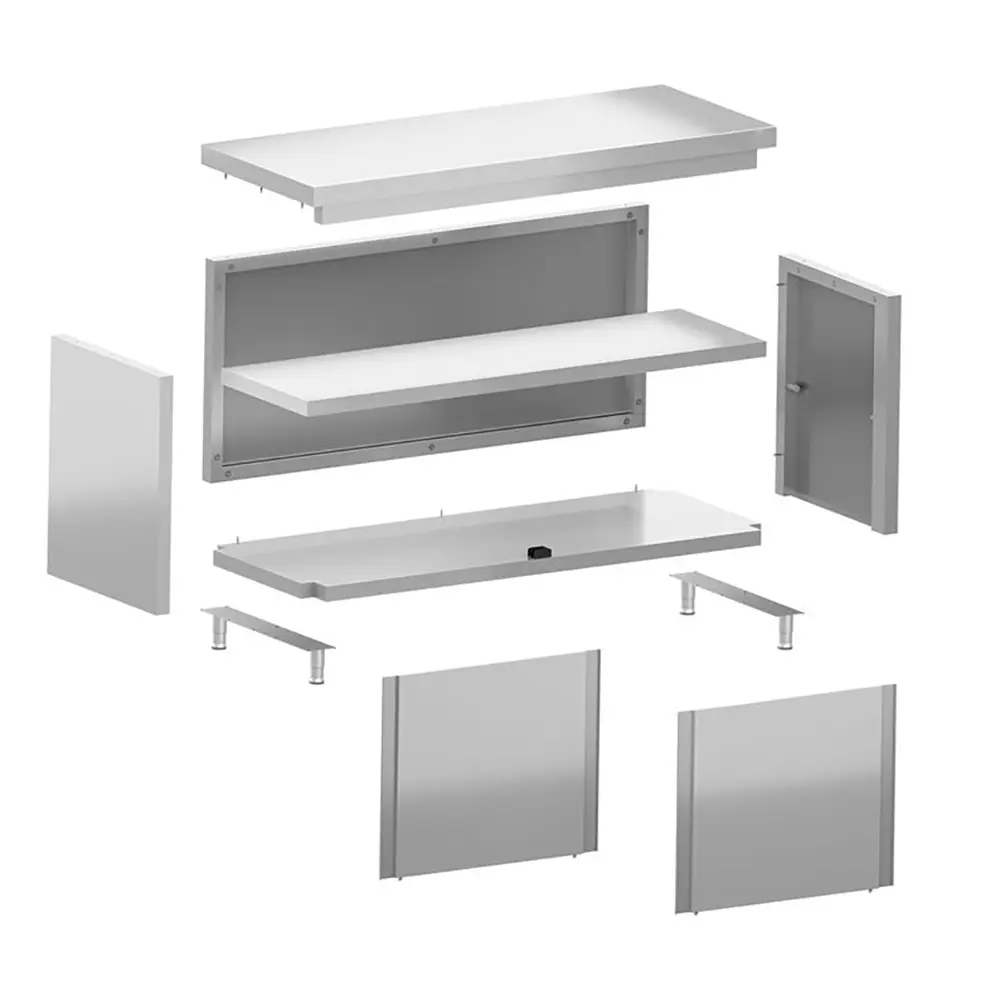
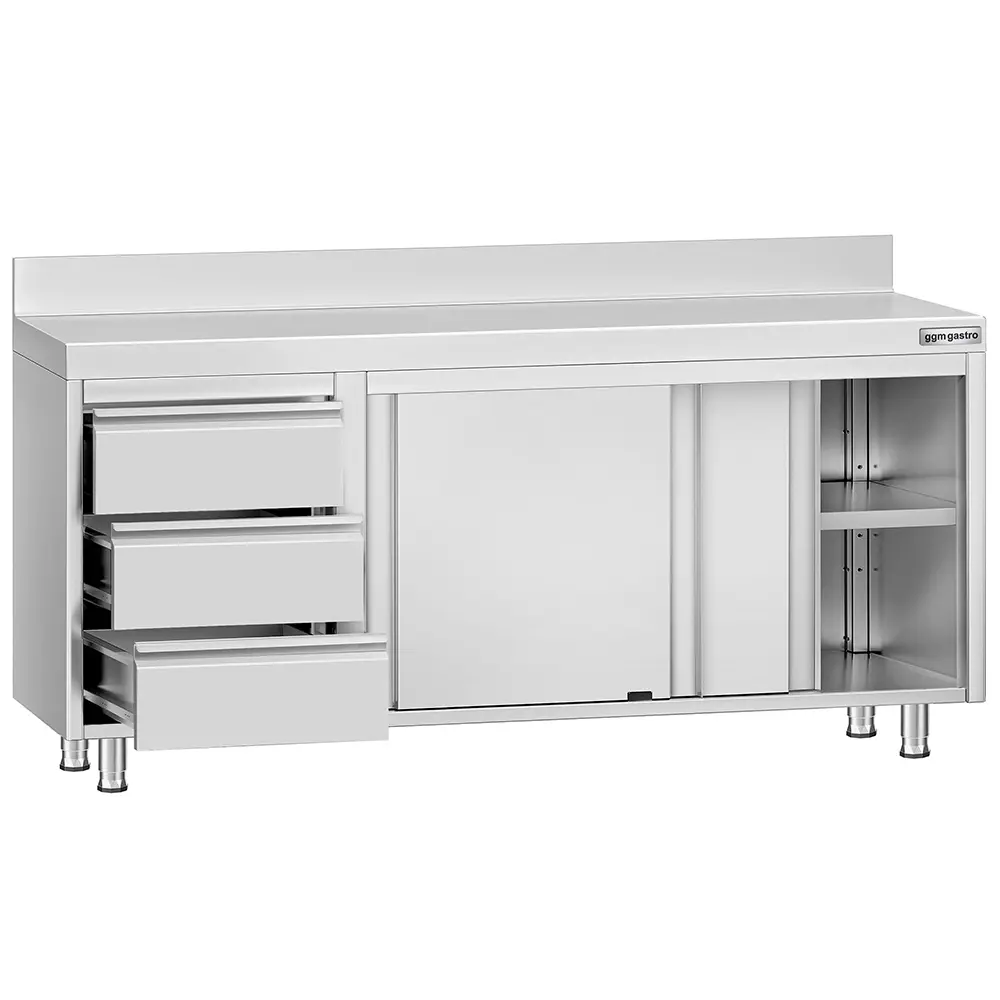
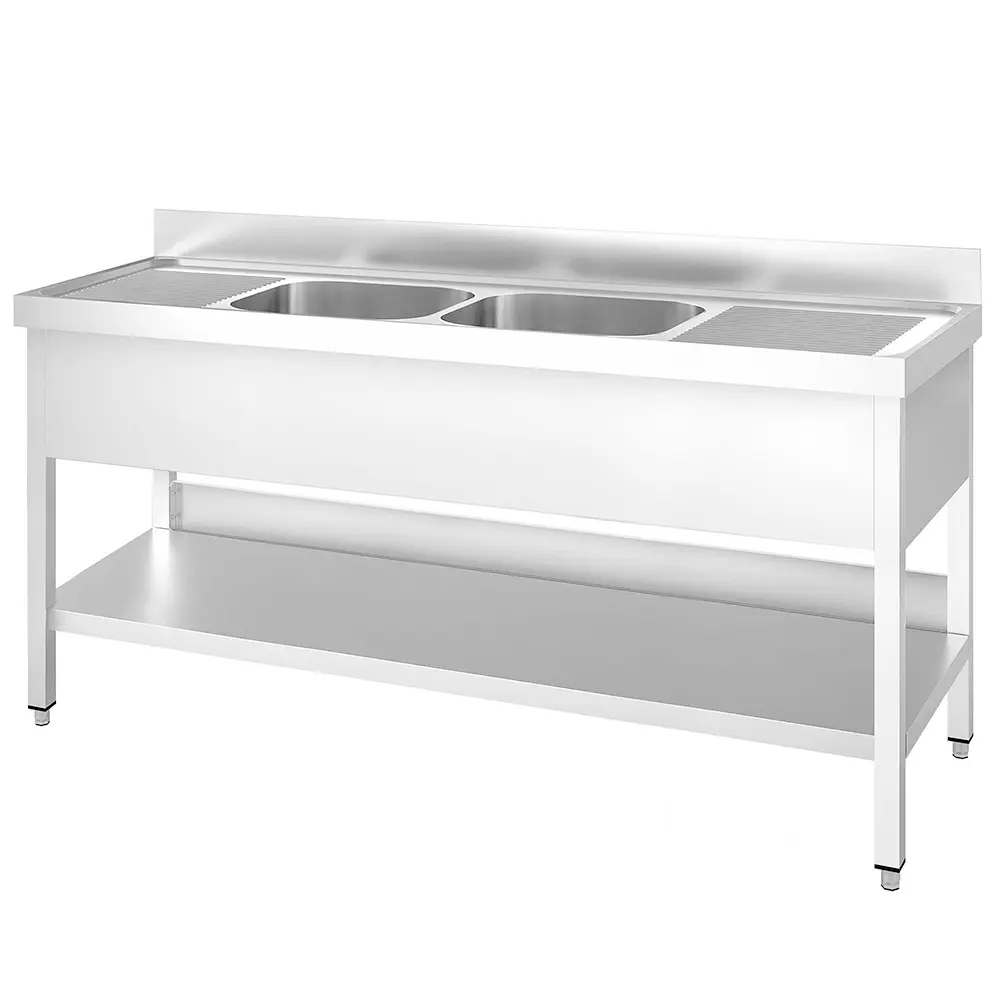
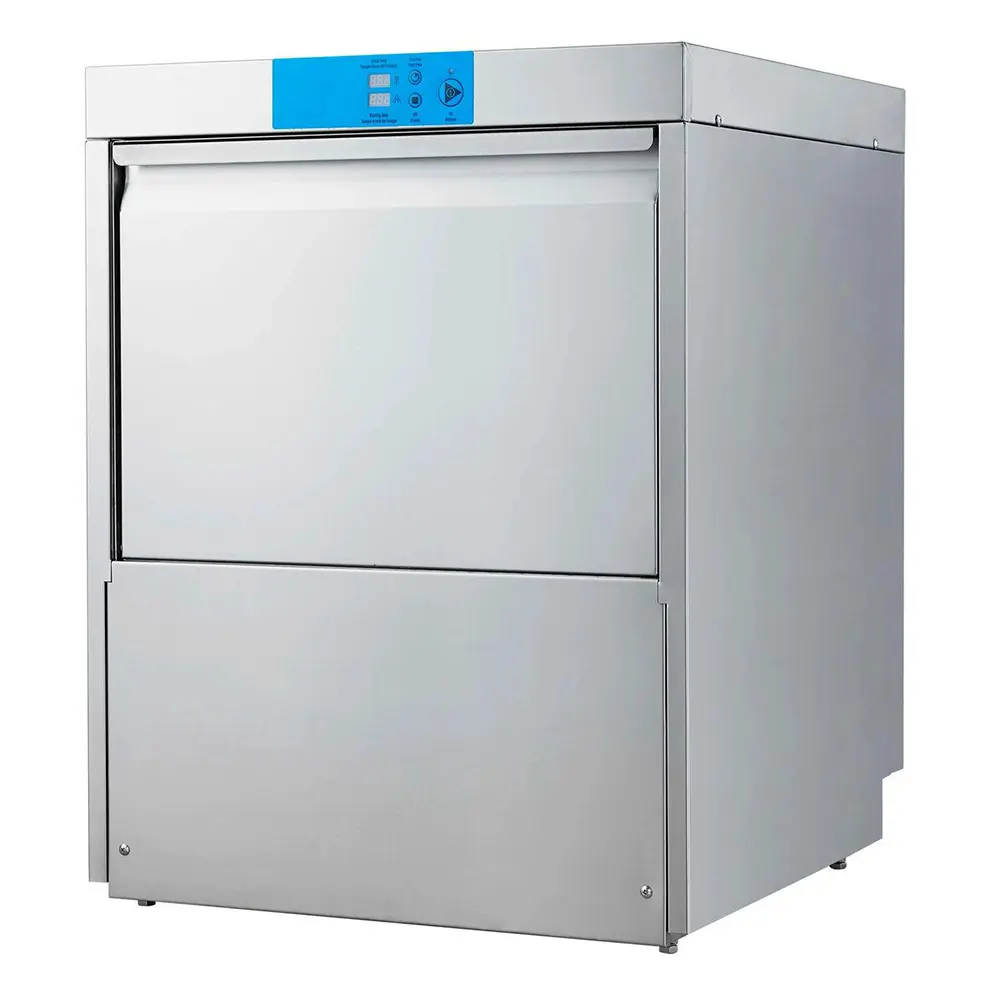
This project explores how a fiber laser cutting machine can improve sheet metal processing for commercial kitchen equipment manufacturing. From stainless steel worktables and countertops to kitchen sinks, exhaust hoods, storage cabinets, and commercial dishwasher housings, laser cutting helps manufacturers produce components with accurate dimensions, clean edges, and consistent cutting quality. The project focuses on commonly used materials such as stainless steel 304, stainless steel 201, aluminum alloy, and galvanized steel, while walking through the complete production process, including CAD drawing preparation, material loading, nesting, laser cutting, and finished part inspection. It also introduces the CATEKCNC C3 Pro enclosed fiber laser cutting machine, featuring a 3,050 × 1,530 mm working area, dual shuttle worktable, and fully enclosed protective structure. By combining efficient sheet processing with subsequent bending, welding, and polishing operations, manufacturers can build a more streamlined production workflow for a wide range of commercial kitchen equipment.
Related models
I. Project Overview: Fiber Laser Cutting for Commercial Kitchen Equipment Manufacturing
Commercial kitchens rely on a wide range of stainless steel equipment, including worktables, sinks, storage cabinets, exhaust hoods, dishwashers, and food preparation stations. Behind these products is a manufacturing process that requires accurate sheet metal cutting, consistent dimensions, clean edges, and efficient production.
Stainless steel is one of the most widely used materials in commercial kitchen equipment manufacturing. It offers good corrosion resistance, durability, and ease of cleaning, making it suitable for food preparation areas and equipment exposed to water, grease, cleaning agents, and frequent use. However, manufacturing stainless steel kitchen equipment involves more than simply cutting sheets into different shapes.
Manufacturers need to produce components with various contours, mounting holes, slots, ventilation openings, and connecting structures. For example, a commercial kitchen countertop may require multiple sink openings and faucet holes, while an exhaust hood may contain ventilation holes, mounting brackets, and connecting flanges. These components must fit together accurately during bending, welding, and final assembly.
Traditional mechanical cutting methods may require different tools and additional operations to process complex shapes. A fiber laser cutting machine offers a more flexible solution for stainless steel sheet metal fabrication. It can cut straight edges, irregular contours, small holes, and complex patterns directly from CAD drawings, making it suitable for both customized kitchen equipment and repetitive batch production.
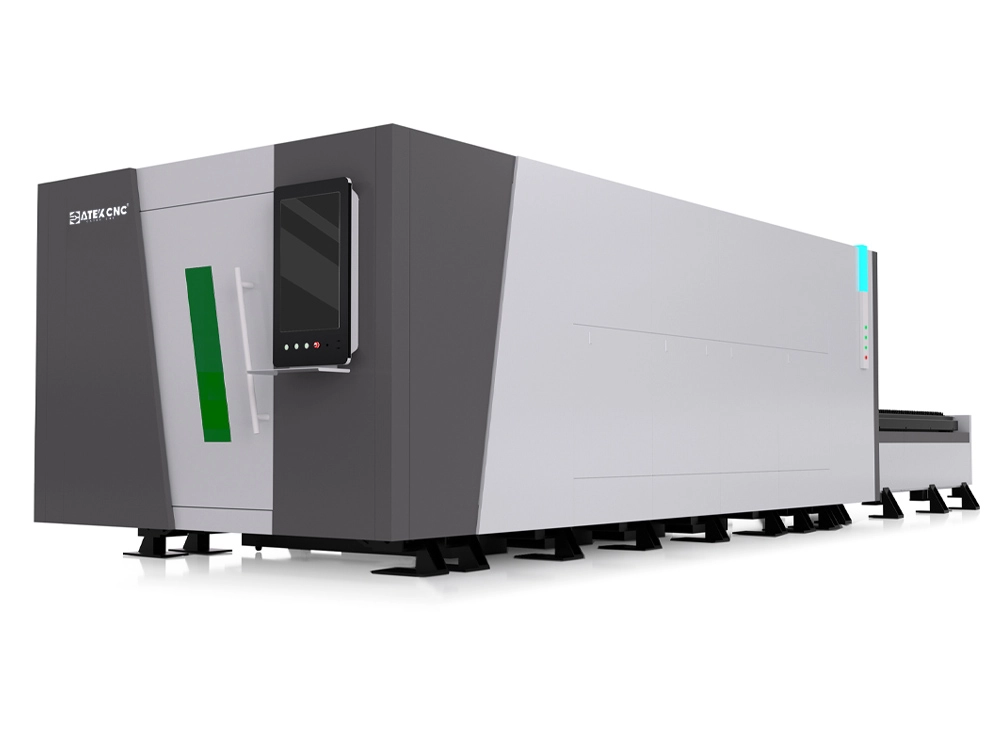
For this type of manufacturing application, CATEKCNC offers the C3 Pro enclosed fiber laser cutting machine with a dual shuttle worktable. Designed for medium- to large-scale sheet metal processing, it features a 3050 x 1530 mm working area, a fully enclosed protective structure, and an automatic exchange table system. Its configuration supports the processing of stainless steel, carbon steel, and aluminum alloy sheets.
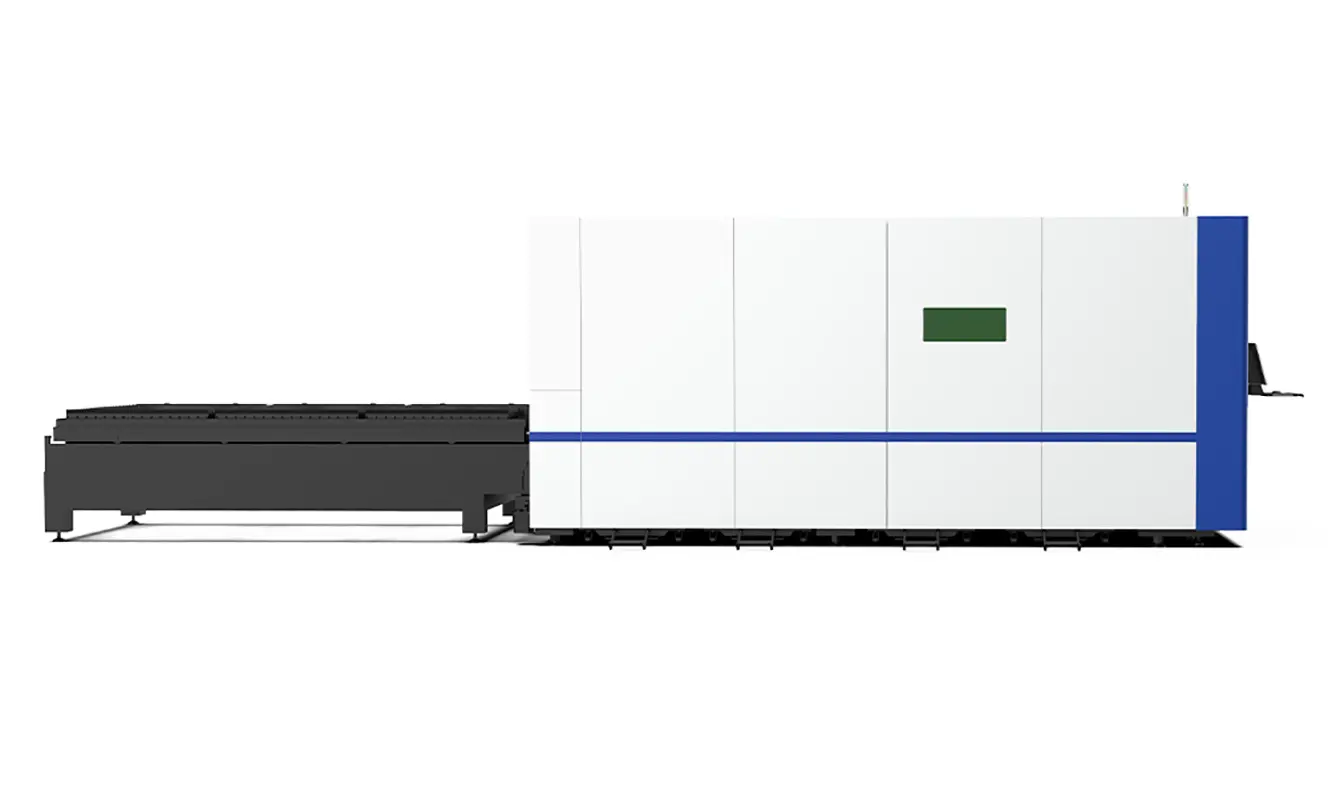
In commercial kitchen equipment manufacturing, the C3 Pro can be used to cut various sheet metal components before they move to subsequent processes such as bending, welding, polishing, and assembly.
The main processing objectives include:
- Accurate component dimensions: Produce kitchen equipment panels, countertops, cabinet doors, and structural parts according to CAD drawings.
- Complex hole and contour cutting: Process sink openings, faucet holes, ventilation slots, mounting holes, and irregular profiles in one cutting program.
- Consistent batch quality: Maintain repeatable cutting results when manufacturing multiple components with the same specifications.
- Flexible production: Switch between different kitchen equipment parts without requiring dedicated cutting dies for every design.
- Improved production flow: Reduce loading and unloading interruptions through the dual shuttle worktable.
The following sections explore the main components that can be processed, the materials used in kitchen equipment manufacturing, and how the C3 Pro supports the complete sheet metal production workflow.
II.What Commercial Kitchen Equipment Components Can Be Processed?
Commercial kitchen equipment manufacturers rarely produce only one type of product. A single production facility may manufacture stainless steel worktables, sinks, storage cabinets, exhaust hoods, and customized equipment housings.
Although these products have different structures, many of their components are made from flat metal sheets. A fiber laser cutting machine can process these sheets into the required shapes before they are formed and assembled.
Here are five common applications of fiber laser cutting in commercial kitchen equipment manufacturing.
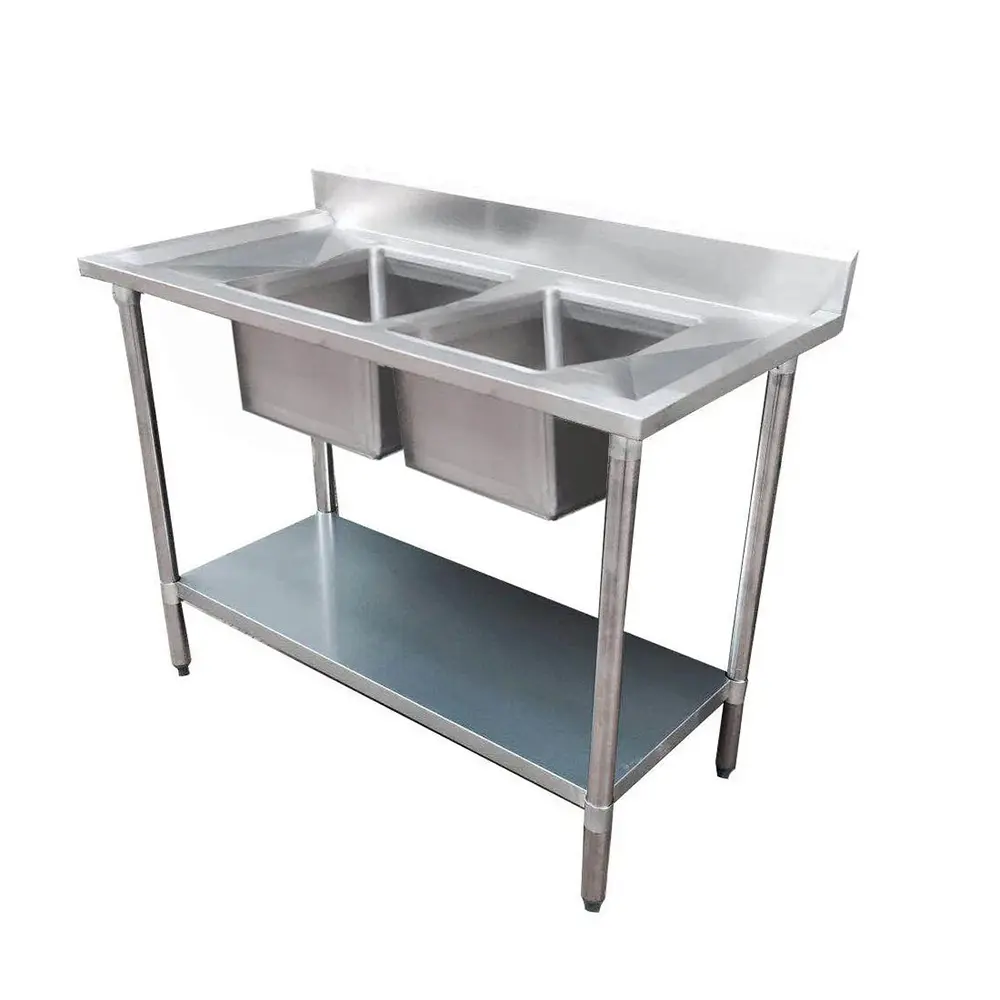
1.Stainless Steel Kitchen Worktables and Countertops
Stainless steel worktables and countertops are essential in restaurants, hotels, catering facilities, food processing plants, and institutional kitchens. They provide durable work surfaces for food preparation, ingredient handling, and equipment placement.
During manufacturing, the stainless steel tabletop is usually cut from a flat sheet and then bent or reinforced to achieve the required structure. Depending on the product design, the sheet may need several different openings and mounting features.
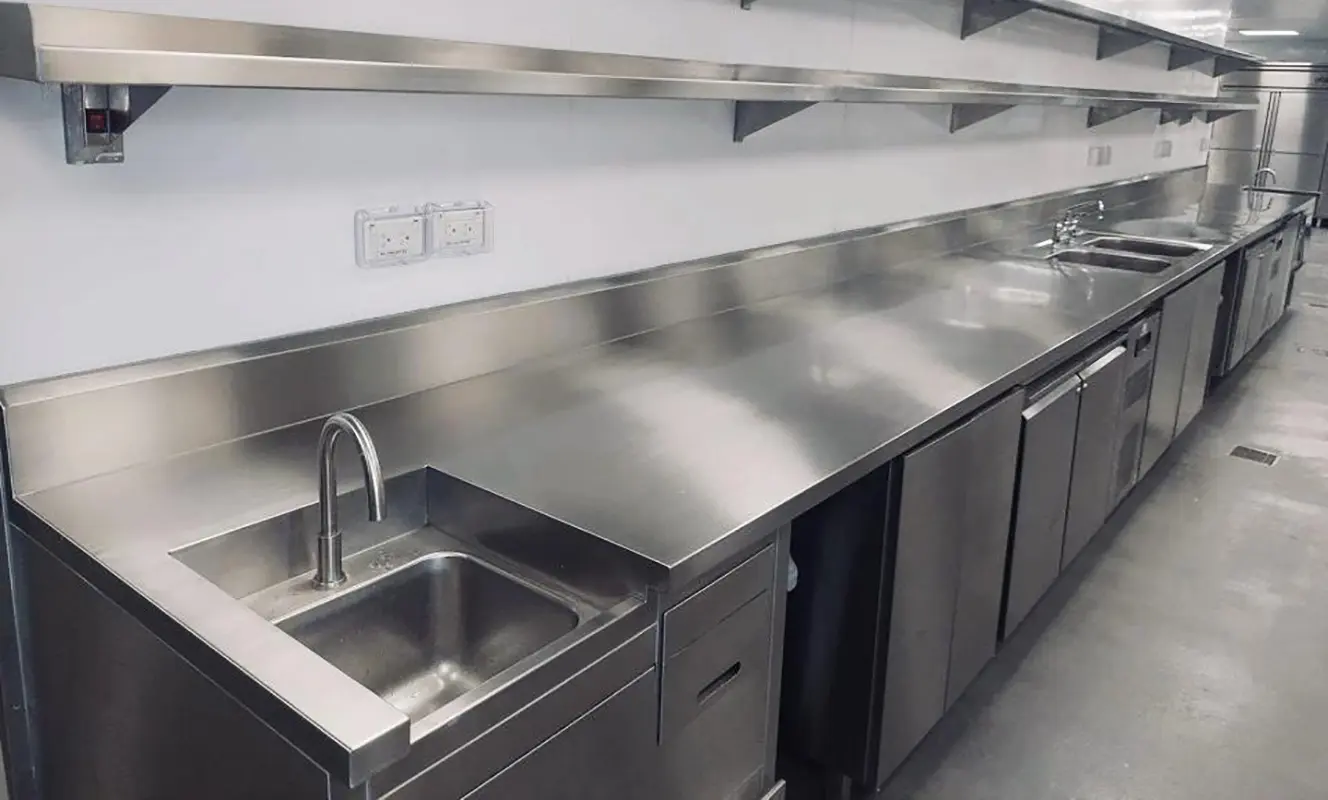
A fiber laser cutting machine for stainless steel can process the following components:
- Countertop panels: Cut rectangular, square, or customized tabletop profiles according to the required dimensions.
- Sink openings: Create accurately positioned openings for single-bowl or double-bowl sinks.
- Faucet holes: Cut round holes for water taps, spray units, and other countertop-mounted accessories.
- Drainage openings: Process holes and cutouts for drainage fittings and related components.
- Reinforcement plates: Cut supporting plates and connecting pieces used to strengthen the underside of worktables.
- Mounting brackets: Produce accurately sized brackets and fixing plates for assembly.
One important consideration in countertop manufacturing is the relationship between the cutting dimensions and the subsequent forming process. For example, the opening for an inset sink must match the sink dimensions and installation requirements. If the opening is too large or incorrectly positioned, the sink may not fit properly or may leave an uneven gap.
Laser cutting makes it easier to follow the original CAD design and maintain consistent opening dimensions across repeated production runs. Manufacturers can also modify the drawing when producing countertops in different lengths, widths, or configurations.
For manufacturers offering customized commercial kitchen worktables, this flexibility is particularly useful. Different customers may require different sink positions, backsplash heights, drainage arrangements, and equipment mounting holes. Instead of preparing a dedicated cutting tool for every design, operators can update the cutting file and produce the new component directly.
2.Commercial Kitchen Sinks
Commercial kitchen sinks are used in restaurants, hotels, food preparation facilities, and industrial kitchens. Compared with ordinary household sinks, commercial models may have larger bowls, multiple compartments, deeper basins, and additional drainage or installation structures. The production of stainless steel sinks involves several sheet metal components. These may include the main sink panel, bowl structures, drainage fittings, supporting frames, and mounting plates.
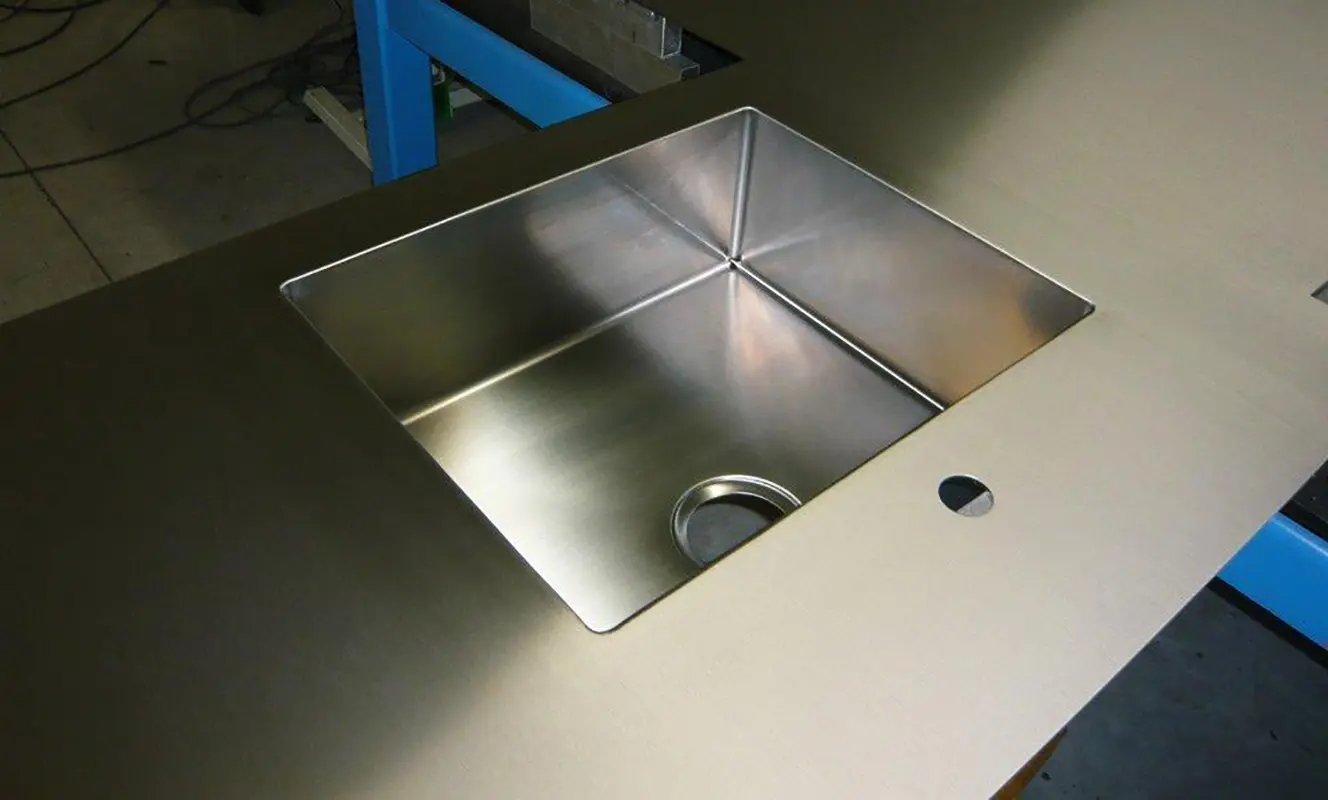
A fiber laser cutting machine is mainly used to prepare the flat sheet metal components before forming and welding. Typical cutting applications include:
Sink countertop panels
The upper panel needs accurately positioned openings for one or more sink bowls. For double-bowl or triple-bowl sinks, the spacing between openings must be consistent to ensure that the finished bowls fit correctly.
Drainage and faucet openings
Round holes are required for drain fittings, water taps, and other accessories. Their diameters and positions should match the installation specifications.
Sink mounting plates
Some sink designs use additional plates or brackets to connect the sink bowl to the countertop or supporting structure. Laser cutting can produce these parts with the required holes and contours.
Supporting frames and connecting plates
Commercial sinks may require metal supports to maintain structural stability, particularly when they are designed for heavy-duty use. The key challenge in sink manufacturing is dimensional consistency. A small deviation in the opening position can create problems during bowl installation, welding, or final assembly. By cutting components directly from CAD drawings, manufacturers can reduce manual marking and improve repeatability.
It is also important to consider the material grade and surface finish. Stainless steel 304 is commonly selected for commercial kitchen equipment because of its corrosion resistance and suitability for demanding kitchen environments. When processing brushed or pre-finished stainless steel sheets, manufacturers should also take appropriate precautions during material handling to reduce scratches and surface damage.
3. Commercial Kitchen Exhaust Hoods
Commercial kitchen exhaust hoods are installed above cooking equipment to collect smoke, grease particles, heat, and cooking fumes. They are commonly found in restaurant kitchens, hotel kitchens, canteens, and food service facilities.
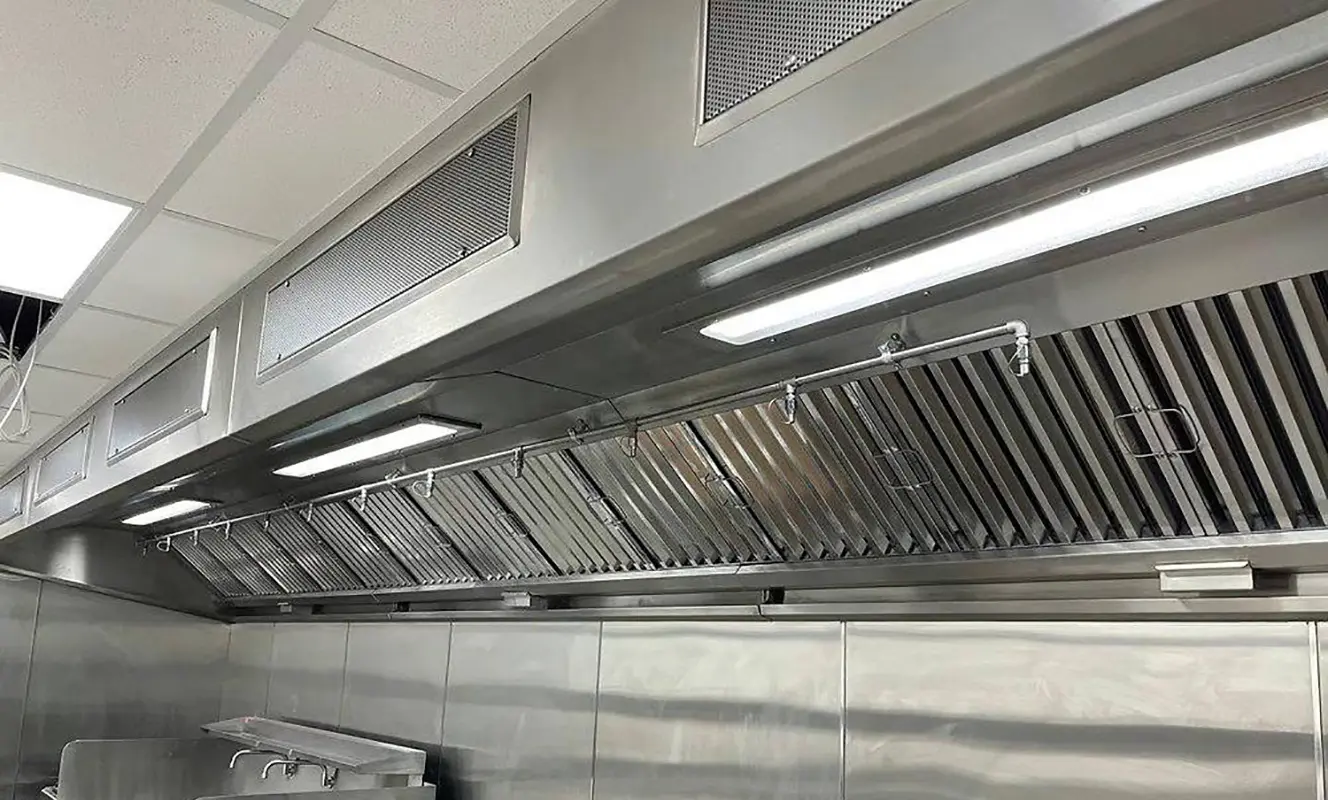
Unlike simple flat panels, exhaust hoods often consist of multiple shaped components that need to be cut and assembled into a larger structure.
Typical laser-cut parts include:
- Front and side panels: Cut the main exterior panels according to the hood's overall dimensions.
- Top panels: Prepare the upper sheet metal sections that connect to the ventilation duct system.
- Ventilation openings: Cut openings for air movement and equipment connections according to the design.
- Mounting flanges: Produce connecting edges and mounting plates for installation.
- Support brackets: Cut structural components used to reinforce the hood and connect different panels.
- Inspection and access panels: Prepare removable panels and their mounting holes for maintenance access.
The cutting of ventilation openings is particularly important. Their positions and dimensions need to match the design of the exhaust system and the assembly requirements of the hood.
A CNC fiber laser cutting machine can process these features in the same cutting program as the outer panel profile. This reduces the need for separate drilling or manual cutting operations.
For manufacturers producing several hood models, the flexibility of laser cutting is another advantage. A standard product may have a fixed width and depth, while customized models may need different side-panel angles, duct openings, or mounting positions. Operators can adjust the CAD drawing and generate a new cutting program without manufacturing a new die.
After cutting, the panels can move to bending, welding, grinding, and polishing. These processes turn the individual flat sheets into a complete exhaust hood with the required shape and appearance.
4. Stainless Steel Kitchen Cabinets
Stainless steel kitchen cabinets are widely used for storing utensils, ingredients, cookware, and cleaning supplies. They are designed for frequent use and need to withstand moisture, cleaning, and daily mechanical contact. A typical commercial kitchen cabinet contains multiple sheet metal parts, such as side panels, doors, shelves, drawer fronts, back panels, and connecting brackets.
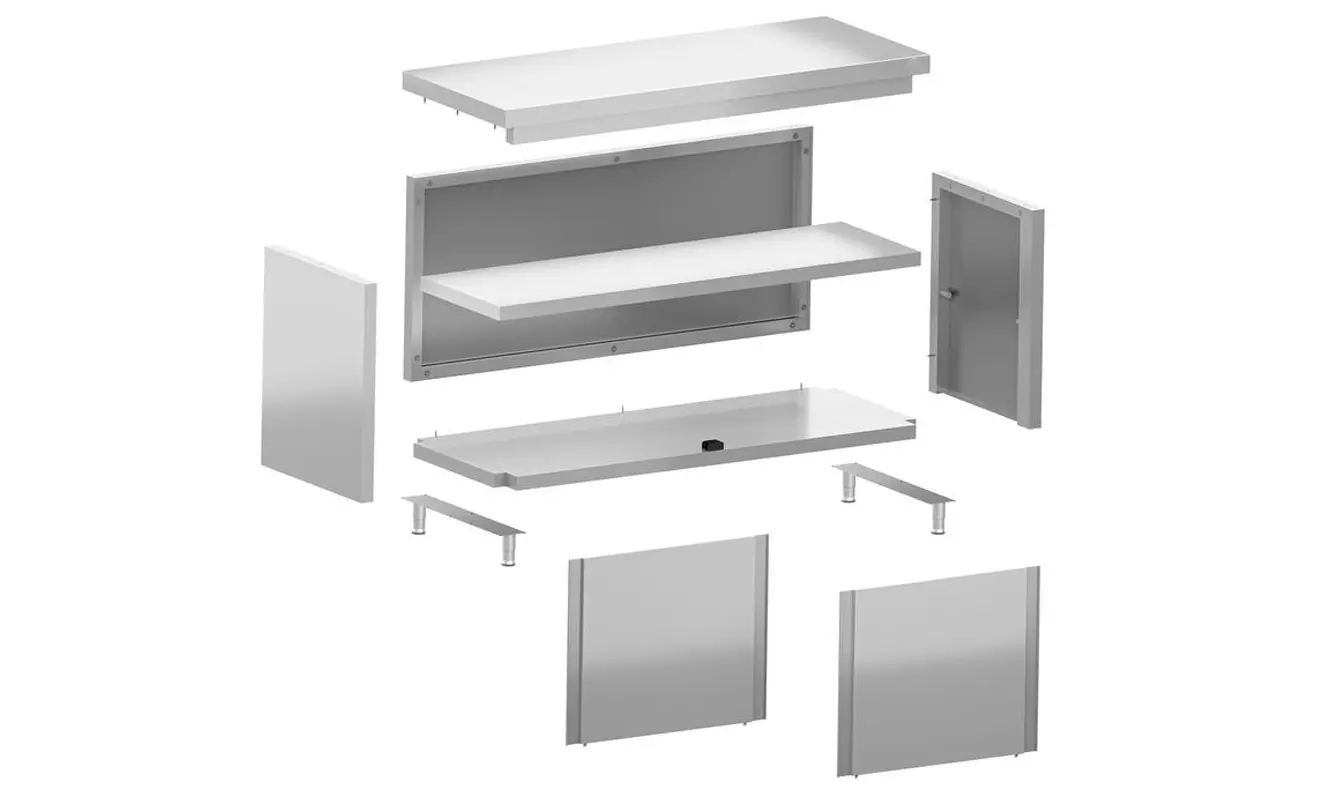
A fiber laser cutting machine for metal cabinets can process these components with different shapes and hole patterns.
Cabinet doors and side panels
These components are cut according to the cabinet dimensions. Depending on the design, they may include hinge mounting holes, handle openings, ventilation slots, and connection features.
Drawer panels
Laser cutting can produce drawer fronts and side plates with consistent dimensions. This is useful when manufacturing cabinets with multiple drawers or producing several cabinets in the same product series.
Internal shelves
Shelves can be cut into different sizes and shapes. Some designs require slots, folded edges, or mounting holes for adjustable shelf supports.
Hinge and handle mounting holes
Accurate hole positioning helps ensure that cabinet doors and drawers can be installed correctly. Laser cutting allows these features to be included directly in the cutting program.
Connecting plates and support brackets
Small metal brackets are used to connect cabinet panels, support shelves, and reinforce the cabinet structure. These parts can be nested together on one sheet to improve material utilization.
For cabinet manufacturers, production efficiency depends not only on cutting speed but also on how efficiently different parts are arranged on the sheet. A single stainless steel sheet may contain cabinet doors, side panels, shelf supports, and small connecting plates. Using suitable nesting software, manufacturers can arrange multiple components within the available sheet area, reduce unused material, and prepare cutting programs for different cabinet models.
5.Commercial Dishwashers and Equipment Housings
Commercial dishwashers, sterilizers, food preparation machines, and other kitchen equipment often use stainless steel sheet metal housings. These housings protect internal components, provide a clean exterior appearance, and create mounting structures for doors, control panels, pumps, and other equipment.
Compared with ordinary cabinet panels, equipment housings may require more complicated cutouts and mounting features. Common laser-cut components include:
- Outer housing panels: Cut the main front, rear, and side covers of the equipment.
- Control panel openings: Prepare openings for displays, switches, buttons, and control interfaces.
- Ventilation slots: Cut openings that allow air circulation around heat-generating components.
- Door panels: Produce door structures and related mounting features.
- Internal mounting plates: Cut plates used to install electrical components, pumps, motors, and other parts.
- Connecting brackets: Manufacture small structural parts used during equipment assembly.
Dimensional accuracy is particularly important for these applications. For example, a control panel opening needs to match the size of the electronic component being installed. If the opening is incorrectly positioned, it may interfere with the wiring arrangement or make final assembly more difficult.
The fiber laser cutting machine C3 Pro's 3050 × 1530mm working area allows manufacturers to process a range of medium and large sheet metal panels. Its dual shuttle worktable is also useful when production involves frequent loading and unloading of stainless steel sheets.
For manufacturers producing different types of commercial kitchen machinery, this flexibility makes a fiber laser cutting machine a practical solution for both standard components and customized equipment housings.
III.Metal Materials Used in Commercial Kitchen Equipment Manufacturing
Material selection directly affects the durability, corrosion resistance, appearance, and manufacturing cost of commercial kitchen equipment.
Stainless steel is the most common choice for food preparation surfaces and equipment exposed to moisture. However, carbon steel, galvanized steel, and aluminum alloy are also used in certain structural and auxiliary components.
The CATEKCNC C3 Pro fiber laser cutter is designed to process large stainless steel, carbon steel, and aluminum alloy sheets, with fiber laser power options ranging from 3,000W to 30,000W. The appropriate configuration and cutting parameters should be selected according to the material, thickness, and required cutting quality.
1.Stainless Steel 304
Stainless steel 304 is one of the most commonly used materials in commercial kitchen equipment manufacturing. It offers good corrosion resistance, durability, and formability. These characteristics make it suitable for equipment that comes into frequent contact with water, food ingredients, cleaning agents, and humid kitchen environments.
When laser cutting stainless steel 304, manufacturers need to consider the sheet thickness, surface condition, cutting gas, and processing parameters. For example, thin stainless steel sheets used for cabinet doors and exterior panels require stable cutting conditions to achieve smooth edges and minimize discoloration. Thicker components may require different power, focus, and gas settings.
2.Stainless Steel 201
Stainless steel 201 is a more economical alternative to 304 and is commonly used in commercial kitchen cabinets, shelves, equipment panels, and other components where high corrosion resistance is not essential.
It offers good strength and formability, but has lower corrosion resistance than 304 stainless steel. For this reason, it is better suited to relatively dry areas rather than sinks, countertops, or equipment frequently exposed to water and cleaning chemicals.
A fiber laser cutting machine can process both 201 and 304 stainless steel sheets, making it easier for manufacturers to produce different kitchen equipment components using different material grades.
3.Aluminum Alloy
Aluminum alloy is used in commercial kitchen equipment where lightweight construction is preferred. Common applications include equipment covers, ventilation panels, mounting brackets, and decorative components.
Compared with stainless steel, aluminum is lighter and has good corrosion resistance. However, its reflective properties and thermal conductivity require suitable laser cutting parameters.
A CNC fiber laser cutting machine can cut aluminum alloy sheets as well as stainless steel, allowing manufacturers to process different metal components on the same machine.
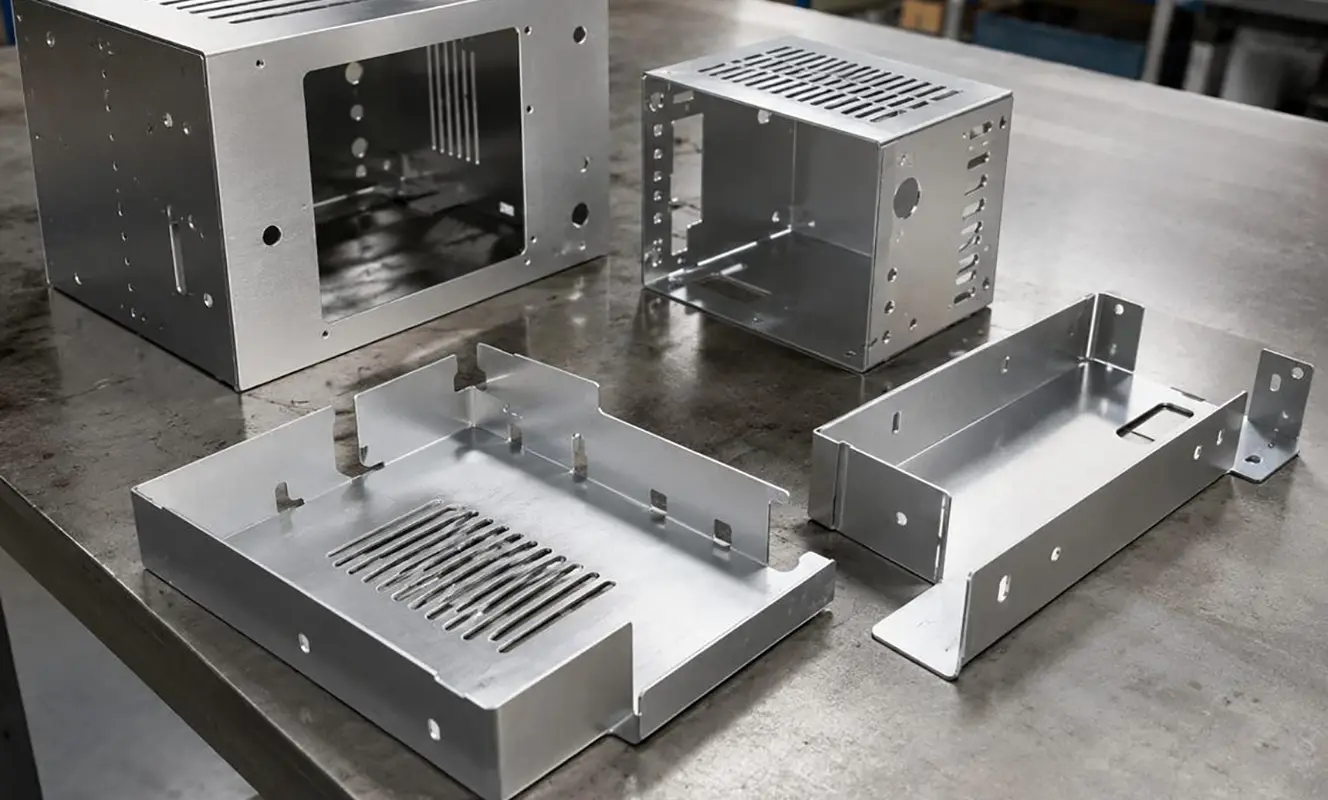
4. Carbon Steel and Galvanized Steel
Carbon steel and galvanized steel are mainly used for non-food-contact structural components in commercial kitchen equipment, such as support frames, reinforcement brackets, mounting plates, and machine bases.
Carbon steel offers good strength and is cost-effective for structural parts, while galvanized steel provides additional corrosion protection through its zinc coating.
Both materials can be processed using a fiber laser cutting machine. When cutting galvanized steel, proper fume extraction is particularly important because the zinc coating generates fumes during processing. The CATEKCNC C3 Pro's enclosed structure and zoned fume extraction system help collect cutting fumes and maintain a cleaner working environment.
IV.Project Processing Workflow
Manufacturing commercial kitchen equipment involves more than cutting stainless steel sheets into different shapes. Each component needs to match the product design and fit correctly during bending, welding, and assembly.
Using a CNC fiber laser cutting machine, manufacturers can process countertop panels, cabinet doors, sink panels, equipment housings, and other sheet metal parts directly from CAD drawings.
The typical workflow includes five steps.
1.CAD Drawing Preparation
The first step is preparing the cutting drawings according to the dimensions and structure of each kitchen equipment component. For example, a stainless steel worktable may require a large rectangular panel with openings for a sink and faucet. A dishwasher housing may need several ventilation slots, mounting holes, and openings for its control panel.
Before importing the drawings into the laser cutting software, manufacturers should check:
- Dimensions: Confirm the length, width, and thickness requirements of each component.
- Hole positions: Ensure that mounting holes, drainage openings, and installation holes are correctly positioned.
- Cutting contours: Check that all cutting lines are closed and that there are no overlapping or duplicate paths.
- Bending allowances: Consider the dimensions needed for subsequent sheet metal bending.
- Assembly requirements: Make sure that connecting holes and edges match the corresponding components.
Once the drawings have been checked, they can be imported into the laser cutting machine's control system to generate a machining program.
2. Equipment Startup and Safety Checks
Startup Sequence:
- Turn on the main power supply and the voltage stabilizer.
- Start the chiller and wait for the water temperature to reach the set requirement.
- Turn on the fiber laser power supply, release the emergency stop button, and launch the control software and key switch.
Daily Checks:
- Check that the pressure of the auxiliary gases (such as nitrogen, oxygen, or compressed air) is sufficient. Since kitchen equipment is often made of stainless steel, high-pressure nitrogen cutting is typically used to ensure a bright cut surface free of oxidized black edges.
- Check the machine table for any residue or foreign objects, and clean the cutting nozzle and protective lens.
3. Material Loading and Sheet Layout
Once the cutting files are ready, load the prepared stainless steel sheets onto the laser cutting machine’s worktable, ensuring they are securely clamped to prevent vibration during cutting that could affect accuracy.
Common materials used in commercial kitchen equipment manufacturing include 201 and 304 stainless steel. Before processing, check the grade and thickness of the sheets to ensure they meet the requirements of the production drawings.
The next step is sheet layout. Operators use nesting software to arrange different components on a single sheet to make the best use of available material. Proper nesting helps reduce material waste and scrap generated during production. Additionally, it is important to leave appropriate spacing between parts and consider the cutting sequence to prevent small parts from shifting during processing.
4. Laser Cutting Parameter Settings
Before starting the cut, the operator must select the appropriate processing parameters based on the material type and sheet thickness.
The main settings include:
- Laser power
- Cutting speed
- Focus position
- Assist gas type and pressure
- Nozzle type and diameter
- Piercing parameters
Different materials require different cutting parameters. For example, nitrogen is typically used when cutting stainless steel to achieve a clean cut edge and reduce oxidation. Oxygen, on the other hand, can be used for cutting certain types of carbon steel.
Proper settings also depend on the sheet thickness and the desired edge quality. If the parameters are not properly matched, problems such as incomplete cuts, excessive slag, rough edges, or thermal distortion may occur.
The C3 Pro uses the Bochu control system and CypCutE software to manage the cutting process. Operators can select the appropriate material and thickness settings and make adjustments based on the actual machining results.
5.CNC Fiber Laser Cutting
Once the cutting program and parameters are ready, the machine starts processing the stainless steel sheet. The laser cutting head follows the programmed paths, cutting the outer contours and internal features of each component. This allows manufacturers to complete multiple cutting operations in one setup.
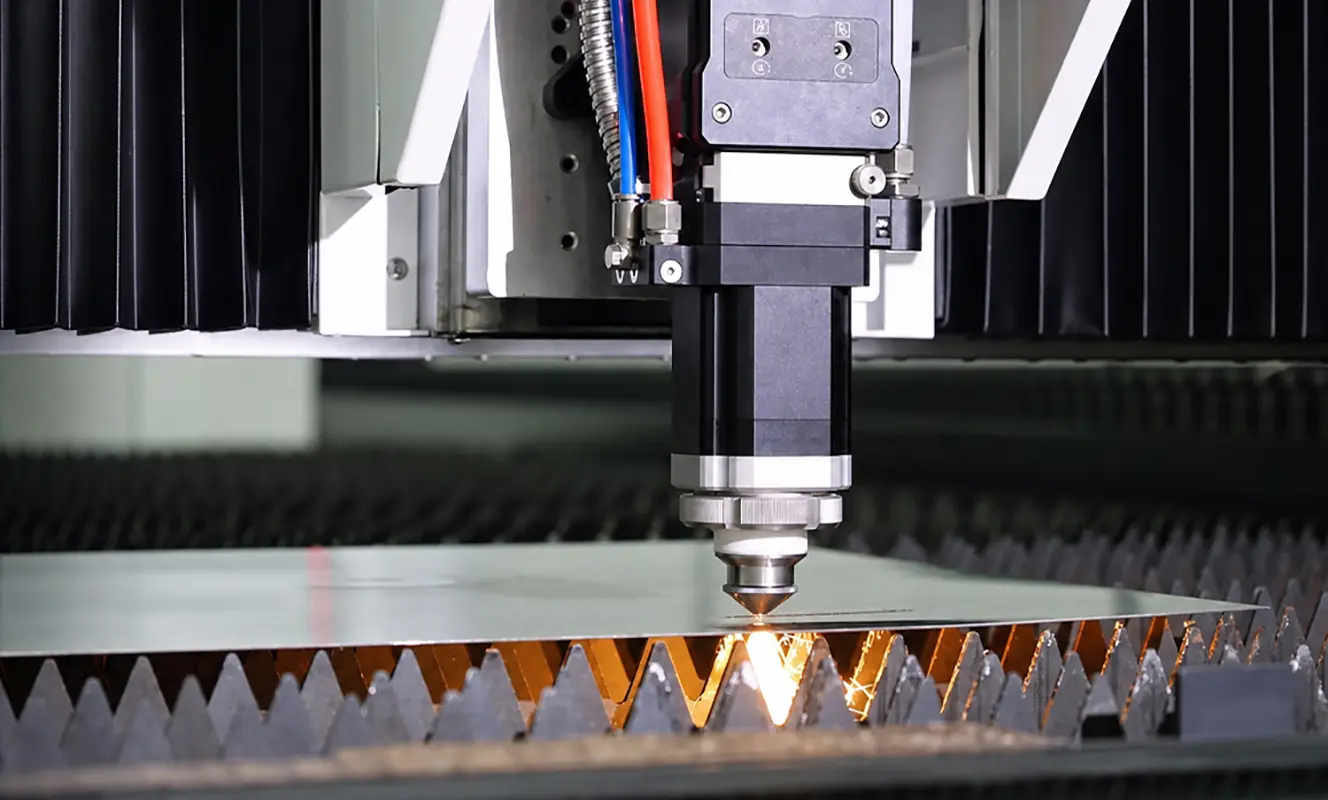
Compared with processes that require separate drilling, sawing, or manual cutting operations, fiber laser cutting can produce these different features directly from the same CAD program.
The C3 Pro is also equipped with a dual shuttle worktable. While one worktable is processing a stainless steel sheet inside the machine, operators can prepare the next sheet on the other worktable. Once cutting is completed, the tables exchange positions, helping reduce loading and unloading downtime between production cycles.
V.Post-Processing: Turning Laser-Cut Sheets into Finished Kitchen Equipment
After laser cutting, the stainless steel components need further processing before they become finished commercial kitchen equipment. Depending on the product design, the main steps include sheet metal bending, welding, surface finishing, and final assembly.
1.Sheet Metal Bending
After laser cutting, the metal sheets are sent to a press brake for forming. This process transforms flat metal sheets into three-dimensional components, such as kitchen countertop edges, cabinet doors, side panels, sink mounting flanges, and range hood covers. Precise cutting dimensions are critical, as they directly affect the final bend dimensions and the assembly of the components.
2.Welding and Assembly
After the components are formed through bending, they are joined together via welding or mechanical fastening. For instance, manufacturers weld sink basins to countertops, attach cabinet side panels, and assemble exhaust hood structures. Argon arc welding is frequently used for stainless steel kitchen equipment, as this method ensures neat weld seams and an aesthetically pleasing surface finish.
Precisely cut components facilitate better alignment during the assembly process and reduce the need for additional assembly work.
3.Grinding and Surface Polishing
Grinding and polishing improve the appearance and surface finish of stainless steel equipment. Weld seams are smoothed, sharp edges and burrs are removed, and visible surfaces such as countertops, cabinet doors, and equipment panels are polished.
For brushed stainless steel products, manufacturers may also apply a consistent brushed finish to achieve a uniform appearance. These finishing operations help create smooth surfaces that are easier to clean and maintain in commercial kitchens.
4.Final Assembly and Quality Inspection
The finished components are assembled into complete kitchen equipment. Depending on the product, this may involve installing sink bowls, drainage fittings, cabinet doors, hinges, handles, shelves, and other accessories.
Before delivery, manufacturers check the overall dimensions, component alignment, welding quality, surface finish, and structural stability. For products such as commercial kitchen sinks, water leakage testing is also necessary.
Once all inspections are completed, the equipment is ready for packaging and delivery to restaurants, hotels, catering facilities, and other commercial kitchens.
VI.CATEKCNC C3 Pro: A Fiber Laser Cutting Solution for Kitchen Equipment Manufacturers
For manufacturers producing stainless steel worktables, kitchen sinks, storage cabinets, exhaust hoods, and commercial equipment housings, a fiber laser cutting machine needs to handle different component sizes and cutting requirements while maintaining stable production.
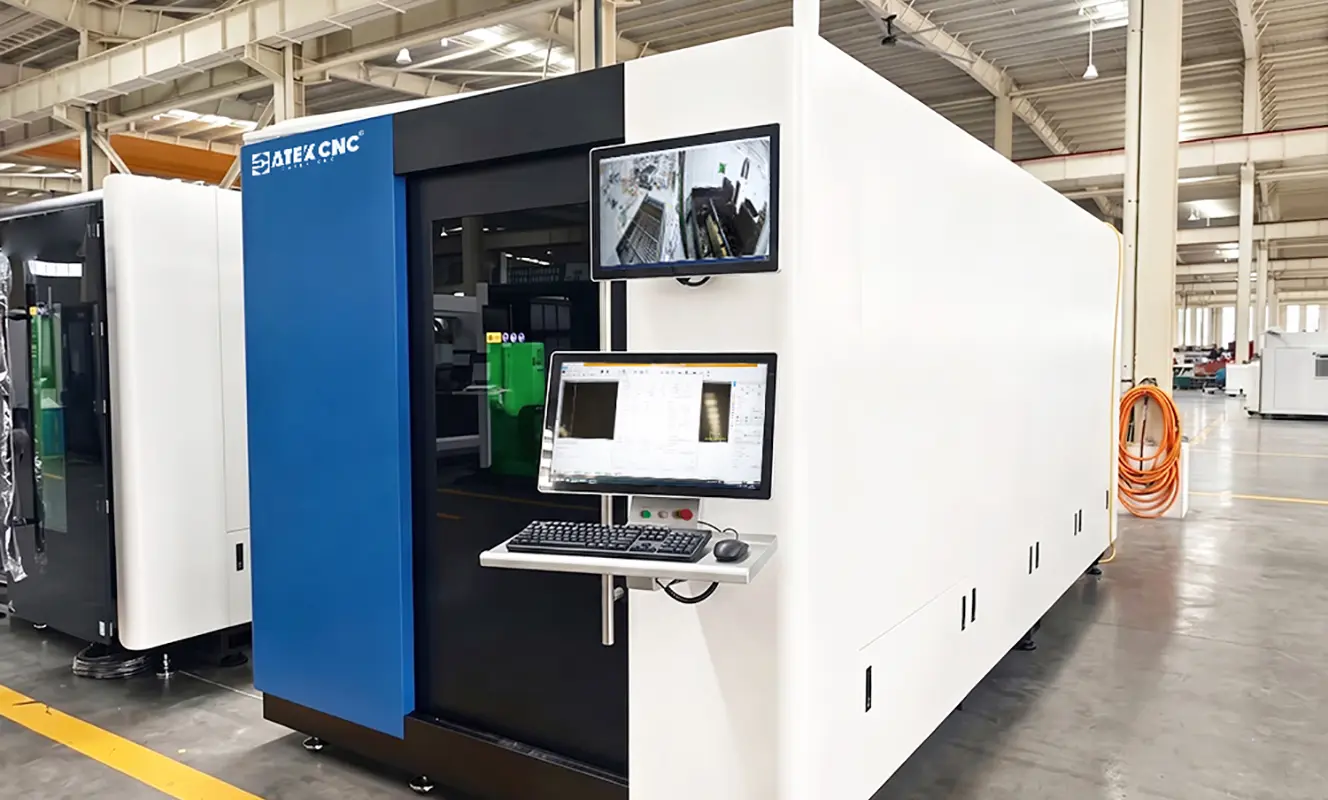
The CATEKCNC C3 Pro enclosed fiber laser cutting machine combines a large-format working area, dual shuttle worktable, high-speed servo system, and enclosed protective structure. It is designed for medium- to large-scale sheet metal fabrication and supports the processing of stainless steel, carbon steel, and aluminum alloy.
For commercial kitchen equipment manufacturing, several features deserve particular attention:
- Large-format sheet processing: The 3,050 × 1,530 mm working area accommodates many countertop, cabinet, and equipment housing panels.
- Dual shuttle worktable: Supports simultaneous cutting and material preparation, reducing loading and unloading interruptions.
- Fully enclosed protection: Helps contain cutting radiation, sparks, molten slag, and fumes.
- Intelligent fume extraction: Activates the relevant extraction zones according to the cutting position.
- High-speed motion system: The BOCHU S9 servo system supports fast machine movement and responsive cutting operations.
- Automation options: An optional automatic nozzle changer and cantilever-type automatic loading system can further reduce manual intervention.
The most suitable machine configuration depends on the materials, sheet thicknesses, production volume, and required cutting quality. For more details about the machine structure, available configurations, and technical specifications, visit the CATEKCNC C3 Pro enclosed fiber laser cutting machine product page.
VII.Conclusion
Commercial kitchen equipment manufacturing involves many different sheet metal components, from stainless steel countertops and sink panels to cabinet doors, exhaust hood covers, and dishwasher housings.
These parts often require accurate outer contours, mounting holes, ventilation openings, and customized cutouts. A fiber laser cutting machine helps manufacturers process these features directly from CAD drawings, making it easier to produce both standard components and customized kitchen equipment parts.
Other Projects
CO2 Laser Cutting Machine for Wooden Puzzles
Wooden puzzles are increasingly popular in education, gifts, and creative industries due to their durability and design flexibility. To achieve high precision, clean edges, and consistent quality, a CO2 Laser Cutting Machine has become the ideal solution for wooden puzzle production. This project showcases how CO2 laser cutting and engraving technology is used to efficiently manufacture wooden puzzles, from design to finished products, while ensuring accuracy, scalability, and customization.
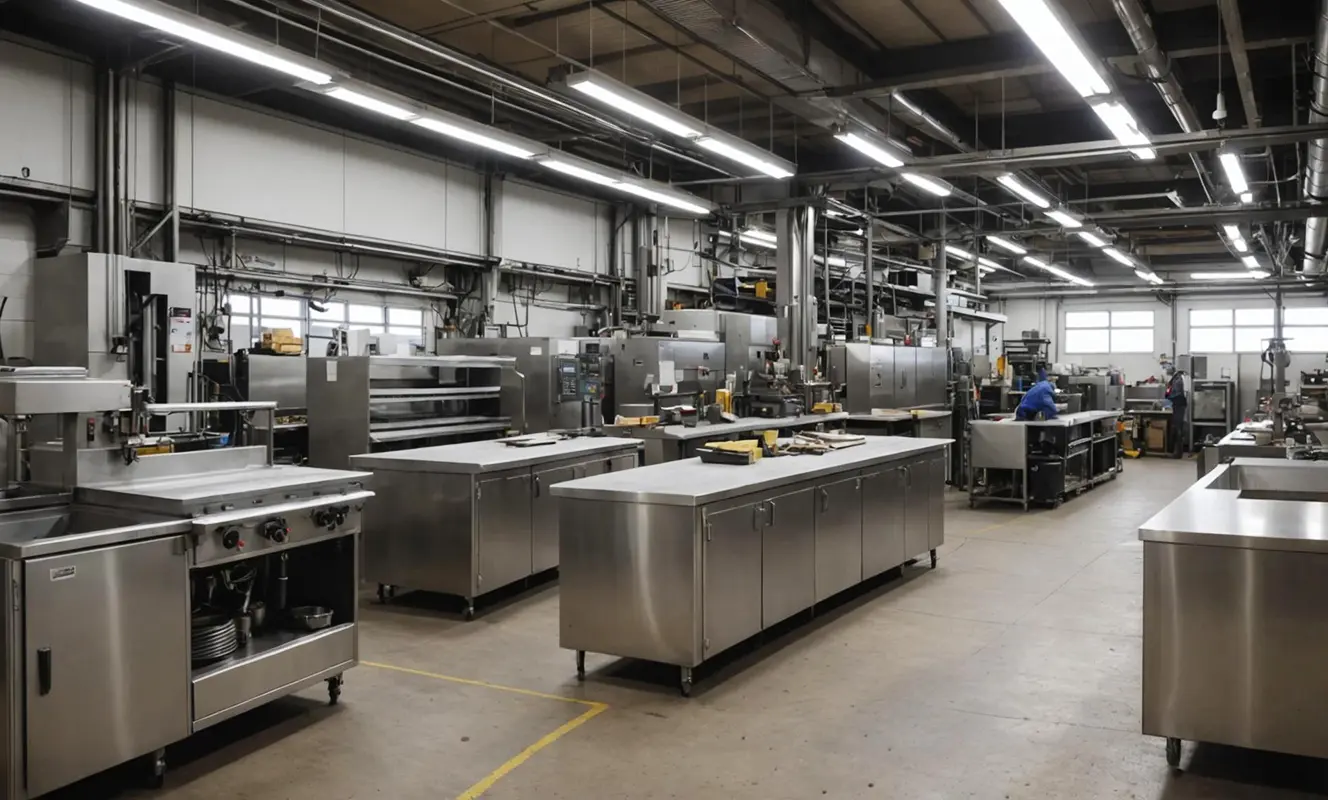
Fiber Laser Cutting Machine for Commercial Kitchen Equipment
This project explores how a fiber laser cutting machine can improve sheet metal processing for commercial kitchen equipment manufacturing. From stainless steel worktables and countertops to kitchen sinks, exhaust hoods, storage cabinets, and commercial dishwasher housings, laser cutting helps manufacturers produce components with accurate dimensions, clean edges, and consistent cutting quality. The project focuses on commonly used materials such as stainless steel 304, stainless steel 201, alumi...
Fiber Laser Cutting Machine for Metal Tube Cutting Project
This project focuses on the application of a fiber laser cutting machine for high-efficiency metal tube cutting in industrial production. By utilizing the CATEKCNC fiber laser tube cutter, the client successfully achieved precise processing of round, square, and rectangular tubes across a range of materials, including stainless steel and carbon steel.Through the integration of advanced CNC fiber laser tube cutting technology, the project significantly improved cutting accuracy, reduced material ...
Sheet Metal Laser Cutting Project: From Metal Sheets to Finished Parts
This sheet metal laser cutting project demonstrates how a fiber laser cutting machine transforms flat metal sheets into precision-cut components for industrial applications. The project covers the key stages of production, including CAD drawing preparation, material layout and nesting, laser cutting, and finished-part inspection. By cutting mounting holes, slots, and custom contours, the machine helps produce metal components with consistent shapes and accurate dimensions, ready for subsequent f...