


{{goods.model}}


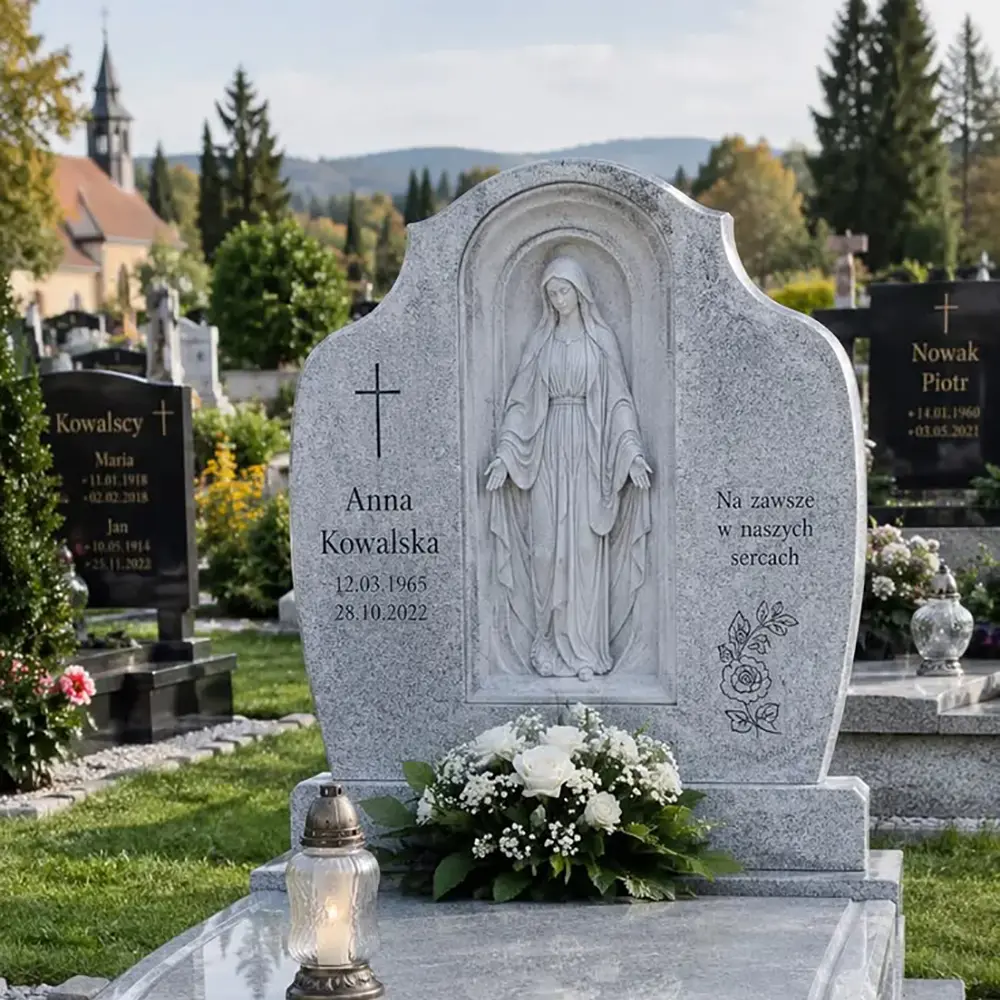
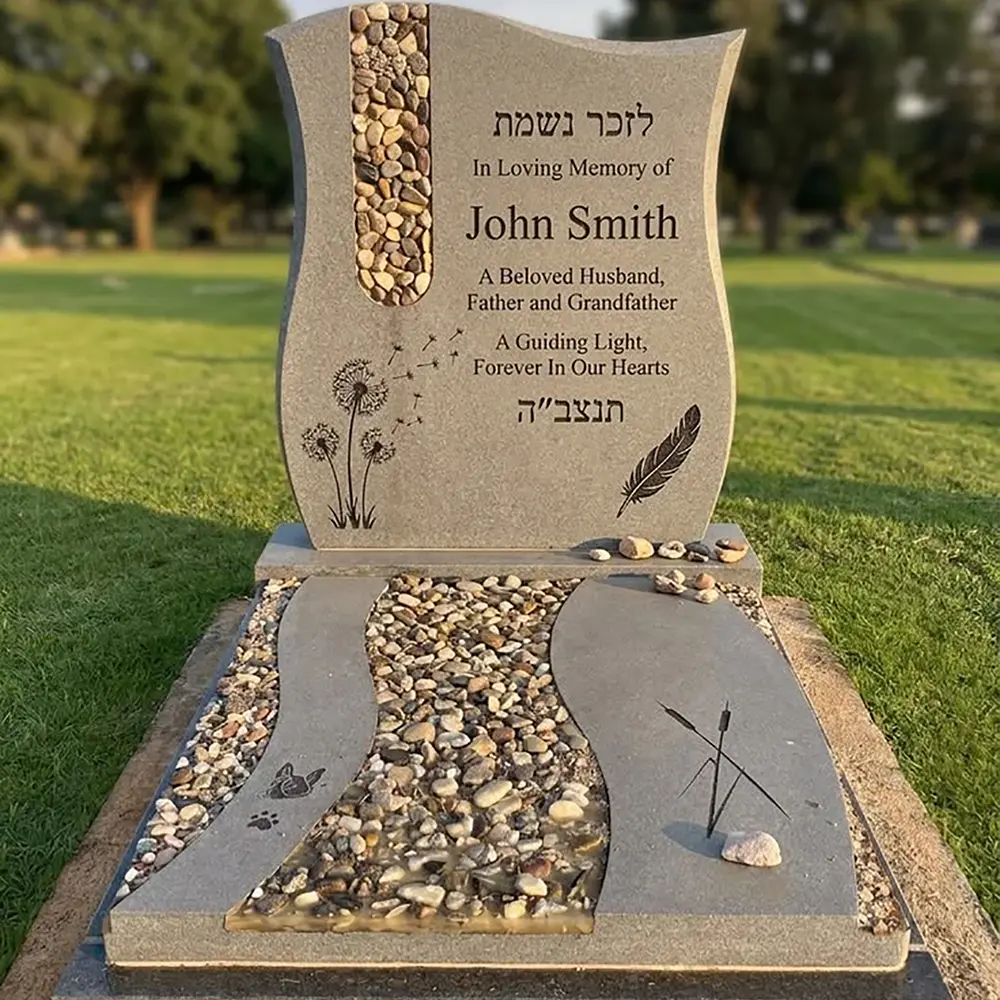
Granite Tombstone Engraving Project with CNC Stone Router
This granite tombstone engraving project demonstrates how a CNC stone router can process natural granite into customized memorial headstones. From memorial lettering and religious symbols to floral decorations, portrait engraving, and 3D relief carving, CNC technology enables precise and consistent stone engraving. With suitable diamond cutting tools and an effective water-cooling system, CATEKCNC stone routers provide a practical solution for tombstone manufacturers looking to improve processing efficiency and expand their range of customized memorial products.
Related models
Granite is one of the most widely used materials for tombstones and memorial monuments. Its natural beauty, high hardness, weather resistance, and long service life make it suitable for creating lasting memorials. However, processing granite into a finished tombstone requires more than cutting the stone into the desired shape. Manufacturers also need to engrave names, dates, memorial messages, decorative patterns, portraits, and sometimes complex three-dimensional designs.
Traditional manual engraving can handle basic lettering and simple decorations, but it becomes more challenging when manufacturers need to produce intricate patterns, maintain consistent lettering, or fulfill customized orders. This is where a CNC stone router becomes a valuable production tool.
With a digital design and programmed toolpaths, a CNC granite engraving machine can accurately remove material from granite surfaces to create everything from simple inscriptions to detailed relief carvings. It also helps tombstone manufacturers improve production consistency and handle a wider range of personalized memorial designs.
In this project guide, we will explore the requirements of granite tombstone manufacturing, the CNC equipment used for stone engraving, and the complete machining process, from design preparation to final finishing.
I. Project Requirements: What Makes Granite Tombstone Manufacturing Challenging?
Granite tombstone production involves several machining requirements. Unlike ordinary decorative stone processing, memorial engraving often includes personalized information and intricate details that must remain clear and visually balanced for many years.
1. Different Engraving Designs and Personalization Requirements
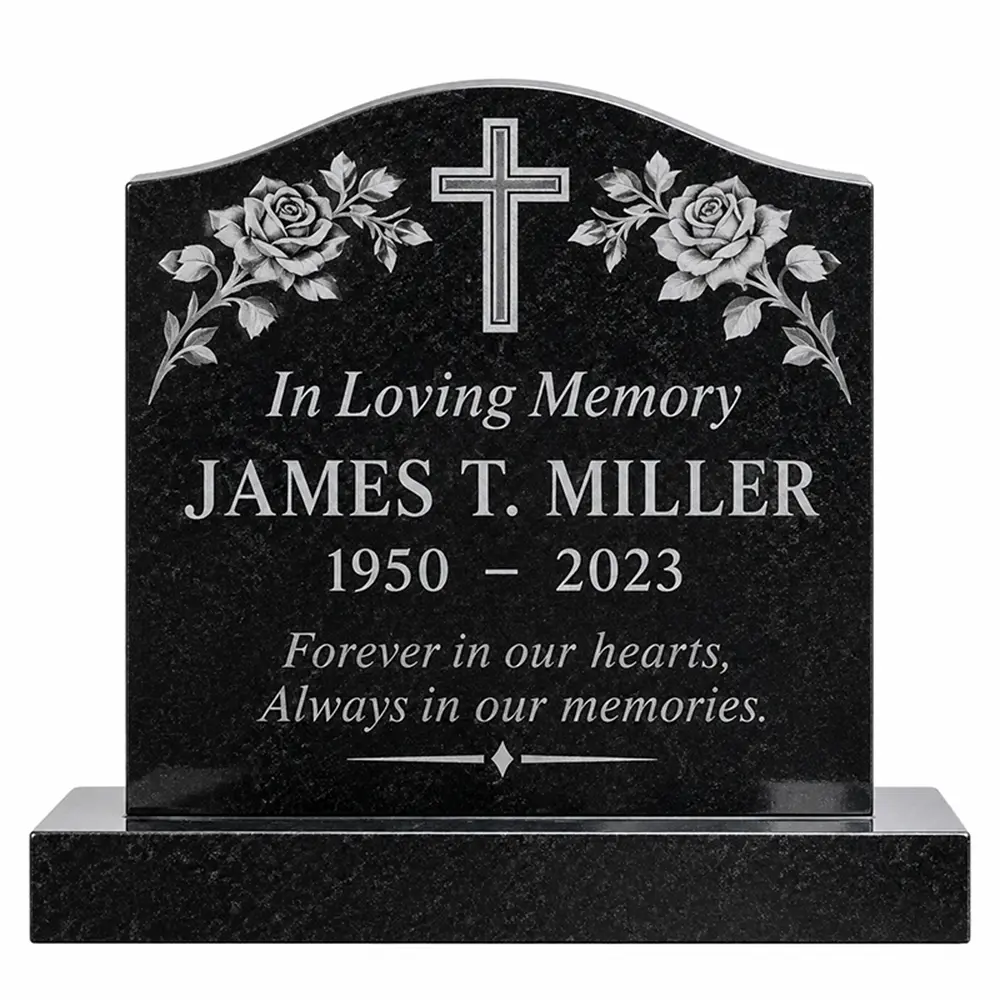
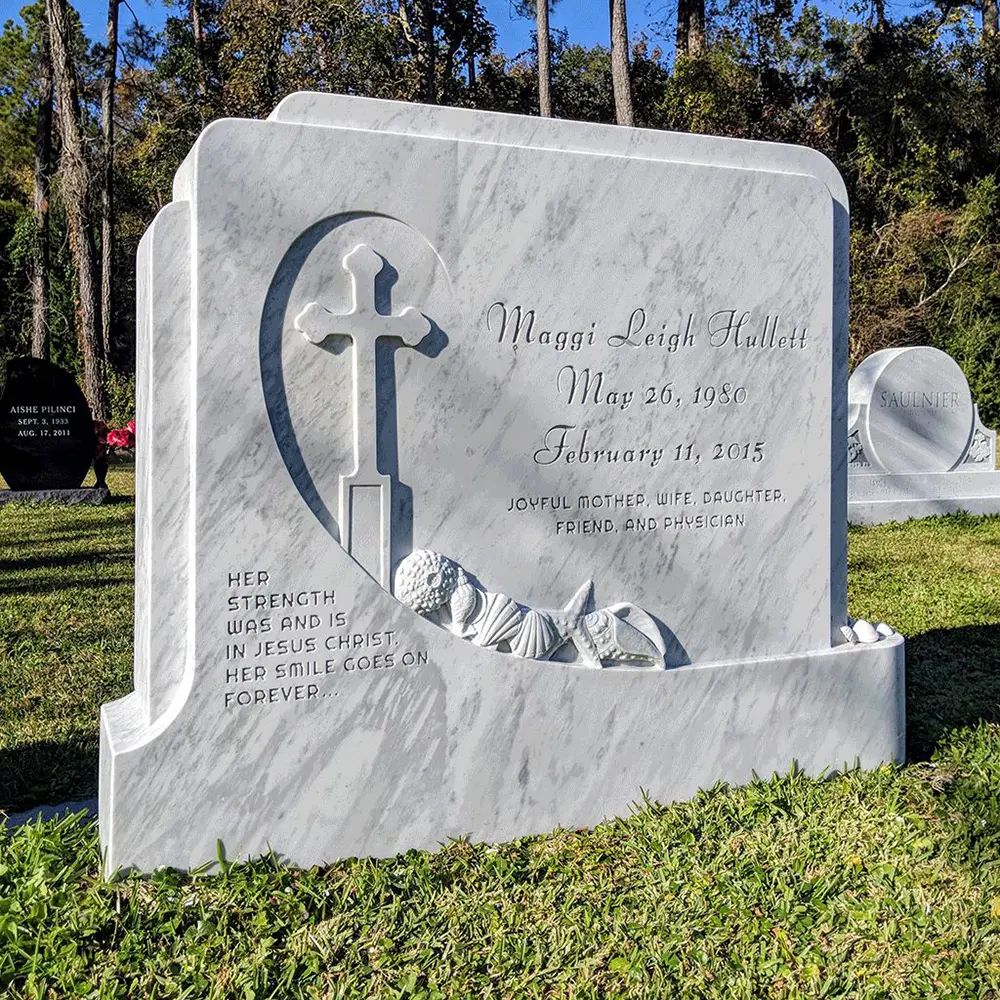
Every memorial stone may have a different design. Some customers prefer traditional headstones with names, dates, and short inscriptions, while others request religious symbols, floral decorations, portrait engravings, or elaborate relief sculptures.
For tombstone manufacturers, this means the production process must accommodate different engraving styles without requiring a completely different machine for every design.
A suitable CNC tombstone engraving machine should be capable of handling:
- Memorial lettering: Names, dates of birth and death, family names, and personalized messages.
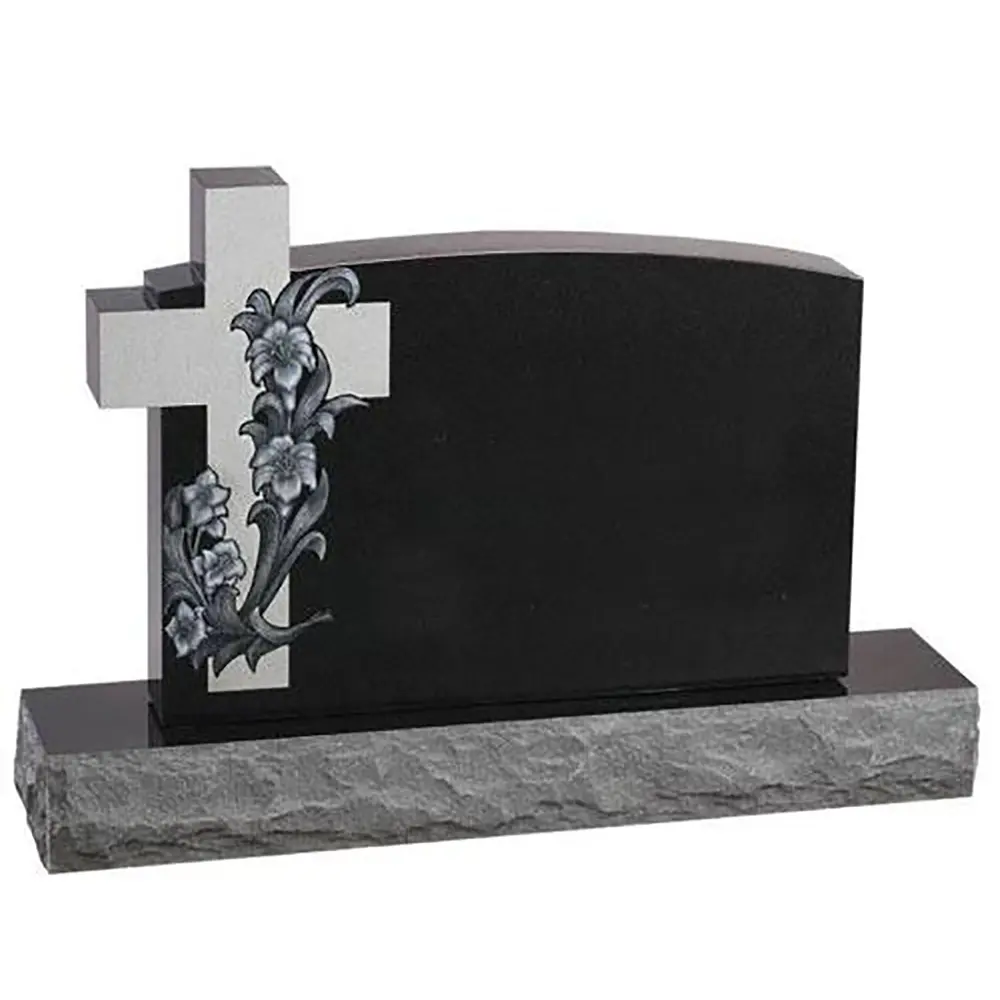
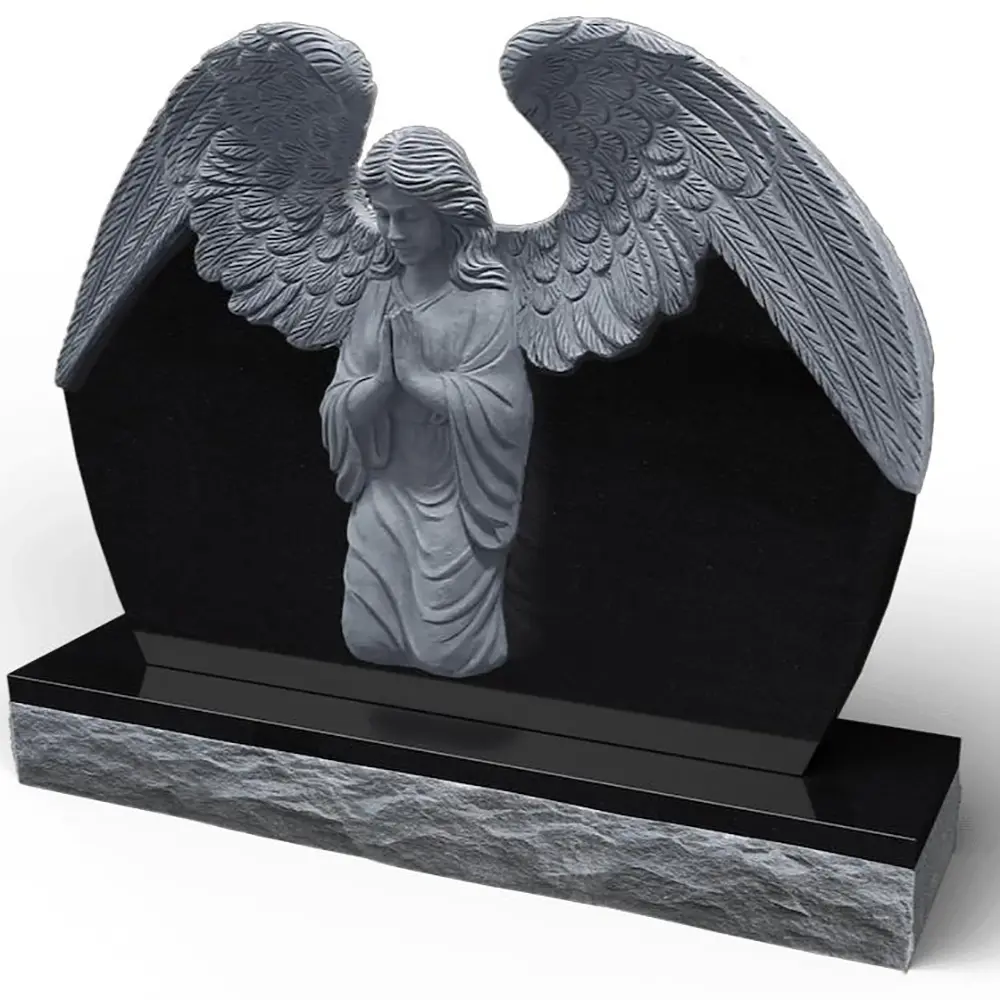
- Religious symbols: Crosses, angels, praying hands, and other memorial motifs.
- Decorative patterns: Flowers, leaves, borders, geometric shapes, and ornamental details.
- Portrait engraving: Photographic images converted into engraving data.
- 3D relief carving: Raised or recessed designs that add depth and dimension to memorial stones.
The ability to process different designs is particularly important for manufacturers producing customized tombstones in small batches or individual orders.
2. The Hardness and Abrasiveness of Granite
Granite is a hard, abrasive natural stone containing minerals such as quartz and feldspar. Its hardness makes it durable, but it also increases the difficulty of engraving and carving.
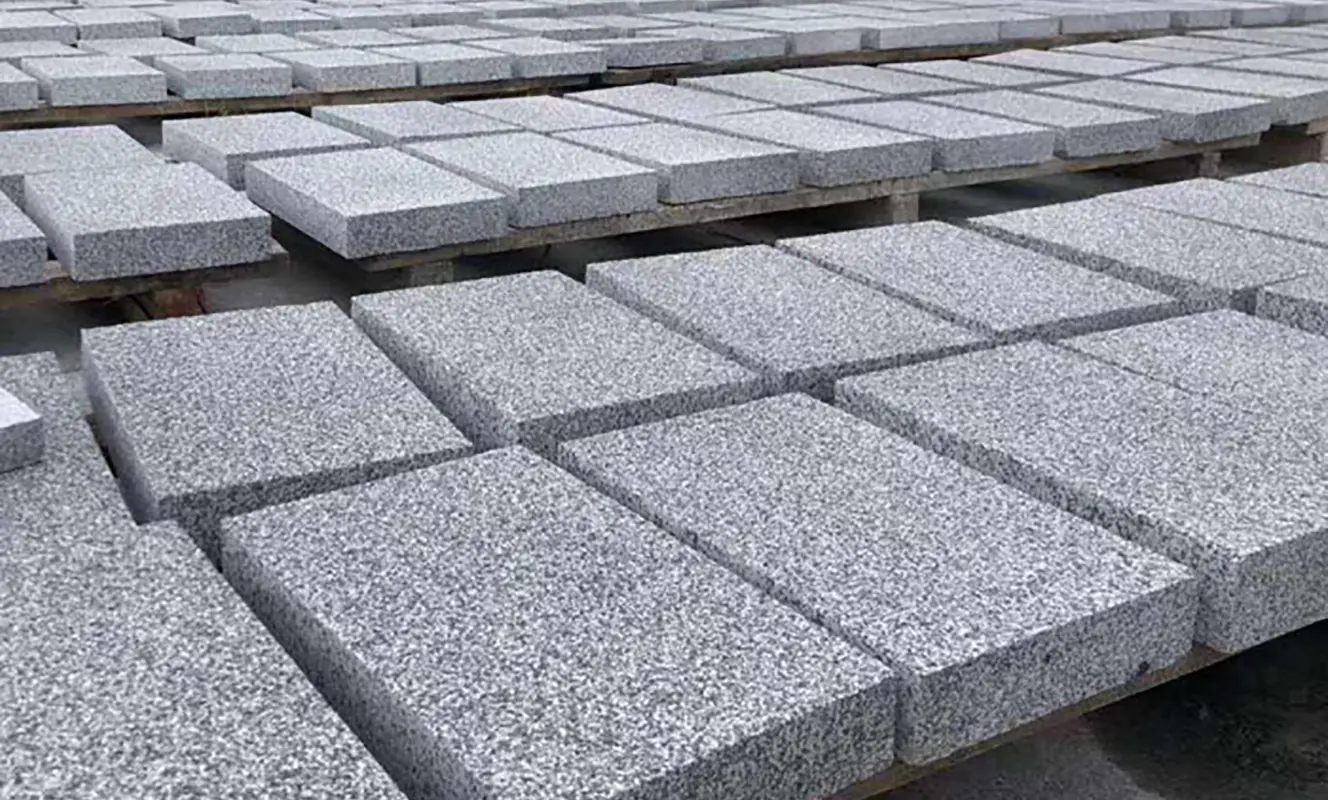
When machining granite, ordinary cutting tools are unsuitable. Specialized diamond tools are commonly used because their abrasive cutting surfaces can withstand the demands of stone processing.
The machine must also provide sufficient spindle capability, stable mechanical construction, and effective cooling. Without proper machining conditions, manufacturers may encounter excessive tool wear, rough engraving edges, inconsistent cutting depth, or unnecessary production delays.
3. Maintaining Consistent Lettering and Decorative Details
The appearance of a granite tombstone depends heavily on the quality of its engraved details. Letters should have clean edges and consistent spacing, while decorative patterns should retain their intended proportions.
This is especially important when processing small text, narrow outlines, or complex symbols. Even minor machining errors can affect the readability and overall appearance of a memorial stone.
A CNC engraving process helps reproduce digital designs consistently by following programmed toolpaths. However, the final result still depends on correct design preparation, tool selection, workpiece positioning, and machining parameters.
4. Processing Different Tombstone Sizes
Tombstones are available in various dimensions and shapes, from small memorial plaques to large upright headstones and decorative monuments.
Manufacturers therefore need to consider the machine's effective working area when selecting equipment. The machine should provide enough space for the intended stone dimensions while allowing the cutting tool to reach all required engraving areas.
For larger granite slabs, a stable worktable and reliable workpiece positioning are particularly important because the stone must remain securely fixed during machining.
II. CNC Stone Router Solution for Granite Tombstone Production
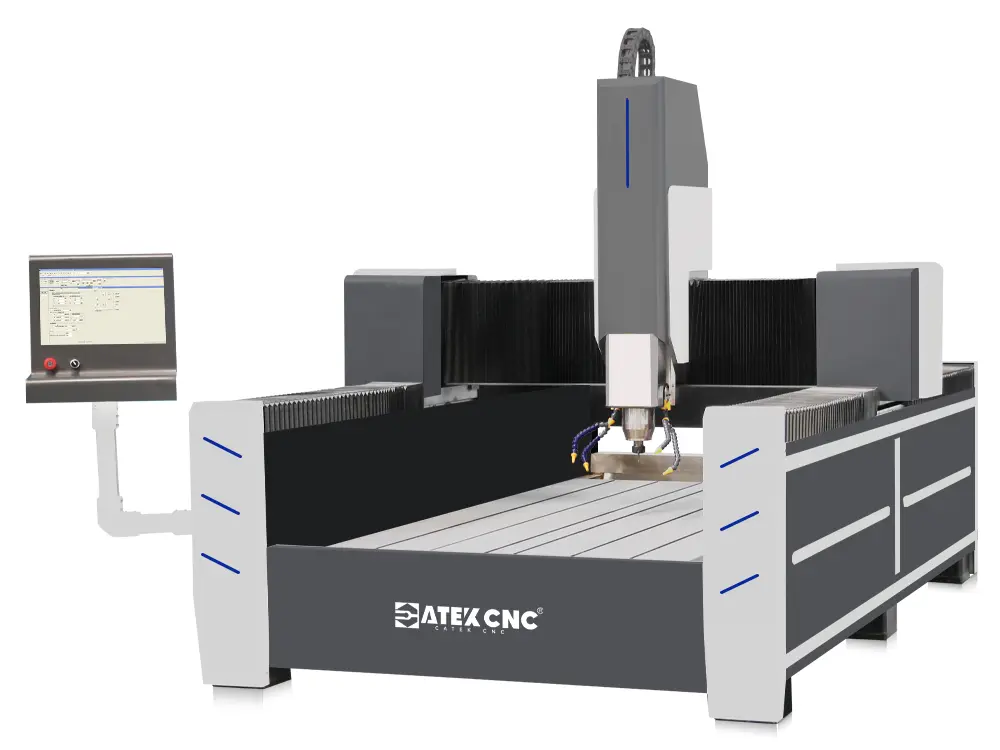
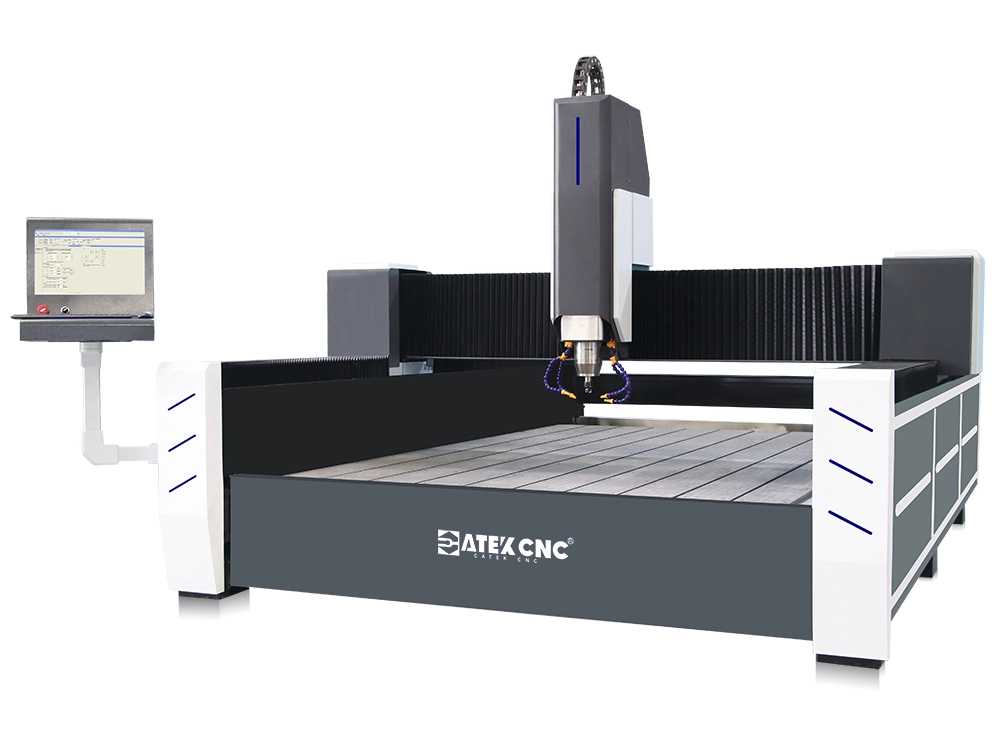
A CNC stone router provides a practical solution for manufacturers who need to process granite tombstones with different engraving requirements. It uses a computer-controlled spindle and cutting tools to follow programmed paths, allowing the machine to produce lettering, decorative patterns, recessed areas, and three-dimensional relief designs.
For granite tombstone manufacturing, machine selection should consider the workpiece dimensions, spindle power, cooling system, machine rigidity, and compatibility with suitable diamond cutting tools.
CATEKCNC offers different stone CNC router configurations for processing natural stone and other hard materials. Two models worth considering for tombstone production are:
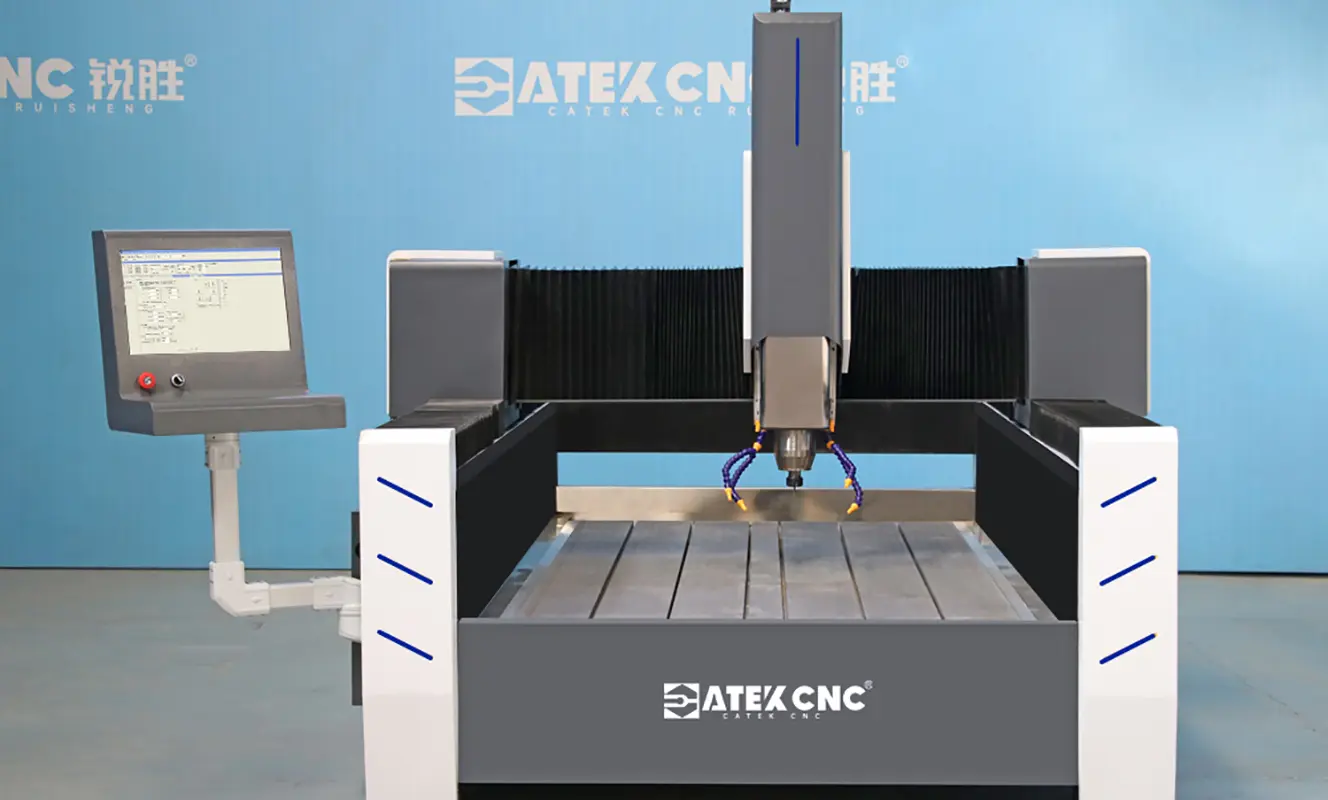
1. CK-1325-S 4×8ft CNC Stone Router
The CK-1325-S CNC stone router features a 1300 × 2500 × 400 mm working area and a 7.5 kW high-speed water-cooled spindle. Its heavy-duty sunk-style bed provides a stable platform for machining hard stone materials, while the dual cooling system helps cool the cutting tool and workpiece during engraving. It is a practical choice for manufacturers processing standard-size granite tombstones, memorial plaques, and decorative stone panels.
2. CK-2030-S Large-Format CNC Stone Router
For larger granite workpieces, the CK-2030-S CNC stone router provides a 2000 × 3000 mm working area and a 5.5 kW water-cooled spindle with speeds of up to 24,000 RPM. Its heavy-duty sunk-style structure, stainless steel water tank worktable, and flood cooling system support stable machining of large stone slabs. The larger working area makes it suitable for oversized tombstones, large memorial monuments, and other customized stone carving projects.
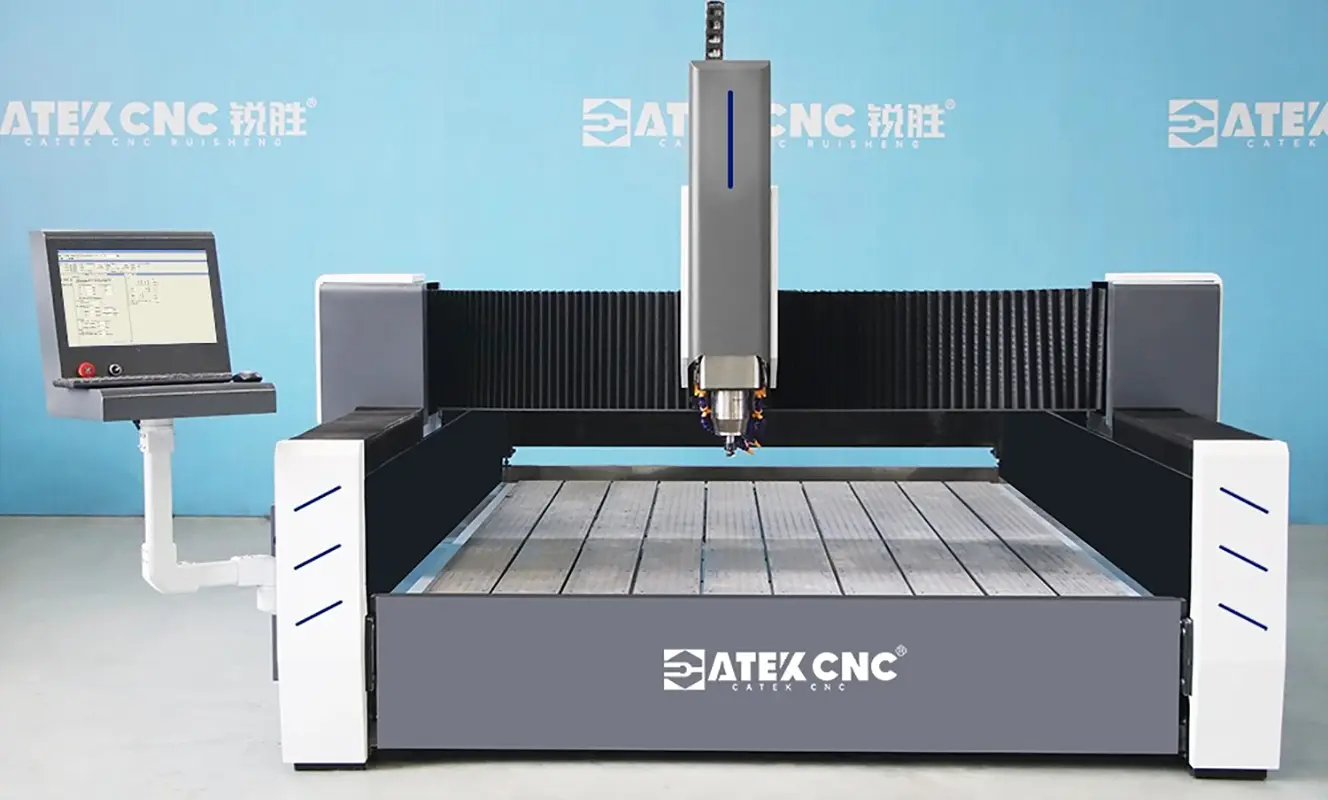
Both models are equipped for water-cooled stone processing. Their suitability for a particular tombstone design depends on the workpiece dimensions, cutting tools, machining strategy, and required engraving details.
You can explore the available configurations on the CATEKCNC Stone CNC Router page.
III. Granite Tombstone Engraving Process: From Digital Design to Finished Memorial Stone
The granite tombstone engraving process involves several important stages. Each stage affects the final appearance, machining accuracy, and production efficiency. For manufacturers, understanding these steps helps them choose suitable tools, prepare the stone correctly, and avoid common machining problems.
1. Step 1: Create and Prepare the Tombstone Design
Before machining begins, the tombstone design must be prepared using compatible CAD/CAM software. The design typically includes the stone's dimensions, lettering layout, decorative elements, and any personalized images or relief patterns.
Different design elements require different preparation methods:
- Text and lettering: Names, dates, and memorial messages are converted into vector outlines or engraving paths. Font size, spacing, alignment, and line arrangement should be adjusted to fit the available surface.
- Decorative patterns: Crosses, flowers, leaves, borders, and other ornaments are converted into vector paths for contour engraving or shallow carving.
- Portraits: Photographs need to be converted into suitable grayscale or relief-style engraving data. Contrast, brightness, and image resolution should be adjusted to preserve recognizable facial features.
- 3D relief designs: Three-dimensional models are converted into machining data that defines the cutting tool's movement and material-removal depth.
After preparing the design, the operator needs to check the overall dimensions and confirm that the engraving layout matches the actual granite slab.
For example, if a tombstone includes a name, dates, a portrait, and a decorative border, each element should be positioned carefully to maintain visual balance. The design should also account for the available machining area and the physical shape of the stone.
Practical tip: Always check the scale of the design before generating the toolpath. A design that looks correct on a computer screen may not produce readable lettering or balanced proportions when transferred to a real granite surface.
2. Step 2: Prepare and Position the Granite Slab
Granite preparation is essential for stable and accurate engraving. Before placing the stone on the machine, inspect its surface for cracks, chips, uneven areas, and other defects that could affect machining.
The preparation process generally includes:
- Clean the stone surface: Remove dust, loose particles, and other contaminants that could interfere with positioning or cutting.
- Check the stone dimensions: Confirm that the granite blank fits within the machine's working area and that the engraving design matches the actual workpiece.
- Load the granite carefully: Place the slab on the machine's worktable, ensuring that it is properly supported.
- Secure the workpiece: Use suitable fixtures or clamping arrangements to prevent movement during machining.
- Set the workpiece origin: Establish the X, Y, and Z reference positions so the CNC machine can follow the design accurately.
Workpiece stability is especially important when engraving large granite tombstones. If the stone moves during machining, lettering may become misaligned and decorative patterns may lose their intended proportions.
The stone surface should also be considered when setting the machining origin. If the granite is uneven, the operator may need to account for surface height variations to maintain a consistent engraving depth.
Why does accurate positioning matter?
Memorial lettering and decorative elements are often arranged according to a carefully designed layout. Incorrect positioning can affect the alignment of names, dates, borders, and portraits. Taking time to secure and position the stone correctly helps reduce machining errors and unnecessary rework.
3. Step 3: Select the Right Diamond Cutting Tools
Tool selection directly affects engraving quality, machining efficiency, and tool life. Because granite is hard and abrasive, manufacturers generally use diamond cutting tools specifically designed for stone processing.
Different engraving tasks require different tool geometries. Using the wrong tool can result in poor edge definition, excessive machining time, or unnecessary tool wear.
| Cutting tool | Main application | Typical result |
|---|---|---|
| Diamond V-bit | Lettering, narrow lines, and outlines | V-shaped grooves with defined edges |
| Diamond engraving bit | Small text and fine decorative details | Narrow and precise engraving lines |
| Diamond end mill | Flat-bottom grooves and material removal | Recessed areas with relatively uniform widths |
| Diamond ball-nose bit | 3D relief and curved surfaces | Rounded contours and smoother transitions |
| Diamond core bit | Drilling holes and circular features | Clean holes for specific stone-processing requirements |
Which tool should be used for different tombstone designs?
- For names and memorial inscriptions, diamond V-bits or suitable engraving bits are commonly used to create clearly defined lettering.
- For floral patterns, religious symbols, and decorative outlines, smaller diamond tools help reproduce narrow lines and intricate shapes.
- For wider recessed areas, suitable diamond end mills can remove material more efficiently.
- For three-dimensional relief carving, ball-nose tools are often used during finishing to refine curved surfaces and contours.
- For drilling mounting or decorative holes, diamond core bits may be selected according to the required hole diameter.
Tool diameter and tip geometry also influence the final appearance. Smaller tools can reproduce finer details, but they may require more machining time. Larger tools remove material more efficiently but cannot reproduce every small feature.
Manufacturers should therefore select cutting tools according to the design, engraving depth, stone characteristics, and desired surface finish rather than using one tool for every operation.
4. Step 4: Set Machining Parameters and Start CNC Engraving
Once the design and cutting tools are ready, the operator can generate the toolpath and load the machining program into the CNC controller.
Before starting the full engraving operation, it is important to confirm the tool position, workpiece origin, cutting depth, spindle rotation, cooling supply, and machining path.
For granite processing, several machining factors require particular attention:
Spindle Speed and Feed Rate
The spindle speed and feed rate must be matched to the diamond tool, granite characteristics, and machining operation. Excessive feed rates may cause rough edges, tool damage, or inconsistent engraving. Conversely, overly conservative settings may increase machining time unnecessarily.
There is no single parameter combination suitable for every granite tombstone. Operators should follow the tool manufacturer's recommendations and determine suitable settings through testing.
Cutting Depth and Machining Passes
For deeper lettering or carved patterns, it is generally better to remove material in multiple controlled passes rather than attempting to reach the full depth in one operation.
For example, a decorative pattern may first be outlined with a suitable engraving tool, followed by additional passes to create wider or deeper recessed areas. This approach helps control material removal and reduces unnecessary stress on the cutting tool.
Water Cooling and Debris Removal
Granite machining generates stone dust, slurry, and frictional heat. A suitable water-cooling system helps cool the cutting area, flush away debris, and protect the diamond tool during operation.
The water supply should be directed toward the cutting area throughout machining. Operators should also ensure that the cooling system is working properly before starting the machine.
Machining Sequence
For tombstones containing several design elements, the machining sequence should be planned in advance. A typical sequence may involve outlining the lettering, engraving decorative details, removing material from larger recessed areas, and finishing more complex relief sections.
The exact sequence depends on the design and toolpath strategy. Proper planning helps reduce unnecessary tool changes and makes the overall production process more organized.
5. Step 5: Engrave Different Tombstone Designs
A CNC granite engraving machine can process different memorial designs by using suitable tools and machining strategies. The following examples show how common tombstone features are produced.
Memorial Lettering and Inscriptions
Names, dates, and memorial messages are among the most common engraving requirements. The CNC machine follows vector-based toolpaths to cut the letters into the granite surface. The appearance of the lettering depends on font design, tool geometry, groove width, and engraving depth. V-shaped grooves are commonly used when manufacturers want clearly defined letters with a traditional engraved appearance. For small lettering, the design should be simplified when necessary to ensure that narrow spaces and fine strokes can be reproduced accurately.
Religious Symbols and Decorative Patterns
Crosses, praying hands, flowers, leaves, and ornamental borders are frequently included in customized memorial designs. These elements are generally processed through contour engraving or shallow carving. The CNC machine follows the programmed outlines, while suitable diamond tools create the required grooves and recessed details.
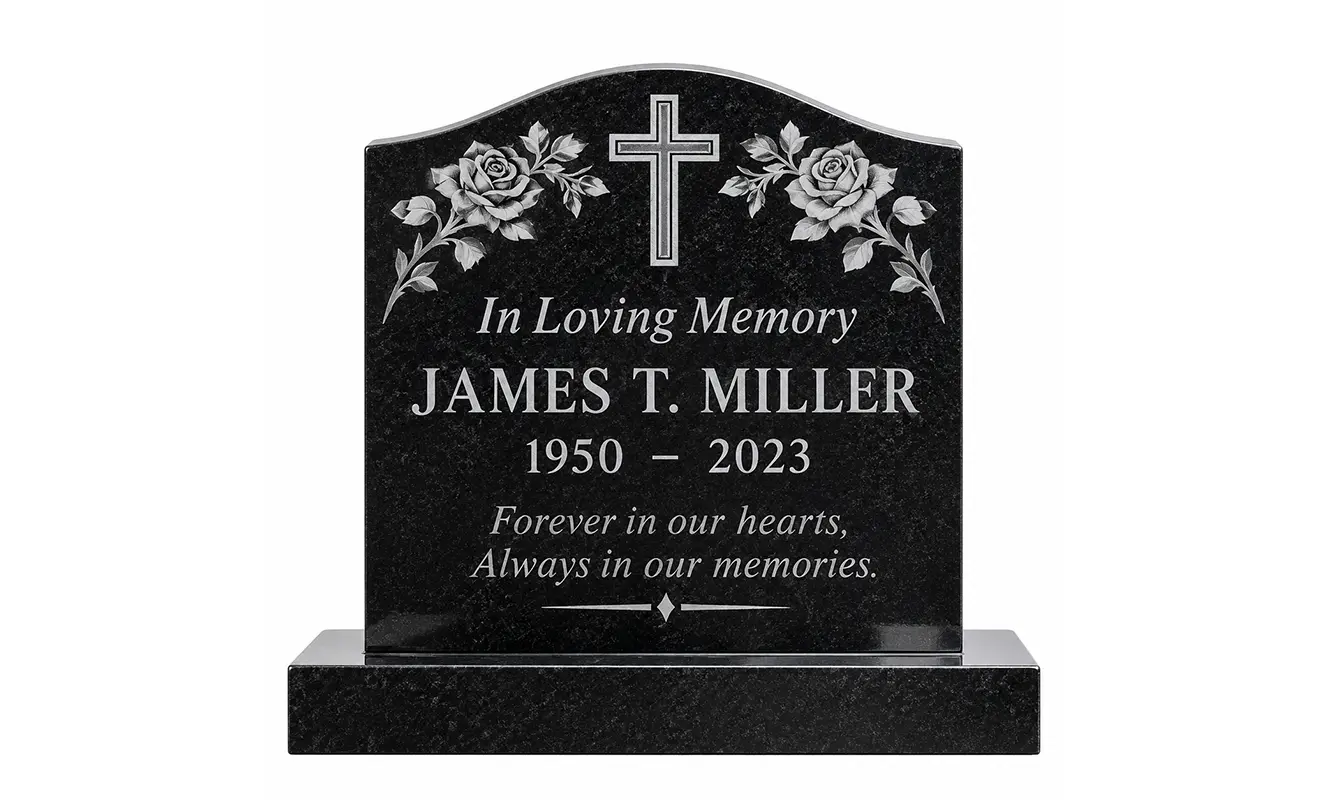
For intricate decorative patterns, the tool diameter should be selected carefully. A tool that is too large may remove small details or make narrow lines appear wider than intended.
Portrait Engraving on Granite
Portrait engraving is one of the more demanding applications in memorial stone production because it requires the reproduction of recognizable facial features. The original photograph must first be converted into a suitable grayscale or relief-style design. Image contrast and brightness should be adjusted to distinguish light and dark areas, while unnecessary background details may need to be removed.

The CNC machine then follows the generated machining data to create different depths or surface patterns. The final portrait quality depends on the original image, image-processing method, tool size, machining resolution, and granite surface finish.
Manufacturers should test the image conversion and machining settings before processing the final tombstone, especially when the portrait is a major feature of the memorial.
3D Relief Carving
Some customers prefer more dimensional memorial designs, such as angels, flowers, religious figures, or sculptural decorations. Unlike ordinary line engraving, 3D relief carving requires the CNC machine to remove material at different depths according to a three-dimensional model.
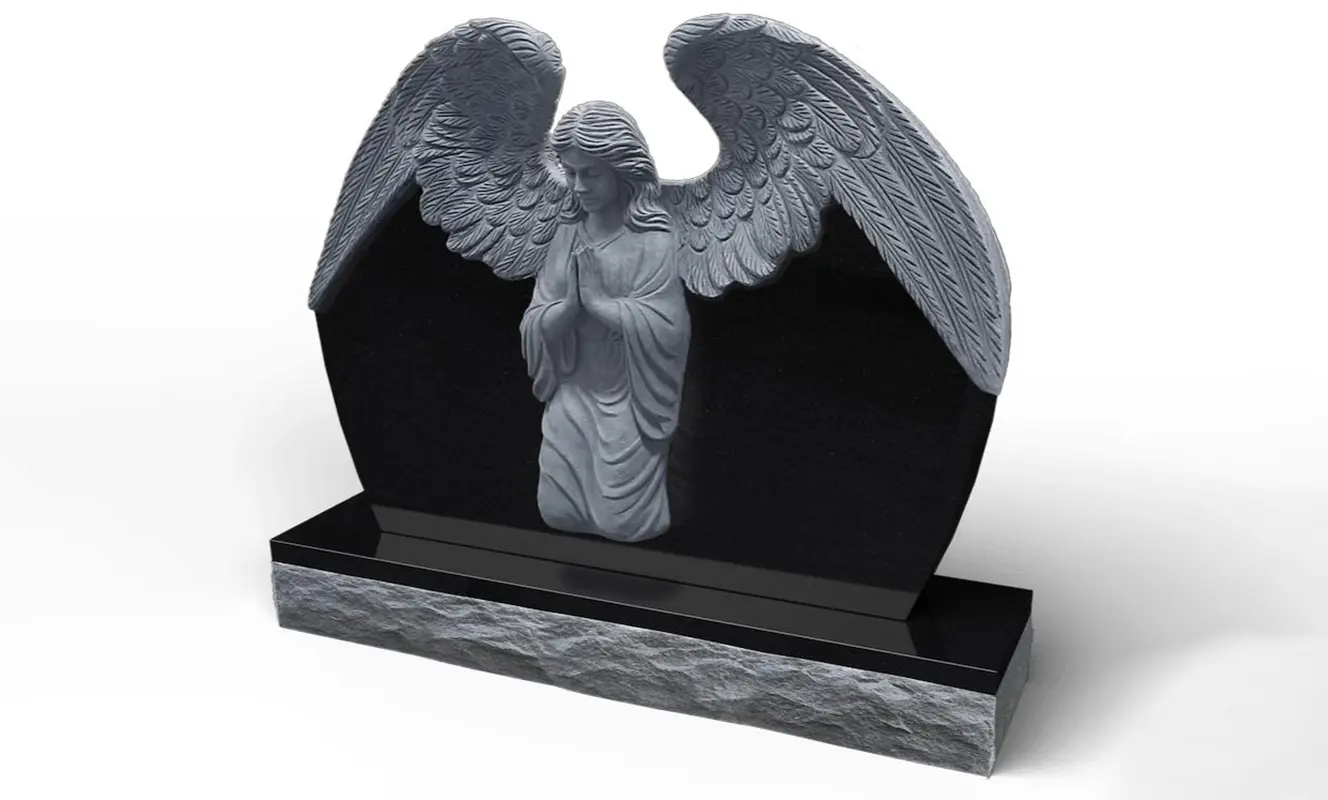
The process usually involves roughing and finishing operations. Roughing removes excess granite and establishes the basic shape. Smaller finishing tools then refine the contours, curved surfaces, and finer details.
The achievable detail depends on the machine configuration, tool geometry, model resolution, stone characteristics, and machining time.
6. Step 6: Clean, Inspect, and Finish the Engraved Tombstone
CNC machining is not necessarily the final step in tombstone production. Post-processing helps improve the appearance of the engraved areas and prepares the memorial stone for delivery or installation.
After machining, the granite surface should be cleaned to remove stone slurry, dust, and cutting debris. Once the workpiece is clean, the operator can inspect the lettering, decorative patterns, and relief details.
Depending on the required finish, additional operations may include:
- Edge smoothing: Minor burrs and rough edges around engraved grooves can be refined using suitable hand-finishing tools.
- Surface polishing: Selected areas may require additional polishing to achieve the desired gloss and contrast between the engraved and surrounding surfaces.
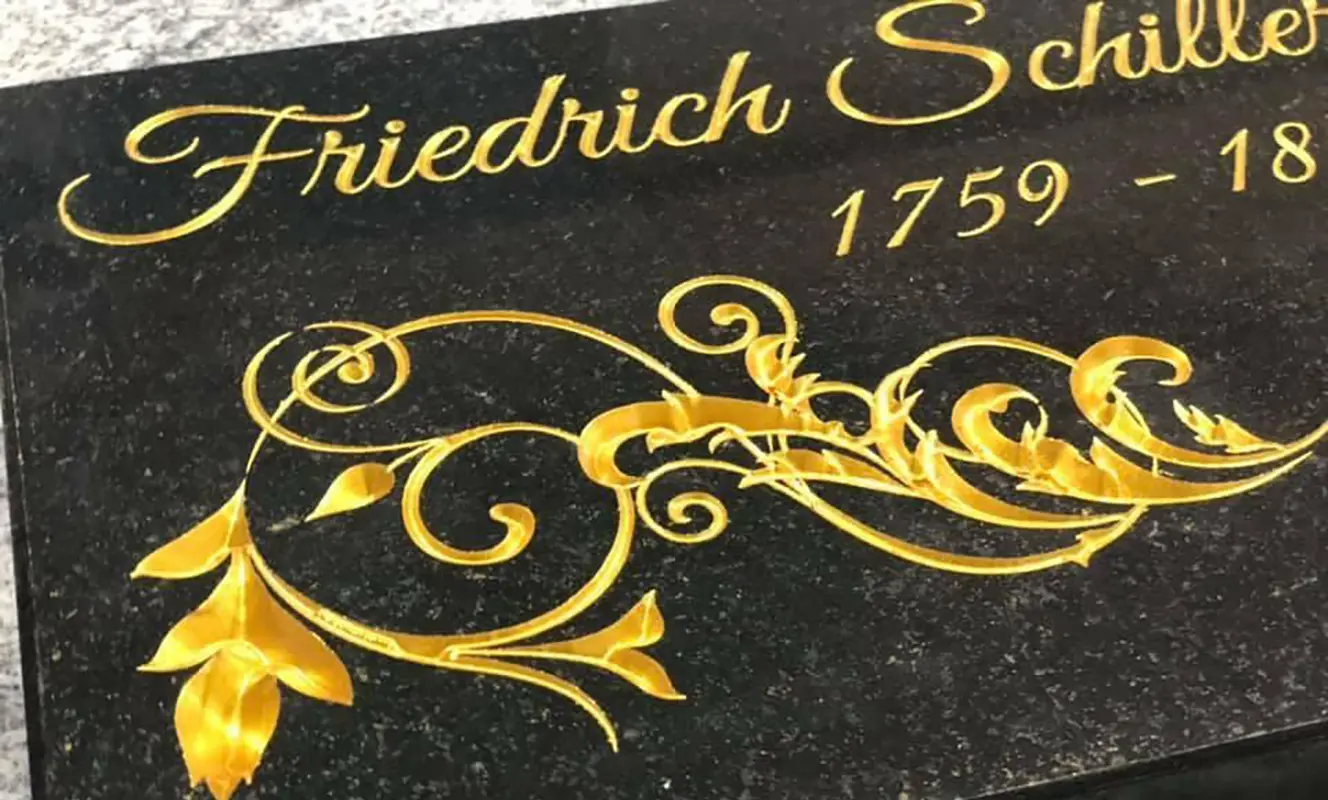
- Letter and pattern coloring: Suitable paint or color-filling materials can be applied to engraved grooves to improve visibility. Gold, white, and other contrasting colors are commonly selected according to the granite color and customer's design.
- Detail correction: Small areas that require additional refinement can be corrected with appropriate finishing tools.
- Final quality inspection: Check the lettering, dates, engraving depth, decorative details, surface condition, and overall design layout before delivery.
For example, on a polished black granite tombstone, gold-colored lettering can create a strong visual contrast against the dark stone.
IV. Why Use a CNC Stone Router for Granite Tombstone Manufacturing?
For tombstone manufacturers, investing in CNC stone is not simply about replacing manual engraving. It is about improving the way customized stone products are designed, processed, and reproduced.
1. More Consistent Engraving Results
Manual engraving depends heavily on the operator's experience and hand control. A CNC stone router follows programmed toolpaths, helping maintain consistent lettering, spacing, and decorative patterns. This is particularly useful when manufacturers need to reproduce similar designs or process multiple memorial products with consistent layouts.
2. Greater Flexibility for Customized Orders
Memorial products often require individual designs. With CAD/CAM software, manufacturers can modify text, dimensions, decorative elements, and engraving layouts without changing the basic machine setup. This makes CNC engraving suitable for both standard tombstone production and personalized orders.
3. More Efficient Processing of Complex Designs
Intricate lettering, decorative borders, and relief patterns can require considerable time and skill when completed manually. CNC machining helps automate repeated tool movements and material-removal operations. Although complex designs still require careful programming and finishing, CNC technology makes it easier to incorporate detailed patterns into the production process.
4. Reduced Repetitive Manual Work
Once the design and machining program have been prepared, the CNC machine can carry out the programmed engraving operations automatically. Operators still need to prepare the stone, select tools, monitor machining, and inspect the finished product. However, automated tool movement reduces the amount of repetitive manual engraving work.
5. Suitable for Different Granite Products
By changing the design and machining program, manufacturers can use the same CNC equipment for different stone products. This is particularly valuable for workshops that process tombstones alongside memorial plaques, decorative stone panels, and other granite products.
V. Conclusion
Granite tombstone manufacturing requires a combination of accurate design preparation, suitable diamond cutting tools, stable workpiece positioning, and carefully controlled machining parameters.
From memorial lettering and decorative patterns to portrait engraving and 3D relief carving, a CNC stone router provides manufacturers with a flexible way to process different granite memorial designs. It helps improve engraving consistency, reduce repetitive manual work, and expand the range of customized products they can offer. If you are looking for a CNC granite engraving machine for tombstone production, contact CATEKCNC to discuss your workpiece dimensions, engraving requirements, and suitable equipment options.
Other Projects
How This 4-Axis ATC CNC Router Transforms Panel Furniture Production Efficiency
This project focuses on upgrading a panel furniture production line by introducing a fully integrated 4-axis ATC woodworking CNC router machine with automatic labeling and drilling functions. The goal was to replace a traditional multi-machine workflow with a more efficient, single-machine solution.By implementing this advanced CNC router for woodworking, the factory successfully streamlined its entire process, from labeling and cutting to drilling and output, while significantly reducing manual...

Cabinet Manufacturing Project Using 2130 Linear ATC CNC Router
In modern furniture manufacturing, improving efficiency and machining accuracy is essential for cabinet factories and panel furniture producers. This project introduces the use of a 2130 Linear ATC CNC router in cabinet production, showing how an automatic tool change CNC router can complete cutting, drilling, grooving, and engraving in one cycle.With a large working area, vacuum table, and high-speed spindle, the ATC CNC router for cabinet making allows manufacturers to process MDF, plywood, pa...
Stone CNC Router Machining Project – Quartz Stone Engraving with 2030 CNC Stone Router
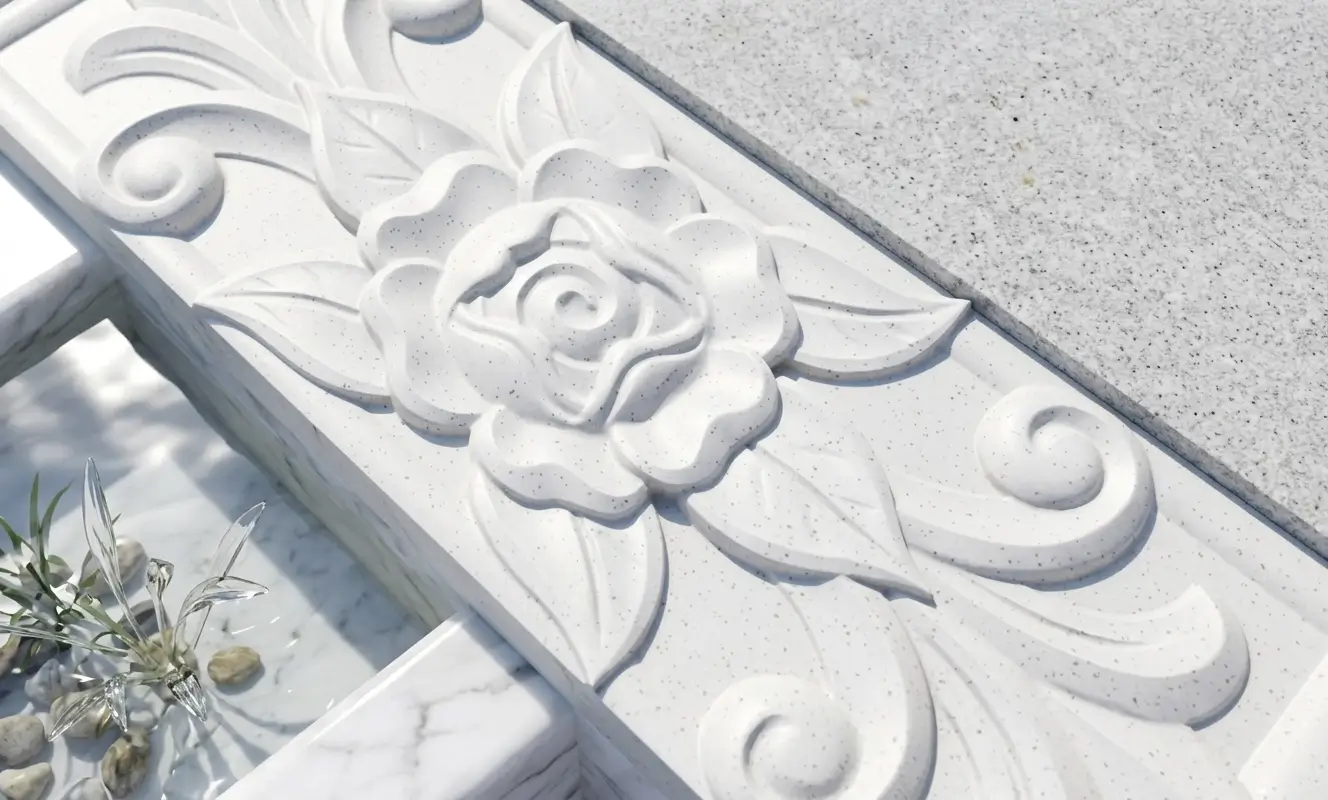
In the stone processing industry, precision, stability, and durability are essential. Whether producing tombstones, architectural decorations, relief carvings, or custom stone signs, choosing the right stone cnc router directly affects productivity and final quality.This project article introduces a real stone engraving project completed with the 2030 stone cnc router, explains the full machining workflow, highlights machine configuration advantages, and recommends different models for various s...
Application of 6090-T Mini ATC CNC Router in Advertising Sign Processing
To address space constraints and tedious tool changes in small sign shops, this project introduces the compact CK-6090-T ATC CNC router. By integrating multiple processes into a single automated workflow, it enables efficient custom signage production with minimal manual labor.