


{{goods.model}}


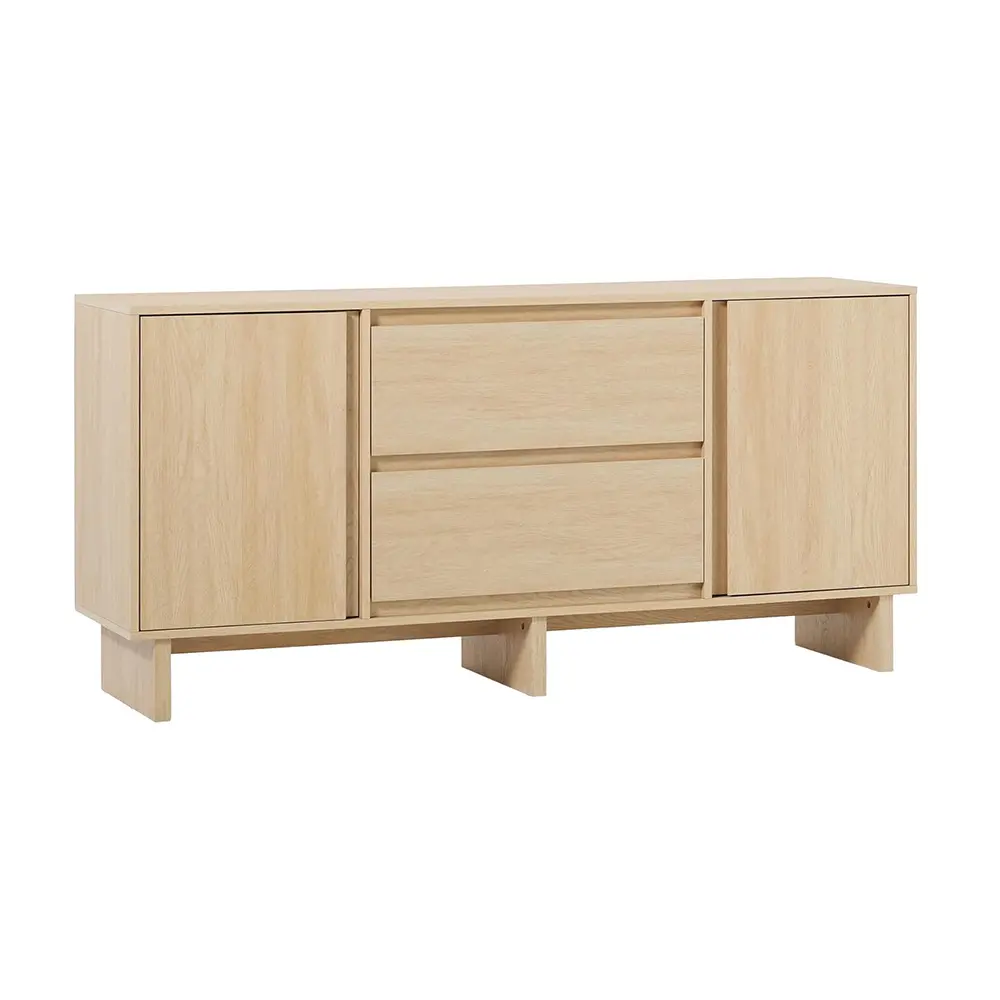

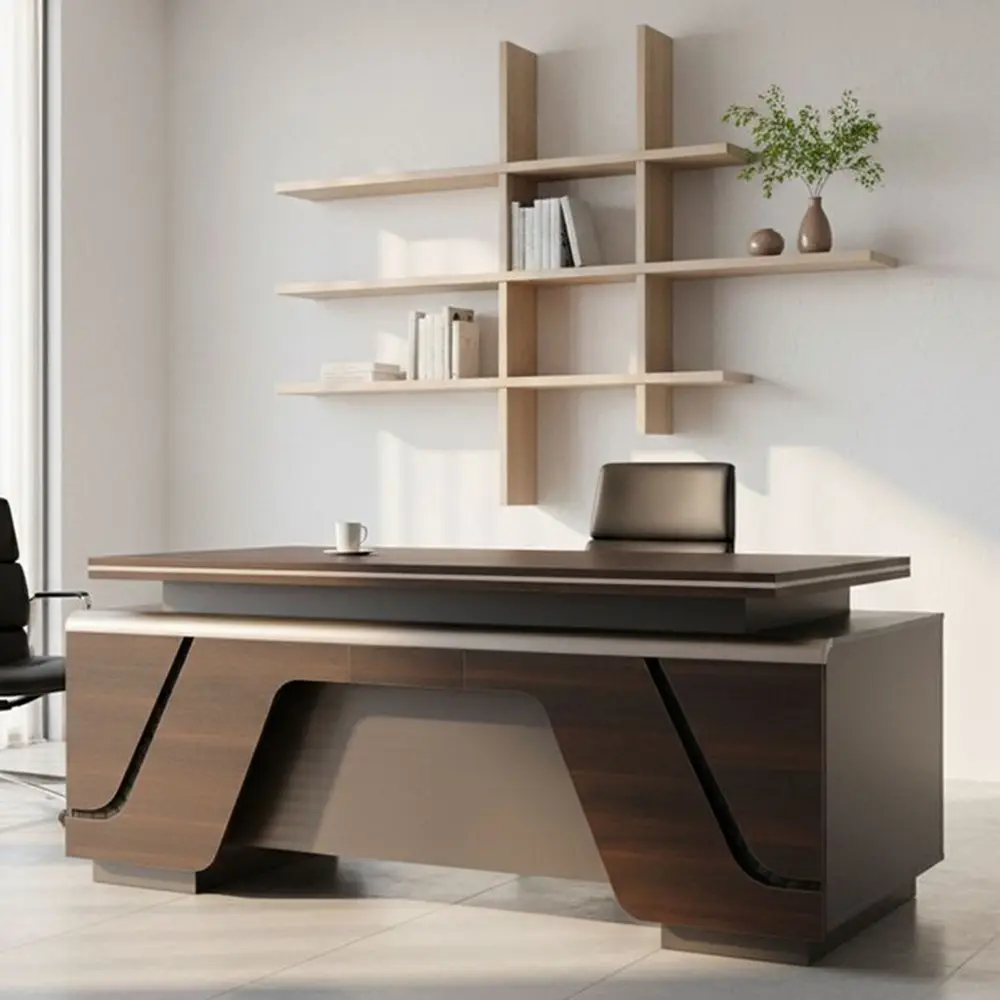

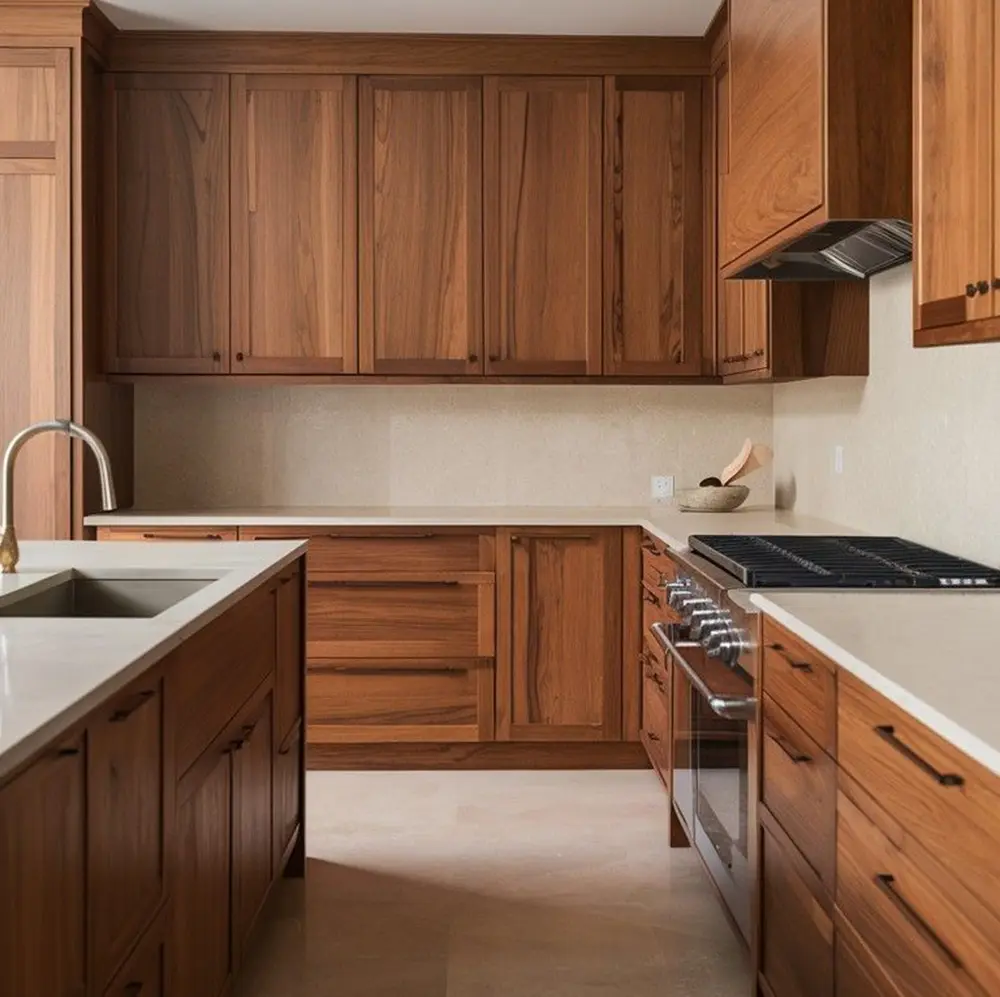
Cabinet Manufacturing Project Using 2130 Linear ATC CNC Router
In modern furniture manufacturing, improving efficiency and machining accuracy is essential for cabinet factories and panel furniture producers. This project introduces the use of a 2130 Linear ATC CNC router in cabinet production, showing how an automatic tool change CNC router can complete cutting, drilling, grooving, and engraving in one cycle.With a large working area, vacuum table, and high-speed spindle, the ATC CNC router for cabinet making allows manufacturers to process MDF, plywood, particle board, and laminated panels with high precision and stable performance.
This project demonstrates how upgrading to an industrial ATC CNC router can increase production efficiency, reduce labor costs, and provide a reliable solution for modern kitchen cabinet and panel furniture manufacturing.
Related models
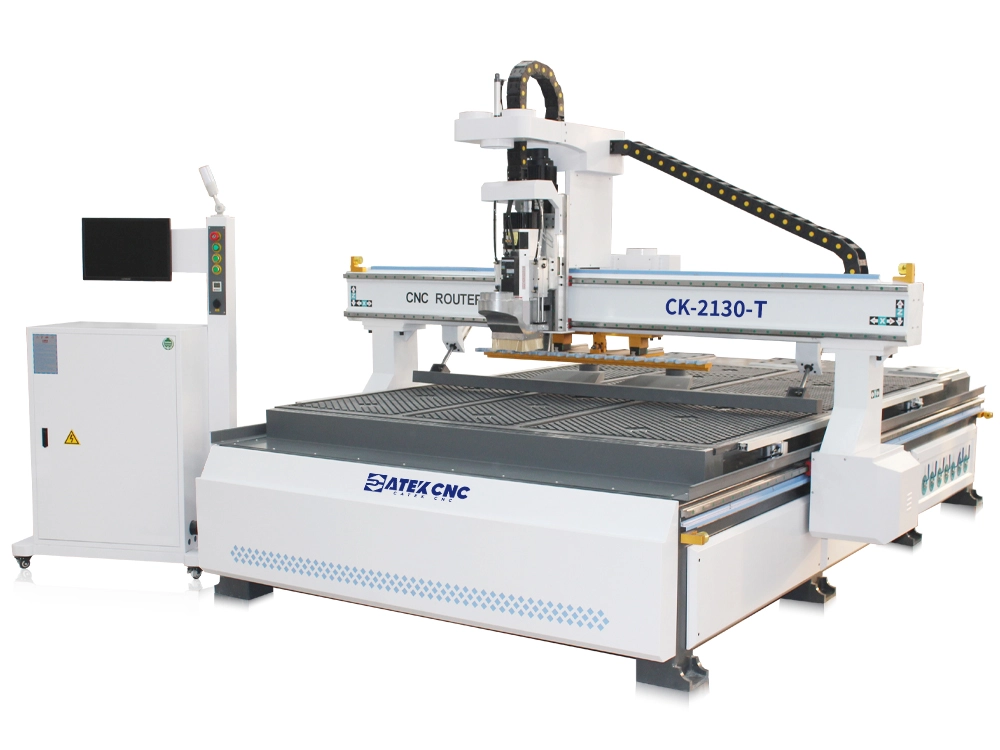
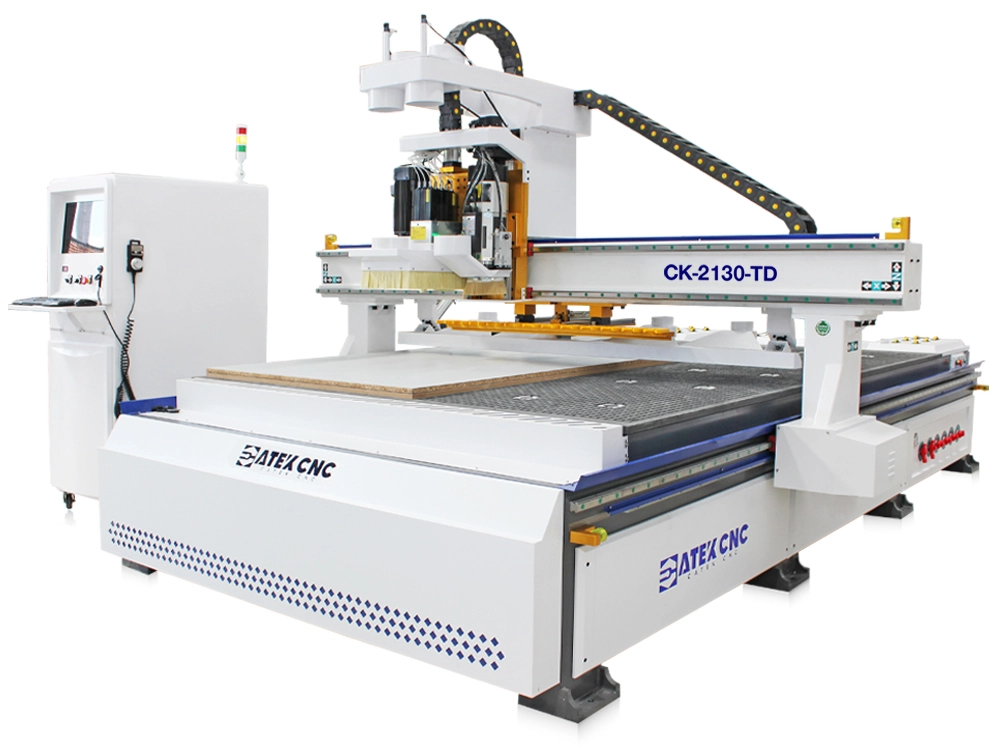
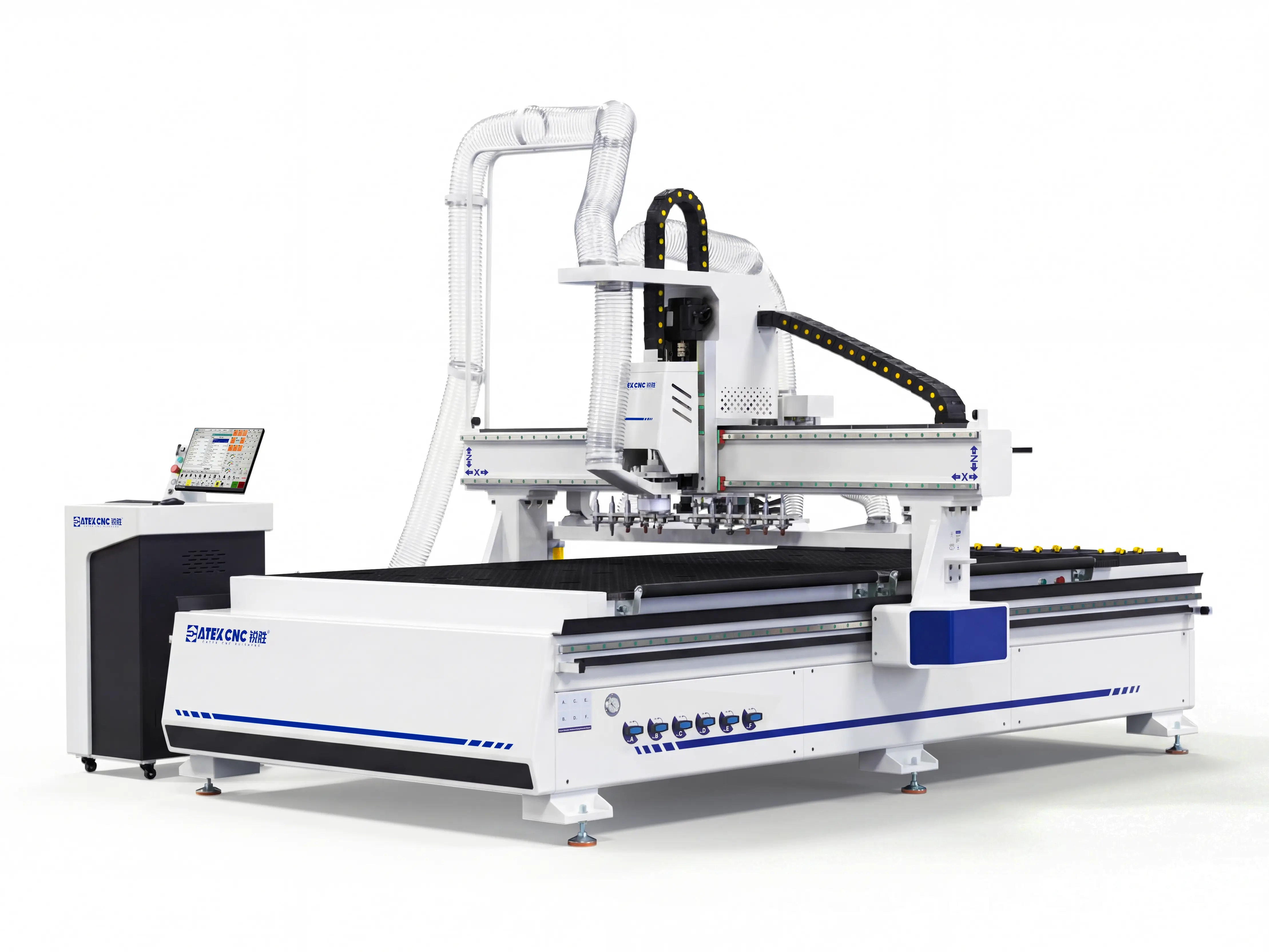
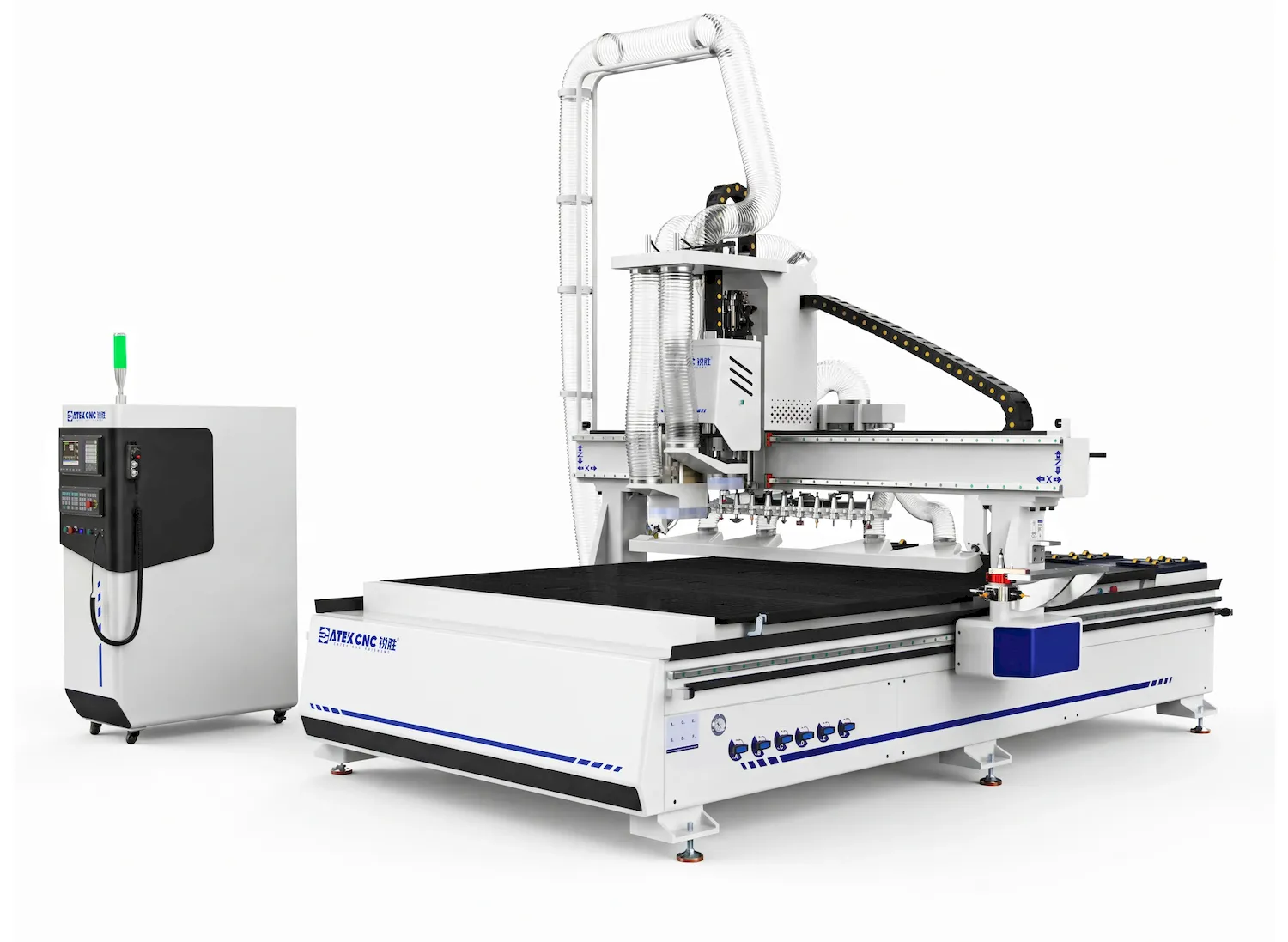
In modern furniture production, automation and precision have become essential for improving productivity and reducing labor costs. This cabinet manufacturing project uses a 2130 Linear ATC CNC Router to process kitchen cabinets, wardrobes, and panel furniture. The machine is designed for high-efficiency cutting, drilling, grooving, and engraving, making it an ideal ATC CNC router for cabinet making.
By using an automatic tool change CNC router, the factory can complete multiple machining processes in one cycle, which greatly improves production efficiency and ensures stable quality.
This project demonstrates how a professional industrial ATC CNC router can help furniture factories upgrade from manual production to modern CNC manufacturing.
I.CNC Router Used in This Project
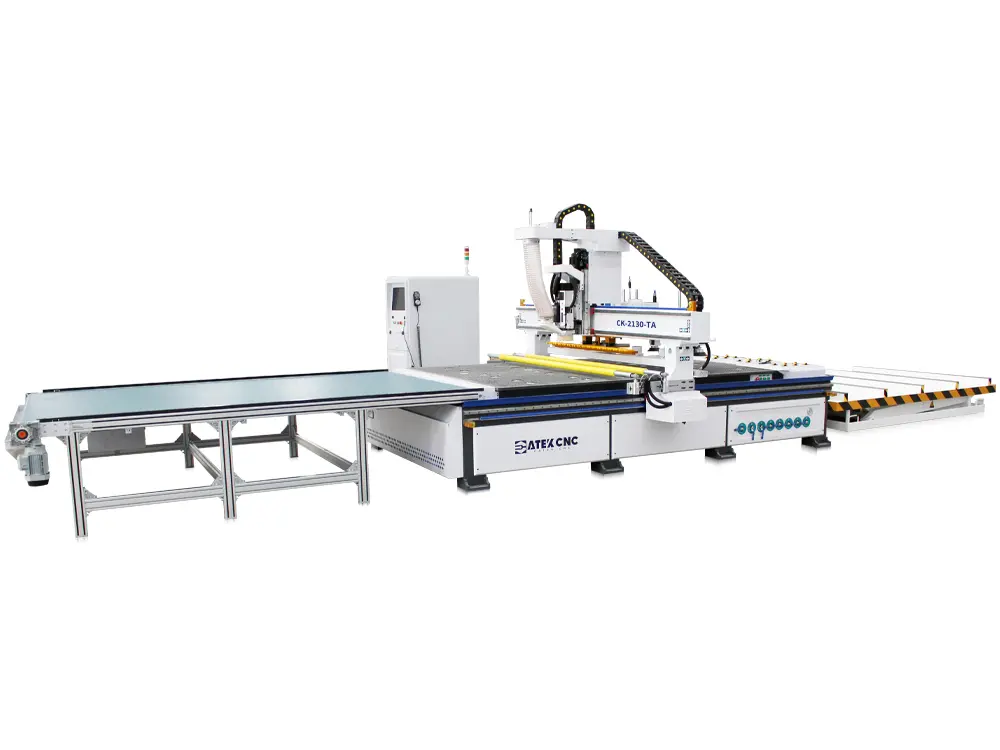
The machine used in this project is the 2130 Linear ATC CNC Router. This type of ATC CNC router is widely used in modern furniture factories where large boards, high production speed, and continuous operation are required.
The CK-2130-T has a working area of 2100 × 3000 mm, allowing operators to process full-size panels without pre-cutting the material. For cabinet manufacturers, this is crucial as it minimizes material waste and improves nesting efficiency.
With innovations in design concepts and evolving aesthetic preferences, traditional 4×8-foot (1220 mm × 2440 mm) standard panels are increasingly unable to meet the demands of high-end clients for whole-home customization. Large-format (e.g., 4×9-foot) medium-density fiberboard (MDF), plywood, and melamine-faced panels are becoming increasingly common.
Using this large-format CNC router for cabinet manufacturing can help you expand your business scope and precisely meet the diverse needs of your clients—effortlessly achieving “floor-to-ceiling” designs, minimalist styles that integrate doors, walls, and cabinets, and high-end custom collections. This not only secures higher profit margins but also helps you maintain a leading competitive edge in the fiercely competitive industry.
The 2130 Linear ATC CNC Router is equipped with a high-power Italian HSD 9KW automatic tool-changing spindle, capable of performing cutting, drilling, slotting, and milling within a single machining cycle. Unlike standard CNC wood router, this automatic tool change CNC router automatically switches tools according to the machining program, eliminating the need for operator intervention during processing. This significantly boosts production efficiency, making the machine ideal for high-volume cabinet manufacturing.
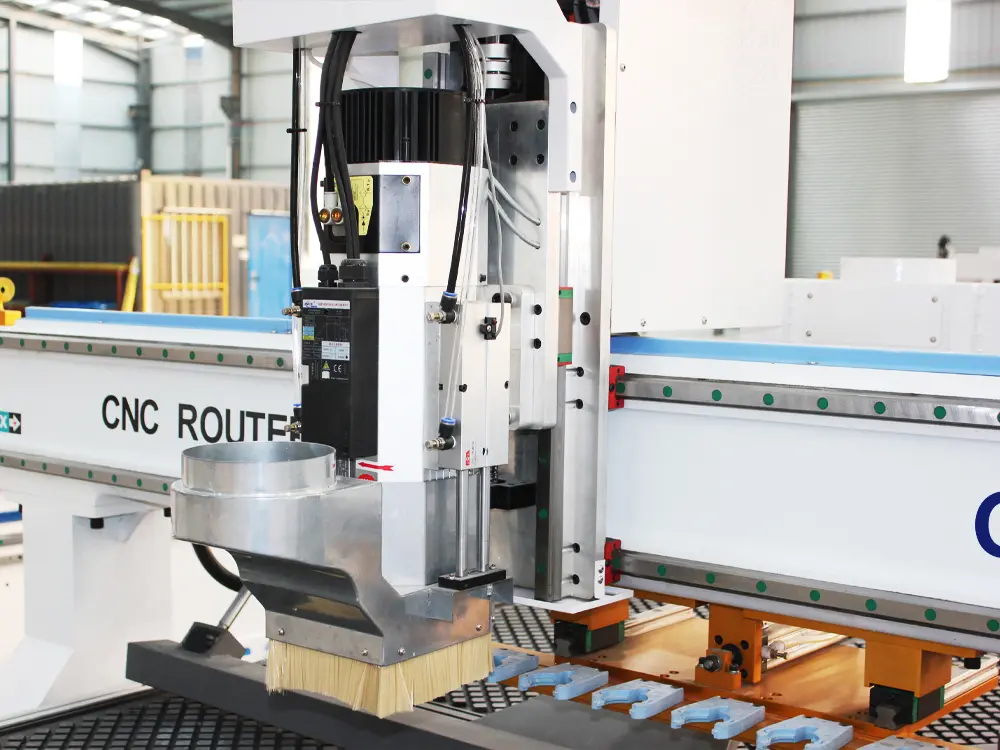
In this project, the machine is equipped with a linear automatic tool changer (ATC), which is one of the most practical solutions for furniture factories. The linear tool magazine is mounted beneath the machine’s gantry, minimizing the spindle’s tool-changing path. This design saves space while enabling fast and stable tool changes. Compared to manual tool changing, the linear automatic tool changer system enhances the efficiency of industrial CNC router machines and reduces the likelihood of human error.
To ensure stable operation during long working hours, the machine adopts a heavy-duty steel structure with high rigidity. High-precision guide rails and rack transmission provide smooth movement even at high speed, which is necessary for maintaining accuracy in cabinet drilling and panel cutting. For factories that run machines every day, a reliable furniture CNC router machine must keep precision even after long-term use.
The machine is also equipped with a vacuum adsorption working table with multiple independent zones. This design allows different panel sizes to be fixed securely, ensuring that the material does not move during high-speed machining. Because cabinet production usually requires nesting processing, a vacuum table is an essential feature for a professional nesting CNC router with ATC.
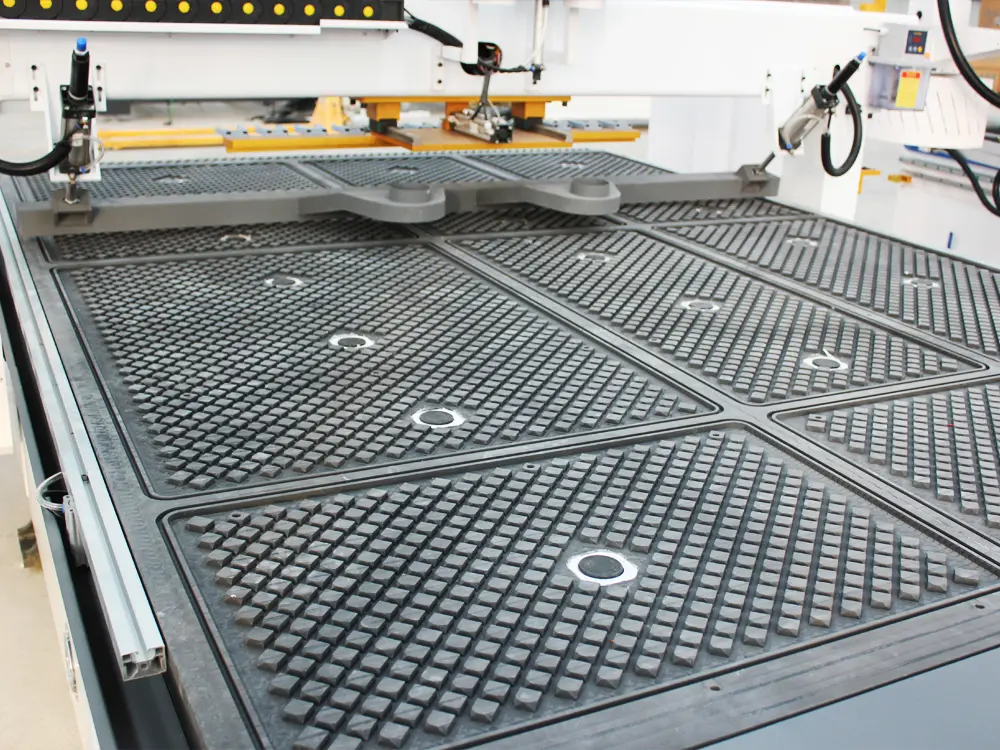
Due to these characteristics, linear ATC CNC router machines are among the most popular machines in furniture manufacturing.
II. Project Requirements
The goal of this project is to establish a more efficient and reliable production process for cabinetry.
With the growing demand for custom furniture and kitchen cabinets, furniture manufacturers must handle larger order volumes while maintaining consistent product quality. Customers need a solution that can significantly improve production efficiency without increasing labor costs.
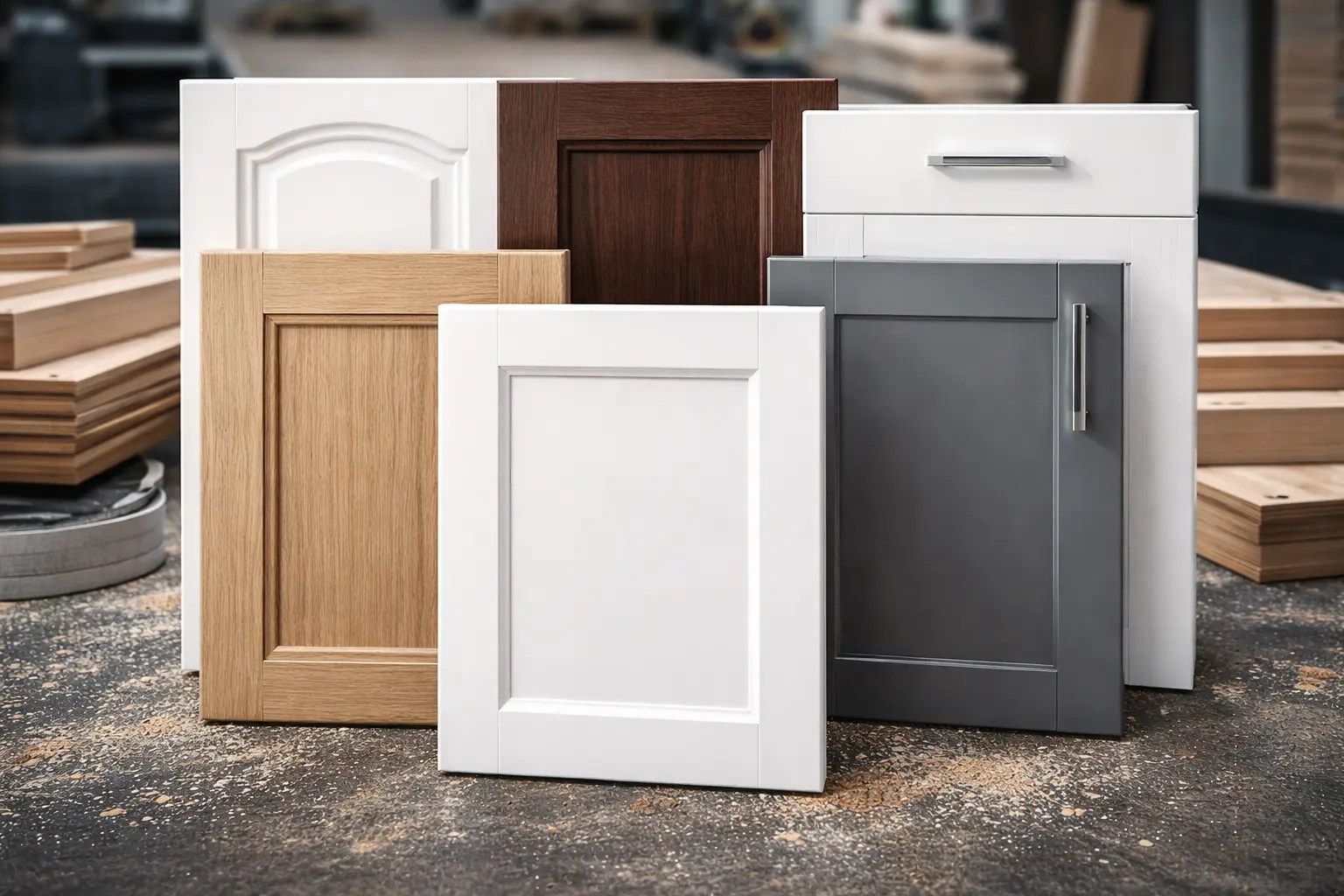
In traditional cabinet manufacturing facilities, many processes—such as panel cutting, routing, and drilling—require multiple machines or manual labor to complete. This production method results in slow processing speeds, inconsistent precision, and a high risk of human error. As the factory’s operations expand and production volumes continue to rise, the existing equipment can no longer meet customer demands, prompting the search for an optimal solution.
The customer indicated that the machine must be capable of continuous operation and maintain high precision even during long production shifts. The factory specifically requires an integrated machine capable of automatically performing multiple machining steps, preferably one that supports the processing of common furniture materials (such as MDF, plywood, particleboard, and laminated panels). Since large panels need to be processed, the machine requires a large working area and a material clamping system.
After learning about the customer’s needs, we provided them with a modern CNC router for cabinet making.
1. Automatic Tool Change
In traditional CNC machining, operators typically need to stop the machine and manually change tools when switching between processes such as cutting, drilling, and slotting. This not only reduces production efficiency but also interrupts the workflow. An automatic tool changer significantly reduces the time required for manual tool changes and helps prevent loss of precision.
2. Capable of processing a wide range of materials
Various types of wood are widely used in kitchen cabinets, wardrobes, and office furniture. ATC CNC routers deliver consistent cutting performance and smooth edges, reducing the need for additional finishing work.
3. Supports Large Sheets
The 2130 Linear ATC CNC Router features an extra-large worktable with a maximum processing area of 2100 × 3000 mm. It is equipped with a vacuum table, an essential feature for ensuring sheet stability during high-speed cutting. This is particularly important when using a nesting CNC router machine, as precise positioning is required to maximize material utilization.
This machine can handle a wide range of machining tasks and has undergone production testing based on the customer’s production templates, ultimately receiving positive feedback from the customer. This CNC router is also compatible with nesting software, allowing for efficient utilization of the entire sheet of material and minimizing waste.
III. Why Choose Linear ATC CNC Router for Cabinet Production
In cabinet and panel furniture manufacturing, the efficiency of the tool-changing system directly impacts overall production efficiency.
Among the various automatic tool-changing designs, linear ATC CNC routers are considered the most practical and cost-effective option for factories specializing in cabinet manufacturing and large-scale panel processing.
Compared to disk-type tool changers, linear automatic tool changing CNC router machines feature a simpler and more stable design. The tool magazine is typically mounted at the rear of the machine, which keeps the work area open and facilitates the loading and unloading of large sheets of material. This design is ideal for manufacturers who use CNC router to process full sheets of material.
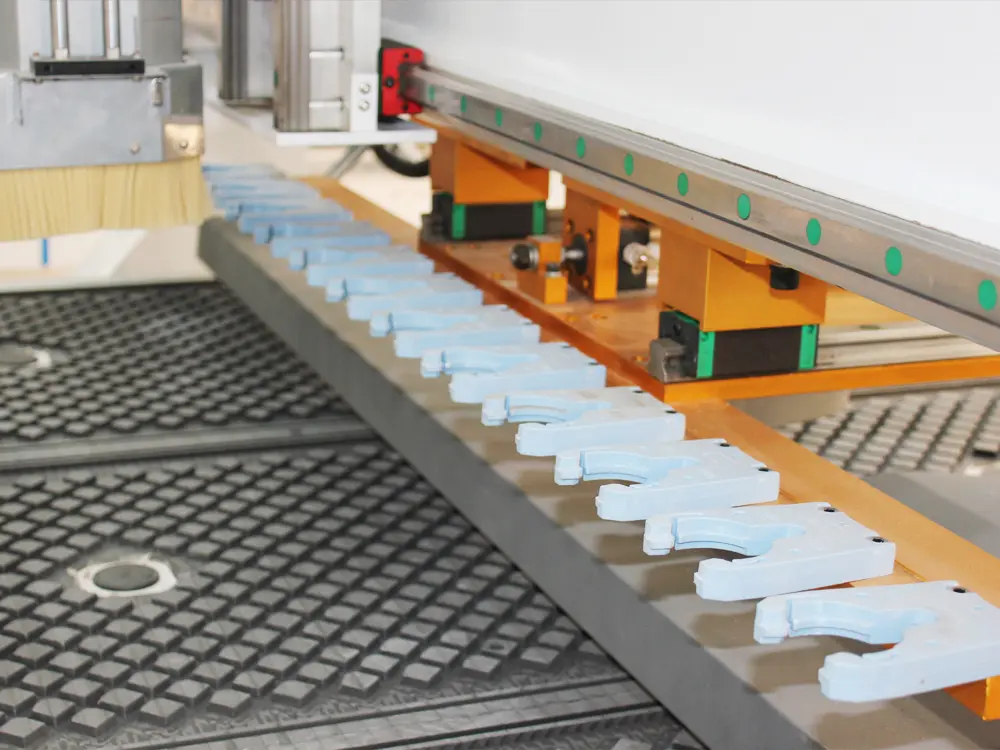
Another advantage of linear ATC CNC routers is their fast tool-changing speed. Since the tools are arranged in a straight line, the spindle can move to the desired position and quickly pick up the tool. This reduces unnecessary movement and improves work efficiency, which is crucial for mass production.
Compared to complex tool-changing systems, linear tool magazines are easier to maintain. With fewer moving parts, they reduce the likelihood of mechanical failures and simplify routine maintenance.
Compared to disk-type automatic tool changers, linear ATC CNC engraving machines are more cost-effective and offer sufficient tool capacity to meet the demands of most furniture processing tasks.
Compared to disk-type tool changers, linear ATC CNC engraving machines feature a simpler and more stable design. The tool magazine is typically mounted beneath the gantry, which keeps the work area open and facilitates the loading and unloading of large panels.
The design of linear automatic tool changers (ATC) provides ample space, stable performance, and fast tool-changing speeds, making them one of the most suitable configurations for modern CNC machine tools used in panel furniture manufacturing.
IV.Cabinet Manufacturing Workflow Using an ATC CNC Router
Step 1 – Design and Import Files
First, use furniture design software to design the cabinet structure. All cabinet components, including side panels, shelves, door panels, and back panels, are arranged in nesting software to maximize material utilization. Next, convert the design files for import into the control system, enabling the machine to automatically machine all parts.
Step 2 – Loading Panels onto the Worktable
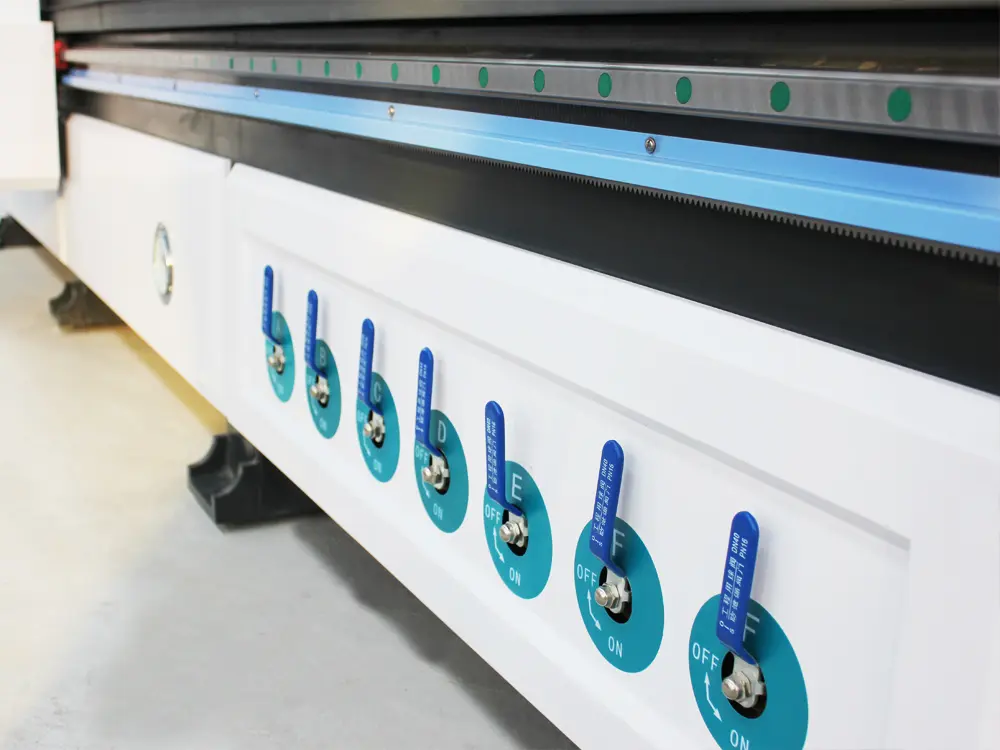
Place the panels to be processed onto the vacuum-assisted worktable. The multi-zone vacuum system securely holds the material in place, ensuring the panels do not shift during high-speed cutting. Each vacuum zone is equipped with an independent control switch, allowing you to adjust suction individually based on the panel size.
Step 3 – Automatic Cutting of Cabinet Components
Once the program starts, the ATC CNC router machine begins cutting the panels according to the layout specified in the file. The high-power spindle ensures smooth edges and precise dimensions. Due to the machine’s large processing area, multiple cabinet components can be cut from a single panel in a single cycle.
Step 4 – Automatic Tool Change for Routing
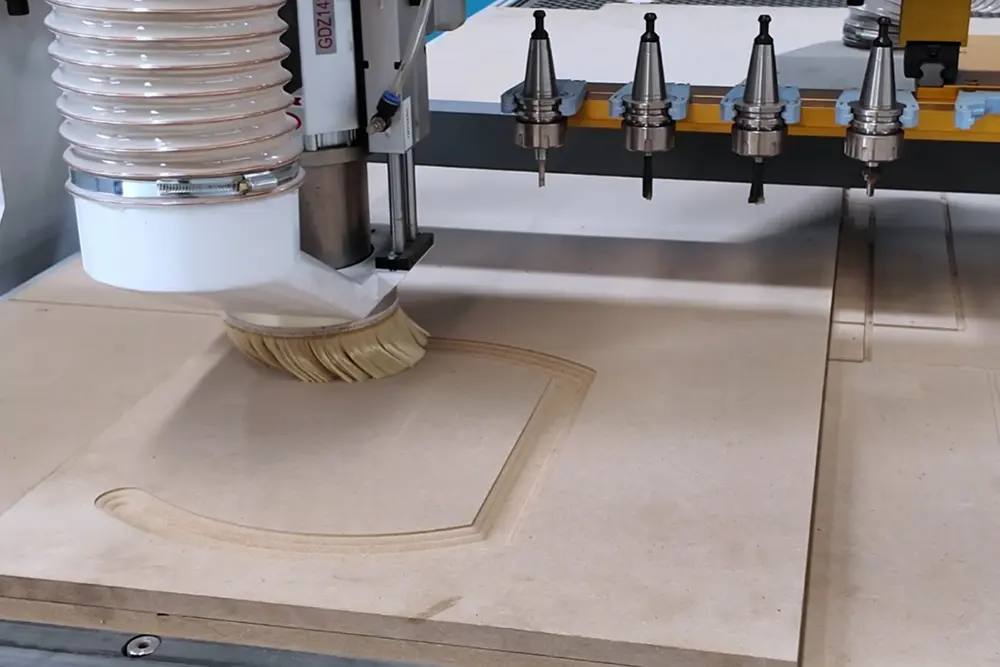
Once the cutting operation is complete, the spindle automatically moves to the tool magazine to change to the required tool. This is one of the key advantages of an ATC CNC router, as the machine can continue working without downtime. The router then proceeds to process other structural details.
Step 5 – Drilling
This machine can automatically select drilling tools to process hinge holes, screw holes, or positioning holes. All hole positions are program-controlled, preventing errors that could lead to assembly issues.
Step 6 – Mass Production
Since linear ATC CNC routers support automatic tool changing and long-term stable operation, factories can achieve continuous machine operation. Through this workflow, ATC CNC routers used for cabinet production allow factories to complete cutting, drilling, routing, and engraving on a single machine.
V.Materials Suitable for ATC CNC Router
In this project, the CNC wood router with ATC is used to process different furniture materials.
- MDF
- Plywood
- Particle board
- Melamine board
- Solid wood board
- PVC board
- Acrylic board
Because the ATC CNC router uses a high-power spindle and multiple tools, it can easily handle different materials without changing machine settings frequently.
VI.Customer Feedback
After using the 2130 linear ATC CNC router machine for several months, this European customer is very satisfied with its performance.
- The machine operates stably even during prolonged continuous operation.
- Cutting accuracy meets the requirements of the cabinetry industry.
- The automatic tool-changing function saves a significant amount of time.
- The vacuum suction cups securely hold the panels in place.
- Production efficiency has increased significantly compared to before.
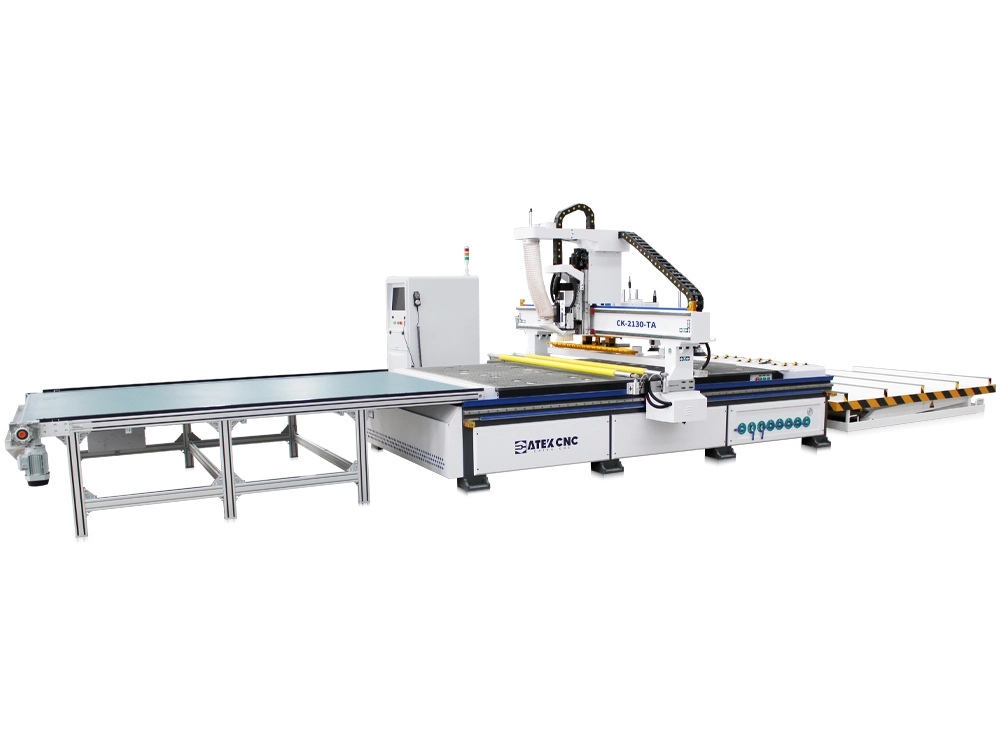
The customer plans to add another CK-2130-TA ATC CNC Wood Router with Automatic Loading and Unloading to expand their production line.
VII. Conclusion
This cabinet manufacturing project demonstrates that upgrading to a 2130 linear ATC CNC router machine is an effective way to improve furniture production efficiency, precision, and automation. Choosing a reliable ATC CNC router machine for cabinet manufacturing will help your factory achieve faster production speeds, higher quality, and long-term stability.
Other Projects

Application of 6090-T Mini ATC CNC Router in Advertising Sign Processing
To address space constraints and tedious tool changes in small sign shops, this project introduces the compact CK-6090-T ATC CNC router. By integrating multiple processes into a single automated workflow, it enables efficient custom signage production with minimal manual labor.
Produce Chinese-Style Wood Door Using a CNC Router Machine
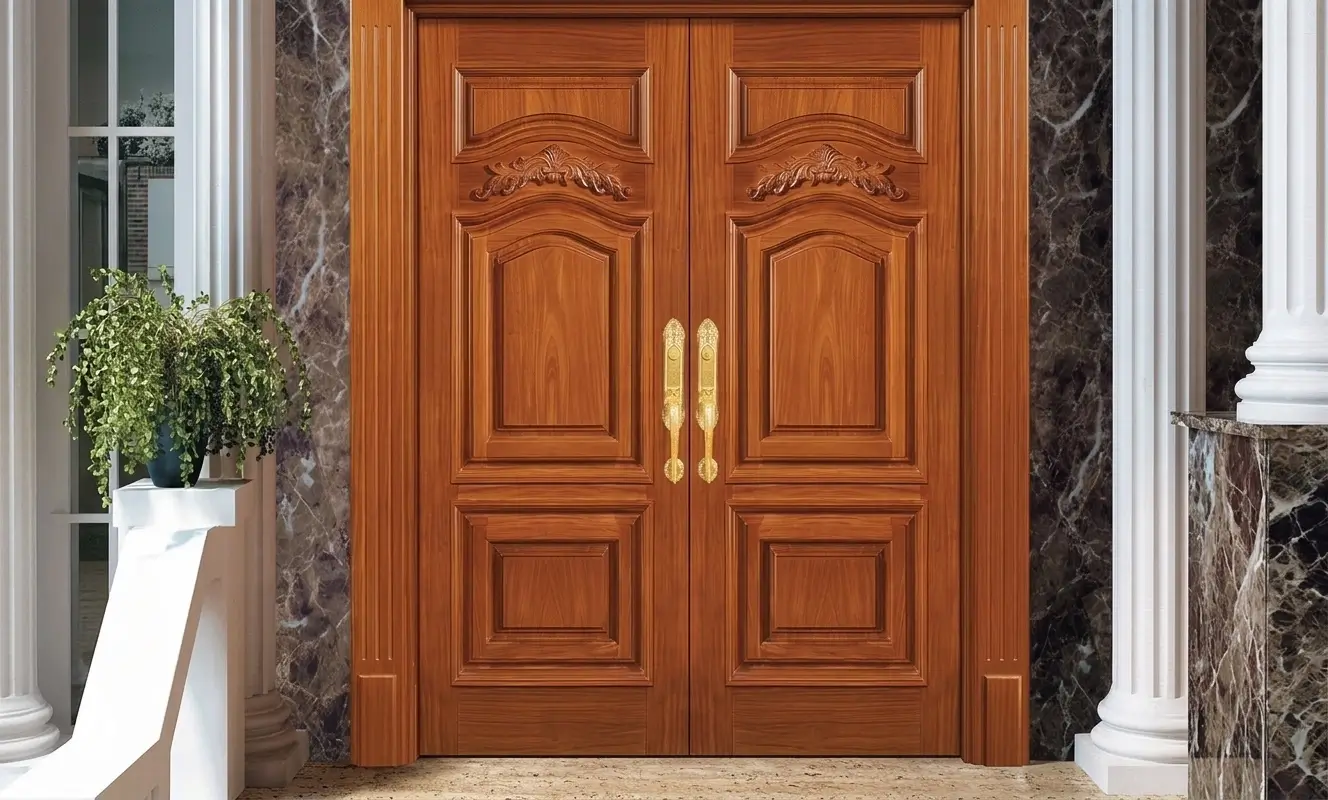
Chinese furniture is loved by some people for its solemn, simple, harmonious and elegant style, but its complex carvings and strict symmetrical aesthetic requirements make its processing more complicated. Now, with the help of CNC routers, you can save effort and complete the production of Chinese furniture quickly, and the production quality and consistency of mass production far exceed traditional manual labor.

Cabinet Manufacturing Project Using 2130 Linear ATC CNC Router
In modern furniture manufacturing, improving efficiency and machining accuracy is essential for cabinet factories and panel furniture producers. This project introduces the use of a 2130 Linear ATC CNC router in cabinet production, showing how an automatic tool change CNC router can complete cutting, drilling, grooving, and engraving in one cycle.With a large working area, vacuum table, and high-speed spindle, the ATC CNC router for cabinet making allows manufacturers to process MDF, plywood, pa...
How This 4-Axis ATC CNC Router Transforms Panel Furniture Production Efficiency
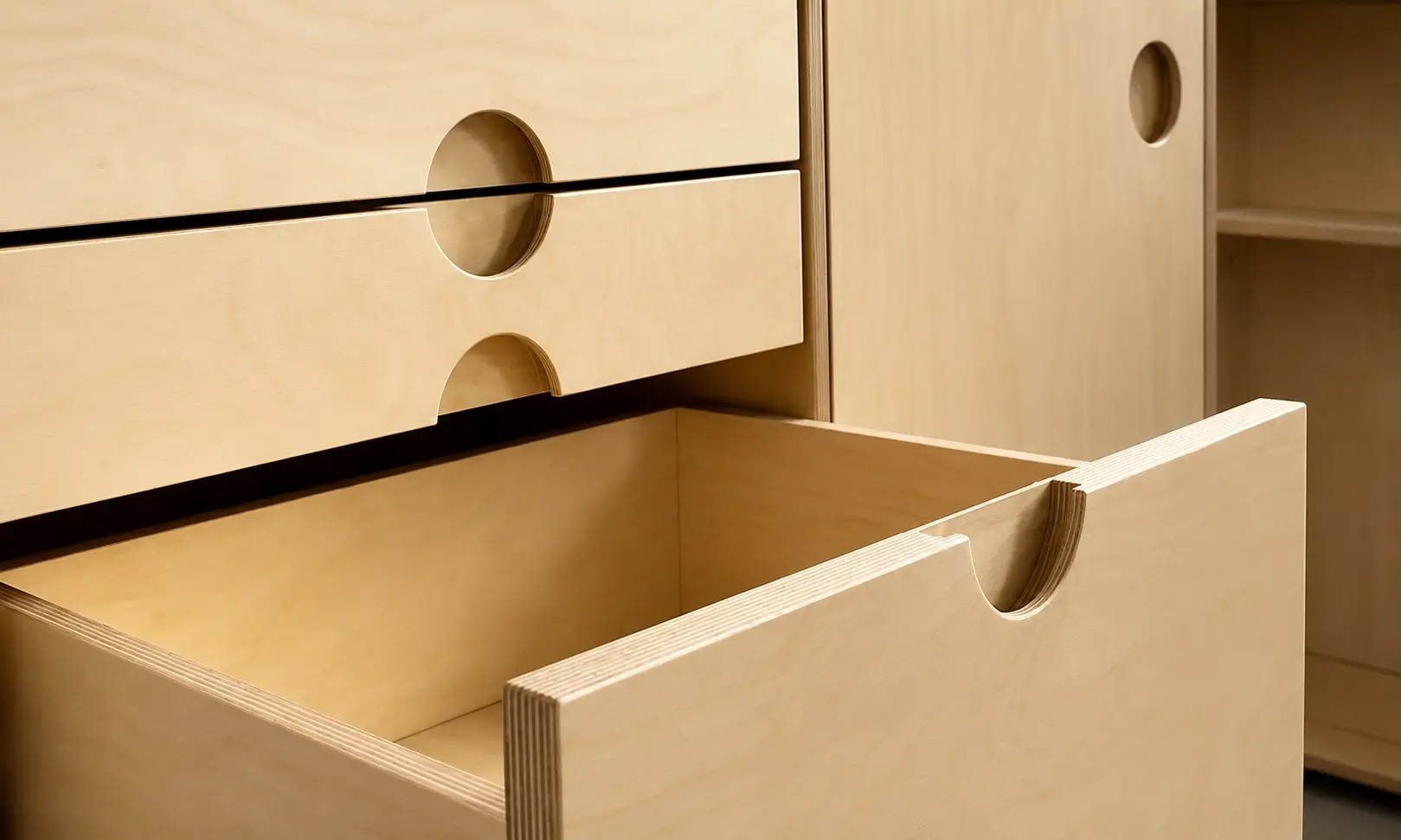
This project focuses on upgrading a panel furniture production line by introducing a fully integrated 4-axis ATC woodworking CNC router machine with automatic labeling and drilling functions. The goal was to replace a traditional multi-machine workflow with a more efficient, single-machine solution.By implementing this advanced CNC router for woodworking, the factory successfully streamlined its entire process, from labeling and cutting to drilling and output, while significantly reducing manual...