


{{goods.model}}
5 Best ATC CNC Routers for Cabinet Making in 2026
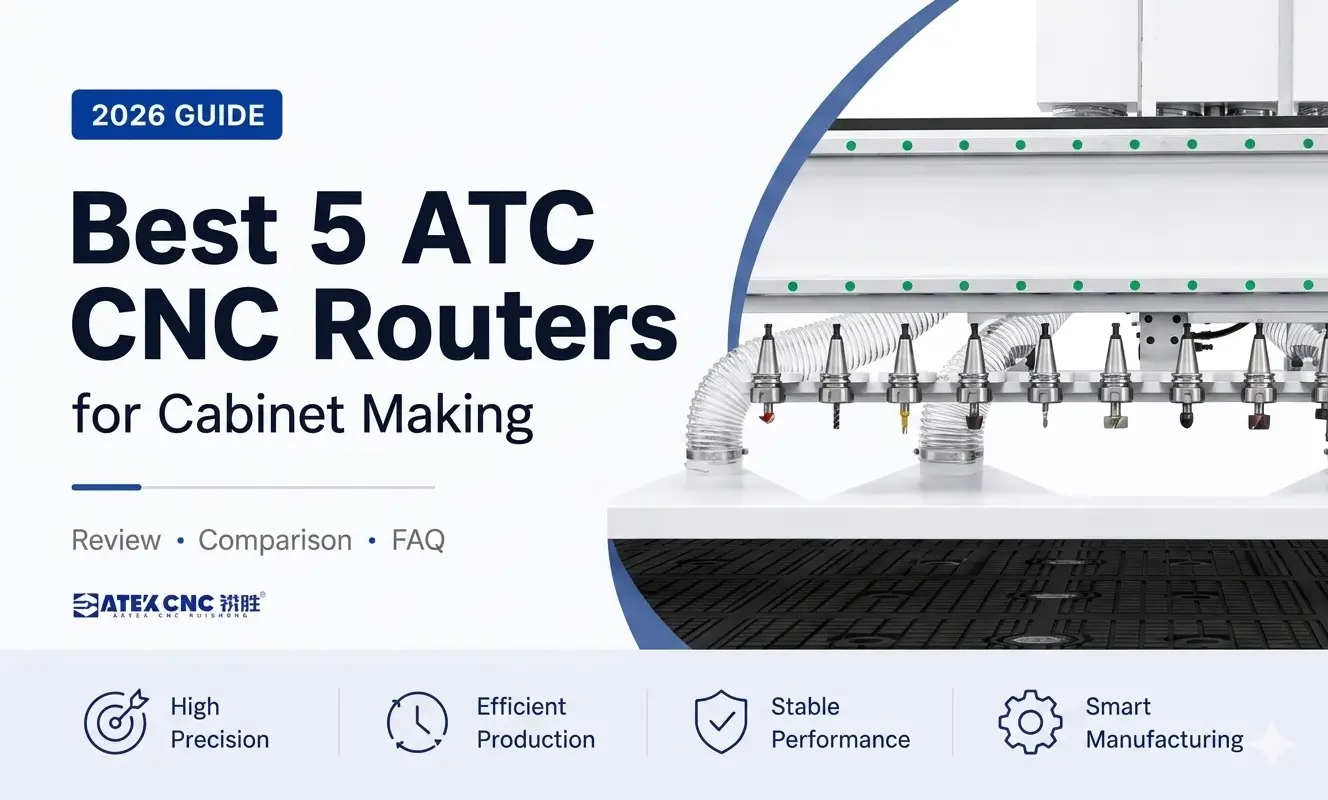
As labor costs continue to rise and orders for custom cabinetry and furniture keep increasing, more and more factories are turning to automation to improve efficiency and remain competitive. Investing in an ATC CNC router (Automatic Tool Changer CNC Router) has become one of the most effective ways to increase production speed while maintaining cutting precision.
However, with so many brands and configurations on the market, choosing the best CNC router for cabinet making is no simple task. Factors such as spindle power, tool changer type, working area, servo systems, vacuum worktable, and software compatibility all impact long-term production performance.
This guide explores the 5 best ATC CNC routers for cabinet making in 2026, compares their key features, and explains how to select the right machine based on your production needs. Whether you’re upgrading your existing woodworking CNC machinery or launching a new cabinetry business, this article will help you better understand the ATC CNC solutions worth considering in 2026.
I.Why Cabinet Factories Are Switching to ATC CNC Routers
Driven by growing demand for home renovations, custom furniture, and modern kitchen design, the global cabinetry market is experiencing steady, long-term growth. According to industry research, the global cabinetry market is projected to exceed $95.8 billion by 2026 and is expected to continue growing to over $150 billion by 2035, with a stable compound annual growth rate (CAGR) of approximately 4% to 6%. Approximately 31% of companies report a shortage of skilled workers in their cabinetry workshops, leading to reduced production efficiency and increased reliance on automated production to maintain output levels.
Other market reports also indicate that, driven by growth in residential construction, accelerated urbanization, and demand for modular kitchen solutions, the total market size of the cabinetry industry could exceed $320 billion by 2033.
In practical terms, the demand structure is also very clear:
- Residential kitchens account for approximately 70% to 80% of total cabinet demand.
- The market for custom and semi-custom cabinets continues to grow rapidly.
- More than 40% of homeowners now prefer modular or custom cabinet systems.
- Wood and engineered wood remain the primary materials in cabinet production.
These figures clearly indicate a trend: the cabinet manufacturing industry is moving toward customization, efficiency, and mass personalization.
At the same time, production pressures are mounting. In many cabinetry projects, cabinet costs can account for 30% to 50% of the total kitchen renovation cost, making them the most critical link in the entire production chain. Consequently, manufacturers are increasing their investment in automation technologies, such as ATC CNC routers and CNC nesting machine, to boost output and reduce reliance on labor. Today’s custom cabinet production demands faster processing speeds, higher precision, and more flexible manufacturing capabilities than ever before.
Traditional woodworking machinery typically relies on manual tool changes, which reduces production efficiency and increases labor costs. In a busy cabinet production environment, operators may need to frequently switch between cutting, drilling, routing, and engraving tools during a single job. This not only reduces efficiency but also increases the risk of processing errors.
An automatic tool changer CNC router solves this problem by automatically switching tools during the machining process. Without the need for downtime to manually change tools, the machine can complete multiple operations in a single, continuous workflow. This is particularly important for factories producing kitchen cabinets, wardrobes, office furniture, and other panel furniture.
Another major reason factories are turning to industrial CNC routers is the growing consumer demand for personalized furniture. Modern consumers increasingly prefer to customize the dimensions, colors, and layouts of their cabinets, which means manufacturers need more flexible production systems. High-performance nesting CNC router enables factories to quickly process different types of panels such as MDF, plywood, particleboard, and melamine-faced panels while maintaining consistent machining quality.
Furthermore, modern woodworking CNC machines equipped with automatic tool changers deliver higher precision and consistency. This is critical for cabinet assembly, as inaccurate drilling positions or uneven cutting edges can lead to installation issues in subsequent production stages.
Today, many medium-to-large furniture factories are integrating CNC automation technology into their production lines to create more efficient and intelligent manufacturing systems. By combining automatic tool changers, vacuum tables, servo motor systems, and intelligent nesting software, manufacturers can increase processing speed while reducing material waste.
As the woodworking industry continues to evolve toward smart furniture production, investing in a reliable ATC CNC router is becoming one of the most practical ways for cabinet manufacturers to remain competitive in 2026 and beyond.
II. What Is an ATC CNC Router?
ATC CNC router stands for Automatic Tool Changer CNC Router, a type of advanced woodworking CNC machine designed to automatically switch cutting tools during the machining process. Unlike standard CNC routers that require manual tool changes, the ATC system automatically switches tools based on different machining tasks, thereby significantly improving efficiency and precision.
In modern cabinet making and furniture manufacturing, a single project typically involves multiple processes such as cutting, drilling, routing, grooving, and engraving. With traditional CNC routers, operators must stop the machine multiple times throughout the process to manually change tools. This not only wastes production time but also reduces machining accuracy.
Professional ATC CNC router solves this problem with a built-in tool changer system that can store multiple tools and switch between them automatically. This allows the machine to complete complex machining tasks continuously without interrupting the workflow, making it ideal for high-volume cabinet production and custom furniture manufacturing.
Most ATC CNC routers for cabinet making use one of two common tool changer systems:
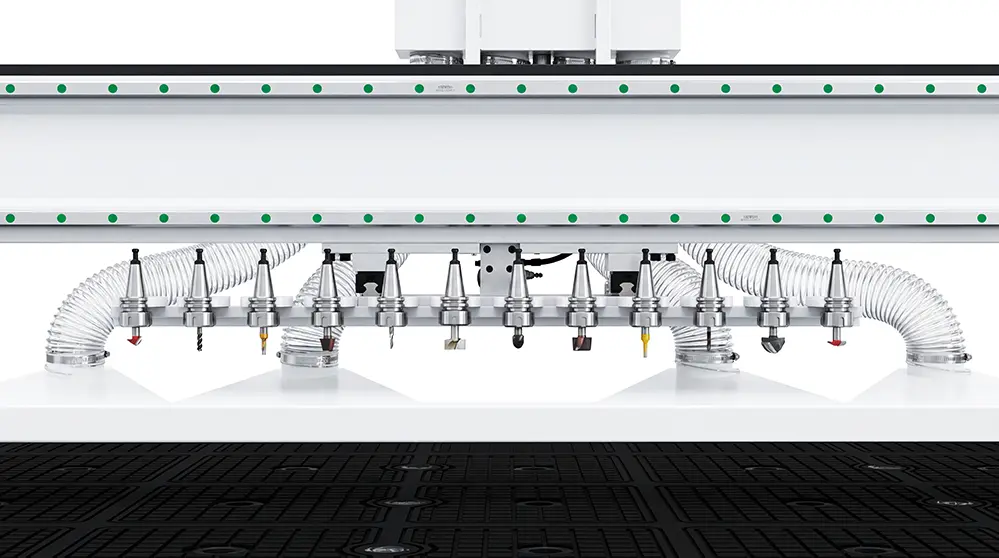
Linear ATC System
Linear ATC CNC router stores tools in a linear tool magazine located beneath the gantry, minimizing the spindle’s tool-changing path. This space-saving and cost-effective design is widely adopted in small and medium-sized cabinet factories.
The advantages of linear ATC systems include:
- Lower machine cost
- Easier maintenance
- Stable tool-changing performance
- Suitable for standard panel furniture production
Many manufacturers choose linear ATC machines to process MDF, plywood, and melamine-faced panels for daily cabinet production processes.
Carousel ATC System
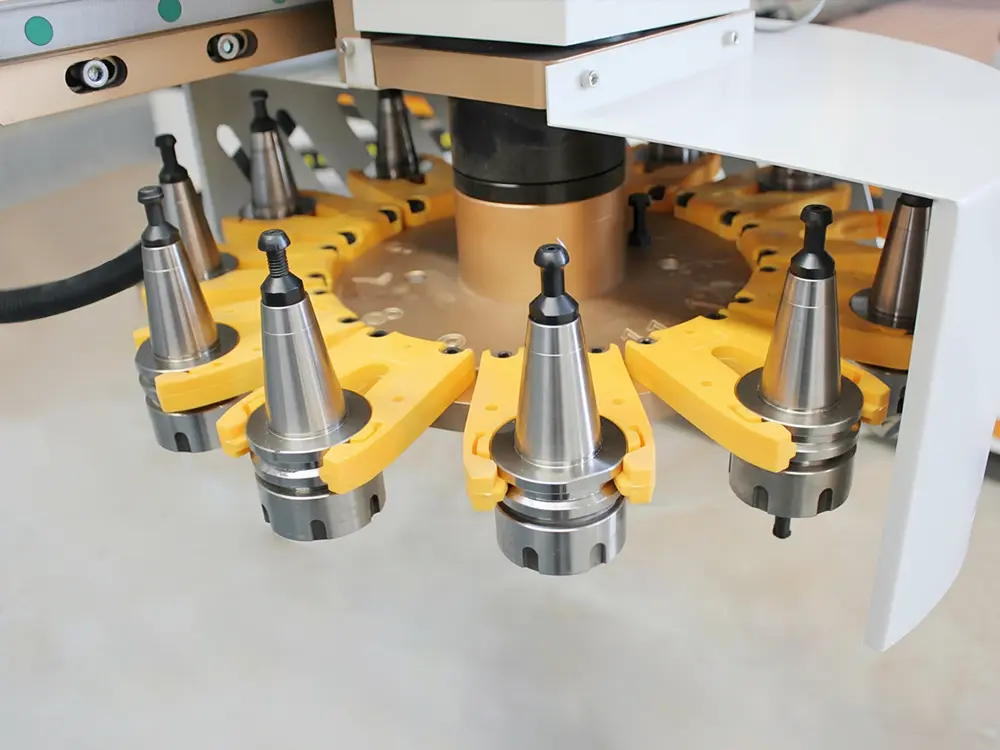
A carousel ATC CNC router uses a rotating tool magazine that can accommodate more tools and enables faster tool changes during machining. This system is commonly found in high-end industrial CNC routers and does not affect the machining height of the panel.
Carousel ATC systems offer the following advantages:
- Larger tool capacity
- Higher production efficiency
- Better suited for complex machining tasks
For large furniture factories handling a variety of machining operations, the carousel automatic tool changer system can significantly enhance automation levels and reduce downtime.
Another key component of ATC CNC woodworking machine is the spindle. Most cabinet-making machines are equipped with powerful 9kW spindles capable of sustained continuous cutting. Combined with servo motor systems and vacuum-assisted worktables, these machines deliver stable performance for a wide range of panel processing applications.
III.How to Choose the Best CNC Router for Cabinet Production
Choosing the right ATC CNC router for cabinet making depends on more than just the machine’s price. For modern cabinet factories and furniture manufacturers, factors such as processing efficiency, machine stability, automation levels, and long-term maintenance costs are equally important. A properly configured woodworking CNC machine can significantly boost production capacity while reducing labor costs and material waste.
Here are the key factors you should consider before purchasing an industrial CNC router for cabinet production.
1. Working Size
The first consideration is the machine’s working area. Different cabinet manufacturing requirements may call for worktables of varying sizes, depending on the type of panel being processed.
For most factories, a 4x8 CNC router (1325 CNC router) is the most common choice, as it can process standard-sized plywood, MDF, and melamine panels. This allows manufacturers to maximize material utilization and minimize waste during nesting CNC operations.
Small workshops may opt for compact machines to accommodate limited space, while large furniture factories typically require larger work areas for high-volume production, such as a 7x10 CNC router, which is suitable for nearly all processing dimensions.
When selecting a work area size, consider:
- Maximum panel dimensions
- Daily production output
- Workshop space
- Future production expansion
An appropriately sized work area can significantly improve overall production efficiency.
2. Spindle
The spindle is one of the most critical components of a woodworking CNC machine, as it directly affects cutting quality, processing speed, and long-term stability.
For professional cabinet making, most manufacturers recommend using a spindle with a power rating of 9kW or higher. A high-quality spindle delivers smoother cut surfaces and offers superior performance when processing materials such as MDF, plywood, particleboard, and hardwood panels.
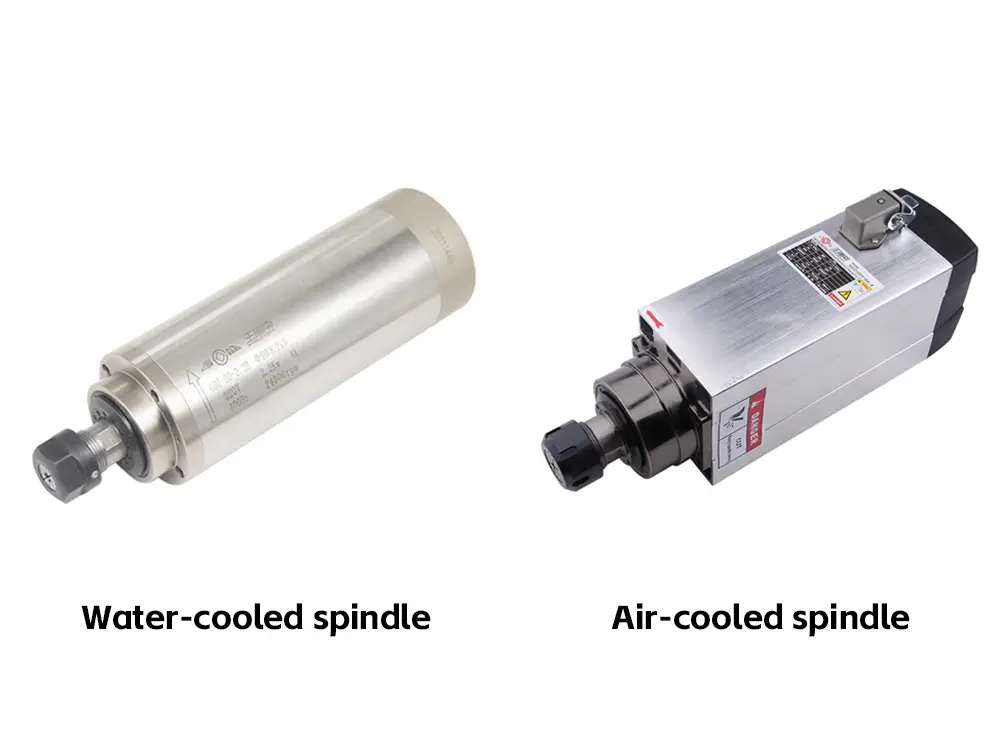
Common spindle options include:
- Air-cooled spindles
- Water-cooled spindles
For continuous furniture production, stable spindle performance ensures precision machining and minimizes maintenance issues.
3. Automatic Tool Changer (ATC) System
The core advantage of ATC CNC routers lies in their automatic tool changer system. This feature allows the machine to automatically switch between different tools during the machining process without manual intervention.
The two most common systems are:
Linear Automatic Tool Changer
A cost-effective solution suitable for standard cabinet production and medium-sized workshops.
Carousel Automatic Tool Changer
A faster, more advanced system designed specifically for complex machining and high-volume furniture production.
When selecting an ATC CNC router, consider the following factors:
- Tool change speed
- Number of tool holders
- Production complexity
- Daily production hours
An efficient ATC system can significantly increase workflow automation and reduce downtime.
4. Vacuum Worktable
During cutting and drilling operations, vacuum worktable securely hold materials such as plywood and MDF in place, thereby reducing vibration and preventing the panels from shifting. This helps improve machining accuracy and cutting consistency.
For cabinet manufacturers, a powerful vacuum system also enhances safety and machining efficiency during high-speed operations.
Many professional industrial CNC routers utilize multi-zone vacuum clamping systems to optimize material holding performance for panels of various sizes.
5. Servo Systems
Servo systems determine a machine’s motion accuracy and operational stability. Compared to standard stepper motors, high-quality servo motor CNC systems offer the following advantages:
- Faster operating speeds
- Higher positioning accuracy
- Smoother operation
- Better long-term stability
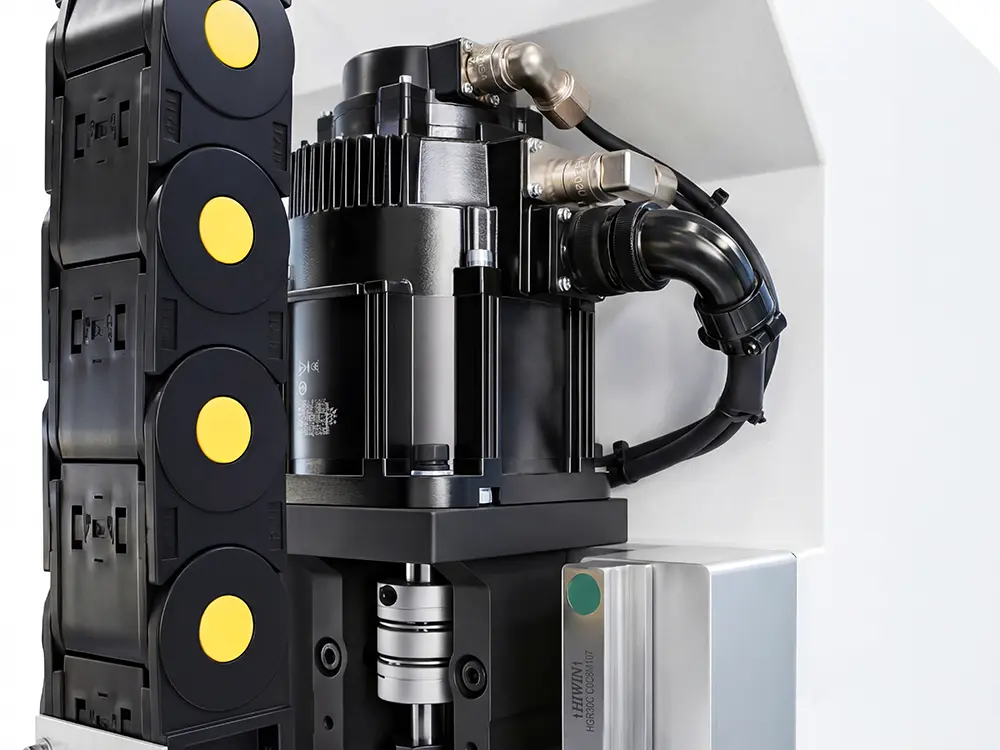
Common servo motor brands used in ATC woodworking CNC machines include:
- Yaskawa Servo Systems
- Delta Servo Systems
- Leadshine Servo Motors
For large-scale cabinet manufacturing, servo systems ensure that machining accuracy is maintained throughout continuous production.
6. Dust Collection System
Dust management is often overlooked when purchasing CNC woodworking machines. During cabinet production, materials such as MDF and particleboard generate large amounts of fine dust. Without an efficient dust collection system, this dust can impair machine performance and shorten the lifespan of components.
A professional dust collection system helps to:
- Keep the workshop clean
- Improve cutting visibility
- Protect machine components
- Reduce maintenance frequency
For modern smart furniture production, effective dust collection has become a standard requirement.
7. Software
Most nesting CNC routers support intelligent software that can automatically optimize layouts, design drill holes, and generate cutting paths. User-friendly software helps operators reduce programming time and improve material utilization.
Common software systems include:
- Type3
- ArtCAM
- AutoCAD
- Alphacam
- PowerMill
- Aspire
- JDpaint
For custom furniture manufacturing, software compatibility plays a crucial role in increasing workflow automation and reducing production errors.
8. After-Sales Service
Reliable after-sales service is one of the most important factors to consider when purchasing an industrial CNC router.
Even high-quality machines may eventually require technical support, replacement parts, or software assistance. A professional supplier should provide:
- Installation guides
- Operator training
- Online technical support
- Availability of spare parts
- Remote troubleshooting
For overseas buyers, quick response times and clear communication are particularly important.
Choosing a reliable CNC router supplier with robust after-sales support can help ensure long-term, stable production for cabinet manufacturers and minimize unexpected downtime.
IV. Top 5 ATC CNC Routers for Cabinet Making
With the continued growth in demand for custom furniture and automated production, choosing the right ATC CNC router for cabinet manufacturing has become more important than ever. Different manufacturers cater to different production needs—some machines prioritize affordability and flexibility, while others are specifically designed for high-speed industrial automation and continuous batch production.
Below are five popular industrial ATC CNC routers widely used in modern cabinet production, panel furniture manufacturing, and woodworking CNC machining. Each machine has its own advantages, depending on the size of the workshop, production volume, and automation requirements.
1. CATEKCNC Spire CK-2130-RSP-TDM
The ultimate versatile CNC router with automatic tool changer for high-end cabinet manufacturing
This Spire CK-2130-RSP-TDM ATC CNC router is designed for manufacturers requiring complex cutting and nesting capabilities. Unlike standard ATC CNC routers, it integrates a drilling unit, an automatic tool changer, and a 4-sided aggregate unit into a highly integrated production platform, making it ideal for high-end cabinetry, panel furniture production, and smart woodworking automation.
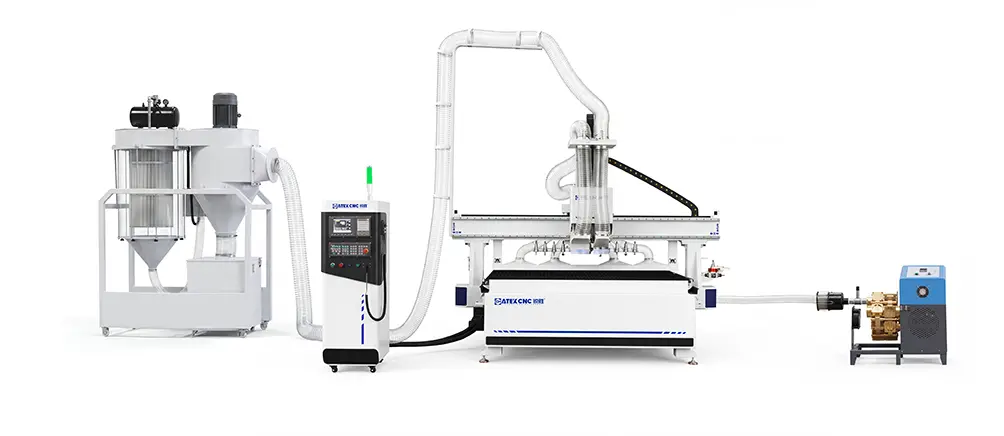
One of the machine’s greatest strengths is its multi-process machining capability. Equipped with a 12-tool linear automatic tool changer, a 5+4 vertical drilling unit, and a 4-sided HQD side milling angle head, the CK-2130-RSP-TDM can perform the following operations:
- Panel cutting
- Vertical drilling
- Horizontal drilling
- Side grooving
- Slotting
- Milling
- Engraving
All these processes can be performed in a single workflow without the need to repeatedly reposition the material. This significantly improves production efficiency for manufacturers of kitchen cabinets, wardrobes, and custom furniture.
The machine also features a large 2100×3000mm (7×10 ft) working area, enabling factories to process oversized panels more efficiently than with standard 4×8 CNC router machines. Combined with a 15-zone vacuum worktable, it provides stable material clamping during high-speed machining.
Designed for industrial production environments, the CK-2130-RSP-TDM features a heavy-duty welded frame and is equipped with:
- HIWIN precision guide rails
- TBI ball screw transmission
- Japan Shimpo reducers
- Taiwan SYNTEC control system
- Yaskawa (Japan) 1300W Bus Servo System
All these operations can be performed without repeatedly repositioning the material during complex workflows. This significantly improves production efficiency for manufacturers of kitchen cabinets, wardrobes, and custom furniture.
The machine is equipped with a 9kW HQD air-cooled spindle capable of speeds up to 24,000rpm, making it suitable for machining MDF, plywood, particleboard, acrylic sheets, and other common furniture materials. Its integrated linear automatic tool changer offers lower costs and simpler maintenance compared to more complex turret-style configurations.
Additional automation features—such as automatic tool setup, centralized lubrication, pneumatic positioning cylinders, auxiliary loading rollers, and an automatic panel feed system—help reduce labor intensity and enhance workflow automation in modern smart furniture production.
2.Laguna Tools SmartShop® M
The SmartShop® M is designed for woodworking businesses seeking professional machining capabilities, ease of operation, and cost-effectiveness. Compared to many heavy-duty industrial CNC routers with automatic tool changers, the SmartShop® M prioritizes ease of use and convenience, making it the preferred choice for rapidly growing cabinet shops and professional woodworking workshops.
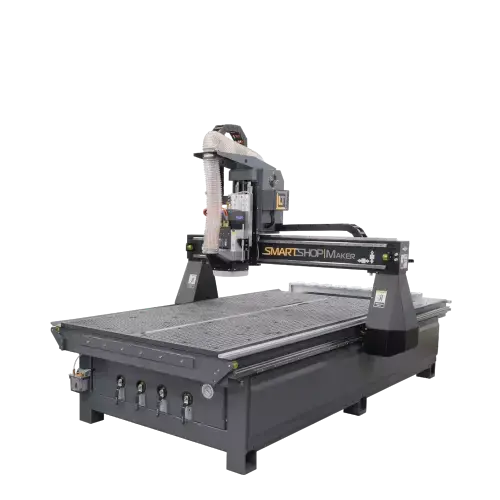
One of the machine’s greatest strengths is its practical production configuration. Laguna has equipped the SmartShop® M with:
- 6HP Italian HSD spindle
- 8 position ISO30 automatic tool changer
- 4 zone vacuum Table
- SYNTEC industrial control system
- Helical gear-rack drive system
- Heavy-Duty One-Piece All-Steel Frame
These features ensure consistent performance in daily cabinet manufacturing, MDF cutting, plywood processing, and custom furniture production.
The SmartShop® M supports multiple table sizes, including:
- 4×4 ft
- 4×8 ft
- 5×10 ft
Businesses can select the appropriate configuration based on workshop size and production volume. For most small and medium-sized panel furniture manufacturers, the 4×8 and 5×10 ATC CNC routers are suitable for standard panel processing.
Another key advantage lies in simplified CNC operation. Many woodworking businesses transitioning from manual equipment to automated CNC cabinet production typically prefer machines that are easier to learn and offer more robust support systems. The SmartShop® M is designed precisely to meet this need, offering relatively simple workflow management compared to more complex industrial nesting systems.
The integrated automatic tool changer helps improve efficiency in the following processes:
- Cabinet cutting
- Drilling
- Routing
- Engraving
- Decorative woodworking
There is no need for frequent manual tool changes. With a spindle speed of up to 24,000 rpm, the machine is suitable for processing common woodworking materials such as MDF, plywood, hardwood, plastic, veneer, and composite panels.
The SmartShop® M also emphasizes production stability through its robust all-steel frame and industrial-grade SYNTEC controller. For woodworking shops operating daily production cycles, machine rigidity and control stability are critical for maintaining cutting accuracy and minimizing vibration during high-speed machining.
Another reason for the continued popularity of Laguna machines in North America is their relatively robust support system. The company provides training resources, installation support, and long-term service assistance, which is invaluable for businesses new to the field of CNC automation in woodworking.
3.CATEKCNC Spire CK-1530-RSP-TA
The CATEKCNC Spire CK-1530-RSP-TA is designed for manufacturers who prioritize automation, continuous production, and labor-saving workflows. Compared to standard CNC routers with automatic tool changers, this machine focuses on intelligent material handling and automated cabinet production, making it ideal for large-scale panel furniture manufacturing.
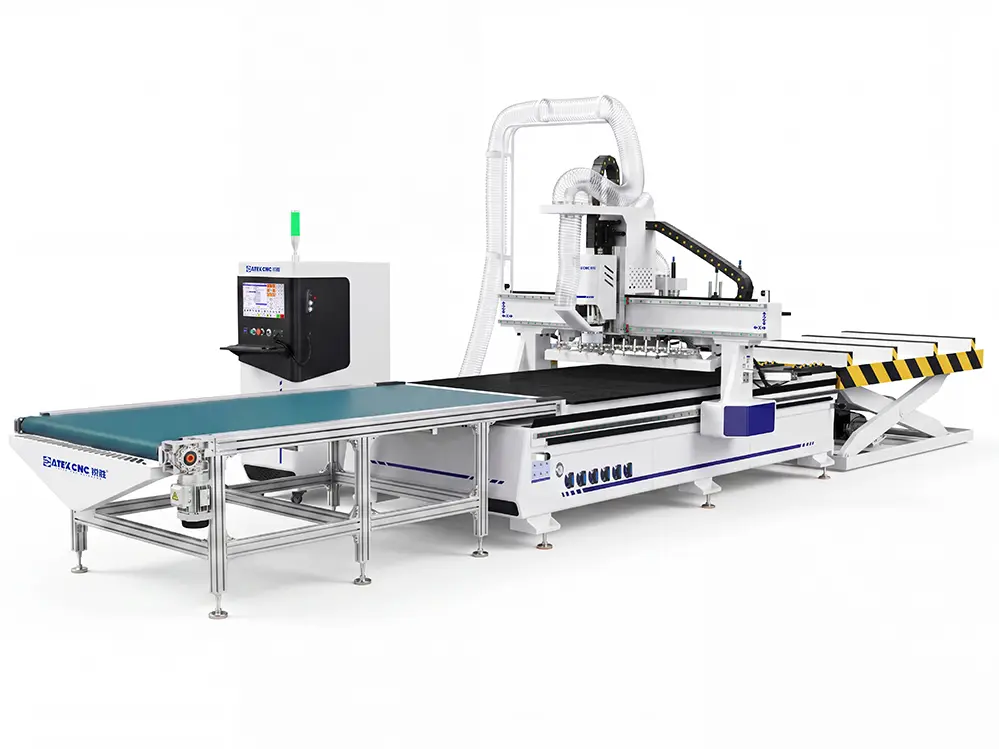
One of its key advantages is the integrated automatic loading and unloading system. The CK-1530-RSP-TA eliminates the need for manual handling, instead utilizing a fully automated workflow that helps improve efficiency and reduces reliance on labor during high-volume production.
The machine features:
- Automatic loading and unloading platform
- Vacuum suction cup loading system
- Pneumatic positioning cylinders
- Rear auxiliary loading rollers
- Automatic unloading conveyor
- Finished product push-out system
This enables manufacturers to create a smoother, more efficient CNC router nesting workflow, particularly when processing large volumes of MDF, plywood, and melamine panels.
The machine also features a large 1500×3000mm (5×10 ft) working area, offering greater flexibility for machining oversized cabinet panels and custom furniture components compared to standard 4×8 CNC routers. Combined with the vacuum-assisted worktable, this helps maintain stable material positioning during high-speed machining.
In terms of machining performance, the CK-1530-RSP-TA utilizes a 12-tool linear automatic tool changer and a 9kW HQD air-cooled spindle, enabling rapid switching between various machining operations such as cutting, drilling, routing, and engraving. This makes the machine highly suitable for modern cabinet manufacturing processes, meeting the demand for multiple machining operations within a single production cycle.
To ensure long-term production stability, the machine is equipped with:
- LNC (Taiwan) MW2200A CNC System
- Taiwan LNC Absolute Servo System
- High-Precision Linear Guideways
- YYC (Taiwan) High-Precision Ground Helical Rack & Pinion
- SHIMPO (Japan) Planetary Gear Reducers
- Automatic Lubrication System
- Hydraulic Lifting Automatic Loading Table
- 9kW High-Power Variable Frequency Constant Pressure Vacuum Pump
These industrial-grade components help improve positioning accuracy, reduce vibration, and maintain consistent machining quality during continuous CNC woodworking operations.
The machine is also equipped with a 7.5 kW pulse cyclone dust collector, which helps keep the workshop environment clean during the processing of medium-density fiberboard (MDF) and particleboard. For factories transitioning to smart furniture production, clean production management is becoming increasingly important.
4.ShopBot PRS 5 Alpha ATC
The ShopBot PRS 5 Alpha ATC is one of the most well-known automatic tool-changing CNC routers in the North American woodworking market, particularly favored by custom furniture shops, sign makers, and flexible manufacturing companies. Unlike many large industrial nesting CNC routers that focus solely on mass production, the PRS 5 Alpha ATC emphasizes versatility, customization, and ease of workflow integration.
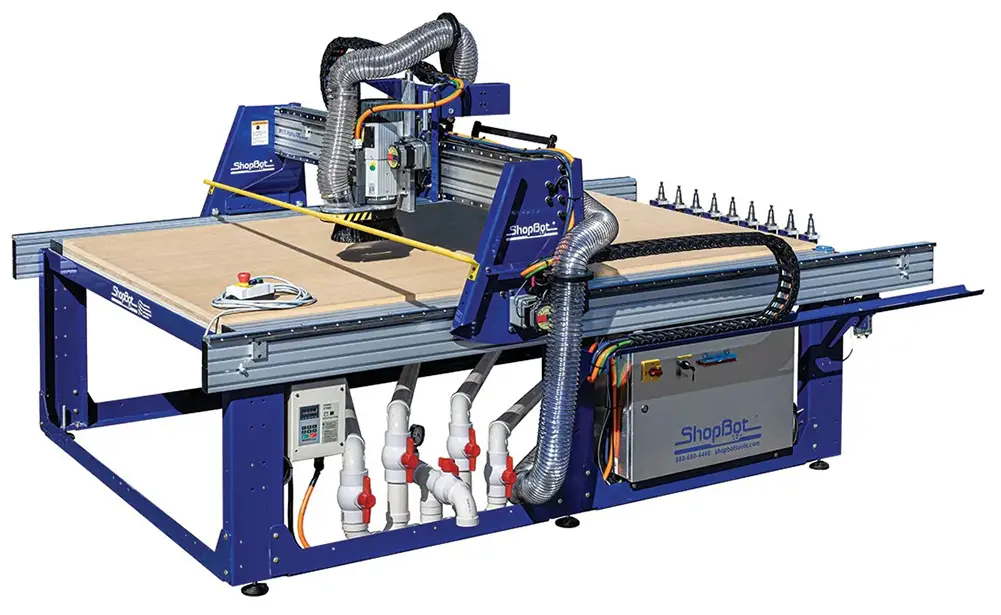
One of the machine’s greatest strengths is its flexible configuration system. ShopBot offers a variety of table sizes, gantry widths, and Z-axis travel options, allowing manufacturers to customize the machine to meet their specific production needs. The machine supports table sizes ranging from 48 inches to 192 inches and offers optional Z-axis travel heights of 8 inches, 14 inches, or 26 inches, making it suitable for both standard cabinet production and large-scale custom woodworking projects.
The PRS 5 Alpha ATC is equipped with:
- 5HP automatic tool change spindle
- 9 position automatic tool changer
- AlphaStep closed loop control system
- Vectric VCarve Pro software
The integrated automatic tool changer system helps reduce the number of manual tool changes required during cutting, drilling, and engraving operations. The low-profile design of the automatic tool changer also positions the tool holder below the cutting surface, making it easier to load and unload materials during production.
ShopBot’s closed-loop Alpha motor system continuously monitors the position of the axes during machining, thereby improving cutting accuracy and reducing positioning errors during long production runs. According to ShopBot’s specifications, the machine achieves a maximum cutting speed of 720 inches per minute and a maximum rapid traverse speed of 1,800 inches per minute.
The machine performs well across a wide range of applications, including:
- Custom cabinetry
- Furniture prototyping
- Decorative woodworking
- Sign making
- Architectural panels
- MDF and plywood processing
- Plastic and aluminum processing
Another major advantage of the PRS 5 Alpha ATC is its robust software and support ecosystem. The machine comes equipped with ShopBot’s proprietary control software as well as Vectric VCarve Pro, which is widely used for CNC programming and design in the woodworking industry.
Many users consider the PRS Alpha series to be reliable and powerful, suitable for woodworking and light aluminum machining applications. Some users also specifically mention the machine’s clean design and long-term manufacturer support.
For manufacturers who prioritize customization and flexible project workflows, the ShopBot PRS 5 Alpha ATC remains one of the most versatile CNC woodworking machines in 2026.
5.Baileigh WR-84V-ATC
The Baileigh WR-84V-ATC machine is designed for manufacturers who prioritize machine rigidity, long-term reliability, and stable industrial production. Unlike lightweight CNC woodworking systems that focus primarily on flexibility, this machine is engineered for continuous, heavy-duty machining in the demanding environments of cabinet manufacturing and woodworking.
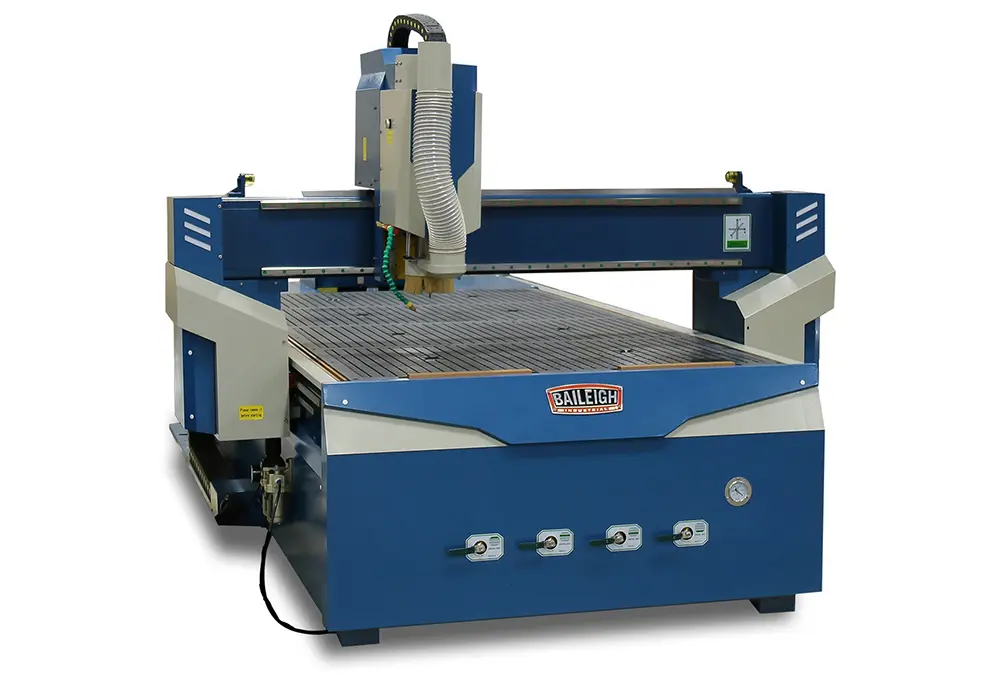
One of the WR-84V-ATC’s greatest strengths lies in its rugged, industrial-grade construction. The machine features a fully welded steel frame designed to minimize vibration during high-speed machining and maintain consistent cutting accuracy over extended production cycles. For shops that process MDF, plywood, hardwood, and composite panels on a daily basis, the machine’s stability directly impacts product quality and tool life.
The machine comes standard with a 4×8 ft working table, making it suitable for full-sheet processing in modern cabinet production workflows. It is commonly used for:
- Cabinet panel cutting
- Closet door production
- Furniture manufacturing
- MDF and plywood processing
- Sign making
- Industrial woodworking applications
The WR-84V-ATC is equipped with a powerful 10-horsepower air-cooled spindle, with spindle speeds adjustable from 3,000 to 24,000 RPM, enabling it to handle a wide range of machining applications, from high-speed engraving to heavy-duty cutting. Combined with the integrated automatic tool changer, the machine can automatically switch tools in approximately 8 seconds, thereby improving efficiency in multi-process machining.
Another practical advantage is its industrial vacuum suction system. The machine includes:
- 7-horsepower vacuum pump
- 4 independent vacuum zones
- Dust extraction system
This helps securely hold materials in place during machining while improving dust extraction and workshop cleanliness. The independent vacuum zones also allow operators to optimize suction according to different panel sizes, thereby enhancing material stability during cutting.
In terms of motion control, the WR-84V-ATC utilizes servo motors and a precision linear guide system to ensure smooth motion and high positioning accuracy during production. According to the specifications, the machine achieves a repositioning accuracy of up to 0.0019 inches, which is critical for ensuring consistent results in CNC woodworking.
Many factories highly value another key feature of this machine: it is delivered with most of the pre-assembly and calibration already completed. Compared to CNC systems that require complex installation processes, this helps reduce setup time, enabling manufacturers to begin production more quickly. Additionally, the machine comes equipped with BobCAD-CAM Express software for CNC programming and workflow management.
Compared to highly automated nesting CNC routers, the WR-84V-ATC places greater emphasis on reliable industrial machining and streamlined production processes. For manufacturers who prioritize durability, day-to-day operational stability, and long-term machine reliability, it remains a strong choice in the industrial ATC CNC router market.
V. Comparison of ATC CNC Routers
| Feature | CATEKCNC CK-2130-RSP-TDM | Laguna SmartShop® M | CATEKCNC CK-1530-RSP-TA | ShopBot PRS 5 Alpha ATC | Baileigh WR-84V-ATC |
|---|---|---|---|---|---|
| Best For | Advanced multi-process cabinet production | Professional woodworking shops | Automated high-volume furniture manufacturing | Custom furniture & creative production | Heavy-duty industrial woodworking |
| Working Area | 2100x3000mm (7x10ft) | 4x4ft, 4x8ft, 5x10ft | 1500x3000mm (5x10ft) | Multiple configurable sizes | Standard 4x8 |
| ATC System | 12-tool linear ATC | 8 position ISO30 ATC | 12-tool linear ATC | 9 position ATC | 4 position ATC |
| Drilling Bank | 5+4 vertical drilling unit | — | Optional | — | — |
| Automation Level | High | Medium | High | Medium | Medium |
| Loading & Unloading | Semi-automatic assistance | Manual | Fully automatic | Manual | Manual |
| Machine Structure | Semi-automatic assistance | All tube welded steel frame | Heavy-duty industrial frame | Steel frame | Fully welded steel frame |
| Driving Control | Yaskawa 1300W servo systems | SYNTEC controller | Taiwan LNC Absolute Servo System | Closed-loop Alpha system | Servo control system |
| Main Strength | Multi-function machining integration | User-friendly workflow | Full production automation | Flexible customization | Long-term stability & rigidity |
| Price | $21,800.00-$32,800.00 | $39,495-$43,495 | $14,990.00- $32,800.00 | $42,256 | $40,647.60 |
VI. FAQ
1. How long does an ATC CNC router machine typically last?
A high-quality industrial CNC router machine, if properly maintained, can typically operate for 10–20 years or even longer.
2. Can a single machine meet the needs of both custom furniture and mass production?
Yes, many modern ATC CNC routers can handle both custom furniture projects and mass production, especially those equipped with automatic tool changers, nesting software, and intelligent control systems. However, the ideal configuration depends on your factory’s production focus. Flexible CNC systems are generally better suited for custom orders, while highly automated nesting CNC routers are better suited for large-scale cabinet manufacturing and continuous batch production.
3. Is vacuum clamping necessary for cabinet production?
For most panel furniture manufacturing, a vacuum table is highly recommended. It helps stabilize MDF and plywood during the cutting process and improves machining accuracy.
4. What is the fastest tool change speed for an ATC CNC router?
Most modern ATC CNC routers can complete a tool change in 5–8 seconds, depending on the design of the tool changer and the controller configuration.
VII. Conclusion
A comparison of these five popular ATC CNC routers for cabinet making clearly reveals that each machine has distinct design objectives. Some prioritize intelligent automation and large-scale panel furniture production, while others emphasize flexibility, ease of operation, or heavy-duty industrial stability. The best ATC CNC router for cabinet making depends on your production scale, automation goals, and factory workflow.
RELATED MODELS
We recommend some related models for you...
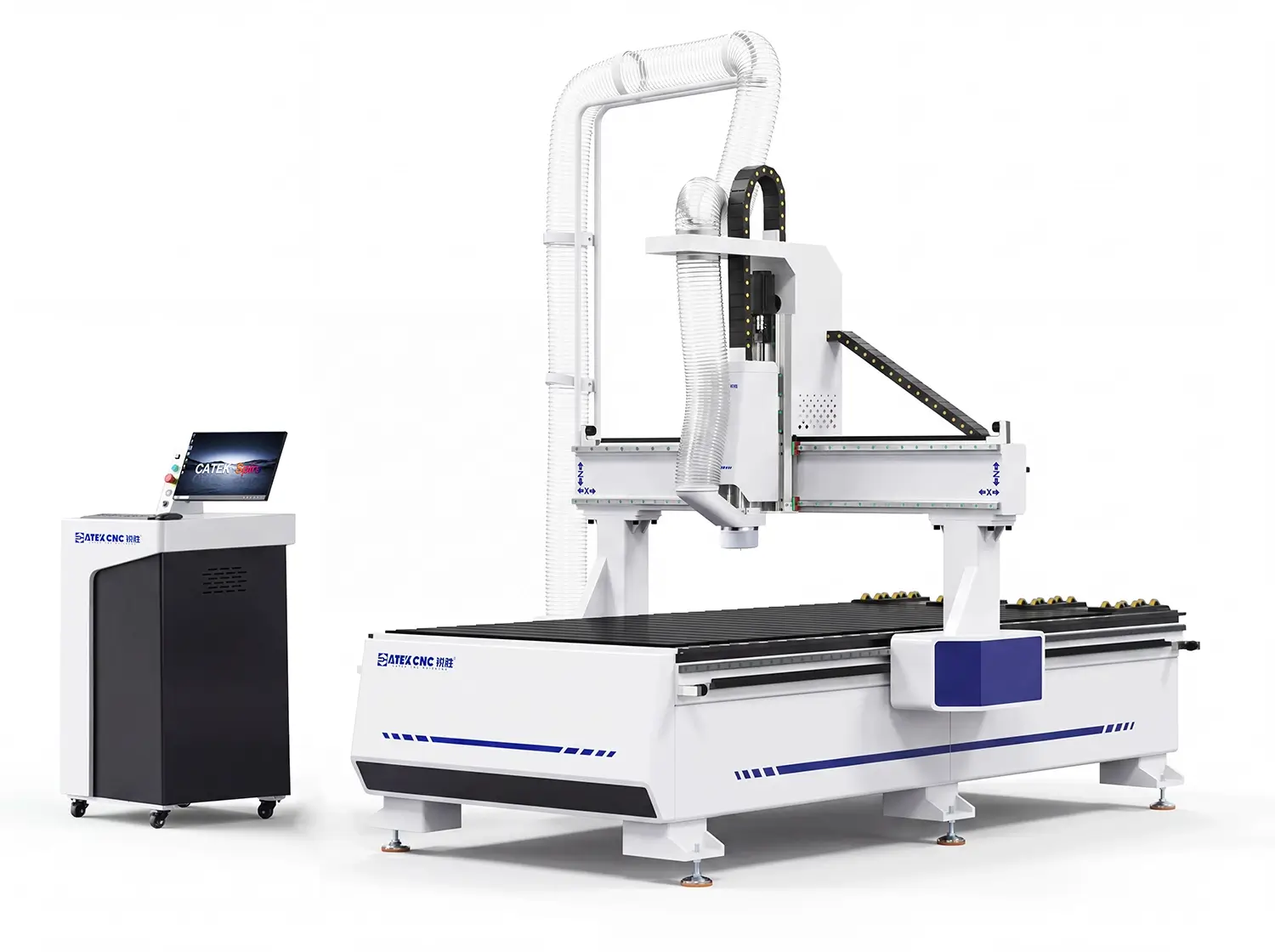
This custom-built Spire 1325 CNC router features a T-slot table and a 400mm customized machining height, making it ideal for machining various sheet materials and irregular workpieces (particularly tall-dimension products).
$4,790.00~$13,980.00
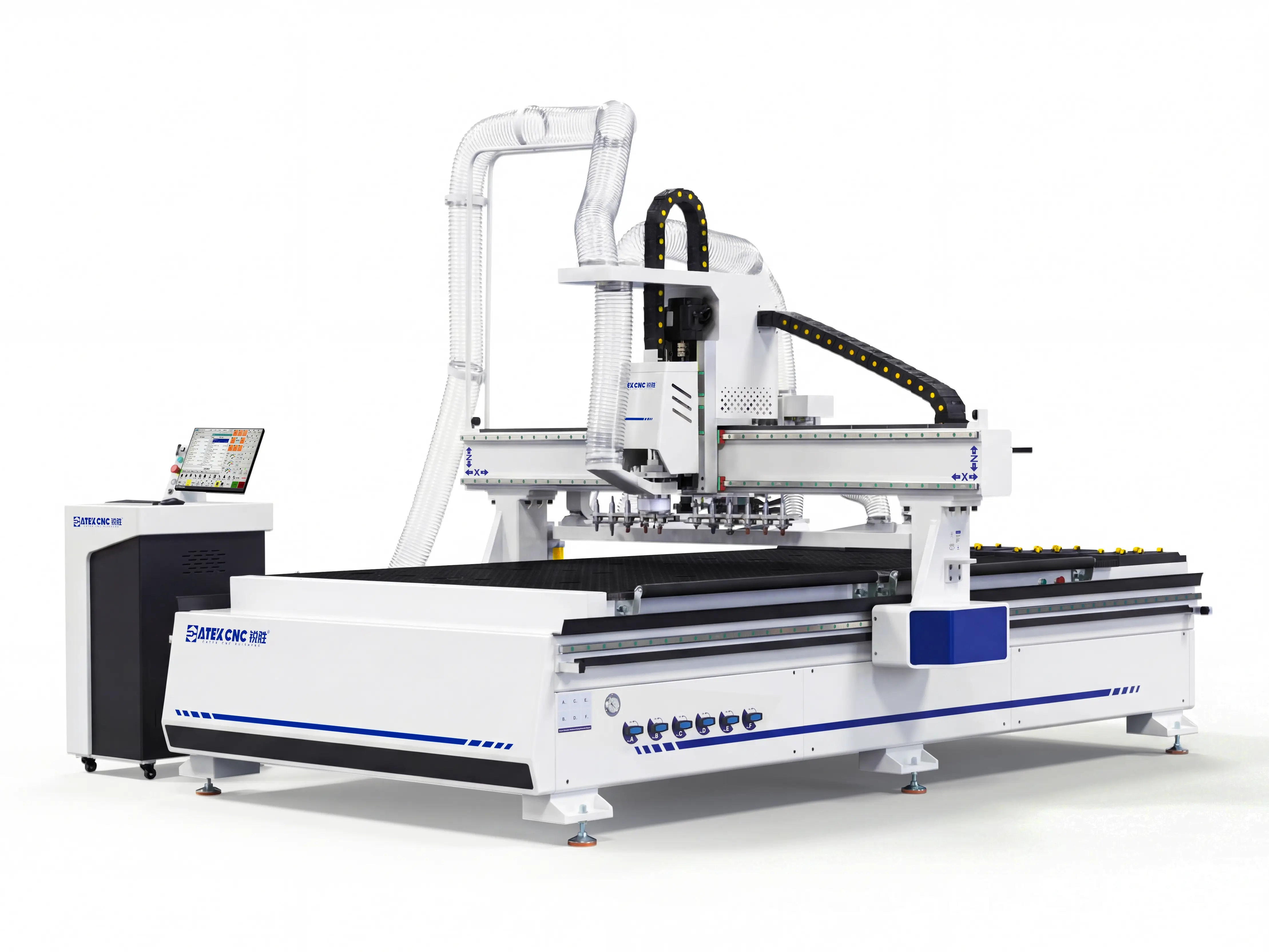
This is an 7x10ft (2100*3000mm) ATC CNC wood router from the Spire Series, highly adaptable to almost all machining sizes. It is equipped with a 9KW HQD ATC spindle, LNC servo system and control system, it delivers stable and efficient performance.
$13,800.00~$39,800.00
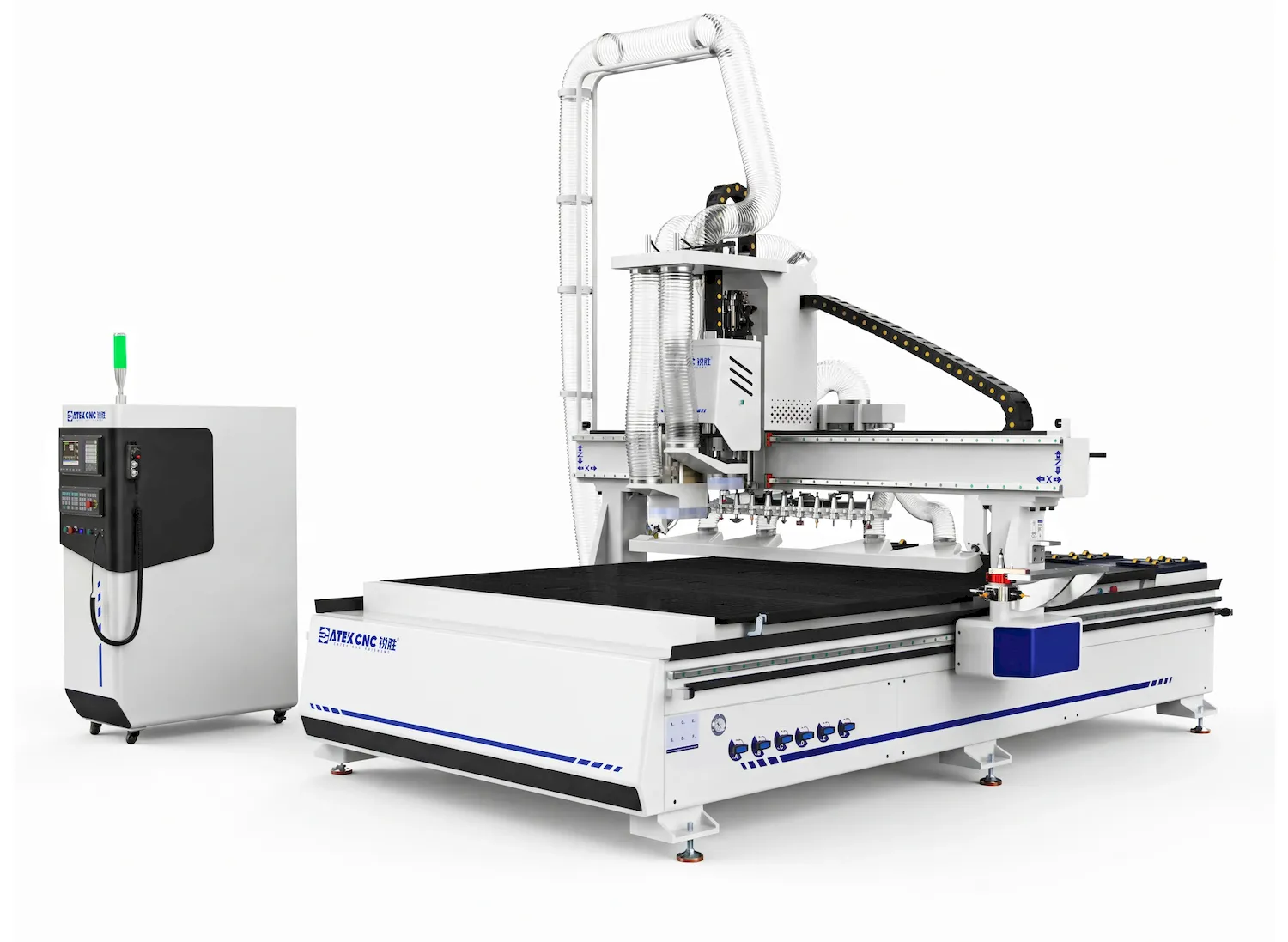
This is a 7x10ft linear ATC CNC wood router, equipped with a drill bank and 4-sided aggregate unit. It is highly efficient for drilling holes on panel furniture, as well as side drilling, slotting, milling and other machining.
$21,800.00~$39,800.00
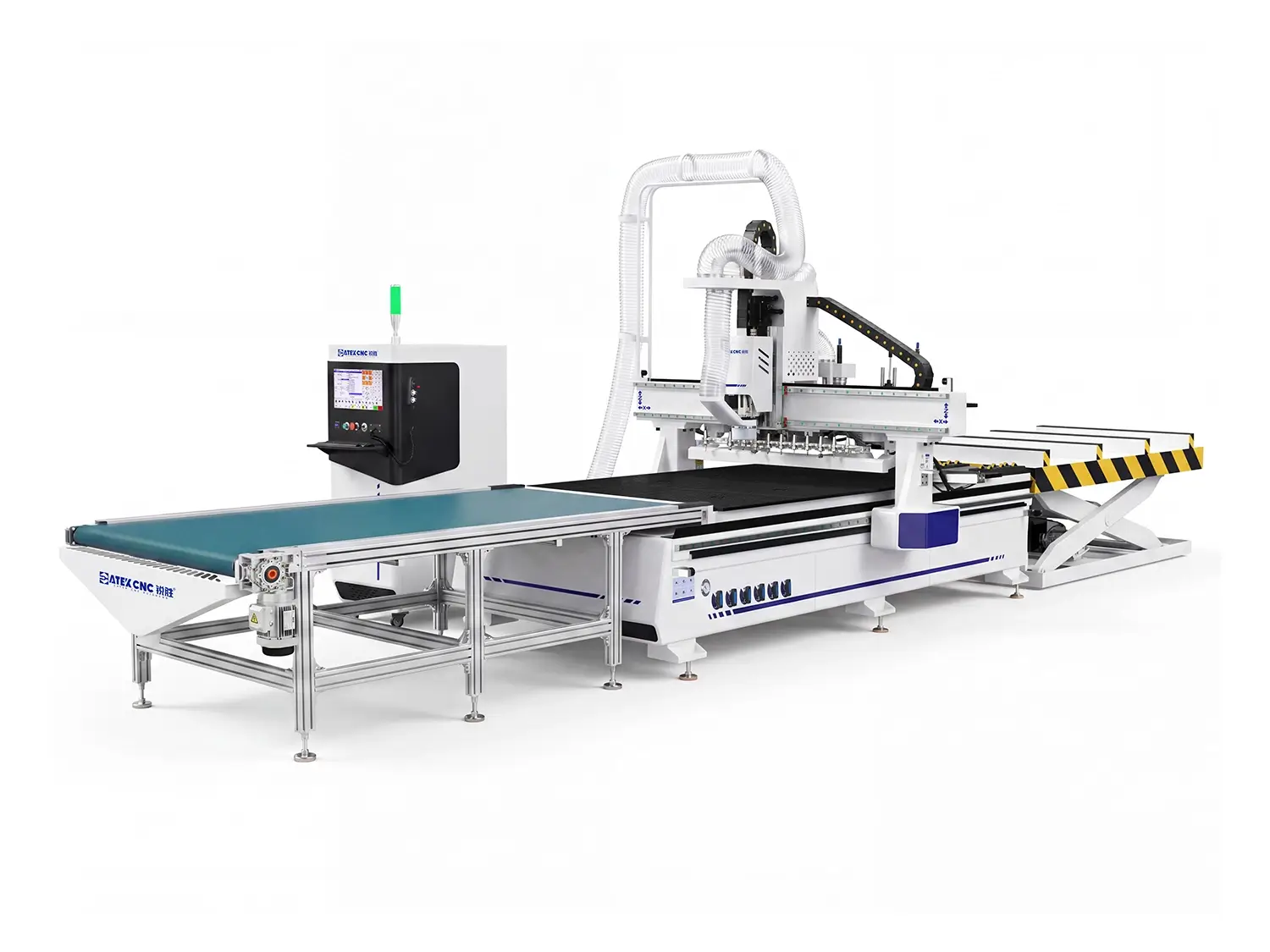
This is a Spire CNC nesting machine with a 5x10ft (1500*3000mm) work table. It features a linear tool changer and an automatic loading and unloading system, enabling fully automated, multi-process panel machining.
$14,990.00~$39,800.00
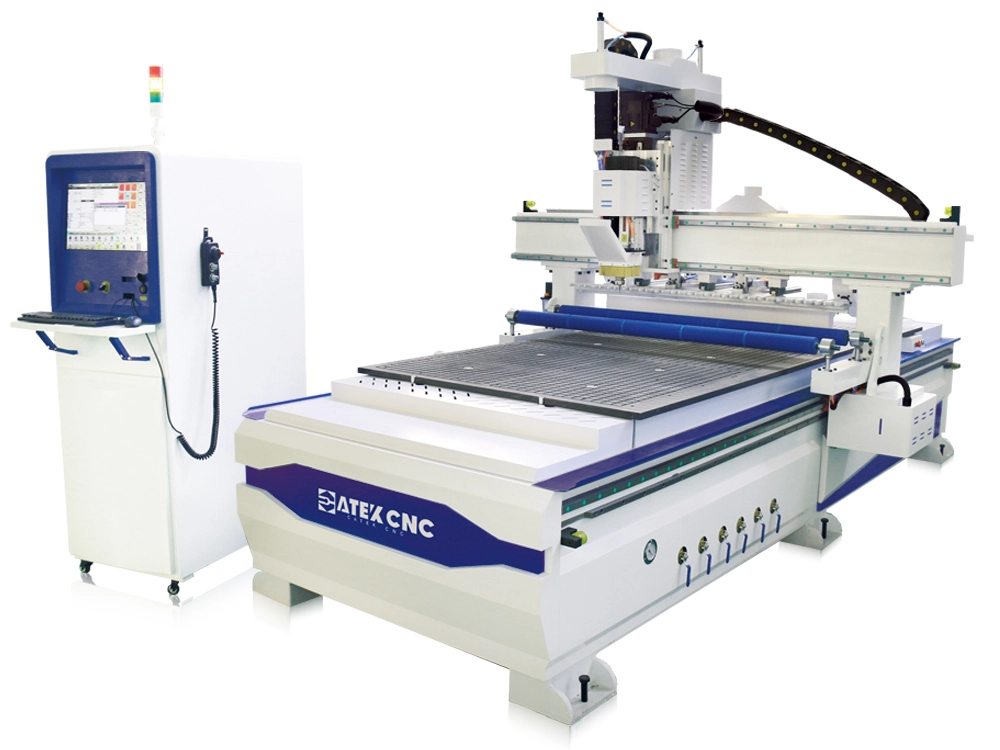
CNC routers equipped with automatic tool changers are referred to as CNC ATC routers. This machine features a linear 8/12/16-position tool magazine that automatically switches tools based on machining requirements. It comes standard with a vacuum adsorption table and automatic tool setting device, making it particularly suitable for processing tasks such as nesting, cutting, drilling, grooving, engraving, and milling of wardrobes, cabinets, and office furniture.
$8,285.00~$9,700.00
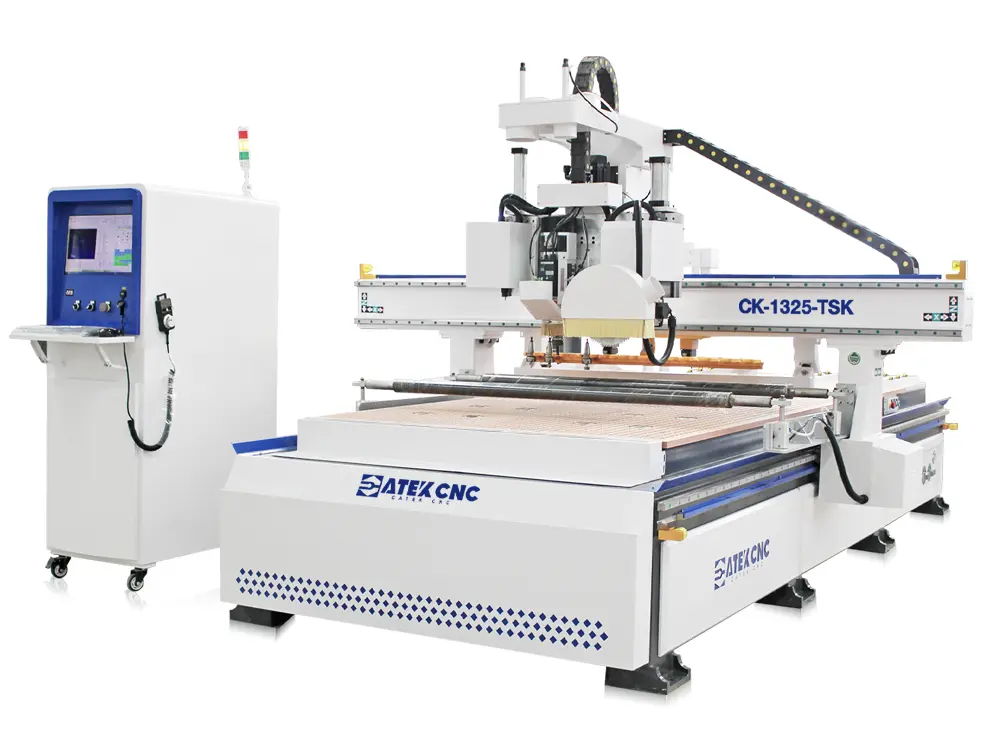
The CK-1325-TSK is a high-performance multi-functional CNC router that integrates automatic tool changing, flexible material cutting, and rigid sheet processing to comprehensively meet diverse production needs. The CNC router machine is equipped with a linear tool magazine capable of holding 12 tools and an automatic tool setter. Working in concert with a 9KW high-speed air-cooled spindle, it enables automatic tool changes and measures/calculates compensation values during processing, significan...
$13,800.00~$23,800.00
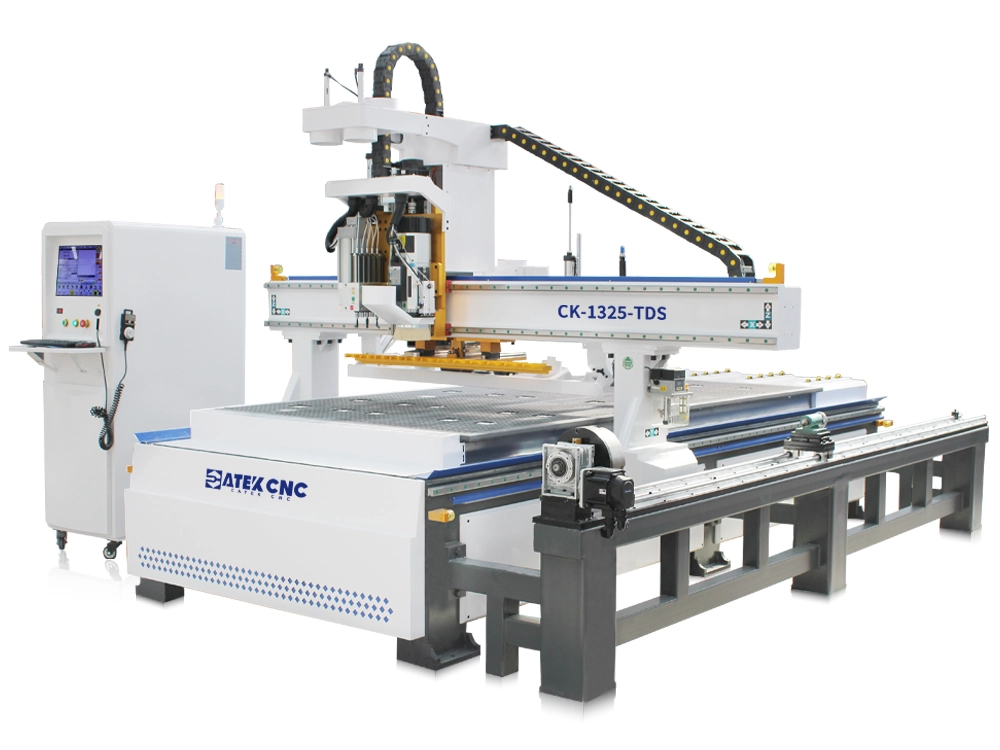
This CNC nesting machine is specifically developed for whole-house customized panel furniture production. It incorporates all functionalities of a linear ATC CNC router and is equipped with a 5+4 pneumatic drilling bank that can mount 9 different drill bits simultaneously, capable of completing 99% of drilling tasks, making it particularly suitable for manufacturing panel furniture like wardrobes and cabinets. Additionally, it features a 3D rotary fourth axis for processing 3D products such as E...
$13,800.00~$17,500.00