


{{goods.model}}
Furniture Production: How to Choose an ATC CNC Router?
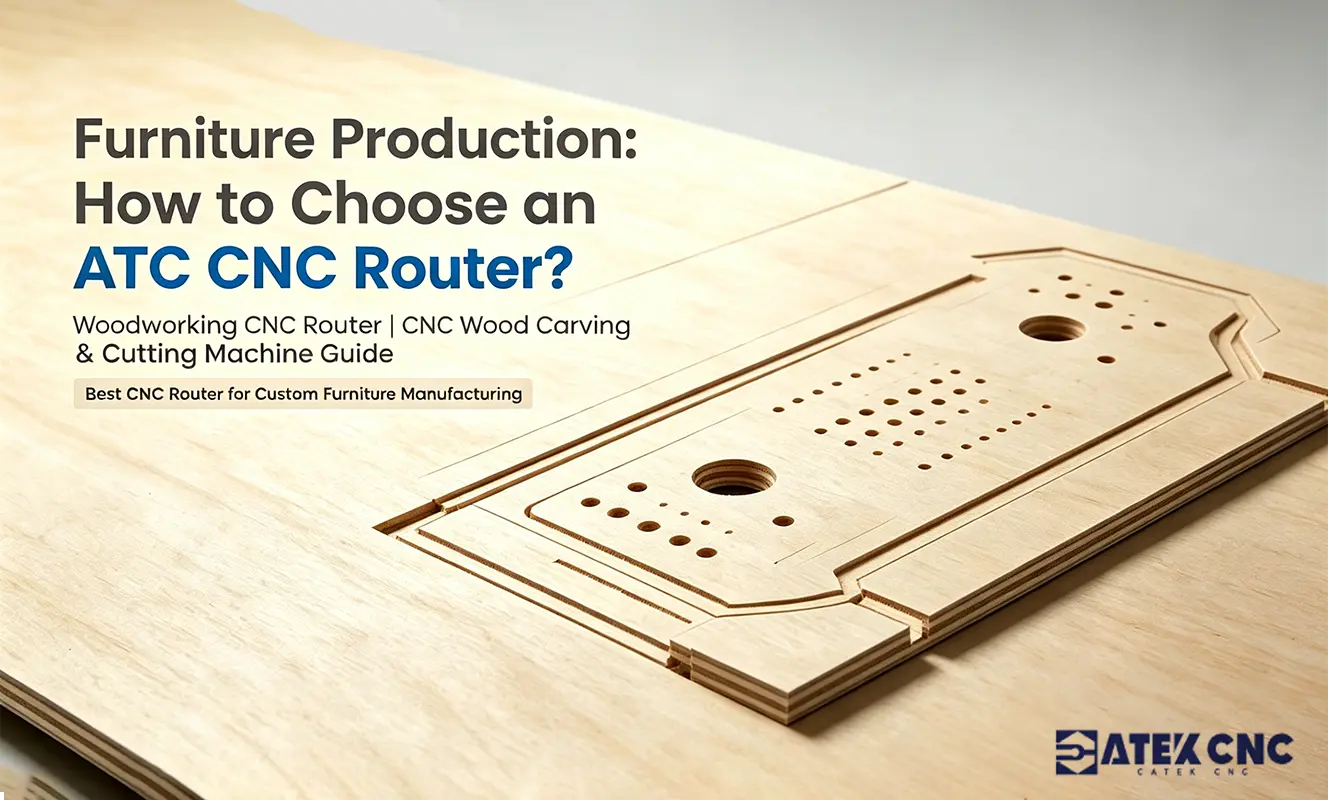
As custom furniture becomes increasingly popular, the market demand for professional furniture ATC CNC routers is expanding. As an automated piece of furniture production equipment, it can effectively replace manual labor, improve factory efficiency, and reduce production costs.
However, choosing a suitable ATC CNC router remains a serious consideration for furniture manufacturers. With the growing market demand for high-precision, high-efficiency, and diverse furniture, industry standards for board flatness, carving precision, and product variety are also constantly rising. Manual operation has become a thing of the past; automated equipment and technology are mandatory requirements. The focus of furniture factories has shifted from 'whether to buy an ATC CNC router' to 'what kind of ATC CNC router to buy'.
This article will start from actual production scenarios to help you master the key points of selection and find the one that best suits your needs.
Ⅰ. What is an ATC CNC Router?
An ATC CNC router is a CNC machine equipped with an automatic tool changer that enables seamless switching between different tools during the machining process. Based on pre-programmed instructions, the machine automatically changes tools as needed, completing the entire workflow from design to finished product without manual intervention.
Machinable materials include:
- Various solid woods; MDF (Medium-Density Fiberboard), plywood, solid wood, particleboard; carbon fiber composites; copper, aluminum, and other soft metals.
- Custom and modular furniture production: Achieving high-precision cutting and machining to ensure accurate dimensions and aesthetically pleasing designs, while meeting personalized customization requirements.
- Cabinet, kitchen, and wardrobe manufacturing: High-precision machining ensures consistent dimensions for every component, with smooth and flat finished surfaces, improving product assembly quality and visual appeal.
- Panel doors and decorative woodworking: Suitable for complex carving patterns and fine texture decorations. Whether for functional door panels or artistic wood pieces, precise machining is achieved.
- Office furniture manufacturing: In the office furniture sector, rapid and stable batch production of desks, filing cabinets, and more, while ensuring structural stability and visual consistency of the finished products.
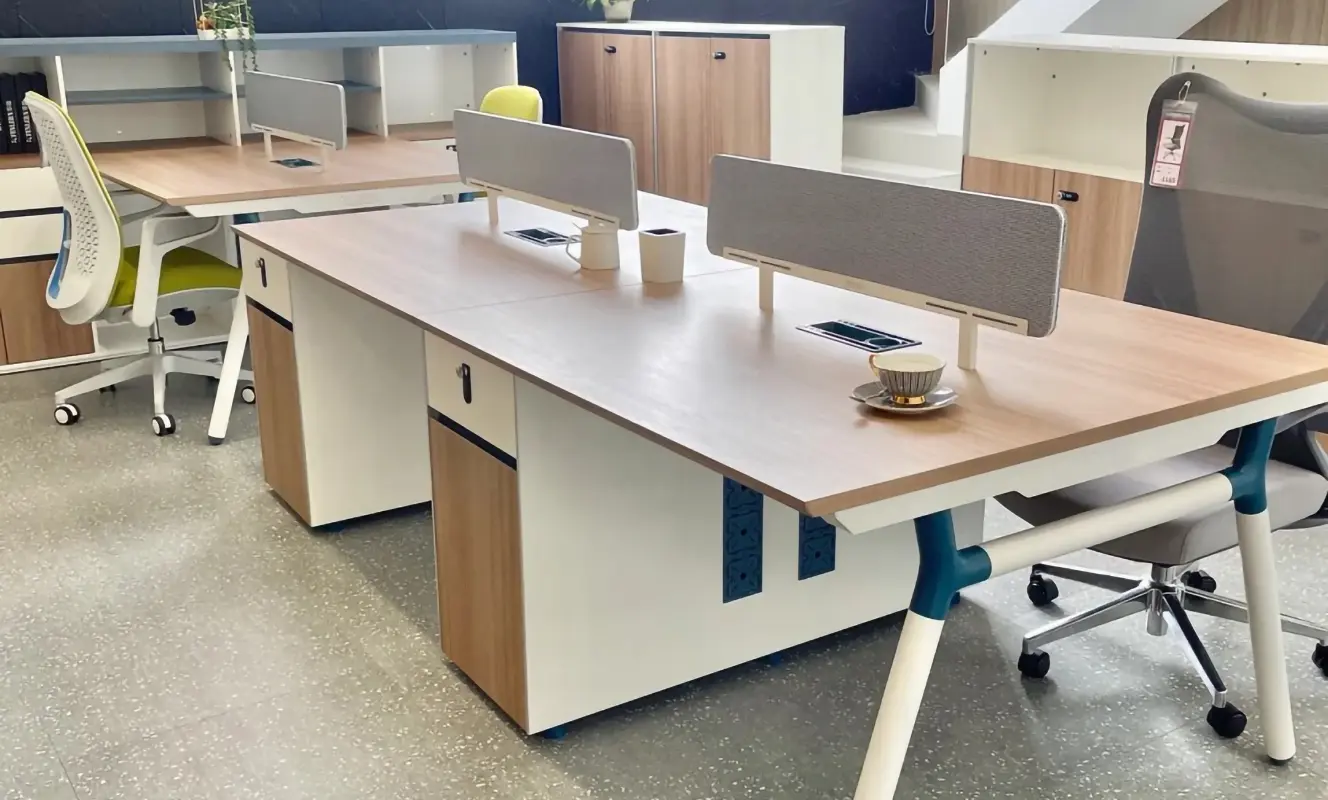
In addition, it can also be used for milling and engraving furniture products, such as 3D corrugated board processing, decorative windows, screens, sliding doors, painted doors, decorative wooden doors, cabinet doors, as well as cutting, boring, and slotting for cabinets.
Ⅱ. Why Are ATC CNC Routers Becoming Standard Equipment in Furniture Production?
Furniture manufacturing demands extremely high precision, as the accuracy of preliminary machining directly affects the quality of the final product. Any deviation in dimensions can lead to misaligned panels, uneven surfaces, and other defects, resulting in costly rework.
In the past, each production step required dedicated operators. However, as order volumes grow and designs become increasingly complex, simply adding more workers can no longer simultaneously ensure production efficiency and product quality. ATC CNC routers integrate multiple processes into a single machine, allowing for continuous operation with just one setup. For furniture manufacturers facing these pressures, ATC CNC routers offer the following advantages:
- More stable cutting precision
Manual operations inevitably introduce errors. ATC CNC routers execute machining based on digital programs, effectively reducing human error and meeting strict standards for overall product precision, assembly quality, and surface finish.
- Higher production efficiency
In traditional manual processing, every step—from measuring and marking the panel to cutting and drilling—requires manual labor and must be repeated for each piece. CNC machining, however, integrates the entire process into a single machine. With automatic tool changing, all operations can be performed continuously without manual intervention, reducing downtime and improving overall processing efficiency.
- Greater capability for complex shapes
Traditional methods work well for standard straight-line cutting, but complex curves, patterns, and custom shapes often require significantly more time. ATC CNC routers can machine any shape regardless of complexity, following the patterns drawn in software to achieve true customized production.
- Higher material utilization
Panel materials account for a significant portion of production costs in furniture factories. Poor nesting layouts lead to unnecessary material waste and increased production costs. CNC routers equipped with professional nesting software automatically generate optimal layout plans based on component sizes and shapes, avoiding waste and achieving cost reduction and efficiency improvement.
- Greater convenience for custom and small-batch orders
The challenge of custom furniture lies in the fact that different requirements demand different processing techniques. If every custom order requires setting up the production process from scratch, costs become difficult to control and delivery times are indefinitely extended. With CNC machining, parameters can be adjusted directly, eliminating the need for extensive reconfiguration.
This makes furniture CNC routers particularly valuable for businesses that handle both standard models and customized orders. Small workshops can produce a one-off custom piece, while large factories can use the same system for repeat batch production.
Traditional Methods vs. ATC CNC Routers
| Production Factor | Manual or Traditional Methods | Furniture CNC Router |
|---|---|---|
| Measurement & Positioning | Repeated manual measuring and marking | Digital dimension control |
| Consistency | Relies on operator skill level | Programmed production |
| Complex Patterns | Time-consuming | Directly generated from digital files |
| Custom Sizes | Requires re-setting jigs and fixtures | Modify parameters in design files |
| Tool Changes | Typically manual operation | Automatically completed by ATC machine |
| Material Nesting | Manual planning | Optimized by nesting software |
| Batch Production | Requires more labor | Programs can be saved and reused |
| Skill Requirements | Traditional woodworking craftsmanship | CNC and software operation knowledge |
Ⅲ. How to Choose the Right ATC CNC Router for Furniture?
Efficiency and precision are the two factors that customers care about most in modern furniture production, as they directly impact a factory‘s output, quality, and operating costs. However, not all CNC routers can deliver on both requirements simultaneously. Choosing the right CNC router for furniture manufacturing not only addresses current processing needs but also lays the foundation for future business expansion.
1. Table Size and Working Area
The panels processed daily in furniture factories are primarily MDF and composite boards, mostly in large sheet sizes. The most common panel size is 4×8 feet, which is also the standard table size for most CNC routers.
For factories with higher output, consider a larger table or a nesting-style CNC router to process full sheets and optimize material utilization.
The table size should match both the panel dimensions and daily production requirements.
2. Machine Frame Structure and Rigidity
Furniture production often requires machines to run continuously for extended periods. The stability of the machine frame structure directly determines whether the machine can maintain long-term precision. Key points to check when evaluating structural stability:
- Total machine weight: For machines of the same specifications, heavier ones use more substantial materials and provide greater stability during cutting.
- Stress relief treatment: Frames that have not undergone stress relief may deform over time. Stress relief effectively prevents structural deformation and precision drift.
- Guide rail brand: Choose reputable brands for better durability and reliability.
3. Spindle Power and Performance
Furniture manufacturing demands high dimensional accuracy—cabinet doors must fit flush and flat, and all components must assemble tightly and neatly. This requires the spindle to maintain sufficient precision throughout the machining process.
Power determines how thick a board can be cut and how fast the cutting can be done. 9KW is the mainstream configuration in the furniture industry, sufficient for cutting 18mm MDF, particleboard, and plywood. With lower power, thicker boards cannot be cut effectively, and the edges are prone to burrs.
4. Software and Control System
Furniture production typically relies on nesting to reduce material waste and accelerate processing speed. A good CNC router should support professional nesting software and a stable control system. Two factors to consider when selecting:
- Software compatibility: Whether it is compatible with common CAD/CAM software and nesting software.
- System stability: The control system is the brain of the CNC router. A clear interface and smooth, lag-free operation are essential for improving processing efficiency.
5. Worktable and Material Holding
Furniture processing primarily involves full-sized panels, and vacuum suction is the most commonly used holding method for furniture ATC CNC routers. It ensures that panels remain flat and stable during cutting, especially when machining large-format boards.
Key selection points:
- Sufficient suction power
- Zone control functionality
- Good sealing performance
6. After-Sales Support and Service
An ATC CNC router is a long-term investment, and the quality of after-sales service directly affects the machine‘s performance and uptime in the long run. Choosing a supplier with extensive experience in the furniture industry ensures better equipment compatibility and reduces unnecessary complications in future maintenance and operation.
Ⅴ. How to Choose an ATC Router for Different Production Scenarios
Furniture factories operate under various production models, and the choice of CNC router should be tailored to the specific production scenario. Mass production of cabinet bodies, customization of three-dimensional components, and multi-material processing each have different processing requirements and configuration priorities. Below are selection guidelines and recommended models for three common scenarios.
Scenario 1: Batch Production of Cabinet Bodies
This scenario focuses primarily on kitchen cabinets and wardrobes, with large order volumes and no involvement in three-dimensional or curved surface machining. The workload is heavy and precision requirements are high—any deviation can compromise the entire batch order.
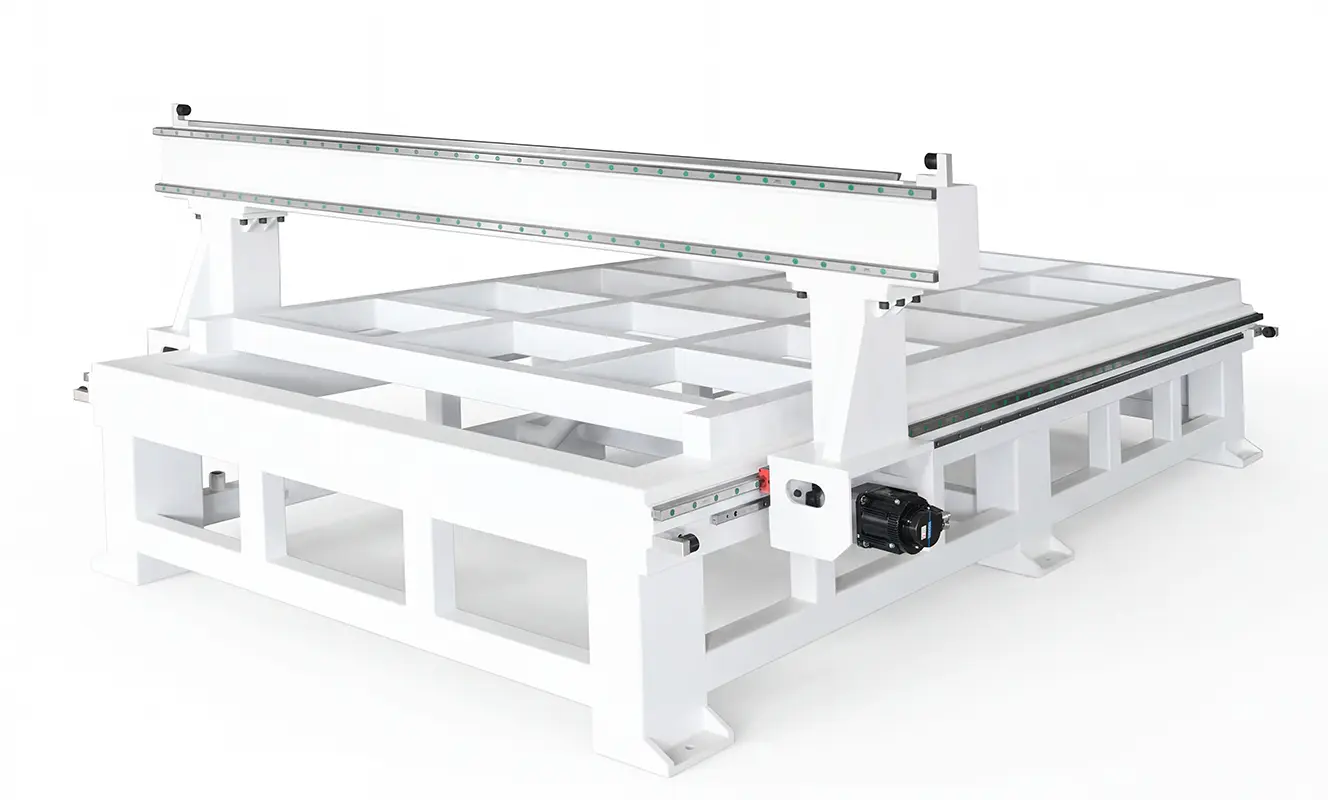
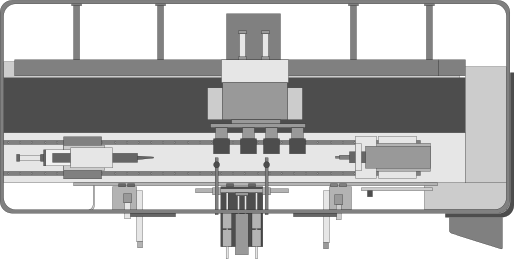
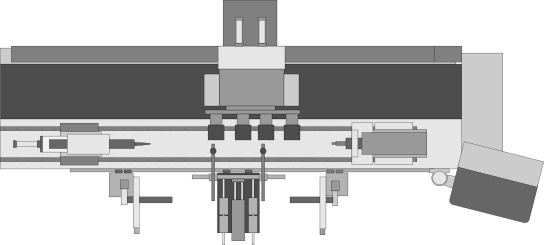
The Spire-2130-RSP-TDM is an automated processing equipment designed for batch production of panel furniture, with its core positioning being the replacement of multiple processes with a single machine. For cabinet door production, it can complete drilling and slotting in a single setup, eliminating the need to stop midway or transfer workpieces to a side-hole boring machine. Unlike standard CNC routers, the competitiveness of this model lies primarily in its functional integration:
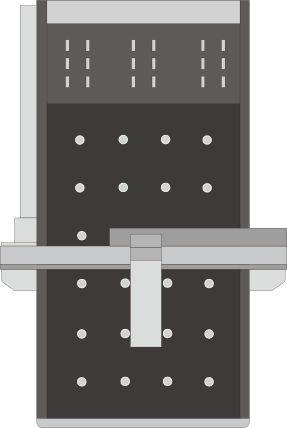
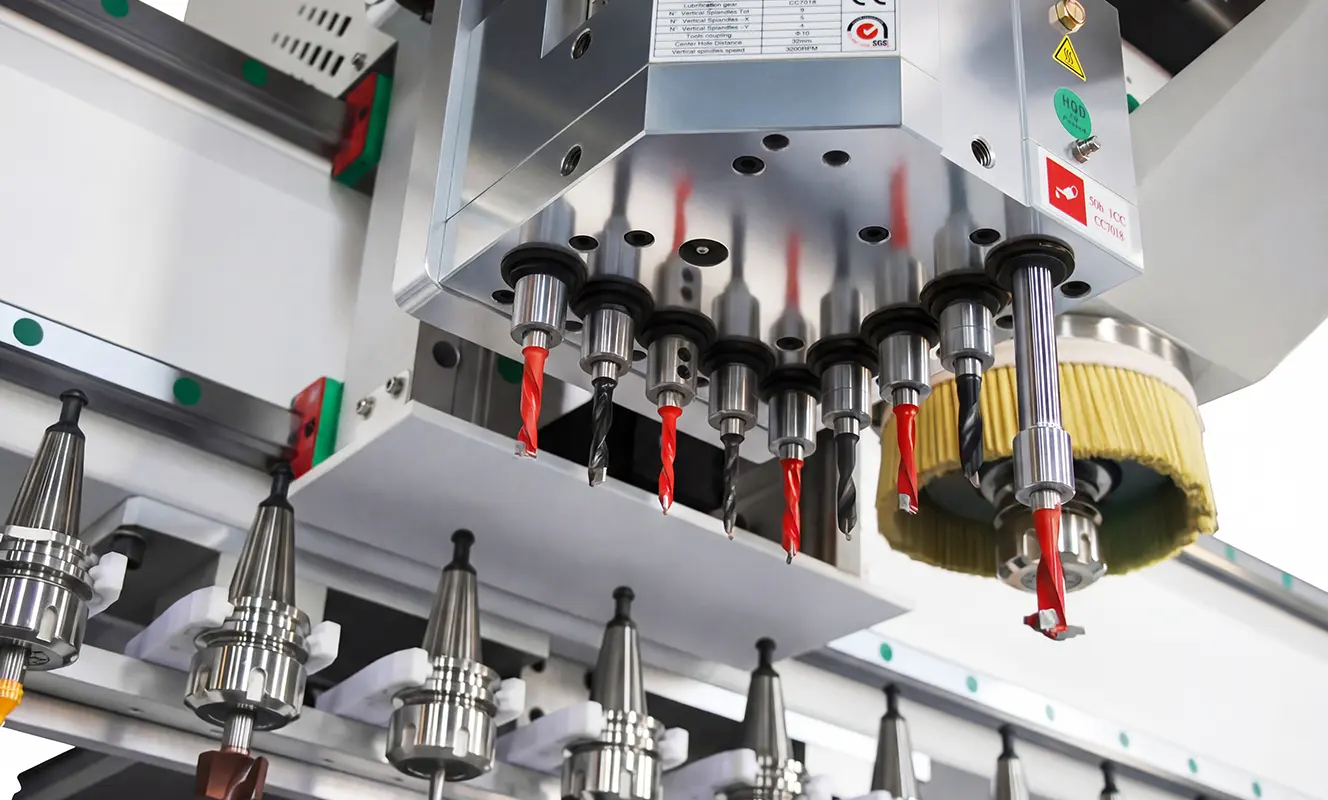
- 5+4 vertical drill bank: Specifically designed for drilling operations in panel furniture processing. With 9 drill bits, it can complete a large number of vertical hole machining in a single pass, eliminating frequent tool changes and significantly improving production efficiency.
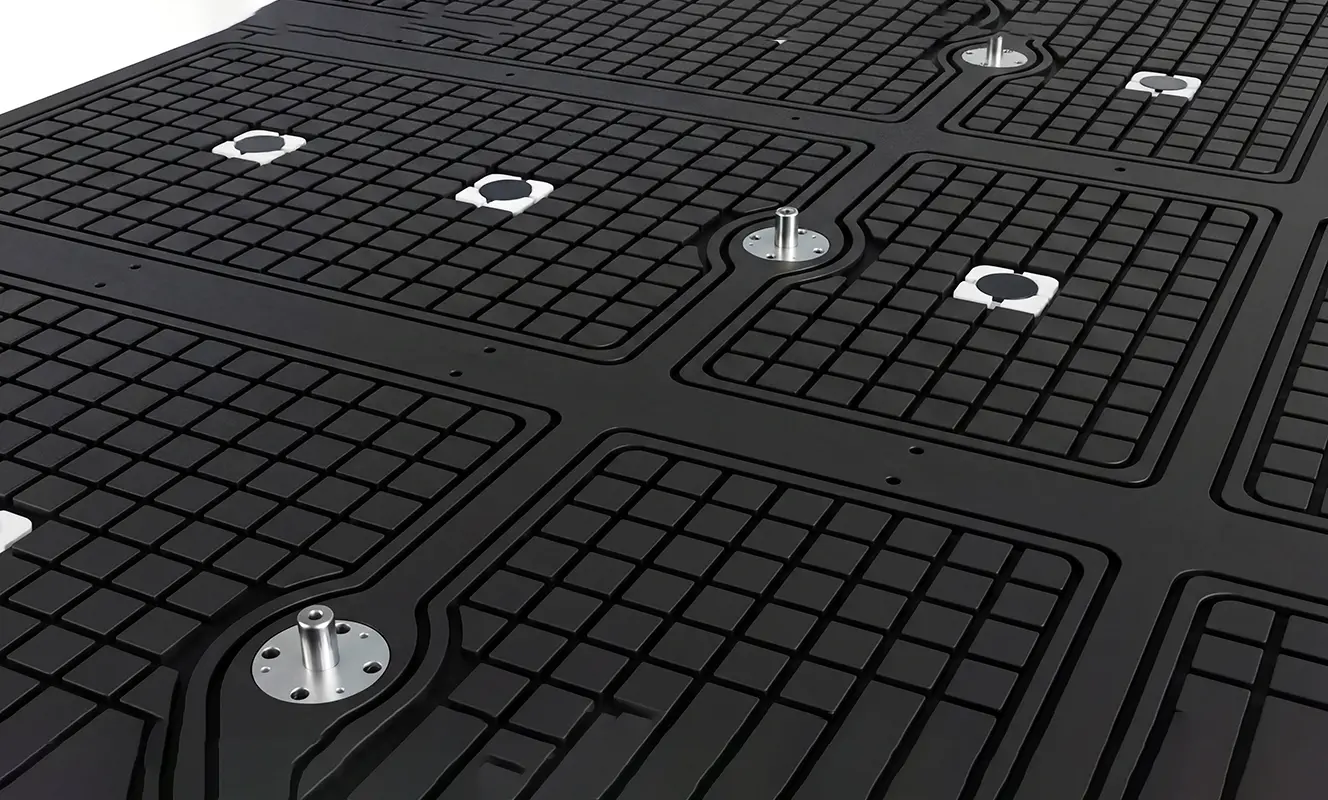
- 7×10 ft table with vacuum suction: Full sheets can be loaded directly onto the machine without pre-cutting. The vacuum suction holds the panel firmly in place, ensuring it stays completely stable even during high-speed cutting. The finished components have consistent dimensions, so cabinet doors and drawers fit together perfectly during assembly.
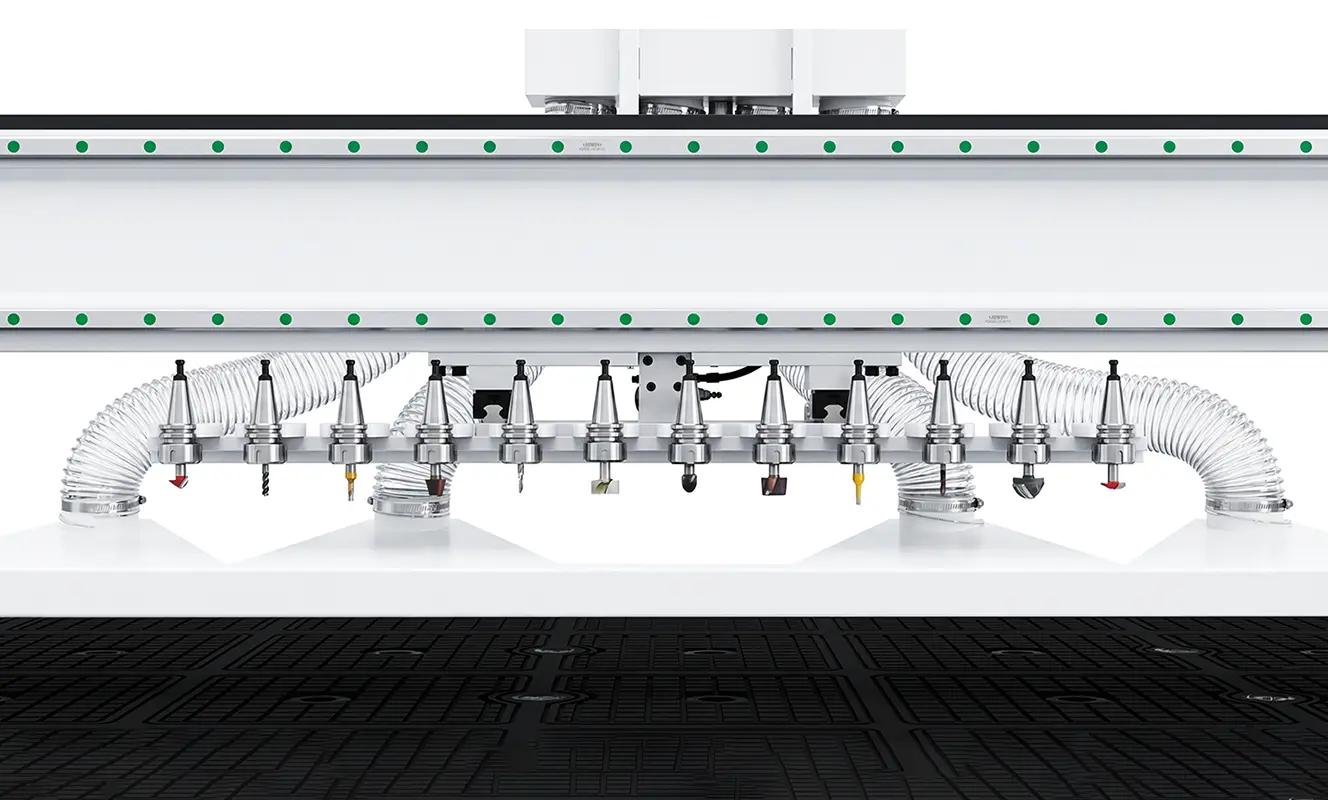
- 16-station tool magazine + automatic tool change: Tools for cutting, trimming, drilling, and slotting are all pre-loaded in the magazine. The machine changes tools automatically without any downtime waiting for manual intervention. In batch production, the time saved translates directly into increased throughput.
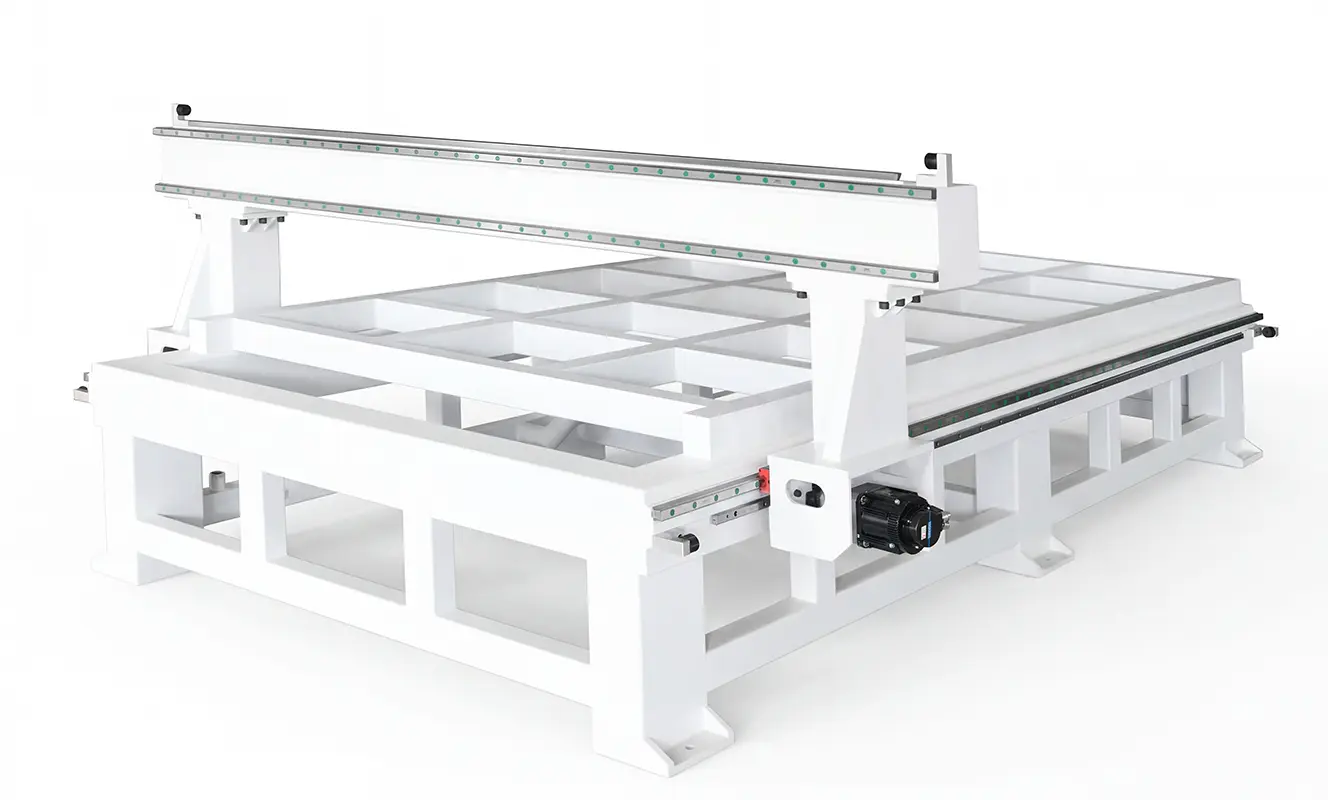
- Heavy-duty machine frame structure: Cabinet production requires machines to run continuously for extended periods, demanding exceptional frame rigidity. This model features thickened steel tubes combined with stress-relief treatment, ensuring the frame does not deform under long-term heavy cutting and maintaining precision over time.
Scenario 2: Custom Three-Dimensional Components
In addition to standard cabinets, customers occasionally request three-dimensional components such as Roman columns, stair balusters, and curved backrests. The challenge in machining these 3D parts lies in the fact that the workpieces are not flat—standard CNC routers can only perform vertical machining on flat surfaces and struggle with curved surfaces. What is needed is a machine capable of handling three-dimensional curved machining.
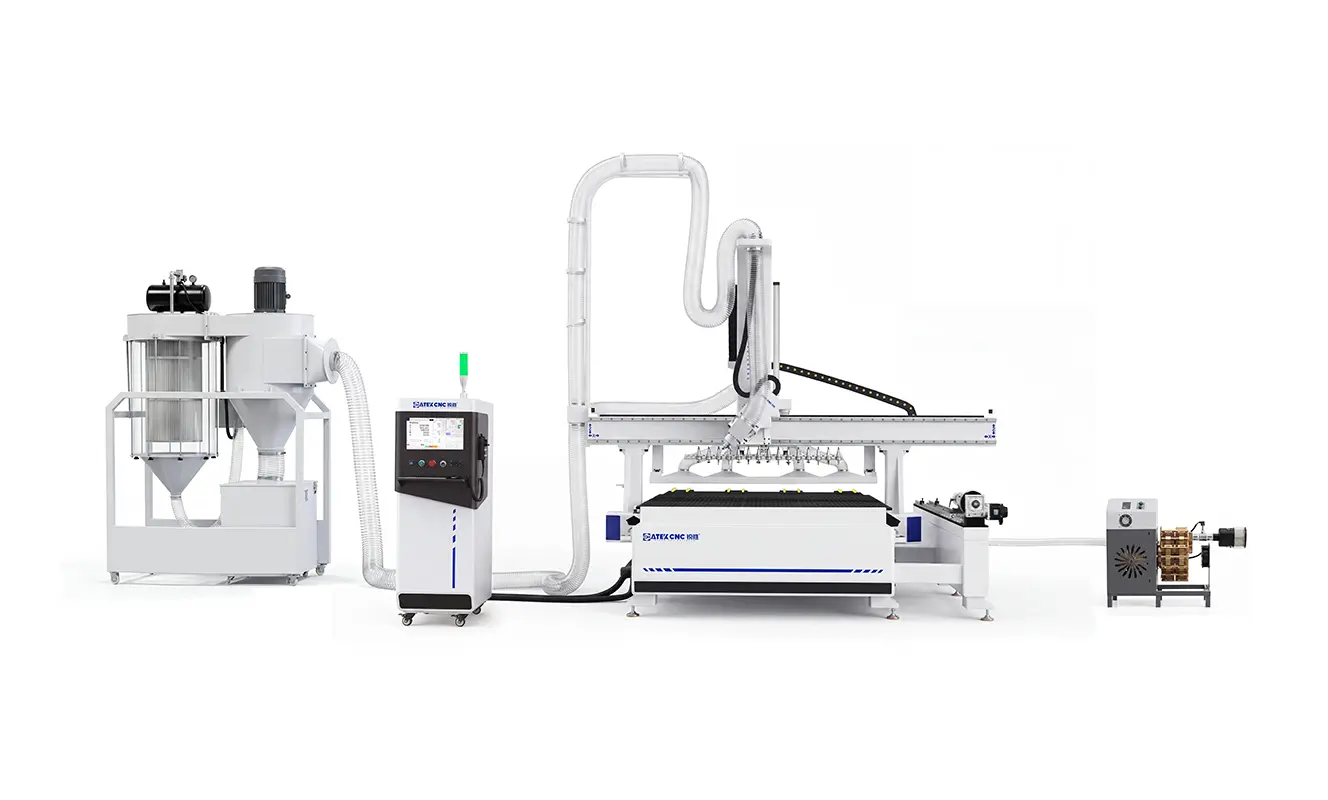
The Spire-2130-RSP-T-4RS is designed based on 4-axis linkage technology, breaking through the limitation of traditional 3-axis CNC routers that can only machine flat surfaces. It achieves this through two core configurations: a 4-axis oscillating head and a rotary 4th axis.
- 4-axis oscillating head: The spindle can oscillate ±90°, enabling angle machining. It handles bevel cutting, side milling, and curved surface machining—overcoming the flat-only limitation of standard routers.
- Rotary 4th axis: A rotary axis is mounted on the side of the machine, allowing cylindrical workpieces to rotate 360°. Roman columns, table legs, and stair balusters can be carved in one full rotation with a single setup.
- Flat + 3D machining in one machine: No need to purchase a separate 3D carving machine. Use it as a standard 3-axis CNC router for cabinet work, and activate the 4-axis function for custom 3D components. This maximizes equipment utilization and ensures a fast return on investment.
Scenario 3: Multi-Material Processing Orders
For panel furniture factories whose product lines already involve multiple material types, or those planning to expand into the advertising and packaging sectors, the range of processed materials extends beyond wood-based panels to include flexible materials such as EPE foam, acoustic panels, leather, corrugated cardboard, and composite foam core materials. This means the factory needs not only the capability to handle conventional woodworking orders but also the configuration to process flexible materials.
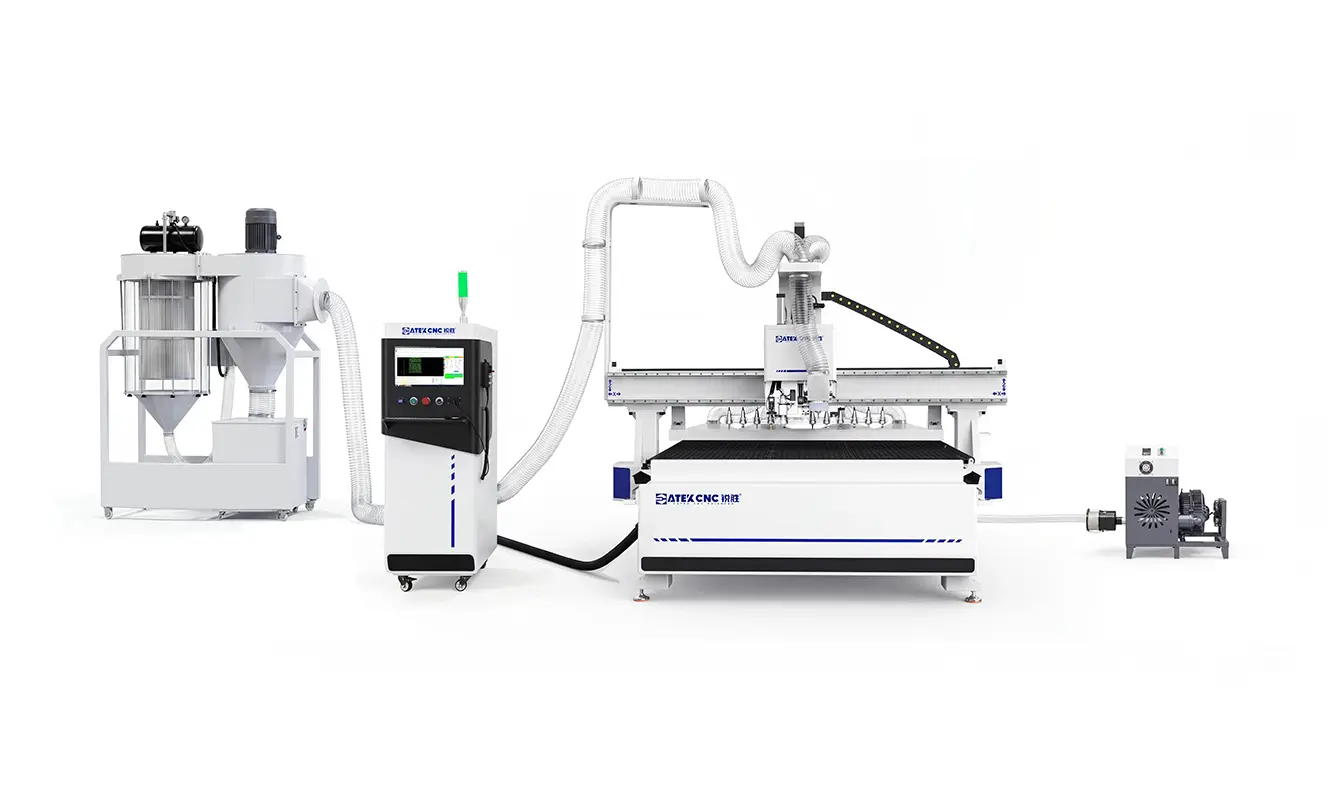
The Spire-2030-RSP-TK differs from other models primarily in that it is not material-selective. Standard CNC routers can only process wood boards, MDF, and acrylic, but the Spire-2030-RSP-TK covers both rigid and flexible material processing needs in a single machine—cutting rigid panels with the spindle and switching to an oscillating knife for flexible materials.
- Integrated spindle and oscillating knife dual-system enables integrated processing of both rigid and flexible materials. Whether it‘s cabinets and wooden doors for furniture factories, illuminated signs for advertising companies, or accessories and wood molds for musical instrument manufacturers, this machine covers rigid material processing needs across different industries, ensuring high utilization.
- CCD vision system supports automatic contour cutting for printed materials. The system uses an industrial camera to automatically recognize pattern contours, eliminating the need for manual alignment. If the material is placed skewed or the pattern is misprinted, the system automatically corrects the cutting path, improving precision for complex shape processing.
Recommended Supporting Equipment
After panels are cut and drilled by the CNC router, the exposed cut edges require edge banding. Edge banding serves to cover the internal structure of the board, improve edge regularity and aesthetics, while also providing moisture resistance and preventing deformation. It is one of the key processes in cabinet production.
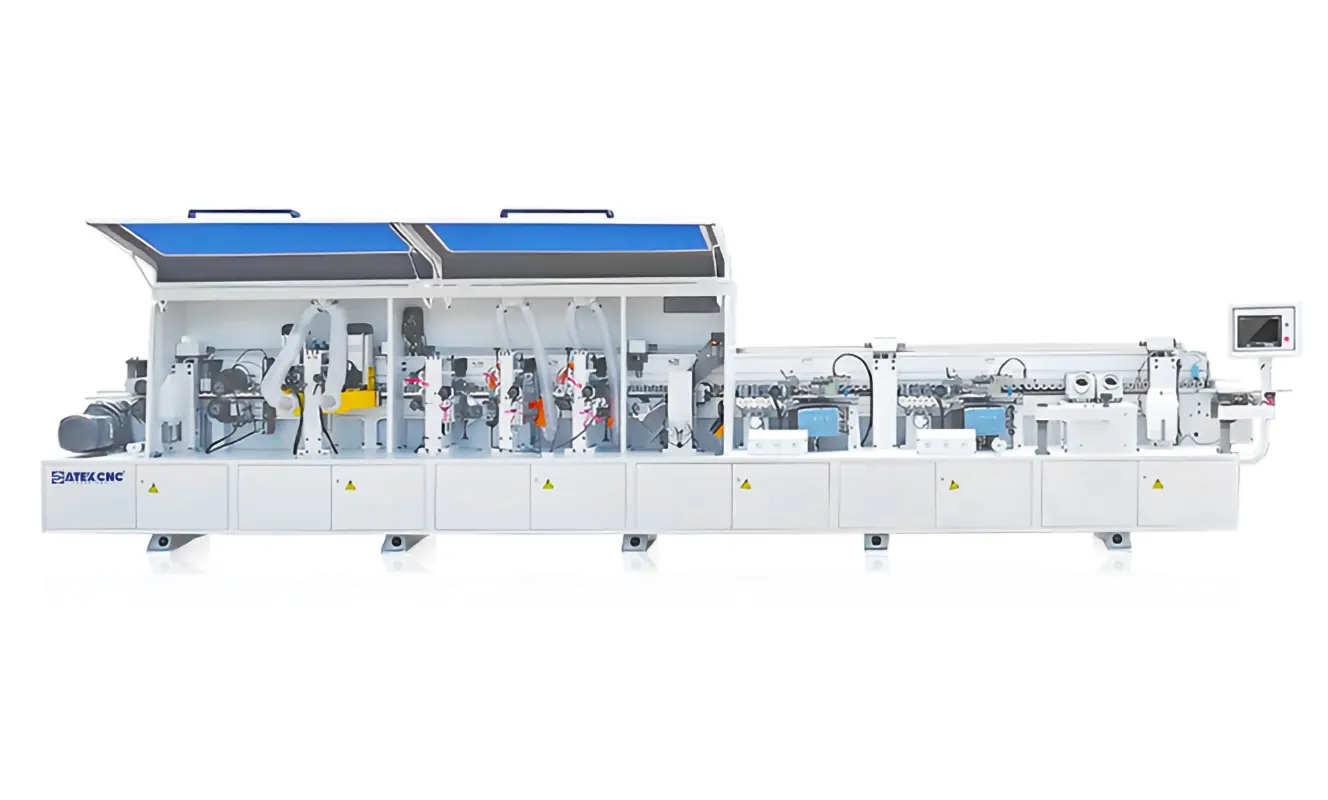
It is recommended to pair with an 8-in-1 automatic edge banding machine for furniture manufacturing. This model integrates eight processes—pre-milling, glue application and edge banding, end cutting, rough trimming, fine trimming, profile copying, scraping, and buffing—into a single machine. It combines edge pre-treatment, edge banding application, and post-edge finishing, meeting the edge banding needs of various panels including cabinets, tabletops, door panels, and decorative boards.
- Eight processes integrated into one machine: Pre-milling, glue application and edge banding, end cutting, rough trimming, fine trimming, profile copying, scraping, and buffing. The entire edge banding process is completed in a single pass.
- High processing efficiency: Edge banding speed reaches 16/18/22 m/min, accommodating different batch production requirements. Applicable panel thickness: 10-60mm; edge banding tape thickness: 0.4-3mm.
- Branded component configuration: Features Taiwan HIWIN guide rails, Delta/MCGS control systems, and core electrical and pneumatic components from well-known brands. These components determine the stability and precision of the equipment.
- Footprint and weight: Total machine weight of 2300kg, providing the stability of heavy-duty equipment. Suitable for factories with fixed production lines; not recommended for frequent relocation.
Ⅵ.FAQ
Q1: What materials can a CNC router for furniture production process?
It can process various wood-based panels, including MDF, particleboard, plywood, and solid wood, as well as non-metal materials such as acrylic and PVC. The specific capabilities depend on spindle power and machine configuration.
Q2: Can a furniture CNC router process solid wood?
Yes. To machine solid wood stably, the correct combination of cutting tools, spindle speed, feed rate, and workpiece holding method is required.
Q3: How long does it take to recoup the investment in an ATC CNC router for furniture production?
It depends on the factory's output and labor costs. Typically, small to medium-sized furniture factories can recover the equipment investment within 1–2 years through labor savings, reduced material waste, and increased production capacity.
Q4: Do you provide after-sales support?
Yes, we offer operation training and comprehensive after-sales service. Employees who are already familiar with CAD/CAM software and nesting software can get up to speed quickly.
Ⅴ.Conclusion
The efficiency and quality of furniture production depend on how well the equipment aligns with production needs. If you are considering investing in an ATC CNC router, we recommend starting with your own production scenario—refer to the three scenarios outlined in this article to clarify your requirements—and comprehensively evaluating factors such as table size, frame rigidity, spindle power, control system, and material holding method to select the ATC CNC router that best fits your needs.
RELATED MODELS
We recommend some related models for you...
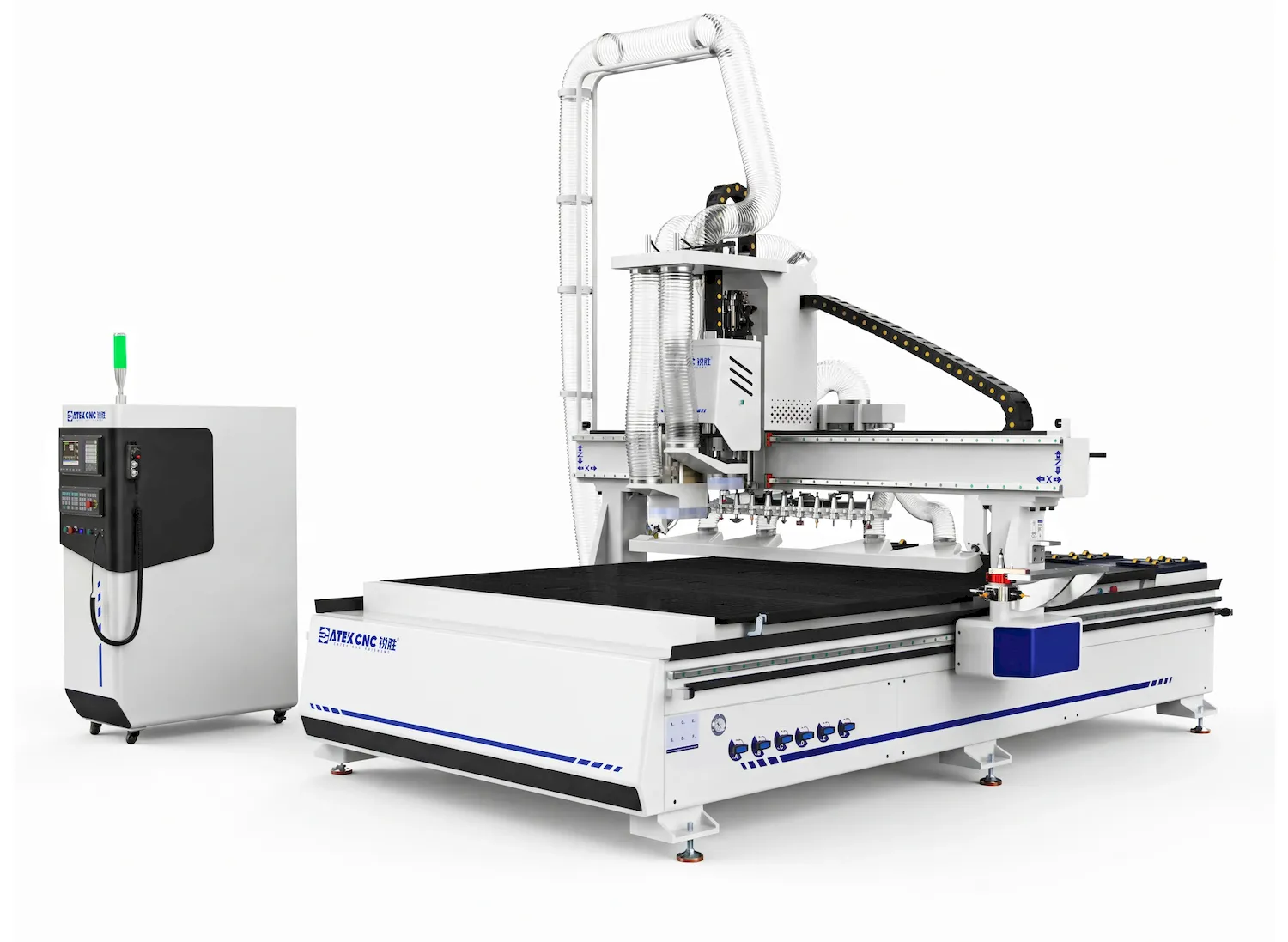
This is a 7x10ft linear ATC CNC wood router, equipped with a drill bank and 4-sided aggregate unit. It is highly efficient for drilling holes on panel furniture, as well as side drilling, slotting, milling and other machining.
$21,800.00~$32,800.00
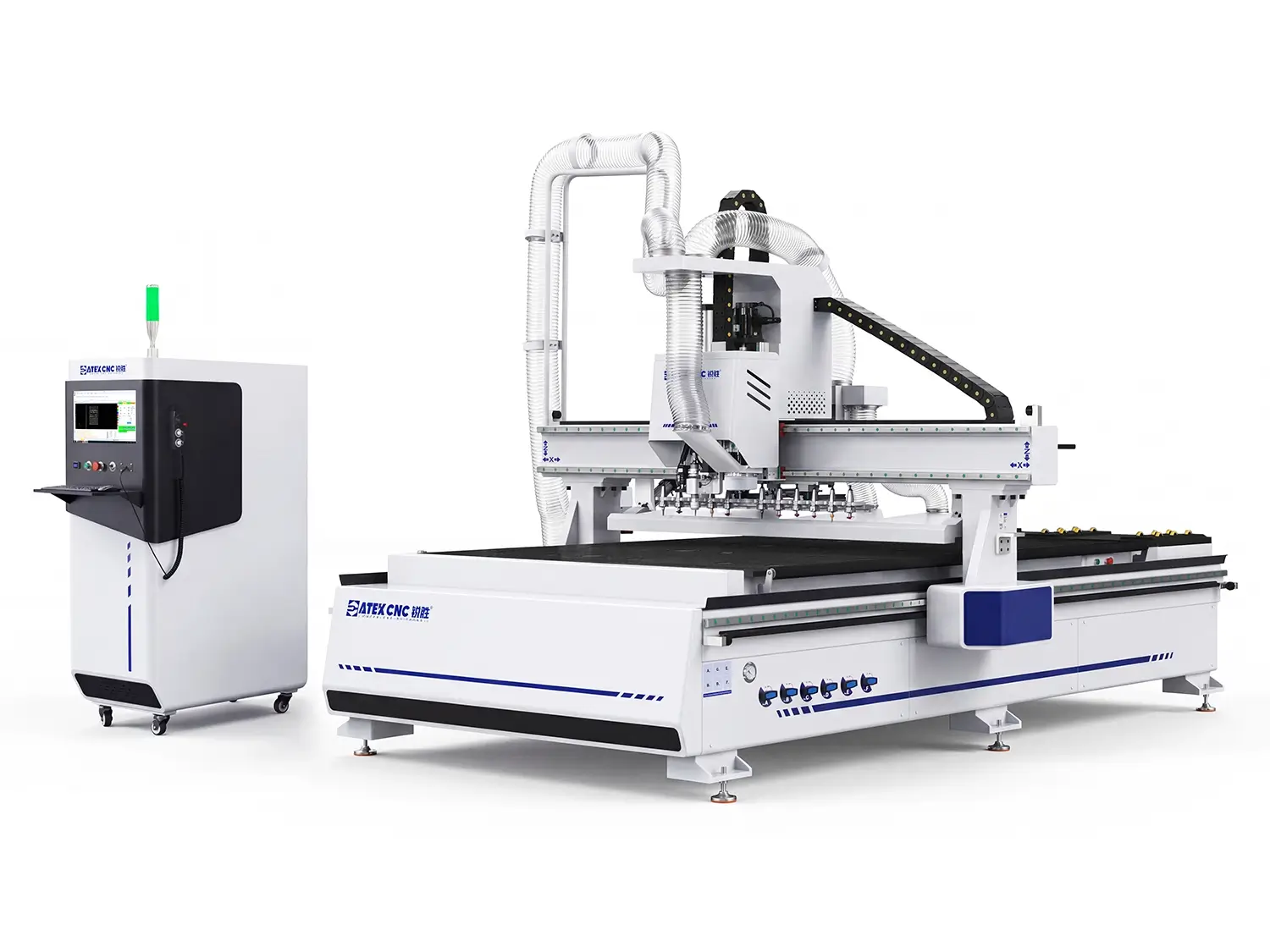
This is a Spire Series multi-functional CNC router with a 2000 × 3000 mm working area. Its key feature is the integration of a pneumatic oscillating cutter and a CCD vision system, enabling efficient cutting of both rigid and flexible materials.
$17,990.00~$32,800.00
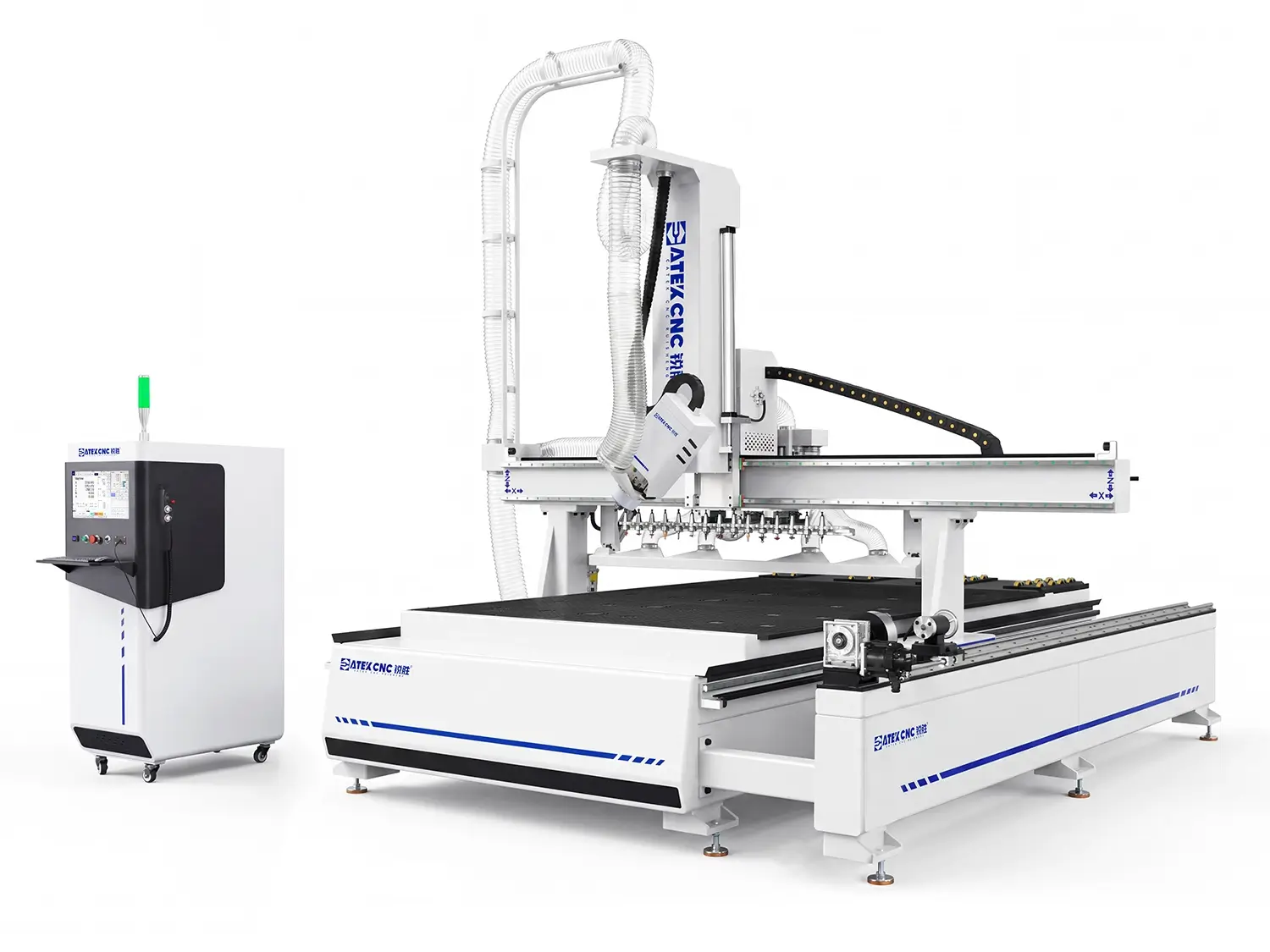
Engineered for ultimate versatility, this Spire 4-axis linear ATC CNC router combines a 7x10ft vacuum table with a swing head for angular machining and a rotary 4th axis for rotational workpieces.
$24,800.00~$32,800.00
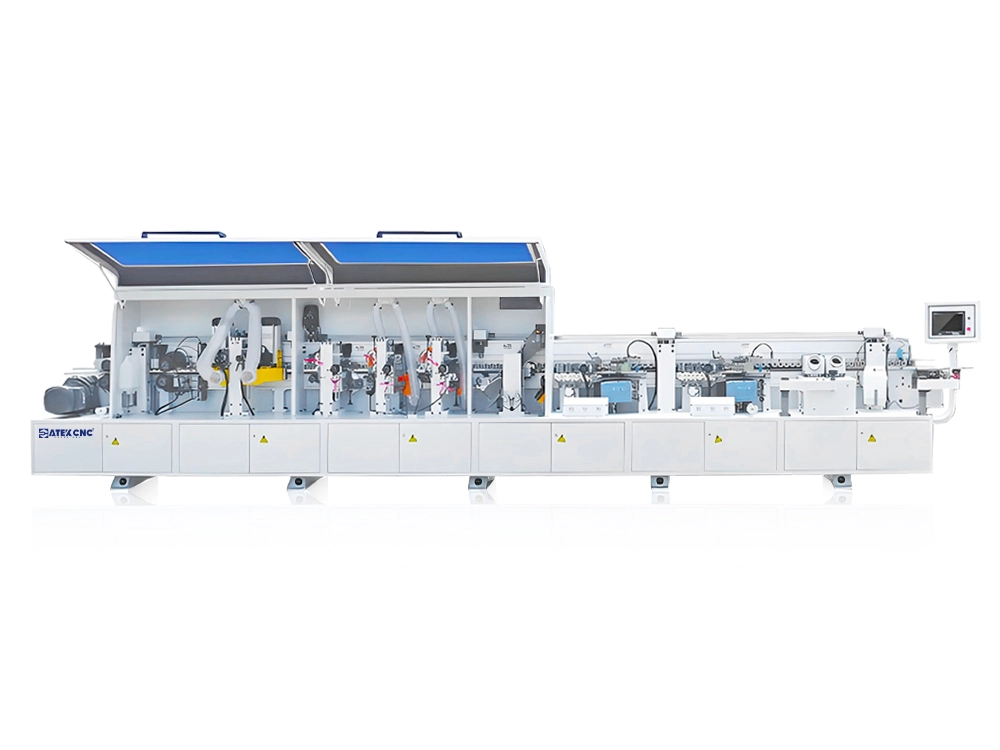
The CK-368-J is an 8-in-1 automatic edge banding machine that integrates eight functions: pre-milling, gluing and pressing, front and rear end trimming, rough trimming, fine trimming, edge scraping, and buffing. It can complete automatic edge banding operations on panels , and simultaneously realize pre-processing before edge banding and finishing after edge banding, and is widely applicable to the edge banding processing of various panels such as cabinets, tables, doors, and decorative panels.
$13,600.00~$15,800.00