


{{goods.model}}
How to Choose the Right CNC Wood Router for Your Workshop?
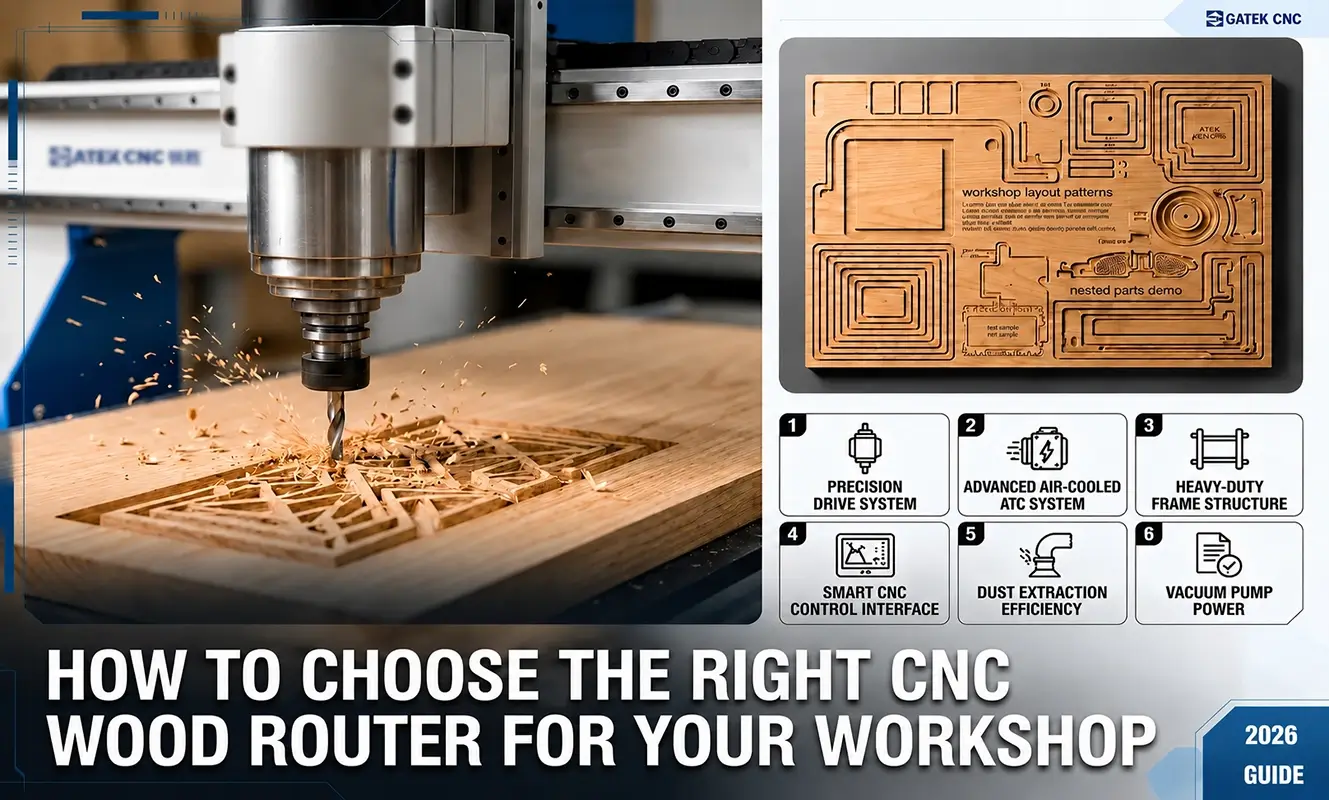
For a woodworking shop, choosing the right CNC wood router machine is a critical decision. Selecting an appropriate CNC wood cutting machine not only affects current processing efficiency but also impacts subsequent product quality and operational costs. Different production requirements impose varying demands on equipment size, spindle power, and control systems. With an increasing number of wood CNC machines available on the market today—whether you operate a furniture factory, a cabinet shop, a stair railing processing plant, or a custom woodworking business—choosing an unsuitable woodworking CNC router may lead to low production efficiency, unstable cutting results, or even failure to meet future order demands.
This article introduces the key factors to consider when selecting a CNC router, helping you choose the right equipment based on your workshop and production needs.
I.What is a CNC wood router machine?
A CNC wood router machine is a piece of equipment that uses a CNC system to control motion axes such as X, Y, Z, A, and B, driving various tools to perform cutting, drilling, slotting, milling, engraving, and other machining operations on workpieces. By controlling the coordinated movement of different motion axes, the machine drives the cutting tools to complete machining tasks according to programmed instructions, enabling flat machining, relief engraving, and some complex 3D processing. Compared to traditional manual processing methods, the CNC router offers several significant advantages:
Higher degree of automation
Increased processing efficiency
More stable machining accuracy
Strong consistency in batch processing
Ability to create complex patterns and 3D machining
Reduced labor costs
Today, CNC wood router machines are widely used in:
Furniture manufacturing
Craft production
Architectural decoration
Advertising industry
Model and mold making
Musical instrument manufacturing
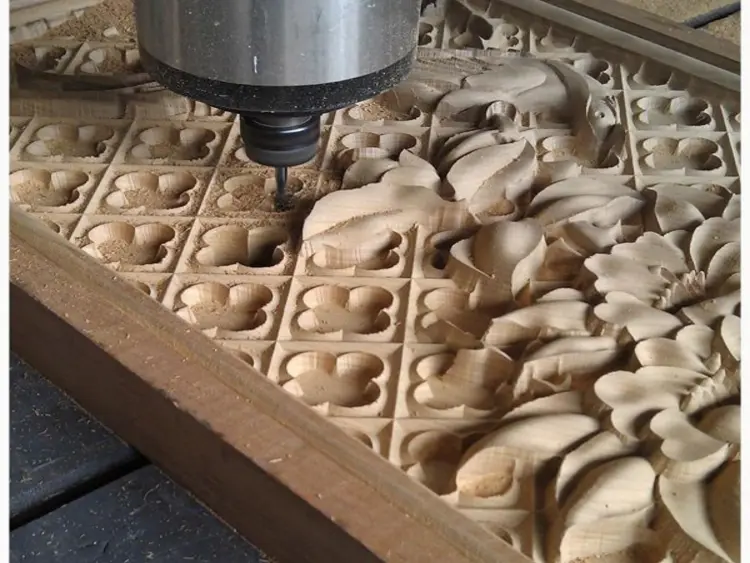
II.What are the common types of woodworking CNC routers?
Woodworking CNC routers can be classified into several types based on differences in structure and machining capabilities. Each type varies in functionality and application scope. The different machine models are primarily designed to meet various woodworking processing needs, such as flat cutting, 3D carving, multi-axis machining, and multi-process automated production.
When comparing different types of CNC wood cutting machines, you need to consider their specific engraving applications and precision cutting capabilities to determine which machine best suits your requirements.
1. 3-Axis Wood CNC Machine
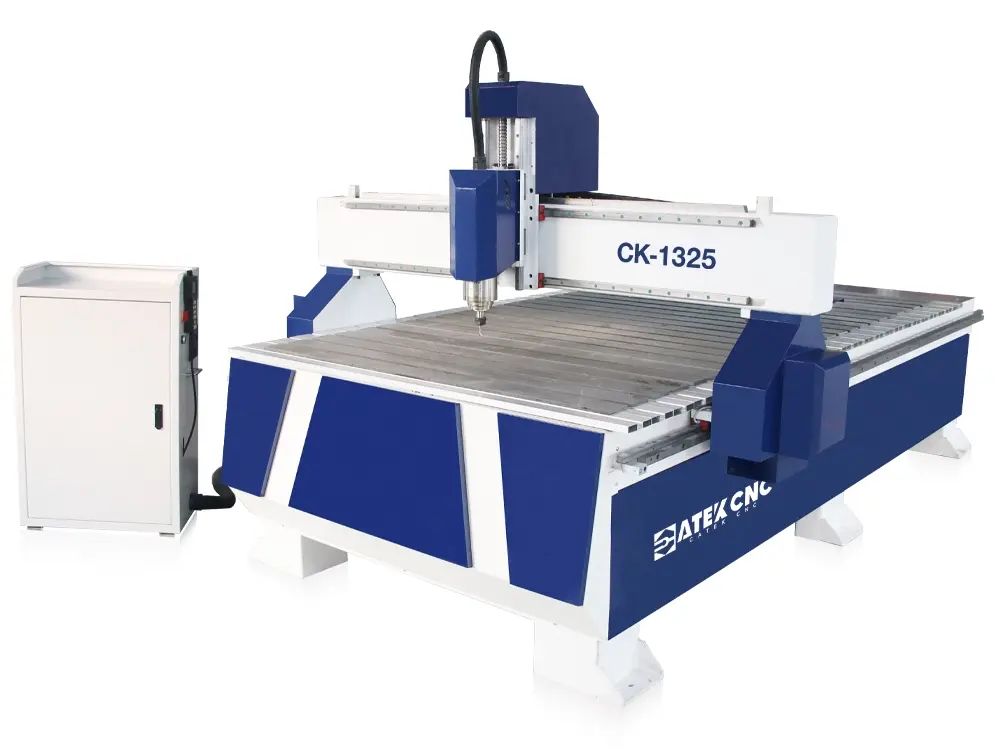
One of the most common woodworking CNC equipment types currently available, primarily used for sheet cutting, cabinet processing, wood panel engraving, and flat surface machining.
- Applications: Panel furniture, MDF cutting, wooden door processing, flat engraving
- Advantages: Lower cost, simple operation, suitable for small to medium-sized workshops, ideal for 2D cutting and engraving
Due to their simple structure, lower cost, and relatively easy operation, 3-axis machines are well-suited for small to medium-sized woodworking shops and entry-level furniture manufacturing businesses. However, 3-axis equipment has certain limitations when it comes to complex curved surfaces and 3D machining.
For small woodworking shops with limited budgets, the 3-axis woodworking CNC router remains a highly practical choice.
Especially in the panel furniture, cabinet, and advertising signage industries, the 3-axis CNC wood cutting machine can deliver stable cutting efficiency and low operating costs.
2. 4-Axis wood CNC machine
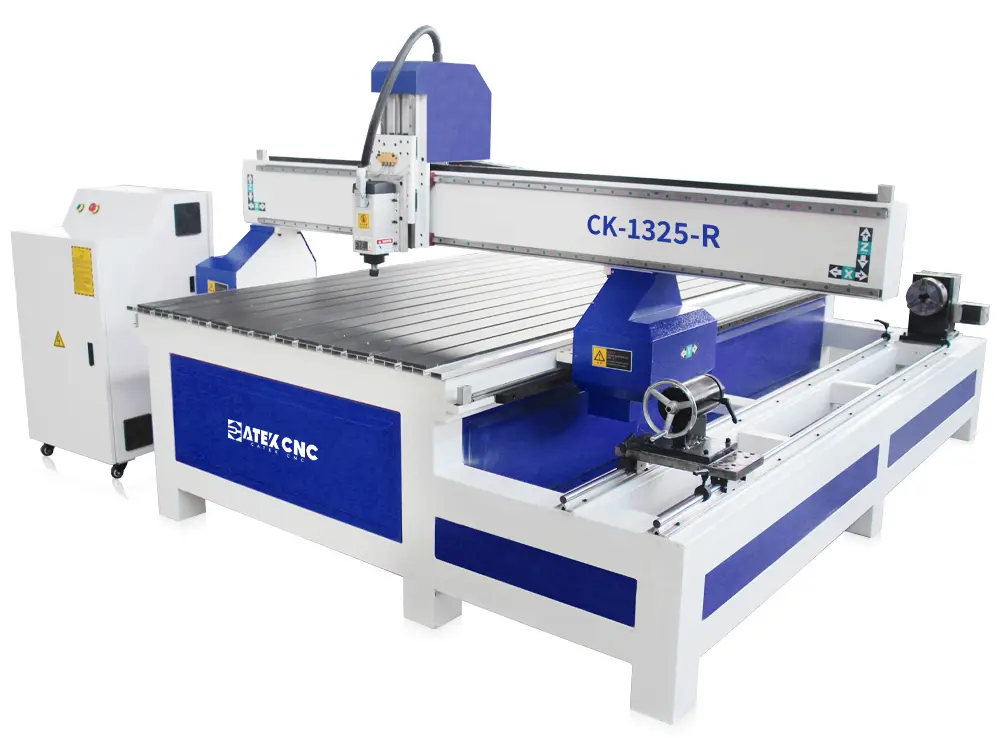
Based on the 3-axis configuration, a 4-axis wood CNC machine adds a rotary axis or a swinging head structure, enabling more complex curved surface and 3D machining.
- Offers multiple 4-axis configurations: rotary fourth-axis engraving machine, swinging-head four-axis engraving machine, automatic tool changer (ATC) four-axis machine, turning and carving combination machine
- Applications: stair railings, Roman columns, furniture legs, cylindrical wood carving, complex decorative components
Compared to traditional 3-axis CNC router machines, 4-axis equipment provides greater flexibility when machining cylindrical products and complex curved surfaces.
If your factory primarily produces cabinets and panel furniture, a standard 3-axis CNC wood router machine can usually meet most of your cutting requirements.
However, if you need to machine stair railings, furniture legs, or complex decorative components, a 4-axis woodworking CNC router will be a more suitable choice.
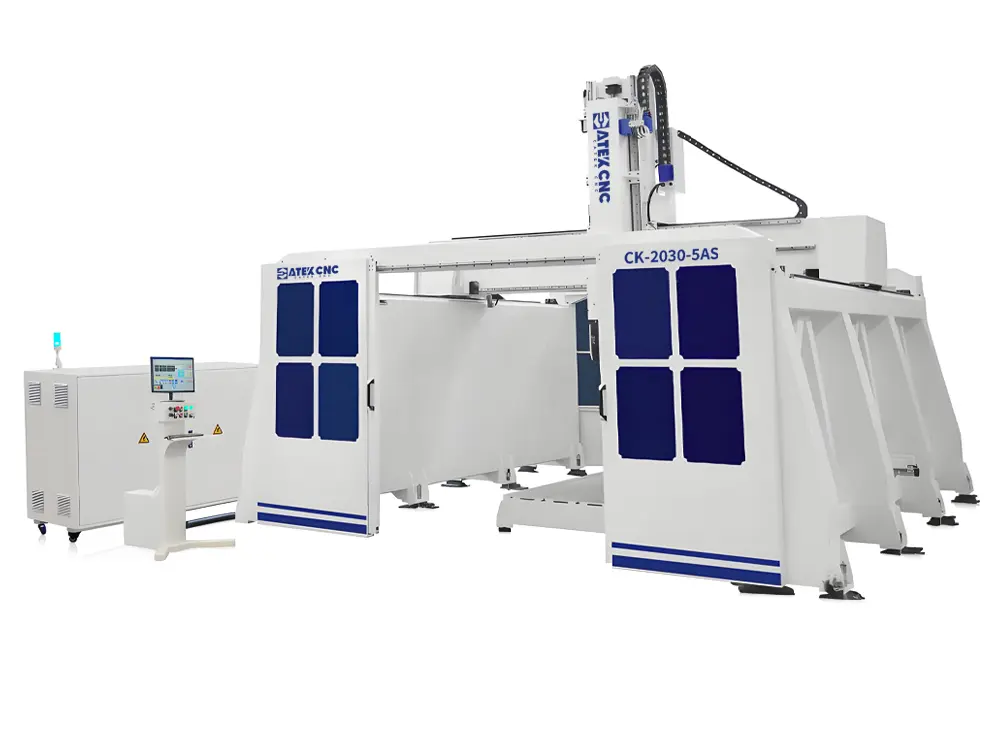
3. 5-Axis wood CNC machine
Many woodworking companies encounter a common challenge during equipment upgrades:
While standard 3-axis or 4-axis CNC routers can handle basic cutting and engraving, machining complex curved surfaces, irregular structures, or high-precision 3D products often requires repeatedly adjusting the work piece angle or even multiple re-clamping operations.
This not only increases machining time but also introduces positioning errors that affect final machining accuracy.
This is particularly true in high-end furniture manufacturing, artistic wood carving, and complex decorative component processing, where many products inherently contain numerous curved surfaces, bevels, and three-dimensional details. Traditional machining methods often struggle to balance both processing efficiency and surface quality.
This is why an increasing number of large woodworking companies are turning to 5-axis wood CNC machines.
- Machining capabilities: multi-angle cutting, 5-axis simultaneous machining, complex curved surface carving, large-scale 3D model machining, and other customized CNC wood engraving solutions
- Applications: high-end furniture manufacturing, large-scale wood carvings, complex wooden molds, aviation models, customized 3D products
For complex woodworking products, this machining approach typically delivers several notable improvements:
- Reduced errors caused by repeated clamping
- Improved consistency in machining complex curved surfaces
- Lower time costs associated with manual angle adjustments
- Enhanced efficiency in 3D carving and irregular structure machining
- Easier completion of high-precision 3D machining tasks
For factories primarily engaged in panel furniture processing, 3-axis equipment usually meets most production needs. However, if your product line begins to involve complex curved surfaces, irregular structures, or high-end custom machining, a 5-axis woodworking CNC router often provides distinct advantages.
- Therefore, 5-axis equipment is better suited for woodworking companies looking to enhance their complex machining capabilities, reduce manual intervention, and further increase product added value.
4.What is the difference between 4-axis and 5-axis woodworking CNC routers?
| Comparison Item | 4-Axis CNC Wood Router Machine | 5-Axis CNC Wood Router Machine |
|---|---|---|
| Axis Configuration | 3 axes + rotary axis / swivel head | 5-axis simultaneous machining |
| Machining Method | Capable of rotation and partial curved surface machining | Supports complex multi-angle simultaneous machining |
| Suitable Products | Stair railings, furniture legs, Roman columns, cylindrical wood carvings | High-end furniture, complex wood carvings, large-scale 3D models |
| Curved Surface Capability | Good | Excellent |
| Multi-Angle Machining Capability | Limited | Stronger |
| Complex 3D Carving | Can achieve some 3D machining | More suitable for complex 3D machining |
| Machining Accuracy | Relatively high | Higher |
| Automation Level | Relatively high | Industrial-grade automation |
| Need for Manual Flipping | Partially required | Significantly reduced |
| Production Efficiency | High | Higher |
| Equipment Cost | Relatively low | Relatively high |
| Operation Difficulty | Medium | High |
| Suitable Enterprises | Small to medium-sized woodworking shops | Large factories and high-end manufacturing enterprises |
III.What key factors should be considered when selecting a CNC wood cutting machine?
1. Budget and Project Requirements
Your budget needs to be balanced with your actual production requirements. This will allow you to select a machine that fits your budget while improving operational efficiency. To make the right choice, it is essential to carefully weigh short-term costs against long-term benefits. This way, you will avoid purchasing a machine that either fails to meet production demands or has excessive functionality.
Entry-Level Requirements
- Suitable for: startup workshops, small woodworking shops, basic sheet processing
- Recommended configuration: 3 axis structure, standard spindle, basic control system
Industrial-Grade Requirements
- Suitable for: furniture factories, high-capacity production, complex engraving
- Recommended configuration: automatic tool changer (ATC), vacuum worktable, heavy-duty frame construction, 4-axis or 5-axis capability
When selecting a CNC wood router machine, it is not advisable to focus solely on the initial price of the equipment.
For long-term production, factors such as machine stability, automation level, ongoing maintenance costs, and production efficiency are often more important than a low upfront price.
A high-quality woodworking CNC router, though requiring a higher initial investment, typically delivers more stable long term production returns.
2. How to choose the size of a CNC wood router machine?
Choosing the appropriate size of a CNC wood router machine is one of the most common concerns for many woodworking companies and beginners when purchasing equipment.
The working area directly affects the material specifications you can process, production efficiency, and your future business scalability. Therefore, when selecting a CNC wood cutting machine, it is important to plan reasonably based on actual processing needs, rather than simply opting for the largest size available.
Common specifications of CNC wood router machines include:
- 1325 CNC Router (4×8 ft)
- 1530 CNC Router (5×10 ft)
- 2130 CNC Router(7x10ft)
- Custom CNC Router
Generally speaking, furniture factories and cabinet processing companies primarily use 1325 and 1530 models. Whether to choose a larger machine should be determined based on future order volumes and product types.
If your business has expansion plans in the future, it is advisable to choose a larger specification within budget to avoid duplicate investments later.
For example:
- The 1325 CNC Router is ideal for standard furniture panels, cabinets, and panel furniture processing.
- The 1530 CNC Router offers a larger working area compared to the 1325, making it suitable for factories that require higher nesting efficiency or process larger sheets.
For beginners, small workshops, and individual hobbyists, a smaller wood CNC machine is often more space-saving and reduces equipment investment costs, such as:
- 1×1 ft
- 2×2 ft
- 2×3 ft
- 3×4 ft
- 4×6 ft
For the furniture manufacturing, cabinet production, and industrial woodworking industries, the 4×8 ft woodworking CNC router remains the most standard and mainstream configuration, as it accommodates most standard sheet sizes while balancing production efficiency and operating costs.
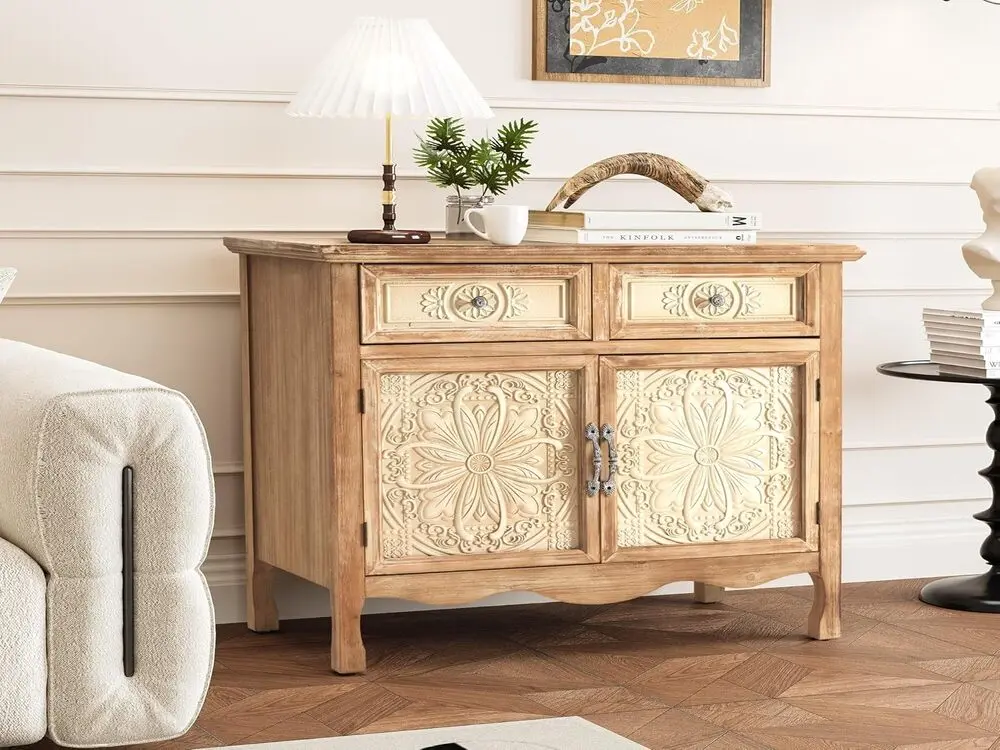
In addition to current production requirements, when selecting a CNC router size, it is also recommended that companies consider future production capacity expansion, workshop space, and automated processing needs in advance.
CATEKCNC CNC Router Products offer a variety of standardized and customizable working area options to meet different processing requirements—ranging from small wood CNC machines to large industrial CNC woodworking machines.
3. Machining Accuracy and Stability
Many users, when purchasing a woodworking CNC router, often focus only on machine size and price. However, what truly impacts long-term processing results is the accuracy and stability of the equipment.
Especially for furniture manufacturing, cabinet production, and complex engraving applications, insufficient equipment stability can easily lead to problems such as:
- Dimensional deviations in cut panels
- Unclear or blurred carving details
- Uneven machined surfaces
- Loss of accuracy after prolonged operation
- Frequent downtime affecting production efficiency
Therefore, when selecting a CNC wood cutting machine, spindle quality, spindle speed, and the tooling system are all very important factors.
What Does Spindle Speed Affect?
For woodworking applications, spindle speed directly affects the cutting performance of the tool. Generally speaking, the common spindle speed range for a woodworking CNC router is approximately 18,000–24,000 RPM.
For processing cabinet doors, decorative panels, relief carvings, or wood products with high surface finish requirements, a high-speed spindle often performs better in actual machining in the following ways:
Smoother and more continuous cutting, reducing visible tool marks
Finer and more uniform surface finish
Better performance for detailed engraving and complex patterns
It is important to note that higher spindle speed is not always better. To achieve the optimal machining performance from a CNC wood cutting machine, spindle speed must be properly matched with material hardness, tool type, and feed rate.
How to Choose the Right Spindle?
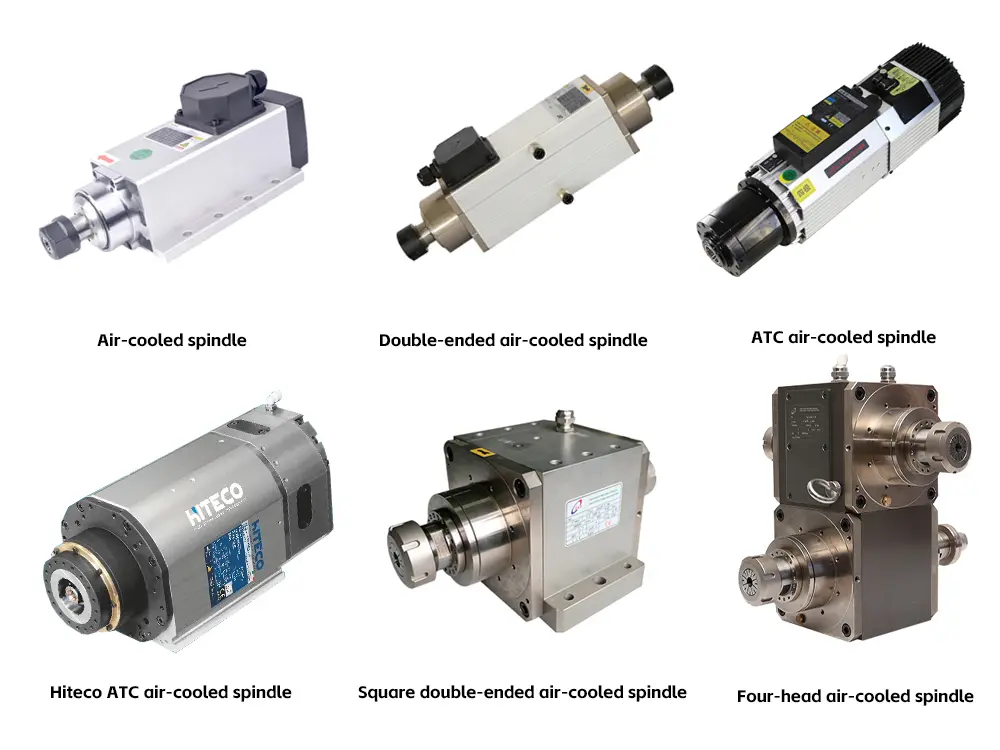
Spindle performance typically affects the following aspects:
Stability of the cutting process
Smoothness of the machined surface
Ability to maintain accuracy during extended operation
Service life and required maintenance frequency
For example, in a furniture factory or a panel furniture production facility, equipment often needs to run continuously for long periods. If spindle stability is insufficient, it may not only affect machining accuracy but also increase maintenance costs and downtime.
In the woodworking industry, common spindle types for CNC router machines include water-cooled spindles and air-cooled spindles. Their characteristics are as follows:
Water-cooled spindle: Generally better suited for long-duration, high-load continuous machining due to superior heat dissipation stability.
Air-cooled spindle: Simpler in structure and easier to maintain, making it suitable for many small to medium-sized machining applications.
Many small to medium-sized workshops find that an air-cooled spindle already meets their daily machining needs. However, for furniture factories that require long, continuous production runs, a water-cooled spindle is generally more stable. Especially during high-load operation in summer, the spindle's heat dissipation capability directly affects the machine's ability to run continuously.
Why Are the Tooling and Automatic Tool Change System Important?
Many users tend to overlook the importance of the tooling system when selecting a CNC wood router machine in the early stages.
In fact, different machining processes require different types of tools. For example:
End mill: Suitable for conventional cutting, nesting, and grooving of panels
Ball nose bit: Better suited for 3D relief and curved surface machining
Compression bit: Used for double-sided cutting, effectively reducing burrs on panel edges
V-groove bit: Commonly used for lettering and decorative line engraving
For simple cutting applications, manual tool change is usually sufficient.
However, for complex carving, cabinet door processing, or production scenarios that require frequent tool changes, an automatic tool change (ATC) system can significantly improve production efficiency.
An ATC CNC wood router machine can automatically perform multiple tool changes, reducing manual intervention time while improving consistency and automation levels for complex machining projects.
For woodworking companies engaged in batch production, an ATC woodworking CNC router often effectively reduces labor costs and increases overall processing efficiency.
4. CNC Control System
The control system determines the stability and operational experience of the equipment. For basic cutting applications, a standard control system is usually sufficient. However, when it comes to complex engraving, multi-process machining, or multi-axis simultaneous operation, the performance differences between control systems become very significant.
Common control systems include:
Syntec
NC Studio
DSP
Different systems have their own characteristics in terms of operation methods, expandability, and automation capabilities.
For example, DSP is more suitable for basic woodworking equipment, offering simple operation and entry-level applications. In contrast, industrial-grade systems such as Syntec are better suited for high-precision machining, automatic tool changing, multi-axis simultaneous operation, and other complex production environments.
A high-quality control system improves the following:
Motion precision and path control capability of the equipment
Ease of operation and learning curve
Automation efficiency and program execution speed
Stability during multi-axis simultaneous operation
Complex woodworking applications are generally better served by industrial-grade control systems. Choosing a stable control system is very important for the long-term operation of CNC routers.
A reliable control system not only enhances the overall stability of the CNC router but also supports higher levels of automated machining requirements.
5. Maintenance and Technical Support
Many users overlook the importance of after-sales support when purchasing equipment, tending to focus mainly on price and specifications. However, what truly affects the long-term user experience is often ongoing maintenance and technical support. Especially for users who are new to a woodworking CNC router, equipment installation, software operation, machining parameter adjustment, and troubleshooting can all directly impact production schedules.
A reliable supplier typically provides: Technical training, Remote support, Installation guidance, Spare parts supply, Software service
In addition, equipment maintenance is equally important.
Routine maintenance includes: Cleaning the guide rails and worktable, Regularly lubricating moving components, Checking the spindle operating condition, Replacing worn tools, Calibrating equipment accuracy
Some CATEKCNC models are equipped with an automatic lubrication system, which effectively reduces the maintenance workload.
IV.FAQ
What Materials Can a CNC Wood Router Machine Process?
In addition to solid wood, it can also process MDF, plywood, acrylic, PVC, foam, composite materials, and some soft metals. Different materials require matching tooling and spindle configurations.
Do You Need an Automatic Tool Change System?
If your machining involves:
Multiple tool changes
Continuous production
Complex carving
Batch processing
Then an ATC (automatic tool changer) system can significantly improve efficiency and reduce labor costs. For medium to large furniture factories, cabinet production enterprises, and complex woodworking projects, an ATC CNC router often delivers higher production efficiency and more stable machining quality.
3.How to Maintain a Woodworking CNC Router?
Routine maintenance includes:
1.Clean the equipment daily
Regularly lubricate the guide rails
Check the spindle cooling system
4.Replace worn tools
Inspect the electrical system
For a CNC wood router machine that operates under high loads over long periods, establishing a regular maintenance schedule can effectively reduce the risk of downtime and improve overall production efficiency.
V.Conclusion
Choosing the right CNC wood router machine is not simply a matter of comparing prices or equipment specifications. Instead, it requires a comprehensive consideration of your specific product types, production scale, and future development direction.
For a woodworking company, a suitable woodworking CNC router not only improves production efficiency and machining quality but also reduces labor costs and enhances the ability to take on future orders. Equipment with different configurations is suited to different processing needs. Only by selecting a machine that truly matches your production scenario can you achieve more stable long-term value.
Before purchasing equipment, it is recommended to thoroughly understand your own processing requirements and pay close attention to the machine's stability, automation level, and future expandability. This will help your business maintain higher production efficiency and more stable development in a competitive market.
With extensive experience in woodworking CNC equipment, CATEKCNC CNC Router Manufacturer offers complete solutions ranging from standard 3-axis engraving machines to high-end 5-axis machining centers, helping woodworking manufacturers improve production efficiency, machining quality, and long-term competitiveness.
RELATED MODELS
We recommend some related models for you...
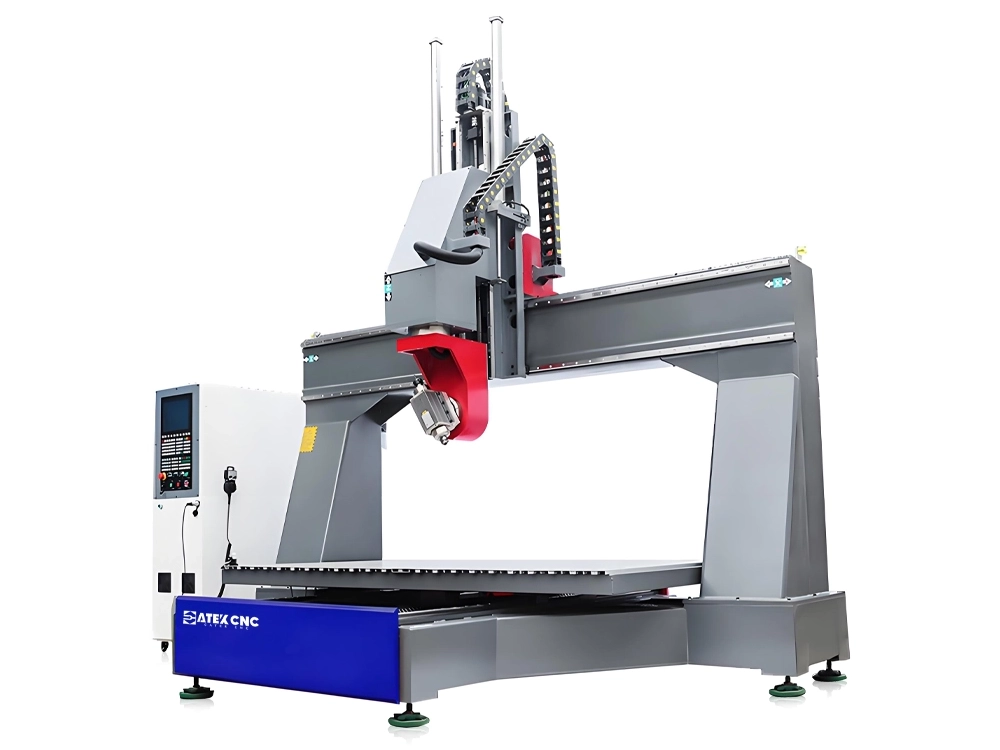
This is a five-axis CNC router with a movable worktable. The transverse slide can move along the X-axis, the worktable can move along the Y-axis, and the spindle moves along the Z-axis, equipped with A and C rotary axes to achieve five-axis linkage. This equipment is suitable for complex 3D carving of intricate curved surfaces on three-dimensional workpieces and is widely used in industries such as furniture manufacturing and mold production. It can machine various complex-shaped components, inc...
$37,000.00~$65,000.00
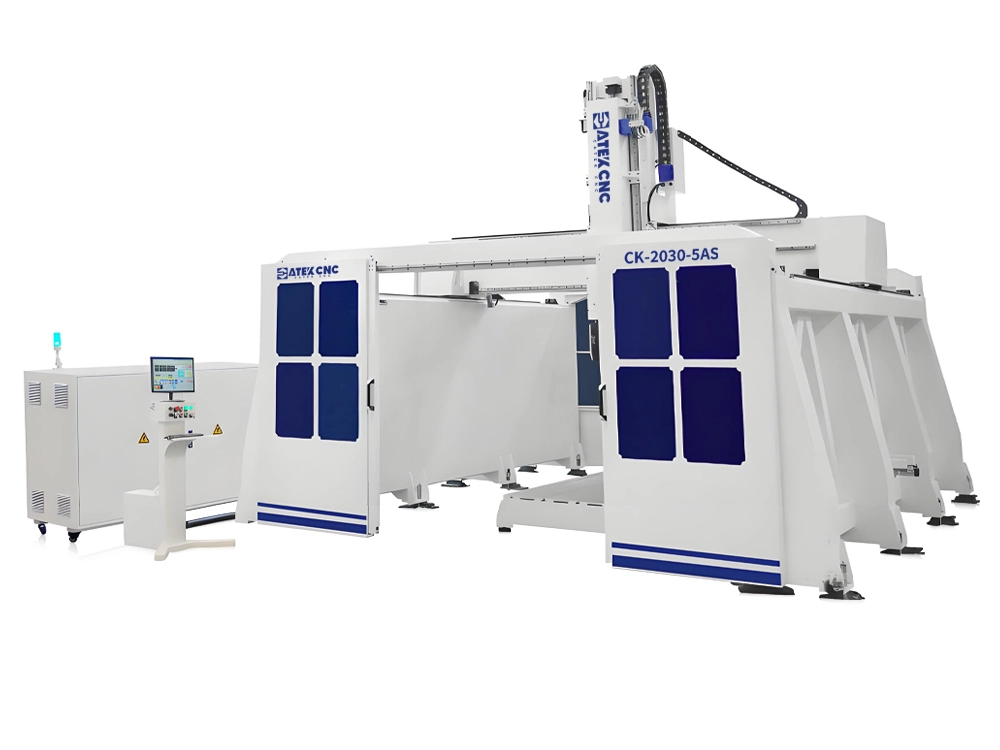
This is a large five-axis CNC router, featuring an elevated and widened bridge design. The beam is mounted on bridge-style columns for front-to-back movement, while the other two linear axes are identical to those of a three-axis gantry router. Additionally, it includes two rotary axes: one enables the spindle to rotate indexically around its central axis, and the other allows the spindle to tilt at an angle along a plane perpendicular to the X-Y plane. This enables the spindle to perform variou...
$78,000.00~$138,000.00
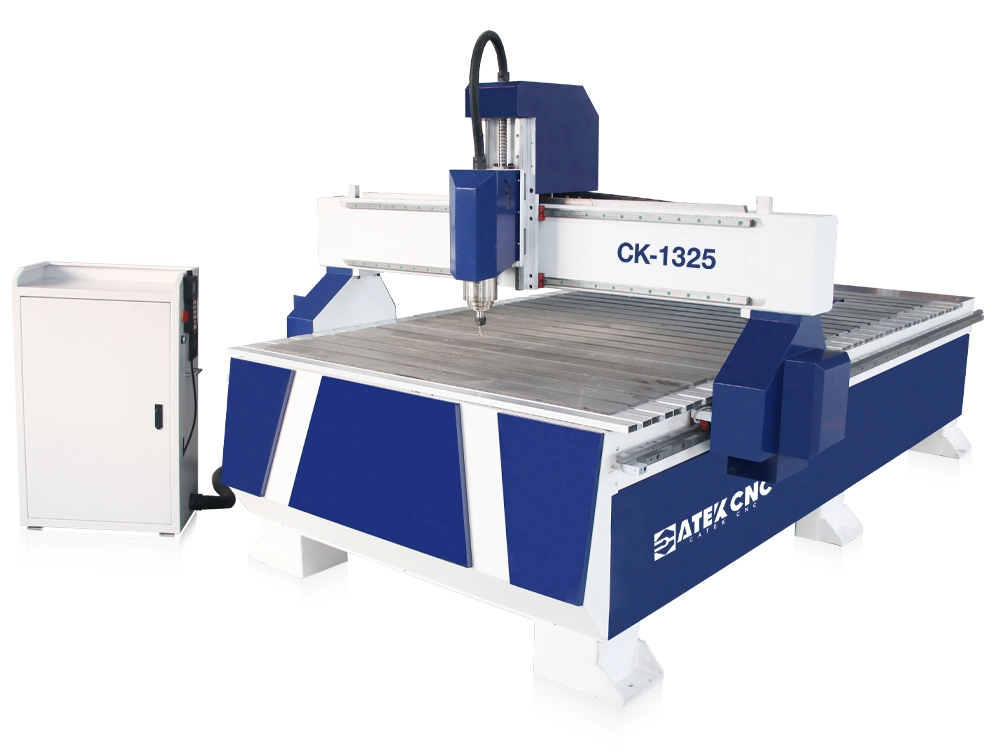
The CK-1325 is a standard-sized CNC router featuring simple operation and affordable pricing, making it ideal for small furniture manufacturing workshops, personal studios, and hobbyists. It is widely used for various processing techniques on solid wood, plywood, and MDF materials, including engraving, cutting, milling, drilling, and grooving of wave boards, doors/windows, cabinets, tables/chairs, and signage letters.
$2,570.00~$5,370.00
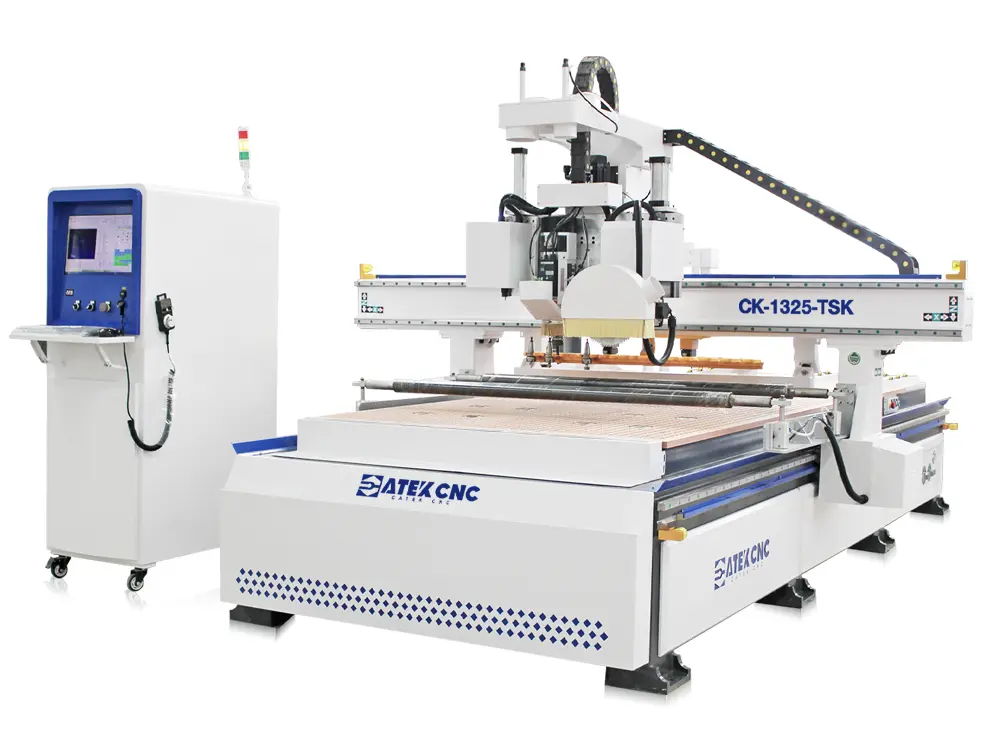
The CK-1325-TSK is a high-performance multi-functional CNC router that integrates automatic tool changing, flexible material cutting, and rigid sheet processing to comprehensively meet diverse production needs. The CNC router machine is equipped with a linear tool magazine capable of holding 12 tools and an automatic tool setter. Working in concert with a 9KW high-speed air-cooled spindle, it enables automatic tool changes and measures/calculates compensation values during processing, significan...
$13,800.00~$23,800.00
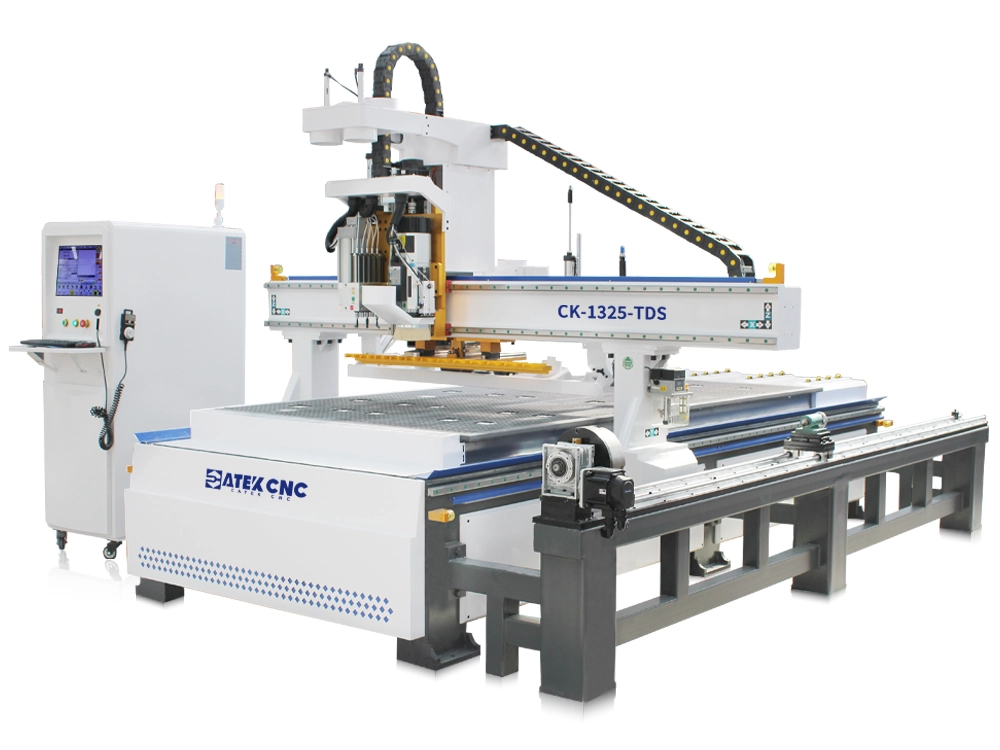
This CNC nesting machine is specifically developed for whole-house customized panel furniture production. It incorporates all functionalities of a linear ATC CNC router and is equipped with a 5+4 pneumatic drilling bank that can mount 9 different drill bits simultaneously, capable of completing 99% of drilling tasks, making it particularly suitable for manufacturing panel furniture like wardrobes and cabinets. Additionally, it features a 3D rotary fourth axis for processing 3D products such as E...
$13,800.00~$17,500.00
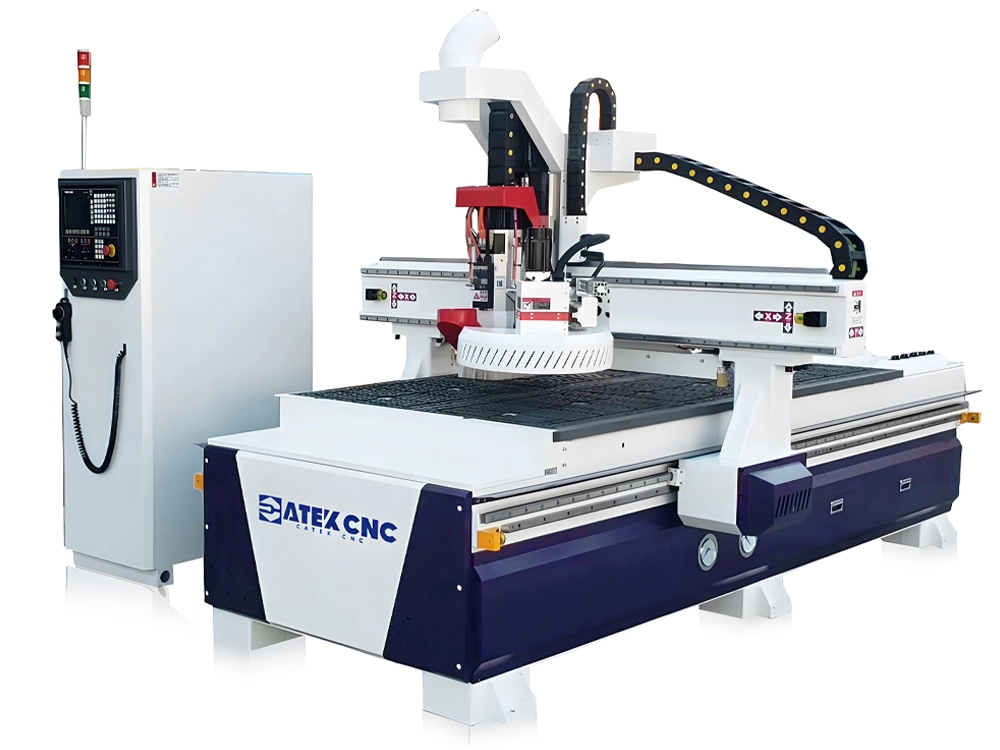
This ATC router is equipped with a carousel tool magazine with a maximum of 16 tools, and the machine automatically changes tools as needed during processing.It also has a 6-zone 24-hole vacuum adsorption table and an automatic tool setting instrument,and it is a good choice for you to process cabinets, door panels and other furniture.
$9,700.00~$13,000.00
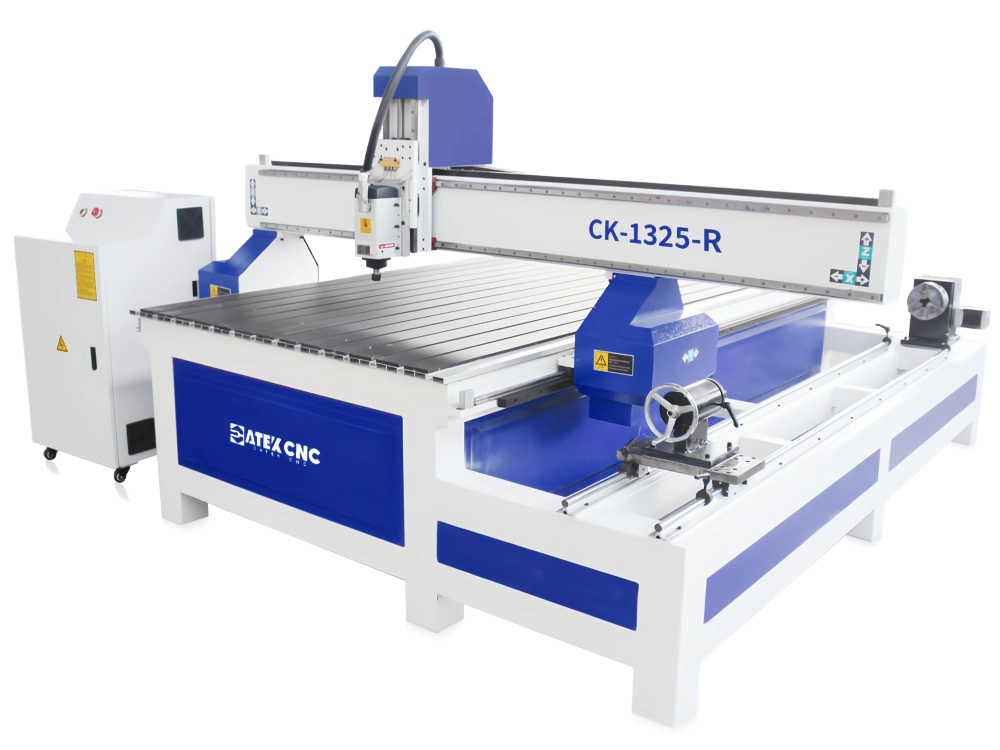
The machine features a 4x8ft worktable specifically designed for sheet material machining, along with a rotary 4th axis for clamping and rotating workpieces. This dual-functionality enables both planar engraving and 3D carving operations. Serving dual purposes with a single machine not only reduces procurement costs and floor space requirements but also lowers subsequent maintenance expenses. If your operations require both flat-surface processing and 3D machining, this equipment deserves your s...
$4,000.00~$5,570.00
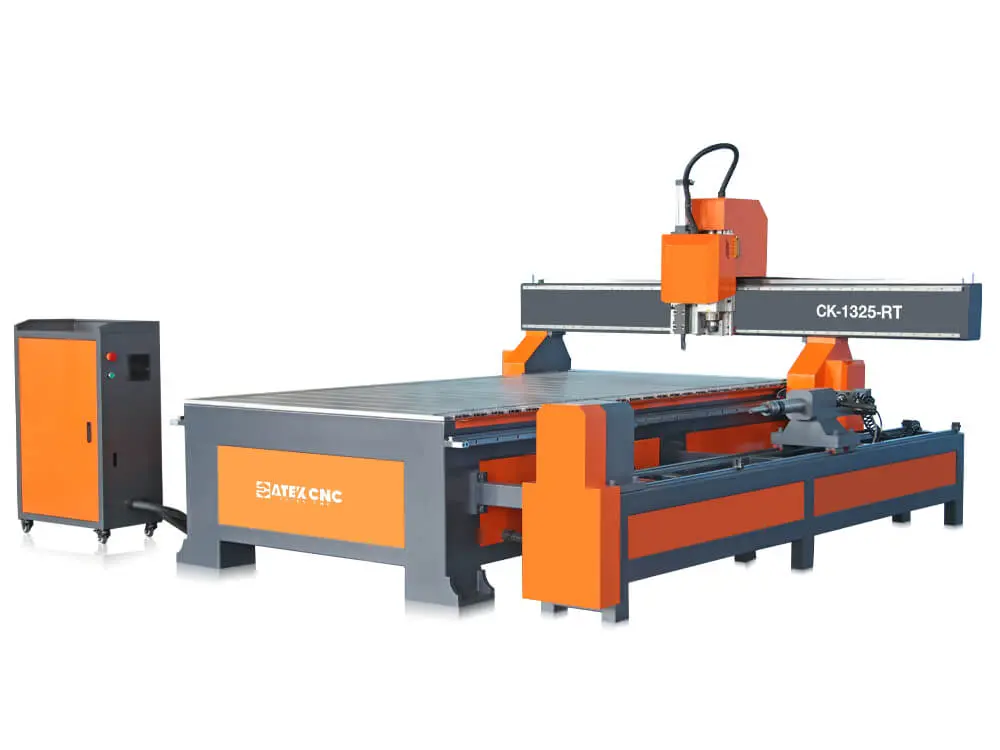
This is a composite CNC wood router, which can be regarded as a combination of a CNC wood router and a 4-axis CNC wood lathe. In addition to the 2D engraving function of a standard CNC wood router, this machine is innovatively equipped with a rotary 4th axis on the side of the body. The rotary axis can perform both indexing rotation and continuous high-speed rotation. Working with the turning tools and spindle, it can complete turning and 3D carving operations. This design realizes dual function...
$5,280.00~$6,380.00