Five-Axis CNC Router for Mold and Model Making
5-axis CNC routers is a complex CNC machine tool with five motion axes. Depending on different product forms and processes requirements, it has various design forms in terms of mechanical structure. Typically, the motion system of this type of machine consists of three linear axes and two rotary axes. The three linear axes are used for standard front-back, left-right, and up-down linear movements in three-dimensional space, while the two rotary axes allow the workpiece or spindle to index, rotate, or tilt, adjusting the tool to the machining position of the workpiece at the optimal angle. This enables comprehensive and precise machining of all positions of the workpiece. It is widely used for complex mold processing, model making, and electrical component machining, such as injection molds, die-casting molds, and foam disappearance molds.
-
Hot
Five-Axis CNC Wood Router with Movable Worktable
-
CK-1325-5S
-
5.0(3)
This is a 5-axis worktable-moving-type CNC router, it adds two rotary axes to three linear axes, the C-axis for spindle tilting and A-axis for rotating C-axis , enabling complex small 3D moldel make.$37,000.00~$65,000.00 -
-
2026 The Best Five-Axis CNC Wood Milling Machine for Sale
-
CK-1219-8
-
5.0(1)
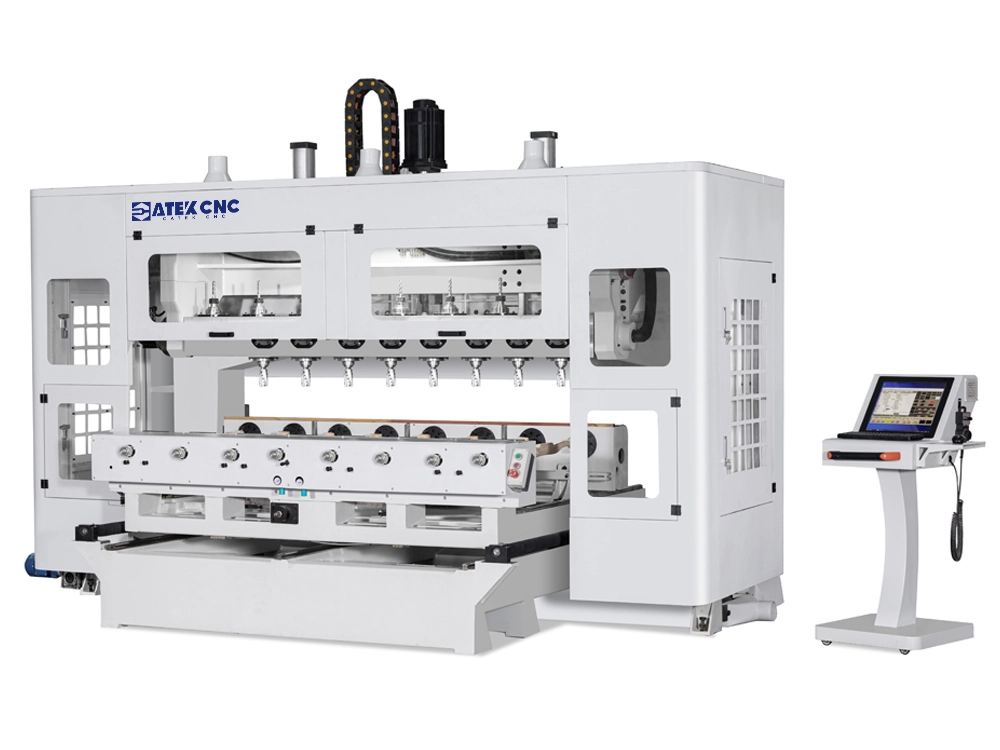
This CNC wood sculpting machine specializes in milling/carving cylindrical wood, featuring 3 linear axes and 2 rotary axes (A-axis for workpiece clamping and indexing, B-axis for spindle tilting or tool switching).$33,000.00~$51,800.00 -
-
Bridge-Type Five-Axis Large CNC Wood Machining Center for 3D Milling
-
CK-2030-5AS
-
5.0(0)
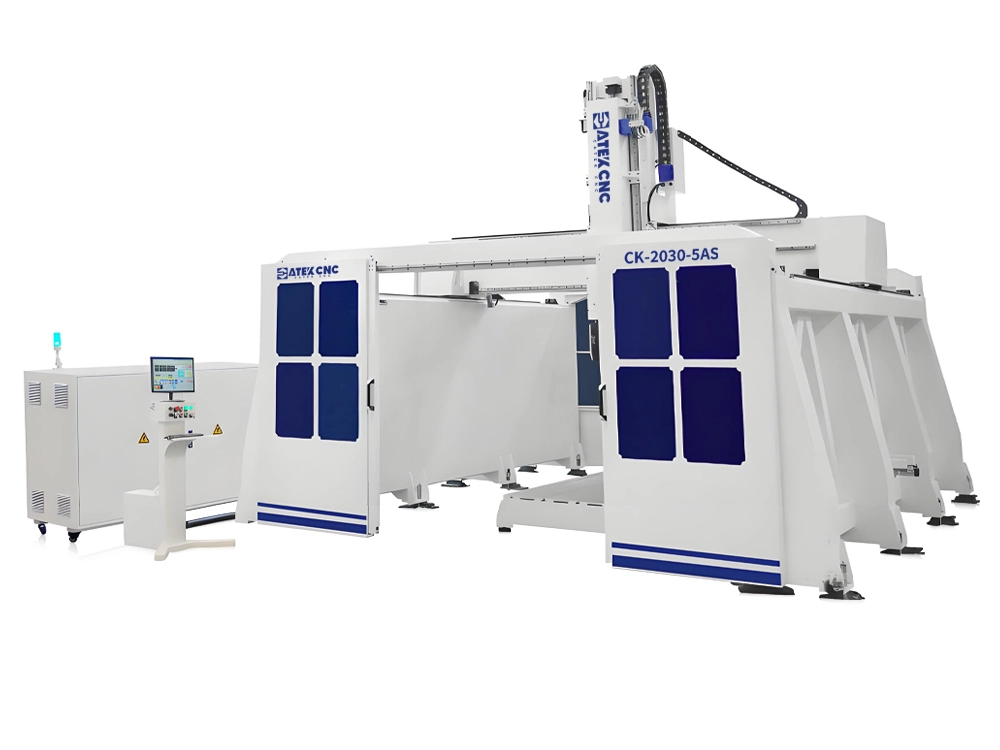
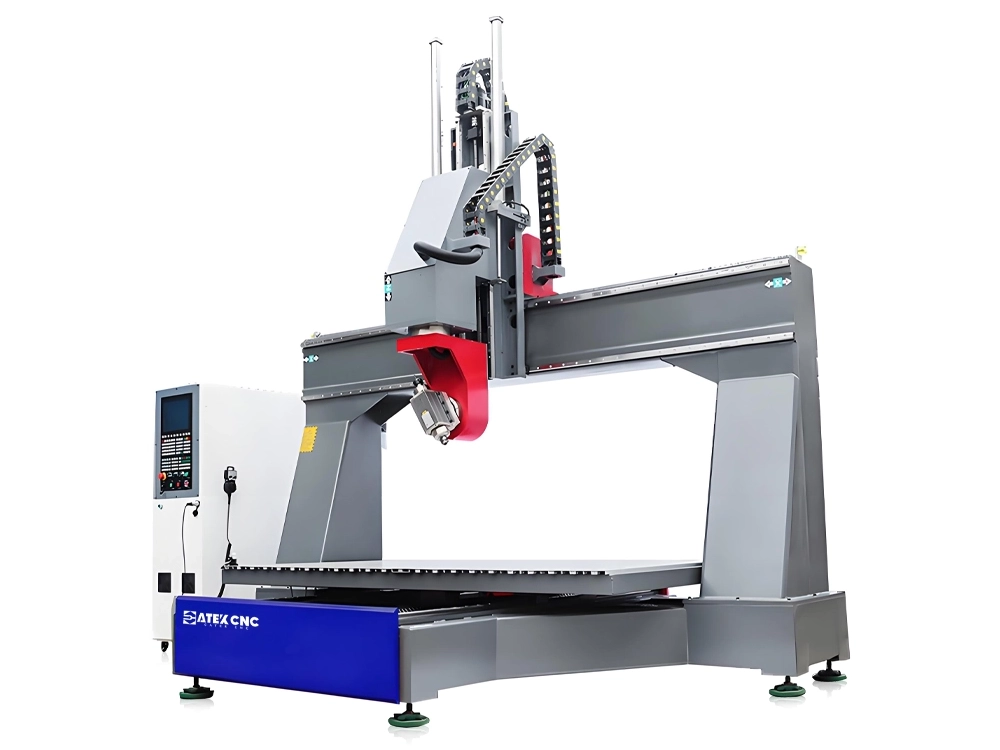
This large bridge-type 5-axis CNC router features a 2000*3000mm worktable and dual rotary axes, enabling 180° spindle tilt in 3D space for machining various large, complex molds and components.$78,000.00~$138,000.00 -
THE FOLLOWING ARTICLES MAY HELP YOU
-
CNC Router
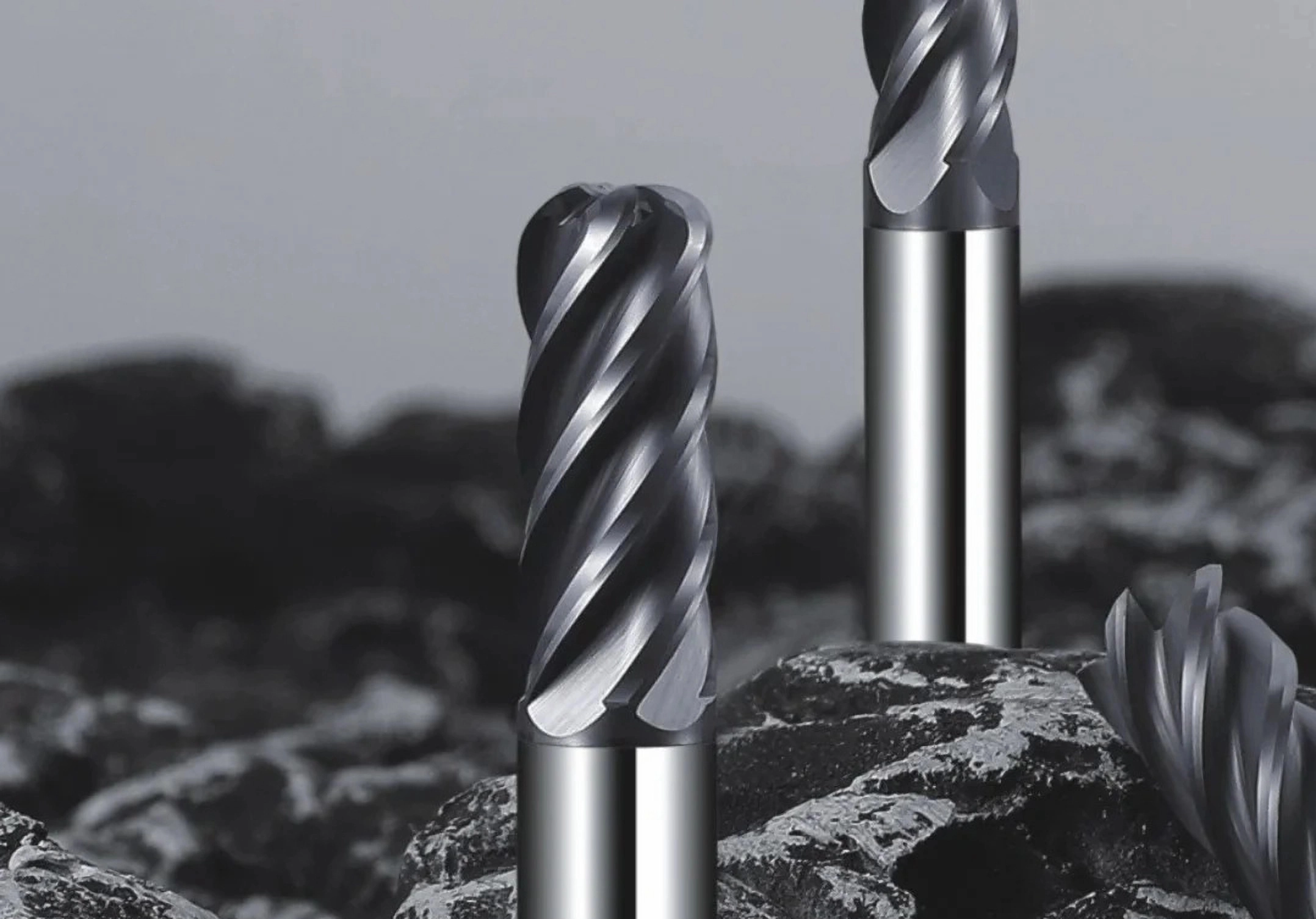
How to Select the Milling Tools for CNC Wood Router?
A milling tool is a cutting tool with a cylindrical shape, featuring cutting edges on its circumference and bottom, which performs rotational motion to cut and machine workpieces.The milling tool family is very extensive. Together with hole-making tools (drills, reamers, taps, boring tools, etc.), they cover almost all commonly used processing tools on CNC wood router machines.Types of Milling ToolsMilling tools can be classified into various categories based on different criteria. Below are sev...
-
Other
What Is a Servo Motor?
To understand what a servo motor is, you first need to know several relevant professional terms.Open-Loop ControlA control system in which the output quantity has no impact on the system's control is called an "open-loop control system".Open-loop control is a control method that acts on the controlled object unidirectionally only through preset instructions. Its core feature is the absence of a feedback loop in the system structure. After the controller generates an operation instruction based o...
-
Other
What Is the Transmission System of CNC Machine?
In CNC machines, the transmission system refers to the collective term for a series of mechanical components and devices that convert the power from the transmission system into precise and stable linear or rotary motion required by the machine's execution parts. Its primary function is to transmit power and transform the nature, direction, and speed of the motion. Specifically, in CNC router machines and CNC lathes, the transmission system mainly converts the rotational motion of various motors...
HERE ARE SOME RELATED VIDEOS OF CNC MACHINES
-
00:49
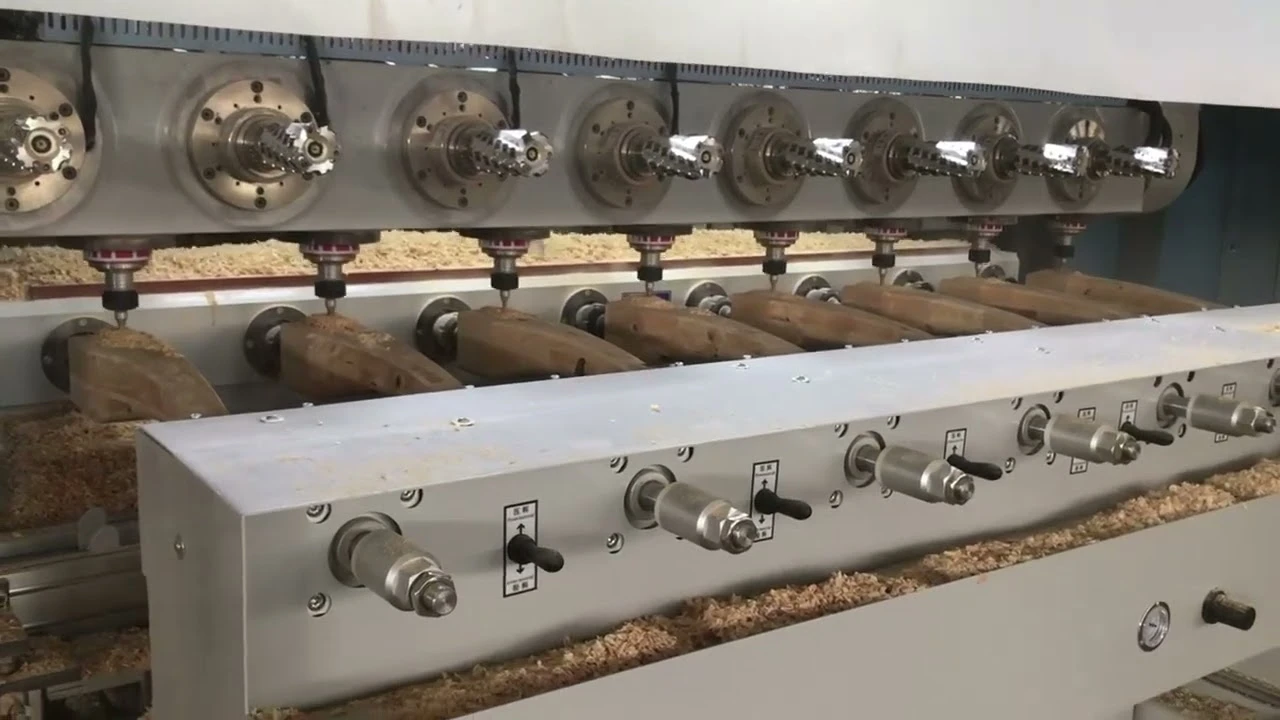
CNC RouterMay 27, 2025Five-Axis CNC Wood Machining Center - CK-1219-8
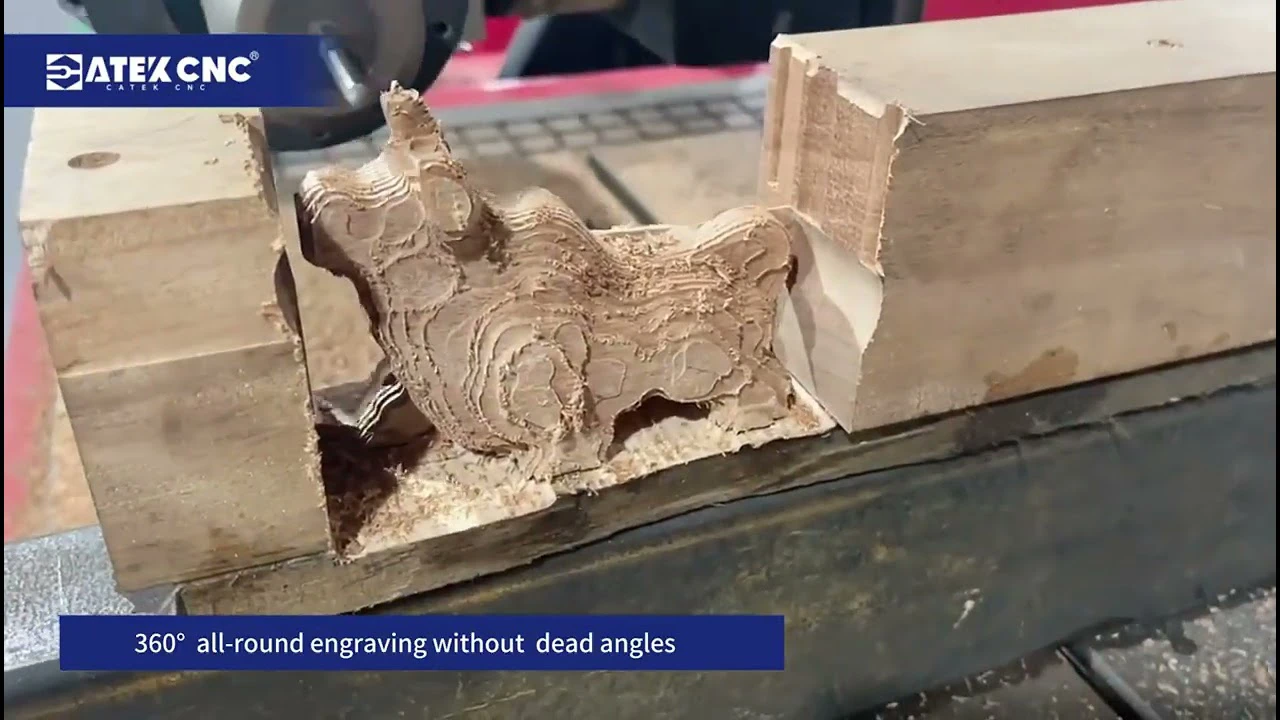
This machine is equipped with multiple machining stations and tool switchable device, enabling milling, carving, drilling, and other operations on columnar wood materials.
-
00:46
CNC RouterMay 28, 20255-Axis CNC Wood Router With Movable Worktable - CK-1325-5S
The video showcases the 5-axis CNC wood router's advanced machining capabilities: 3D carving, bevel grooving, contour carving, and horizontal drilling,etc.
HERE ARE SOME FUN PROJECTS FOR CNC MACHINES
-
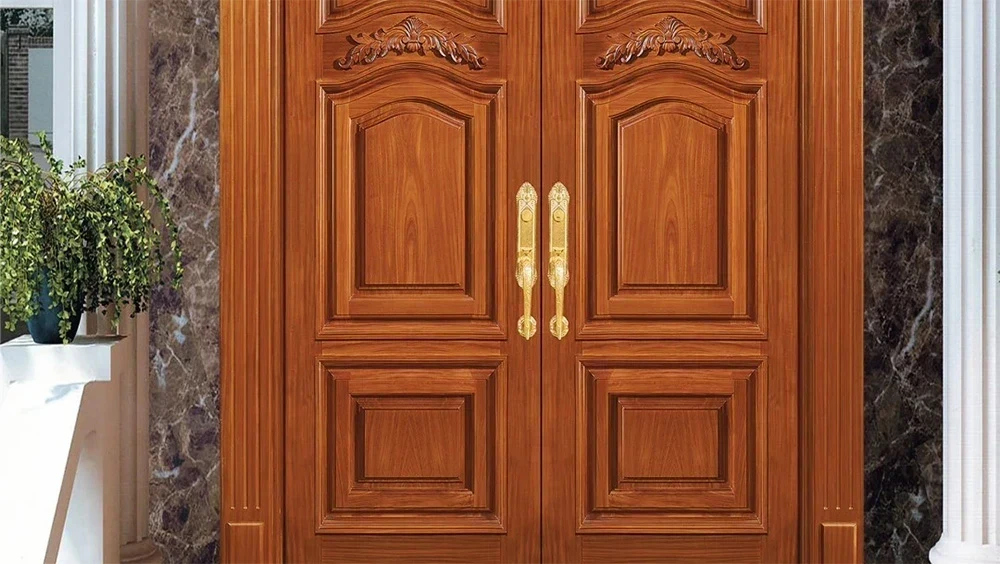
CNC RouterProduce Chinese-Style Wood Door Using a CNC Router Machine
Chinese furniture is loved by some people for its solemn, simple, harmonious and elegant style, but its complex carvings and strict symmetrical aesthetic requirements make its processing more complicated. Now, with the help of CNC routers, you can save effort and complete the production of Chinese furniture quickly, and the production quality and consistency of mass production far exceed traditional manual labor.
BEST BUYER'S GUIDE FOR 5-AXIS CNC ROUTER IN 2026\n
Introduction of Five-Axis CNC Router
First, let's take a preliminary look at the concept of five-axis routers. According to the processing method, they can be divided into "3+2", "4+1", and "five-axis linkage". So how do we understand these methods?
From a professional perspective, "3+2" refers to adding two axes to the three-axis(X, Y, and Z axes) CNC router. These two axes are the tilting axes or rotation axes for clamping materials, which are defined as A and C axes. It should be noted that these two axes are not called A and C axes in all five-axis CNC routers. This is related to the definition and rotation direction of the CNC system. They may also be named A and B axes or B and C axes.
"4+1" refers to 4 axes plus 1 axis. The hardware part is the same. 4+1 describes the linkage capability. Many people mistakenly believe that it means that only one of the A and C axes of the indexing rotary chuck can move, but this is not the case. The real meaning of 4+1 is five-axis four-linkage, that is, during the processing process, 4 of the 5 axes of the machine can be linked at the same time, and the remaining axis is used for positioning processing. For example, the X, Y, A, and C axes may move in coordination, while the Z axis remains stationary; or the X, Y, Z, and A axes may move, while the C axis remains stationary.
Five-axis five-linkage means that the five axes can work together at the same time, and can complete the processing tasks of any angle and any curved surface except the clamping surface at one time.
Structural Type of Five-Axis CNC Router
There are many types of five-axis design structures, the common types are:
-
Cradle type (double turntable): A bidirectional rotating axis is installed on the workbench, the axis rotating around the X-axis is defined as the A-axis, and the axis rotating around the Z-axis is defined as the C-axis. Due to its limitation on the load-bearing and rotation size of the rotating axis, it is suitable for the processing of small and medium-sized workpieces.
-
Table movable double swing head: In this structure, the workbench on which the workpiece is placed is movable, and the gantry is immovable. The spindle is installed on a swivel head, which can rotate around the Z-axis and is defined as the C-axis. There is also an A-axis that can rotate around the X-axis on the swivel head. The 5-axis engraving head that can rotate 360 degrees on the C-axis and ±110 degrees on the A-axis can process various complex shapes of the material. Most mold products are processed using machines of this structure.
-
Single swing head single rotation type: This machine structure has a rotating axis that can rotate 360 degrees on the workbench, and a rotating axis on the spindle that can swing 180 degrees. The rotating axis structure of this type of machine tool has a heavy load-bearing capacity and high rotation accuracy. Any two of the A, B, and C axes can be combined to achieve a variety of processing requirements. It is particularly suitable for rotating and box-type products, such as metal engines, non-metallic figures, statues, etc.
-
Bridge-type gantry structure: This structure is composed of the entire Y-axis and Z-axis as a whole, with a swingable five-axis head, which moves in the X-axis direction on the fixed bed, and processes various complex shapes of the workpiece fixed on the workbench. This structure has a fast running speed and is suitable for five-axis processing of large products.
The above models can achieve five-axis five-linkage in mechanical structure, but whether this function can actually be achieved depends on whether the equipped CNC system supports it and whether it has the RTCP function.
Price of Five-axis CNC Router
When it comes to five-axis equipment, many people subconsciously think that this type of machine will be expensive. In fact, it is not. The price of the machine is determined by the material, size and precision requirements of the processed product. The price of a small home five-axis CNC router is only $2,600. Only large or metal-processing five-axis machining centers are very expensive. The average purchase price of a five-axis CNC router for non-metallic mold processing is $32,850. In addition, you can also choose a machine with an automatic tool change function, the price of this function kit is $2,300. You can also choose a machine with a double table, while one machine is processing a product, you can prepare the material for the next product to be processed in advance,the average price of this function kit is $4,280.
It should be noted that the price ceiling of this machine is relatively high. The average purchase price of a high-precision large 5-axis and 5-linkage machine tool for processing metal is $328,570. You can contact the supplier to get an accurate machine quotation according to your needs.
Working Principle of Five-Axis Machining Center
First of all, the working mode of the five-axis CNC machine tool is different from that of ordinary CNC machine tools. Ordinary CNC machine tools can only move on the three axes of X, Y, and Z, while the five-axis CNC machine tool also has the ability to control two rotation angles, which enables it to complete more complex processing tasks, such as three-dimensional curved surface engraving, spiral surface processing, etc.
The core of the 5-axis linkage control is the CNC system, which accurately controls the synchronous and coordinated movement of the five axes through programming. Among them, the three linear axes of X, Y, and Z enable the tool to appear in the front, back, left, right, and up and down directions of the workpiece. The A, B, and C axes can realize the angle change of the workpiece or tool by rotating around the three linear axes. The specific implementation depends on the machine tool design and workpiece processing requirements. In this type of machine tool, the tool can process the workpiece from multiple angles, and the processing flexibility is very high. Moreover, due to the reduction in the number of clamping times, the processing accuracy is also guaranteed, and high-precision and high-efficiency processing of complex shapes can be achieved, which is suitable for the manufacture of high-precision and complex parts or molds.
In short, the principle of the five-axis CNC machine tool is to control the linear and rotational motion of the five axes through the control system to achieve multi-angle processing of the workpiece. It uses only 5 linkage axes because 5 linkage axes are the minimum number required to achieve any angle processing. The fewer the number of linkage axes, the simpler and more compact the machine tool structure is, and the easier it is to ensure the dynamic and static stiffness of the machine tool. Dynamic and static stiffness are very important for CNC machine tools with high precision requirements.
Generally speaking, a 5-axis and 5-linkage machining center can achieve all-round processing of all positions of the workpiece except the clamping surface. However, some special workpieces need to be processed on the clamping surface, so the workpiece must be re-clamped. In order to ensure the accuracy of repeated clamping, an additional set of mechanical devices is required to ensure the positioning error of repeated clamping. This set of devices has several moving axes and does not participate in cutting motion. They belongs to auxiliary axes. This type of machine tool has more than 5 axes and is called a multi-axis 5-linkage machine tool, such as a 7-axis 5-linkage machine tool, a 9-axis 5-linkage machine tool, etc.The core of a multi-axis CNC machine tool lies in the number of linkage axes. Under normal circumstances, if the number of axes linked at the same time exceeds 5, the practical significance is not great, because no matter how complex the workpiece is, 5-axes and 5-linkage are enough to achieve high-precision all-round processing without dead angles. The axes other than the five linked axes in a multi-axis CNC lathe are all auxiliary axes. Their main purpose is to improve processing efficiency and ensure workpiece accuracy. They does not matter whether these auxiliary axes can be linked or not.
Comparison of Three-Axis, Four-Axis and Five-Axis
- 3-Axis
-
3-axis machining is the most fundamental type in CNC routers. It uses three independent linear axes, X, Y, and Z, to directly or indirectly control the movement of the cutting tool. It enables left-right and forward-backward movement on the horizontal plane and vertical movement upwards and downwards. This makes it capable of completing most high-precision basic geometric shape processing tasks, such as 2D, 2.5D pattern engraving, groove processing, milling surfaces, and drilling. However, a 3-axis CNC router can only process one surface of the workpiece during one setup. If multiple surfaces need to be processed or if curved surface processing is involved, this type of machine cannot complete the task.
- 4-Axis
-
A four-axis CNC router machine has an additional rotation axis compared to a three-axis CNC router. This rotation axis gives the four-axis CNC router machine additional rotational degrees of freedom. It can process multiple surfaces or multiple angles of the material by rotating the workpiece or tool, thus expanding its application range. It is commonly used in geometric shapes with bending features, such as engraving the surface of a cylinder, cutting the side of a sheet material, and drilling.
- 5-Axis
-
A five-axis machine is based on the 3-axis machine and adds two more axes, enabling it to complete more complex processing tasks. Among them, the three linear axes perform linear interpolation movements, and the two rotation axes can dynamically change angles during the processing, capable of handling various difficult-to-process curved geometric shapes, narrow cavity structures, and complex components with overhanging features. It is very powerful. Almost all five-axis lathes are equipped with RTCP function, which can automatically calculate compensation based on the spindle swing length and the mechanical coordinates of the rotary table according. When programming, only the coordinates of the workpiece need to be considered. Of course, five-axis machining equipment is not perfect. Its relatively high price may be the main challenge it faces during promotion.
The Difference Between 3+2, 4+1 and 5-Axis Linkage
These three types of machines are all five-axis machines, so what are the differences between them?
- 3+2
-
3+2 is two rotation axes positioning, XYZ axis linkage processing, can process multi-directional bevels, holes, etc., but cannot directly process curved surfaces. It is three-axis linkage and then two rotation axes positioning, not five-axis linkage, programming is simpler. Three-axis machining is distributed positioning machining, there may be accumulation of positioning errors, precision control is more difficult, suitable for processing simple shapes or multi-faceted parts.
- 4+1
-
4+1 is also called five-axis four-linkage. It uses three linear axes XYZ and one of the rotary axes for linkage processing. The other rotary axis is only used for positioning. It can process complex curved surface structural parts and blades, etc. Its linkage axis can interpolate motion at the same time, and can accurately process complex curved surfaces. When programming, it is necessary to consider the complex tool space trajectory, use mathematical algorithms to calculate the path, and have high processing accuracy, which can reduce tool marks and is suitable for high-precision complex parts processing.
- 5-Axis-Linkage
-
Five-axis linkage, which involves the coordinated operation of three linear axes (X, Y, and Z) and two rotational axes, enables simultaneous processing. This processing method can achieve the machining of complex curved surfaces and ruled surfaces.
However, in actual processing, under the premise of meeting processing requirements, the number of linked axes is inversely proportional to the stability and quality of the workpiece. This means that if 4 + 1 or 3 + 2 processing methods can produce qualified products, the quality of the workpieces is often better than those processed by five-axis linkage. However, some complex shapes can only be achieved by five-axis linkage. Therefore, it is not necessarily the case that five-axis linkage is always better than other processing methods; the appropriate processing method is the best choice.
In the market, up to 95% of products do not require five-axis linkage. Generally, 3 + 2 fixed-axis processing is sufficient for at least 70% of five-axis processing scenarios, and the application range of 4 + 1 linkage is even higher, reaching over 95%. The situations that truly require five-axis linkage may account for less than 5%, such as processing particularly deep undercuts or extremely distorted complex surfaces. Moreover, from rough processing to fine processing, five-axis linkage is likely to be used only in a few feature processing and finishing procedures.
In contrast, the 4 + 1 linkage method is not only more widely applied but also has a relatively simpler structure, better stability, and higher processing accuracy. Additionally, it possesses the same tool tip following function as five-axis linkage, making it an ideal choice for batch and large-scale production. Of course, five-axis linkage also has its irreplaceable aspects. It can handle all the workpieces that 3 + 2 or 4 + 1 can process, and it can also solve tasks that these two methods cannot. Therefore, in some high-end manufacturing fields, the position of five-axis linkage is unshakable.
What is RTCP?
What is RTCP? RTCP stands for "Rotation of Tool Center Point", which is commonly known as the tool tip following function. In the complex working conditions of five-axis machine tools, there is often a spatial position deviation between the theoretical control point of the numerical control system and the actual tool tip point. To ensure that the tool tip point strictly follows the trajectory specified by the numerical control program for precise movement, the numerical control system must have the ability to automatically correct the control point. This function has various names in the industry, such as TCPM (Tool Center Point Management), TCPC (Tool Center Point Control), and RPCP (Rotation Around Part Center Point), although the names are different, the essence is to maintain the precise position of the tool center point and the actual contact point on the workpiece surface constant.
For example, if the fourth axis of the machine tool is defined as the A-axis and the fifth axis as the C-axis, and the C-axis is mounted on the A-axis, this structural characteristic determines that the rotation movement of the A-axis will inevitably affect the C-axis. Similarly, when processing a workpiece placed on the machine tool's worktable, if the tool center is programmed for slotting, due to the change in the rotational axis coordinates, the coordinates of the three linear axes (X, Y, and Z axes) will change accordingly, resulting in relative displacement. To eliminate this displacement, the machine tool needs to compensate for it, and RTCP is designed to achieve this compensation function.
For machines equipped with RTCP technology, the control system will always keep the tool center at the expected position set in the program. When clamping the workpiece, the operator does not need to precisely align the workpiece with the centerline of the rotary table and can clamp it freely. The machine tool will automatically compensate for the offset caused by clamping and other factors, not only shortening the clamping time but also improving the processing accuracy. With the support of RTCP technology, the programming process also becomes more independent and concise. Programmers do not need to consider the influence of the machine tool's complex motion posture and tool length changes on the processing trajectory, but only need to focus on the relative motion relationship between the tool and the workpiece. The complex calculation and compensation work is automatically completed by the control system. In addition, RTCP also simplifies the post-processing process, and only the coordinates and vector data of the tool tip need to be output to meet the requirements of subsequent processing and quality control.
The Difference Between RTCP and Non-RTCP
Below, we briefly explain the differences between a five-axis machine equipped with RTCP functionality and one without it.
Five-axis machine with RTCP functionality: In this type of machine, once the feed rate of the tool tip along the axes is set, each axis will adjust its acceleration or deceleration based on the real-time position of the tool tip, ensuring a smoother and more fluid movement of the tool tip throughout the entire machining path, thereby enhancing the quality and speed of the machining process.
Five-axis machine without RTCP functionality: When operating this type of machine, we can only set an upper limit speed for each axis. Other axes will decelerate passively according to the changes in the machining position, but this deceleration is based on preset rules rather than dynamic adjustments according to the real-time position of the tool tip. When multiple axes operate in coordination, due to the lack of an intelligent coordination mechanism like RTCP, the speed of the tool tip position will show a certain degree of unevenness, resulting in relatively poorer machining results and a longer overall machining time.
How to Program the 5-Axis without RTCP?
For this type of machine tools, programming mainly relies on CM programming and post-processing technology. The core objective is to solve the problem of coordinate offset between the linear axis and the rotational axis during the five-axis coordinated machining process. At the beginning of programming, operators need to meticulously plan the tool path and clearly define the positional relationship between the fourth and fifth axes of the machine tool, so as to compensate for the displacement caused by the rotational axis movement on the linear axis coordinates. After such processing, the generated program not only includes the approach points of XYZ positions, but also contains the necessary compensation amounts required on the XYZ axes.
However, this programming method has many drawbacks. From the perspective of processing effect, its machining accuracy still cannot reach the ideal level, and the processing efficiency is also relatively low. The generated program has extremely poor universality and requires a high cost of human resources. Moreover, due to the differences in the rotational parameters of different machine tools and the extremely complex post-processing files, it also brings great inconvenience to production management. When changing machine tools or cutting tools, CM programming or post-processing work must be redone. Thus, manual five-axis programming is almost an impossible task. In addition, due to the lack of RTCP function, many advanced functions of five-axis machine tools cannot be applied. Taking the five-axis tool compensation function as an example, for machine tools without RTCP function, when clamping the workpiece, it is necessary to ensure that the workpiece is located at the rotational center position of the worktable. This process requires a lot of time for clamping and alignment, and even so, it is difficult to ensure the clamping accuracy, that even if indexing is used, the operation will be troublesome.
Application
Five-axis CNC routers are widely applied in various fields such as aerospace, automotive manufacturing, furniture production, mold processing, medical devices, shipbuilding, and handicraft manufacturing.
-
Aerospace: They can process complex aircraft components such as aircraft engines, engine blades, wings, fuselages, etc.
-
Automotive manufacturing: They are mainly used for efficient processing of automotive parts such as engine blocks, transmission housings, turbocharger vanes, body processing, car seats, gear rings, clutches, shaft components, etc.
-
Furniture production: Traditional woodworking processes such as sawing, cutting, slotting, drilling, and engraving can all be completed with just one 5-axis CNC machining equipment. For the curved shapes and structures of custom solid wood furniture, they can be processed in one go.
-
Mold processing: They can achieve efficient processing of complex molds, including plastic molds, stamping molds, foam molds, and wooden molds, and can handle complex curved surfaces and details.
-
Medical devices:They are used to manufacture high-precision medical equipment and artificial joints, such as orthopedic prostheses and surgical instruments, etc., for high-precision medical equipment.
-
Shipbuilding: They can process complex workpieces such as ship propellers.
-
Handicraft industry: They can achieve fine engraving and complex shape processing, such as figures, statues, and model pieces, meeting the high-precision and complex design requirements for artworks, and they can all be processed in one go without secondary processing.
Comparison of Programming Software for Five-Axis CNC Routers
CNC programming is the soul and brain of CNC machining, so choosing a suitable programming software is crucial. However, there are so many programming software on the market that beginners are often at a loss.
Below we will discuss the four major mainstream programming software - UG, Mastercam, Powermill, Hypermill, and explain their respective advantages and disadvantages, and help you find the one that suits you best among the many software.
- UG(NX)
-
When it comes to mainstream programming software, UG has an extremely high market share. It is often used for programming work in product and mold fields. UG belongs to Siemens AG of Germany and was renamed NX after acquisition.
Advantages: UG integrates modules such as drawing, design, programming, sheet metal processing, and finite element analysis. It is often compared with software in various fields, so prove its all-round capabilities. After purchasing Moduleworks' professional five-axis technology and making major revisions to the programming module, UG has seen rapid progress in 3D and multi-axis tool path functions since version NX12.0. It has been updated and optimized frequently, and now has functions comparable to those of major professional CAM software. In 2D tool path, the dynamic milling tool path integration in planar milling has significantly improved the calculation speed compared to before;In 2.5D tool path, the bottom wall milling function is very powerful and convenient; in 3D tool path, the continuous optimization of guiding curve tool path has provided strong support for fine and smooth surface processing. In addition, UG's synchronous modeling function can assist in drawing and modeling more quickly and effectively, and it is dominant in the field of synchronous modeling.
Disadvantages: UG's disadvantages are also quite obvious. Its functions are complex, and the learning threshold is high. It usually takes several months or even 1-2 years to get familiar with it. Fortunately, there are many users and relatively rich and complete courses to facilitate learning. In addition, there are many parameters to set in UG programming, and for practitioners who do not use programming templates, the settings are relatively cumbersome. The naming and interpretation of many functions in multi-axis programming are not intuitive, and the learning difficulty is high. Moreover, there is room for improvement and optimization in IPW blank management.
- Mastercam
-
It originated in the United States and has now been acquired by the Sandvik Group. This software has a significant lead in terms of installed base. Its intuitive interface is very easy to learn.
Advantages: It has strong advantages in various fields such as 3-5 axis lathes, turning-milling combined lathes, etc. In 2D tool paths, its dynamic processing is very representative. Wireframe programming is its forte, this stems from its extremely powerful selection function. Whether it is 2D line segments or 3D entity edges, it can be operated intuitively and conveniently. In 3D tool paths, its intelligent integrated tool path has epoch-making significance. It integrates processing methods such as isometric parallel gradient projection, providing users with very convenient selection of surface finishing tool paths. In multi-axis programming, it has introduced the multi-axis technology of Moduleworks Company and has always maintained cutting-edge functional applications. For example, multi-axis roughing and multi-axis deburring functions and details are at the leading level in current programming software. This software is easy to get started with, intuitive and convenient to operate. Moreover, the parameters that need to be set during programming are slightly fewer than those of UG. If you focus on doing professional programming work wholeheartedly, then this is a very suitable software. Under the same learning time, Mastercam often takes less time and is easier to master than UG.
Disadvantages: Its disadvantage lies in that its modeling and synchronous modeling functions are not powerful. It is rather difficult to model and modify complex graphics.
- Power mill
-
It was born in the UK and was later acquired by the American industrial giant Autodesk. It is often used for programming and processing in the mold field and has almost become a must-learn software for the mold production industry.
Advantages: This software has extremely powerful tool path calculation speed and anti-overcut function. It focuses on efficient processing of complex shapes and surfaces, and demonstrates outstanding performance in high-speed cutting and mold processing fields. Through efficient tool path calculation, it can optimize processing time, reduce tool wear, and provide rich processing strategies. In addition, it supports various simulation functions, helping users optimize the processing flow. At the same time, it has a very convenient tool path trimming function. If you are engaged in mold programming, mastering this software is very necessary.
Disadvantages: Beginners need to invest more time to familiarize themselves with it. Compared with the comprehensive multi-functional software, Powermill is more focused on the processing part, and its design functions are relatively weak.
- Hypemill
-
It originated in Germany and is affiliated with German OpenMind Company. As the leading player in the five-axis programming market, it offers very simple and convenient control for the tool axis in multi-axis programming. The entire model is involved in the calculation during programming, avoiding interference or missed cuts.
Advantages: It is hailed as the "King of Five-Axis Programming". Its five-axis tool paths are excellent and suitable for multi-axis machining. Especially in five-axis programming, it has strong capabilities. Its second roughing work orders are very powerful, with neat tool paths. The safety of the simulation and modeling is the highest among all software. It was the first to propose the concept of super-string machining and applied it to actual production, and in the field of super-string machining, this software has already left other software far behind. its concepts such as digital twins and virtual avatars currently being promoted on the market are also at the forefront of technology.It's tool path work order setting options are relatively few, making it easier to get started, and the intelligence level is relatively high.
Disadvantages: The disadvantages of this software are also quite obvious. The selection module and modeling module have single functions. When modifying and modeling complex models (such as two-dimensional design or simple three-dimensional modeling), it needs to rely on other software. Moreover, there are few related learning tutorials on the market, and the software post-processing is relatively closed, resulting in a low usage rate.
Each software has its own areas of expertise. Even if some specific functions are not perfect, they can produce good results in the hands of skilled programmers. If your time and energy allow, after improving your process capabilities, we recommend that you learn other software to expand your thinking. Improving your cognition by learning to use various software is also a way to deepen your technical cognition and break through technical bottlenecks. However, CAM software is only a tool for engineers. Real technical improvement also requires the accumulation of process experience and comprehensive improvement of the application cognition of equipment and accessories.
If you have better insights or are using a certain software, please communicate with us.
CUSTOMER REVIEWS
-
Diese 5-Achsen-CNC-Fräse ist äußerst leistungsstark. Produkte, die ich früher nicht bearbeiten konnte, lassen sich jetzt problemlos herstellen. Nach der Ankunft der Maschine hatte ich zunächst Bedenken, ob ich sie richtig bedienen könnte – doch das CATEKCNC-Team hat mich geduldig per Videoanruf eingewiesen und die Maschine erfolgreich in Betrieb genommen. Vielen Dank an CATEKCNC für die großartige Unterstützung!
MuzrabovApr 08, 2025 -

Delivery: CATEKCNC team delivered the machine within the agreed time and provided us with a confirmation video and photos of the machine. Quality: The machine is of very good quality and the salesperson told me that they would provide a three-year free warranty. The machine is very powerful and I use it to make molds and it has been running well so far. Service: The salesperson Angie was very helpful and provided me with quotes for various configurations of the machine and offered me discounts and extra tools.
SanchezcastroFeb 14, 2025 -

This five-axis CNC router is very powerful and has ATC function. Now my wooden mold can be processed with only one clamping, which saves me a lot of time. The processing accuracy is very high, which saves me a lot of time. I like this machine very much.
SimonMay 25, 2025 -

The price of this machine is quite high. I need a machine that can process complex products. After repeated comparisons, I decided to buy this machine. After a long wait, I finally got the machine and installed it. When I saw the appearance of this machine, I knew that the time and money spent were worth it.
WillemDec 23, 2024