MEET CATEKCNC

Professional CNC Wood Router Machines for Precision Woodworking

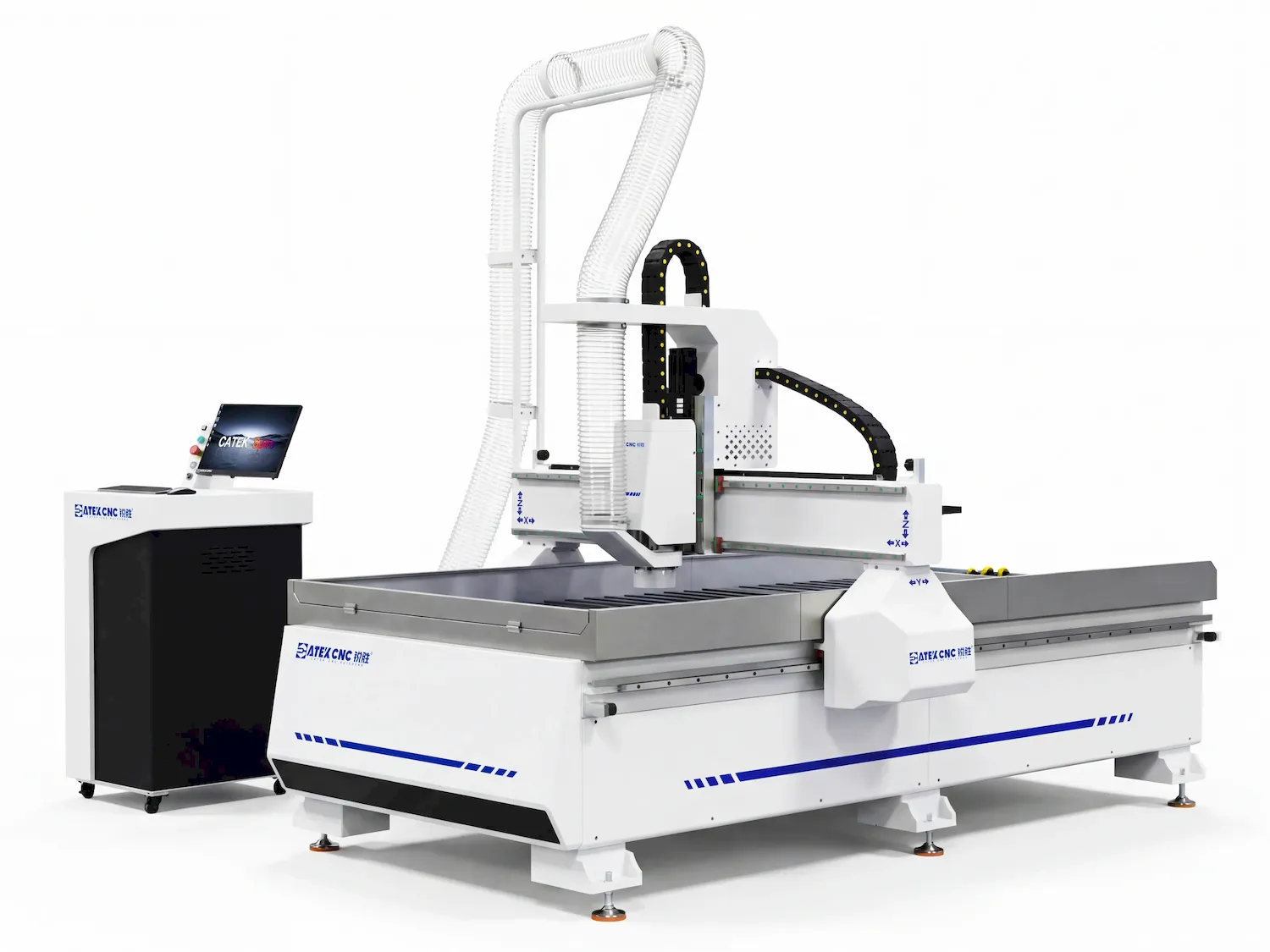
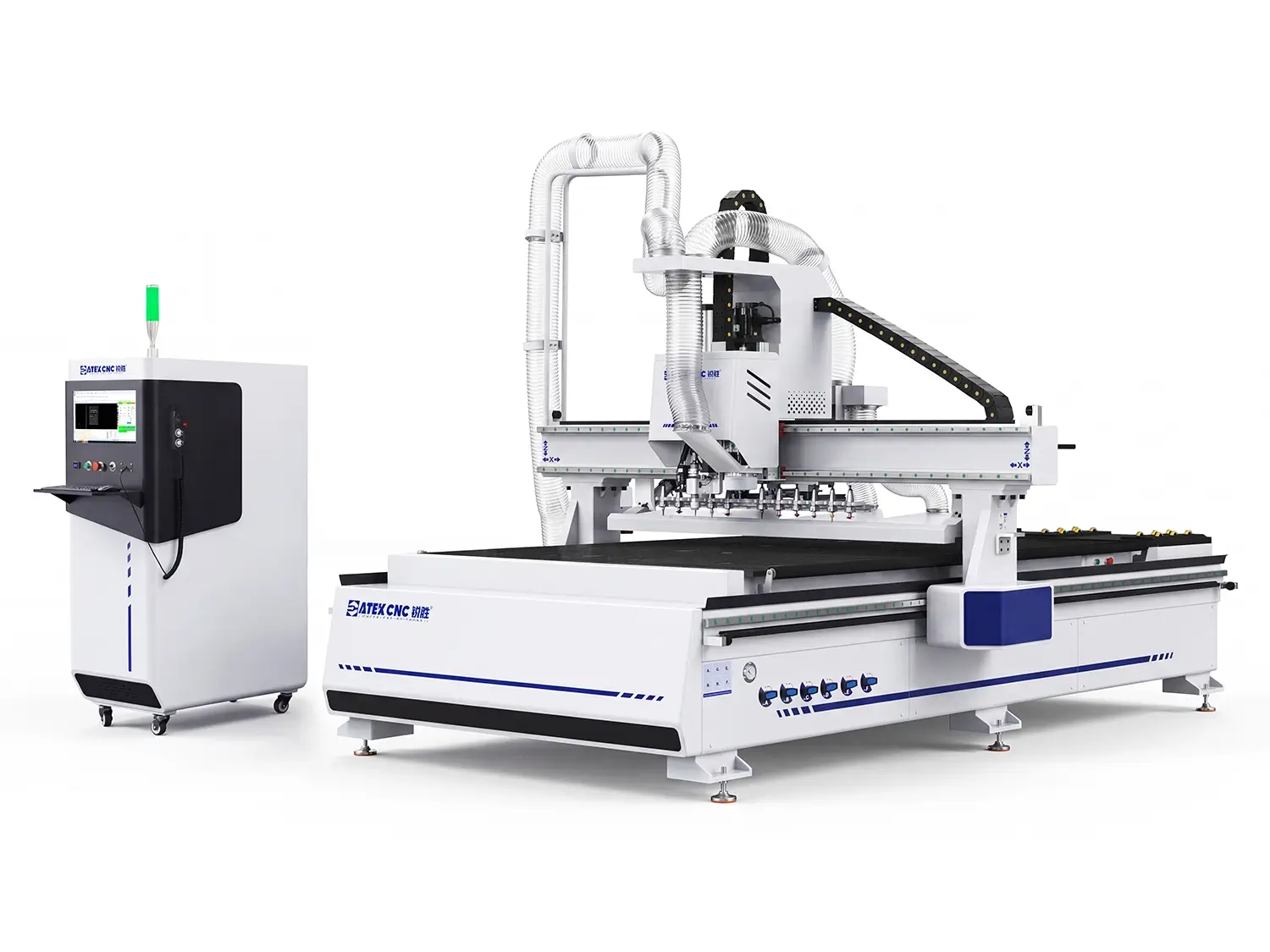
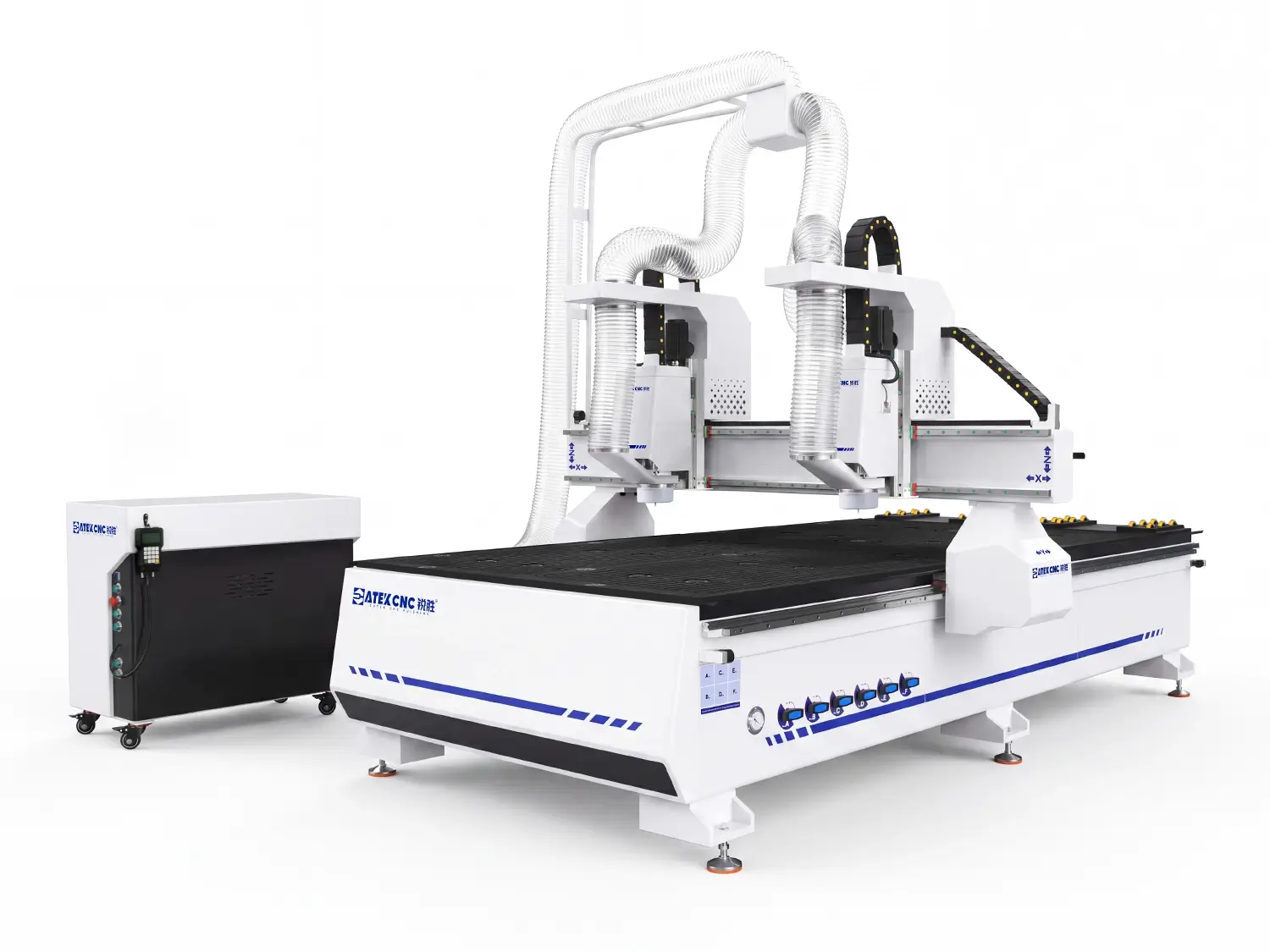
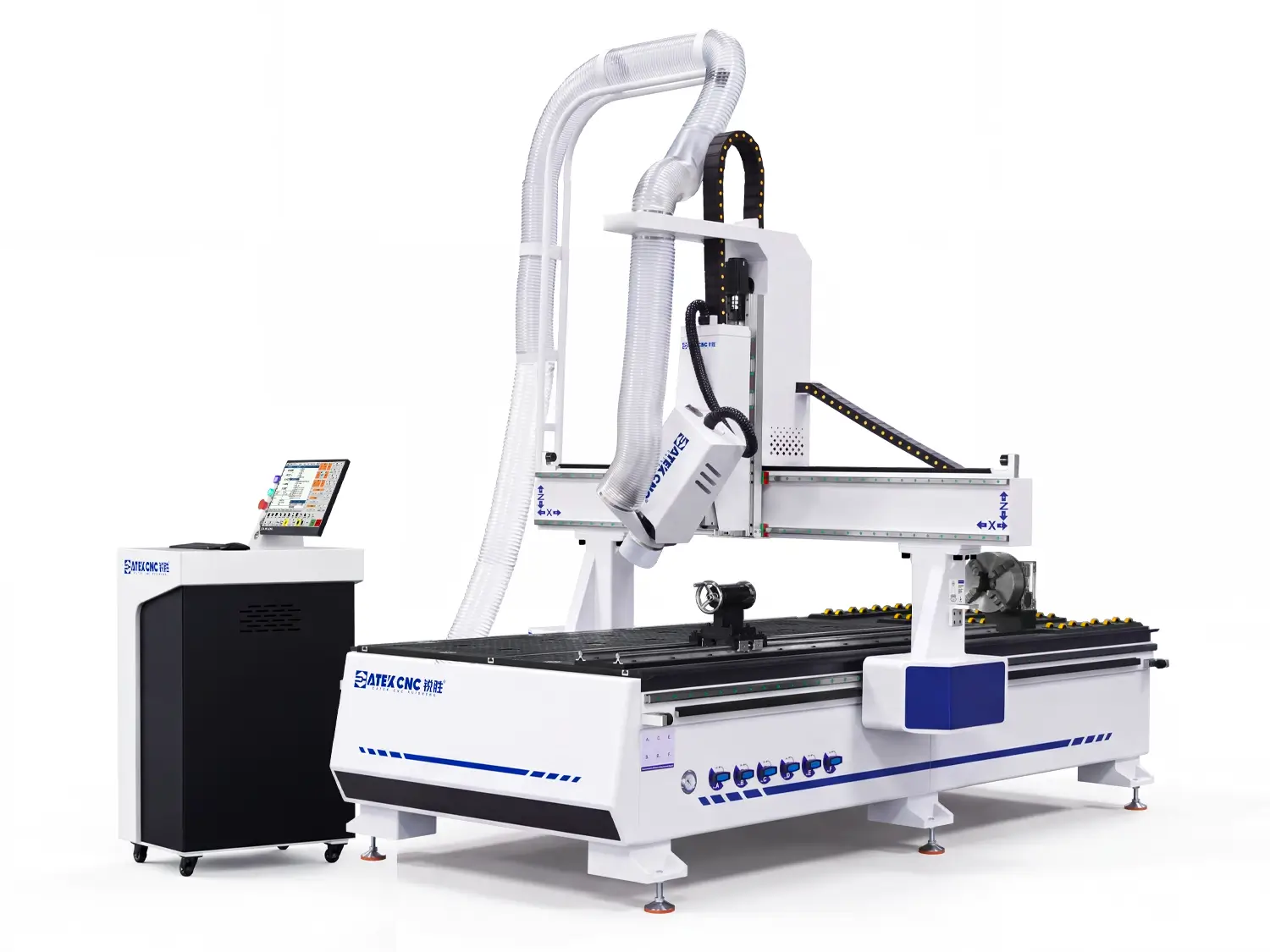
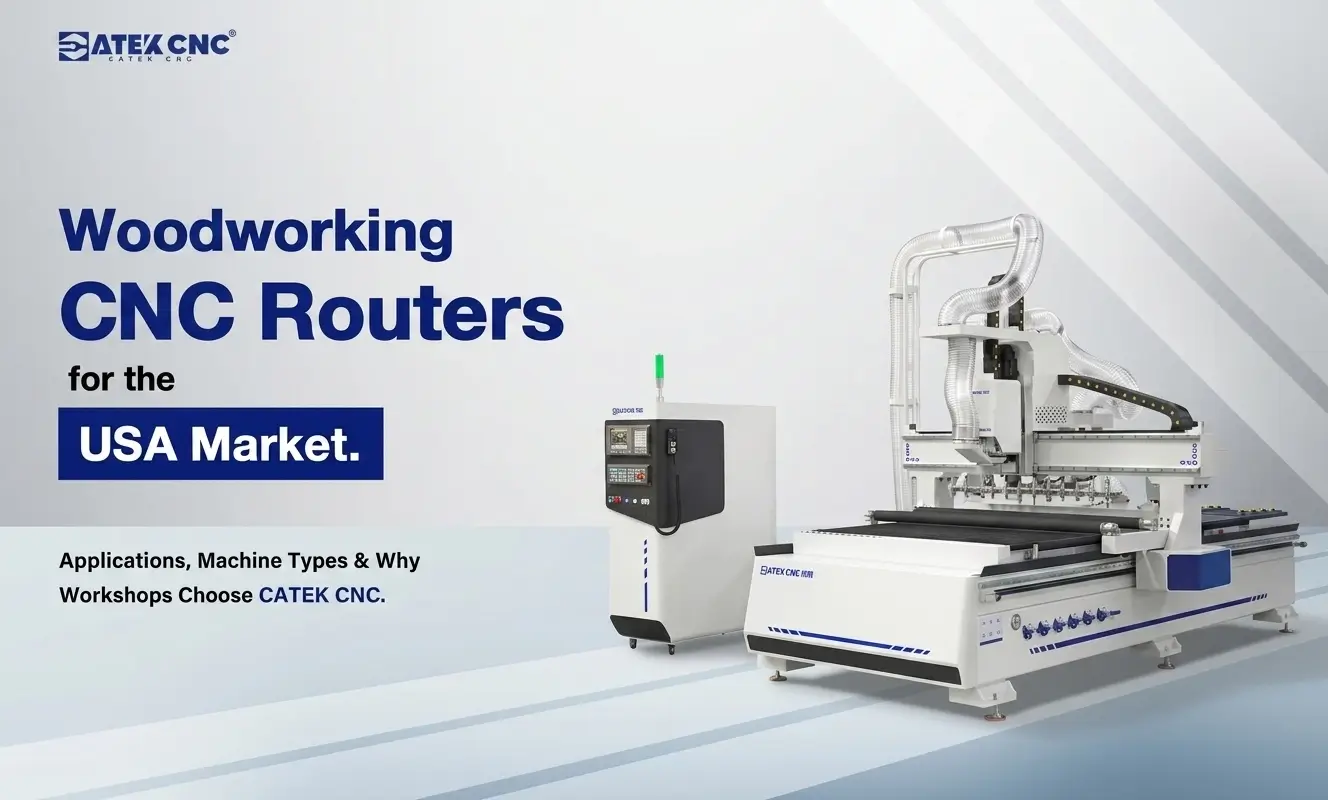
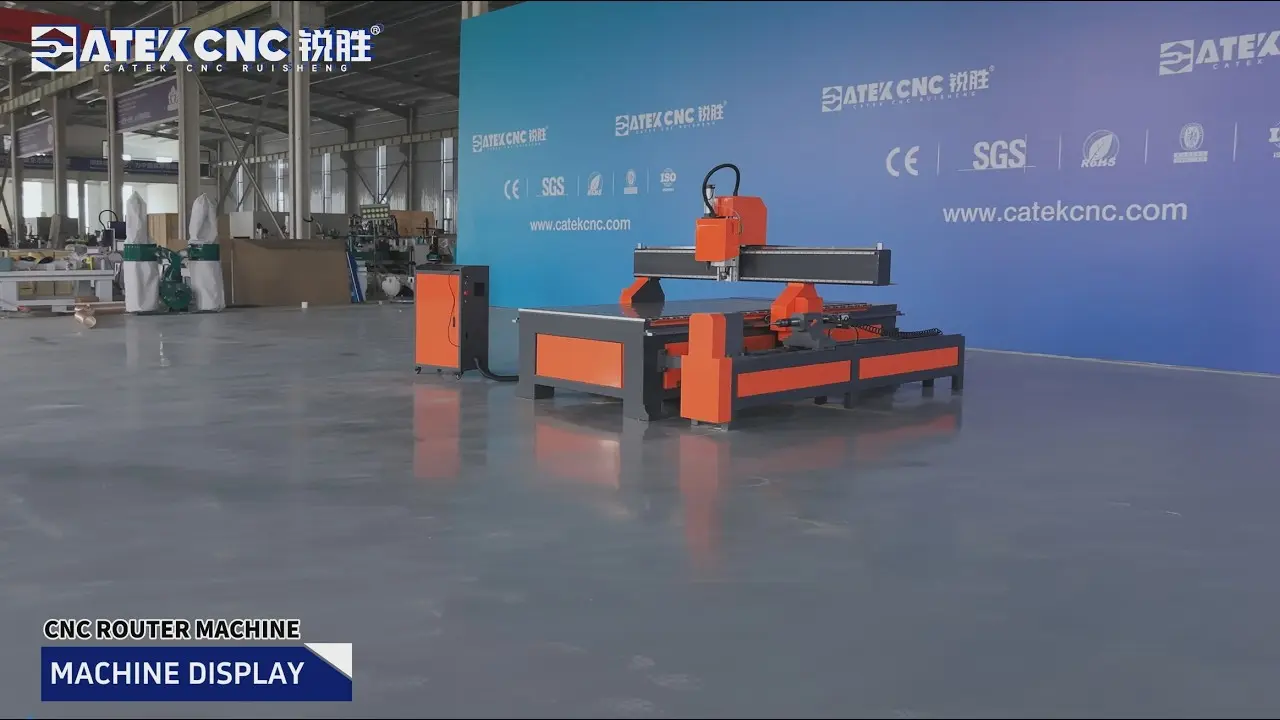
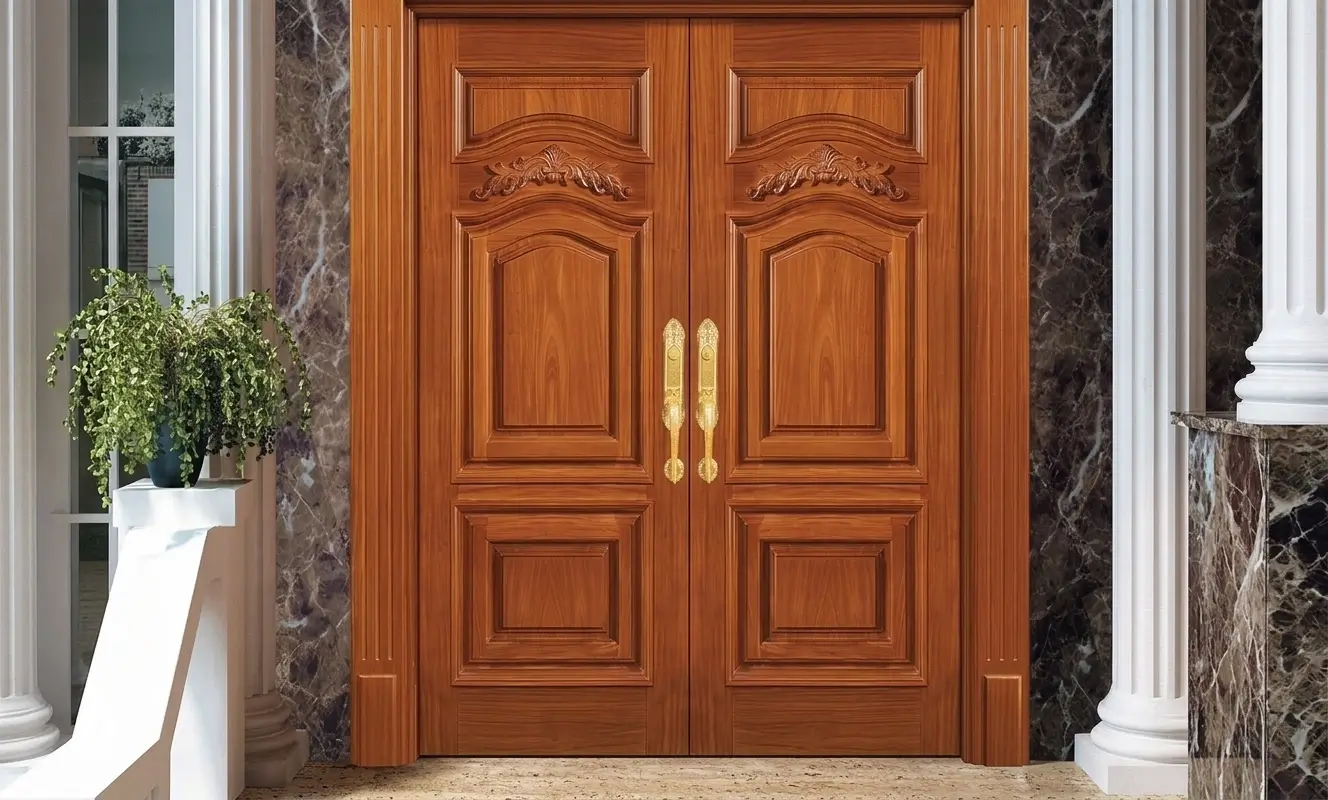
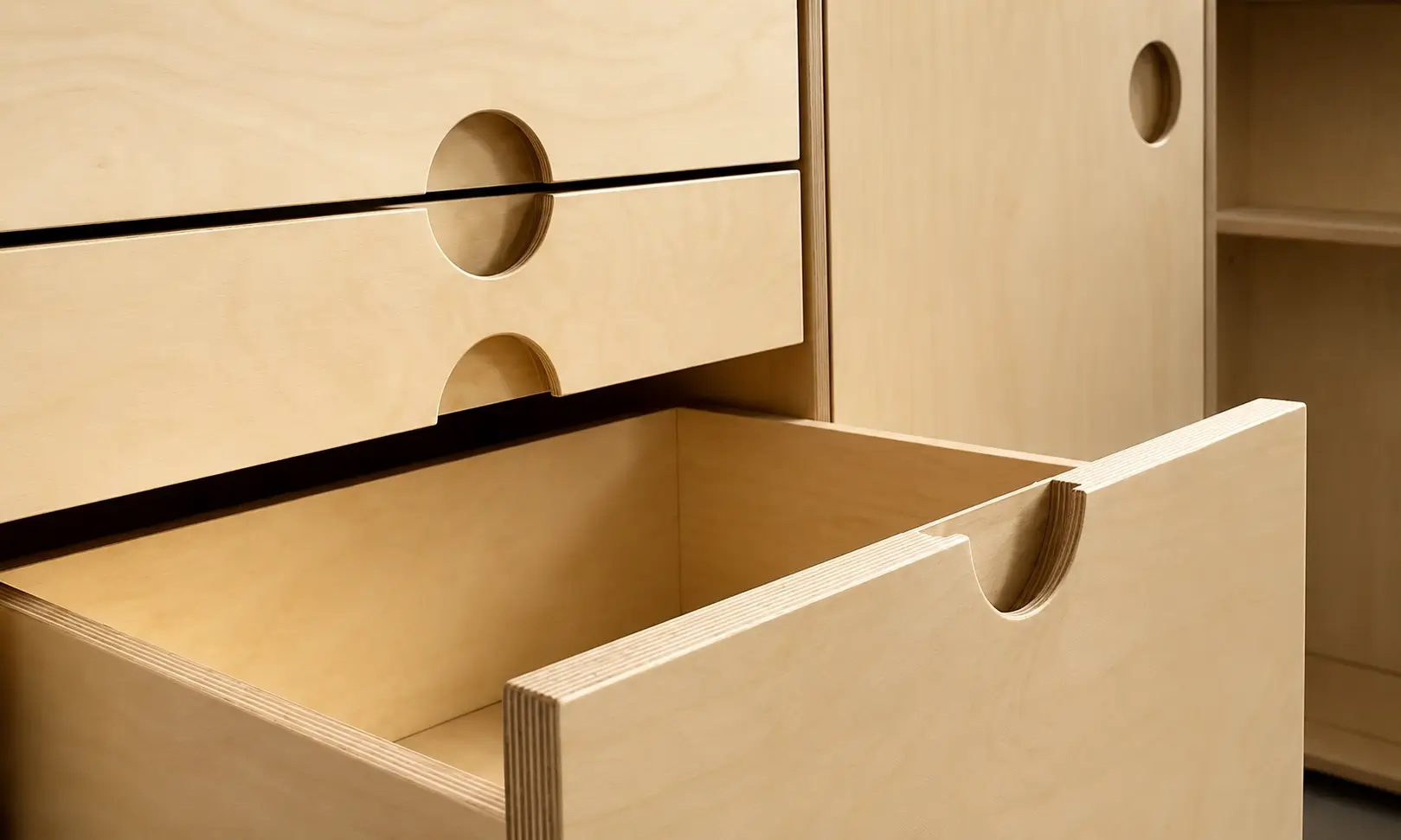
CNC wood router machines are a type of equipment that utilizes a CNC system to control motion axes such as X, Y, Z, A, and B, driving various tools to perform cutting, drilling, grooving, milling, engraving, and other processing operations on workpieces. CNC nesting machines is primarily used for the production of panel furniture, such as wardrobes, storage cabinets, TV stands, dressing tables, desks, sofas, and coffee tables. CNC wood routers are suitable for solid wood furniture, doors, and windows in the renovation industry, screens, architectural decorative panels, as well as signage and advertising letters in the advertising industry. 3D CNC routers are mainly used to process various cylindrical products that require engraving, such as statues, furniture legs, stair railings, stair column bases, and tool handles. 5-axis CNC routers are typically used for the production of various molds or complex statues.

CNC wood router machines manufactured by CATEKCNC incorporate components from world-renowned upstream suppliers and integrate vacuum adsorption, automatic positioning, automatic tool setting, automatic tool changing, 3D engraving, and edge-following cutting. We offer mini CNC routers suitable for beginners and individual enthusiasts, including 1×1 foot, 2×2 foot, 2×3 foot, 3×4 foot, and 4×6 foot models. For personal woodworking studios and furniture manufacturing plants, we provide standard 4×8 CNC router tables, as well as larger sizes designed for big-format processing needs, such as 4×9 foot, 5×10 foot, 7×9 foot, and 7×10 foot models. Optional control systems include DSP, RZNC, Syntec, LNC, Mach3, Mach4, UCCNC, NcStudio, and FANUC. Depending on your application, machines can be equipped with vacuum tables, T-slot tables, automatic tool changers, rotary axes, drilling units and other options.CNC wood routers are widely used for furniture manufacturing, cabinet making, wood carving, signage, doors and windows, decorative panels and custom woodworking. You can select the appropriate machine based on your material, workpiece size, machining process, production volume and automation requirements.

Showing 13–24 Of 45 Results
  • Spire
    1325 CNC Router Machine with Flood Cooling
    This machine is a CNC router of the Spire Series with an extremely wide processing range, featured with a flood cooling system and a water-cooled spindle, and it can process a variety of materials including wood, stone, aluminum, copper, stainless steel, and more.
    $4,580.00~$13,980.00
  • Spire
    2030 ATC CNC Router Machine with Oscillating Cutter and CCD Vision
    This is a Spire Series multi-functional CNC router with a 2000 × 3000 mm working area. Its key feature is the integration of a pneumatic oscillating cutter and a CCD vision system, enabling efficient cutting of both rigid and flexible materials.
    $17,990.00~$39,800.00
  • Spire
    1530 Dual-Spindle CNC Router Machine
    This 5×10 ft CNC router with dual independent spindles is a Spire series model built for efficient batch production. Equipped with two CATEKCNC water-cooled spindles, independent servo drives, and a DSP control system, it delivers synchronized machining with high precision and efficiency.
    $5,680.00~$13,980.00
  • Spire
    1325 4-Axis CNC Router with Swing Head and Rotary 4th Axis
    Spire 1325 4-axis CNC router features a tilting spindle head and rotary fourth axis for versatile machining. With a 4×8 ft vacuum/T-slot hybrid table, it supports multi-angle cutting, cylindrical machining, and complex 3D processing, expanding beyond standard 3-axis CNC capabilities.
    $7,980.00~$13,980.00
  • Spire
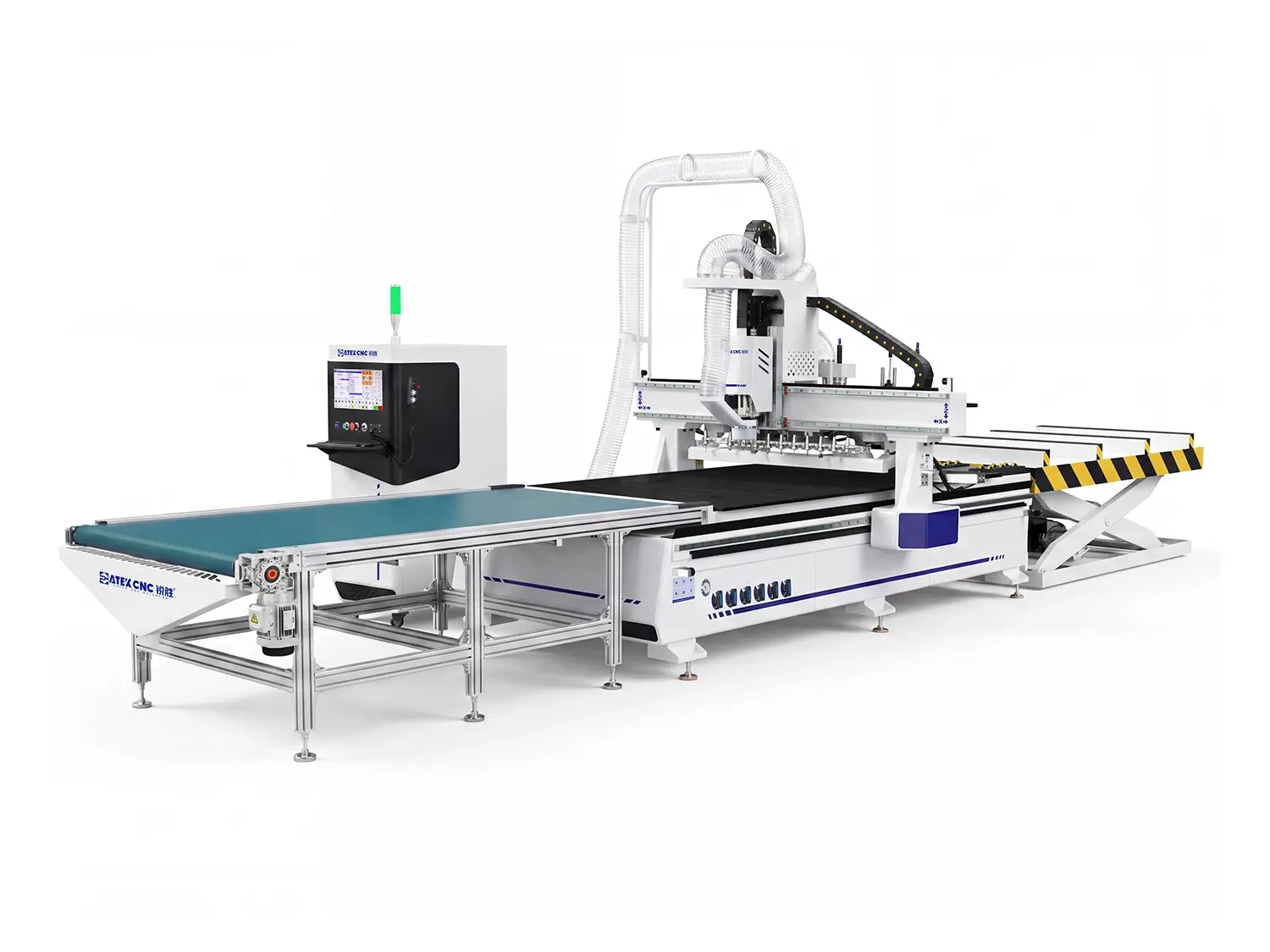
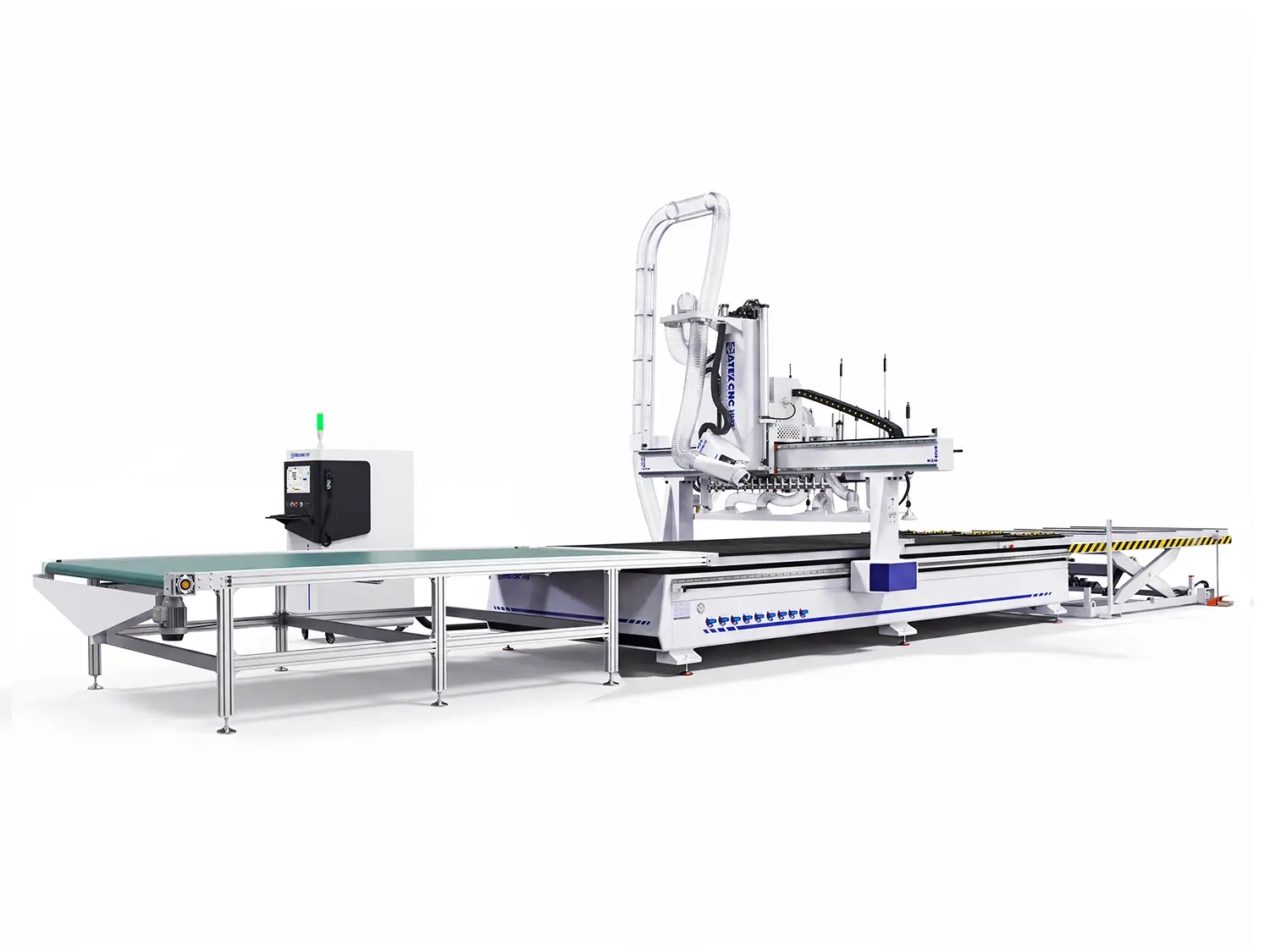
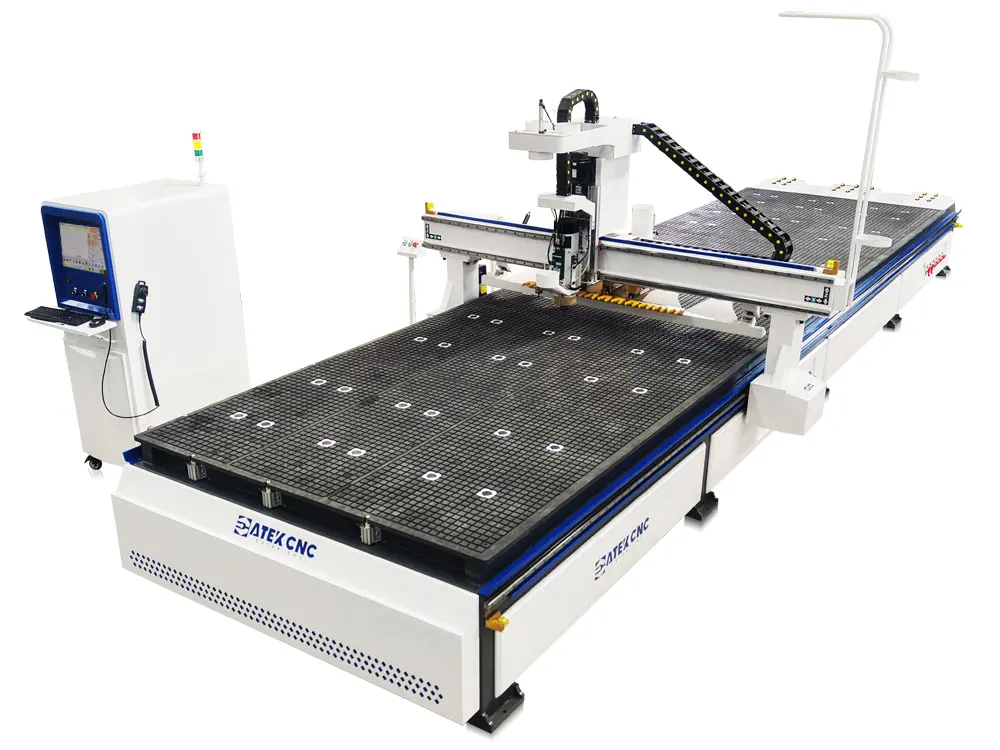
    1530 Linear ATC CNC Router Machine with Automatic Loading & Unloading
    This is a Spire CNC nesting machine with a 5x10ft (1500*3000mm) work table. It features a linear tool changer and an automatic loading and unloading system, enabling fully automated, multi-process panel machining.
    $14,990.00~$39,800.00
  • Spire
    2140 Automatic Loading & Unloading CNC Router Machine with 4-Axis Swing Head and Drilling Unit
    This Spire CNC nesting machine features a 2100×4000 mm vacuum table. Equipped with linear tool change and auto loading/unloading systems, plus a 5+4 vertical drilling unit and 4-axis oscillating head, it supports diverse material processing and fully automatic multi-operation machining of panels.
    $36,800.00~$39,800.00
  • Hot
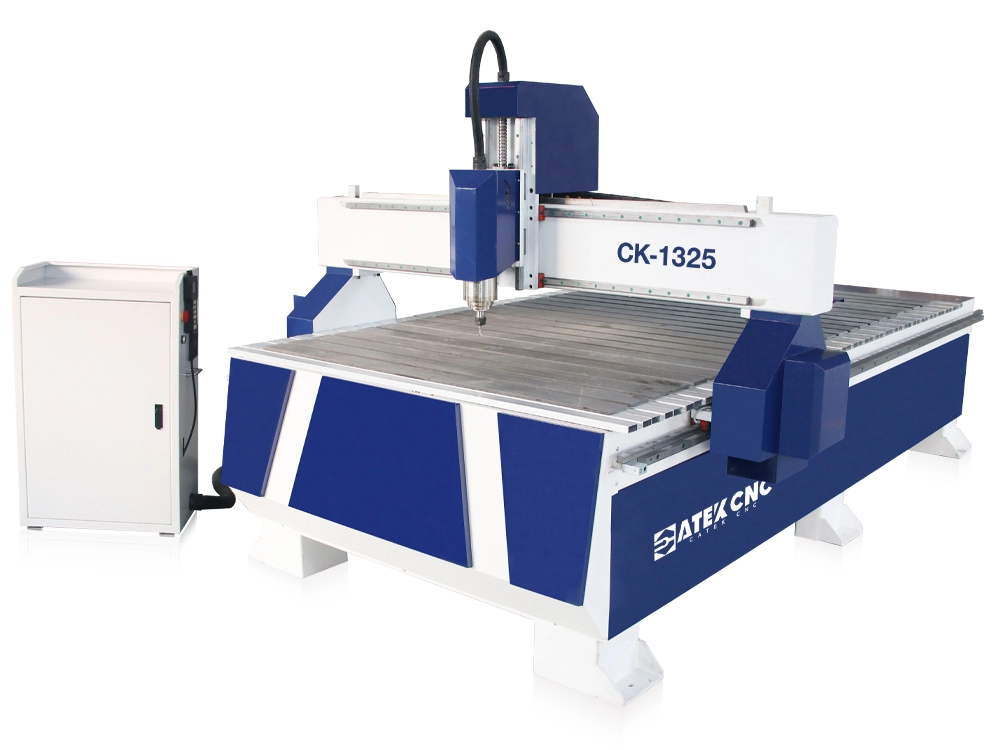
    Entry-Level 4x8 feet 1325 CNC Wood Router Machine for Hobby
    The standard basic 4x8 feet CNC wood router comes with a T-slot aluminum alloy workbench as standard and can be equipped with various functional kits for processing wooden boards.
    $2,570.00~$5,370.00
  • Hot
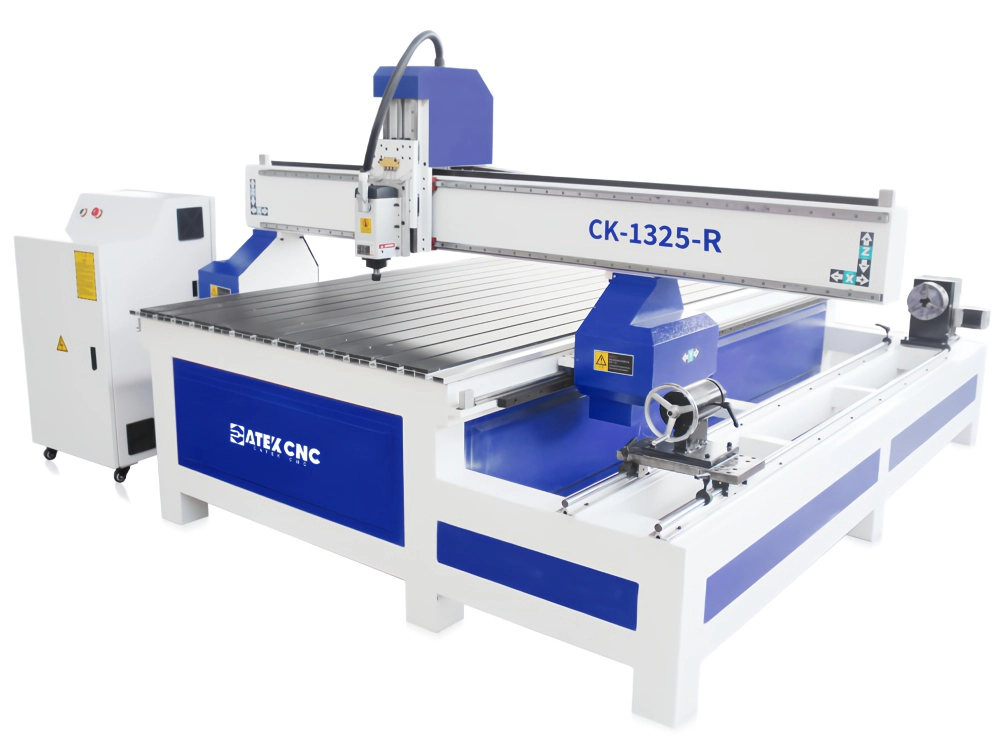
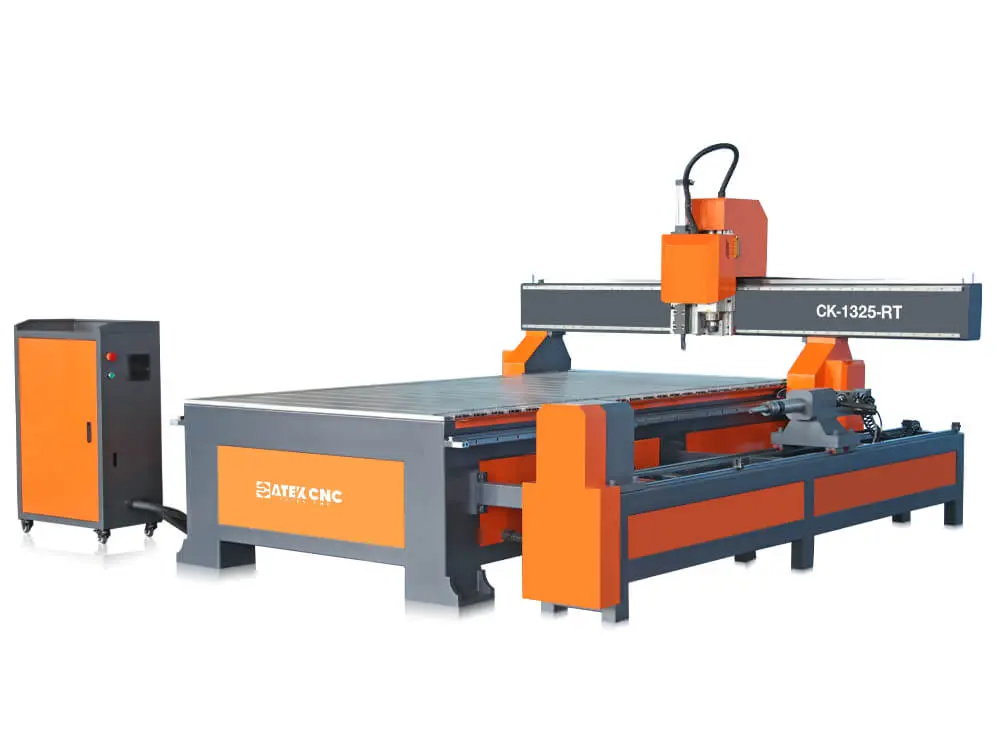
    4x8 CNC Wood Router Machine with Rotary 4th Axis
    This CNC router features an added fourth rotary axis on the side. In addition to standard flatbed machining, the fourth axis can clamp and rotate cylindrical workpieces for machining, serving dual purposes.
    $4,000.00~$5,570.00
  • Hot
    CNC Wood Router with Rotary 4th Axis and Turning Tools
    This is a 4-axis CNC wood router, additionally equipped with a rotary 4th axis and turning tools, capable of flat engraving, 3D carving and turning operations.
    $5,280.00~$6,380.00
  • Hot
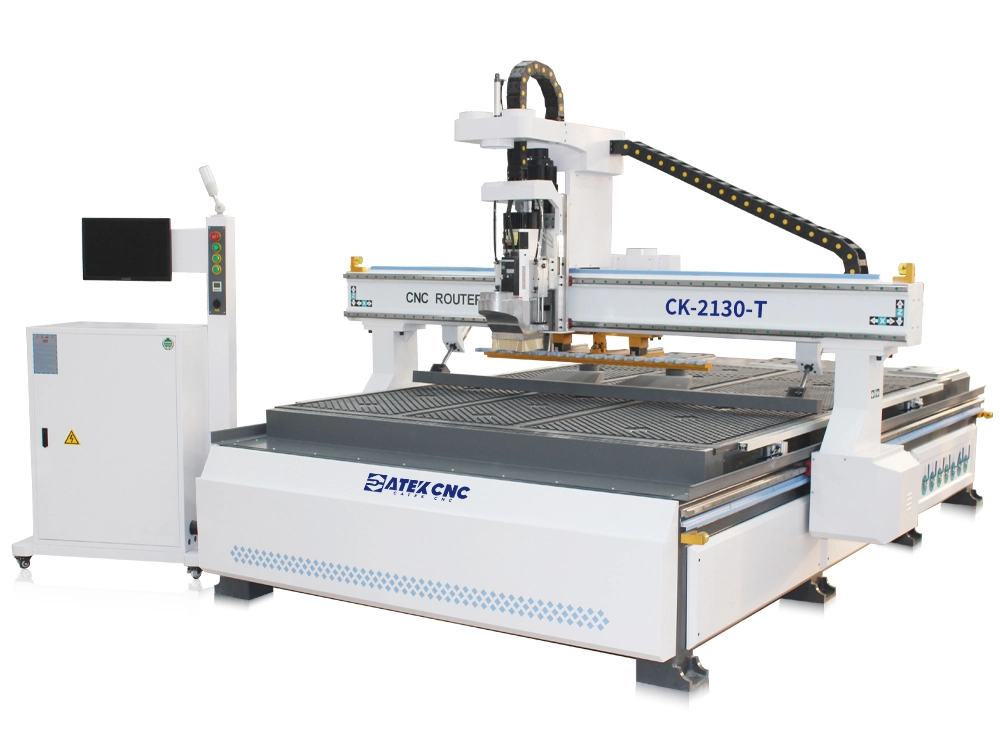
    7X10 ATC CNC Wood Router Machine with HSD Spindle
    This 7x10ft linear ATC CNC router features a 9KW HSD high-speed air-cooled spindle and an 9-zone, 30-hole vacuum adsorption workbench.
    $11,800.00~$16,800.00
  • 2140 Dual Table ATC CNC Nesting Machine for Large Panel Processing
    CK-2140-2WT is a dual-table ATC CNC nesting machine built for continuous large-panel production. It is ideally suited for cabinets, wardrobes, office furniture, wall panels, signage, and other wood products.
    $15,990.00~$25,990.00
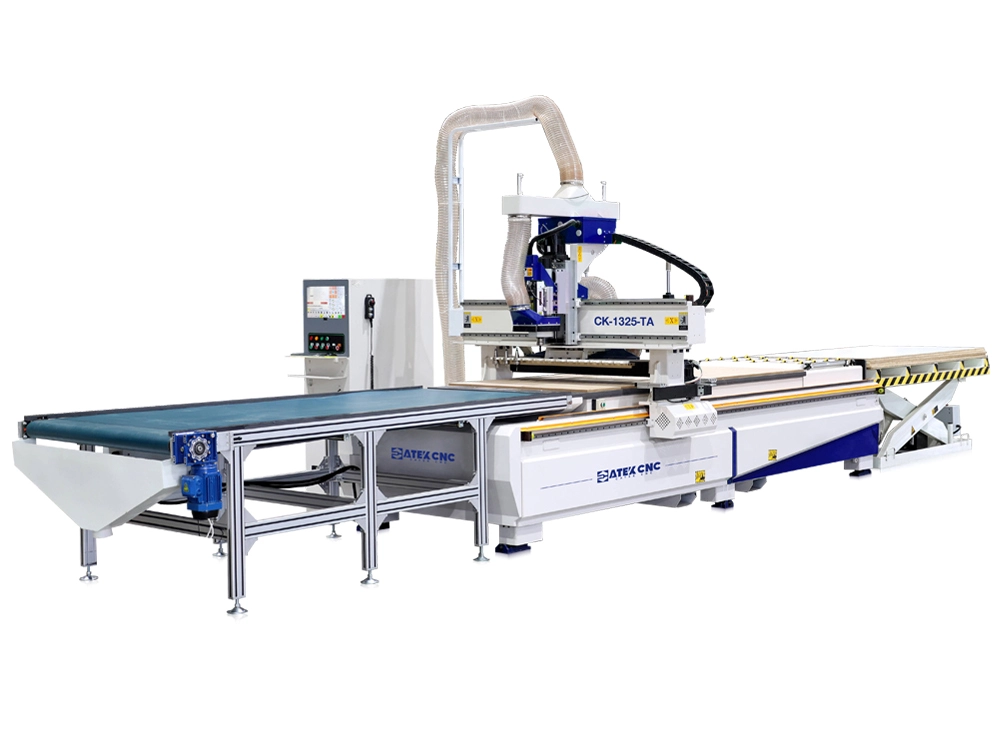
  • Best-Selling Linear ATC CNC Router with Automatic Loading and Unloading
    Based on the CK-1325-T, it adds an automatic loading/unloading system, enabling full automation from feeding, machining, tool changing, to unloading.
    $10,500.00~$11,900.00

USING CNC ROUTER TO PROCESS PANEL FURNITURE

The wood finishing market is huge, covering a wide range of products and styles. Cutting, embossing, grooving, milling and other processing techniques are cumbersome and complicated. Choosing a powerful CNC wood router machine can make things much simpler.

The woodworking industry has a considerable profit margin and a very active market. Whether you are planning to get involved in this industry or have been in it for many years and hope to expand production scale, increase market share and competitiveness by upgrading machinery and equipment, CATEKCNC can provide you with professional and efficient support.

Let's listen to some of our suggestions on how to choose the most suitable machine for you in 2026.

Introduction of CNC Wood Router Machine

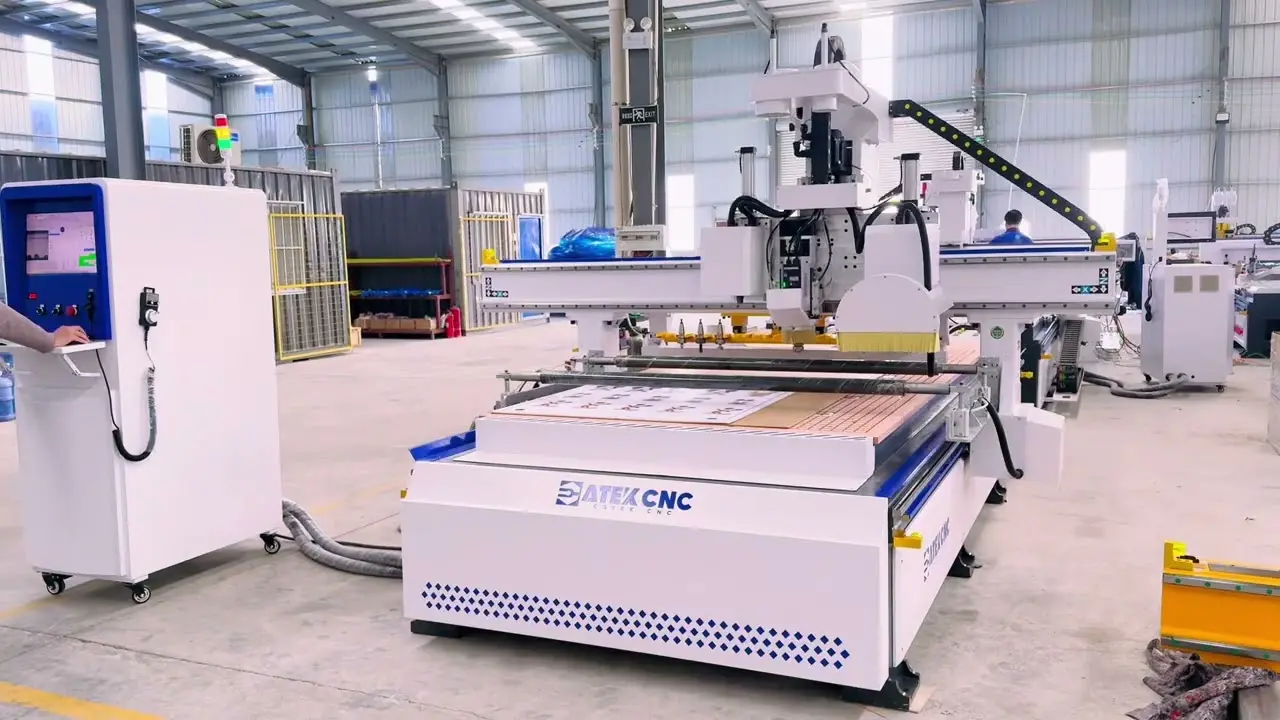
CNC wood router machines is a CNC equipment specially used for engraving on wooden boards, due to its wide application in the panel furniture industry, it is also called CNC nesting machine. It adopts the classic gantry structure, which consists of a wide horizontal surface and a door-shaped gantry.With the development of wood routers, its types are becoming more and more abundant. Its manufacturing needs to be planned and designed according to the product process (such as wood cutting, surface engraving, plane or multi-faceted milling, etc.). In this process, the mechanical structure designer designs the mechanical structure, the mechanical appearance designer designs the machine appearance with aesthetic feeling according to the mechanical structure, the software engineer writes the CNC system and control software, the component processing workshop processes the corresponding various machine components, and finally the professional assembly engineer assembles the machine.

When using it, just place and fix the material to be processed properly, and the machine can start fully automatic processing. The products it produces have uniform specifications and sizes, low operation difficulty and high production efficiency. It is an advanced CNC machine that replaces manual production. In the past, the production process was overly dependent on the workers' skills, and it was difficult to produce exquisite products without years of production experience. The CNC woodworking router perfectly solves this problem. It only needs to draw the product drawings to be processed on the computer and input them into the CNC system, and the machine can generate the G code for processing. Through the movement of XYZ and other axes, the high-speed rotating spindle equipped with suitable cutting and engraving tools can be driven to move, and the expected products can be processed.

CNC woodworking router machines can not only process wood, but also non-metals such as foam, PVC, acrylic, or soft metals such as aluminum plates. After years of continuous development and accumulation, the technology of CNC routers has become very mature and stable. Ordinary basic models of machines only have spindles for rotary cutting. On this basis, many functions can be expanded to cope with various types of business. For example, a CCD camera can be added, and the machine will automatically recognize the outline of the pattern and perform edge cutting without programming; add a vibration knife to complete the cutting of materials such as cloth, cardboard, soft foam, sponge, etc. In this way, from hard packaging to soft packaging, one machine can complete all the work, and the application range is wider.

What are The Types of Woodworking CNC Router Machines?

Classification by Machine Size

30*30cm(1*1'), 40*60cm(1.3*2'), 60*60cm(2*2'), 60*90cm(2*3'), 120*100cm(4*3'), 120*120cm(4*4'), 130*250cm(4*8'), 150*300cm(5*10'), 200*300cm(6.6*10'), 210*400cm(6.8*10'), etc.

Classification by Number of Axes

3-axis (flat engraving CNC router), 4-axis (swing head CNC router, round engraving CNC machine), 5-axis (5-axis round engraving CNC router, CNC mold making machine)

Classification by Demand

Mini CNC router for entry-level personal studios, standard CNC router for small wood workshops,  large multi-functional CNC router machine for factories

Classification by Function and Configuration

Basic CNC wood router

This type of machine is generally cheaper, simple to use and operate, and easy to maintain. It usually has three motion axes (X axis for horizontal lateral movement, Y axis for horizontal longitudinal movement, and Y axis for vertical up and down movement). This type of machine is equipped with free design software such as CAD/JD, ARTCAM, etc. After designing and inputting the drawings into the CNC control system, automatic processing can be achieved. It is mainly used for engraving, cutting, punching, grooving and other work of wood products. Common models include 6060, 6090, 1325, 1530, etc.

Multi-head CNC wood router (multi-station CNC wood router)

When facing mass production, if you buy multiple devices, the cost will increase significantly, and a large area will be required to place these machines. At this time, you can choose a machine equipped with multiple spindles. This type of machine has multiple processing stations, each station has a spindle equipped with an independent motor, so the processing efficiency can be doubled. For example, a 6-station CNC router can process 6 identical products at the same time, and the processing efficiency is 6 times that of an ordinary CNC router.

Multi-function switching CNC wood router

This type of machine has multiple spindles, which are equipped with different processing tools. These spindles cannot be used at the same time. It is usually used to deal with projects that require multiple tools to complete. Although the tools available for switching are limited (our machine can switch up to four spindles), its tool change speed is extremely fast, which is suitable for projects that require 1-4 tools for processing and require frequent tool switching.

Automatic tool change CNC wood router (ATC CNC wood router)

When faced with complex processes that require more than four tools for processing, manual tool change is obviously not a wise choice, and it is difficult to achieve with machines with multi-function switching. This type of machine is equipped with an automatic tool changing system, with linear tool magazines and rotary tool magazines to choose from, which can be equipped with 6, 8, 12, and 16 different types of tools, and can realize automatic replacement of required tools during the entire processing process. This type of machine can realize a variety of processing techniques, such as cutting, hollowing, grooving, punching, engraving, etc., which greatly improves the processing quality and production efficiency. It is suitable for large factories that customize cabinets, wooden doors, and whole-house furniture.

Four-axis CNC wood router
  • Swing head CNC wood router: When we need to process on a curved surface or on the side of a wooden board, a 3-axis router whose spindle can only move vertically up and down is obviously not able to cope with it. The spindle of the swing head router can rotate a maximum of 180 degrees around the connection point. With the movement of the other three linear axes, it can realize multi-faceted and multi-angle processing, and can complete processing work on inclined surfaces, curved surfaces, and vertical surfaces.

  • Four-axis CNC wood router with rotary axis: The structure of this type of machine is very similar to that of a lathe with four-axis linkage. The workbench in the ordinary router is replaced by a rotating axis that can cooperate with other axes in this machine. The cylindrical workpiece is driven to rotate by this rotating axis and processed using an engraving spindle perpendicular to the rotating axis. It is often used in 3D stereo engraving, such as portraits, sculptures, European table and chair legs or other special-shaped furniture accessories.

Five-axis CNC wood router
  • CNC wood router with rotary axis and switchable spindle: This machine adds a device that can rotate and switch the spindle on the basis of the four-axis CNC wood router with rotating axis, which can be used to switch the tools when performing 3D engraving.

  • Model making machine: This five-axis machine adds two additional axes (such as A axis and B axis) on the basis of the ordinary three-axis CNC wood router. The engraving spindle can achieve 360-degree free rotation in three-dimensional space. This mechanical structure enables the engraving tool to better fit the surface of the workpiece for processing. It is suitable for the processing of complex curved surface workpieces and the engraving of three-dimensional sculptures, especially for complex model manufacturing.

  • Other customized CNC wood routers: The CNC wood router can also be customized according to user needs. For example, you can choose to integrate the functions of the three-axis CNC wood router for plane engraving and the four-axis CNC wood router for 3D carving into one machine; you can also add various functional accessories to the standard model, such as: CCD camera, vibration knife, laser, saw blade, pressure wheel knife, etc.

Application of CNC Woodworking Router Machine

CNC woodworking router machine are suitable for carving, hollowing, grooving, chamfering, punching, milling, etc. of various materials such as cork, hardwood, solid wood boards, MDF, synthetic boards, acrylic, PVC, foam, aluminum, copper, plastic, etc., and are widely used.

  • Furniture manufacturing: office furniture, cabinets, solid wood doors, craft wooden doors, painted doors, European furniture, wardrobes, etc.

  • Crafts production: two-color board logos, non-metallic badges, hand cards, refrigerator magnets, decorative gifts, etc.

  • Architectural decoration: roof lines, door frames, solid wood hard-packed decorative panels, thread carving, etc.

  • Advertising industry: advertising words, models, seals, advertising light boxes and other advertising decoration products.

  • Model and mold manufacturing: various wooden molds, propellers, automotive foam molds, etc.

  • Musical instrument production: cutting and carving of three-dimensional surfaces and shapes of musical instruments such as guitars, piano keys, violins, etc.

Specification of CNC Woodworking Router Machine

Category CNC wood router
Brand CATEKCNC
Worktable Size(width*length) customizable, 600*600mm(2*2 feet), 600*600mm(2*3 feet), 900*1500mm(3*5 feet), 1200*1200mm(4*4 feet), 1300*1500mm(4*8 feet), 1500*3000mm(5*10 feet), 2100*3000mm(7*10 feet)
Number of Axes 3 axis, 4 axis, 5 axis
Processable Materials Wood, plastic, stone, acrylic, PVC, foam, aluminum, copper, etc.
Type Entry-level CNC wood router, professional-level CNC wood router, industrial-level CNC wood router, etc.
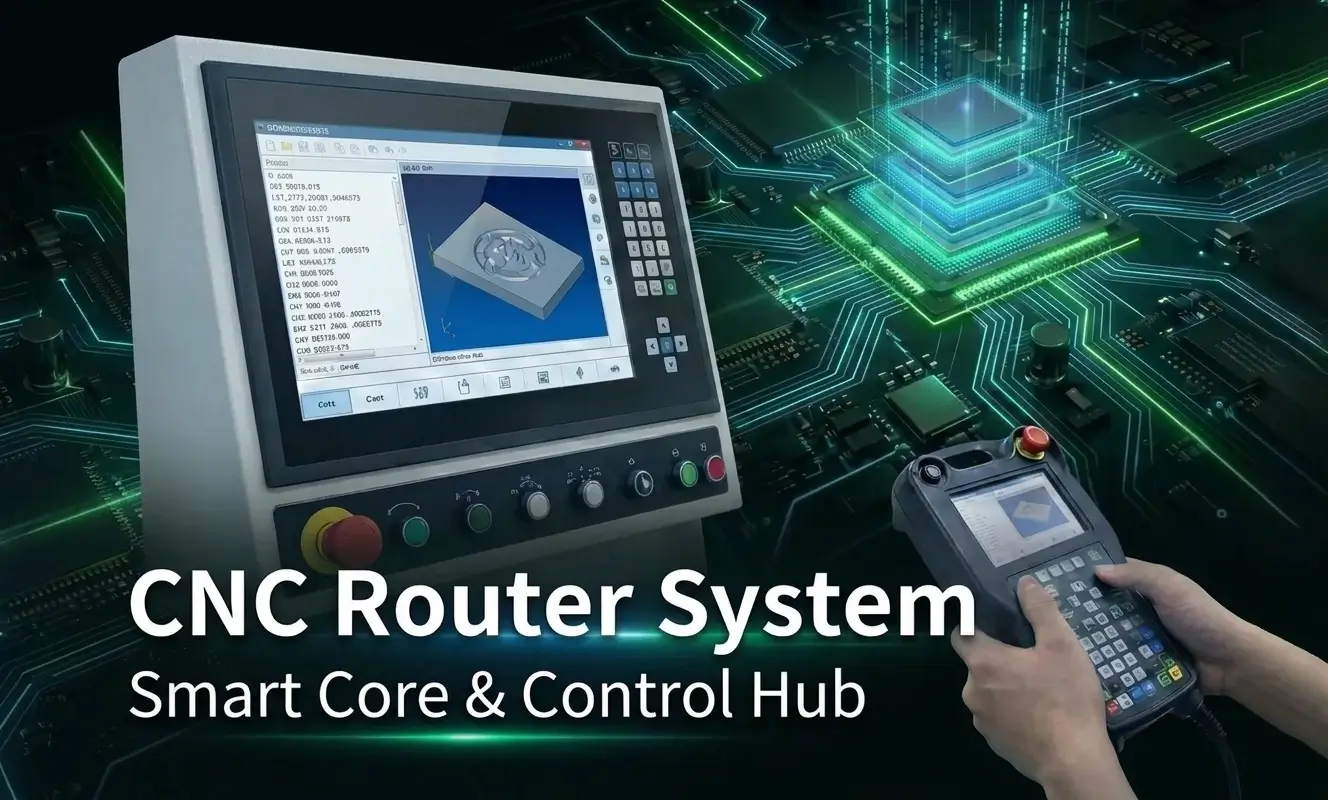
Control System DSP, NC Studio, Mach3, weihong, OSAI, LNC, Syntec, TPA, Fanuc, Siemens, etc.
Price 1000~138000USD
Compatible Software AutoCAD, JDPaint, ArtCAM, Type3, Cabinet Vision, UG, Solidworks, MeshCAM, AlphaCAM, UcanCAM, MasterCAM, PowerMILL, Fusion360, Aspire, Alibre, Rhinoceros 3D, etc.
Optional Functions Vacuum worktable, pneumatic roller, servo motor, spindle, side milling device, fourth rotary axis, drilling bank, labeling machine, oscillating tools, automatic loading and unloading platform, saw blade cutting device, etc.

How Much Does a CNC Wood Router Cost?

The price of a CNC woodworking router machine is mainly influenced by factors such as machining capability, machine configuration, and working area. Before selecting the most suitable CNC wood router machine for your needs, you should consider these factors and choose based on your budget. Below, you’ll find a price reference to help you pick the best CNC wood router machine within your budget.

Mini Desktop CNC Wood Router Machine
This type of mini desktop CNC wood router machine occupies a very small area and has low power and they can be placed on the desktop or on the ground for use. It is easy to operate and can be purchased without too much investment. It is very suitable for CNC enthusiasts or CNC hobbyists, home workshops, etc. It is suitable for processing signs, patterns, models, logos, cookie molds, chocolate molds and other small crafts. This type of CNC wood router price is cheap. The price of a mini desktop CNC wood router machine with a 400*600mm worktable starts at only $900, and the price of a mini CNC wood router machine with a 600*900mm worktable starts at only $1,000. The price of a 6090 mini CNC wood router machine with a fourth rotating axis starts at $2,000. On this basis, you can also choose to use a servo motor. The 750w Chinese-made servo motor brand needs to add an additional cost of $300-1,500 to the machine price, and if you choose to use a Japanese Yaskawa servo motor, the price will increase by $1,100-2,800. Of course, a higher configuration also means that the machine's performance is more powerful, but in general, the mini CNC wood router machine is very cheap and versatile, making it very popular among amateurs.
Basic 3-Axis Wood CNC Router Machine
The basic 3-axis wood router machines feature three motion axes (X, Y, and Z), enabling three-dimensional movement. This type of CNC woodworking router has a relatively simple structure and does not require professional CNC knowledge to start using, they are extremely user-friendly and ideal for startups or small businesses with limited budgets.Despite their affordability, these machines offer wide-ranging applications, including making wardrobes, cabinets, wooden doors, office furniture, signage, acrylic cutting, model-making, and mold production. They are extensively used in woodworking, construction, advertising, and other industries.The common 1325 CNC wood router with a 4*8ft worktable starts at $2,570, the 1530 CNC wood router with a 5*10ft vacuum worktable starts at $3,500, and the 2-station CNC wood router with two independent spindles starts at $3,570. The CNC wood router that is most suitable for batch machining and can work with six spindles at the same time starts at $4,000.
CNC Wood Router Machine With Automatic Tool Changer (ATC)
This type of high-end CNC wood router machines is standardly equipped with a high-power spindle (with automatic tool-changing functionality) and a vacuum worktable. It uses a powerful control system and an efficient transmission system, which is very suitable for use in factories or production workshops. This CNC wood router is extremely efficient and can be used to efficiently process various wardrobes, cabinets, wine cabinets, wooden doors and other products. It is suitable for use in various industries such as furniture, construction, and advertising. Compared to ordinary CNC routers, this type of router is priced higher. The 1325 ATC CNC router with a 4*8ft vacuum worktable and a linear tool magazine starts at $8,285, the 1325 ATC CNC router with a carousel tool magazine starts at $9,700, and the 2130 ATC CNC router with a 2100*3000mm worktable starts at $11,800. The 1328 ATC CNC router with an optional 5-axis saw blade starts at $10,500. The price of ATC CNC router with drill bank and rotary 4th axis starts at $13,800. The price of ATC CNC router with oscillating tools that can be used to cut flexible materials starts at $9,700. In addition, all ATC CNC wood router machines can add automatic loading & unloading platforms, which are very suitable for mass production processing, from plate loading, to plate machining, to plate unloading, all operations are automated, which can effectively save labor and reduce labor costs. The 1325 ATC CNC router with an automatic loading & unloading platform starts at $10,500, and the full-size 2130 CNC router with a automatic loading & unloading platform starts at $14,800. Although these CNC routers with automatic tool changers are relatively expensive, their functions and machining efficiency is completely unmatched by ordinary CNC routers.
4-Axis CNC Wood Router Machine
Compared with the ordinary 3-axis CNC router, this CNC router has an additional rotatable fourth axis, which can be used to process products that are difficult to process with the 3-axis CNC router. There are two types of fourth axes: One is to add a 360° rotating fourth axis device, which is used to rotate the workpiece, and can process various statues, table and chair legs and other three-dimensional products. The second is to add a rotating axis to the spindle, which allows the spindle to tilt ±90° left and right, and can be used to process various curved surfaces, inclined surfaces, vertical surfaces and other processing tasks that are difficult to process with ordinary three-axis CNC routers, we generally call this device a swing head. The price of a machine that adds a fourth rotary axis to the 1325 ordinary 3-axis CNC wood router starts at $4,000, and the price of a multi-station 3D CNC router with ten stations that can be processed in batches starts at US$10,300. The 2130 ATC CNC router with a swing head spindle and automatic tool changer starts at $11,600. Although the price of the 4-axis CNC router is relatively high, it can complete tasks that are difficult for 3-axis CNC routers to handle, and covers the functions of ordinary 3-axis CNC routers. One machine can meet different processing needs, which can effectively reduce the purchase cost and operation cost of the machine.
5-Axis CNC Wood Router Machine
The 5-axis CNC wood router is the most powerful CNC router machine. Compared with 3-axis CNC routers, it has two additional rotation axes and can be used to process extremely complex large-scale three-dimensional sculptures or various molds. This CNC router machine is expensive and is generally purchased by large factories or large enterprises. The price of a 1325 model ordinary five-axis CNC wood router starts at $37,000, while the price of a large 2030 bridge-type 5-axis CNC wood router is generally above $78,000. This powerful 5-axis CNC router can complete various difficult processing tasks with extremely high processing accuracy, which allows the workpiece to be fully processed in one clamping. This makes it the ideal choice for manufacturing complex molds, sculptures, and other precision-demanding projects.

If you have any questions about the price or want to find the price of the CNC woodworking router that suits you best, you are welcome to contact our sales specialist. We will provide you with the most affordable price as soon as we receive the news.

Issues to Note when Choosing and Purchasing a CNC Wood Router Machine

As the saying goes:" Not afraid to buy expensive, afraid not to buy the right.” The importance of choosing a CNC wood router machine that suits your needs is self-evident. For experienced experts, this may not be a difficult task, but novices who have just entered this industry often have a headache about it. Once you choose the wrong machine, you are likely to have endless troubles in the future. Therefore, it is wise to choose the right machine according to the characteristics of the product you plan to process. So, how to choose specifically? Let's analyze it from the following dimensions.

Model selection

First, you need to select the corresponding machine model according to the characteristics of your own processed products. If you need to flat-carve a wooden board, a three-axis CNC wood router can generally meet the needs. If you need to carve the rotating surface of a wooden strip or punch holes on the side of a wooden board, you should choose from four-axis CNC wood router. If you need to do three-dimensional carving and there are a large number of complex curved surfaces, a five-axis CNC wood router can meet the processing needs. After clarifying the type of machine, there is no need to worry about the processing capacity of the router at least. Then, determine the specifications of the machine according to the maximum size of the product.

Transmission mode selection

The transmission types of CNC wood router machines are mainly divided into full-screw drive and screw-rack drive. At this time, we need to comprehensively consider the processing accuracy and processing speed. The screw drive has high precision and excellent cutting and engraving accuracy, but the idle speed and processing speed are relatively slow, so the production efficiency will be lower than that of the CNC wood router machine with rack drive. The machine using helical rack drive has a fast idle speed and high torque, but the accuracy is slightly inferior to the screw drive. The accuracy of the CNC wood router machine using screw drive can be controlled within 0.05mm, while the accuracy of the machine using rack drive can be kept within 0.1mm.

In terms of slide rails, they are divided into linear square rails and circular rails. You should give priority to square rails because they are superior to circular rails in terms of load-bearing capacity and processing accuracy. The advantage of circular rails is only that they are cheap and easy to install.

Spindle selection

According to the cooling method, it is mainly divided into water-cooled spindles and air-cooled spindles. The water-cooled spindle has high speed, good precision, and excellent cooling effect. It is suitable for long-term continuous processing, but an external water cooling device is required. In comparison, the air-cooled spindle has a larger torque, but the speed is slightly lower, and the cooling effect is inferior to the water-cooled spindle. It is not suitable for long-term continuous operation and is more suitable for cutting processes. The air-cooled spindle comes with a cooling fan, which is convenient to use and maintain. When choosing a spindle, you need to fully consider the actual application scenario. For example, whether the cutting work accounts for a large proportion, or the fine engraving tasks are mostly, and whether the machine needs to run for a long time. Fine engraving operations generally take a long time and require low torque, so it is very suitable to use a water-cooled spindle. Cutting operations take a short time and require a large torque, so an air-cooled spindle can also be used. Generally speaking, for frequent cutting of materials with a thickness of more than 20mm, it is recommended to choose a spindle with a power of 5.5KW or more; if the cutting thickness is less than 10mm, or it is only used for engraving, a spindle with a power of 3.5KW or even less can be selected.

Drive motor selection

Mainly divided into stepper motors and servo motors. Stepper motors are low in cost and easy to maintain, but their accuracy is relatively limited (within 0.1mm), and their upper limit of running speed is also low. They are often used in ordinary engraving machines with affordable prices. Servo motors have almost all-round advantages. They have large torque, extremely high accuracy, and fast idling speed, but their price is relatively high, and they are more suitable for high-end models with demanding precision.

CNC system selection

Common CNC system brands on the market include mach3, DSP, NCStudio, SYNTEC, LNC, etc. For operators with some experience, it is usually recommended to give priority to the control system that they are familiar with and have used before. For novices, choosing a control system that is easy to operate will help them learn quickly, and for such users, we recommend that you follow the advice of the salesperson directly.

Worktable selection

The aluminum alloy T-slot table is suitable for long-term fine engraving and milling operations, and can clamp various special-shaped workpieces. The vacuum clamping platform can effectively improve work efficiency and save clamping time, but it can only adsorb workpieces with flat surfaces and needs to be used with a vacuum pump. You can choose the corresponding platform according to actual needs, or you can choose a table with a combination of vacuum clamping and T-slot to meet various types of processing needs.

In short, you should purchase a CNC wood router based on your processing needs, budget, site conditions and other factors.If you still have doubts about this, you can contact our experts for a one-on-one free consultation, and you can also do free proofing to help you determine whether a certain machine can process the products you need, while ensuring that the processing effect, speed and budget meet your expectations.

How to Choose the Right CNC Wood Router for Your Application?

CNC Wood Router Type Main Applications Key Advantages Suitable Users
Standard 3-Axis CNC Router Flat-panel cutting, engraving, grooving and furniture component processing Versatile configuration and straightforward operation Small woodworking shops and furniture manufacturers
ATC CNC Router Cabinet production, panel furniture manufacturing and multi-tool machining Automatic tool changes reduce manual intervention between machining operations Furniture factories with diverse machining processes
CNC Router with Drilling Unit Cabinet panels, wardrobe components and furniture parts requiring multiple holes Integrates drilling with other compatible machining operations Panel furniture manufacturers
4-Axis CNC Router with Swing Head Angled milling, side machining and inclined-surface processing A tilting spindle enables machining at different angles Manufacturers producing complex furniture components
Rotary 4-Axis CNC Router Table legs, cylindrical decorations and three-dimensional wooden components Rotary-axis machining supports cylindrical workpieces Custom woodworking and 3D carving businesses
5-Axis CNC Router Complex curved surfaces, molds and three-dimensional components Multi-axis movement supports complex machining geometries Specialized manufacturers and mold makers

The right CNC wood router depends on your workpiece dimensions, machining processes, production volume and automation requirements. For example, a standard 3-axis router may be sufficient for flat-panel cutting and engraving, while an ATC CNC router can be a better choice for jobs involving multiple tools. If your products require angled machining or cylindrical carving, consider a suitable 4-axis configuration.

How to Choose the Right CNC Router Bits for Woodworking?

Choosing the right CNC router bits is important for achieving good cutting results and improving woodworking efficiency. Different router bits are designed for different machining tasks, including cutting, grooving, engraving, and 3D carving.

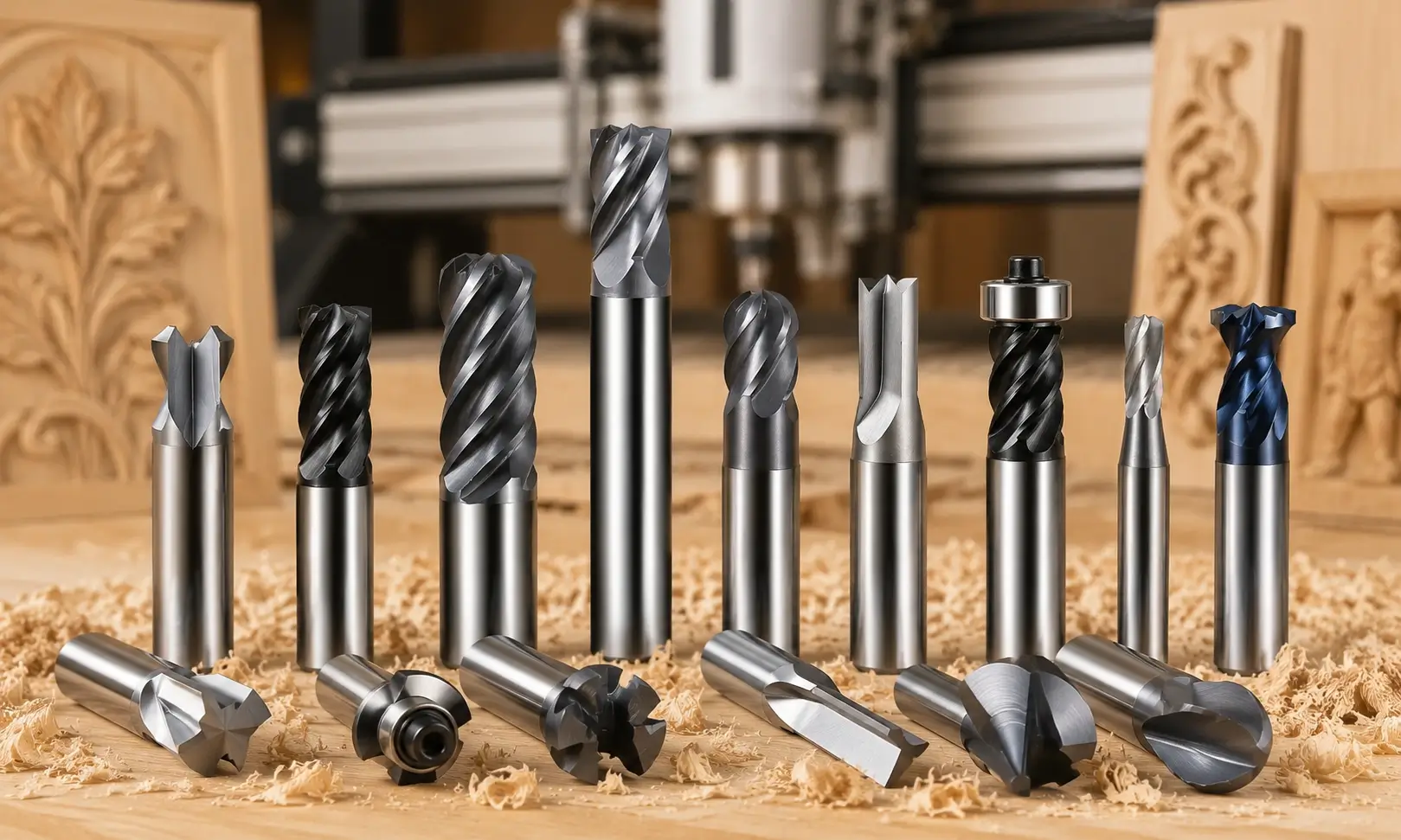
Here are some common CNC router bits and their applications in woodworking.

CNC Router Bit Main Applications
Straight Router Bit Suitable for general cutting, slotting, and grooving in wood and wood-based panels.
Spiral Router Bit Used for cutting and milling wood panels, helping remove chips during machining.
Compression Router Bit Commonly used for cutting plywood, laminated panels, and other sheet materials where clean edges on both sides are important.
Ball Nose Router Bit Suitable for 3D carving, curved surfaces, and decorative relief patterns.
V-Groove Router Bit Used for creating V-shaped grooves, decorative lines, lettering, and chamfered edges.
Engraving Router Bit Suitable for engraving letters, logos, and decorative patterns on wooden surfaces.
Form Router Bit Designed for machining special profiles, decorative edges, chamfers, and raised or contoured patterns on wooden components.

The right router bit depends on the material, cutting depth, machining requirements, and desired surface finish. Choosing suitable bits helps improve machining quality and production efficiency.Need help choosing the right router bits for your woodworking projects? Contact CATEKCNC to discuss your materials and machining requirements. Our team can help you select a suitable CNC wood router configuration for your production needs.

How Does a CNC Router Process Panel Furniture?

A CNC wood router is widely used in panel furniture manufacturing, including the production of cabinets, wardrobes, kitchen furniture, and office furniture. As a versatile CNC router for woodworking, it can perform cutting, grooving, drilling, and engraving operations to help furniture manufacturers improve machining efficiency, material utilization, and production consistency.

For manufacturers looking for a reliable CNC router for panel furniture, understanding the processing workflow can help them choose the right machine configuration for their production needs.

1.Design and Nesting

The first step in panel furniture production is designing the furniture components and arranging them on the sheet material. CAD/CAM software helps generate machining paths and optimize the layout of parts on MDF, plywood, and other suitable wood-based panels.

A CNC nesting router can then follow these programmed paths to cut multiple furniture components from a single sheet, helping reduce material waste and improve production efficiency.

2.Panel Loading and Fixing

Before machining, the panel must be positioned and securely fixed on the CNC router table. A vacuum table is commonly used for flat panel materials, while a T-slot table can accommodate mechanical clamps for different workpiece shapes and fixing requirements.

Choosing the right workholding system for your CNC wood cutting machine helps keep panels stable during machining and supports consistent cutting results.

3.Cutting and Shaping

During this stage, the CNC wood router follows the programmed toolpaths to cut panels into the required shapes and dimensions. Typical applications include cabinet sides, wardrobe panels, shelves, drawer components, and other furniture parts.

For manufacturers producing large quantities of furniture components, a suitable CNC router for cabinet making can help streamline panel cutting and improve dimensional consistency.

4.Grooving and Drilling

Grooving and drilling are important operations in panel furniture manufacturing. They are used to create connection slots, assembly grooves, hinge holes, and other openings required for furniture assembly.

Depending on the machining requirements, manufacturers can choose a standard CNC router or a CNC router with drilling unit to handle drilling operations more efficiently.

The appropriate configuration depends on the number of holes, hole positions, machining accuracy, and production volume.

5.Automatic Tool Changing

Some furniture components require multiple tools for cutting, grooving, drilling, and engraving. An ATC CNC router can automatically change tools according to the machining program, reducing manual intervention and helping maintain a smoother production workflow.

For furniture factories handling different designs and frequent machining changes, an ATC system can improve flexibility and reduce downtime associated with manual tool changes.

6.Unloading and Quality Inspection

After machining, the finished panels are unloaded and inspected. Manufacturers typically check dimensions, hole positions, groove accuracy, and edge quality to ensure that the components meet assembly requirements.

A properly configured woodworking CNC machine can help manufacturers maintain consistent machining results across repeated production runs. However, final quality also depends on the material, tooling, machining parameters, and machine setup.

Why Choose CATEKCNC?

"Quality First, Excellence Foremost" is the mission of CATEKCNC. We are committed to delivering comprehensive automated CNC solutions through cutting-edge R&D, design, and manufacturing. From pre-sales to in-sales and to after-sales, we provide full range services to address all your challenges. Whether you need CNC solutions or expert advice, CATEKCNC is your optimal choice. Here’s why:

  • R&D: With 20+ years of experience in standardized automation equipment R&D and manufacturing, CATEKCNC excels in CNC router production, software integration, and woodworking solutions, tackling even the most complex machining challenges.
  • Customized Solutions: We offer full customization for CNC routers, including machine appearance, functionality, accessories, and colors—tailored to your industry or specific needs.
  • Quality Control: At CATEKCNC, Every CNC router undergoes precision assembly and testing to guarantee accuracy, stability, and compliance with customer requirements.
  • After-Sales Service: Enjoy 3-year free warranty, lifetime maintenance, and free software upgrades, backed by a 24/7 professional engineering team for immediate technical support.
  • Our entry-level CNC wood routers are designed with user-friendly controls, making them perfect for those transitioning from hobbyist woodcraft to professional production. However, proper operation is key to maintaining high precision. Before your first project, we highly recommend reviewing our expert tips: 《8 Common CNC Router Mistakes Beginners Should Avoid》.

How to Buy The CNC Wood Router Machine?

  1. Establish communication: You can contact us through email, WhatsApp or phone. Please elaborate on your needs, and our sales experts will answer your questions carefully and recommend suitable models according to your situation.

  2. Confirm details and quote: After repeated confirmation, determine the specific machine model and configuration. We will provide you with a detailed quotation list including machine quotation, transportation cost, etc.

  3. Test machine proofing: We will arrange engineers to program according to your product, use the prototype to complete the processing, and send you the processing video and photos to confirm whether it meets your requirements.

  4. Sign the contract and pay the advance payment: When the machine model, configuration, cost, transportation, etc. meet your expectations, we will send you a bill. After paying the advance payment, the machine can be included in the production plan.

  5. Production completion: After the machine is manufactured, it will first undergo strict quality inspection to ensure quality. Then we will send you photos and videos of the machine for your inspection.

  6. Delivery: The machine will be shipped by a professional transportation company after professional dust-proof and waterproof packaging, and insurance will be purchased to ensure the safety of cargo transportation. Any loss during transportation will be borne by us.

  7. Customs clearance: During the transportation of the machine, we will prepare the documents required for customs clearance in your country or region and send them all to you before the goods arrive to ensure that you receive the goods smoothly.

  8. After-sales and service: Our equipment enjoys a three-year free warranty and lifetime maintenance service. After the equipment arrives, the after-sales engineer will take the initiative to contact you and provide you with necessary technical support.

Training Process and Content of CNC Wood Router

When you purchase a CNC wood router machine, even though we will provide a detailed machine manual and instructions for use with the machine, our factory's technical experts will still take the initiative to contact you and systematically explain the machine's functions, programming methods, operating skills, and maintenance knowledge to help you understand and use the machine more deeply. The following is our standard training process for your reference:

  1. Theoretical basic training: Our experts will introduce and explain the basic working principle, structural composition, machine performance characteristics, and basic concepts of CNC technology of the CNC wood router machine. This will help you fully understand the machine and lay a solid foundation for subsequent training.

  2. Tool use training: Based on your processed products, we will introduce you to the necessary tools in the processing of the product, and extend this to explain the types of tools suitable for different workpieces, the reasonable setting of the spindle speed, and how to set the optimal processing speed. At the same time, you will be familiar with the precautions for tool use, ensure that the tool selection is appropriate, and ensure the safety and efficiency of the engraving process.

  3. Software operation training: Systematically learn the basic operations of engraving software, covering design, typesetting, path generation, etc., and master the skills of diagnosing and solving wrong paths.

  4. Machine operation training: Learn the actual operation steps of starting the CNC wood router machine, returning to the mechanical origin, loading the processing program, determining the workpiece origin, and setting system parameters, so that you can operate the CNC wood router skillfully and accurately.

  5. Application scope training: Introduce you the types of materials, processes and products that the purchased machine can process in an all-round way. Let you understand the corresponding engraving methods for materials of different materials and thicknesses, so as to fully master the knowledge of the application scope of the CNC woodworking router machine.

  6. Maintenance and maintenance training: Learn the daily maintenance and regular maintenance methods of the CNC woodworking router, including the setting points of the electric oiling device, the regular inspection of the transmission device, and the regular maintenance of electrical components. At the same time, master the troubleshooting methods of common faults to ensure the long-term stable operation of the CNC woodworking router and effectively extend the service life of the equipment.

Troubleshooting CNC Router Machines

During the operation of CNC routers, you may encounter some machining-related issues. You can always contact our technical team for troubleshooting. Below are answers to some common problems.

  1. Control software error: Check if the control cable connection is secure. Try reconnecting the data cable or reinstalling the driver.
  2. Abnormal engraving pattern: Verify the correctness of the design path settings, ensure machine parameters match, and inspect the transmission system for abnormalities.
  3. Spindle overheating: Check if the cooling system is functioning properly. For water-cooled systems, inspect the water pump and water circulation. For air-cooled systems, ensure the fan is not blocked.
  4. XYZ-axis movement issues: Examine the transmission system for faults, check if the driver reports errors, and verify that the driver plugs or cables are not loose.
  5. Machine fails to power on: Inspect the power button wiring for damage and confirm the power cable is properly connected.
  6. Rough or imperfect machined surface: Check if the design matches the tool specifications, inspect the tool for severe wear, and replace it if necessary.
  7. Positioning/size deviation: Ensure the workpiece is securely fixed and verify the accuracy of the design file.
  8. XYZ-axis alarm: Check if the limit switches are functioning correctly to avoid exceeding the machine's working range.
  9. Abnormal spindle noise: Inspect for spindle overload or blockage. Manually rotate the spindle to check for excessive tightness. If the spindle is stuck or difficult to turn, repair or replace it.
  10. Vacuum table malfunction: Verify the vacuum pump is operating normally and check for blockages in the vacuum hoses.
Last Updated:
2026-10-25 15:40:27

FAQs

Frequently Asked Questions

Find the answers to the machine-related questions you're looking for.

Still have questions?

We are here to help you!

Contact Us
  • 1. Can a CNC wood router cut materials other than wood?

    Yes. In addition to solid wood, plywood, MDF, particleboard, and melamine-faced panels, many CNC wood routers can also process acrylic, PVC, foam, composite materials, and even soft metals like aluminum when equipped with the appropriate spindle, cutting tools, and cutting parameters.

  • 2. Can a CNC router create 3D carvings and relief designs?

    Yes. Equipped with a fourth spindle, CNC wood router can produce intricate 2D and 3D engravings, decorative panels, furniture components, signs, molds, and artistic reliefs. By using CAD/CAM software and appropriate cutting tools, complex 3D designs can be machined automatically.

  • 3. What maintenance does a CNC router require?

    Regular maintenance includes cleaning dust and chips, lubricating guide rails, checking spindle condition, inspecting electrical connections, and replacing worn cutting tools when necessary. Proper maintenance helps ensure long-term accuracy and machine reliability.

  • 4. What support is available after purchase?

    As a professional supplier, CATEKCNC provides machine installation assistance, operating manuals, training videos, remote troubleshooting, spare parts support, and lifetime technical consultation. If needed, replacement parts can usually be shipped quickly.

  • 5. Is a vacuum clamping table necessary?

    A vacuum clamping table is ideal for cabinetry, furniture, and panel processing because it quickly secures materials and improves production efficiency. For smaller workshops or special projects, mechanical clamps can also be used depending on the specific application.

  • 6. How often should CNC router bits be replaced?

    The service life of a CNC router bit depends on your specific materials and usage intensity. As a general rule, you should replace the bit if you notice burning marks or excessive burrs on the workpiece, or if you hear abnormal vibrations and squealing during operation.Please replace it immediately.

CUSTOMER REVIEWS

  • Normalmente trabajo cortando maderas, pero a veces también necesito procesar espuma o cuero. Por eso decidí comprar esta máquina CNC para madera con cabezal de vibración. La verdad es que cumple perfectamente con lo que esperaba, todo funciona muy bien.

    Marequip
    ec
    Apr 05, 2025
  • I've been running this CNC router in full production for over a week now. Honestly, I wanted to leave a review the moment it arrived, but I waited because the installation and learning curve were quite a challenge.

    The after-sales team was excellent—they worked through the time zone differences and did their absolute best to support me until everything was dialed in. Now that I’m up and running smoothly, I’m happy to give a 5-star rating.

    Silue
    ci
    Mar 05, 2026
  • All went smoothly! The CNC router has been installed, tested, and is now ready for production. We’ll start running it next week and are excited to see the results.

    Matthew
    gb
    Aug 06, 2026
  • When I opened the electrical cabinet, I was pleasantly surprised — it looked exactly like what they showed in their marketing materials. No shortcuts, no surprises. Everything was built the way they promised.

    Marlen
    us
    Aug 07, 2026
  • I've been using this 1325 CNC router machine for a few weeks now. It processes wood very well, producing clean and sharp cuts, and the machine runs stably and reliably. The setup process was also smooth.

    Creel
    us
    Jan 18, 2026
  • We’ve had the CNC router in our shop for a while now and have been using it mostly for plywood, MDF and cabinet parts. It’s been a good fit for the kind of work we do. The vacuum table is probably the feature we use the most. It holds the sheets in place well and makes things easier when we’re working on larger pieces. We also found the automatic tool setting quite handy once we got everything set up.

    Justin
    ca
    Sep 05, 2026
  • A gente está usando a CNC 1325 para cortar compensado na nossa marcenaria. Não é uma máquina complicada, mas resolve bem o trabalho do dia a dia. Fazemos bastante corte de chapas para móveis e ela aguenta o ritmo. No começo tivemos que ajustar algumas configurações, depois ficou tudo ok. Até agora está funcionando de forma estável.

    Livros
    br
    Jun 07, 2026
  • They weren't joking—this truly is the best CNC wood router out there! Absolutely fantastic machine. Everything from the build quality to the performance is just perfect.

    Igor
    pt
    Feb 08, 2026
  • I placed the order for this CNC engraving machine on January 30th, but it happened to be during Chinese New Year. After the holiday, they told me they were speeding up production based on the order queue. Really happy I got the machine today!

    Sher Ali khan
    pk
    Feb 27, 2025
  • Alright, after two months of struggle, I think I can share my experience now. First of all, as a small woodworking workshop in a town in India, we simply couldn’t afford overly expensive machines, so we ultimately chose this Chinese-made 4x8 feet model CNC router machine, whose price was very attractive. Now we are finally able to take on orders for complex carved cabinet doors and decorative panels. It’s not that we couldn’t handle them before, our skills are sufficient... but what I mean is, for hand-carved work, we just didn' t have enough time.

    Ashtafali
    in
    Jul 08, 2025
Share this:
Menu